DD
MM
YYYY

PAGES

DD
MM
YYYY

spot_img

PAGES

Home Blog Page 3644

Key to efficiency: software licenses discounted. Get Windows 10 Pro for the lowest cost of this year!

0

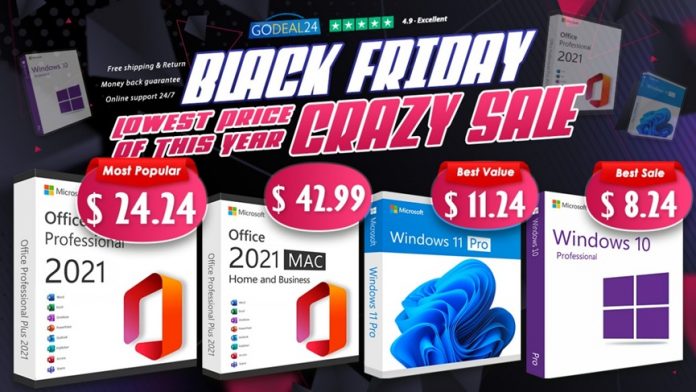
In the ever-evolving landscape of digital innovation, having the right software at your fingertips is the key to unlocking unparalleled possibilities. No more searching for a reliable place to buy cheap software keys as I already got it – Godeal24 Black Friday & Cyber Monday Huge Sale. The lowest-priced productivity suites can be found on Godeal24 – the latest Office 2021 Professional is only $24.24. Packaged products not only bring more sales to merchants, but customers can also enjoy lower prices and get the same product, such as the Office 2021 5 PC pack that is as low as $14.85/PC. Office 2021 Pro meets your needs in every aspect, boosts efficiency and makes your work stand out. Please feel free to buy software keys from Godeal24 because of the professional customer service team and lightning shipping. The keys are used to activate the software after you download it from the official website. The whole process is very safe, and the keys are 100% genuine! Godeal24 will not provide unlimited low-price software, time and inventory are being consumed quickly, please hurry up! Don’t miss out on the chance to redefine what’s possible with software keys – your gateway to a world of endless innovation!

The safer way to get a working key to activate your Windows 10!

Get a productivity suite for 90% off the original price!

Get your cost-effective bundle today! (coupon code “DYF62”)

Up to 50% off on More Windows and Office! (coupon code “DYF50”)

>>> Get More

How to Pay?

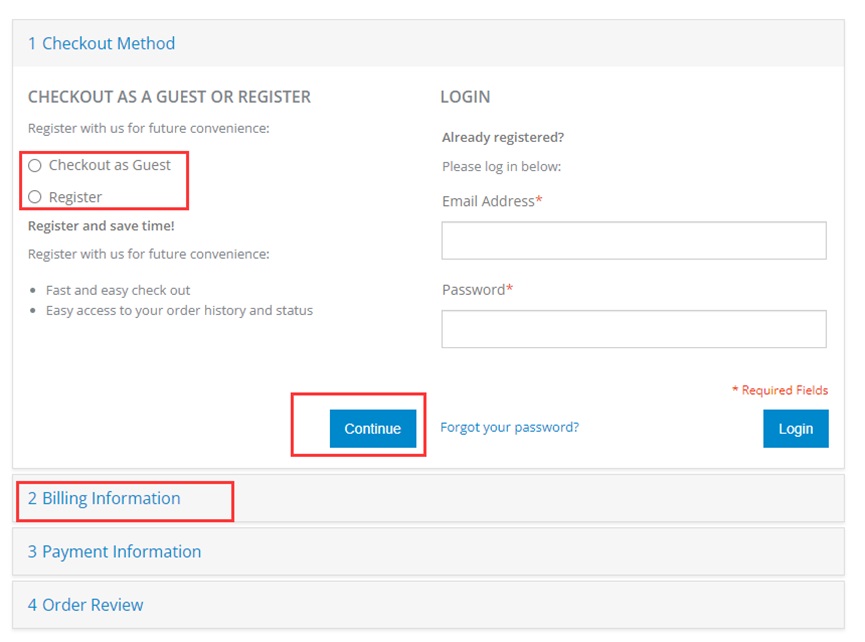
  • Go to the checkout page, continue as a guest (or create an account), and then fill in “Billing Information”.
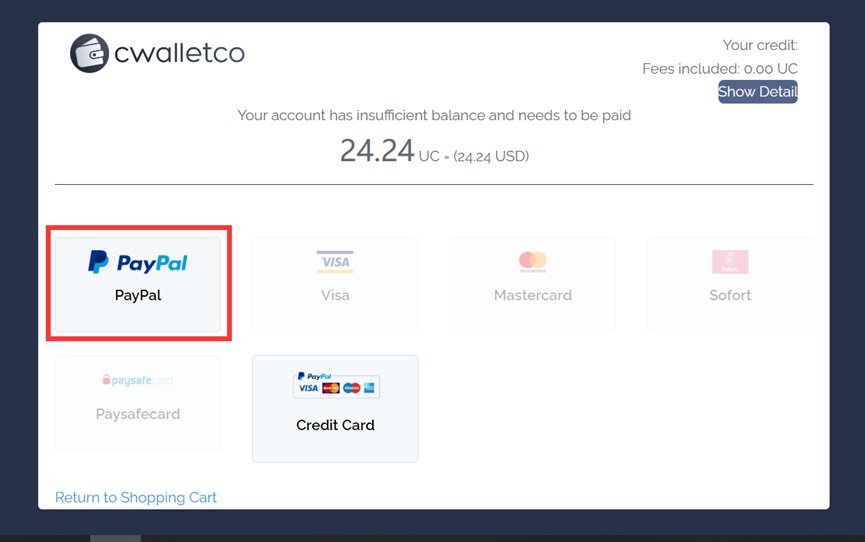
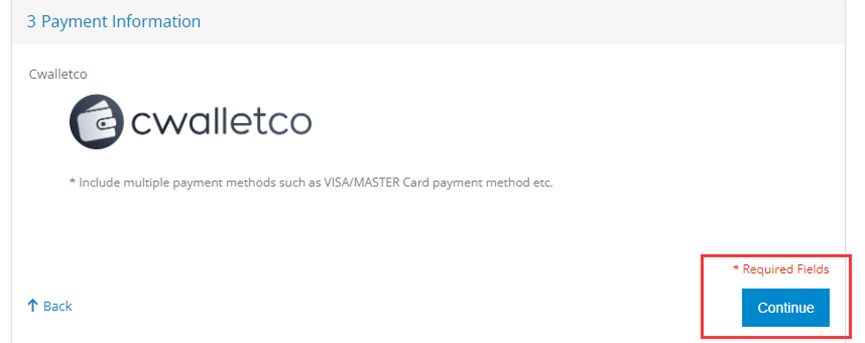
  • Please select “CWALLETCO” in this step, then click “Continue”.
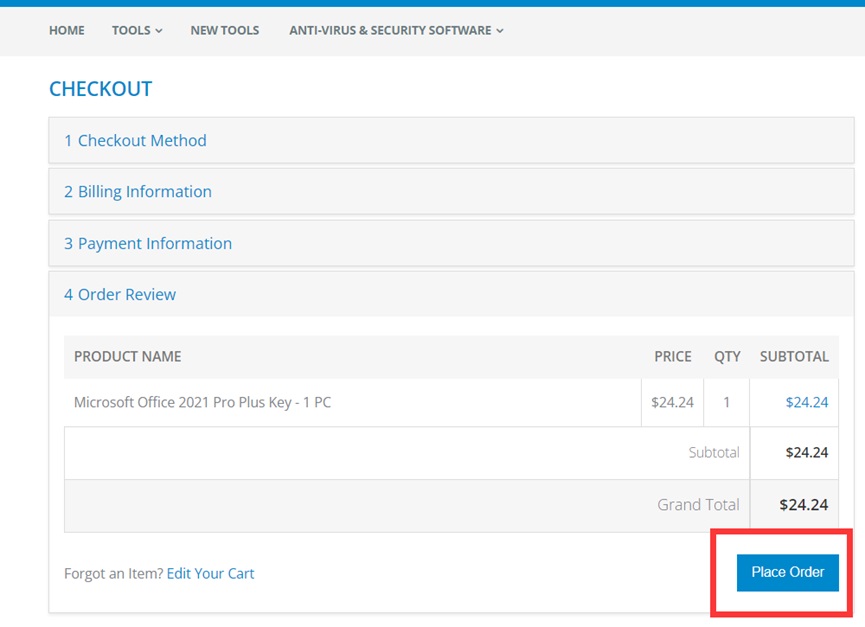
  • Please check your order and click “Place Order”.
  • Then it will jump to this page, click “Choose payment methods”.
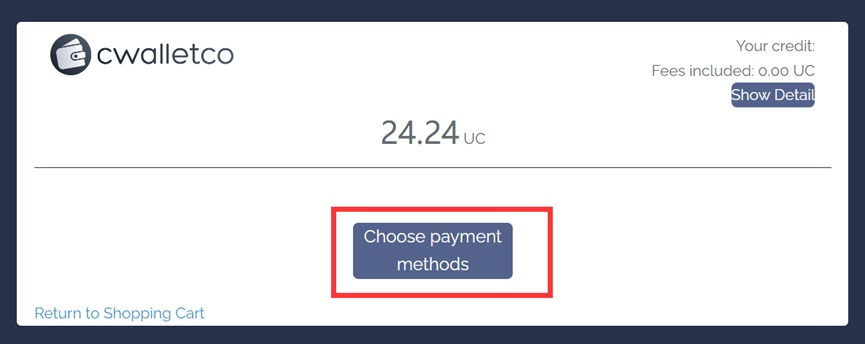
  • Finally, you can choose to use PayPal to complete the payment.

At Godeal24, you can save a lot of time and money with discounted Microsoft licenses, major IT security software and other computer tools. Get Windows OS and MS Office at an unbeatable price. Experience hassle-free shopping with Godeal24’s digital delivery, which sends your software directly to your email within seconds of purchase. Plus, with a TrustPilot 98% Excellent rating and 24/7 expert technical support, you can be confident in the quality of the product you are buying.

 Godeal24 promises that they offer 24/7 professional technical support and lifetime after-sales service and that you can use the product without problems!

Contact Godeal24: service@godeal24.com

A Commendable Move by Cardoso on Central Bank of Nigeria’s New Strategy

5

I commend Nigeria’s apex bank governor, Yemi Cardoso, for this new playbook: ‘In a significant shift from previous practices, Cardoso revealed the central bank’s intention to withdraw from direct development financing interventions. He said the CBN aims to transition to more limited advisory roles that align with the government’s economic agenda. There is a need to pull the central bank back from direct development finance interventions into more limited advisory roles that support economic growth,” explained Cardoso.”

This is what I have been advocating for ages. I had noted that part of Nigeria’s problem was the overheating of the economy with Naira via the Ways and Means policy ( Nigerian government borrowing from CBN!) which distorted market equilibrium, and in the process neutralized CBN policies.

Largely, you raise interest rates to slow the economy and control inflation, but the next day, you print billions of Naira and hand it over to the government, canceling out the very policy you are architecting to control inflation. Under that regime, Nigeria has struggled to tame inflation!

But with this new policy, there is hope. Of course, everything depends on  Cardoso’s capacity to hold his ground as the government comes with a debit card for more money, knowing that the CBN can load the ATM with cash!

I call on the apex bank to also do something new: instead of raising rates to lower inflation in Nigeria, lower interest rates to boost production and supply. I guarantee you that if you lower interest rates in Nigeria, you will improve the Supply side in the market, and if that happens, inflation will drop. Our inflation is driven by low supply, and when we raise rates, we reduce supply [higher productive cost depresses supply] even though the policy has no impact on Demand since our consumer lending is largely nonexistent.

If you cannot try it across Nigeria, use Ovim, and you will see how inflation will drop in Oriendu Market, Ovim, Abia State.

Following growing public outcry over the nation’s current economic situation and mounting pressure from stakeholders to turn the fortune around, the CBN has been caught in the mix. The apex bank’s attempts for years to change the economic trajectory with varying monetary policies failed.

In a speech delivered via email on Tuesday, as reported by Reuters, Cardoso highlighted the pressing issues of a depreciating naira, double-digit inflation projected to reach 30% in the near term, and a staggering N87 trillion debt.

Comment On Feed

Comment 1: I have always held the opinion that until we go back to supply side economics, the whole monetary and fiscal policies of Nigeria will not yield 100% return. The supply side is the key. Let us have enough food supply with reliable road infrastructure that ensures prompt delivery at reduced cost anywhere in the country, consumer price index will go down which will directly impact inflation rate.
Let Govt provide infrastructure that supports surplus supply of food, clothing and shelter and see how cpi and inflation goes down.

Comment 2: Interesting positions. However, when the supply side is boosted and consumer lending remains non-existent, as the erudite Ndubuisi Ekekwe pointed out, there’s still a problem.

My Response: The problem is that prices will drop due to “Oversupply” assuming no change in Demand. That is a good problem to have in Nigeria right now and especially in Oriendu Market Ovim.

Comment 3: Thank you Prof. Ndubuisi Ekekwe for this economic analysis that I strongly align with. We do not tackle poverty and lack by mitigating or ameliorating it. Instead, we should focus on creating/catalyzing prosperity, so that scarcity, poverty and inflation are indirectly tackled too.

This is why I posit that for Africa to thrive economically under the clean energy transition, affordable (low-cost) energy must be made available in large quantities to boost local productivity. This will also protect our local markets from cheaper imported alternatives.

While we must commend what is being done in Africa now in replacing fossil-fuel generators with solar PV energy, our vision should be bigger: large-scale production of “cheap” sustainable energy for high-value agricultural value-chain, manufacturing and AI/data-science technological competitiveness.

You can please see details on this from my recent writing for The London School of Economics and Political Science (LSE) here: https://blogs.lse.ac.uk/africaatlse/2023/10/02/locally-generated-electricity-might-not-be-the-most-efficient-route-for-african-energy-transition/

Eden Life Launches eCommerce Platform to Diversify Offerings And Capture A Larger Market Share

0

Eden Life, Africa’s first home services app for scheduling food, laundry, and cleaning services, has announced the launch of Eden marketplace, an e-commerce platform as it aims to diversify its product offerings and capture a larger market share.

According to the Head of Marketing at Eden Life, Deji Adeleye, he said the company seeks to drastically improve the quality of life by scaling its vision across Africa through the new e-commerce marketplace.

The freshly introduced Eden Marketplace will encompass a diverse array of categories, incorporating groceries, pharmaceuticals, electronics, and beauty products.

These will be supplementing its existing services such as laundry, cleaning, and the recently inaugurated Homemade on-demand food delivery service. Eden Life’s strategic foray into the e-commerce space places it in direct competition with industry giants like Jumia and Konga.

Announcing the launch of the marketplace, the company said,

“Our rebrand signifies our evolution and dedication to improving the quality of your life, while Eden marketplace takes that commitment to the next level, allowing other dedicated vendors to leverage on the infrastructure we’ve built over the years, allowing our customers to flourish conveniently get more done”.

Eden Life’s entry into the e-commerce space signifies a strategic move to broaden its services from home services to a larger retail market, offering vendors and small businesses in various sectors a platform to sell their products.

The company will compete with other e-commerce giants in Nigeria which include Jumia and Konga, with the aspiration to also capture a significant share of the market.

Eden Life will charge a commission on the sales made on its marketplace, betting on a wide range of vendors and customers who get onboarded.

Recall that the startup had initially ventured into the e-commerce space, and was faced with logistical challenges during a flash promotion for its quick-service restaurant in July. This saw the company discontinue its online platforms due to unexpected demand, emphasizing the need for an efficient logistics model.

However, following its re-entry into the sector, the company said it has learned from its previous experience and will work with more delivery partners to fulfill food and non-food orders on its new e-commerce platform, where order volume could soar to tens of thousands if the service gets off the ground.

Eden Life’s Brand Manager, Olumide Yomi-Omolayo said,

“We’ve partnered with specific fleets and businesses, and we’re growing our database of riders and delivery services in order to ensure that our customers get their orders by the time they need them.”

The rebranding symbolizes the company’s evolution and its commitment to enhancing life quality tenfold, with the new Eden Marketplace extending the company’s infrastructure to empower vendors and customers alike. This move will also diversify the startup’s offerings which can help them attract a broader audience and increase market share.

Tinubu Negotiates Multi-billion Naira Infrastructure Financing with Islamic Development Bank

0

President Bola Tinubu, currently in Mecca, Saudi Arabia, has entered advanced negotiations with the Islamic Development Bank for a multi-billion dollar infrastructure finance facility.

This funding aims to support a diverse portfolio of infrastructure projects at both federal and sub-national levels in Nigeria. The initiative follows President Tinubu’s discussions with Dr. Mansur Muhtar, the Vice-President of the Islamic Development Bank.

“The Islamic Development Bank President announced the provision of $50 billion U.S. Dollars of new investment for the African continent from the Arab Coordination Group (ACG). As the largest market and the largest economy in Africa, Nigeria will certainly receive a significant share. We look forward to supporting Nigeria’s economic transformation,” said Dr. Mansur Muhtar.

This development comes at a time when the Nigerian government is grappling with a severe financial crisis, as acknowledged by the National Security Adviser, Nuhu Ribadu.

“Yes, we’re facing budgetary constraints. It is okay for me to tell you. Fine, it is important for you to know that we inherited a difficult situation, literally a bankrupt country, no money, to a point where we can say that all the money we’re getting now, we’re paying back what was taken. It is serious!” Ribadu said.

In response to the financial challenges, the federal government, under the leadership of President Tinubu, has turned to borrowing as a means of addressing the current predicament. The country’s public debt rose to N87 trillion under the past administration led by Muhammadu Buhari, and projections suggest further increases under the present administration.

The Tinubu administration’s medium-term expenditure framework (MTEF) reveals plans to accumulate a combined fiscal deficit of N30.6 trillion between 2024, 2025, and 2026, raising concerns among experts. The proposed 2024 budget, with a fiscal deficit of N9.04 trillion, exceeds the 3% threshold stipulated in the Fiscal Responsibility Act (FRA) 2007.

Complicating matters, Nigeria’s financial crisis is exacerbated by challenges in the oil sector, where crude oil production falls short of the 1.8 million barrel per day (mbpd) quota assigned by the Organization of Petroleum Exporting Countries (OPEC).

Amid mounting debt, there are increasing concerns about the prudent utilization of limited funds, especially as loans are being securitized with future crude oil proceeds. The recently proposed 2023 Supplementary Budget of N2.17 trillion, to be financed with loans, has faced criticism for its extravagant expenditures, particularly those catering to the leisure of political officeholders.

Notable allocations in the supplementary budget include N1.5 billion for vehicles for the Office of the First Lady, an entity not constitutionally recognized. Although the controversial N5 billion yacht was initially included, public backlash prompted the National Assembly to remove it from the allocation.

Additional allocations in the supplementary budget encompass N2.9 billion for Sport Utility Vehicles (SUVs) for the Presidential Villa and another N2.9 billion for replacing operational vehicles for the presidency.

Furthermore, N4 billion is designated for the renovation of the president’s residence and N2.5 billion for the vice president’s residence. The proposed State House budget is N28 billion, with N12.5 billion allocated for the Presidential Air Fleet.

The juxtaposition of seeking external funding while grappling with a domestic financial crisis raises questions about the sustainability of government expenditures. Critics are concerned that depending on external loans might lead to increased debt burdens for the nation.

Thus, the need for transparency in negotiating terms and conditions of such loans, as well as effective utilization of the funds for their intended purposes, has become a focal point in the discussions.

As negotiations with the Islamic Development Bank progress, stakeholders, including economists, policymakers, and the general public, are closely monitoring the outcomes. It is believed that the government’s ability to strike a balance between addressing infrastructure needs and managing the country’s financial crisis will be a critical factor in determining the success and sustainability of these funding endeavors.

Old Naira Notes Remain Legal Tender Indefinitely – Central Bank of Nigeria

0

The Central Bank of Nigeria has extended the validity of the old naira notes indefinitely, annulling the December 31, 2023 deadline set by the Supreme Court earlier in the year.

The apex bank announced the decision through a circular titled: “CBN To Allow Old Design Naira Banknotes As Legal Tender, Ad Infinitum”, which it shared on Tuesday.

“Please recall that the Central Bank of Nigeria introduced the redesign of N200, N500, and N1,000 denominations in October 2022 and certain deadlines were set for the old design of these denominations to cease as legal tenders. 

“Without prejudice, the Central Bank of Nigeria wishes to inform the general public of its desire to extend the legal tender status deadline of the old design of N200, N500, and N1,000 denominations, ad infinitum. This is in line with international best practices and to forestall a repeat of earlier experiences. 

“Thus, all banknotes issued by the Central Bank of Nigeria (CBN), in accordance with Section 20(5) of the CBN Act 2007, will continue to remain legal tender, ad infinitum, even beyond the initial December 31, 2023, deadline. The Central Bank of Nigeria is working with the relevant authorities to vacate the subsisting court ruling on the same subject.” 

The CBN added that all its branches across the country will continue to issue and accept all denominations of Nigerian banknotes, old and redesigned, to and from banks. 

The apex bank also urged the public to continue to accept all Naira banknotes (old or redesigned) for day-to-day transactions, as well as embrace alternative modes of payments.

Story background

In October of last year, the central bank made a noteworthy announcement, revealing that President Muhammadu Buhari had granted authorization for the issuance of new naira notes, set to take effect from December 15, 2022. The redesigned banknotes, specifically the denominations of N200, N500, and N1,000, were slated for production and circulation.

As part of this initiative, the central bank declared that all existing currencies would lose their legal tender status starting from January 2023. Simultaneously, commercial banks were instructed to cease charging fees on cash deposits with immediate effect. 

The decision to embark on this currency overhaul was motivated by various factors, including the growing ease and risk of counterfeiting and an exacerbating shortage of clean and fit banknotes in circulation, according to the financial regulatory authority. 

However, what unfolded following the implementation of the initiative was unprecedented. The naira redesign which also was initiated to curtail vote-buying and money laundering among other ills, unleashed chaos, crippling economic activities as the new naira notes became scarce amid high demand. 

It took several court orders to force the CBN to extend the deadlines, allowing both the new and the old naira notes to co-circulate. The governors of three northern states—Kogi, Kaduna, and Zamfara—took legal action against the federal government, bringing the case to the Supreme Court. They sought to compel the CBN to reverse its policy on the new naira notes, advocating for the coexistence of the new and old notes. The governors argued that the policy had adverse effects on the economy, leading to significant hardships for the Nigerian populace.

In response to the case, the Supreme Court issued a ruling instructing the federal government to suspend the implementation of the February 10 deadline until the case could be thoroughly examined and determined. The court set a date for the resolution of the case on February 15.

However, despite the Supreme Court’s subsequent judgment, barring the central bank from implementing its February 10 deadline for the phasing out of old notes, the financial regulator was adamant. The Supreme Court on March 3 nullified the policy, calling it an affront to the constitution. It therefore set December 31, 2023, as the deadline for phasing out the old notes.