DD
MM
YYYY

PAGES

DD
MM
YYYY

spot_img

PAGES

Home Blog Page 3644

The Lesson from AT&T for Nigerian Telcos on Service Delivery

1

A lesson for telcos in Nigeria. An American telecom company, AT&T, had a network outstage which lasted hours for many customers. The company has apologized, and apologized, and is now working out a way to credit them dollars to compensate for the time they could not use the service: “No matter the timing, one thing is clear – we let down many of our customers, including many of you and your families. For that, we apologize.”

There was no threat from the consumer protection for AT&T to deliver this goodwill. 

Good People,  how many times did you buy data and never got to use it because the network was very poor – and at the end of the month, that data expired? Ideally, that was against the constitution of Nigeria (yes, theft is illegal), but we live with it.

Every sector in Nigeria remains at infancy for a world-class service delivery! And that is an opportunity out there!

Bitcoin Price Surges to $57k as ETFs Continue to Record Massive Inflows

0

The price of Bitcoin has surged to $57,000 during the opening trading session of the week, following news that nine of the US-listed spot Bitcoin exchange-traded funds (ETFs) recorded all-time high trading volumes.

Reports reveal that Bitcoin Spot ETFs amassed $2.4 billion in a single-day trading volume, an all-time high. BlackRock’s shares of Bitcoin Trust (IBIT) ETF topped the charts, recording around $1.3 billion in total net inflows, representing roughly 55% of the overall figure.

Apart from BlackRock, spot Bitcoin ETFs from Fidelity, Franklin Templeton, Invesco, Bitwise, VanEck, Valkyrie, WisdomTree and Hashdex also contributed to the figure by attracting considerable amounts of inflows.

Speaking on the impact of ETFs approval on Bitcoin price, Mike Novogratz, the CEO of Galaxy Digital and a prominent figure in the digital asset space, shared his views on the future of Bitcoin and the impact of Exchange-Traded Funds (ETFs) on retail demand.

Novogratz’s optimism is significantly buoyed by the recent U.S. Securities and Exchange Commission’s approval of the first U.S.-listed spot bitcoin exchange-traded funds. This development, according to him, marks a watershed moment for the industry, potentially heralding a new era of institutional and retail engagement with digital assets.

He added that ETF approval could address some of the liquidity and volatility concerns that have previously deterred more conservative investors from entering the crypto market.

Despite the positive momentum generated by the introduction of ETFs, Novogratz cautions about the lingering regulatory uncertainties that cloud the industry’s future.  His critique extends to the regulatory approach of the SEC and the need for a more coherent and supportive legislative framework to foster innovation and stability in the crypto sector.

However, he remains bullish on Bitcoin’s role as a store of value, drawing parallels with gold, as reports reveal that the crypto asset is performing better than Gold and stocks in 2024.

This year, Bitcoin’s price has surged by 33%, as sustained upward momentum in the market has also fueled interest in other leading cryptocurrencies like Ethereum (ETH) and BNB. In January alone, over 150 new Bitcoin wallet addresses were created, with each of them holding more than 1,000 BTC worth an estimated $56 million.

As the price of Bitcoin continues to surge experts predict a $6 Trillion market cap for Bitcoin. A bitcoin surge to $64,900 would represent a potential upside of 22% from current levels and would put the cryptocurrency just a few thousand dollars below its record high of about $69,000, reached in November 2021.

Meanwhile, the Bitcoin blockchain is set to undergo a block reward reduction process in April called the ‘Halving. This once-in-four-year event reduces BTC’s supply, further contributing to its high demand.

Percentage of Self-Employed Nigerians Witnessed A Decline in 2023 as Businesses Shut Down

0

According to a recent survey, the percentage of self-employed Nigerians reportedly experienced a decline from 88.0 to 87.3 percent in the third quarter (Q3) of 2023.

As businesses continue to shut down, this has given rise to wage employment, as Nigerians are dumping their businesses to look for white-collar and blue-collar jobs to survive the harsh reality on the ground. The percentage of wage employment is reported to have increased from 12.0 percent to 12.7 percent.

Part of the report reads,

“Informal employment in Nigeria and other developing countries seems to be very high when compared to the developed countries. The share of employed persons in informal employment was 92.3 percent in Q3, a reduction of 0.4 percent when compared to 92.7 percent in the previous quarter”.

The report disclosed that the unemployment rate rose for the second straight time in Q3 to 5.0 percent from 4.2 percent in Q2. Experts say that the decline in self-employment in Nigeria, which has led to the shutdown of businesses, poses a serious threat to the country’s entrepreneurship growth and development.

Speaking on this, the national president of the Association of Small Business Owners of Nigeria, Femi Egbesola said,

“The reduction in self-employment is an indication that more businesses are going down, particularly the micro and nano ones which are run as self-employment as a result of harsh economic realities. Inflation is on the high side and their working capital has been eroded.”

He added that it is becoming increasingly difficult to do business in the country and that the ease of business has dropped drastically.

Nigeria’s struggling economy has reportedly slowed the growth of major job-creating sectors of the economy such as agriculture, manufacturing, trade, construction, and transportation. According to the NBS GDP report, the agricultural sector slowed to 1.88 percent last year from 2.13 percent in 2022.

The manufacturing sector grew by 1.40 percent, down from 2.45 percent; while trade’s growth slowed to 1.66 percent from 5.13 percent. The growth of the construction sector also slowed to 3.57 percent from 4.54 percent, and transportation and storage contracted to 30.17 percent as against 15.20 percent.

As Nigeria continues to battle with an economic downturn, it has continued to pose a serious challenge to business owners especially small business owners who have been grappling with a combination of issues such as, Epileptic power supply, Rising borrowing costs, rising inflation, restrictive economic policies, forex crisis, amongst others.

The rise of uncertainty in Nigeria’s macroeconomic environment is on course to further dampen business activities, with some firms seen closing shop late last year and early this year.

Notably, unstable macroeconomic indicators have affected the medium and long-term plans of many businesses, a situation experts said could drive down profitability, lead to more job losses, and low tax revenue, threaten the survival rate of many businesses, or trigger more exits of multinationals.

Operators in the Micro, Small, and Medium Enterprises (MSMEs) are fuming over the harsh economic scenario in the country that is leading to the death of many Small and Medium Enterprises(SMEs) in recent times.

The business environment in Nigeria is no longer promising and futuristic as more businesses have plunged into debt due to the overhead cost of running businesses. Lots of Entrepreneurs are currently retooling their business models, while others are closing shops and revamping operating space, which has also led to the downsizing of their workforce.

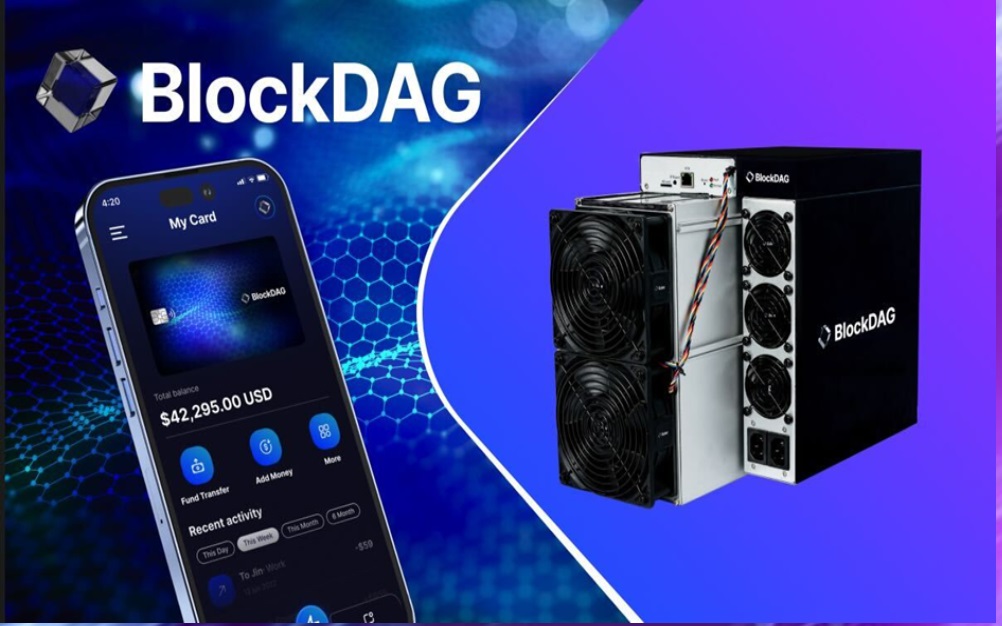
Chainlink’s Telefonica Partnership and Bitcoin Halving Fade Away Before BlockDAG’s 1000x ROIs

0

As the Bitcoin halving event approaches, new investors are feeling the heat. With the mining of new coins set to be set in half, new investors are looking for safer bets. Entering presale stablecoins, BlockDAG coin is one of them, boosting successful returns of 1000x for its early investors. But that’s not all! While Bitcoin mining rewards are halving, Chainlink, the Ethereum-based crypto, is making great progress. Partnering up with telecom giant Telefónica, which has made Chainlink price rise. As the market buzzes with excitement, one thing’s for sure: BlockDAG’s success story is one to watch closely. 

Chainlink’s Telefónica Partnership Results in Price Surge

As we have seen in the past, whenever there’s a partnership between crypto coins and big firms or some influencers talk about it, the price of that crypto goes up. The same is happening with Chinlink coin, as they are partnered with Telefonica. Telefonica is a multinational telecom company, originating from Spain.

Chainlink is responsible for improving SIM swap detection. This will allow for enhanced security in carrier providers running in Web3 environments. As Chainlink is an Oracle provider that is decentralized, it allows it to run smart contracts on different networks like Polygon. It will help them to gain information about a SIM card people using, this will restrict SIM swaps, which are used for hacking. This is projected to cause Chainlink’s price to increase soon. 

Bitcoin Gears Up for Halving Event 

Recently, top crypto assets like Bitcoin and Ethereum have experienced fluctuations in their price brackets. While Ethereum is making progress and ascending on the price chart, Bitcoin is expected to face a significant drop. Why is this happening? Bitcoin will undergone a halving event, which means its mining rewards will be cut in half.

If you’re unfamiliar with the term “halving,” don’t worry, we’re here to help you understand. Halving is a process where mining rewards are reduced by half, and it occurs approximately every four years. This has led new investors to wonder whether they should still invest in Bitcoin or explore other options. While Bitcoin is in the halving process, it’s advisable to hold off on investing, as rewards are not as lucrative during this time.

BlockDAG: Next Crypto Giant?

BlockDAG is emerging as a top crypto asset, selling rapidly in its presale stage. This is attributed to its utilization of technology similar to other crypto giants like Bitcoin. BlockDAG uses Proof-of-Work (PoW) for security and decentralization, setting it apart from traditional blockchain-based cryptocurrencies. Its adoption of PoW ensures the safety of all transactions, contributing to its swift sales.

BlockDAG prioritizes security and transparency, fostering a secure blockchain environment for investors and miners alike. As a proven stable coin, BlockDAG presents an opportunity for substantial returns similar to Bitcoin. Investing in stable coins like BlockDAG is advisable, especially during presales, which can yield ROIs of more than 1000x.

With BlockDAG already in batch 2 and demonstrating significant potential within its community, it stands as a promising investment opportunity, with early investors in batch 1 enjoying up to a 50x return. If you still invest now, you can take advantage of good returns.

There is a lot to offer by BlockDAG yet, it’s gearing up to hit the target of $600 million dollars in 2024. No other crypto coins in presales have shown such positiveness except for BlockDAG. So, be a part of this community, as you have the option to buy this coin in presale.

Don‘t forget

The rise in Chainlink price, boosted by its partnership with Telefónica, makes the crypto market stable. Meanwhile, Bitcoin struggles due to halving which fades its attractiveness as an investment option currently. Therefore, it’s essential to seek stable and decentralized cryptocurrencies with comparable technologies, such as BlockDAG. Merely investing in presale coins isn’t sufficient; one must check stats to validate their stability. BDAG has demonstrated stability in the crypto market, earning the trust of its investors to deliver more than 1000x ROIs.


Invest In BlockDAG Presale:

Website: https://blockdag.network

Presale: https://purchase.blockdag.network

Telegram: https://t.me/blockDAGnetworkOfficial

Discord: https://discord.gg/Q7BxghMVyu

Nigeria to Extend Social Security Payments to Unemployed Graduates, Introduces Consumer Credit Scheme

0

In a fresh move aimed at alleviating the economic challenges faced by Nigerian youths and citizens, the Federal Government announced plans to extend its social security payments net to unemployed graduates and introduce a consumer credit scheme.

These initiatives were disclosed by the Minister of Finance and Coordinating Minister of the Economy, Wale Edun, after the Federal Executive Council (FEC) meeting on Monday.

Edun emphasized President Bola Tinubu’s commitment to assisting the poorest segments of society, particularly in the face of heightened food prices. He revealed that the government would implement a Social Security unemployment programme to provide stipends to unemployed Nigerian youths, including graduates.

“At this period of heightened food prices, Mr. President has committed to doing all that can be done to assist in giving purchasing power to the poorest and in that line…we have coming, in the nearest future, an unemployment benefit for the young unemployed, in particular,” he said, without giving the timeline for the implementation.

Furthermore, the Federal Government plans to establish a consumer credit scheme to ease the economic adjustment pains faced by citizens. Edun said that the Chief of Staff to the President, Femi Gbajabiamila, will lead a committee tasked with implementing this scheme, which aims to make consumer credit available and increase the affordability of goods.

Regarding the review of the National Social Investment Programme (NSIP) implemented by the Special Presidential panel, Edun highlighted its outcomes, including the resumption of direct payments to 12 million households comprising 60 million Nigerians. He emphasized the importance of beneficiary identification through national identity numbers and bank verification numbers to ensure transparency and accountability in the distribution of funds.

“The big change that has allowed Mr. President to approve the restart of that direct payments to beneficiaries programme is the verification of the identity of beneficiaries. Each person that receives 25,000 Naira for a total of three months will be identifiable,” he explained.

Similarly, the Minister of Communications and Digital Economy, Dr. Bosun Tijjani, underscored the importance of leveraging existing datasets such as the Bank Verification Number (BVN) and National Identity Number (NIN) to vet beneficiaries and prevent multiple payouts to individuals.

“One of the initial moves that we’re making is leveraging the existing dataset that we have on our people…we will get commitment to ensuring that no one is paid twice, because you have to be properly IDed before you can benefit from that programme,” stated Tijjani.

However, despite the laudable intentions behind these initiatives, challenges such as the lack of reliable data and adequate funding could pose significant hurdles to their successful implementation.

Similar schemes introduced by the government in the past, such as N-Power, had been mired in allegations of corruption. The schemes were alleged to harbor many ghost beneficiaries owing to a lack of reliable identification.

Thus, the success of these social security programmes and the consumer credit scheme is said to depend heavily on accurate and up-to-date information about beneficiaries. Analysts note that without reliable data systems and proper verification mechanisms, there is a risk of inefficiencies, errors, and even potential abuse of the system.

Additionally, the availability of funds is crucial for sustaining these programmes in the long term. While the government has expressed its commitment to assisting the poorest segments of society, the availability of funds for such large-scale initiatives remains a concern.

Limited funding could lead to delays in payments, inadequate coverage of beneficiaries, or even the inability to sustain the programmes over time – particularly now that the government is grappling with heavy economic headwinds that have left its treasury empty.

Similar schemes initiated by the government in the past suffered from inadequate funding, with fund disbursement being abandoned halfway or the scheme being entirely suspended.

Stakeholders said that addressing these challenges will require concerted efforts from the government to invest in data infrastructure, improve data collection and verification processes, and allocate sufficient funds to support these social security programmes and the consumer credit scheme.

However, these initiatives are said to mark a concerted effort by the Federal Government to address unemployment and economic challenges. Economic experts believe that with proper planning, coordination, and resources, these programmes have the potential to make a meaningful impact in improving the livelihoods of Nigerian citizens and stimulating economic growth.