DD
MM
YYYY

PAGES

DD
MM
YYYY

spot_img

PAGES

Home Blog Page 3647

Under Naira FX Paralysis, MVNO Business Model Will Struggle in Nigeria

1

“Now, it is a matter of cutting your coat according to your clothes. We are in an unusual time. From a governance perspective, our CAPEX is fixed in Naira, so with the devaluation of the Naira it does mean that you are going to get fewer dollars to spend.” – MTN Nigeria

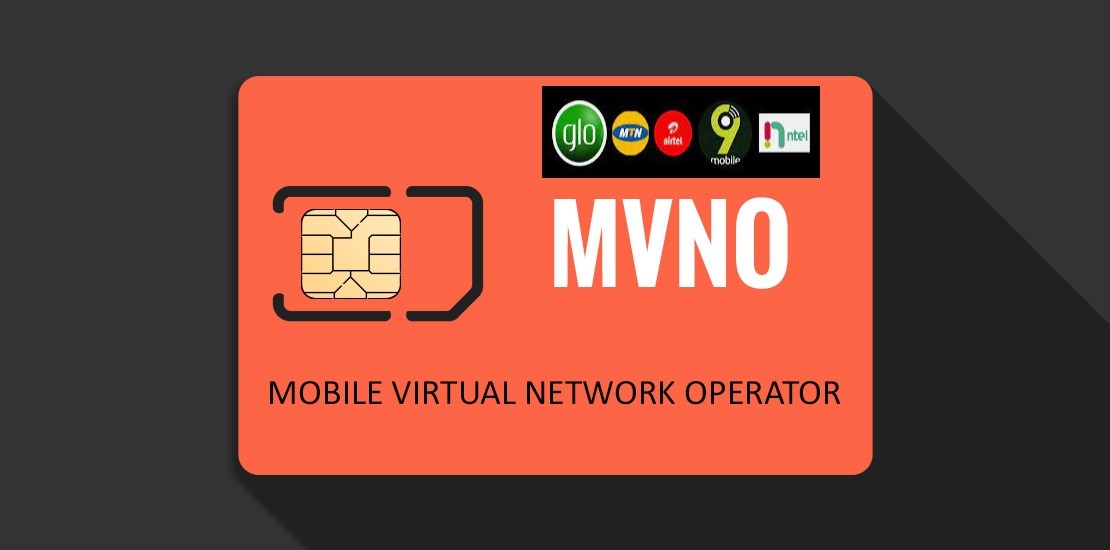
This is one of the reasons why I think the Mobile Virtual Network Operator (MVNO*) framework may not deliver the alpha many people may be expecting in Nigeria. In Western Europe and US where MVNO companies are common, their main infrastructure firms like Verizon and AT&T are usually at overcapacity which means they have excess bandwidth, and can support more customers. 

In other words, Verizon may have for RegionA a capacity to support 10 million customers, but at the moment, it has just 4 million customers in the network. When an MVNO comes, Verizon will be happy as it can “power” that MVNO to go out there, and get the customers in RegionA via better customer support, laser-focused marketing, etc. If that MVNO does get 2 million customers, the overall service level within Verizon remains intact.

But in Nigeria, I do posit that some of our core telcos are already operating at above customer-capacity. For example, they are built for say 20 million users, but they have 30 million users, causing service failures, call drops, inability to browse efficiently, and broad network congestion.

If you now allow them to add an NMVO, and that company brings 2 million users, you are not helping any person. This is why I do not have a positive view of the MVNO market in Nigeria considering the Naira FX paralysis.

Indeed, with the above MTN warning where spending is expected to reduce on core infrastructure, customers cannot expect better service delivery if MVNOs are piled on top of the already over-congested network.

*A mobile virtual network operator (MVNO) is a telecommunications company that provides wireless services under its own brand name. MVNOs do not own the wireless network infrastructure they use, but instead buy network capacity from licensed mobile operators (MNOs). MVNOs then resell this capacity to consumers at a lower price.

MTN Allocated More Than $120M Towards The Expansion of 5G Coverage in Nigeria

0

Giant telecommunications company MTN Nigeria has reportedly allocated more than $120 million towards the expansion of 5G coverage in Nigeria.

This was disclosed by the company’s Chief Financial Officer, Mr. Modupe Kadri in an exclusive interview with Nairametrics.

Mr. Kadri stated that these investments boosted the 5G coverage of the population from 3% in 2022 when it launched to 11% in 2023. He further noted that the government would need to urgently address the forex situation in the country and institute fair pricing to encourage further investments.

In his words,

“Last year, we increased our population coverage of 5G from 3% to 11%. That investment alone is worth $120 million. We made those investments because that’s what is required to build resilience or to carry the sort of traffic that we can see on our network”.

MTN has continued to deepen its investments in 5G in Nigeria, noting that the strength with which it expanded 2G, 3G, and 4G, would be combined to expand 5G coverage across the country in major population centers in the coming months.

In 2022, the telco strategically partnered with Ericsson to upgrade the core network in Nigeria. According to MTN, building on existing partnerships for cloud-native core network deployment with Ericsson would ensure the readiness of MTN Nigeria’s network infrastructure to enable 5G standalone in the future.

It further noted that the 5G services can bring about unique sustainable development initiatives for agriculture, energy, financial inclusion, and security, among others.

MTN believes that the 5G technology will revolutionize the way we live and communicate across industries. With the speed 5G offers, users will be able to experience the internet with low latency, void of lag, which will make virtual interactions more real.

In the latest industry data released by the Nigerian Communications Commission (NCC), 5G connections in the country increased to 2.3 million in December 2023. This represents 1.04% of the country’s total active subscriptions for telephone services, which stood at 224.7 million of the year.

While the three telecom operators have deployed 5G infrastructure across major cities in the country, the service providers are seeing slow adoption due to the device limitation.

The Global System for Mobile Telecommunications Association (GSMA) has said that advanced markets would focus on promoting 5G adoption even as North America, East Asia, and the Gulf Cooperation Council (GCC) markets are leading the way in 5G adoption.

The telecoms advocacy body said globally, 5G will overtake 4G in 2029 to become the dominant mobile technology. It noted that it is significant for scaling mobile’s contribution to the SDGs as research shows 5G subscribers make greater and more frequent use of digital services on their smartphones, compared to 4G users.

Honda announces the launch of its first all-electric SUV in the US market as Google Continues To Innovate on Smartphones

0

Honda has announced the launch of its first all-electric SUV in the US market, the Prologue. The Prologue is a compact crossover that offers a range of 300 miles on a single charge and qualifies for the full $7,500 federal tax credit for electric vehicles.

The Prologue is expected to have a range of over 300 miles and a starting price of around $40,000. The vehicle will compete with other electric SUVs such as the Ford Mustang Mach-E, the Volkswagen ID.4 and the Tesla Model Y.

The Prologue is powered by a dual-motor system that delivers 275 horsepower and 300 lb-ft of torque. The SUV also features a 10-inch touchscreen infotainment system, wireless charging, a panoramic sunroof, and a suite of advanced driver-assist technologies.

Honda claims that the Prologue is designed to appeal to mainstream customers who are looking for a practical, spacious, and eco-friendly vehicle. The Prologue is expected to compete with other electric SUVs such as the Ford Mustang Mach-E, the Hyundai Ioniq 5, and the Volkswagen ID.4.

The Prologue’s name reflects Honda’s vision of electric mobility as a transition to a more sustainable future. The company hopes to attract customers who are looking for a spacious, versatile and efficient SUV that also offers advanced technology and safety features. The Prologue will feature Honda Sensing 360, a suite of driver-assist and collision-avoidance systems that use multiple cameras and sensors to monitor the vehicle’s surroundings. The Prologue will also have wireless charging, over-the-air software updates and a digital key system.

The Prologue will go on sale in early 2024, with a starting price of around $40,000. Honda plans to produce 70,000 units of the Prologue per year at its plant in Ohio. The Prologue is part of Honda’s goal to achieve 100% zero-emission vehicle sales in North America by 2040.

The implication of these policies is that electric vehicles will become more affordable and accessible for consumers, as well as more competitive with conventional vehicles. This will create more opportunities and challenges for automakers like Honda, who will have to balance their product portfolio, supply chain and customer demand in a rapidly changing market. Honda’s electric SUV is a sign of its commitment and readiness to embrace the electric future.

The Prologue’s launch comes at a time when the US government is pushing for more incentives and regulations to support the adoption of electric vehicles. The Biden administration has proposed to invest $174 billion in electric vehicle infrastructure, manufacturing and innovation, as well as to extend and expand the federal tax credit for electric vehicles. The administration has also set a goal of having 50% of new vehicle sales be electric by 2030.

The prologue will have a major impact on the automobile industry, as it will demonstrate Honda’s commitment to innovation and sustainability. The prologue will also showcase Honda’s collaboration with GM, which could lead to more joint ventures and partnerships in the future.

The prologue will also influence consumer preferences and expectations, as it will offer a high-quality and reliable electric SUV that meets the needs and desires of modern drivers.

The prologue is more than just a vehicle. It is a statement of Honda’s vision and values. It is a sign of Honda’s readiness to adapt and evolve in the changing world. It is a promise of Honda’s contribution to the advancement and improvement of the automobile industry.

Google Continues To Innovate on Smartphones

Meawnhile, in 2024, Google is expected to launch its most demanding smartphones yet, with impressive specifications and capabilities that will challenge the competition and delight the customers. Here are some of the features that make Google’s 2024 smartphones the most demanding ones in the market.

A powerful processor: Google’s 2024 smartphones will run on a custom-made processor that will deliver faster performance, smoother multitasking and longer battery life. The processor will also support advanced artificial intelligence and machine learning applications, such as Google Assistant, Google Lens and Google Photos.

A stunning display: Google’s 2024 smartphones will feature a high-resolution OLED display that will offer vivid colors, sharp details and wide viewing angles. The display will also support a variable refresh rate, which will adjust automatically to the content on the screen, saving battery and enhancing the user experience.

A versatile camera: Google’s 2024 smartphones will boast a versatile camera system that will capture stunning photos and videos in any lighting condition. The camera system will include a wide-angle lens, a telephoto lens, an ultra-wide-angle lens and a depth sensor, as well as optical image stabilization and optical zoom.

The camera system will also leverage Google’s computational photography technology, which will enhance the image quality, dynamic range and low-light performance.

A durable design: Google’s 2024 smartphones will have a durable design that will resist scratches, drops and water. The smartphones will have a metal frame and a glass back, with a matte finish and a fingerprint-resistant coating. The smartphones will also have wireless charging and reverse wireless charging capabilities, as well as stereo speakers and a headphone jack.

A secure system: Google’s 2024 smartphones will have a secure system that will protect the user’s data and privacy. The smartphones will have a biometric authentication system, such as face recognition or fingerprint scanning, as well as a Titan M security chip that will encrypt the data and prevent unauthorized access. The smartphones will also run on the latest version of Android, which will provide regular security updates and bug fixes.

Google’s 2024 smartphones are expected to be released in the second half of the year, with different models and prices to suit different needs and preferences. These smartphones are likely to be the most demanding ones in the market, as they will offer a combination of features and performance that will appeal to both casual and power users. If you are looking for a smartphone that can do it all, you might want to wait for Google’s 2024 smartphones.

Bitcoin is not a Memecoin, it is the ultimate Memecoin

0

One of the most debated topics in the crypto space is what is the best use case for this technology. Some argue that it is decentralized finance, or DeFi, which aims to create a parallel financial system that is open, transparent and permissionless.

Others claim that it is non-fungible tokens, or NFTs, which enable the creation and ownership of unique digital assets that can represent anything from art to gaming to identity. And then there are those who believe that it is Bitcoin, the original cryptocurrency that started it all.

Bitcoin is often dismissed as a mere meme by its critics, who argue that it has no intrinsic value or utility. They say that Bitcoin is only valuable because people believe it is valuable, and that this belief is irrational and unsustainable.

But this view misses the point of what makes Bitcoin so special and revolutionary. Bitcoin is not just a meme; it is a meta-meme. It is a meme that derives its value from being valuable, but it is not a memecoin.

A memecoin is a cryptocurrency that is created as a joke or a parody, such as Dogecoin or Shiba Inu. These coins have no serious purpose or vision, they are simply meant to be fun and entertaining. They rely on social media hype and celebrity endorsements to pump their prices, but they have no fundamentals or long-term prospects. They are essentially gambling tokens that can make or lose money quickly, but they have no lasting impact or significance.

Bitcoin, on the other hand, is a serious and profound innovation that has changed the world of money and finance forever. It is the first decentralized, peer-to-peer, censorship-resistant, scarce and programmable form of money that exists outside the control of any government or institution.

It is a global and neutral network that enables anyone, anywhere, to transact value securely and efficiently. It is a store of value that preserves and increases its purchasing power over time, unlike fiat currencies that are constantly debased by inflation. It is a hedge against the uncertainty and instability of the current system, as well as a catalyst for social and economic change.

Bitcoin is not valuable because of some arbitrary or whimsical reason; it is valuable because of its unique properties and features that make it superior to any other form of money that has ever existed.

It is valuable because of its network effects, its security, its scarcity, its transparency, its immutability, its portability, its divisibility, its interoperability and its adaptability. It is valuable because of its history, its culture, its community and its ethos. It is valuable because of its vision, its mission and its potential.

Bitcoin is not a memecoin, it is the ultimate memecoin. It is the memecoin that transcends the category of memecoins and becomes something more: a new paradigm of money and value. It is the memecoin that proves that memes can be powerful and meaningful, not just silly and trivial.

It is the memecoin that shows that value is not objective or fixed, but subjective and emergent. It is the memecoin that demonstrates that money is not just a tool or a medium of exchange, but a language and a symbol of expression.

Bitcoin is the best use case for crypto because it is the essence and the origin of crypto. It is the crypto that defines and inspires all other cryptos. It is the crypto that matters and endures.

German Automotive Suppliers find credit lines tightening – VDA

0

According to a recent survey conducted by the German Association of the Automotive Industry (VDA), many automotive suppliers in Germany are facing difficulties in accessing credit from banks and other financial institutions.

The survey, which was published on March 8, 2024, revealed that 42% of the respondents reported a deterioration in their credit conditions compared to the previous year, while only 9% reported an improvement. The remaining 49% reported no change.

According to a report by Mayer Brown, originating loans to German borrowers requires a license under German law, a European passport or an exemption from German license rules. This means that foreign lenders may face regulatory hurdles and costs when lending to German automobile companies, which could limit their access to financing.

Moreover, German automobile companies may face higher interest rates and stricter terms when borrowing from foreign lenders, as they may be perceived as riskier due to the uncertainty of the market and the impact of the Covid-19 pandemic.

The survey also showed that the main reasons for the tightening of credit lines were the increased risk perception of lenders, the reduced profitability and equity ratio of suppliers, and the uncertainty caused by the ongoing transition to electric and autonomous vehicles.

The survey respondents indicated that they needed more financial flexibility and support to cope with the challenges of innovation and transformation in the automotive industry.

The VDA president, Dr. Martin Winterkorn, commented on the survey results and urged the government and the financial sector to provide more assistance to the automotive suppliers. He said: “The automotive industry is undergoing a fundamental change that requires enormous investments in research and development, new technologies, and new business models.

The suppliers are an essential part of this change, and they need adequate financing to remain competitive and innovative. We call on the government and the financial sector to recognize the strategic importance of the automotive industry for Germany and Europe and to facilitate access to credit for our suppliers.”

The lack of access to loan could have serious consequences for the German automobile industry, which is one of the largest and most innovative in the world. According to a study by EconBiz, default clusters and credit risk contagion are prevalent in the German auto loan market, which could lead to systemic shocks and financial instability.

Furthermore, the reduced availability of financing could hamper the investment and innovation capabilities of German automobile companies, which are facing increasing competition from global rivals and new entrants in the fields of electric vehicles, autonomous driving and mobility services.

The German government has taken some measures to support the automobile industry during the crisis, such as providing subsidies for electric car purchases, extending short-time work schemes and offering state guarantees for loans.

However, these measures may not be sufficient or sustainable in the long term, as they may create fiscal burdens and distortions in the market. Therefore, it is crucial for the German automobile industry to find alternative sources of financing, such as equity capital, bonds or securitisation, and to diversify its funding base. It is also important for the industry to improve its efficiency, resilience and adaptability to changing consumer preferences and environmental regulations.