DD
MM
YYYY

PAGES

DD
MM
YYYY

spot_img

PAGES

Home Blog Page 3651

Google Paid $26bn in 2021 to Secure Its Position As The Default Search Engine

0

In a federal antitrust trial, a slide made public revealed that Google paid a total of $26.3 billion in 2021 to secure its position as the default search engine on mobile phones and web browsers.

This figure provides a more detailed breakdown of the payments Google makes to various partners, including Apple, to be the default search engine on their products.

The U.S. Department of Justice and a coalition of state attorneys general have argued that Google has unlawfully maintained its monopoly power in the general search market by using its dominance to exclude competitors from critical distribution channels, such as Apple’s Safari web browser.

While the $26.3 billion figure is not specific to any one company, Apple is likely the largest recipient. Analysts had estimated that Google could pay Apple as much as $19 billion in a given year for the default placement on Apple devices.

The Department of Justice’s complaint asserts that “Google pays billions of dollars each year to distributors—including popular device manufacturers such as Apple, LG, Motorola, and Samsung; major U.S. wireless carriers such as AT&T, T-Mobile, and Verizon; and browser developers such as Mozilla, Opera, and UCWeb—to secure default status for its general search engine and, in many cases, to specifically prohibit Google’s counterparties from dealing with Google’s competitors.”

Google has countered these claims by arguing that users have the option to change their default search engine with just a few clicks.

The slide presented in court, titled “Google Search+ Margins,” focused on Google’s search business. It indicated that the division’s revenue in 2021 exceeded $146 billion, with traffic acquisition costs (TAC) totaling more than $26 billion. The slide included data dating back to 2014 when Google reported approximately $47 billion in revenue for the division and paid around $7.1 billion for default status.

This signifies a threefold increase in revenue for Search+ between 2014 and 2021, while this portion of TAC costs nearly quadrupled.

Google routinely reports its total TAC, which encompasses payments to network partners for displaying ads on their platforms. The trial slide appeared to specifically address the portion of TAC related to Search+ revenue, distinct from the broader TAC figure reported in Google’s earnings.

While Google regularly reports its overall traffic acquisition costs, this figure also includes payments to network partners for displaying ads on their properties. The specific portion of these costs related to Google’s search division was represented in the slide disclosed during the trial.

This ongoing antitrust case has significant implications for Google and the tech industry at large, as it may lead to the drastic downsizing of the tech giant’s dominance of the search market.

Nigerian Launches a Presidential CNG Bus Initiative

0

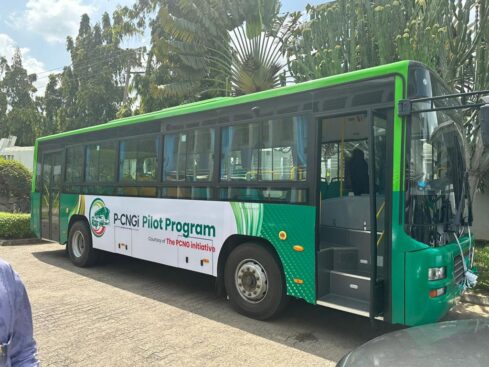
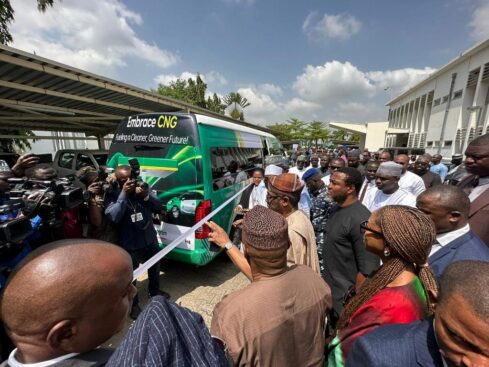
The Federal Government of Nigeria officially launched the Presidential Compressed Natural Gas Initiative (PCNGI) on Friday, in a move to reduce the cost of transportation and promote environmental sustainability and economic growth.

This initiative, which comes as a response to the demands of organized labor unions, aims to provide affordable energy options to Nigerians, reducing the nation’s reliance on traditional fuels.

The ceremony, held at the State House in Abuja, saw the Chief of Staff to the President, Femi Gbajibiamila, flagging off the PCNGI.

In a symbolic handover of CNG buses to the State House, Zacch Adedeji, Chairman of the Presidential CNG Initiative Steering Committee, announced key measures to support the adoption of CNG vehicles.

Mr. Farouk Ahmed, the Chief Executive Officer of the Midstream and Downstream Petroleum Regulatory Authority (NMDPRA), represented Adedeji at the event. Ahmed revealed that the government had waived the Value Added Tax (VAT) on the purchase of CNG buses and was actively seeking duty waivers for the entire value chain. He emphasized the goal of building a sustainable future by leveraging Nigeria’s abundant, cheap, and clean energy source – natural gas.

Adedeji also disclosed the government’s plans to establish multiple conversion centers across the country within the next two weeks, further promoting the adoption of CNG vehicles nationwide. He urged Nigerians to view the CNG buses as symbols of a new beginning and an integral part of President Bola Tinubu’s commitment to environmental sustainability and economic growth.

Engr. Micheal Oluwagbemi, the Project Director of the Presidential CNG Initiative, stated that several state governments had already expressed interest in investing in CNG buses. Notably, the Rivers State Government had already acquired a substantial number of CNG buses to address transportation challenges within the state.

Addressing concerns about the cost of conversion to CNG, Oluwagbemi explained that the expense varies depending on the vehicle model and type. However, he assured Nigerians that, as part of the PCNGI, the committee would incentivize the conversion process, making it more affordable for the general populace.

Chinedu Oguegbu, Managing Director of OMAA Motors and managing partner of PCNGI, lauded the federal government’s patronage of made-in-Nigeria vehicles, emphasizing that it is a pivotal step towards deepening industrialization and promoting the use of cleaner energy sources.

The major aim of the CNG initiative is to provide affordable transport means for the Nigerian masses, following a more than 250% increase in transport fares triggered by the fuel subsidy removal.

The Nigerian Labour Congress (NLC) and the Trade Union Congress (TUC) suspended their planned industrial action early this month, after reaching an agreement with the federal government that the CNG and other initiatives contained in their demands will be met.

However, while stakeholders applaud the launch of the scheme, they also emphasized that a lot of work is yet to be done to establish conversion centers across the country.

How To Raise Capital for a Business Venture

0

How do you raise funds before investors? What are the things they look for, in extremely young companies? It is very important to understand that a venture capitalist raises funds from limited partners (rich family offices, fund managers, pension funds, companies, etc).

So, just as a startup goes out to raise funds, even those you are trying to raise funds from also raise funds, to have money to invest in you. In other words, a venture investor is also a good fundraiser because he/she must raise funds first before the opportunity to invest funds will come. (Sure, there are those who have so much they can invest from their purses; not typical at the mainbowl.)

Join me at Africa’s finest business school for entrepreneurial capitalism as we examine How To Raise Capital for young scalable companies. Tekedia Mini-MBA has opened registrations for the next edition, pick your seat here https://school.tekedia.com/course/mmba13/

My Response:The banks of the future will not be banks which use technology, but tech companies which offer banking services. You can apply that in every other sector. In Tekedia Capital, we invest in anything provided the innovator is using tech to create a new basis of competition. At Egoras, they do manufacturing, but tech has provided them competitive advantages to make better, and more affordable keke.

Blocking the Skills Gaps in Nigerian Universities: Will Doctors or Professors of Practice Model Work?

0

As a recommendation in one of my articles focusing on the skills gaps in Nigerian universities, I had suggested that the Nigerian University System adopts a model that allows industry experts into the classroom. This, in my own opinion, would shorten the distance between theory and practice. It would also enable the students to tap from the experience of the experts. To this recommendation was a question on how that would work as raised by one of the readers of the article. In this piece, I focus on  the professor in practice model examining how it is practiced elsewhere and how the Nigerian University System could adopt and make it work.

Who is a Doctor or Professor of Practice

A professor in or of practice is described in different ways but with similar focus or direction. For example, the HNSC University in Mumbai describes a professor in practice as a distinguished person who has made remarkable contributions in his/her profession from any field and has the ability to take real world practices and experiences into the class rooms. In the same manner, Durham University Business School says that Professors in Practice are experienced professionals across a wide variety of disciplines and sectors, who share their skills and knowledge directly with students bringing public distinction and practical insights to the classroom. In a slightly different manner, the University of Wales Trinity and Saint David calls it Honourary Professor of Practice which offers opportunities for professional and industrial experts to pass on their subject knowledge to the students and give back to the communities they serve. According to the university’s policy, this position is not remunerated as it is considered as an opportunity for the appointed professor to make a difference in the students’ journey and transform lives.

These descriptions point to a number of things in the global discourse for quality, all round education in the tertiary institutions. One, it identifies the limitations of only classroom experience to give the needed knowledge. No matter how immersive the classroom teaching is, it still cannot replace the industry experience. Two, bringing in industry experts into the classroom opens the students to industry insights and could assist in the students’ quest to be industry ready. Thus, the use of industry professors in universities is to bridge the gap between the classroom and the industry and as well address the aperture between theory and application.

The Justification for the Doctor or Professor of Practice

The most important reason for the introduction of professor in practice model has been to reduce the distance between classroom experience and industry practice. Doctors and Professors of Practice bring real-world experience and practical knowledge to the classroom. This bridge between theory and practice helps students understand how concepts are applied in the real world and prepares them for the demands of their future careers.

However, there are other benefits of bringing industry experts to the class. These professionals often have up-to-date knowledge of current industry trends, technologies, and best practices. This ensures that students are exposed to the most relevant and current information, which is crucial in rapidly evolving fields. Besides, it enhances the learning of the students. Students benefit from the firsthand experiences and insights that Doctors and Professors of Practice can share. This experiential learning can be more engaging and memorable, leading to a more effective learning experience. In addition to this is improved employability. Graduates who have learned from Doctors and Professors of Practice are often better prepared for the job market. They possess practical skills and knowledge that are highly valued by employers, making them more competitive in the workforce.

Including professionals from various industries and sectors as Doctors and Professors of Practice enriches the educational experience by offering diverse perspectives and a broader understanding of different career paths. This diversity can inspire students and open their minds to various career possibilities. Equally, students have the chance to build valuable connections with industry experts through Doctors and Professors of Practice. These connections can lead to internships, job opportunities, and mentorship, which are essential for career development. In the same vein, tertiary institutions that attract and retain Doctors and Professors of Practice can enhance their reputation and prestige, making them more appealing to students and potential partners. This also prepares students with practical skills and knowledge and makes them more competitive on a global scale raising the chances of Nigerian graduates excelling in international job markets very high. To support entrepreneurship and innovation, these Doctors and Professors of Practice can serve as mentors and advisors for student startups and innovative projects, fostering a culture of entrepreneurship and innovation.

Flashes of Doctor and Professor of Practice Model in Nigerian Universities

Observations have revealed that there is a flash of this practice in the Nigerian University System. Some selected few universities have adopted bringing experts into the classroom. The Pan African University’s School of Media and Communication, Covenant University and the Department of Mass Communication, Fountain University and some others have some programmes where industry experts come into the classroom to interact with the students. The professor in practice system goes beyond one-off interactions or Meet the Expert programmes. It is a complete immersion of outstanding industry professionals into the four walls of a university to strengthen both theoretical and practical knowledge among students.


Accommodating the Professor in Practice in Nigeria Universities

Reviewing Institutional Policies

The first step is to start by reviewing and updating institutional policies to accommodate the introduction of Doctor and Professors of Practice roles. This would ensure  that these roles are recognized and valued within the academic system.

Faculty Recruitment

This involves identifying experienced professionals who have substantial practical knowledge and experience in the relevant fields. They should be individuals who have a track record of success in their respective industries and have the passion to teach. This would require the universities establishing partnerships and collaborations with relevant industries, companies, and organizations to identify potential Doctor and Professors of Practice candidates. Industry input is crucial in selecting candidates who can bridge the gap between academia and real-world practice.

Flexible Requirements

There is a need for the qualification requirements for these positions to be more flexible compared to traditional academic roles. The focus should be on professional expertise and experience rather than a purely academic background. This would facilitate ease of entry for them.

Teaching and Research Balance

The roles of Doctor and Professors of Practice should be well defined with clear emphasis on their contributions to teaching, mentorship, and practical training while also allowing for some level of research activities. These practitioners are to mentor students, providing them with insights into the current state of industries and helping them develop practical skills.

Curriculum Design and Implementation

There should be collaboration with the Doctor and Professors of Practice to develop or update curricula, ensuring that theoretical and practical knowledge are seamlessly integrated. This should include hands-on projects, real-world case studies, and industry-relevant content.

Introduction of Guest Lectures and Workshops

The presence of Doctors and Professors of Practice should diversify the teaching methods incorporating regular guest lectures, workshops, and seminars. These should be  conducted by Doctors and Professors of Practice to expose students to the latest industry trends and challenges.

Recognition and Compensation

To make the model successful and impactful, there should appropriate recognition of the contributions of Doctors and Professors of Practice through appropriate compensation and benefits. Their roles should be seen as valuable to the institution’s overall mission.

In closing this piece, it is apparent that appointing a Doctor or Professor of Practice for universities is a global practice aimed at strengthening industry-academia collaboration and improving industry skills of the students. But, the big question has been whether it would work or not. It should work if tertiary institutions are ready to make changes both in curriculum and pedagogy creating the space for people who have made remarkable contributions in their industry to contribute to increased employability of the graduates.

How To Secure Certification For Aerodromes In Nigeria

0

This article will be looking at the process of aerodrome certification in Nigeria which is under the jurisdiction of the Nigerian Civil Aviation Authority( NCAA) via an adoption International Civil Aviation Organization (ICAO) Regulations Annex 14, Volume I which requires that States certify aerodromes(small airports or airfields) used for international operations in accordance with the specifications contained in that Annex as well as other relevant ICAO specifications through an appropriate regulatory framework.

The regulatory framework is required to include the establishment of criteria for certification of aerodromes. As part of the certification process, an aerodrome operator is required to formally apply for the certification of its aerodrome and shall prepare an aerodrome manual giving all pertinent information on the aerodrome site, facilities, services, equipment operating procedures, organisation and management including a safety management system, and complete a Statement of Compliance checklist for submission to the Authority for approval/acceptance.

We will thus be looking at details of the NCAA Framework on aerodromes as follows:-

Basic Requirements For Aerodrome Certifications in Nigeria

Detailed requirements for the certification of aerodromes are given in the Nigeria Civil Aviation Regulations Part 12 (Nig.CARs Part 12) and Advisory Circular NCAA-AC-ARD002.

Applications for Aerodrome Certificate

– An application for the issuance of an Aerodrome Certificate shall be made to the Authority in the form and manner prescribed by the Authority ( i.e. FORM: AC -ARD 002-1 and FORM: AC-ARD002-2).

The application shall be accompanied by:

i.Aerodrome Manual and Statement of Compliance demonstrating that the aerodrome operator’s Aerodrome Manual is in compliance with the relevant provisions of the Nigeria Civil Aviation Regulations Part 12 (Nig.CARs Part 12).

ii.the survey plans of the Aerodrome including obstacle chart ‘A’ showing details of the aerodrome facilities and obstructions marked/lighted as specified in the implementing Standards (IS 12.4.2(2)) of Nig.CARs Part 12;

iii.security clearance from the Federal Government;

iv.written approval from the town planning authority;

v.An Environmental Impact Assessment(EIA) approval from the Ministry of Environment; 

vi.the appropriate fee as prescribed by the Authority ; 

vii.adequate insurance cover; and

viii.particulars of non-compliance with, or deviations from the standards prescribed in Nig.CARs Part 12 and/or Aerodrome Standards Manual (ASM).

Ix Proof of financial capability to operate and maintain the aerodrome.

-Fundamentally, the aerodrome certification process comprises of the following five phases:

Phase 1: 

expression of interest by an applicant 

Phase 2: 

assessing the formal application including evaluation of aerodrome manual;. 

Phase 3: 

Assessment of Facilities and Equipment

Phase 4: 

Grant/refusal of certificate

Phase 5: 

Promulgation in the AIP of the certified status and details of the aerodrome

Flowchart for the processes of Aerodrome certification 

Phase 1

Step 1

Completion and submission of Form: AC- ARD002-1A

Step 2

Clearance letter from Environmental Authority

-Only noise assessment is required for existing aerodromes before 2006 security clearance from Federal Government.

-Not applicable to Federal Government operated aerodrome.

Step 3

– Written approval from the town planning authority

Step 4

– Provision of proof that applicant is financially capable to operate and maintain the Aerodrome

– This is not applicable to existing aerodromes before 2006

Step 5

Certification Meeting

Step 6

– Payment of Aerodrome Construction Fees

– This procedure is not applicable to existing aerodrome constructed before 2006

Phase 2

Step 1

-Completion, submission and evaluation of Form: AC-ARD002-2 together with detailed aerodrome drawings and obstacle charts

-Aerodrome drawings and obstacle chart would be required for aerodromes in existence before 2006, if they have never been submitted to the NCAA.

Step 2

– Approval of drawings and project monitoring till completion


Step 3

– Payment of Aerodrome Certification Fees

Step 4

Submission and evaluation of

– Aerodrome Manual

– Airport Security Programme

– Air Traffic Service manuals

– applications for deviations, if necessary

– Also to be provided are written technical and commercial agreements between the applicant and designated providers of air traffic service and meteorological services for the provision of these services(This is applicable to nonfederally operated airports)

-For existing aerodrome,the documents should be submitted with Form:AC-ARD002-2, if it has not been submitted in step 1

Phase 3

Step 1

Physical inspection of:

-Aerodrome facilities and services by aerodrome standards inspectors

-Aviation Security facilities and services by AVSEC inspectors

– ANS facilities and services by ANS inspectors.

Step 2

Provision of insurance cover

Phase 4

Grant or Refusal of Aerodrome Certificate

Phase 5

Step 1

Promulgation of the certified status of the aerodrome in the AIP

Step 2

Update of surveillance plan

Notes

When an aerodrome does not meet the requirement of a standard specified in the Nig.CARs Part 12/ASM, the aerodrome operator must carry out an aeronautical study, to provide an alternative means of compliance, and submit to the Authority. NCAA will evaluate the aeronautical study to determine if the mitigation measures provided by the Aerodrome Operator are acceptable to ensure a level of safety equivalent to that established by the relevant standard. Before NCAA decides to exempt the aerodrome operator, it will take into account all safety-related aspects.