DD
MM
YYYY

PAGES

DD
MM
YYYY

spot_img

PAGES

Home Blog Page 3652

How To Set Up a Licensed Air Freight Forwarding Business in Nigeria

0

Aviation Law :- How To Set Up A Licensed Air Freight Forwarder Business In Nigeria

This article deals with how to set up a licensed air freight forwarding business in Nigeria, particularly the subtopics of :-

– The Regulatory agency in charge of licensing air freight forwarding businesses in Nigeria

– The procedure for air freight forwarding license applications

– The validity period of air freight forwarding licenses

– General & Specific licensing requirements for air freight forwarding in Nigeria.

What does an air freight forwarding business do?

Air freight forwarding involves the process of organizing and planning the transport of freight from one point to another by air.

Which regulatory agency is in charge of licensing air freight forwarding businesses in Nigeria?

Air freight forwarding businesses and licensing are regulated by the Nigerian Civil Aviation Authority (NCAA).

What is the procedure for licensing as an air freight forwarding business?

– An application for registration as Air Freight Forwarder shall be made in writing to the NCAA along with the following:-

– A non-refundable processing fee of N100,000 .

–    A completed application form to be returned to the NCAA.                                                                                                      

– A  Certificate of Incorporation of the company;

– A copy of the  Memorandum and Articles of Association of the company;

–  Curricula Vitae of the Directors/Operational staff;

–  Current Tax Clearance Certificates of the company and each of the Directors (originals should also be           submitted for sighting)      

–   Evidence of Agreement with Airline;

– Evidence of registration by the council for the regulation of freight forwarding in Nigeria;

– A   Corporate profile in respect of all aviation -related  services being performed by the applicant-                   company;

–  Audited Statement of Accounts for three years;            

–   Evidence of Insurance coverage for Agency and Air  Freight obligations in case of default, accidents and incidents; and

–    Details of the company’s proposed distribution channel(s).      

What are the General requirements for air freight forwarding businesses in Nigeria?                                

-The   minimum Authorized Share Capital for air freight forwarding businesses shall be Two million Naira (N2, 000,000). 

-Each applicant shall ensure preparedness for the inspection of its office and warehouse premises by            officials of NCAA.   

–  The applicant shall put in place adequate security at its office premises and warehouse to ensure  control and security of goods, to and from the airlines.              

-All personnel involved in cargo acceptance must be trained in Basic Cargo Skills and Procedures.                  They should, inter-alia, be able to:  

(i)      Calculate the transportation time;

(ii)     Calculate chargeable weight;

(iii)    Calculate relevant charges;

(iv)    Complete the Air Waybill (AWB) correctly;

(v)     Have knowledge of conditions of carriage and airline liability;

(vi)    Have basic knowledge of relevant characteristics of aircraft; and

(vii)   Make reference to and use relevant manuals. 

What are the specific requirements for air freight forwarding businesses in Nigeria as prescribed by the NCAA?     

– For handling Dangerous Goods and other special goods, the following additional requirements shall be fulfilled:

(I)  The applicant must have at least two qualified personnel with certificates on Dangerous Goods   Regulation (DGR) as appropriate (i.e. current within the validation period of 24 months).  

(II)  The applicant must be able to make reference to and use the Life Animal Regulation (LAR) and the  Air Cargo Tariff (TACT) Rules Manuals correctly.

(III) The applicant must be able to select special cargoes and have adequate knowledge on how to  handle them safely.

(IV)      The applicant must submit a copy of its dangerous goods manual for evaluation and approval.

(V)       The applicant must have current copy of the ICAO Technical Instructions, TI (updated every 2yrs)   or IATA manual, or other Dangerous Good regulatory manual.

(VI)      The applicant must ensure that shipments of dangerous goods are accepted and offered for transport             in accordance with the Nigerian CAR, Part 15 and ICAO Technical Instruction for the transport of dangerous goods.

(VII)       The applicant must make available emergency response guide for all shipments.

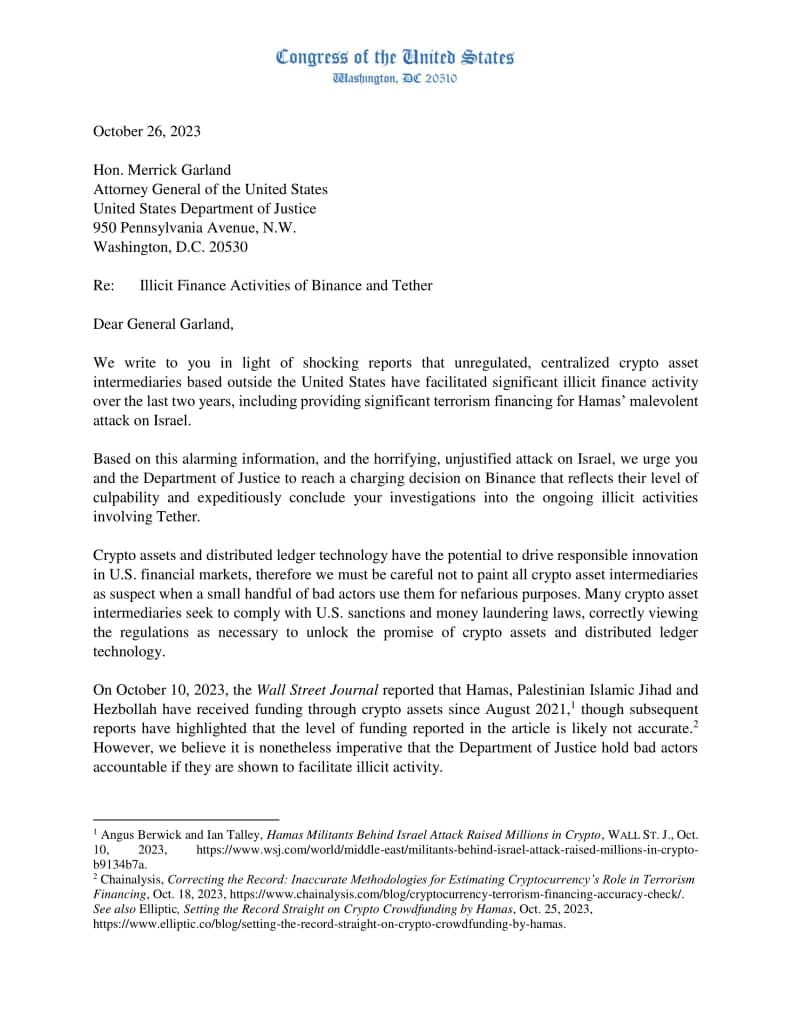
Senator Cynthia Lummis asks the Department of Justice to criminally charge Binance and Tether USDT

0

In a letter dated October 65, 2023, US Senator Cynthia Lummis urged the Department of Justice (DOJ) to take action against Binance and Tether, two of the largest players in the cryptocurrency industry. Lummis accused them of engaging in illegal activities that pose a threat to the national security and financial stability of the United States

Lummis, who is a member of the Senate Banking Committee and a vocal supporter of Bitcoin, wrote that Binance and Tether have been operating in the US without proper registration and oversight, violating anti-money laundering and sanctions laws, facilitating market manipulation and fraud, and exposing investors to significant risks.

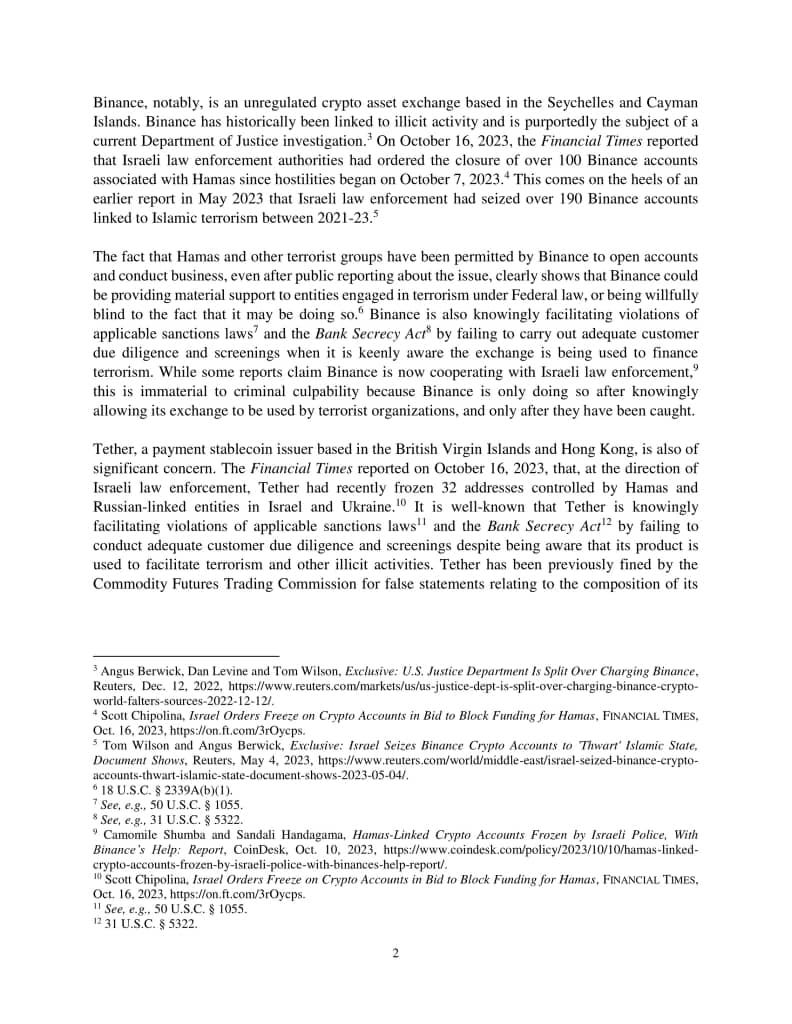
She cited several reports and investigations that have raised serious concerns about the legitimacy and transparency of Binance and Tether, such as:

The DOJ’s ongoing criminal probe into Binance for allegedly allowing US customers to trade on its platform without complying with US regulations.

The New York Attorney General’s settlement with Tether and its affiliated exchange Bitfinex, which revealed that Tether had misrepresented the backing of its stablecoin USDT and had used it to cover up an $850 million loss.

The Financial Action Task Force’s (FATF) assessment that Binance and Tether are among the “red flag” entities that pose a high risk of money laundering and terrorist financing.

The Securities and Exchange Commission’s (SEC) lawsuit against Ripple, which alleged that Ripple sold its cryptocurrency XRP as an unregistered security and that Binance was one of the major platforms that facilitated the illegal sales.

Binance and Tether are two of the most prominent players in the cryptocurrency industry, but they are also facing serious legal troubles. The Department of Justice (DOJ) has reportedly asked the Federal Bureau of Investigation (FBI) and the Internal Revenue Service (IRS) to investigate whether Binance and Tether have violated any criminal laws, such as money laundering, tax evasion, or sanctions violations.

Binance is the world’s largest cryptocurrency exchange by trading volume, offering hundreds of digital assets and derivatives to millions of users around the globe. Tether is the issuer of the most widely used stablecoin, USDT, which is pegged to the US dollar and backed by reserves of cash and other assets. USDT is often used as a medium of exchange and a store of value in the crypto market, especially in countries with capital controls or unstable currencies.

However, both Binance and Tether have been accused of operating with a lack of transparency and regulatory compliance. Binance has been under scrutiny for allegedly facilitating illicit transactions, such as money laundering, terrorist financing, and market manipulation. The exchange has also faced regulatory actions and warnings from several countries, including the UK, Japan, Germany, Canada, and Singapore.

Tether has been under investigation for allegedly issuing more USDT than it can back with its reserves, creating a systemic risk for the crypto market. The company has also been sued by the New York Attorney General (NYAG) for allegedly concealing a loss of $850 million in funds that were supposed to back USDT. The NYAG has reached a settlement with Tether in February 2021, requiring the company to pay $18.5 million in fines and submit periodic reports on its reserves.

The DOJ’s request to criminally charge Binance and Tether is a significant escalation of the legal pressure on the crypto industry. If the DOJ decides to indict Binance and Tether, it could have serious consequences for both companies and their users. For instance, Binance could face asset freezes, fines, or even a shutdown of its operations in the US or other jurisdictions. Tether could face a loss of confidence in its stablecoin, leading to a run on its reserves or a collapse of its peg to the dollar.

The DOJ’s request also reflects the growing regulatory attention on the crypto space, as more governments and agencies seek to establish rules and standards for this emerging sector. The DOJ’s request could signal a more coordinated effort among different regulators to crack down on crypto-related crimes and protect consumers and investors from fraud and abuse.

The crypto industry is facing a critical moment in its history, as it balances innovation and growth with compliance and accountability. Binance and Tether are not the only ones under legal scrutiny, as other crypto companies and projects are also facing lawsuits, investigations, or regulatory actions. The outcome of these legal battles could shape the future of the crypto market and its role in the global financial system.

The Commodity Futures Trading Commission’s (CFTC) investigation into whether Binance offered illegal futures and derivatives products to US customers. Lummis argued that these actions by Binance and Tether have undermined the credibility and innovation of the cryptocurrency sector, which she believes has great potential to benefit the US economy and society. She urged the DOJ to “use all available tools” to hold Binance and Tether accountable for their “egregious violations” and to protect US consumers and national interests.

She also called on the DOJ to coordinate with other federal agencies, such as the Treasury Department, the SEC, the CFTC, and the Federal Reserve, to develop a clear and consistent regulatory framework for cryptocurrencies that would foster innovation while preventing abuse.

Lummis concluded her letter by stating that she is committed to working with the DOJ and other stakeholders to ensure that the US remains a leader in the development and adoption of cryptocurrencies, while also safeguarding its security and prosperity.

Aptos Blockchain, Bandai Namco, FDIC, NYAG, Reddit Community and other Crypto News

0

Aptos, a leading provider of retail solutions, announced that it has successfully restored its network services after a five-hour disruption that affected some of its customers. The company said that the outage was caused by a hardware failure in one of its data centers, and that it has taken steps to prevent similar incidents in the future. Aptos apologized for any inconvenience caused by the network issues and thanked its customers for their patience and understanding.

Bandai Namco has announced that it will temporarily suspend the downloads of its new mobile game, Gundam Metaverse, due to technical issues. The game, which was launched on October 25, is a social VR platform that allows players to create and customize their own Gundam robots and interact with other fans. However, some users reported problems with logging in, loading scenes, and accessing features.

Bandai Namco apologized for the inconvenience and said it is working to fix the issues as soon as possible. The company did not specify when the downloads will resume but assured that players who have already downloaded the game can continue to play it normally.

The New York Attorney General (NYAG) has filed a complaint against Gemini Trust Company, Genesis Global Trading, Digital Currency Group, Michael Moro and Barry Silbert for allegedly violating the state’s securities laws with their Earn product. The Earn product allows customers to lend their cryptocurrency holdings to Genesis in exchange for interest payments.

The NYAG claims that the defendants failed to register the Earn product as a security offering and misled investors about the risks and returns of the product. The NYAG seeks to stop the defendants from offering the Earn product in New York and to impose civil penalties and restitution.

Paolo Ardoino, the chief technology officer of Bitfinex and Tether, has expressed his enthusiasm for RGB, a protocol that enables the issuance of tokens on the Bitcoin network. In a recent interview, Ardoino said that RGB is the “best opportunity” to create stablecoins on Bitcoin, as it preserves the security and decentralization of the underlying blockchain.

He also revealed that Bitfinex and Tether are working on integrating RGB into their platforms, and that they plan to launch USDT, the largest stablecoin by market capitalization, on RGB in the near future. Ardoino believes that stablecoins on Bitcoin will have many advantages, such as lower fees, faster transactions, and interoperability with other RGB-based tokens and applications.

SynFutures, a decentralized exchange (DEX) for trading derivatives, has announced that it has raised $22 million in a Series A funding round led by Polychain Capital. The DEX allows users to trade futures, perpetual swaps, and options on any asset, including cryptocurrencies, commodities, and stocks. SynFutures aims to provide a more transparent and flexible platform for derivatives trading, as well as lower fees and higher capital efficiency. The DEX is currently in beta and plans to launch its mainnet in the first quarter of 2022.

One of the potential use cases of SynFutures is to enable users to hedge against the volatility of crypto markets. For example, users can short sell Bitcoin futures to protect themselves from a price drop or buy Ethereum options to profit from a price increase. SynFutures also supports cross-margin trading, which means users can use multiple assets as collateral for their positions.

The DEX is powered by its native token, SYN, which is used for governance, liquidity mining, and fee discounts. SynFutures has not yet decided whether to launch its token through an initial DEX offering (IDO) or another mechanism, but it is open to the idea. The DEX plans to use the new funding to expand its team, develop new features, and grow its user base.

A scandal has erupted in the Reddit community after two moderators of popular subreddits allegedly dumped their tokens before the platform announced the end of its blockchain experiment. The program, which allowed users to earn and trade tokens based on their contributions to selected subreddits, was abruptly terminated on October 25, 2023. According to blockchain data, two moderators of r/CryptoCurrency and r/FortNiteBR sold large amounts of their tokens just hours before the announcement, raising suspicions of insider trading and breach of trust.

The trial of Sam Bankman-Fried, the founder and CEO of cryptocurrency exchange FTX, is nearing its end as both sides have submitted their proposed jury instructions to the court. Bankman-Fried is accused of violating anti-money laundering laws and conspiring to defraud investors by manipulating the prices of digital assets on his platform. The US prosecutors have asked the judge to instruct the jury that they can find Bankman-Fried guilty if they conclude that he acted with intent to deceive or cheat, or that he knowingly participated in a scheme to do so.

They also want the jury to consider the evidence of Bankman-Fried’s communications with his employees and associates, as well as his control over the operations and transactions of FTX. The defense lawyers, on the other hand, have argued that Bankman-Fried did not have any criminal intent or knowledge of any wrongdoing, and that he acted in good faith and in compliance with the law.

They have requested the judge to instruct the jury that they must acquit Bankman-Fried if they have any reasonable doubt about his guilt, and that they should not infer any guilt from his wealth or success in the cryptocurrency industry. They have also challenged the credibility and reliability of some of the government’s witnesses and evidence.

FDIC needs to do more to prepare for Crypto Risks amid SEC’s agency staff ‘doing work’ on multiple Bitcoin ETFs

The U.S. Securities and Exchange Commission (SEC) is actively reviewing several applications for bitcoin exchange-traded funds (ETFs), according to the agency’s chairman Gary Gensler. In a recent interview with CNBC, Gensler said that the SEC staff is “doing work” on multiple bitcoin ETF filings, some of which are seeking approval under the Investment Company Act of 1940. He added that the SEC is also looking at other types of crypto-related products, such as futures-based ETFs and mutual funds.

Bitcoin ETFs are seen as a potential catalyst for more institutional and retail adoption of the leading cryptocurrency, as they would provide a regulated and convenient way for investors to gain exposure to bitcoin without having to buy and store it directly. However, the SEC has so far rejected or delayed every bitcoin ETF proposal that has come before it, citing concerns over market manipulation, fraud, and investor protection.

Gensler, who took office in April 2021 has expressed interest in facilitating innovation in the crypto space, but also emphasized the need for more regulation and oversight. He has repeatedly called on Congress to grant the SEC more authority and resources to regulate crypto exchanges, platforms, and products. He has also suggested that some crypto assets, especially those that are centrally issued or controlled, may fall under the SEC’s jurisdiction as securities.

While Gensler did not give a timeline or a hint on whether the SEC will approve any bitcoin ETFs in the near future, he said that he hopes to provide more clarity and guidance for the crypto industry as soon as possible. He also urged investors to be cautious and do their homework before investing in any crypto-related products or services.

The Federal Deposit Insurance Corporation (FDIC) is the agency that protects depositors from bank failures in the US. However, a recent report by its own inspector general has found that the FDIC is not adequately prepared to deal with the potential risks posed by cryptocurrencies and other digital assets.

The report, which was released on October 25, 2023, identified several areas where the FDIC needs to improve its readiness and response to crypto-related issues. These include:

Developing a clear and consistent definition of crypto assets and their regulatory status. Enhancing its supervision and examination of banks that are involved in crypto activities or offer crypto services to customers. Establishing a dedicated team of experts and coordinators to monitor and analyze crypto trends and developments. Providing more guidance and training to its staff and stakeholders on crypto risks and best practices. Strengthening its coordination and collaboration with other federal and state regulators, as well as international counterparts

The report also highlighted some of the challenges and opportunities that crypto assets present for the FDIC and the banking industry. For instance, crypto assets could increase financial inclusion, innovation, and efficiency, but they could also pose operational, reputational, legal, and cyber risks for banks and their customers. Moreover, crypto assets could affect the FDIC’s deposit insurance fund, resolution authority, and consumer protection mandate.

The report concluded that the FDIC needs to take proactive steps to address these issues and prepare for the evolving crypto landscape. It recommended that the FDIC develop a comprehensive crypto strategy and action plan, as well as update its policies and procedures accordingly. It also urged the FDIC to allocate sufficient resources and staff to implement its crypto initiatives.

The FDIC has agreed with most of the report’s findings and recommendations and has stated that it is working on enhancing its crypto capabilities and oversight. However, it also noted that some of the recommendations may require legislative or regulatory changes, which are beyond its control. The FDIC has requested more time to provide a detailed response and timeline for its actions.

Grayscale Bitcoin Trust leading Nvidia with 220% so far this year, as DTCC acquires Securrency

0

Grayscale Bitcoin Trust (GBTC) is one of the most popular ways for investors to gain exposure to the cryptocurrency market without having to buy or store bitcoins themselves. GBTC is a trust that holds bitcoins and issues shares that represent a fractional ownership of those bitcoins. GBTC shares trade on the over-the-counter market and can be bought and sold like any other stock.

GBTC has been outperforming many other stocks this year, especially those related to the technology sector. According to data from Yahoo Finance, GBTC has gained more than 220% year-to-date, while Nvidia (NVDA), a leading chipmaker and a major player in the crypto mining industry, has gained only about 70%. GBTC has also outperformed the S&P 500 index, which has risen about 23% in the same period.

NVIDIA’s stock has been on a remarkable rally since the beginning of 2022, reaching an all-time high of $502.66 on August 31, 2023. The stock has gained more than 300% in the past year, outperforming the S&P 500 index, which rose by about 25% in the same period. The stock’s impressive performance reflects NVIDIA’s strong revenue and earnings growth, as well as its expanding market share and leadership position in the GPU and AI segments. NVIDIA has also benefited from several positive catalysts.

One of the main drivers of GBTC’s impressive performance is the growing demand for bitcoin as an alternative asset class and a hedge against inflation. Bitcoin has surged to new all-time highs this year, reaching over $66,000 in October, as more institutional investors, corporations, and celebrities have embraced the digital currency. Bitcoin has also benefited from the anticipation of the launch of the first bitcoin exchange-traded fund (ETF) in the U.S., which could open the door for more mainstream adoption and liquidity.

However, GBTC is not without its challenges and risks. One of the biggest drawbacks of GBTC is that it trades at a significant premium or discount to its net asset value (NAV), which is the value of the underlying bitcoins held by the trust. This means that investors may pay more or less than the actual value of the bitcoins they own through GBTC. For example, as of October 26, GBTC was trading at a 16% discount to its NAV, meaning that investors were paying $44.77 for a share that was worth $53.34 in bitcoins.

Another challenge for GBTC is the competition from other crypto products and platforms, such as Coinbase (COIN), which is the largest U.S. crypto exchange and also offers exposure to various cryptocurrencies through its Coinbase Pro service. Coinbase has been growing rapidly this year, reporting a 27% increase in revenue and a 77% increase in verified users in the third quarter. Coinbase also has a lower fee structure than GBTC, which charges a 2% annual management fee.

NVIDIA’s financial results have been impressive in the past year, reflecting its strong sales growth across all its segments. In the second quarter of fiscal 2024 (ended July 31, 2023), NVIDIA reported revenue of $13.51 billion, up 101.48% year-over-year and beating analysts’ estimates of $12.55 billion. The company’s net income was $6.19 billion, up 843.29% year-over-year and surpassing analysts’ expectations of $5.41 billion. The company’s earnings per share (EPS) was $2.70, up 429.41% year-over-year and exceeding analysts’ projections of $2.34.

The company’s revenue growth was driven by strong demand for its GPUs and AI chips in gaming, data center, automotive, and professional visualization markets. The company’s gaming segment revenue was $6.76 billion, up 85% year-over-year, driven by the popularity of its GeForce RTX 30 series GPUs and GeForce NOW cloud gaming service. The company’s data center segment revenue was $4.63 billion, up 123% year-over-year, driven by the adoption of its Ampere architecture GPUs and BlueField DPUs for AI, cloud computing, and edge computing applications.

The company’s automotive segment revenue was $212 million, up 37% year-over-year, driven by the growth of its DRIVE platform for autonomous driving and infotainment systems. The company’s professional visualization segment revenue was $519 million, up 156% year-over-year, driven by the demand for its RTX A-series GPUs and Omniverse platform for content creation and collaboration.

Moreover, GBTC may face pressure from the potential launch of a bitcoin ETF, which could offer a more efficient and cost-effective way for investors to access the crypto market. A bitcoin ETF would track the price of bitcoin directly and trade on a regulated exchange, eliminating the premium or discount issue and reducing the fees and risks associated with holding bitcoins.

Several companies have filed applications for a bitcoin ETF with the Securities and Exchange Commission (SEC), but none have been approved yet. However, some analysts believe that a bitcoin ETF could be approved by early next year, following the successful launch of several bitcoin ETFs in Canada and Europe.

GBTC is a popular and convenient way for investors to gain exposure to the cryptocurrency market without having to deal with the complexities and challenges of buying and storing bitcoins themselves. GBTC has delivered impressive returns this year, beating many other tech stocks and indices, as bitcoin has soared to new highs amid growing demand and adoption.

However, GBTC also faces some significant challenges and risks, such as its premium or discount to NAV, its high fees, and its competition from other crypto products and platforms. Additionally, GBTC may lose some of its appeal if a bitcoin ETF is launched in the U.S., which could offer a more attractive alternative for crypto investors.

DTCC acquires Securrency to ‘fast-track’ DeFi effort as Joseph Lubin faces lawsuit over ConsenSys Stock Value

The Depository Trust & Clearing Corporation (DTCC), a leading provider of post-trade infrastructure services, announced today that it has acquired Securrency, a blockchain startup that offers a suite of tools and services for tokenizing and trading digital assets.

The acquisition is part of DTCC’s strategy to leverage distributed ledger technology (DLT) and smart contracts to enhance its existing offerings and create new solutions for the evolving financial markets. DTCC said that Securrency’s platform will enable it to “fast-track” its efforts to develop and deploy decentralized finance (DeFi) applications that can streamline and automate various aspects of the post-trade lifecycle, such as clearing, settlement, collateral management, and regulatory reporting.

Securrency, founded in 2015, is based in Washington, D.C. and Abu Dhabi. The company has developed a proprietary technology stack that combines blockchain-agnostic protocols, compliance frameworks, identity management systems, and liquidity solutions. Securrency claims that its platform can support any type of digital asset, including cryptocurrencies, stablecoins, security tokens, and tokenized traditional assets.

According to the press release, DTCC and Securrency have been collaborating since 2019 on several initiatives, such as testing the feasibility of tokenizing U.S. Treasury securities and exploring the use of DLT for cross-border payments. The acquisition will allow DTCC to integrate Securrency’s technology into its existing platforms and networks, as well as to co-create new products and services with its clients and partners.

Michael Bodson, President and CEO of DTCC, said: “We are excited to welcome Securrency to the DTCC family. This acquisition reflects our commitment to driving innovation and transformation in the post-trade space and to enhancing our capabilities to meet the evolving needs of our clients and the industry. Securrency has a proven track record of delivering cutting-edge solutions for tokenizing and trading digital assets, and we believe that their platform will enable us to fast-track our efforts to develop and deploy DeFi applications that can bring greater efficiency, transparency, and security to the post-trade process.”

Dan Doney, Co-Founder and CEO of Securrency, said: “We are thrilled to join forces with DTCC, a global leader in post-trade infrastructure services. We share a common vision of leveraging DLT and smart contracts to modernize and optimize the post-trade ecosystem and to unlock new opportunities for value creation across the financial markets. By combining our complementary strengths and expertise, we will be able to deliver innovative and impactful solutions that can benefit the entire industry and ultimately the end-users.”

Ethereum co-founder Joseph Lubin faces lawsuit over ConsenSys stock value.

Joseph Lubin, one of the co-founders of Ethereum and the founder of ConsenSys, a blockchain software company, is being sued by a former employee for allegedly misrepresenting the value of ConsenSys stock options.

The plaintiff, Daniel Novy, claims that he was hired by ConsenSys in 2018 as a senior software engineer and was granted 50,000 stock options as part of his compensation package. He says that he was told by Lubin and other executives that the stock options were worth $2.77 each, based on a valuation of ConsenSys at $1.65 billion.

However, Novy alleges that this valuation was inflated and misleading, and that Lubin knew or should have known that ConsenSys was not worth that much. He says that he discovered the true value of the stock options in 2020, when he tried to exercise them and was told that they were worth only $0.21 each, based on a valuation of ConsenSys at $125 million.

Novy claims that he suffered damages of more than $13 million as a result of Lubin’s fraud and breach of contract. He is seeking compensatory and punitive damages, as well as an injunction to prevent Lubin from further misrepresenting the value of ConsenSys stock options.

Lubin has not yet responded to the lawsuit, which was filed in the Supreme Court of New York on October 26, 2023. ConsenSys declined to comment on the matter, citing pending litigation.

The lawsuit comes at a time when ConsenSys is undergoing major changes in its structure and strategy. In August 2023, ConsenSys announced that it had split into two entities: ConsenSys Software Inc., which focuses on developing enterprise blockchain solutions, and ConsenSys Mesh, which operates as a venture studio and incubator for blockchain projects. Lubin remains the CEO of both entities.

ConsenSys is also one of the main supporters of Ethereum 2.0, the long-awaited upgrade to the Ethereum network that aims to improve its scalability, security and efficiency. Lubin has expressed optimism about the future of Ethereum and ConsenSys, despite the challenges and competition they face in the blockchain industry.

Ark Invest sells shares as Bitcoin Price Continues To Rise

0

Ark Invest, the investment firm led by Cathie Wood, has sold some of its holdings in Coinbase and Grayscale Bitcoin Trust (GBTC) as the cryptocurrency market continues to rally. According to the firm’s daily trade summary, Ark sold 81,600 shares of Coinbase and 57,043 shares of GBTC on Thursday, October 26. The combined value of the sales was about $16.5 million, based on the closing prices of Coinbase and GBTC on that day.

The sales come as bitcoin, the largest cryptocurrency by market capitalization, reached a new all-time high of over $35,000 on Wednesday, October 20. The rally was driven by several factors, including the launch of the first bitcoin futures exchange-traded fund (ETF) in the US, increased institutional adoption, and positive regulatory signals from some countries. Bitcoin has gained more than 120% year-to-date, outperforming most traditional assets.

Coinbase and GBTC are two of the most popular ways for investors to gain exposure to the cryptocurrency market. Coinbase is the largest crypto exchange in the US, offering a variety of services such as trading, custody, staking, and lending. GBTC is a trust that holds bitcoin and issues shares that trade on the over-the-counter market. GBTC is often seen as a proxy for bitcoin, as its share price tends to track the price of the underlying asset.

However, both Coinbase and GBTC have faced some challenges recently. Coinbase has been under pressure from regulators and lawmakers over its plans to launch a lending product called Lend, which would allow users to earn interest on their crypto holdings. The Securities and Exchange Commission (SEC) has threatened to sue Coinbase if it launches Lend, claiming that it would violate securities laws. Coinbase has since decided to shelve Lend and focus on other products.

GBTC, on the other hand, has been suffering from a persistent discount to its net asset value (NAV), meaning that its shares are trading below the value of the bitcoin it holds. This is partly due to the emergence of more competitive products, such as bitcoin ETFs, which offer lower fees and better liquidity. GBTC’s sponsor, Grayscale Investments, has been working on converting GBTC into an ETF, but it is still awaiting approval from the SEC.

Ark Invest is known for its bullish stance on disruptive technologies, such as crypto, artificial intelligence, biotech, and fintech. The firm has been one of the most active buyers of Coinbase and GBTC shares since their inception. As of October 26, Ark held about 4.4 million shares of Coinbase and 8.9 million shares of GBTC across its various funds. The firm has also invested directly in bitcoin and other cryptocurrencies through its partnership with 21Shares.

Ark’s decision to sell some of its Coinbase and GBTC shares does not necessarily mean that it is bearish on crypto. The firm frequently rebalances its portfolio to adjust its weightings and allocations based on market conditions and performance. Ark may also use the proceeds from the sales to buy other crypto-related stocks or assets that it deems more attractive or undervalued. Ark’s founder and CEO, Cathie Wood, has repeatedly expressed her confidence in the long-term potential of crypto and has said that she expects bitcoin to reach $500,000 in the next five years.

The price of Bitcoin (BTC) soared to a new all-time high of $35,000 on Wednesday, October 20. The bullish momentum triggered a massive wave of short liquidations on derivatives platforms, as traders who bet against the market were forced to close their positions at a loss.

According to data from Bybt, a crypto analytics platform, over $220 million worth of Bitcoin short contracts were liquidated in the past 24 hours, with the largest single liquidation order occurring on Binance, worth $10.3 million. The liquidations peaked around 12:00 UTC, when Bitcoin broke above $35,000 and reached a new record high.

Short liquidations occur when the market moves against the traders who have borrowed funds to sell an asset they do not own, hoping to buy it back at a lower price and pocket the difference. However, if the price rises above a certain threshold, known as the liquidation price, the traders are automatically closed out of their positions by the platform to prevent further losses. This creates a positive feedback loop, as the closing of short positions adds more buying pressure to the market, pushing the price even higher.

The launch of the ProShares Bitcoin Strategy ETF (BITO) on Tuesday, October 19, was a major catalyst for the Bitcoin rally, as it marked the first time that US investors could gain exposure to Bitcoin through a regulated and mainstream investment vehicle. The ETF tracks the performance of Bitcoin futures contracts, rather than the spot price of Bitcoin, and trades on the New York Stock Exchange (NYSE) under the ticker BITO.

The ETF attracted a huge demand on its debut day, with over $1 billion worth of shares traded, making it one of the most successful ETF launches in history. The high volume also caused some technical issues on the NYSE website, which briefly displayed incorrect prices for BITO. The ETF closed at $41.94 per share on Wednesday, up 4.8% from its opening price of $40.02.

The success of the ProShares ETF could pave the way for more Bitcoin-related products in the US market, as several other firms have filed applications for similar funds with the Securities and Exchange Commission (SEC). Some analysts expect that the SEC could eventually approve a Bitcoin spot ETF, which would track the actual price of Bitcoin rather than futures contracts and offer lower fees and less complexity for investors.