DD
MM
YYYY

PAGES

DD
MM
YYYY

spot_img

PAGES

Home Blog Page 3652

Court Authenticates Enugu’s Mba NYSC Certificate, Awards Him N5m in Damages

0

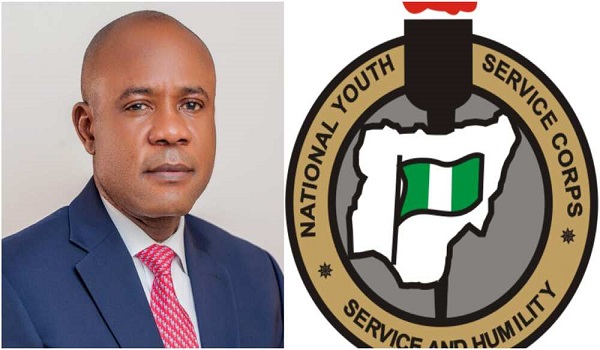
A Federal High Court in Abuja has ruled in favor of Enugu State Governor Peter Mbah, awarding him N5 million in damages against the National Youth Service Corps (NYSC).

The court’s decision follows allegations made by the NYSC that Governor Mbah’s discharge certificate was fake.

Justice Inyang Ekwo, in his judgment, found the Director General of the NYSC and the corps guilty of misrepresenting material facts. He held that the certificate presented by Governor Mbah to the Independent National Electoral Commission (INEC) was genuine and validly issued by the NYSC.

The court’s findings revealed that although Governor Mbah was mobilized for NYSC service in 2001, he completed his service in 2003. During his service, he sought and received permission from the NYSC to attend the Nigerian Law School and was subsequently reinstated into the NYSC in 2003.

Furthermore, the court noted that the evidence presented regarding Governor Mbah’s service at a law firm was not challenged by the NYSC. Justice Ekwo criticized the NYSC for failing to charge the governor with forgery if they believed that the NYSC certificate was not genuinely issued to him.

The court concluded that the NYSC’s actions were mischievous and in bad faith, as they had wrongly denied the authenticity of Governor Mbah’s NYSC certificate.

Governor Mbah had initiated legal action against the NYSC and its Director of Corps Certification, Mr. Ibrahim Muhammad, after they published a disclaimer denying the issuance of a discharge certificate to him on January 6, 2003.

In a previous ruling on May 15, the court had restrained the NYSC, Mr. Muhammad, and their agents from engaging in such publications until the substantive matter was heard and determined. This order was issued following an ex parte motion brought by Governor Mbah’s counsel, Mr. Emeka Ozoani, SAN.

The NYSC had argued, in its preliminary objection, that Governor Mbah did not follow the proper procedure, including appealing to the President, before instituting the lawsuit. They contended that an appeal to the President was a prerequisite for initiating legal action against the defendants.

However, the court’s judgment has raised questions about its authority to determine the authenticity of an NYSC certificate. Some argue that the NYSC, as the issuing authority, should have the right to authenticate the certificates it provides to youth corps members, rather than the court.

ChatGPT Has 100m Weekly Users, Altman Says, As OpenAI Unveils GPT-4 Turbo

0

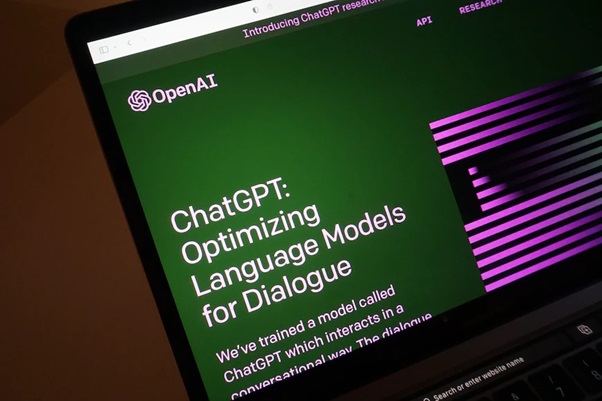
OpenAI’s ChatGPT has achieved a significant milestone, with 100 million weekly users, according to an announcement made by OpenAI CEO Sam Altman during the company’s first developer conference.

This achievement underscores ChatGPT’s remarkable growth since its API release in March, as well as its popularity among a diverse user base that now includes over two million developers and over 92 percent of Fortune 500 companies.

OpenAI’s announcement coincided with the unveiling of new features and models, including a platform designed for creating customized versions of ChatGPT tailored to specific tasks.

“Anyone can easily build their own GPT—no coding is required,” the company wrote in a release. “You can make them for yourself, just for your company’s internal use, or for everyone. Creating one is as easy as starting a conversation, giving it instructions and extra knowledge, and picking what it can do, like searching the web, making images or analyzing data.”

Additionally, OpenAI introduced GPT-4 Turbo, a model with knowledge of world events up to April 2023, capable of processing a substantial amount of text within a single prompt, equivalent to over 300 pages.

“We are just as annoyed as all of you, probably more, that GPT’s knowledge about the world ended in 2021,” Altman said in a speech Monday.

The enhanced capabilities of the GPT-4 Turbo extend its input capacity significantly. In contrast to previous iterations, which were constrained to around 3,000 words, the GPT-4 Turbo now accommodates inputs that can span up to 300 pages, enabling you to request comprehensive book summaries.

Furthermore, GPT-4 introduces support for DALL-E 3-generated AI images and text-to-speech functionality. Additionally, it boasts a selection of six predefined voices, offering you the flexibility to select from a diverse range of voices for receiving responses to your queries.

ChatGPT has earned a reputation as one of the fastest-growing consumer internet applications, garnering an estimated 100 million monthly users in just two months after its initial release nearly a year ago. Comparatively, social media giants like Facebook, Twitter, and Instagram took significantly longer to reach 100 million users after their respective launches.

In March, Microsoft’s Bing search engine integrated generative AI features powered by OpenAI’s GPT-4, surpassing 100 million daily active users, marking a significant milestone more than a decade after its 2009 launch. While ChatGPT’s rapid growth was outpaced by Meta’s Threads, which reached 100 million users within a week of its July launch, Threads’ user base appeared to decrease in the months that followed, with just under 100 million monthly active users as of October.

OpenAI’s ChatGPT continues to maintain its popularity and growth, despite being less than a year old as a public service. While earlier estimates hinted at its widespread usage, today’s announcement from OpenAI provides an official data point to support ChatGPT’s ongoing success.

This announcement also serves as a response to recent media reports suggesting that ChatGPT’s popularity might be waning since its launch in November of the previous year. OpenAI aims to reinforce the platform’s continued strong performance and user engagement with these official statistics.

THREE BITES OF THE CHERRY – TEKEDIA EDITION

0

BITE 1: ETH WOES PART 1.

Most Ethereum Layer 2 projects exist so VCs can launch Ponzi tokens on general-purpose layer-2 platforms before dumping them for ETH and eventually exiting for USD.

This becomes a vehicle to make a margin on the start-up funds of the project.

ETH itself has a market cap of over $215.8 billion and is the second largest after Bitcoin (BTC). Typically, coins with higher market caps are harder to manipulate and usually have found more institutional adoption than emerging tokens.

The thing about human nature is that once a gambler, always a gambler, and addictive behaviour is very difficult to shake, regardless of how many losses incurred doing the exact same thing.

Addicts don’t internalize lessons learnt.

So the small time addicts jump into the back of the VCs adding to the ramping under the pretence of ‘community’, make a lot of noise, post gifs as online cheerleading, and once the VC exits, go broke.

Rumour is, institutions aren’t happy and want a more ‘dynamic’ environment directly as part of Eth. They got jealous of all the fun the VCs had in 2021 and early 2022.

Addicts will always be addicts, and if they are determined to lose money, institutions would prefer it fell their way, rather than the VCs.

Changes being brought out, including the latest Solidity compiler are indicators of the direction. The latest version 0.8.22 has inherent design problems, of which David Fernandez said:

‘In simple terms, the Solidity team sacrificed security for gas efficiency. No bueno!’

BITE 2: PEPSICO CONSENSUS AND TOKENOMICS

So, if things weren’t bad enough already, PepsiCo is now trying to teach us about Web 3.

That’s the company started by one Caleb Bradham, who apparently created a blockchain in his pharmacy in 1898 in New Bern, North Carolina, and called it “Pepsi-Cola” In those days, a consensus mechanism was called a ‘recipe’.

At Blockchain Expo Europelast month, they dropped this gem:

‘Web3 eliminates the need for intermediaries between users and applications, enabling trustless interactions. This means seamless, direct transactions and interactions without relying on third parties.’  – I’m having that no sh** Sherlock moment again.

Don’t need to educate 9ja Cosmos on this, but it might be a good idea to communicate directly with every CEX on the planet to let them know… err.. 2FA isn’t it!

Many people don’t know this, but 9ja Cosmos founder has previously led a CSD start-up in Ogun State, Nigeria.

However, PepsiCo, despite  past experience…. lets us do a deal – PepsiCo promise not to lecture on Web 3 again, and 9ja Cosmos won’t make Cola drinks!

ETH BUTERIN FRIED

ETH BUTERIN FRIED


BITE 3: ETH WOES REPRISE

Meanwhile, Scott Matherson, lead crypto writer at Bitcoinist, reports a source in the inner sanctum of Ethereum leadership, claims that their fraudulent activities far surpass those seen in the notorious FTX fraud case.

The lawyer, Steven Nerayoff, has come forward with explosive allegations regarding the actions of Ethereum founders, Vitalik Buterin, and Joseph Lubin.

Mathersons’ report said: ‘According to Nerayoff, these two Ethereum founders have allegedly orchestrated fraudulent activities regarding the ETH blockchain that exceed the scale of the actions committed by Former CEO and founder of FTX, Sam Bankman-Fried.’

“Ethereum is the fraudulent elephant in the room in plain sight 1000x bigger than SBF,” Nerayoff stated.

9ja Cosmos is here… 

Get your .9jacom and .9javerse Web 3 domains  for $2 at:

.9jacom Domains

.9javerse Domains

Visit 9ja Cosmos

Follow us on LinkedIn HERE


Background Sourced 06/11/23 from

docs.soliditylang.org, ‘The Block’, Bitcoinist.com,  Solidity on Github,  Wikipedia, and LinkedIn post by David Fernandez.


Dealing With Due Diligence

0

Before you go into business with any other person, invest your money in a business, acquire another business, or team up with a prospective business partner, you are expected to carry out an underground and holistic check on the business you are about to put your money in and even an underground check on the person at the other end of the business that you want to partner with. This holistic and underground check is called due diligence.

Due diligence is defined in the corporate world to be an investigation conducted into a target company before engaging in any investment decisions. Its goal is to establish the status of the assets and most importantly, the liabilities of the prospect, including the legal risks associated with them. The concept of due diligence as enshrined in corporate jurisprudence refers to the exercise of reasonable care in the course of business. It generally involves careful investigation of the economic, legal, fiscal and financial circumstances of the business or the individual(s) that is running the business. 

This covers aspects such as the financial standing of the business, like the sales figures, inflow and outflow, shareholders of the business, shareholder structure and most importantly if there are possible links with any form of economic crime such as corruption, embezzlement, money laundering, tax evasion etc.

Prospective business partners who intend to go into business are expected morally speaking, to be honest to themselves and disclose to each other whatever aspect of their lives that is relevant to the business dealings but as expected, humans are not honest. Due to the fact that the prospective business partners may not be honest with themselves hence why the concept of due diligence comes into play. Every party is expected to take it upon himself to find out facts concerning the other party that are relevant to the business.

The Due diligence stage is the most important pre-contract stage in the transaction. This is the stage where you are to uncover every secret that the other party may not want to disclose to you. 

The two most important kinds of due diligence to be conducted before a transaction is entered are the legal due diligence and the financial due diligence. Legal due diligence is where your lawyer will try to find out if there is any legal encumbrance on the prospective company or on the business owner(s) or the shareholders if there is a pending legal matter hanging around their neck and the rest of that stuff. If you as an investor invest in a business or acquire a business with pending legal battles, you have also acquired the legal trouble together with the business, hence why legal due diligence is very important and critical. 

Financial due diligence is where your accountant or auditor will check and cross-check the financials of the prospective partner if they are in debt or if there are fishy financial dealings. If you purchase a business that is in deep debt, the debt will also be transferred to you as the new owner unless there is a clause to prevent that from happening. 

Ignorance is never an excuse before the law. If you fail to do your background check and you then go into business with the wrong person and you got your fingers burnt, you can not turn around to blame anybody other than you. Ensure you take out time to do your due diligence before going into business with anybody. 


Africa’s Food and Agricultural Industry Poised to Reach $1tn by 2030, says AfDB President

0
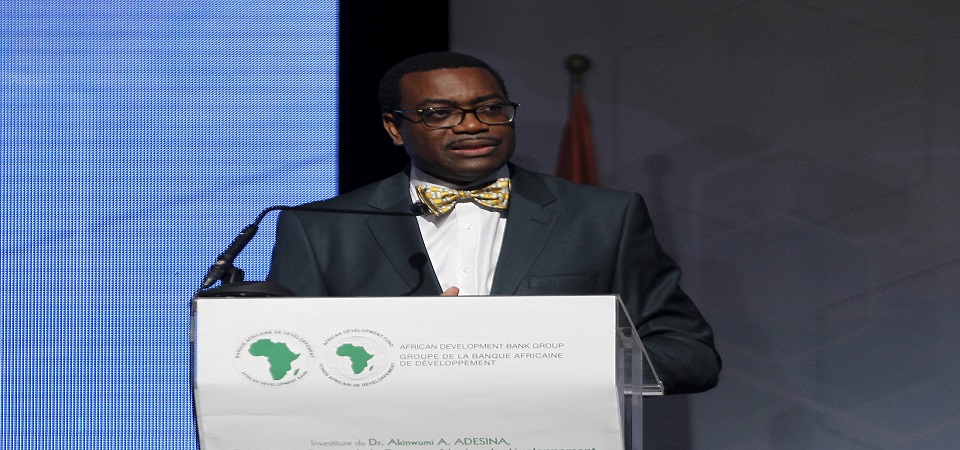
AfDB president Akinwumi Adesina
Akinwumi Adesina

In a groundbreaking announcement at the Norman E. Borlaug Dialogue organized by the World Food Prize Foundation, the President of the Africa Development Bank (AfDB), Dr. Akinwunmi Adesina, revealed that Africa’s food and agricultural industry is projected to be worth an estimated $1 trillion by 2030.

Adesina highlighted the pivotal role of 34 African leaders who have given their endorsement to country food and agriculture delivery compacts. These compacts are instrumental in developing action-oriented plans with clear outcomes, aiming to ensure food security and unlock the full agricultural potential of the continent within a five-year timeframe.

“This development aligns perfectly with the central tenets of the Bank’s Feed Africa strategy, initiated in 2016,” Adesina emphasized, underscoring the Bank’s commitment to driving sustainable agricultural growth across the continent.

Since its inception, the Feed Africa strategy has provided vital support to over 250 million individuals, empowering them with enhanced agricultural technologies that have significantly improved their livelihoods.

Partnerships are playing a crucial role in this initiative, with pledges exceeding $70 billion in support of the food compacts. The AfDB itself is poised to contribute $10 billion over the next five years, further solidifying its commitment to the ambitious goals.

Adesina also highlighted the significance of the Dakar 2 project, which symbolizes the collective determination of African leaders to ensure the continent attains self-sufficiency in food production.

President Sahle-Work Zewde of Ethiopia, who was present at the Borlaug Dialogue, echoed the sentiment of African leaders, stating, “As African leaders, we are all committed to self-sufficiency in food production. Today, Ethiopia, for the first time in its history, is self-sufficient in wheat production and is a wheat exporter to its neighbors.”

Tackling the challenges

Despite these positive strides, challenges remain. Africa, possessing 65% of the world’s untapped arable land, still heavily relies on food imports. There is skepticism regarding the continent’s ability to achieve food self-sufficiency in the near future, given that nearly three-quarters of African governments have reduced their agricultural budgets while increasing spending on arms.

A report by humanitarian organization Oxfam International earlier this year revealed that in the past 12 months, over 20 million more people in Africa have been pushed into severe hunger, equivalent to the entire population of Botswana, Namibia, and Zimbabwe combined. Currently, a fifth of the African population (278 million) is undernourished, and 55 million children under the age of five suffer from severe malnutrition.

Fati N’Zi-Hassane, Oxfam in Africa Director, pointed out, “The hunger African people are facing today is a direct result of inadequate political choices. In a year marred with global inflation and climate disasters, African leaders should have stepped up to their responsibility.”

Chronic underinvestment in agriculture is identified as a key factor contributing to the widespread hunger experienced in 2022. Oxfam reported that 48 out of 54 African governments allocate an average of only 3.8 percent of their budgets to agriculture, with some spending as little as one percent. Additionally, nearly three-quarters of these governments have reduced their agricultural spending since 2019, failing to honor their Malabo commitments to invest at least 10% of their budget in agriculture.

As the global population is projected to reach nine billion by 2050, the urgency for Africa to enhance agricultural productivity becomes increasingly apparent in order to meet the growing demand for food. The AfDB’s ambitious plans aim to address this pressing need, positioning Africa as a leading force in the global food and agricultural industry by 2030.