DD
MM
YYYY

PAGES

DD
MM
YYYY

spot_img

PAGES

Home Blog Page 3656

Nigerian Fintech Startup Brass Temporarily Suspends Part of Its Workforce, Due to Economic Challenges

0

Nigerian Fintech startup Brass has temporarily suspended part of its workforce, as part of a restructuring plan to navigate the current economic challenges.

This was disclosed by the startup CEO Sola Akindolu on X (formerly Twitter), stating that the move was necessitated as the company looks to reset itself and rebuild for the current economic realities. He believes that this move will ensure to support the company’s sustainability and growth.

In his words,

For almost 4 years since we launched, we have been building best-in-class financial products for Nigerian businesses, and have since then, extended our services to individuals and families. We have since raised $2m, and have continued to build and grow through the changing times. We have added some of the kindest and smartest people I have been privileged to work with, and they have all played important roles in building today’s Brass.

In the last few months, however, the local economy has really changed significantly, impacting our plans. Over the next couple of days, Brass will be moving some of its employees to furlough as it resets itself and rebuilds for the current economic realities. This is really sad for us. During this time, we would continue to provide impacted colleagues with health insurance coverage and other benefits until we are able to bring them back in the following months, so they can continue to do their best work with us.”

Akindolu further disclosed that Brass employee experience lead, alongside the co-founder and CTO will be leading this process with one-on-one calls and ensuring it provides every kind of support to everyone impacted.

With plans to temporarily disengage some part of its workforce, it however remains unclear the number of people that would be impacted by this move.

Founded in 2020 by Sola Akindolu and Emmanuel Okeke, the duo started Brass with the simple belief that businesses everywhere can have access to top-end money operations and cashflow services to ensure they can finance their business growth with cheaper and easy-to-access financing throughout their lifetime.

Brass provides simple, yet powerful current account services, tools, and support to help you grow your business. With Brass, users can open a free account for their business in 10 minutes. In October 2021, the company secured a $1.7 million funding round to scale its offerings for “local entrepreneurs, traders, and fast-growing businesses.

The startup products today help thousands of businesses do better with their money operations, from accepting payments to taking care of supplier payments. Brass’s mission is to empower local businesses with the right tools to help them succeed and grow at a very low cost.

Jeff Bezos Reclaims Title of World’s Richest Person, Surpassing Elon Musk

0

In the latest shift of fortunes, Jeff Bezos, the founder of Amazon and Blue Origin, has once again ascended to the top of the Bloomberg Billionaires Index, surpassing Tesla CEO Elon Musk.

The announcement came on Monday as a result of a sustained rally in Big Tech shares, particularly fueled by the artificial intelligence boom.

Bezos, 60, previously held the title of the wealthiest individual in 2021 before being surpassed by Elon Musk, the visionary CEO of Tesla and SpaceX. However, a recent rally in the shares of major technology companies, fueled in part by the ongoing artificial intelligence boom, has propelled Bezos back to the top of the wealth rankings.

The resurgence of Bezos’ wealth can largely be attributed to the impressive performance of Amazon’s stock, which has surged by 17% since the beginning of the year and nearly doubled in value compared to the same period last year, closing at $177.58 per share on Monday. Given Bezos’ significant ownership stake in Amazon, which stands at around 9%, any uptick in the company’s stock price directly contributes to his net worth.

Additionally, Bezos’ ownership of Blue Origin, a private aerospace manufacturer and spaceflight services company, is factored into Bloomberg’s calculation of his wealth, further bolstering his position at the top of the billionaire rankings.

The shift in rankings marks a significant reversal for Bezos, who had ceded the top spot to Elon Musk for nine months. Musk, known for his ambitious ventures in electric vehicles and space exploration, had at one point held a substantial lead over Bezos, boasting a wealth advantage of $142 billion, according to Bloomberg data.

Notably, this is not the first time that Bezos has reclaimed the title of the world’s richest person. He initially surpassed Microsoft co-founder Bill Gates in 2017 before being overtaken by Musk in 2021 following a surge in Tesla’s stock price.

As of the latest rankings, Elon Musk retains the second position on the Bloomberg Billionaires Index, with a net worth of $198 billion, followed closely by Bernard Arnault, the chairman of LVMH Moet Hennessy Louis Vuitton, whose net worth stands at $197 billion.

Musk’s fortunes have experienced volatility in recent times, with Tesla’s stock witnessing a 24% decline since the start of the year and a 3% decrease compared to the previous year. The company faced additional challenges on Monday as its shares tumbled by 7% due to disappointing sales figures in China during February.

The competition for the title of the world’s richest person has been intense, with Musk, Arnault, and Bezos frequently jockeying for the top position. Musk had briefly reclaimed the title in May 2023, surpassing Arnault, whose wealth had surged on the back of strong performance in the luxury goods sector.

Earlier this year, a Delaware state court judge invalidated Musk’s 2018 pay package, valued at over $50 billion, which had contributed significantly to his wealth.

Despite the fluctuations in wealth rankings, Musk and Arnault remain formidable figures in the world of finance, with their combined net worth reaching staggering heights. According to Oxfam’s annual inequality report, the top five wealthiest individuals have seen their collective wealth soar by 114% since 2020, reaching a total of $869 billion after adjusting for inflation.

As global market performances and corporate advancements influence the dynamics of wealth, the competition among the world’s wealthiest individuals remains intense. The ongoing struggle for dominance among these affluent individuals shows no indication of slowing down and is expected to persist.

“…we have more to do” for Nigeria – Ndubuisi Ekekwe [video]

0

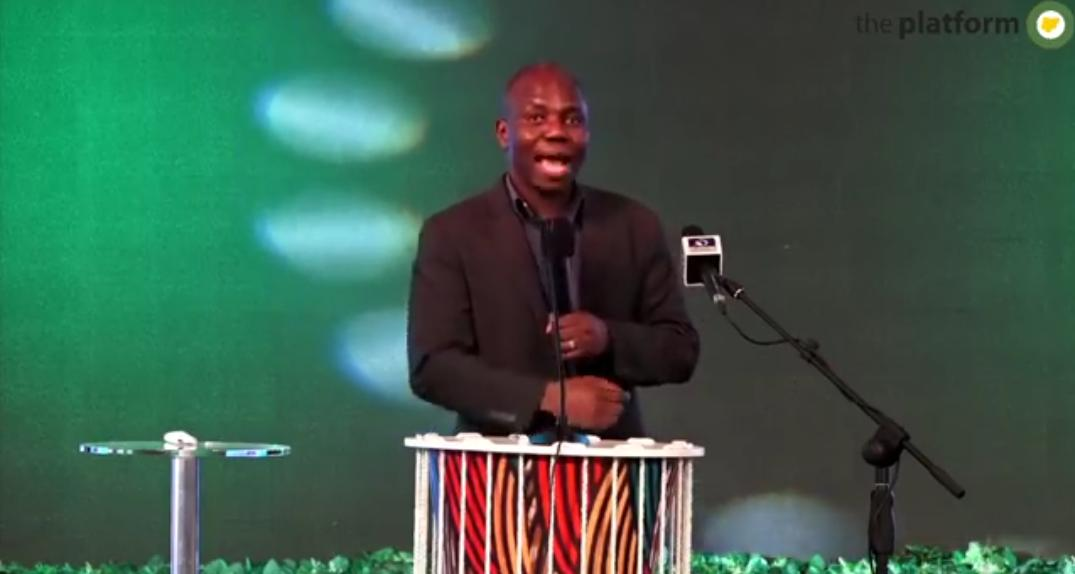
“…we have more to do” for Nigeria, a “beautiful country, [which] has done many things for many of us”…

Ndubuisi Ekekwe | The Platform, Lagos


Binance Largely Exits Nigeria

1

Nigeria’s high voltage searchlight on Binance has forced the company to exit some of its core operations in the nation: “Binance will discontinue all Nigerian Naira (NGN) services as per the timeline below. Users are encouraged to withdraw NGN, trade their NGN assets or convert NGN into crypto prior to the discontinuation of these NGN services. From 2024-03-08 08:00 (UTC), any remaining NGN balances in users’ Binance accounts will be automatically converted to USDT”.

While I support Nigeria on its rights to enforce its AML/KYC regulations, I also make it clear that Binance is not the reason our Naira is in trouble. Also, I hope Binance follows Nigeria’s AML/KYC laws. Of course, the executives should be treated based on the rule books, with no rights under local and international laws denied.

We need to focus on more important things which remain constant electricity, security of lives and properties, rule of law and the catalytic enablers which make economies work. If we continue to improve on those, Nigerian Naira will rise, Binance or no Binance.

Binance, one of the world’s largest cryptocurrency exchanges, has recently faced a series of regulatory challenges in Nigeria, Africa’s biggest crypto market. The exchange has been accused of contributing to the devaluation of the naira, Nigeria’s currency, by offering peer-to-peer (P2P) trading services that bypass the official exchange rate.

The Nigerian government has also restricted access to Binance’s website and arrested two of its executives in the country. We will explore the implication of Binance shutting P2P to crypto in Nigeria, and what it means for the future of crypto adoption in the country.

How to stop worrying about the next Bitcoin halving

1

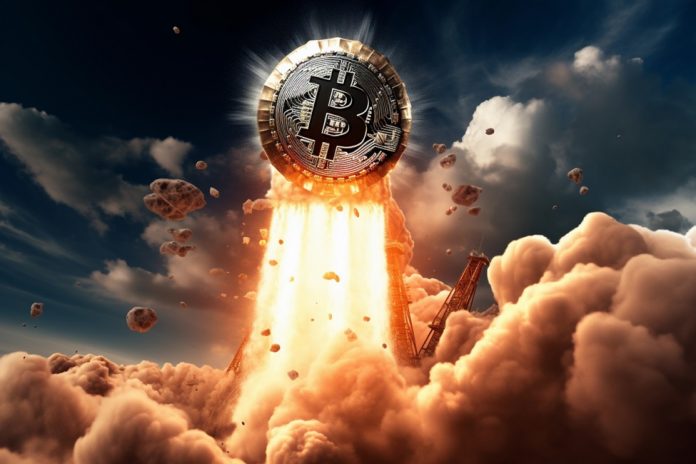
The next Bitcoin halving is a highly anticipated event in the crypto world, but it is also a source of anxiety for many investors. What will happen to the price, the mining difficulty, and the network security after the block reward is cut in half? Will it trigger a new bull market or a devastating crash?

I will explain why you should stop worrying so much about the next Bitcoin halving and focus on the long-term fundamentals of the cryptocurrency. I will also provide some tips on how to prepare for the event and take advantage of the opportunities it may create.

What is the Bitcoin halving and why does it matter?

The Bitcoin halving is a process that occurs every 210,000 blocks, or approximately every four years, in which the number of new bitcoins created per block is reduced by 50%. This means that the inflation rate of Bitcoin decreases over time, making it a scarce and deflationary asset.

The Bitcoin halving is important because it affects the supply and demand dynamics of the cryptocurrency. On one hand, it reduces the supply of new bitcoins entering the market, which puts upward pressure on the price. On the other hand, it reduces the revenue of miners, who are responsible for securing the network and validating transactions. This could lead to some miners exiting the market, which could lower the hash rate and make the network more vulnerable to attacks.

The Bitcoin halving also has a psychological impact on the market, as it generates a lot of hype and speculation among investors, traders, and media outlets. Some people expect the halving to be a catalyst for a massive price rally, while others fear that it will cause a market crash or a miner capitulation.

While the Bitcoin halving is undoubtedly an important event that affects the cryptocurrency ecosystem, it is not something that you should lose sleep over. Here are some reasons why you should stop worrying so much about the next Bitcoin halving:

The Bitcoin halving is predictable and transparent. Unlike fiat currencies, which are subject to unpredictable and arbitrary changes in monetary policy by central banks, Bitcoin has a fixed and transparent supply schedule that is encoded in its protocol. This means that everyone knows when and how much the block reward will decrease and can plan accordingly. There are no surprises or shocks in the Bitcoin halving.

The Bitcoin halving is already priced in. The efficient market hypothesis states that all available information is reflected in the current price of an asset. This means that the market has already taken into account the expected effects of the next Bitcoin halving on the supply and demand of Bitcoin and has adjusted its price accordingly. Therefore, there is no reason to expect a sudden or dramatic change in the price after the halving.

The Bitcoin halving has historically been positive for the price. While past performance is not indicative of future results, it is worth noting that the previous two Bitcoin helving’s in 2012 and 2016 were followed by significant price increases in the subsequent months and years. This suggests that the halving creates a favorable environment for long-term price appreciation, as it reduces inflation and increases scarcity.

The Bitcoin halving does not affect the fundamentals of Bitcoin. The halving does not change anything about the underlying technology, innovation, or value proposition of Bitcoin. It does not affect its decentralization, security, censorship-resistance, or immutability. It does not affect its utility as a store of value, a medium of exchange, or a unit of account.

It does not affect its adoption, development, or innovation. The halving only affects one variable: the supply of new bitcoins. And while this variable is important, it is not the only or the most important one that determines the success or failure of Bitcoin.