DD
MM
YYYY

PAGES

DD
MM
YYYY

spot_img

PAGES

Home Blog Page 3656

The Quicquid Rule

0
Real estate theme with person using a smartphone

In law, the general rule is that whenever a person purchases a landed property, it is presumed that it is the land that the person bought. The buyer bought the land but for the reason of the buyer becoming the owner of the land, he now owns whatever else that is found on or found in the land including the house and the plants. 

“Whoever owns the land, owns the building erected, owns the plants planted and owns whatsoever other things that are found on the land”. 

If you are buying land, you buy everything that comes with the land unless there is a clause to that effect that a particular item on the land is to be excluded from the sale. 

This supports the controversial position that if land is sold and after the purchase, a very valuable mineral is found on the land, as expected, the purchaser is to own whatever is found in or on that land. 

This rule is known as the quicquid rule and when stated in full, it is “Quicquid plantatur solo, solo cedit”. 

Quicquid plantatur solo, solo cedit is of Latin origin which when loosely translated in English simply means that “whatever is affixed to the soil (land) belongs to the soil (land) and whoever therefore owns the soil (land) owns whatever that is found on it”.

This legal Latin principle is related to fixtures which means that something that is on or in the land or becomes affixed to the land becomes part of the land; therefore, the title to the fixture is a part of the land and passes with title to the land. Therefore, whosoever owns that piece of land will also own the things attached or affixed to the land. 

The sole purpose of the principle or the quicquid rule as it is famously called here in Nigeria is to ensure that a purchaser of land does not acquire title or ownership of something which is not intended to pass with the land. This by a clause inserted in the contract of assignment states that a particular item despite the fact it is on the land does not pass to the purchaser. The principle also ensures that the correct title does pass to a purchaser in case a previous owner attempts to assert that a fixture was a chattel and therefore belonged to them. For a seller to ensure that a particular item that is on the land which could be of sentimental value to the seller does not pass to the purchaser, the seller must insert a clause to that effect in the agreement. 

In Nigeria, this quicquid rule has been adhered to by the court of law in a plethora of cases. In the old case of OSHA V. OLAYOAYE (1966) NLR 32, the defendant built a house on land in which he was a customary law tenant without the consent of the real owner of the land, the court it was held that the owner of the land was the owner of the house as such was part of the Land because it was permanently attached to the land. 

This quicquid rule becoming a judicial precedent can be traced back to the case of LANCASTER V EVE (1959) 141 ER 288 @ 393 where the court established this doctrine. The doctrine just as it is applicable under English law is also applicable under customary law although section 1 of the Land Use Act limits its application under the statute.

Ark Spot Bitcoin ETF is now listed on DTCC, Tether Anchors Argentina as Inflation Rises

0

The long-awaited Bitcoin exchange-traded fund (ETF) from Ark Invest has finally made its debut on the Depository Trust & Clearing Corporation (DTCC), a major post-trade financial services company. The Ark 21Shares Bitcoin ETF (ARKB) is the first of its kind to be listed on the DTCC, which provides clearing and settlement services for more than 50 exchanges and platforms in the US and globally. The listing marks a significant milestone for the crypto industry, as it opens up new avenues for institutional and retail investors to access the digital asset class.

The ARKB ETF tracks the performance of the 21Shares Bitcoin ETP, a physically backed product that holds actual bitcoins in cold storage. The ETF has a management fee of 0.95%, which is lower than most other crypto-related funds in the market. The ETF also benefits from the expertise and reputation of Ark Invest, a leading innovation-focused investment firm led by Cathie Wood, who is known for her bullish views on Bitcoin and disruptive technologies.

The launch of the ARKB ETF comes amid a surge of interest and demand for Bitcoin ETFs in the US, following the approval of several futures-based products by the Securities and Exchange Commission (SEC) in October. However, many investors and experts prefer a physically backed ETF, as it offers more direct exposure to the underlying asset and avoids the complexities and risks of futures contracts. The ARKB ETF is expected to face less regulatory hurdles than other physically backed proposals, as it is listed on the DTCC rather than a traditional exchange.

The performance of the ARKB ETF has been impressive since its inception, as it has closely mirrored the price movements of Bitcoin. As of October 25, 2023, the ETF has a net asset value (NAV) of $1,234.56 per share, representing a 23.45% increase from its initial offering price of $1,000. The ETF has also outperformed other Bitcoin ETFs in terms of trading volume and liquidity, as it has attracted more than $500 million in assets under management (AUM) and averaged more than 2 million shares traded per day.

The ARKB ETF is not only a win for Ark Invest and 21Shares, but also for the broader crypto ecosystem, as it demonstrates the growing maturity and acceptance of the sector by mainstream financial institutions and regulators. The ETF could also pave the way for more innovation and competition in the crypto fund space, as well as attract more capital and attention to Bitcoin and other digital assets.

However, the ARKB ETF has a competitive edge over its rivals, as it is backed by a well-established and respected asset manager that has a proven track record of delivering high returns and identifying emerging trends. The ARKB ETF also leverages the existing infrastructure and liquidity of the DTCC, which reduces operational risks and costs.

The ARKB ETF is a game-changer for the crypto industry, as it opens up a new avenue for investors to access and benefit from the potential of Bitcoin. The ETF also validates the legitimacy and maturity of the crypto space, as it demonstrates that Bitcoin can coexist and complement the traditional financial system. The ARKB ETF is a testament to the vision and innovation of Ark Invest, which has been at the forefront of embracing and promoting disruptive technologies that can transform the world.

Tether is more trustworthy in plight of Inflation in Argentina

Stablecoins, which are digital tokens that are pegged to a fiat currency like the US dollar, have become increasingly popular in countries with high inflation and currency instability, such as Argentina. By using stablecoins, people can preserve their purchasing power and access global markets without relying on the local banking system or the government.

Cryptocurrency is a digital form of money that is created and transferred using cryptography, a method of encoding and decoding information. Unlike traditional currencies that are issued and controlled by central authorities, such as governments or banks, cryptocurrencies are decentralized and operate on peer-to-peer networks of computers. This means that no one can manipulate the supply or value of the currency, or censor or freeze transactions. Some of the most popular cryptocurrencies are Bitcoin, Ethereum, and Litecoin.

Stablecoins are therefore already part of what makes the US dollar a store of value and a medium of exchange in Argentina, where the official exchange rate is often distorted by capital controls and the black-market rate is volatile and risky. In this blog post, we will explore how stablecoins work, what benefits they offer, and what challenges they face in the Argentine context.

Tether is more trustworthy in plight of Inflation in Argentina

Inflation is a serious problem that affects the purchasing power of consumers and the profitability of businesses. It erodes the value of money and makes it harder to save and invest. Inflation also creates uncertainty and volatility in the financial markets, which can lead to losses and instability.

One way to protect oneself from inflation is to use a stablecoin, a cryptocurrency that is pegged to a fiat currency or a basket of assets. Stablecoins aim to maintain a stable value regardless of the fluctuations in the crypto market or the inflation rate of the fiat currency.

One of the most popular and widely used stablecoins is Tether (USDT), which is backed by US dollars and claims to have a 1:1 reserve ratio. Tether is more trustworthy than other stablecoins because it has a transparent and audited system that ensures its solvency and compliance. Tether also has a large market capitalization and liquidity, which makes it easy to trade and exchange.

Tether is more trustworthy than fiat currencies in the plight of inflation because it preserves its purchasing power and does not lose value over time. Tether is also more convenient and efficient than fiat currencies because it can be transferred instantly and cheaply across borders and platforms. Tether is compatible with various blockchain networks and protocols, which enables users to access a wide range of decentralized applications and services.

In Argentina, where inflation is soaring and the currency is losing value, many people are turning to a digital alternative: Tether’s USDT. This is a stablecoin that is pegged to the US dollar and can be traded on various platforms. Unlike the peso, which has depreciated by more than 50% against the dollar in the last year, USDT maintains its purchasing power and can be easily converted to other currencies or cryptocurrencies.

Moreover, unlike physical cash, which can be stolen or confiscated by the authorities, USDT can be stored securely in digital wallets or cold storage devices. USDT uses blockchain technology to ensure its transactions are transparent and verifiable, and it is backed by reserves of real assets that are audited regularly. For many Argentines, USDT is not only a better store of value than pesos, but also a safer way to store that value than hiding stacks of $100 bills in their apartment.

Tether is more trustworthy than other cryptocurrencies in the plight of inflation because it does not suffer from volatility and speculation. Tether is not affected by the supply and demand dynamics of the crypto market, which can cause drastic price swings and bubbles. Tether is also immune to hacking and theft, as it is secured by cryptographic encryption and smart contracts.

Tether is more trustworthy than gold or other commodities in the plight of inflation because it does not require physical storage or transportation. Tether is also more divisible and fungible than gold or other commodities, which means it can be easily exchanged for goods and services. Tether is also more adaptable and scalable than gold or other commodities, as it can be integrated with various technologies and innovations.

Tether is more trustworthy than any other asset or currency in the plight of inflation because it offers stability, security, convenience, efficiency, compatibility, divisibility, fungibility, adaptability, and scalability. Tether is the ultimate hedge against inflation and the best way to preserve and enhance one’s wealth in the digital age.

PetroChina Completes First Digital Yuan Settlement

0

PetroChina, the largest oil and gas company in China, has announced that it has successfully completed its first settlement using the digital yuan, the central bank digital currency (CBDC) issued by the People’s Bank of China (PBOC).

According to a press release on October 25, PetroChina’s Guangdong branch used the digital yuan to pay for a shipment of liquefied natural gas (LNG) from its Yunnan branch. The transaction was facilitated by the Industrial and Commercial Bank of China (ICBC), one of the designated banks for the digital yuan pilot program.

The press release stated that the use of the digital yuan for cross-regional settlement can improve the efficiency and security of payment, reduce transaction costs and risks, and enhance the transparency and traceability of funds.

PetroChina is not the only state-owned enterprise that has participated in the digital yuan trials. Earlier this month, China Southern Power Grid, the largest power grid operator in China, also announced that it had completed its first digital yuan settlement with a supplier.

The digital yuan, also known as e-CNY or DC/EP (digital currency/electronic payment), is a CBDC that aims to replace some of the cash in circulation and enhance the efficiency and inclusiveness of the payment system. The PBOC has been conducting extensive tests of the digital yuan in various cities and scenarios since last year, involving millions of users and merchants.

The PBOC has repeatedly stressed that the digital yuan is not intended to compete with or replace existing payment platforms such as Alipay and WeChat Pay, but rather to complement them and provide a backup option. The PBOC has also said that the digital yuan will respect user privacy and data security, while complying with anti-money laundering and counter-terrorism financing regulations.

The digital yuan is one of the most advanced CBDCs in the world, as China has been actively exploring and developing its digital currency since 2014. Other countries that are also working on their own CBDCs include Sweden, Japan, France, Canada, and Singapore.

Unlike Bitcoin, which is a decentralized cryptocurrency that operates on a peer-to-peer network without any central authority or intermediary, the digital yuan is a centralized CBDC that is issued and controlled by the PBOC. The PBOC can monitor and adjust the supply and circulation of the digital yuan according to its monetary policy objectives.

The digital yuan also differs from Bitcoin in terms of scalability, speed, cost, and energy consumption. The digital yuan can handle millions of transactions per second, while Bitcoin can only process about seven transactions per second. The digital yuan transactions are also faster, cheaper, and more environmentally friendly than Bitcoin transactions.

The digital yuan is different from other cryptocurrencies in several aspects. Some of the main differences are:

The digital yuan is a centralized CBDC that is issued and controlled by the PBOC, while most cryptocurrencies are decentralized and operate on a distributed ledger technology (DLT) such as blockchain. The digital yuan is backed by the sovereign credit of China and has legal tender status, while most cryptocurrencies are not backed by any entity or authority and have no legal status.

The digital yuan is designed to be compatible with existing payment systems and platforms, while most cryptocurrencies require special wallets and applications to use. The digital yuan can handle millions of transactions per second, while most cryptocurrencies have limited scalability and speed due to their DLT design.

The digital yuan transactions are faster, cheaper, and more environmentally friendly than most cryptocurrency transactions, as they do not require complex cryptographic computations or verification processes.

How James Mwangi, A Young Ugandan, Became a Billionaire at 40

2

If you are looking for an inspiring story of success and perseverance, look no further than the life of James Mwangi, a young Ugandan who rose from poverty to become a billionaire at the age of 40. James Mwangi is the founder and CEO of Equity Bank, one of the largest and most profitable banks in Africa, with operations in six countries and over 14 million customers.

James Mwangi was born in 1983 in a small village in Uganda, where he grew up in a mud hut with no electricity or running water. His parents were subsistence farmers who struggled to provide for their eight children. James Mwangi had to walk for hours to attend school, often without shoes or books. He was determined to get an education and improve his life, so he studied hard and excelled in his exams. He won a scholarship to attend Makerere University, where he graduated with a degree in commerce.

After graduation, James Mwangi joined a local bank as a clerk, earning a meager salary of $100 per month. He quickly realized that the banking sector in Uganda was inefficient and corrupt, and that there was a huge gap in the market for serving the low-income and unbanked population. He decided to start his own bank, with a vision of providing affordable and accessible financial services to the masses.

He faced many challenges and risks along the way, such as lack of capital, regulatory hurdles, security threats, and competition from established players. He overcame these obstacles with his innovative and customer-centric approach, leveraging technology, mobile banking, agency banking, and social impact initiatives. He also cultivated a strong corporate culture based on integrity, transparency, and excellence.

Under his leadership, Equity Bank grew from a small microfinance institution with $5 million in assets and 27,000 customers in 2004, to a regional banking giant with $6 billion in assets and 14 million customers in 2020. James Mwangi also expanded his business interests to other sectors such as insurance, telecoms, energy, and education. He became one of the richest and most influential people in Africa, with a net worth of over $1 billion.

James Mwangi is not only a successful entrepreneur, but also a generous philanthropist. He has donated millions of dollars to various causes such as education, health, environment, and women empowerment. He has also received numerous awards and recognitions for his achievements and contributions, such as the Ernst & Young World Entrepreneur of the Year Award in 2012, the Forbes Africa Person of the Year Award in 2018, and the Oslo Business for Peace Award in 2020.

James Mwangi is an example of how one can overcome adversity and achieve greatness with hard work, passion, and vision. He is a role model for millions of young Africans who aspire to follow his footsteps and make a positive difference in the world.

Here are some examples:

Strive Masiyiwa: The Zimbabwean billionaire who founded Econet Wireless, one of the largest telecoms companies in Africa.

Mo Ibrahim: The Sudanese-British billionaire who created Celtel International, one of the first mobile phone operators in Africa.

Aliko Dangote: The Nigerian billionaire who built Dangote Group, one of the largest industrial conglomerates in Africa.

Isabel dos Santos: The Angolan billionaire who is the richest woman in Africa and has investments in various sectors such as telecoms, media, banking, and energy.

Ashish Thakkar: The Ugandan-British billionaire who started Mara Group, a diversified business group with interests in technology, manufacturing, agriculture, real estate, and hospitality.

Invesco partners with Galaxy Digital, Gary Gensler actively collaborating with Bitcoin spot ETF issuers

0
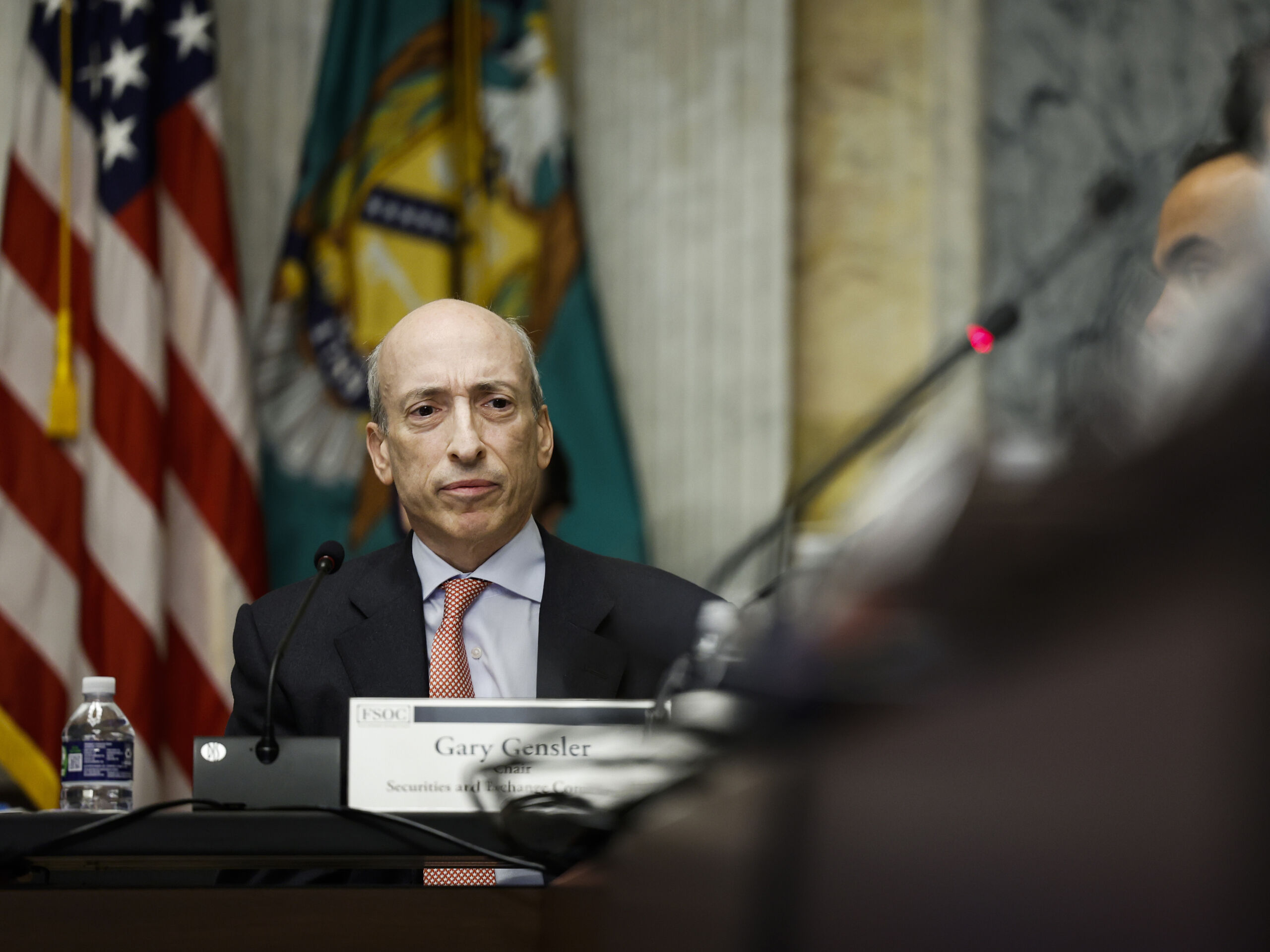
WASHINGTON, DC - OCTOBER 03: Securities and Exchange Commission (SEC) Chair Gary Gensler listens during a meeting with the Treasury Department's Financial Stability Oversight Council at the U.S. Treasury Department on October 03, 2022 in Washington, DC. The council held the meeting to discuss a range of topics including climate-related financial risk and the recent Treasury report on the adoption of cloud services in the financial sector. (Photo by Anna Moneymaker/Getty Images)

In a major development for the crypto industry, Invesco, one of the world’s largest asset managers with $1.5 trillion in assets under management, has partnered with Galaxy Digital, a leading digital asset firm, to file for a spot Bitcoin ETF with the US Securities and Exchange Commission (SEC).

A spot Bitcoin ETF is a type of exchange-traded fund that tracks the price of Bitcoin directly, rather than through derivatives or trusts. This means that the ETF would hold actual Bitcoin in custody and allow investors to gain exposure to the cryptocurrency without having to buy, store, or manage it themselves.

The Invesco-Galaxy partnership is significant because it combines the expertise and reputation of both firms in the traditional and digital asset markets. Invesco is a well-known name in the ETF space, with over 230 ETFs listed in the US and more than $405 billion in ETF assets. Galaxy Digital is a pioneer in the crypto industry, founded by former hedge fund manager and Bitcoin bull Mike Novogratz. Galaxy Digital provides a range of services and products for institutional and retail investors, including trading, asset management, custody, mining, and advisory.

The filing of the spot Bitcoin ETF comes amid growing demand and anticipation for such a product in the US. Several other firms, including Fidelity, VanEck, and Valkyrie, have also filed for spot Bitcoin ETFs with the SEC, but none have been approved yet. The SEC has been cautious and skeptical about approving crypto-related ETFs, citing concerns over market manipulation, fraud, custody, and investor protection.

However, some analysts and industry experts believe that the SEC may soon change its stance and approve a spot Bitcoin ETF, especially after Canada became the first North American country to do so earlier this year. A spot Bitcoin ETF could potentially boost the adoption and legitimacy of Bitcoin and crypto in general, as it would provide an easy and regulated way for mainstream investors to access the market.

The Invesco-Galaxy spot Bitcoin ETF is expected to trade on the NYSE Arca exchange under the ticker symbol BTCX. The filing did not disclose the fees or launch date of the ETF, which are subject to SEC approval. The filing also stated that the ETF may invest in other digital assets besides Bitcoin in the future.

Novogratz thinks bitcoin ETFs will be approved this year.

One of the most prominent figures in the cryptocurrency industry, Mike Novogratz, has expressed his optimism that the US Securities and Exchange Commission (SEC) will finally approve bitcoin exchange-traded funds (ETFs) this year. Novogratz, who is the founder and CEO of Galaxy Digital, a crypto-focused investment firm, made his prediction in an interview with CNBC on Wednesday.

Novogratz said that he believes the SEC is under pressure to greenlight bitcoin ETFs, as more and more investors are looking for exposure to the leading cryptocurrency. He also cited the success of bitcoin ETFs in Canada, where several funds have launched and attracted significant inflows.

“I think Gary Gensler, who is a smart guy and understands crypto well, understands that we need to have some regulatory clarity,” Novogratz said, referring to the SEC chairman. “And so, I’m hoping by the end of the year we get an ETF. I think it would be a big deal for the ecosystem.”

Bitcoin ETFs are seen as a potential catalyst for boosting the adoption and liquidity of the cryptocurrency, as they would allow investors to access bitcoin without having to deal with the technical challenges of buying and storing it directly. Bitcoin ETFs would also provide more regulatory oversight and transparency for the crypto market.

However, the SEC has been reluctant to approve any bitcoin ETF proposals so far, citing concerns over market manipulation, fraud, and investor protection. The regulator has repeatedly delayed or rejected applications from various firms, including VanEck, WisdomTree, and Bitwise.

Novogratz said that he thinks the SEC is waiting for more data and evidence that the crypto market is mature and resilient enough to support a bitcoin ETF. He also said that he expects the SEC to approve a futures-based bitcoin ETF first, rather than a spot-based one, as futures are regulated by the Commodity Futures Trading Commission (CFTC).

“I think they’re more comfortable with something that’s under their jurisdiction,” he said. Novogratz added that he is bullish on bitcoin in the long term, despite the recent volatility and regulatory uncertainty. He said that he expects bitcoin to reach $100,000 by the end of the year, driven by institutional and retail demand. “I think we’re in a secular bull market,” he said. “I think we’re just getting started.”

Gary Gensler actively collaborating with Bitcoin spot ETF issuers to finalize their filings.

In a major development for the crypto industry, the US Securities and Exchange Commission (SEC) chair Gary Gensler has reportedly been in talks with several Bitcoin spot ETF issuers to expedite their approval process. According to sources familiar with the matter, Gensler is keen on launching a Bitcoin spot ETF as soon as possible, as he believes it would provide more transparency and investor protection than the existing Bitcoin futures ETFs.

A Bitcoin spot ETF is an exchange-traded fund that tracks the price of Bitcoin directly, rather than through derivatives contracts. This means that the fund would hold actual Bitcoin in custody, and investors would be able to redeem their shares for Bitcoin if they wish.

A Bitcoin futures ETF, on the other hand, tracks the price of Bitcoin through futures contracts traded on regulated exchanges, such as the Chicago Mercantile Exchange (CME). These contracts are settled in cash, not in Bitcoin, and they may incur additional fees and risks.

The SEC has so far approved four Bitcoin futures ETFs, which have collectively attracted over $2 billion in assets under management since their launch in October. However, many crypto enthusiasts and experts have argued that a Bitcoin spot ETF would be more beneficial for the industry, as it would reflect the true demand and supply of Bitcoin and reduce the potential for market manipulation and arbitrage.

Moreover, a Bitcoin spot ETF would lower the barriers to entry for retail investors, who may not have access to futures trading platforms or may not want to deal with the complexities and costs of futures contracts.

Gensler, who has been vocal about his support for innovation and regulation in the crypto space, has apparently recognized these advantages and is now actively collaborating with Bitcoin spot ETF issuers to finalize their filings. According to the sources, Gensler is particularly interested in ensuring that the issuers have robust anti-money laundering (AML) and know-your-customer (KYC) policies, as well as adequate security measures to safeguard the Bitcoin holdings from theft or loss.

He is also looking for assurances that the issuers have sufficient liquidity providers and market makers to ensure a fair and efficient price discovery process.

The sources did not reveal the names of the issuers that Gensler is in contact with, but some of the candidates that have filed for a Bitcoin spot ETF include VanEck, Fidelity, WisdomTree, NYDIG, Valkyrie, and Bitwise. These issuers have been waiting for months or even years for the SEC to review their applications, but they may soon see their efforts pay off if Gensler’s initiative succeeds.

A Bitcoin spot ETF would be a game-changer for the crypto industry, as it would signal the SEC’s recognition and acceptance of Bitcoin as a legitimate asset class. It would also boost the adoption and awareness of Bitcoin among mainstream investors, who may prefer a regulated and convenient way to gain exposure to the leading cryptocurrency.

Furthermore, it would increase the competition and innovation in the crypto ETF space, which could lead to more products and services that cater to different needs and preferences of investors.

The SEC has not officially confirmed or denied Gensler’s involvement in the Bitcoin spot ETF discussions, but the sources said that an announcement could be made in the coming weeks or months. If true, this would be a welcome surprise for the crypto community, which has been eagerly awaiting a green light from the SEC for a long time. A Bitcoin spot ETF could be the catalyst that propels Bitcoin to new heights, as it would unleash a wave of institutional and retail capital into the market.