DD
MM
YYYY

PAGES

DD
MM
YYYY

spot_img

PAGES

Home Blog Page 3675

$15,000 for directors, $10,000 for employees: Nigeria Introduces Expatriate Employment Levy to Boost Indigenous Workforce

0

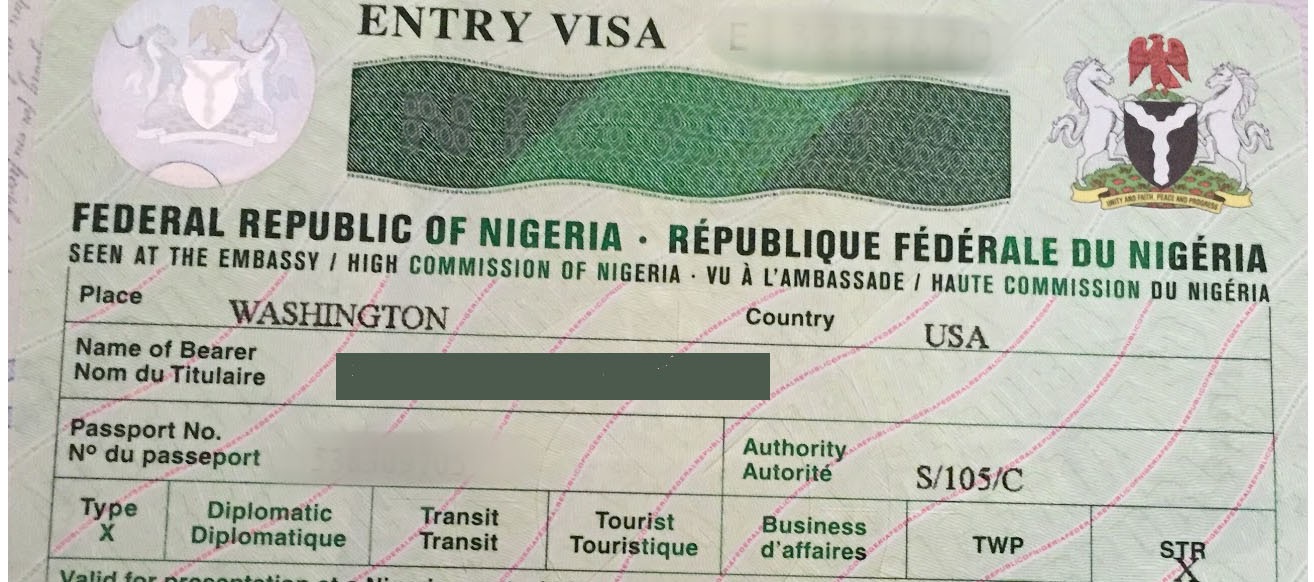
In a bid to bolster local employment opportunities and increase revenue, Nigeria has announced the implementation of a mandatory annual levy targeting organizations employing expatriate workers.

Under this new regulation, companies are required to pay $15,000 for directors and $10,000 for other expatriate employees.

The initiative aims to incentivize foreign companies to hire more Nigerian workers, aligning with President Bola Tinubu’s vision of balancing employment opportunities between Nigerians and expatriates. Tinubu emphasized this objective during the launch of the Expatriate Employment Levy (EEL) handbook, cautioning against any misuse of the levy to deter potential investors.

“The goal is to close wage gaps between expatriates and the Nigerian labor force while increasing employment opportunities for qualified Nigerians in foreign companies in the country,” he said.

According to reports citing data from the interior ministry, Nigeria hosts more than 150,000 expatriates, primarily working in sectors such as oil and gas, construction, telecommunications, and hospitality. Nigeria, being one of Africa’s largest oil producers, relies heavily on oil and gas exports, which constitute 90% of its foreign exchange earnings, as noted by the International Monetary Fund.

This move supplements the existing requirement for companies to pay $2,000 annually for residency permits per foreign employee. However, economists are expressing concern about the potential repercussions on investor confidence.

According to the new controversial methodology adopted by the NBS, Nigeria’s unemployment rate surged to 5.0 percent in the third quarter of 2023 from 4.2 percent in the previous quarter, as indicated by the latest Labour Force Survey. The report from the National Bureau of Statistics also revealed that the labor force participation rate among the working-age population declined to 79.5 percent in Q3 compared to 80.4 percent in Q2.

While the levy seeks to address employment disparities and generate revenue amidst Nigeria’s economic challenges, concerns linger regarding its impact on investor sentiment. Economists fear that the levy could deter foreign investment, exacerbating the nation’s economic woes.

They say while the intention behind the levy is noble, its implementation may inadvertently deter foreign investment, particularly at a time when Nigeria is grappling with economic instability.

But Nigerian economist Abubakar Abdullahi holds a positive outlook, stating that the levy could benefit Nigeria by prompting companies to explore local talent. “I believe Nigeria stands to benefit from this levy as more companies will start looking inwards as there are qualified Nigerians from all sectors,” Abdullahi remarked.

Investor confidence is crucial for Nigeria, especially amid its worst economic crisis in recent history. Widespread hardship and discontent have fueled protests and demonstrations by labor unions and government workers, underscoring the urgency of economic revitalization efforts.

In response to these challenges, President Tinubu reassured Nigerians of ongoing efforts to stabilize the economy and improve financial prospects. However, striking a delicate balance between promoting indigenous employment and sustaining investor confidence remains a formidable task for Nigerian policymakers.

The success of the Expatriate Employment Levy hinges on effective enforcement mechanisms.

Enforcement of the levy falls under the jurisdiction of the Nigerian Immigration Service, with Interior Minister Olubunmi Tunji-Ojo indicating that it will operate under a public-private partnership model involving the government, immigration service, and a private firm.

Collaborative efforts between the government, immigration services, and private entities are said to be essential to mitigate concerns raised by investors and ensure the levy’s contribution to Nigeria’s economic development.

Experts have warned that policymakers must tread cautiously as Nigeria navigates through its economic turmoil, considering the nuanced implications of regulatory measures on investor sentiment and domestic employment dynamics. They said Finding a harmonious equilibrium between these competing priorities will be instrumental in steering Nigeria toward sustainable economic growth and prosperity.

Whales Move To BlockDAG Crypto For 5000x ROI Potential As BTCMTX Presale & Cardano Future Remains Uncertain

0

Have you ever wondered what sets off the FOMO firestorm in the cryptocurrency world? It was ignited and set fire by the extraordinary presale effort known as BlockDAG crypto, which raised more than $2 million in its first two presale batches. Due to its recent fundraising success, BlockDAG has gained attention and generated a lot of buzz that is difficult to ignore. Given that the business raised $2 million in first funding, many people are curious about what Bitcoin Minetrix presale and Cardano’s future will do.

Bitcoin Minetrix Presale is Back!

Bitcoin Minetrix is quickly emerging as one of the preferred options for investors closely behind the BlockDAG presale, which is currently topping the chart. With the help of this unique technology, which combines cloud mining and cryptocurrency staking, mining BTCMTX doesn’t require costly hardware.

Staking your BTCMTX coins gives you control over your mining activity and is a safer option than other cloud mining services. The primary draw of Bitcoin Minetrix is its streamlined cloud mining methodology. There is also less possibility of fraud because every transaction is tracked on-chain. 

30% Drop Makes Cardano Future Uncertain

The 30% drop in the price of Cardano can be attributed to the ongoing negative trend that began in mid-December. Nevertheless, as ADA gets closer to a crucial downtrend line, there are indications that the price may have bottomed out. Resistance is located at the 50-day SMA and $0.5419, the intersection of a horizontal line, if ADA breaks above this trendline.

The resistance level at $0.6412, higher than the present levels, and the $0.5908 barrier, roughly 10% above them, are the following two critical levels to watch. If the falling trendline rejects Cardano, the price may go below the trendline’s support and could test the $0.4668 bottom, which is almost 10% below the current levels. 

BlockDAG’s Batch 2 On A Sellout Frenzy, Raises $2 Million In Presale

BlockDAG (BDAG), inspired by Bitcoin and Kaspa, is reinventing blockchain with its hybrid consensus, combining POW’s security with DAG. As a result of its creative methodology, fastest speeds in the market, and highest level of security, BDAG has become the most advanced layer-1 blockchain globally, raising over 2 million in just two batches.

BlockDAG distinguishes itself in the cryptocurrency market with its commitment to rapid transactions, expansive scalability, and unwavering decentralization. For investors capitalizing on the current second-phase pricing at $0.0015 per BDAG, the anticipated launch price of $0.05 could yield an impressive return of up to 3233%.

Due to the significant interest from early backers, BlockDAG is excited to unveil a $2 million colossal giveaway for 50 fortunate members of its community. To take part in this exceptional opportunity, participants are encouraged to engage with BlockDAG’s social media platforms, register their wallet addresses, enhance their winning probabilities by completing various tasks, and secure additional chances by referring friends.

Conclusion

Even though Cardano Future looks to be approaching a bottom, its price could still be affected by resistance levels in front of it. That being stated, Bitcoin Minetrix & BlockDAG presales are the next to watch. They are undoubtedly following a different route while observing the giants. Its dedication to user needs and success during presale attest to its potential. BlockDAG is a unique option for long-term investment because of its creative strategy, state-of-the-art technology, and commitment to revolutionising the cryptocurrency industry.


Invest In BlockDAG Today

Website: https://blockdag.network

Presale: https://purchase.blockdag.network

Telegram: https://t.me/blockDAGnetwork

Discord: https://discord.gg/Q7BxghMVyu


Nigerian Debt Recovery Startup Bfree Secures $2.95M to Redefine Debt Collection in Africa

0
Fund, money cash dollar

Bfree, a tech-enabled debt collection Nigerian startup has secured $2.95 million in fresh funding, to redefine debt collection in Africa.

The funding round was led by Capria Ventures with participation from Angaza Capital, GreenHouse Capital, Launch Africa, Modus Africa, Axian CVC, and Angel investors.

Commenting on the investment, managing partner at Capria Ventures, Susana Garcia-Robles said,

“The advent of generative Al provides a pathway for more efficient scaling, enabling the company to expand across the continent at a reduced cost. Bfree is well-positioned to play a crucial role in improving accessibility and mitigating risk in financial services.

“We foresee the growing prominence of credit management and are confident that Bfree will spearhead the creation of a secondary market on the continent for distressed assets. Bfree has secured significant partnerships with top-tier banks and fintechs, affirming the effectiveness of its product and reinforcing our belief in its potential to transform credit collection in Africa”.

Through a tech-enabled credit management solution that makes collection processes more scalable, efficient, and user-friendly, Bfree concentrates on helping its customers with their finances.

Commenting on the company’s commitment to addressing the challenges of risk management and how the newly raised fund would enhance that, CEO of Bfree, Julian Flosbach said,

“At Bfree, we are focused on addressing the challenges of risk management in African economies. Through the use of Al, we are developing solutions that help distressed borrowers get back on their feet while empowering lenders and contributing to financial market stability across the continent. With the support of our investors, we are poised to make significant strides in transforming risk management for lenders in Africa.”

Launched in 2020, Bfree offers a personal budgeting service to debt consumers to help them spend within their means and repay their loans with interest promptly.

The startup says 92% of its interactions with customers are fully automated but has maintained a call center, manned by a small team, for when customers call or for follow-ups that require phone calls. It also launched a loan collection management SaaS dubbed Workflow, which targets companies with in-house collection teams or those that are not keen to outsource.

The startup is arguably the only tech-enabled credit recovery company across Africa, where collectors continue to heavily rely on traditional options like call centers to follow up on settlements. Over the years, its customer base has grown to include some of the major banks in Ghana, Kenya, and Nigeria, where it plans to continue scaling.

The startup plans to create a secondary debt market, to allow third-party investors like hedge funds, looking to diversify their investments, to buy non-performing loans (NLPs) from banks in Africa. Debt buyers purchase loans from banks at a fraction of the debt’s face value and make profits from collection. Banks sell NLPs to minimize their risk, manage loan portfolios, and free up funds.

Through its consumer personal budgeting processes, algorithms, and financial literacy, Bfree believes it will tackle Africa’s rising consumer debt.

Mastercard and MTN Group Fintech Collaborate to Boost The Expansion of Mobile Money Across 13 African Markets

0

In a groundbreaking alliance, payments giant Mastercard has partnered with MTN Group Fintech to propel the evolution of the mobile money landscape across 13 vibrant markets in Africa.

The collaboration will enable millions of people and small businesses across Africa to gain access to digital tools to transact through secure mobile payments, expanding access to the benefits of the cashless digital economy.

Also, the partnership will use Mastercard’s cutting-edge technology and capabilities to support MTN’s ambition to become Africa’s largest fintech platform for both merchants and consumers.

This follows Mastercard and MTN’s recent agreement for a minority investment into MTN Group Fintech – the digital financial services arm of Africa’s largest mobile network operator – that concluded this month.

With MTN’s overall subscriber base at 290 million and 60 million active monthly MoMo (Mobile Money) wallets, the agreement will impact 13 markets in Africa which include; South Africa, Rwanda, Ghana, Zambia, Nigeria, Cameroon, Cote d’Ivoire, Eswatini, Liberia, Republic of Congo, Republic of Guinea, Uganda, and Benin.

Speaking on the partnership, Executive Vice President, Market Development EEMEA, Mastercard, Amnah Ajmal said,

“Our innovation strategy is based on collaboration. We are very proud of our partnership with MTN which will enable digital commerce for millions of people in Africa. In addition, mobile money solutions can be greatly beneficial for SMEs, enabling growth through seamless commercial operations, wider payment acceptance, access to affordable credit, and secure digital tools”.

Also speaking, Group CEO MTN Fintech Serigne Dioum said,

“When there is a mutual vision in this case to bring access, progress, financial inclusion, and prosperity to people – the road to partnership is a simple one. We look forward to working with Mastercard as a partner that is also committed to the enablement of more people and businesses through the collaboration into best-in-class apps, superior user experiences, safe transactions, secure remittances, new use cases, and expanded acceptance”.

To enable global access for MoMo wallet users, a virtual and physical Mastercard companion card will be added to every MoMo wallet allowing users access to over 100 million acceptance locations globally enabling MTN to scale up internationally. With this access, Mastercard will also be able to provide its cybersecurity solutions to MTN’s operations with the aim of increasing customer loyalty and trust.

Mastercard and MTN collaboration represents a powerful union of two industry giants committed to driving positive change and fostering financial empowerment across Africa’s dynamic and diverse landscape.

The expansion of the mobile money ecosystem holds immense potential to transform lives and livelihoods, particularly in underserved communities where traditional banking infrastructure may be limited.

By extending the reach of mobile money services across multiple markets, Mastercard and MTN Group Fintech aim to unlock new opportunities for individuals, businesses, and economies to thrive in an increasingly digital world.

Beyond Crypto in Nigeria; How To Make Sense of Everything, including Binance, Naira, FX, etc

1

Young People, please calm down. I know that I went after your beloved Binance and many are not happy in this crypto age. But note this: asking the government to follow the law as written in the rule books should not make people feel bad. I am unbiased and I have no advocacy, what that means is that I do not take sides. 

If the Nigerian government asked Binance to provide documents of its customers in Nigeria, through which it allegedly moved/traded $26 billion, that is fair game. Supporting the government on that should not make you unhappy. According to Premium Times, Binance is yet to provide those documents and as a result, the government was forced to detain the executives: “According to sources who spoke with PREMIUM TIMES Wednesday evening, the Nigerian authorities requested Binance executives to provide data relating to transactions involving the Nigerian Naira on the Binance platform in the last seven years. They also demanded that some other data relating to Nigeria be deleted from the Binance platform. However, the Binance executives insisted that they should be taken to their respective countries’ embassies before they could comply.” 

To read me, you have to be objective. I try to be fair and balanced, critiquing and commending the government based on how I interpret policies. As I have said, I do not need anything from any politician or government in Nigeria because God has blessed. My only desire is that Nigeria works, so that others will benefit from Nigeria, because Nigeria worked for me. I have nothing against Tinubu, Buhari or anyone; I sing praises if they do well, and lead a charge against them if otherwise. That is the way to understand me.

Let us allow our government to do its work, reminding it to follow due process. If a Nigerian is arrested in London or New York, we do not accuse their governments of being stupid. So, why should we do the same on our own? If you read PT report, you can see that what Nigeria is accusing Binance was the same thing the US Government accused it which lead to its CEO pleading guilty: “Binance did not implement comprehensive know-your-customer (KYC) protocols or systematically monitor transactions, and Binance never filed a suspicious activity report (SAR) with FinCEN”.

That Binance collected your ID did not mean anything if it could not provide as required by law. That said, Nigeria’s problem is not Binance or AbokiFX. I have been consistent since June 2023 that the floating of Naira is a bad policy, because you do not float what you cannot control. By floating the Naira when we have limited supply of US dollars, the future of Naira is imperiled. 

So, all the garagara with Binance, AkokiFX, etc will not fix the root cause of Nigeria’s FX problem which is: we need to do things which can reduce demand for USD or/and generate more USD. Look left and right, it is not a finance-first playbook, but a manufacturing/production one. In other words, Nigeria should arrest and detain factories in Aba, Ibadan, Kano, Uyo, etc and force them to produce things, for Naira to breathe.

For Binance, I have no problems with it; it possibly will not have any problem once it provides the documents which I do think it has. And once it does, Nigeria will likely see the list and will do nothing because some “do not touch names” will likely be in that list. Next week, another scene will open … and the play continues.