DD
MM
YYYY

PAGES

DD
MM
YYYY

spot_img

PAGES

Home Blog Page 3676

The Problems of Over-Reliance on AI in Creative Work

0

I recently read about a lady who feared being left out of the AI trend, so she introduced it into her work. She would use AI to write captions and write advertising copies to send to the graphics designer. She even started incorporating AI to reply to client inquiries and emails.

What was the result?

A crash in engagements. She noticed that since she took this route, her post engagements and leads were significantly reduced.

The question is, what did she do wrong? Wasn’t the AI supposed to do the job faster and better?

Well, while there are predictions that AI may take over jobs in several industries, I have yet to see any that adds the creative industry to that list. In recent years, artificial intelligence (AI) has made significant strides in various fields, including creative industries such as art, music, and writing. AI tools and algorithms have demonstrated remarkable capabilities in generating content, assisting artists, and streamlining creative processes.

However, inherent risks are associated with over-reliance on AI, especially in creative work. One of the pitfalls is that it can harm the quality, authenticity, and diversity of creative output. When people interact with creative works, they want to feel and connect to the human behind the work, and if you over-rely on AI, they miss out on that.

How Relying Too Heavily on AI can impact work output

1. Lack of Originality: AI algorithms are trained on existing datasets and patterns, which means they work well with mathematical-based tasks, but when it comes to creativity, they may produce content that lacks originality and uniqueness. Over-reliance on AI-generated content can lead to a homogenization of creative output, where everything starts to look or sound the same, devoid of the human touch and individual expression, kind of like a monotone that is lacking in emotions.

2. Loss of Authenticity: Creative work is often valued for its authenticity and emotional resonance. AI-generated content may lack the depth, nuance, and emotional authenticity that come from human experience and perspective. This can result in a disconnection between the creator and the audience, leading to a loss of engagement and impact. And this is what I think might have happened with the lady we referenced earlier.

3. Dependency on Technology: Relying too heavily on AI tools and automation can lead creatives to rely overly on algorithms to generate ideas, solve problems, and make creative decisions. This can limit the development of critical thinking skills, intuition, and creative problem-solving abilities in humans, especially for entry-level employees.

4. Ethical Concerns: AI algorithms are not immune to biases and ethical issues, which can manifest in the content they produce. Over-reliance on AI in creative work may perpetuate harmful stereotypes, reinforce existing inequalities, and marginalize certain societal voices and perspectives. This is often a general concern with anything driven by technology.

How Over-reliance on AI May Stifle Human Creativity and Innovation

1. Loss of Creative Control: When creatives rely too heavily on AI tools and automation, they may relinquish control over the creative process, losing autonomy and ownership over their work. Creativity thrives on freedom and experimentation, and excessive automation can constrain creative expression and exploration.

2. Reduction of Serendipity: Serendipity plays a crucial role in the creative process, leading to unexpected discoveries, breakthroughs, and innovations. AI algorithms operate based on predefined parameters and data, which may limit their ability to produce genuinely novel and surprising outcomes. Over-reliance on AI can diminish the serendipitous moments that often lead to creative insights and new ideas.

3. Diminished Human Connection: Creativity is a profoundly human endeavor fueled by emotions, experiences, and interpersonal connections. Excessive reliance on AI may erode the human element of creative work, leading to a loss of connection between creators and their audiences. Human creativity thrives on empathy, collaboration, and shared experiences, which AI algorithms cannot fully replicate.

4. Stagnation of Skills: Creativity is a skill that improves with practice, experimentation, and learning from failure. When creatives rely too heavily on AI tools and automation, they may become complacent and fail to develop their creative abilities to their full potential. This can lead to a stagnation of skills and a lack of innovation in the long run. This situation could be worse for those who enter the space in these times when AI is already dominating the flow.

Where lies the balance?

Do creatives discard AI then and stick to the old way of doing things? No.

The balance lies in collaboration. Instead of viewing AI as a replacement for human creativity, embrace it as a tool for collaboration and augmentation. AI can complement human creativity by assisting with repetitive tasks, generating ideas, and providing inspiration. Collaborative approaches combining AI’s strengths and human creativity can lead to richer, more innovative outcomes.

There is also a need to encourage creativity, especially the younger ones, to cultivate essential skills such as critical thinking, problem-solving, curiosity, and adaptability. Investing in creativity training and development programs can help individuals harness their creative potential and overcome the limitations of AI.

We should also not forget to maintain human oversight and intervention in the creative process to ensure that AI-generated content aligns with the creator’s vision, values, and ethical standards. Creatives should retain control over critical, creative decisions while leveraging AI tools to enhance productivity and efficiency.

By finding the right balance between AI assistance and human creativity, we can unlock the full potential of both to create truly impactful and meaningful creative work. Whether in your business, job, or other pursuits, there is a place for AI to assist you in working smarter.Find it and explore it.

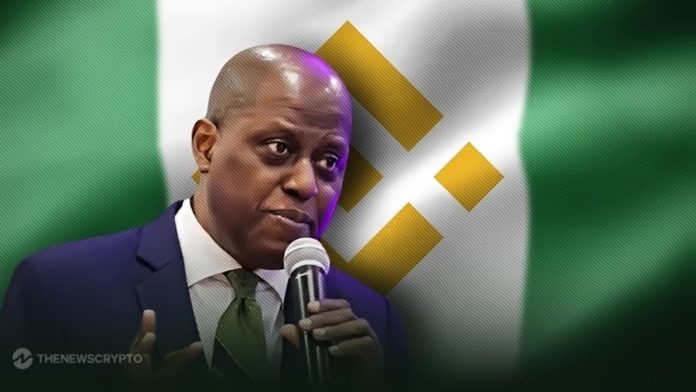
As Nigeria Arrests Binance Executives, It Must Follow Global Best Practices Even As It Enforces Its Laws

0

A big one for Binance Nigeria: “Nigeria…has intensified its efforts to curb speculation on the national currency, the naira, by cracking down on cryptocurrency exchanges as the nation’s economic downturn deteriorates. The Financial Times reported, citing sources, that two senior executives at Binance, one of the world’s largest cryptocurrency exchanges, have been detained in Nigeria in connection with these regulatory measures.”

We must support the Nigerian government to do its work. If Binance broke the law, it  must pay. There is no need to criticize the government for actually doing its work. I am not worried that Binance executives are detained provided those executives are treated according to the rule books.

Nonetheless, I concede that these guys may be innocent; we always arrest on emotions before we investigate. And if that is the case, they should be allowed to go home. Simple!

In America, if you break the law, you pay the price. Some Nigerians have been arrested and put in jails for breaking financial laws in the UK, US, etc. Please allow the government to breathe. We should only ask the government to follow due process.

Yet, I am unhappy that the Financial Times broke this news. You cannot arrest people in Lagos and allow a London-based newspaper to drive the narratives. The leakers should have leaked to local newspapers instead of FT which has limited understanding of Nigeria in this context. #MayNigeriaWork!

They accused Binance of facilitating $26B without KYC in Nigeria. That is a crime in America and should be a crime in Nigeria based on NITDA ordinance. If you check, Binance CEO was convicted for the same crime in the US.

Binance Executives Detained in Nigeria As Government Intensifies Cryptocurrency Crackdown

Binance Executives Detained in Nigeria As Government Intensifies Cryptocurrency Crackdown

0

Nigeria, Africa’s largest economy, has intensified its efforts to curb speculation on the national currency, the naira, by cracking down on cryptocurrency exchanges as the nation’s economic downturn deteriorates.

The Financial Times reported, citing sources, that two senior executives at Binance, one of the world’s largest cryptocurrency exchanges, have been detained in Nigeria in connection with these regulatory measures.

This development comes shortly after the revelation by Nigeria’s central bank governor, Olayemi Cardoso, that over $26 billion in illegal transactions had flowed through Binance’s crypto platform in the span of a year. The detained executives reportedly flew to Nigeria following the country’s recent ban on several cryptocurrency trading websites.

According to the sources familiar with the matter, the executives were detained by the office of Nigeria’s national security adviser upon their arrival in the country, with their passports confiscated. While an adviser to the office declined immediate comment, Binance itself refrained from offering any statement on the situation.

Nigerian authorities have shifted their focus to cryptocurrency websites following a significant devaluation of the naira, which contributed to soaring inflation rates. These platforms have emerged as alternative avenues for trading and establishing unofficial exchange rates for the Nigerian currency.

In response to the executives’ detention, Binance halted trading of the naira against bitcoin and tether digital coins on its exchange.

During a press conference on Tuesday, Governor Cardoso highlighted concerns regarding illicit financial flows through crypto exchanges, specifically mentioning Binance.

“We are concerned that certain practices go on that indicate flows, going through a number of these entities and suspicious flows. In the case of Binance, in the last year, $26 billion has passed through Binance Nigeria from sources and users who we cannot identify,” he said.

As part of their investigation into cryptocurrency exchanges, Nigerian authorities, including the anti-corruption agency, police, and national security adviser, are reportedly seeking access to a comprehensive list of Binance’s Nigerian users since its establishment.

Last week, Nigeria’s telecommunications regulator ordered telecoms companies to block access to major cryptocurrency exchanges like Binance, Coinbase, and Kraken. This move reflects the government’s broader efforts to attract foreign investment and stabilize the economy through market-friendly reforms, including currency devaluations.

The situation poses a significant challenge for Binance, which has been grappling with internal reform efforts. In November, the company faced substantial penalties from US authorities for money laundering and violating international sanctions rules. Former CEO Changpeng Zhao pleaded guilty to related charges and resigned from his position.

Bayo Onanuga, a special adviser to President Bola Tinubu, accused Binance of manipulating exchange rates for Nigeria, infringing upon the central bank’s role as the currency rate setter.

The crackdown on cryptocurrency exchanges comes amid broader efforts by Nigerian authorities to address currency speculation and stabilize the national currency, the naira. In addition to targeting digital asset platforms, the CBN has also taken decisive action against Bureau De Change operators, who play a significant role in the foreign exchange market.

In recent weeks, the CBN has implemented stringent measures to rein in BDCs, including suspending the issuance of licenses to new operators and restricting access to foreign exchange for certain transactions. These measures aim to curb currency speculation and illicit financial flows, which have contributed to the devaluation of the naira and soaring inflation rates in Nigeria.

The CBN’s crackdown on BDCs is part of a broader strategy to strengthen the country’s financial system and promote economic stability. By clamping down on currency speculation and illegal financial activities, Nigerian authorities seek to restore confidence in the national currency and create a more conducive environment for sustainable economic growth.

However, the detention of Binance executives and the crackdown on cryptocurrency exchanges raise questions about the regulatory approach to digital asset trading in Nigeria. As the government grapples with the challenges posed by cryptocurrencies, stakeholders emphasize the need for balanced regulation that fosters innovation while mitigating risks.

Nigeria Detains Two Binance Executives as The Country Cracks Down on Cryptocurrency Platforms

0

Recent reports have revealed that the Federal government of Nigeria has detained two Binance top executives, as the country cracks down on crypto platforms over alleged destabilization of the Naira.

Financial Times reports that the executives flew into the country following the government’s decision to ban several crypto platforms, but were. unfortunately detained by the office of the country’s national security adviser with their passports seized, according to people familiar with the matter.

Following the detention of the executives, Binance has halted trading of the Naira against Bitcoin and Tether digital coins on its exchange.

Check out some reactions of Nigerians on X, following the arrest of two top Binance executives,

@Ebuka Nwafor wrote,

“This is a serious red flag for a country that is traveling around the world seeking for investors. Why is he detaining two Binance executives for a Centralized exchange platform that thrives on P2P amongst other valuable services”.

@OgbeniBiodun wrote,

“This is what happens when you have individuals in positions of power who would rather blame everyone and everything for their own failures and bad policies, how can you detain executives who came to negotiate with you, and you expect foreigners to invest in your country?”.

@YusufZone wrote,

“No matter what anyone feels or thinks, change is always inevitable and constant. The future of money is digital and that future is already here! Attempting to block or frustrate digital money is like attempting to arrest the breeze and locking it up in a cage! Is that possible?”

@iOXRael wrote,

“Detention is overkill. Binance has a thorough KYC scheme and the T&C allows them to share info with government agencies, especially those involved in anti-fraud and anti-money laundering. NSA only needed to ask.”

It is worth noting that the arrest of Binance’s top executives is coming after the Central Bank of Nigeria (CBN) Governor Olayemi Cardoso recently disclosed that over $26 billion in illegal transactions have passed through the crypto platform Binance in one year.

In his words,

“We are concerned that certain practices go on that indicate flows, going through a number of these entities and suspicious flows. In the case of Binance, in the last year, $26 billion has passed through Binance Nigeria from sources and users who we cannot identify”.

Cardoso further added that the Apex bank  has collaborated with different agencies which include the EFCC (Economic and Financial Crimes Commission), the police, and the office of the NSA (National Security Adviser), noting that the bank is determined to do everything it takes to ensure that they take charge of the market and put it differently.

With the Naira’s continuous devaluation against the dollar and other foreign currencies, the Nigerian government has intensified its crackdown on cryptocurrency platforms. The crackdown follows a period after several of these platforms emerged as the preferred choice for Nigerians to trade the Nigerian currency, which has continued to suffer a fall.

Notably, Nigeria’s economy has been experiencing crippling dollar shortages that have pushed its currency to record lows.

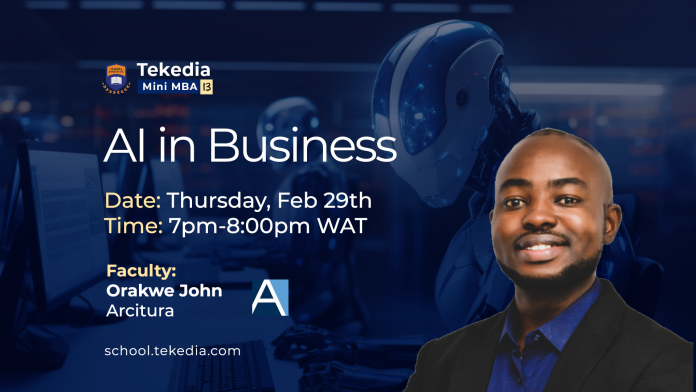
Join “AI in Business” Lecture Tomorrow

0

Join us tomorrow at Tekedia Mini-MBA for an “AI in Business”’ lecture.  AI is reshaping the ordinance of the market system, and Tekedia Institute is committed to educate, inform and train lectures on the fundamental components of AI business. Zoom link in the class board https://school.tekedia.com/course/mmba13/