DD
MM
YYYY

PAGES

DD
MM
YYYY

spot_img

PAGES

Home Blog Page 368

GitHub Begins Full Migration to Microsoft Azure in Major Cloud Overhaul

0

GitHub is preparing for one of the most significant infrastructure transformations in its history — a full migration to Microsoft’s Azure cloud servers over the next two years, according to The Verge.

The move marks a pivotal moment for the world’s largest developer platform as it grapples with mounting data center limitations and surging demand driven by AI-powered services like Copilot.

The migration signals not only a deepening of GitHub’s technical dependence on its parent company, Microsoft, but also a major operational shift within the developer ecosystem. The transition follows a string of capacity issues at GitHub’s primary data centers in Virginia, where space and scalability have become major bottlenecks.

GitHub Chief Technology Officer Vladimir Fedorov laid out the urgency of the shift in an internal announcement, describing the current data constraints as unsustainable.

“We are constrained on data server capacity with limited opportunities to bring more capacity online in the North Virginia region,” Fedorov said.

He emphasized that moving to Azure is “existential for GitHub to have the ability to scale to meet the demands of AI and Copilot.”

Microsoft’s senior leadership, including its CoreAI division, is backing the transition, showing how GitHub’s evolution has become inseparable from Microsoft’s broader artificial intelligence and cloud strategy.

“CoreAI and Azure are mobilizing to get us the capacity and anything else we need to unlock us,” Fedorov noted, suggesting a joint operational framework between the developer platform and Microsoft’s internal infrastructure teams.

The integration builds on a steady consolidation process that began after Microsoft’s $7.5 billion acquisition of GitHub in 2018. The company was later moved under Microsoft’s Developer Division in 2021, bringing it closer to teams working on products like Visual Studio and Azure AI.

Past Setbacks and a New Approach

GitHub’s path to Azure has not been straightforward. Earlier migration efforts, including initiatives like Git in Azure and Azure Sites Automation, encountered delays and technical challenges. Fedorov admitted as much, writing, “I know this is not the first time we said GitHub is moving to Azure. I also know that these types of migrations can drag on, and the longer they drag on, the more likely they are to fail.”

Determined to avoid another drawn-out transition, GitHub’s leadership has reprioritized company-wide efforts, asking teams to delay feature releases and concentrate engineering resources on infrastructure. The internal target is to complete the bulk of migration work within 12 months, with a full switchover to Azure in 24 months.

Scaling for the AI Era

GitHub’s Chief Operating Officer, Kyle Daigle, confirmed the plan in an official statement, highlighting how the surge in developer activity and AI-driven workflows is pushing the company’s existing systems to their limits.

“We need to scale faster to meet the explosive growth in developer activity and AI-powered workflows, and our current infrastructure is hitting its limits,” Daigle said.

By moving to Azure, GitHub expects to gain access to more flexible computing resources, deeper integration with Microsoft’s AI capabilities, and greater global redundancy. The migration will also allow the company to better support Copilot, its AI coding assistant developed with OpenAI, which now powers millions of daily code suggestions and consumes massive amounts of compute capacity.

However, migrating GitHub’s sprawling infrastructure — including complex systems like MySQL clusters, GitHub Actions, and search services — could cause temporary disruptions. The platform has faced several outages in the past year, affecting its automation tools and enterprise import features, underscoring how fragile its backend can be during periods of change.

Analysts note that while moving to Azure may resolve capacity issues, it will also tighten Microsoft’s control over GitHub’s operations. The platform now reports directly into Microsoft’s CoreAI and developer leadership, with no standalone CEO following the recent departure of Thomas Dohmke. This consolidation has already led to organizational changes, such as the replacement of Slack with Microsoft Teams for internal communication.

Internally, employees describe the shift as a cultural and technical convergence with Microsoft. GitHub teams are increasingly using Microsoft’s toolchain, security standards, and deployment systems — part of what executives describe as an effort to “speak the same operational language.”

For Microsoft, GitHub’s migration represents more than just an infrastructure upgrade. The tech giant appears to see it as a symbolic moment in the company’s effort to integrate its developer assets under a unified cloud and AI vision.

However, the migration has presented the challenge of ensuring that this ambitious migration delivers what it promises to the global developer community that relies on GitHub daily: greater scale, stability, and performance — without compromising the reliability and openness that made GitHub the backbone of modern software development.

U.S. Senator Sanders Calls for Robot Tax to Protect Millions of Jobs from AI Threat

0

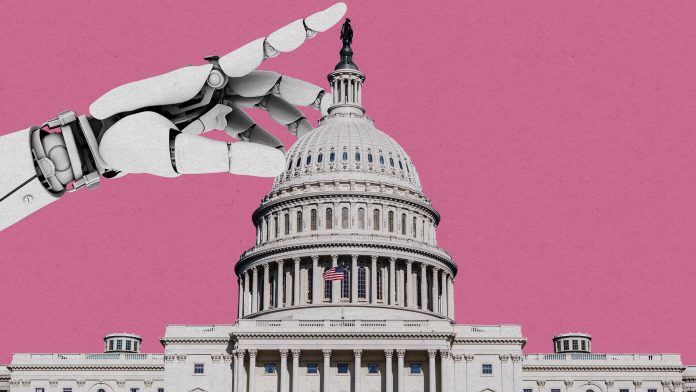
Senator Bernie Sanders has reignited the debate over a “robot tax” as fears mount that artificial intelligence and automation could wipe out tens of millions of American jobs within the next decade.

The Vermont lawmaker, who serves as the ranking member of the Senate Health, Education, Labor, and Pensions Committee, unveiled a new report this week warning that the United States is on the brink of an employment crisis driven by rapid advances in AI. The document projects that AI and automation could eliminate up to 100 million jobs across the country over the next ten years, transforming the labor market faster than any prior technological revolution.

“The agricultural revolution unfolded over thousands of years. The industrial revolution took more than a century,” the report said. “Artificial labor could reshape the economy in less than a decade.”

A Robot Tax to Slow the Corporate Rush Toward Automation

To mitigate what he calls the “human cost of artificial labor,” Sanders proposes introducing a robot tax on large corporations that replace human workers with machines or AI systems. The revenue from this tax, he said, would be directed toward retraining displaced workers, expanding unemployment insurance, and strengthening the social safety net.

The concept of taxing automation is not new, but Sanders’s report marks one of the most comprehensive policy pushes yet from a senior U.S. senator. The proposal also reflects a growing sense of urgency in Washington as AI begins to transform industries ranging from manufacturing and logistics to customer service and software development.

The idea once drew support from Bill Gates, who in 2017 argued that robots performing human work should be taxed at the same rate as people, ensuring that funding for schools, healthcare, and welfare programs doesn’t evaporate as automation spreads. Sanders echoed this view in his 2023 book, It’s OK to Be Angry About Capitalism, where he wrote: “If workers are going to be replaced by robots, as will be the case in many industries, we’re going to need to adapt tax and regulatory policies to assure that the change does not simply become an excuse for race-to-the-bottom profiteering by multinational corporations.”

Beyond Taxation: A Blueprint for a Fairer Future of Work

The report goes further than taxation. It calls for a 32-hour workweek without a reduction in pay, greater worker representation on corporate boards, and stronger pro-union legislation to give employees a voice in how automation is implemented. Sanders argues that these reforms are necessary to ensure that technological progress benefits workers and not just corporate shareholders.

The senator’s report also includes a striking experiment. His staff asked ChatGPT to forecast which professions are most likely to be replaced by AI in the next decade. The model estimated that 89% of fast food and counter workers, 62% of retail salespeople, and 54% of software developers could see their roles automated. Other fields, from call centers to transport and data entry, are also listed among the most vulnerable.

“While this basic analysis reflects all the inherent limitations of ChatGPT, it represents one potential future in which corporations decide to aggressively push forward with artificial labor,” the report cautions.

A Growing Policy Flashpoint

Sanders’s robot tax proposal lands amid intensifying debate in Washington about how to regulate AI’s expansion into the workforce. President Donald Trump’s administration has largely focused on accelerating AI innovation and strengthening U.S. dominance in emerging technologies, while lawmakers like Sanders are warning that unchecked automation could deepen inequality and hollow out the middle class.

Economists remain divided on this issue. Supporters say a robot tax could slow mass layoffs and fund the social transitions needed in an AI-driven economy. Critics, however, warn that it could stifle innovation and drive companies to move automation offshore.

Still, with AI advancing at a pace unseen in previous industrial shifts, Sanders argues that doing nothing is no longer an option.

“We can’t allow corporations to replace millions of American workers with machines without ensuring those workers share in the enormous gains in productivity and wealth that AI will create,” he said.

The senator’s call underscores a widening ideological divide over the future of work—between those racing to automate and those demanding that humanity not be left behind in the process.

Rivian CEO RJ Scaringe Says Electric Vehicles Shouldn’t Be Political Amid Trump-Era Policy Shifts

0

Rivian’s Chief Executive Officer, RJ Scaringe, says electric vehicles should not be associated with any political party — a view that stands out at a time when EVs have become an ideological flashpoint in Washington.

Speaking on The Verge’s Decoder podcast on Monday, Scaringe said that EVs “have become political,” but insisted that “they shouldn’t be.”

His remarks come as President Donald Trump’s administration moves to reverse several of the policies that previously supported the electric vehicle industry. Earlier this year, the Trump administration removed the federal EV tax credit and signed a resolution blocking California’s plan to phase out new gas-powered car sales — decisions that analysts say have slowed industry momentum and forced automakers to rethink their electrification timelines.

“Rivian employs almost 16,000 people domestically and has one of the strongest technology teams, I think, in the United States,” Scaringe said. “We spend a lot of time with the administration on that, and there’s a lot of support and enthusiasm for what we’re creating and building in that regard.”

The national focus on reshoring and domestic manufacturing — central to the Trump administration’s economic agenda — has boosted investment in gas-powered vehicle production, as automakers recalibrate their priorities. In June, General Motors announced a $4 billion investment in U.S. manufacturing plants, including expansions for internal combustion engine vehicles to “meet continued strong demand.”

That marks a sharp contrast from just a few years ago, when major automakers, including GM and Ford, had pledged to phase out combustion engines entirely by the 2030s. Scaringe lamented what he called a “reprioritization of capital towards internal combustion,” warning in August that the shift was “very bad for my kids and their kids, and very bad for the U.S. auto industry.”

While Trump’s policies have broadly applied across the EV sector, he has publicly praised select companies, most notably Tesla, which he has described as a model of American innovation. The president has even purchased one of Tesla’s vehicles himself, calling CEO Elon Musk “a great American success story.”

That endorsement, however, has not extended to the broader EV market. Trump has repeatedly criticized federal subsidies for electric vehicles, arguing they disproportionately benefit wealthy consumers and foreign manufacturers.

Rivian’s Neutral Ground

Scaringe is intent on keeping Rivian above the political fray. Drawing on a line from Michael Jordan’s iconic Nike campaign, he said: “Republicans buy sneakers, too.”

“We have a lot of Republicans who buy our vehicles and love them. We have a lot of Democrats who buy our vehicles and love them. We have people who are in the middle, and we have Independents,” Scaringe said, emphasizing that Rivian’s customer base spans the political spectrum.

He described Rivian’s mission as building a brand that is “as broad as possible,” with a “welcome mat” that invites all Americans — regardless of political affiliation — to embrace sustainable transportation.

“We try very hard not to make what we’re doing political,” Scaringe said. “At the end of the day, our vehicles are about performance, adventure, and innovation — not politics.”

Scaringe’s comments underline a broader tension in the U.S. auto industry as manufacturers navigate the intersection of industrial policy, climate goals, and consumer sentiment. The Trump administration’s rollback of EV incentives has prompted warnings from environmental groups that the U.S. risks falling behind Europe and China, where electric mobility remains a cornerstone of long-term economic and environmental strategy.

Despite the policy uncertainty, Rivian continues to expand its production capabilities and is positioning itself as one of the few independent challengers to Tesla. Scaringe thus appears to be betting that Rivian’s success will hinge less on policy and more on innovation and market appeal.

Elon Musk Reaches Settlement With Ousted Twitter Executives Over $128m Severance Dispute

0

Elon Musk has reached a settlement with four senior Twitter executives he abruptly fired after acquiring the company in 2022, ending a high-profile legal battle that shed light on his handling of the $44 billion takeover.

The settlement follows a year-long standoff over more than $128 million in unpaid severance benefits.

Court filings submitted to the U.S. District Court for the Northern District of California confirm that Musk and X Corp — Twitter’s rebranded parent company — have agreed in principle to settle with former CEO Parag Agrawal, CFO Ned Segal, chief legal officer Vijaya Gadde, and general counsel Sean Edgett. The four executives had sued Musk in March 2024, alleging that he engineered an “early closing” of the Twitter acquisition to deprive them of stock options set to vest the following day.

The filing indicates that the settlement is subject to “certain conditions” yet to be made public. The court has granted an extension of existing deadlines to give Musk time to fulfill those conditions, with proceedings scheduled to resume on October 31 if the terms are not met.

According to the executives’ lawsuit, Musk intentionally closed the acquisition on October 27, 2022 — a day earlier than scheduled — to block roughly $200 million worth of vested stock options. They cited passages from Walter Isaacson’s authorized biography of Musk, where the billionaire allegedly said he would “hunt every single one” of Twitter’s former leaders “till the day they die.” The lawsuit claimed this statement exemplified Musk’s personal vendetta against the executives who had previously resisted his takeover bid.

Agrawal and his team were dismissed within minutes of Musk assuming control of the company, reportedly escorted out of Twitter’s San Francisco headquarters under security supervision. Their abrupt termination formed part of a wider purge that saw more than 6,000 employees laid off globally between late 2022 and early 2023, as Musk sought to cut costs and overhaul the company’s business model.

X has been battling a string of lawsuits stemming from those layoffs. In August 2025, the company agreed to settle thousands of cases filed by ex-employees who accused Musk of violating federal labor laws by failing to provide the mandatory 60-day notice required under the Worker Adjustment and Retraining Notification (WARN) Act. The company has also faced claims from vendors, landlords, and former contractors who allege unpaid dues totaling tens of millions of dollars.

The legal tension comes amid ongoing turbulence at X, which has struggled with declining advertising revenue, operational restructuring, and regulatory challenges in multiple countries. Musk’s rebranding of Twitter into “X” was part of his long-term vision to transform the platform into an “everything app” offering payments, video streaming, and AI-powered services. However, that vision has been undermined by advertiser pullbacks, staffing shortages, and skepticism from regulators.

Analysts say the settlement with the four top executives is a pragmatic move for Musk, who faces mounting legal and financial pressures as X attempts to stabilize.

Dan Ives, a tech analyst at Wedbush Securities, said settling now allows Musk to limit exposure and draw a line under one of the most damaging disputes from his Twitter acquisition, adding that the case symbolized the chaos and personal acrimony that followed the takeover.

Under Musk’s ownership, X has also undergone dramatic policy shifts, including the reinstatement of previously banned accounts, a reduced focus on content moderation, and the introduction of paid verification. These moves have polarized users and advertisers alike, with the platform’s U.S. ad revenue reportedly falling by over 50% in 2023 before showing a modest recovery in mid-2025.

However, Musk remains determined to push X toward profitability and global expansion, particularly through new subscription models and AI-driven features. But legal experts say the latest settlement signals that even as Musk looks ahead, the legacy of his Twitter takeover continues to cast a long shadow.

With the settlement now pending final approval, Musk appears intent on closing one of the most contentious chapters of his ownership — though many within Silicon Valley say the consequences of his aggressive acquisition tactics will linger for years.

HR AI Assistants: Faster Recognition, Smarter Engagement

0

HR AI assistants are revolutionizing the way companies recognize and engage with their employees. By leveraging advanced HR tech and generative AI, these systems enable faster recognition and smarter engagement, transforming traditional human resources (HR) practices. Platforms like Flaree are leading the charge in making these AI solutions accessible and effective for modern workplaces, helping HR teams move from administrative firefighting to strategic employee engagement.

The integration of HR AI assistant technology into workplace systems marks a significant shift in business operations. These assistants automate routine tasks, allowing HR professionals to focus on creating a positive work environment. Employee recognition, a critical component of employee engagement, benefits greatly from AI’s ability to provide timely and personalized feedback. This ensures employees feel valued and motivated, ultimately enhancing productivity and overall team performance.

Key benefits of HR AI assistants include:

  • Automation of repetitive HR tasks such as scheduling, approvals, and reminders
  • Personalized recognition that acknowledges employees’ individual achievements
  • Increased productivity by freeing HR teams to focus on strategic initiatives
  • Streamlined workflows and consistent engagement for hybrid teams

AI’s Role in Enhancing Recognition and Engagement

HR AI assistants are redefining how organizations manage their workforce by streamlining HR processes and reducing administrative burdens. Automation in HR tech not only speeds up routine tasks but also facilitates instant feedback and appreciation, helping employees feel recognized in real time. AI tools leverage analytics to examine large datasets, offering insights into employee performance and engagement, identifying patterns, and suggesting actionable improvements.

For hybrid teams operating across multiple locations, AI ensures consistent recognition, aligning with company culture across geographical boundaries. Employees working remotely receive the same level of acknowledgment as those in the office, reducing feelings of isolation and improving morale. By combining AI with human insight, organizations can create recognition programs that are both scalable and highly personalized.

Machine learning algorithms within HR AI assistants continuously evolve to understand employee behaviors and preferences. These systems can predict when recognition is most impactful, such as after completing challenging projects, exceeding team goals, or reaching significant personal milestones. By analyzing historical data and engagement patterns, AI assistants proactively suggest recognition opportunities to managers, ensuring no achievement goes unnoticed. This predictive capability helps maintain consistent engagement levels, reduces the risk of employee burnout, and supports long-term retention.

Innovative Applications of HR AI Assistants

The potential of HR AI assistants in employee engagement is vast, with several innovative applications already in practice:

  • Auto-suggested recognition messages tailored to individual accomplishments, making kudos more personal and meaningful
  • Values-aligned templates that reinforce company culture and encourage behaviors aligned with organizational goals
  • Slack integration for immediate acknowledgment of achievements within daily workflows
  • Gamification features, including points, badges, and leaderboards, to boost motivation and healthy competition
  • Advanced natural language processing to analyze sentiment in communications, uncovering trends in morale and team dynamics
  • Automatic generation of personalized development plans based on performance patterns and career aspirations

Some forward-thinking implementations even incorporate virtual reality modules for immersive training experiences and team-building exercises, creating a more engaging and interactive workplace environment that goes beyond traditional recognition methods. These experiences help employees feel more connected to their teams, even in fully remote settings.

Leveraging Analytics for Smarter Engagement Strategies

Analytics play a critical role in shaping effective recognition and engagement strategies. By leveraging data analytics, companies can:

  • Track the effectiveness of recognition programs over time
  • Identify trends that drive employee engagement and satisfaction
  • Allocate resources efficiently to maximize impact
  • Tailor recognition strategies to individual teams or employees
  • Measure ROI to ensure recognition investments translate into tangible outcomes, such as higher productivity, engagement, and retention

Data-driven recognition also helps HR leaders make informed decisions about incentive programs, promotions, and professional development initiatives, ensuring recognition is strategic, fair, and measurable.

Privacy Considerations in AI-Powered HR Systems

Privacy concerns are paramount when implementing AI-driven HR systems. Maintaining trust requires robust strategies to protect employee data while utilizing advanced HR tech. Privacy-by-design principles should be integrated from the outset to ensure compliance with legal standards and ethical guidelines.

Key privacy practices include:

  • Strict access controls and encryption to safeguard sensitive information
  • Transparent communication about how employee data is collected and used
  • Ensuring compliance with regulatory requirements such as GDPR or CCPA

Transparency fosters trust among employees, reinforcing confidence in AI solutions like Flaree used by their employers. A commitment to privacy not only protects individuals but also enhances the overall credibility and reputation of an organization’s HR practices.