DD
MM
YYYY

PAGES

DD
MM
YYYY

spot_img

PAGES

Home Blog Page 3683

America Shows The Beauty of Borrowing at Home

0

Only in America can you have this magic: annointed as the richest country, as the wealthiest country, and the most indebted country (by amount), at the same time! Yes, “The US Treasury Department announced on Monday that it expects to borrow $776 billion in the fourth quarter of 2023, a record high for the period and a 35% increase from the same quarter last year.”

The borrowing estimate is $271 billion higher than what the Treasury projected in August, when it expected to borrow $505 billion in the fourth quarter. The Treasury said that the increase is mainly due to higher outlays and lower receipts than anticipated, as well as changes in cash balance assumptions.

The Treasury also said that it expects to end the quarter with a cash balance of $800 billion, which is the level that it considers sufficient to meet its operational needs and potential contingencies. The cash balance at the end of September was $433 billion.

Remember, the World Bank, IMF, etc will preach to Nigeria and most other countries to avoid debts. They are correct because while the US is borrowing at home, Nigeria and most others go offshore.

In an Igbo novel (Uwadiegwu), the man dropped a great hint: when you borrow, go to your kinsman so that if the debt goes bad, he may lock you up but at the same time he would be expected to take care of your family since he is your kinsman! Indeed, debt- pains are lesser when the debt is localized.

America borrows at home and can order more machines to print dollars. But Nigeria has to EARN US dollars by selling something someone else values. Magically, that changes every Nigeria’s policy equation because earning (sales, tax, etc) is the only way to pay the debts!

Friends come and go, but you live with your kinsmen, the axiom says. In other words, make peace with them, because who knows when the next debt will become due. If Nigerian banking is big, Naira will have great cousins and kinsmen as the debts will be wholly localized.

Experimenting Nigerians’ Survival With National Assembly Exponential Budgetary Allocation

0

Since Nigeria’s return to democratic governance in 1999, the National Assembly, consisting of the Senate and House of Representatives, has consistently allocated significant funds for its daily operations and members’ salaries. This practice, while a routine aspect of government, has come under scrutiny, particularly in light of the country’s numerous socio-economic challenges. The real question at the heart of the matter is whether the National Assembly is fulfilling its part of the social contract and how its actions impact citizens’ survival.

Social contract theory, a concept rooted in the works of philosophers like Thomas Hobbes, John Locke, and Jean-Jacques Rousseau, posits that individuals come together to form a government in exchange for the protection of their rights and liberties. In this light, the government, including the National Assembly, is entrusted with the welfare of its citizens. However, concerns have been raised about whether the National Assembly’s budgetary allocations align with the principles of the social contract.

Recent budgetary allocations for the National Assembly in 2023, reaching a record N169 billion, have ignited a debate about the institution’s role in the social contract. To put this in perspective, until 2015, the annual allocations were N150 billion, and between 2015 and 2020, they stood at N125 billion. In 2021, the allocation was N128 billion, with the lawmakers increasing it further to N134 billion. In 2023, the allocation hit an unprecedented high of N169 billion.

While it is essential to recognize the National Assembly’s need for operational expenses and salaries, it raises a significant question about whether these allocations genuinely serve the citizens and align with the principles of the social contract. The N169 billion allocation in 2023 could make a substantial difference in addressing Nigeria’s pressing issues, such as infrastructure deficits, healthcare, education, and poverty alleviation.

A detailed breakdown of the budget reveals that the allocation is divided into various components, covering different aspects of the National Assembly’s operations. The National Assembly Management receives N15,967,404,815, the Senate is allocated N33,267,001,807, and the House of Representatives gets N51,994,511,954. The National Assembly Service Commission receives N5,734,166,662, while Legislative Aides are allocated N9,602,095,928. Other components include Public Accounts Committees, General Service, National Institute for Legislative and Democratic Studies, Service Wide Vote, and the Office of the Retired Clerks and Permanent Secretaries.

As we assess these budgetary allocations, it is crucial to consider whether they reflect the values and priorities of the social contract. The government, including the National Assembly, holds a profound responsibility to protect the rights and well-being of its citizens. While the National Assembly certainly requires resources for effective operation, these allocations should not come at the expense of the nation’s development and the survival of its people.

Social contract theory emphasizes that the government should work in the best interests of its citizens, ensuring that the resources allocated benefit them directly. In a country where access to quality healthcare, education, infrastructure, and poverty alleviation are pressing concerns, the National Assembly must align its priorities with these needs. This is where the real test of the social contract lies.

A close examination of the budget also reveals that the National Assembly has made strides towards transparency and accountability. The ‘Open NASS’ policy, initiated during the 8th National Assembly, involved publishing details of its N139.5 billion budget expenditure in 2018. This transparency promotes a more informed public, enabling citizens to understand how these funds are utilized.

While transparency is vital, it is not the sole determinant of whether the National Assembly fulfils its part of the social contract. The critical question is whether the increased budgetary allocations translate into better representation, effective lawmaking, and enhanced oversight of government activities. These actions should directly contribute to the welfare and survival of the citizens they represent.

Addressing the nation’s pressing needs requires a balanced approach. The National Assembly should prioritize the allocation of resources to initiatives that genuinely benefit the citizens. In a country with significant infrastructure gaps, healthcare disparities, educational challenges, and a substantial poverty rate, the focus should be on addressing these issues to enhance citizens’ well-being and survival.

The actions of Nigeria’s National Assembly in terms of budgetary allocations must be evaluated within the framework of the social contract. The recent increases in fiscal allocations have sparked debate about whether the institution is fulfilling its obligations to the citizens and whether these allocations align with the principles of the social contract.

The social contract obliges the government, including the National Assembly, to prioritize the welfare and rights of its citizens. While operational expenses and salaries are necessary, the primary focus should be on initiatives that address the pressing issues of infrastructure development, healthcare, education, and poverty alleviation.

Transparency, accountability, and a genuine commitment to addressing the needs of the people should guide the National Assembly’s actions. It is through these efforts that the institution can effectively serve its role in the social contract, ensuring the survival and welfare of all Nigerians and contributing to a more just and prosperous society.

US Treasury to borrow $776 billion in the final quarter of 2023

0

The US Treasury Department announced on Monday that it expects to borrow $776 billion in the fourth quarter of 2023, a record high for the period and a 35% increase from the same quarter last year. The unprecedented borrowing reflects the ongoing fiscal challenges posed by the COVID-19 pandemic, the economic recovery efforts, and the looming debt ceiling deadline.

The Treasury said that the borrowing estimate is based on several assumptions, including that Congress will raise or suspend the debt limit before December 3, when the extraordinary measures to avoid default will be exhausted. It also assumes that the government will spend $1.75 trillion on the Build Back Better plan, which is still being negotiated in Congress and faces opposition from some moderate Democrats.

The borrowing estimate is $271 billion higher than what the Treasury projected in August, when it expected to borrow $505 billion in the fourth quarter. The Treasury said that the increase is mainly due to higher outlays and lower receipts than anticipated, as well as changes in cash balance assumptions.

The Treasury also said that it expects to end the quarter with a cash balance of $800 billion, which is the level that it considers sufficient to meet its operational needs and potential contingencies. The cash balance at the end of September was $433 billion.

The $776 billion borrowing estimate for the fourth quarter is the highest ever for the period, surpassing the previous record of $573 billion set in the fourth quarter of 2020. The Treasury borrowed $673 billion in the third quarter of 2023, and $1.9 trillion in the first half of the year.

What are the implications of this massive borrowing on the economy? There are several possible effects, both positive and negative, depending on how the borrowed funds are used and how the debt is managed.

On the positive side, borrowing can help finance public investments that boost productivity, such as infrastructure, education, and research. Borrowing can also stimulate aggregate demand and output in the short run, especially when the economy is operating below its potential. Borrowing can also provide a cushion for households and businesses that are facing income losses or liquidity constraints due to the pandemic.

On the negative side, borrowing can increase the public debt burden and raise interest rates in the long run, crowding out private investment and reducing economic growth. Borrowing can also create fiscal risks and vulnerabilities, especially if the debt is denominated in foreign currency or held by foreign creditors. Borrowing can also generate inflationary pressures if the money supply grows faster than the output.

The net effect of borrowing on the economy depends on several factors, such as the size, duration, and composition of the borrowing; the fiscal and monetary policy stance; the state of the business cycle; and the expectations of consumers and investors. The optimal level of borrowing is not easy to determine, as it involves trade-offs between short-term benefits and long-term costs.

The US Treasury Department said that it plans to issue more long-term bonds to take advantage of low interest rates and extend the average maturity of the debt. It also said that it has enough cash and borrowing capacity to meet its obligations until December 3, when the debt ceiling suspension expires. The debt ceiling is a legal limit on how much the federal government can borrow. Congress will have to raise or suspend the debt ceiling again to avoid a default on US debt, which could have catastrophic consequences for the economy and financial markets.

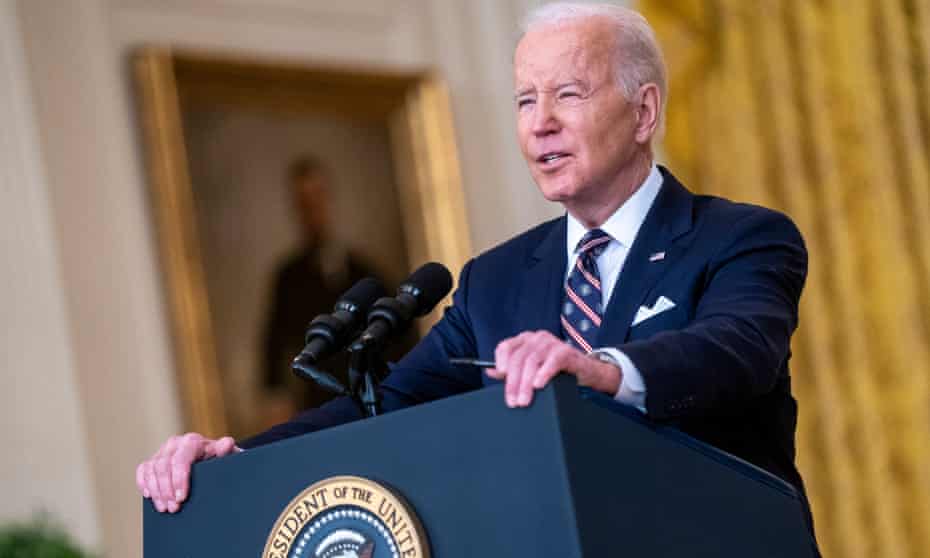
The US Treasury Department’s borrowing announcement comes amid ongoing negotiations between President Joe Biden and Congress over his $3.5 trillion social spending plan, which would expand health care, education, childcare, and climate programs. The plan would be partly financed by tax increases on corporations and wealthy individuals. However, some moderate Democrats have expressed concerns about the size and scope of the plan, as well as its impact on inflation and debt.

The US economy grew at an annualized rate of 6.7% in the second quarter of 2023, according to the latest estimate by the Bureau of Economic Analysis. However, the recovery has been uneven and uncertain, as new variants of the coronavirus pose challenges for public health and economic activity. The Federal Reserve has maintained its accommodative monetary policy stance, keeping its benchmark interest rate near zero and continuing its asset purchase program. The Fed has signaled that it may start tapering its bond-buying later this year, depending on the progress of the economy and inflation.

The soaring borrowing needs have raised concerns about the sustainability of the US debt, which stands at nearly $29 trillion, or about 125% of GDP. The Congressional Budget Office has warned that high and rising debt levels could increase the risk of a fiscal crisis, reduce national savings, and lower future income growth.

The Immigrant’s Dilemma

0

In a world filled with soaring ambitions and boundless dreams, the allure of moving abroad beckons to countless individuals from developing nations. It’s a siren song, promising a better life, new opportunities, and the chance to experience the world. However, reality often paints a different picture, as one individual found out.

“If you don’t move for the right reasons, it might end up in disappointment,” she warned.

This simple yet profound statement reflects the journeys of many who, driven by the prospect of life in a foreign land, make choices that can ultimately lead to disillusionment. It’s a tale of missed opportunities and misplaced priorities, and it resonates deeply with the immigrant experience.

I’ve witnessed numerous individuals, some with well-paying jobs and high growth potential in their home countries, relinquish it all to take up positions abroad that hardly match their calibre. The allure of living in a foreign land, even if it means trading a successful career for a lower-tier job, can seem irresistible. Initially, it feels like the adventure of a lifetime, but, in the long run, it might leave you questioning the path you’ve chosen.

The same dilemma extends to students who venture overseas for higher education. The decision to study at a foreign university should be driven by factors like the quality of education, the credibility of the institution, research and funding opportunities, and the career prospects in the chosen field. Your passion for the subject you’re pursuing should be the guiding force. Making choices based on trends or because everyone else is doing it is a recipe for disillusionment.

Imagine a student who embarks on a journey to a foreign country, thousands of miles away from home, just because studying abroad seems fashionable. As the glamour fades and the initial excitement wanes, motivation dwindles. The realization dawns that passion for the subject isn’t present, and you find yourself stuck in an academic pursuit that no longer makes sense. In the words of the aforementioned individual, “I would never study something I don’t feel passionate about, no matter where in the world it would put me.”

This story brings us to an important discussion about the immigrant experience and how it relates to addressing moral panics. Immigrants often become subjects of fear, prejudice, and myths perpetuated by societies unfamiliar with their struggles and aspirations. To navigate these challenges and create a more harmonious society, thought leadership is required.

Immigrants, in their pursuit of dreams, face moral panics fueled by misconceptions about their intentions and impacts on host countries. To address these concerns, it’s crucial to build a narrative that emphasizes the value immigrants bring to their new homes. This is not just about economic contributions but also about the diverse perspectives and enriching cultural exchange they offer.

The immigrant journey is a profound one, filled with sacrifices, hard work, and resilience. It’s about striving for a better life, not just for themselves but also for the communities they join. This commitment to progress should be celebrated and recognized as an essential element of society’s growth.

Thought leadership, in this context, can serve as a bridge between immigrants and their host societies. It can help dispel misconceptions and foster a deeper understanding of the immigrant experience. By sharing stories like the one mentioned at the beginning of this article, we can humanize the immigrant experience, making it relatable and comprehensible to a wider audience.

The narrative should focus on the shared values of hard work, perseverance, and the pursuit of happiness. These are not limited to a particular nationality; they are universal human values that connect us all. Immigrants, like everyone else, seek happiness, opportunities, and the chance to lead fulfilling lives.

The immigrant experience is a multi-faceted journey that is often romanticized, leading many to make choices for the wrong reasons. Addressing moral panics related to immigration requires a thought leadership approach that shares authentic stories and celebrates the contributions of immigrants to their host countries. It’s a call to recognize the shared values that bind us together as a global community and to embrace the dreams and aspirations of those who dare to venture beyond their borders. It’s about understanding that, in the pursuit of dreams, we are not so different after all.

Satoshi Nakamoto published ‘Bitcoin Whitepaper’ today, 15 years ago

0

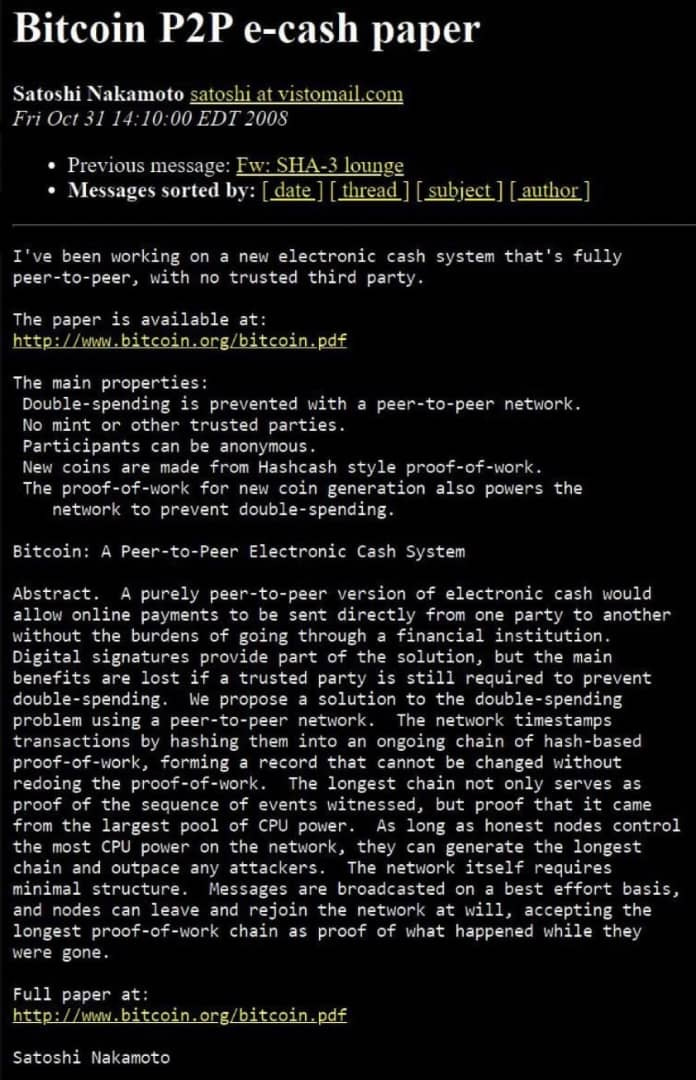
On October 31, 2008, a mysterious person or group using the pseudonym Satoshi Nakamoto published a nine-page document titled “Bitcoin: A Peer-to-Peer Electronic Cash System”. This document, now known as the Bitcoin whitepaper, laid out the foundation for a revolutionary new form of money that is decentralized, censorship-resistant, and trustless.

The Bitcoin whitepaper explained how a network of computers, called nodes, could maintain a shared ledger of transactions, called the blockchain, without relying on any central authority or intermediary. The whitepaper also introduced a novel solution to the problem of double spending, which is the risk that a digital currency can be spent more than once. The solution, called proof-of-work, is a mechanism that requires nodes to perform complex mathematical calculations in order to validate new blocks of transactions and compete for newly minted bitcoins as a reward.

The Bitcoin whitepaper sparked a wave of innovation and experimentation in the field of cryptography, computer science, and economics. It inspired thousands of developers, entrepreneurs, and enthusiasts to join the Bitcoin network and contribute to its growth and development. It also paved the way for the emergence of other cryptocurrencies and blockchain platforms that aim to improve or expand on the original vision of Bitcoin.

The problem with traditional electronic payments

The whitepaper starts by identifying the problem with the current system of electronic payments, which relies on trusted third parties such as banks, payment processors or online platforms to verify and facilitate transactions. These third parties charge fees, impose restrictions, create bottlenecks and introduce risks of fraud, censorship and reversal. Moreover, they require users to share their personal and financial information, which can be compromised or misused.

The whitepaper then proposes a solution to this problem: Bitcoin, a peer-to-peer electronic cash system that allows users to send and receive payments directly to each other without the need for any intermediary. Bitcoin uses cryptographic techniques to ensure the security, integrity and validity of transactions. Bitcoin also uses a novel mechanism called proof-of-work to create a distributed consensus among the network participants about the state of transactions and balances.

The whitepaper explains the key components of the Bitcoin system, which are:

A transaction is a transfer of value between two or more Bitcoin addresses. A transaction consists of inputs and outputs, where inputs are references to previous outputs that are being spent, and outputs are new outputs that are being created. Each output has a value and a script that defines the conditions for spending it. Transactions are signed by the owners of the inputs using digital signatures, which prove that they have the right to spend them.

An address is a string of alphanumeric characters that represents a potential destination for a payment. An address is derived from a public key, which is part of a key pair that also includes a private key. The private key is used to sign transactions, while the public key is used to verify signatures. The private key must be kept secret, while the public key can be shared with others.

A block is a collection of transactions that have been validated by a node (a computer running the Bitcoin software) and broadcasted to the network. A block also contains a header, which includes metadata such as the timestamp, the difficulty target, the nonce and the hash of the previous block. The hash of the previous block links each block to its predecessor, forming a chain of blocks that records the history of transactions.

Proof-of-work: Proof-of-work is a process that requires nodes to perform a computationally intensive task in order to create new blocks. The task involves finding a nonce (a random number) that makes the hash of the block header start with a certain number of zeros. The difficulty target adjusts every 2016 blocks (about two weeks) to ensure that one block is created every 10 minutes on average. The proof-of-work serves as a way of securing the network against attacks by making it costly and impractical for anyone to modify or replace existing blocks.

The network is composed of nodes that communicate with each other using a peer-to-peer protocol. Nodes can act as full nodes or lightweight nodes. Full nodes store and validate the entire blockchain, while lightweight nodes only store and validate a subset of it. Nodes relay transactions and blocks to each other using a gossip protocol, which ensures that information propagates quickly and efficiently throughout the network.

The incentive is the reward that nodes receive for creating new blocks and securing the network. The reward consists of two parts: newly created bitcoins (the block subsidy) and transaction fees (the sum of fees paid by users in each block). The block subsidy halves every 210,000 blocks (about four years), until it reaches zero after 64 halvings (about 130 years). The transaction fees are expected to become the main source of income for miners in the future.

The whitepaper concludes by highlighting some of the benefits of Bitcoin over traditional electronic payment systems, such as: Low transaction costs: Bitcoin eliminates the need for intermediaries and their fees, making transactions cheaper and faster. High security: Bitcoin uses cryptography and proof-of-work to prevent double-spending, fraud and censorship.

High privacy: Bitcoin allows users to transact anonymously without revealing their identities or financial information. High scalability: Bitcoin can handle millions of transactions per day with minimal resources and bandwidth. High innovation: Bitcoin enables new applications and services that were not possible before.

Today, 15 years after the publication of the Bitcoin whitepaper, Bitcoin is widely recognized as the first and most successful cryptocurrency in history. It has a market capitalization of over $1 trillion and is accepted by millions of merchants and users around the world. It has also proven to be a resilient and robust system that has survived multiple attacks, forks, and controversies. Despite its challenges and limitations, such as scalability, volatility, and regulation, Bitcoin continues to evolve and adapt to the changing needs and preferences of its users and the broader society.

The Bitcoin whitepaper is more than just a technical document. It is a manifesto for a new era of money that is open, inclusive, and empowering. It is a testament to the power of human creativity and collaboration. And it is a reminder that we can shape our own destiny with code.