DD
MM
YYYY

PAGES

DD
MM
YYYY

spot_img

PAGES

Home Blog Page 3685

Would You Consider This Investment Vision from Your Nigeria’s State Government?

1

Jamie Dimon calls the balance sheet of JP Morgan a “fortress”, and that means it is impregnable with capacity to withstand any shock including black swan-like economic meltdown. Warren Buffett controls BNSF Railway which brings in about $26 billion in revenue yearly. BNSF owns trains and train tracks. Nigeria’s Bayo Ogunlesi founded GIP (recently acquired by Blackrock) which “owns” many airports and seaports like Gatwick Airport in Europe. These entities invested in boring, but critical assets, which power the world of commerce and industry.

As a Nigerian diaspora or Nigerian in homeland, if your state government floats a Naira-based bond (a loan with interest) and asks you to invest, and that bond repayment is guaranteed by say African Development Bank or a top-tier development finance institution, would you be interested? You will pay in Naira, US dollars or any currency, but there would be a conversion to Naira where the bond contracts would be executed.

The money will not go to the state but to an internationally recognized builder to build, say a seaport, airport, hospital system, etc. More so, after construction, that asset will be concessioned, never to be managed by any bureaucrat, and that asset within five years will be taken public to the stock market. You are guaranteed that the assets would be delivered, and consider the leadership of the state to be competent, capable and credible.

You will get a Naira-based interest on that investment. And when the company goes public, you will also get equity. Together, the interest and the equity will not just bring financial return, but also guarantee that any currency loss will be well managed.

There are other components, but I have explained the grand scheme. Would you drop your $10,000 or so to this project, understanding that the whole framework is to support and develop your state, and not just to add digits to your bank accounts?

Comment below: 

Yes – looks exciting

No – not exciting

YN – explain how this could be sweetened to make it exciting for you.

(this is for an academic purpose)

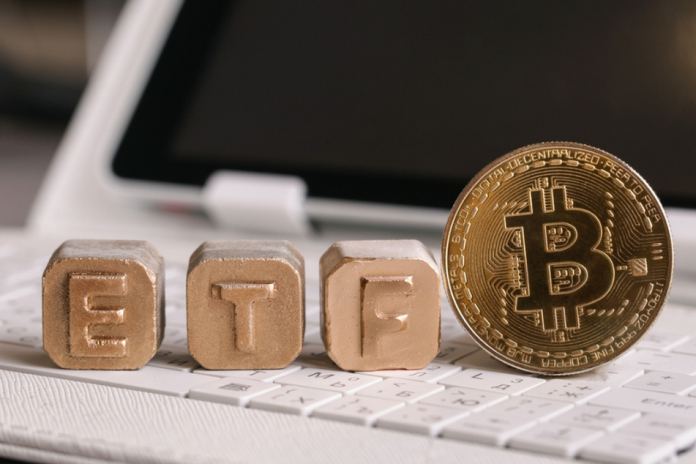
Bitcoin ETFs are not crypto’s finish line

0

The recent approval of the first Spot Bitcoin exchange-traded funds (ETFs) in the US has been hailed as a major milestone for the crypto industry. Many investors see it as a sign of mainstream acceptance and a gateway to wider adoption.

However, while Bitcoin ETFs are certainly a positive development, they are not the ultimate goal of crypto innovation. In fact, they may even pose some risks and limitations for the future of the decentralized economy.

A Bitcoin ETF is a type of investment fund that tracks the price of Bitcoin and trades on a regulated stock exchange. It allows investors to gain exposure to Bitcoin without having to buy, store, or manage the underlying asset.

This makes it easier and cheaper for investors to access the crypto market, especially for those who are not familiar with or comfortable with using crypto platforms and wallets.

Bitcoin ETFs also provide more legitimacy and credibility to the crypto industry, as they are subject to the rules and regulations of the securities market. They can attract more institutional and retail investors who may otherwise be wary of the volatility, security, and legality of crypto assets.

Moreover, they can increase the liquidity and price discovery of Bitcoin, as more trading activity and demand will reflect on its market value.

What are the drawbacks and challenges of Bitcoin ETFs?

However, Bitcoin ETFs are not without their drawbacks and challenges. For one thing, they do not give investors any ownership or control over their Bitcoin holdings. Investors only own shares of the ETF, not the actual Bitcoins.

This means that they cannot use their Bitcoins for transactions, lending, staking, or any other use cases that the crypto ecosystem offers. They also cannot benefit from any forks, airdrops, or upgrades that may occur on the Bitcoin network.

Another issue with Bitcoin ETFs is that they may create a disconnect between the price and the supply of Bitcoin. Unlike traditional ETFs that hold physical assets like gold or oil, Bitcoin ETFs do not have to buy or sell Bitcoins to match their fund size.

Instead, they use derivatives contracts such as futures and swaps to track the price of Bitcoin. This means that the demand for Bitcoin ETFs may not translate into actual demand for Bitcoin itself, and vice versa. This could create arbitrage opportunities and distortions in the market.

Furthermore, Bitcoin ETFs may expose investors to additional risks and costs that are not inherent to Bitcoin itself. For example, investors may face counterparty risk if the ETF provider or the derivatives issuer defaults or goes bankrupt.

They may also incur higher fees and taxes than if they directly own Bitcoins. Additionally, they may be subject to regulatory uncertainty and changes that could affect the performance and availability of the ETF.

What is the ultimate goal of crypto innovation?

The ultimate goal of crypto innovation is not to replicate or replace the existing financial system, but to create a new one that is more open, inclusive, transparent, and efficient.

Crypto assets are not just passive instruments for speculation, but active agents for value creation and exchange. They enable users to participate in a global network of peer-to-peer transactions, governance, and innovation, without intermediaries or gatekeepers.

Bitcoin ETFs are a welcome step towards bringing more awareness and adoption to the crypto industry, but they are not the end game. They are a bridge between the old and the new world, but not the destination.

The true potential and value of crypto lies beyond the confines of traditional finance, in the realm of decentralized applications, platforms, and protocols that are powered by crypto assets. That is where the real innovation and transformation will happen.

The benefits and opportunities of Web3 Gaming

0

The gaming industry is one of the most popular and profitable sectors in the world, with billions of players and developers creating and enjoying immersive experiences. However, it is also one of the most centralized and controlled, with a few powerful platforms and publishers dominating the market and dictating the rules.

This situation has led to many problems and challenges for both gamers and creators, such as:

Lack of ownership and control over digital assets and identities. Gamers spend a lot of time and money on acquiring in-game items, skins, characters, etc., but they do not really own them or have any say over their use or value. They are subject to the whims and policies of the platforms, which can change, ban, or delete them at any time.

Lack of transparency and fairness. Gamers often face issues such as cheating, hacking, fraud, censorship, loot boxes, pay-to-win mechanics, etc., that undermine their trust and enjoyment. Creators also struggle with unfair revenue sharing, high fees, intellectual property rights, etc., that limit their creative freedom and potential.

Lack of innovation and diversity. The gaming industry is dominated by a few genres and franchises that cater to the mainstream audience and follow the same formulas and trends. There is little room for experimentation, originality, or niche markets, as they are considered too risky or unprofitable by the platforms and publishers.

These problems are not new, but they have become more acute and visible in recent years, as the gaming industry has grown in size and influence. Many gamers and creators are looking for alternatives and solutions that can empower them and restore their agency and sovereignty over their digital experiences.

This is where Web3 comes in.

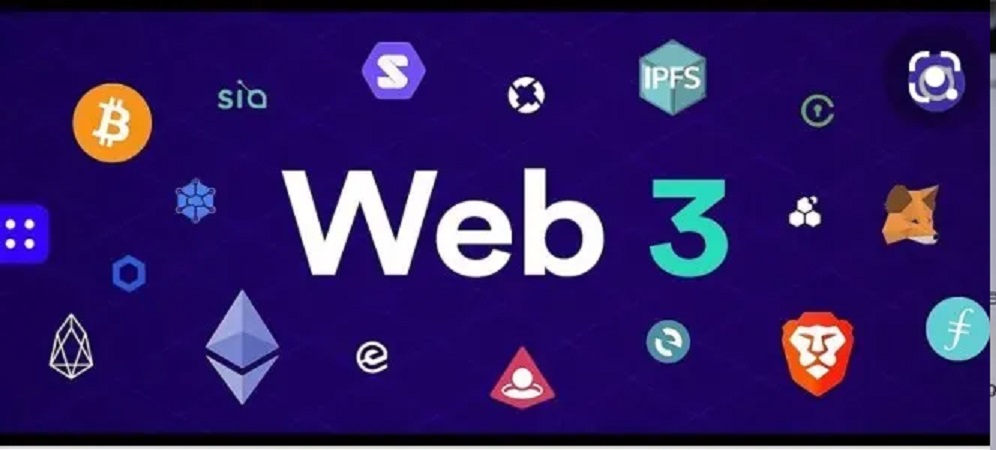
Web3 is a term that refers to the next generation of the internet, based on decentralized technologies such as blockchain, smart contracts, peer-to-peer networks, etc. Web3 aims to create a more open, transparent, fair, and democratic web, where users can own and control their own data, assets, identities, and communities.

Web3 has many applications and implications for various sectors and domains, but one of the most promising and exciting ones is gaming. Web3 gaming is a new paradigm that leverages the power and potential of Web3 to create a more user-centric and innovative gaming ecosystem.

Some of the benefits and opportunities of Web3 gaming are:

Ownership and control. Web3 gaming enables gamers to truly own their digital assets and identities, as they are stored on the blockchain and governed by smart contracts. This means that they can use them across different games and platforms, trade them on open markets, lend or borrow them, etc., without any intermediaries or restrictions.

They can also have more influence and participation in the governance and development of the games they play, through mechanisms such as voting, staking, DAOs (decentralized autonomous organizations), etc.

Transparency and fairness. Web3 gaming ensures that all the transactions and interactions in the gaming ecosystem are recorded on the blockchain and verifiable by anyone. This creates a more trustless and secure environment, where cheating, hacking, fraud, censorship, etc., are minimized or eliminated.

It also enables more fair and efficient revenue sharing models for creators, who can receive direct payments from their users or fans, without any middlemen or fees.

Innovation and diversity. Web3 gaming fosters a more diverse and creative gaming landscape, where anyone can create and publish their own games or content without any barriers or gatekeepers.

This allows for more experimentation, originality, and niche markets to emerge and thrive. It also enables new forms of gameplay and experiences that are not possible or feasible in traditional gaming platforms.

Web3 gaming is not a distant or hypothetical future. It is already happening today.

There are many projects and platforms that are building and exploring Web3 gaming in various ways. Some examples are:

Axie Infinity: A popular game where players collect, breed, battle, and trade cute creatures called Axies. Axies are NFTs (non-fungible tokens) that players own on the blockchain. The game also has its own token (AXS) that players can earn by playing or use to govern the game.

Decentraland: A virtual world where players can create, explore, socialize, and monetize their own content. Decentraland is built on Ethereum blockchain.

Explosive 2024 Price Predictions Revealed by Crypto Analysts: ADA, KANG, LINK

0

Cardano (ADA), KangaMoon (KANG), and Chainlink (LINK) are altcoins worth watching right now. While you may be familiar with ADA and LINK, KANG is a Stage 1 presale star that may become the next 100x meme coin in 2024. Some analysts have made price predictions for all these cryptos that could blow your mind. Keep on reading to find out more.

Ali Martinez Makes a Cardano Price Prediction

Crypto analyst Ali Martinez recently made headlines with a bullish Cardano (ADA) price prediction. According to his new tweet, the Cardano price may hit $0.68 soon. Martinez bases this opinion on the fact that this altcoin shows signs of a descending triangle formation. This rally may occur if it manages to see a daily close above $0.53.

In terms of the Cardano price movement, it has pumped from $0.52 to $0.53 in the past week alone. During that time, its market cap has increased from $18.51B to $18.99B. Sentiment for this altcoin is also bullish, as 24 technical indicators are green. Therefore, they predict the Cardano coin will trade at $0.557 in March 2024.

KangaMoon (KANG): Meme Coin Revolution

Seamlessly blending social-fi and play-to-earn elements, KangaMoon (KANG) is a community-driven DeFi project where users engage in various activities. You can earn cryptos and in-game items by joining battles and tournaments or betting on matches.

At the core of KangaMoon’s ecosystem is its Social-Fi model, which rewards KANG token holders for participating in weekly, monthly, and quarterly challenges. These challenges offer a range of prizes, such as extra tokens and in-game items. Additionally, these assets can be sold or traded on the KangaMoon marketplace – further enhancing the community feeling.

Holding the KANG native token is a must if you wish to gain access to all of these activities. This one-of-a-kind meme coin now costs just $0.005 as it is in Stage 1 of its presale. But, experts forecast a 1,000% surge once a Tier-1 CEX lists it in Q2 of 2024. With close to $100,000 already raised, the future of this DeFi project looks very bright.

Michaël Van De Poppe: The Chainlink Price May Hit $25

Meanwhile, another famous crypto analyst, Michaël Van De Poppe, also made headlines with his Chainlink price prediction. According to his new tweet, this altcoin may see a retest at $16.50 and continue to $25 soon.

CoinMarketCap data shows that the Chainlink crypto value has jumped from $15.27 to $18.23 in the past 30 days. Its market cap also grew from $8.83B to $10.71B in that period. The technical analysis for this altcoin paints a bullish picture as well. For instance, Chainlink now trades above its 100 and 200-day EMAs. Therefore, market analysts predict a surge to $22.19 in March 2024.

Can KangaMoon Outpace Cardano and Chainlink?

Although altcoins like Cardano and Chainlink lead the market, KangaMoon might outpace them. Reason being, a much smaller injection of new funds is needed to trigger significant price surges by KangaMoon. You see, it has a low market cap of $5M. Therefore, KANG may be the perfect crypto to buy for fast returns.

Discover the Exciting Opportunities of the Kangamoon (KANG) Presale Today!

Website: https://Kangamoon.com/

Join Our Telegram Community: https://t.me/Kangamoonofficial

Tesla AI Strategy, FSD, Optimus Robots, and Dojo Supercomputer

0

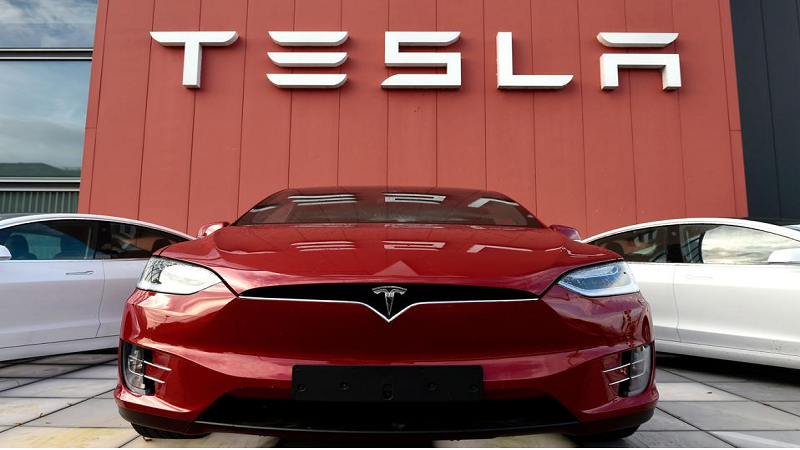
Tesla is not just an electric car company. It is also a leader in artificial intelligence (AI) and machine learning (ML), with ambitious plans to revolutionize the fields of autonomous driving, robotics, and supercomputing. In this blog post, we will summarize some of the key points that Tesla CEO Elon Musk shared in a recent presentation about Tesla’s AI strategy and vision.

FSD: Full Self-Driving

One of the main goals of Tesla is to achieve full self-driving (FSD) capability, which means that the car can drive itself in any situation without human intervention. Tesla has been developing its own custom hardware and software for FSD, using a neural network approach that learns from real-world data collected by millions of Tesla vehicles on the road.

Musk said that Tesla is close to releasing version 10 of its FSD software, which will include significant improvements in functionality and safety. He also said that Tesla plans to launch a subscription service for FSD, which will allow customers to access the feature for a monthly fee.

Optimus: Humanoid Robots

Another exciting project that Tesla is working on is the development of humanoid robots, codenamed Optimus. These robots will use the same hardware and software as the FSD system, but in a different form factor. Musk said that the robots will be able to perform tasks that are boring, repetitive, or dangerous for humans, such as picking up groceries, fixing cars, or building houses.

He also said that the robots will be designed to be friendly and respectful, and that humans will be able to outrun or overpower them if necessary. Musk revealed that Tesla plans to build a prototype of the robot by next year.

Dojo: Supercomputer

The third pillar of Tesla’s AI strategy is Dojo, a supercomputer that will be used to train and optimize the neural networks for FSD and Optimus. Dojo will be one of the most powerful computers in the world, capable of processing exabytes of data at a very high speed.

Elon Musk said that Dojo will use a novel architecture that leverages Tesla’s expertise in chip design and battery technology. He also said that Dojo will be available as a service for other companies and researchers who want to use its computing power for their own AI projects.

Still, some pundits believe Tesla could emerge as the world’s top AI company. Among the reasons: Sensors in Tesla’s cars provide a live, real-world network for data gathering. And Tesla’s back-end infrastructure — including homegrown supercomputer technology — can gather, manage and analyze all of that data.

Admittedly, AI is both a blessing and a burden for the world’s sustainability efforts. While some AI applications allow scientists, universities and businesses to study climate change, the overall AI movement also requires heavy energy use. And of course, some pundits worry AI and robots could ultimately threaten humanity.

Tesla is not only transforming the automotive industry, but also pushing the boundaries of AI and ML. By leveraging its unique advantages in hardware, software, and data, Tesla aims to create products and services that will benefit humanity and solve some of the biggest challenges of our time. We look forward to seeing what Tesla will achieve next with its AI strategy.