DD
MM
YYYY

PAGES

DD
MM
YYYY

spot_img

PAGES

Home Blog Page 3689

Shoot That Professional Shot Today

0

It’s another week again, send that proposal, send that expression of interest letter, shoot that professional shot, and make a demand for that job you wanted; the worst that could happen is you getting a “no” or rejection from the prospect. If you do actually get a “no” or rejection from the prospect, do not relent, rather that no/ should be a motivation for you to send more proposals. 

Sometimes when you listen to the success stories of some folks who landed a dream job or a dream contract you will be amazed at how many times they got rejected by their prospects but they kept pushing and persisted till they landed it. 

Using myself as an example, you may not believe that some of the mouth-watering gigs and jobs I have gotten in the course of my career came simply because I summoned the confidence and asked for it. In fact, one of my saving grace is the confidence I exude. I can approach anybody for a job and demand that I be your lawyer immediately. I see that you can afford to pay me, the worst that could happen is you saying no or telling me that you already have a lawyer and that’s perfectly fine. I have gotten so many “Nos” and so many rejections too and I have also gotten so many yeses that fetched me millions of naira just because I asked for it. 

I approached my landlord earlier this year and I told him that it would only be fair since I’m paying him millions of naira as rent annually for me to be his personal/business attorney. My Landlord told me that although he has so many lawyers including senior advocates that he uses for transactions but for the fact that he has seen I am an ambitious young man and for the fact that he has seen my track record he will sign with me. Well, I have recovered far more than my rent money from my landlord through the legal fees he has paid me during the course of his taking me on as his lawyer and my landlord being a wealthy and influential man who sits on the board of a lot of reputable organizations have as well opened other ways for me through referrals. This only happened because I summoned the courage and asked him for it. 

On a good day, I’d take a count of how many proposals I have so far sent since this year and also take stock of the number of “Nos” and the rejections I have so far gotten, I promise you that the number of No/rejection is high but that didn’t and won’t deter me. In fact, I use some of the rejections to learn. There are some prospects that will tell you no and give you their reason for the no, those reasons do send me back to the drawing board to see where and what I can improve and work on, the result is always better. 

Do not be dismayed, send that proposal today, make a demand for that job today, and boldly express your interest in that job today, you may get the offer but you never can tell unless you ask; the worst that could happen is you get a rejection letter but I promise you that it is perfectly okay too.

UNIPORT 2023 Innovation Week: Segun Aina Champions Sustainable Future for Nigerian Universities

0

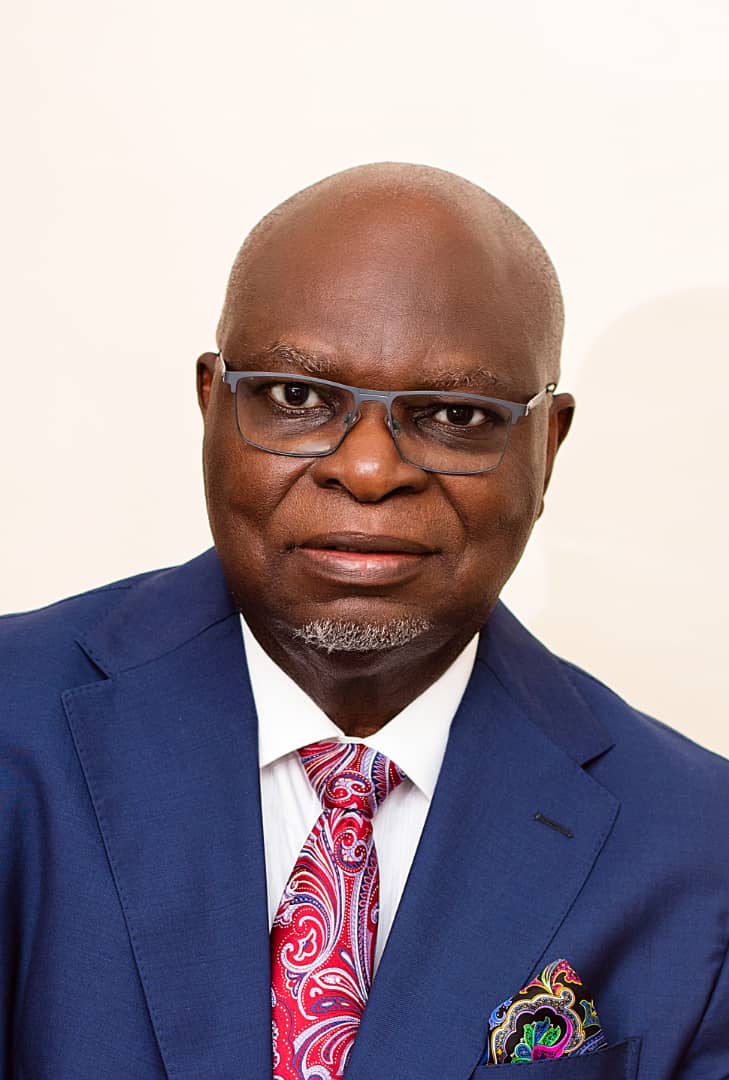
The Chairman and Chief Visioner OF Opolo Global, Dr. Segun Aina, OFR, has challenged Nigerian universities to change the narrative of innovation and entrepreneurship by embracing global practices to make the universities sustainable and impact driven. Aina said this at the 2023 Annual Innovation Week of the University of Port Harcourt.

In the presentation, titled Building a Sustainable Future for Tertiary Institutions through Innovation and Entrepreneurship, Aina underscored the critical role of universities in driving innovation and economic growth. He outlined a comprehensive framework that emphasized several key principles for advancing sustainability in the higher education sector. emphasized the paramount importance of prioritizing research within tertiary institutions. He highlighted that research forms the cornerstone of innovation and entrepreneurship, offering a pathway to create commercially viable products and services. He noted that innovation and entrepreneurship could help the universities record significant result in quality education, decent work and economic well-being, industry, innovation and infrastructure as well as partnerships citing examples universities in the global North that are thriving based on their investment portfolios.

Aina stressed the need for universities to retain and support star faculty researchers identifying them as the driving force behind groundbreaking innovations who can play a pivotal role in the success of technology transfer operations. Dr. Aina further noted that efficient technology transfer operations are instrumental in transforming research outcomes into market-ready products. He said this entails close collaboration with the industry to bridge the gap between the academia and the business world. In concluding this thought, Aina rooted for universities to add a 4th leg of innovation and enterprise to the existing functions of teaching, research and community service.

Aina further challenged universities to embrace the cultivation of a culture of innovation and entrepreneurship within the academic environment highlighting it as a key element of a sustainable future for tertiary institutions. He enjoined the universities to encourage students and faculty members to think creatively and take entrepreneurial risks that can lead to groundbreaking discoveries. He said universities should be a bustling ground for academic and research entrepreneurs.

Aina equally stressed the significance of forging strong connections between universities, industry, and society. According to him, such partnerships can yield mutually beneficial results, including practical applications for research and opportunities for students to gain real-world experience. In closing the framework, Aina emphasized that Nigerian universities should systematically monitor and transparently disclose the impact of their innovation and entrepreneurship initiatives. These outcomes should be showcased to highlight the institution’s contributions to society and the economy.

Dr. Aina, however identified challenges faced by tertiary institutions in Nigeria. These challenges included inadequate funding, inadequate infrastructure and resources, brain drain and incessant strike actions, low remuneration as well as succession challenge.

In response to these challenges, Dr. Aina put forward a series of recommendations. He suggested that universities recalibrate their strategies to ensure sustainability by considering public universities as business. He suggested putting in place that system that accommodate experienced professionals as Professor of Practice. Furthermore, he called for the remodeling of research grant as investment instead of gift. Equally, he challenged the universities to remodel their partnerships with industry to yield more result. He then advocated for a change of promotion criteria with heavy emphasis on IP and venture creation.

In closing the presentation, Aina called upon governments, policymakers, and high-net-worth individuals to actively mobilize and share knowledge, expertise, technology, and financial resources. He said such collaborative efforts are essential to support the achievement of sustainable development goals and create an environment where innovation and entrepreneurship can thrive.

The Customary Practice of Returning Dowry Is Unlawful

1
Igbo traditional marriage

In most African customs and traditions, divorce is conducted and validated by the return of the bride price by the woman’s family to the man. I know for a fact that in my custom, if a woman is no longer interested in marrying the man, the family of the woman will gather the bride price or whatever that has been gifted or that stands as a bride price and return it to the man, this will traditionally and customarily mean that divorce has been conducted and the spouses are no longer married. 

This custom of divorce by returning a bride price has been upheld by courts as a valid means of divorce as has been practiced customarily in most Nigerian customs and even extensively in Africa.

Some men who conducted their marriage customarily even now insist that if their wives are leaving or no longer want to marry them again, the wife must return the bride price and every other gift he has ever gifted the woman during the course of the marriage back to him. This demand from the man will inadvertently tie down the woman who may not afford to return the dowry paid and every gift she has ever received in the marriage. 

Recently, an Upper Customary Court in Kafanchan judicial division sitting at Gwantu, Kaduna state has declared this custom of a man demanding the woman to return the bride price he paid on her back to him before the divorce can be customarily validated to be repugnant to Natural Justice, Equity and good conscience. The court held that the Mada marriage custom and every other Nigerian custom and tradition that requires a departing wife to refund her husband’s dowry and other incidental expenses for her marriage as a ground for granting her divorce is repugnant to natural justice, equity and good conscience.

The court held that those customs demanding women to return dowry paid on their head have reduced women to mere chattels that are up for trade and can be returned whenever the buyer no longer sees fit in the item and the buyer can demand a refund of his money. 

In this landmark Judgment delivered by His Worship, Emmanuel J. Samaila, in the case of Tina John v Adamu John, the court condemned the practice that reduces women married under customary law to the status of mere chattels acquired by men to be used and dumped at their pleasure and with effrontery as repugnant.

The court upheld the Petitioner’s position who had contended that the only ground upon which she will make such a refund is if the respondent can restore her body to its pre-marital state as he has used her body to produce children and in other ways, too for the past three decades their marriage have subsisted. 

Even in the far East African country of Uganda, the court had earlier adopted this reasoning in 2015 in the case of Mifumi (U) & 12 Ors v. Attorney General & Anor (2015) where the Supreme Court of Uganda held that the demand of refund of bride price after the breakdown of a customary marriage is unconstitutional, repugnant to natural justice equity and good conscience.

Therefore, by the implication of this recent judgment, a woman may no longer be expected to return the dowry or the bride price back to the man before their divorce can customarily be validated. 

Nigeria Approves $3.5bn Loan for Education and Power Amid Concerns Over Rising Debt

0

The Nigerian government has given the green light for a $3.45 billion loan that will be allocated to finance vital projects within the power sector and a resource mobilization and education initiative.

While the move is aimed at spurring development in the country, it has raised concerns about the growing national debt crisis.

The announcement was made by Wale Edun, the Minister of Finance and Coordinating Minister of the Economy, during a press briefing following a Federal Executive Council (FEC) meeting presided over by President Bola Tinubu at the Presidential Villa’s Council Chambers in Abuja on Monday.

Edun disclosed that the loans would have a lengthy tenure of around 40 years, with a moratorium period of approximately 10 years and notably low-interest rates. He stated, “In the cases of either loans, zero interest will apply, although some fees will be incurred.”

On the education front, Professor Tahir Mamman, the Minister of Education, revealed that this financial initiative aimed to bolster efforts to reduce the number of out-of-school children, particularly targeting girls aged 10 to 20 from 18 participating states. This move underscores the government’s commitment to promoting education and empowerment for teenage females.

Furthermore, Mamman noted that the Federal Executive Council (FEC) had reevaluated its policy direction and authorized the Public Procurement Council to carry out contract award functions in alignment with the requirements of the Public Procurement Act. This decision allows the FEC to concentrate on issues of national importance.

Betta Edu, the Minister of Humanitarian Affairs and Poverty Alleviation, informed reporters that the council had also approved the establishment of the Humanitarian and Poverty Alleviation Trust Fund. This fund will be overseen by a board of directors and aims to raise $5 billion annually from a range of sources.

Edu emphasized that the implementation of this initiative would be thoroughly planned, with the committee consisting of key ministers, including the finance minister.

One notable development is the ratification of the protocol on the protection of the rights of elderly people in Nigeria, signaling the government’s commitment to the welfare of the elderly.

Despite these ambitious projects, concerns have arisen regarding the increasing volume of loans being sought by the Tinubu administration.

Critics have drawn comparisons to the previous administration led by Muhammadu Buhari, which significantly increased Nigeria’s public debt to N87 trillion in eight years.

Earlier this month, the FEC granted approval for a $1.58 billion loan request. This request, as clarified by Edun, comprises two parts: $1.5 billion from the World Bank and $80 million from the African Development Bank (AfDB).

The Tinubu administration’s plan to accumulate a combined fiscal deficit of N30.6 trillion between 2024, 2025, and 2026, as outlined in the government’s medium-term expenditure framework (MTEF), has raised eyebrows. The 2024 budget proposal, in particular, is expected to have a fiscal deficit of N9.04 trillion, representing a fiscal deficit to GDP ratio of 3.83%, which exceeds the 3% threshold stipulated in the Fiscal Responsibility Act (FRA) 2007.

The situation paints a gloomy economic future for Nigeria due to the significant reduction in the nation’s oil output, which has greatly curtailed its revenue generation.

Nigerian Supreme Court to Deliver Judgment on Atiku, Obi Appeals Against Tinubu on Oct 26

0

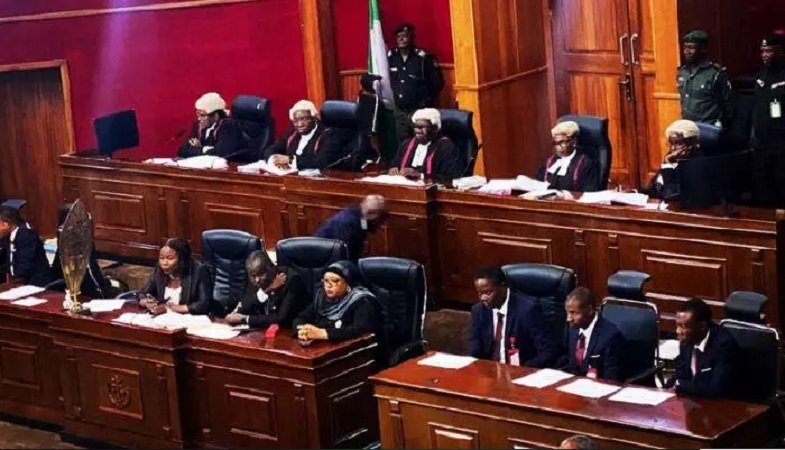
The Supreme Court has announced that it will deliver its judgment on Thursday, October 26, in the appeals lodged by presidential candidates Atiku Abubakar of the Peoples Democratic Party (PDP) and Peter Obi of the Labour Party.

Both candidates are contesting the decision of the Presidential Election Petition Court, which upheld the electoral victory of Bola Tinubu of the All Progressives Congress (APC).

Festus Akande, the Director of Information at the Supreme Court, confirmed this date following a recent hearing before a seven-member panel of justices.

Atiku and Obi are challenging the outcome of the presidential election on various grounds, including substantial non-compliance with the Electoral Act, allegations of Tinubu’s dual citizenship, and his purported failure to secure 25% of the votes in the Federal Capital Territory.

In a twist, Atiku Abubakar, a former Nigerian Vice President, is also seeking to introduce academic records from President Bola Tinubu’s time at Chicago State University. Atiku believes that these records could potentially reveal forgery, further complicating matters for Tinubu.

However, there has been a notable lack of trust expressed by Nigerians in the apex court. This skepticism is largely attributed to previous rulings that have raised questions about the court’s reputation.

The recent scrutiny of Chicago State University’s letters regarding Tinubu’s academic records has added to the skepticism. Justice John Okoro, Chairman of the 7-member panel, noted about the letters, “But in this case, there are two conflicting letters from the CSU – one authenticating the president’s certificate and another discrediting it. Which do we rely on?”

Many Nigerians perceive this as an attempt by the court to find technicalities to dismiss the case.

In a previous ruling by the Presidential Election Petition Tribunal (PEPT) in July, all charges brought by Atiku and Peter Obi challenging Tinubu’s victory were dismissed, leading to widespread criticism and claims of a miscarriage of justice.

The perceived lack of trust in the judiciary is not confined to this case alone. Past rulings, such as the declaration of Hope Uzodinma as the winner of the 2019 Imo State governorship election, despite coming fourth in the polls, have also contributed to the skepticism.

Furthermore, the Supreme Court’s decision to return Ahmad Lawan to the Senate, despite not participating in the party’s primary election, has raised further doubts about the court’s impartiality.

Against this backdrop, there is a prevailing belief that the Supreme Court is hastening its judgment on the certificate forgery case against Tinubu, possibly to issue a favorable ruling to the embattled president. The choice of October 26 for the judgment is viewed by some as a calculated move to shield Tinubu from potential criminal indictments that the files the US Federal Bureau of Investigation (FBI) is anticipated to release later this month will bring.

While Nigerians await the Supreme Court’s decision, the credibility and transparency of the country’s judicial institutions continue to be the focus of intense public debate and concern.