DD
MM
YYYY

PAGES

DD
MM
YYYY

spot_img

PAGES

Home Blog Page 37

Five Eyes Warns Frontier AI Models Will Transform Cyber Warfare Within Months

0

The intelligence alliance known as the Five Eyes has issued one of its strongest warnings yet regarding the rapid advancement of frontier artificial intelligence.

In a recent statement, the alliance declared that Frontier AI models are anticipated to exceed current industry expectations, fundamentally transforming both offensive and defensive cyber capabilities. The timeline is not years, it is months.

The message reflects growing concern among governments, security agencies, and technology leaders that the next generation of AI systems could dramatically reshape the global cybersecurity landscape far sooner than many had anticipated.

The Five Eyes alliance, comprising United States, United Kingdom, Canada, Australia, and New Zealand, has long been at the forefront of intelligence sharing and emerging threat assessment. Its warning suggests that AI development is reaching a critical inflection point where capabilities once considered theoretical are becoming practical realities.

On the offensive side, frontier AI models could significantly enhance the effectiveness of cyberattacks. Advanced systems may be capable of identifying software vulnerabilities, generating sophisticated phishing campaigns, automating malware development, and adapting attack strategies in real time.

What previously required teams of highly skilled hackers could potentially be executed by smaller groups equipped with powerful AI tools. This shift lowers barriers to entry and increases the scale and speed at which cyber threats can emerge. The implications extend beyond criminal organizations.

Nation-states may leverage advanced AI to conduct cyber espionage, influence operations, and infrastructure attacks with unprecedented precision. Critical sectors such as energy, finance, healthcare, telecommunications, and transportation could become increasingly vulnerable if defensive measures fail to keep pace with AI-driven threats.

At the same time, the Five Eyes statement highlights the transformative potential of AI for cybersecurity defense. Frontier models can analyze enormous volumes of network activity, identify unusual patterns, detect vulnerabilities before they are exploited, and automate incident response processes.

Security teams that traditionally struggle with overwhelming amounts of data may gain powerful new capabilities through AI-assisted monitoring and threat detection.

This creates what many experts describe as an AI arms race in cybersecurity. Attackers and defenders are both gaining access to increasingly sophisticated tools, leading to a constant cycle of adaptation and counter-adaptation.

Organizations that successfully integrate advanced AI into their security operations may gain a significant advantage, while those that lag behind could face growing risks. The urgency of the Five Eyes warning is perhaps its most striking element.

Rather than discussing a transformation expected over several years, the alliance emphasizes a timeline measured in months. This suggests intelligence agencies are observing technological progress that exceeds public expectations and may already be influencing real-world cyber operations.

The pace of improvement in large language models, autonomous agents, and multimodal AI systems has accelerated dramatically, making previous forecasts appear increasingly conservative. As governments, businesses, and institutions prepare for this new reality, investment in cybersecurity resilience is becoming more important than ever.

Policymakers are likely to accelerate efforts to establish AI governance frameworks, while private organizations may need to rethink security strategies, workforce training, and risk management practices. The Five Eyes warning serves as a reminder that artificial intelligence is no longer merely a future consideration for cybersecurity planning.

It is rapidly becoming a defining force in digital security. Whether AI ultimately strengthens global cyber defenses or empowers new generations of threats will depend on how effectively societies adapt to a technological revolution that is arriving faster than expected.


China Tightens Capital Controls as Brokerages Restrict Overseas Investment Swaps

0

Chinese authorities have moved to further tighten controls on overseas investment, with several major brokerages reportedly restricting clients from making new investments through cross-border derivative products that have become a popular route for accessing foreign markets.

According to people familiar with the matter cited by Reuters, institutional investors were informed on Tuesday evening that they would no longer be permitted to increase overseas exposure through total return swap (TRS) contracts. Existing positions can still be maintained or gradually reduced, but fresh allocations are no longer being accepted.

The move signals Beijing’s determination to curb capital outflows at a time when domestic investors are increasingly seeking opportunities outside China’s slowing economy and volatile local stock markets.

The restrictions represent the latest step in a broader campaign by regulators to strengthen oversight of cross-border capital movements and preserve financial stability. In February 2024, Chinese authorities already imposed limits on the total volume of overseas investments that could be made through TRS structures. The latest action appears to go further by effectively freezing new investment flows through the channel.

At least four brokerages, including leading state-backed investment bank China International Capital Corporation, have reportedly implemented the restrictions this week. CICC, one of the largest firms licensed to provide the products, is considered a key player in China’s cross-border derivatives market.

The clampdown comes as Chinese policymakers grapple with a delicate balancing act. The authorities want to support investor confidence and maintain openness to international markets. However, they remain wary of large-scale capital outflows that could place pressure on the yuan, reduce domestic liquidity, and undermine efforts to stabilize China’s financial system.

TRS contracts have emerged as an important tool for Chinese institutional investors seeking exposure to overseas assets without directly purchasing foreign securities. Under the arrangement, investors receive returns linked to offshore stocks or indices while the brokerage technically holds the underlying assets.

The structure allows investors to bypass some of the limitations associated with China’s tightly controlled capital account.

This year, many onshore hedge funds, private funds, and institutional investors have used the products to gain exposure to surging overseas technology stocks, particularly semiconductor and artificial intelligence companies. Strong rallies in U.S. and global tech shares have attracted Chinese investors seeking returns that have often been difficult to find in domestic markets.

The restrictions were issued amid the growing divergence between Chinese and foreign equity markets. While Chinese authorities have been working to revive confidence in local markets through stimulus measures and regulatory support, many investors have continued to favor overseas assets, especially U.S. technology companies benefiting from the global AI boom.

Analysts say the latest move points to Beijing’s broader concern about persistent capital outflows. Chinese households, corporations, and institutional investors have increasingly diversified assets abroad in recent years amid concerns over economic growth, property sector weakness, and geopolitical uncertainty.

But the restrictions may also have implications for global markets. Chinese institutional money has become an important source of demand for international equities, particularly technology stocks. Limiting access through TRS products could reduce the pace of new Chinese capital flowing into offshore markets, especially into sectors that have been major beneficiaries of global AI enthusiasm.

At the same time, the measure reinforces a recurring theme in China’s financial policy: authorities remain willing to sacrifice some investment flexibility and market liberalization when they believe capital controls are necessary to safeguard financial stability and currency management.

For investors, the development brings to the fore once again that regulatory risk remains a defining feature of China’s financial landscape. Even as Beijing seeks to deepen capital market reforms and attract foreign investment, it continues to maintain tight control over how domestic money moves beyond its borders.

The latest restrictions suggest that policymakers are becoming increasingly cautious about the scale of outbound investment flows, particularly as Chinese investors continue to chase stronger returns in overseas technology and semiconductor markets.

From Princeton Thesis to $30m Business: GPTZero Acquired as AI Trust Market Enters New Phase

0

GPTZero, the three-year-old artificial intelligence detection startup that Princeton graduate Edward Tian first built as a senior thesis project, has been acquired by Superhuman, the companies announced on Tuesday.

The deal underscores the growing commercial value of tools designed to identify and manage AI-generated content.

Financial terms of the acquisition were not disclosed. However, Tian revealed that GPTZero had grown into one of the largest AI detection platforms in the world, amassing more than 19 million registered users and generating approximately $30 million in annual recurring revenue (ARR) before the acquisition.

The deal marks a remarkable journey for a startup that began in a college dorm room at the height of concerns over the rapid adoption of generative AI. GPTZero emerged shortly after the launch of ChatGPT, attracting widespread attention from educators, universities, publishers, and businesses searching for ways to determine whether content had been written by humans or generated by machines.

Its rapid growth also highlights the emergence of an entirely new segment within the AI economy: trust and verification technologies.

Unlike many AI startups that have consumed hundreds of millions of dollars in venture capital while remaining unprofitable, GPTZero built a sustainable business with relatively modest funding. Tian disclosed in 2024 that the company had already become profitable, a rare achievement in the highly competitive AI sector.

The company raised a total of $13.5 million during its lifetime. That included a $3.5 million seed round led by Uncork Capital and a $10 million Series A round completed in June 2024, led by Footwork co-founder Nikhil Basu Trivedi. Other investors included Reach Capital, Jack Altman’s Alt Capital, and Neo.

The acquisition is also notable because of the buyer.

Superhuman is the company that emerged after Grammarly acquired email platform Superhuman last year and subsequently rebranded under the Superhuman name. The combined company has been aggressively expanding its AI capabilities as competition intensifies among productivity software providers.

Interestingly, Superhuman already operated its own AI detection technology before acquiring GPTZero. That has raised questions about why the company chose to purchase a direct competitor rather than continue developing its in-house solution. Superhuman’s answer was simple: “two AI detectors are better than one.”

The acquisition gives Superhuman access not only to GPTZero’s technology but also to one of the largest user communities in the AI verification market, along with a highly recognizable brand that has become synonymous with AI detection.

The move reflects a broader shift occurring across. While the first wave of generative AI investment focused on building increasingly powerful models capable of creating text, images, audio, and video, attention is increasingly turning toward trust, safety, and verification.

As AI-generated content floods the internet, organizations are seeking tools that can help determine what was created by humans and what was produced by machines.

GPTZero built its reputation around that challenge.

The company’s mission has centered on helping users identify and defend against what critics often describe as “AI slop” — low-quality, misleading, or mass-produced content generated by artificial intelligence systems.

Superhuman’s AI detection tools serve a somewhat different purpose. The company has focused on helping users understand whether their writing may appear AI-generated and providing guidance on revising content. This has been particularly relevant for students, professionals, and job applicants navigating a world where AI-assisted writing has become commonplace.

The combination of the two businesses creates a larger platform positioned at the intersection of AI productivity and AI verification.

The acquisition also arrives as demand for AI detection technologies continues to expand beyond education. Governments, corporations, media organizations, cybersecurity firms, and financial institutions are increasingly investing in tools capable of verifying digital authenticity. Concerns about misinformation, deepfakes, synthetic media, and automated content generation have elevated AI detection from a niche academic concern into a broader societal and commercial issue.

At the same time, the transaction highlights a fundamental tension within the AI industry. Many researchers argue that no detection system can reliably identify all AI-generated content. As frontier models become more sophisticated, distinguishing machine-generated text from human writing becomes increasingly difficult. False positives remain a concern, particularly in educational settings where students may be incorrectly accused of using AI tools.

These limitations have led many experts to conclude that the future of AI trust will depend on a combination of technologies, including content authentication systems, provenance tracking, watermarking standards, and detection tools.

Even so, the acquisition signals strong confidence that demand for verification technologies will continue growing as AI becomes more deeply embedded in daily life.

For Tian, the deal represents an extraordinary outcome for a project that began as a university thesis. In just three years, GPTZero evolved from a student experiment into a profitable business serving millions of users worldwide and generating $30 million in recurring revenue.

Trump Signs Quantum-Focused Executive Order, Signaling New Push for Technological Leadership

0

The signing of a new quantum-focused executive order by Donald Trump marks a significant moment in the global race for next-generation technologies. As nations increasingly compete for leadership in artificial intelligence, advanced semiconductors, and cybersecurity, quantum technology has emerged as one of the most strategically important fields.

The executive order signals a renewed commitment by the United States to accelerate quantum research, strengthen domestic capabilities, and maintain a competitive edge against rival powers. Quantum computing differs fundamentally from traditional computing.

While classical computers process information using bits that exist as either zero or one, quantum computers use quantum bits, or qubits, which can exist in multiple states simultaneously. This capability allows quantum systems to solve certain complex problems exponentially faster than conventional computers.

Potential applications range from drug discovery and climate modeling to financial simulations and national security operations. The executive order is expected to focus on expanding federal investment in quantum research and development while encouraging stronger collaboration between government agencies, universities, and private-sector companies.

Such cooperation is widely viewed as essential because quantum technology remains in an early stage of development and requires significant resources, specialized talent, and long-term funding commitments.

National security considerations are likely a major driver behind the initiative. Quantum computers have the potential to break many forms of encryption currently used to secure communications, financial transactions, and government systems.

While practical quantum machines capable of performing such tasks remain years away, governments around the world are already preparing for the transition to quantum-resistant cryptography. By prioritizing quantum technologies, the United States aims to ensure that it remains prepared for future cybersecurity challenges rather than reacting to them after they emerge.

The executive order also reflects growing concerns about international competition, particularly with countries such as China. China has invested heavily in quantum communications, quantum sensing, and quantum computing research over the past decade.

Many policymakers in Washington view technological leadership as increasingly tied to economic strength and geopolitical influence. Consequently, maintaining leadership in quantum innovation has become a matter of both economic competitiveness and national strategy.

Beyond security concerns, the order could have substantial economic implications. Increased government support often attracts private investment and encourages startups to enter emerging sectors. Quantum technology has already drawn billions of dollars in venture capital globally, with investors betting that breakthroughs could transform industries ranging from healthcare to logistics.

A strong federal commitment may accelerate commercialization efforts and help establish the United States as a hub for quantum entrepreneurship and manufacturing. Workforce development is another likely priority. The quantum industry faces a shortage of highly skilled researchers, engineers, and technicians.

Expanding educational programs, research grants, and training initiatives will be essential to building the talent pipeline required for long-term success.

Without sufficient human capital, even substantial financial investments may fail to achieve their intended impact. Trump’s quantum-focused executive order underscores the growing recognition that quantum technology is no longer a distant scientific curiosity but a strategic priority.

As governments and corporations invest heavily in the field, the race to unlock practical quantum applications is becoming one of the defining technological competitions of the twenty-first century. Whether the order leads to transformative breakthroughs remains uncertain, but it clearly signals that the United States intends to remain at the forefront of the quantum revolution.

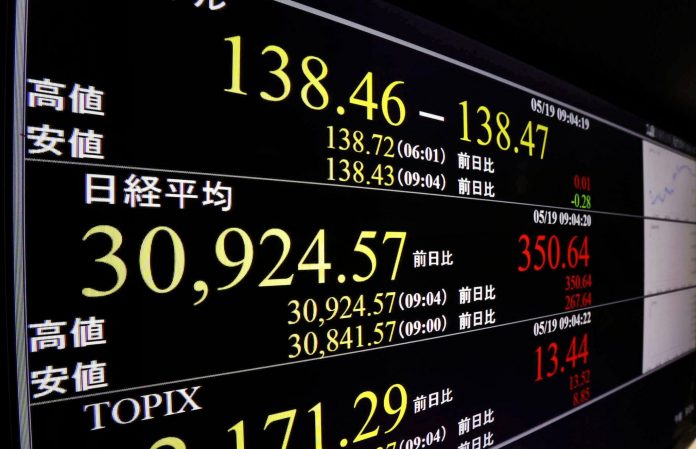
South Korean Stock Exchange Halted After 10% Drop as Nikkei Slides 3.5%

0

Global financial markets were rattled by a sharp wave of selling that swept across Asia, triggering an emergency trading halt on South Korea’s stock exchange after benchmark indices plunged 10%.

At the same time, Japan’s Nikkei 225 fell 3.5%, reflecting growing investor anxiety over a combination of economic uncertainty, geopolitical tensions, and concerns about global monetary policy.

The dramatic selloff marked one of the most volatile trading sessions in the region in recent years. South Korea’s exchange activated market-wide circuit breakers designed to prevent panic-driven trading after the benchmark index breached the 10% decline threshold.

Such measures temporarily suspend trading activity, giving investors time to reassess market conditions and reducing the risk of disorderly market behavior.

The decline in South Korean equities was broad-based, affecting technology firms, industrial manufacturers, financial institutions, and export-oriented companies. Major corporations that are heavily dependent on international demand faced significant pressure as investors worried about slowing global growth and weakening trade activity.

South Korea’s economy is deeply integrated into global supply chains, making its stock market particularly sensitive to shifts in international economic sentiment. Japan’s Nikkei also experienced heavy selling, though its losses were less severe than those seen in Seoul.

The 3.5% decline reflected concerns about the outlook for Japanese exporters, many of which rely on strong demand from overseas markets. Investors also reacted to fluctuations in currency markets, rising bond yields, and uncertainty surrounding future interest-rate decisions by major central banks.

Several factors appear to have contributed to the market turmoil. Investors remain focused on the possibility that major central banks, particularly the U.S. Federal Reserve, may maintain a restrictive monetary stance for longer than previously anticipated. Higher interest rates increase borrowing costs and reduce liquidity in financial markets, often weighing on risk assets such as equities.

Second, geopolitical risks continue to cast a shadow over investor sentiment. Ongoing tensions in key regions, concerns about global trade routes, and uncertainty surrounding energy markets have increased fears of supply disruptions and slower economic growth.

These risks have encouraged many investors to reduce exposure to equities and move toward safer assets. Third, concerns about corporate earnings have intensified. As businesses face higher financing costs and uncertain demand conditions, analysts have begun revising earnings forecasts downward for several sectors.

Technology and manufacturing companies, which play a dominant role in both South Korean and Japanese markets, have been particularly vulnerable to these reassessments. The selloff also highlights the interconnected nature of modern financial markets.

Weakness in one major market can quickly spread across regions as institutional investors rebalance portfolios and respond to shifting risk perceptions.

Asian markets often serve as an early indicator of broader global sentiment, meaning developments in Seoul and Tokyo are likely to be closely monitored by investors in Europe and North America. Despite the severity of the declines, market experts note that circuit breakers and other safeguards are designed precisely for moments like these.

Temporary trading halts help restore order and provide participants with an opportunity to evaluate information more carefully rather than making decisions driven by fear. Investor attention will remain focused on economic data releases, central-bank communications, and geopolitical developments.

Whether the selloff proves to be a short-term correction or the beginning of a deeper market downturn will depend largely on how these factors evolve in the coming weeks. The sharp declines in South Korea and Japan serve as a reminder that global markets remain highly sensitive to uncertainty and rapidly changing economic conditions.