DD
MM
YYYY

PAGES

DD
MM
YYYY

spot_img

PAGES

Home Blog Page 3701

One way to protect the Intellectual Property of Crypto projects is to use Patents

0

The crypto industry is often seen as a bastion of innovation and creativity, where developers and entrepreneurs collaborate to create new solutions and protocols that challenge the status quo. However, this also means that the industry is constantly facing the threat of copycats, plagiarism, and infringement, which can undermine the originality and value of their work.

One way to protect the intellectual property of crypto projects is to use patents, which are legal rights that grant the owner the exclusive right to make, use, or sell an invention for a limited period of time. Patents can help crypto projects secure their competitive advantage, deter potential infringers, and attract investors and partners.

However, some may argue that patents are incompatible with the open-source ethos of crypto, which emphasizes transparency, collaboration, and sharing. They may fear that patents will stifle innovation, create monopolies, and hinder the adoption and development of crypto technologies.

This is a false dilemma. Crypto can benefit from patents without losing its open-source ethos. In fact, patents can be used to support and enhance the open-source movement, rather than oppose it. Here are some ways how:

Patents can be used defensively. Crypto projects can use patents to prevent others from patenting the same or similar inventions and suing them for infringement. This can create a “patent shield” that protects the project and its users from legal attacks.

For example, Square Crypto, a division of Square that focuses on Bitcoin development, has launched the Cryptocurrency Open Patent Alliance (COPA), a non-profit organization that aims to pool patents from crypto projects and make them available to anyone who joins the alliance. This way, COPA members can use each other’s patents defensively, while still allowing anyone to use their technologies for free.

Patents can be used strategically. Crypto projects can use patents to gain leverage in negotiations, partnerships, and licensing deals with other parties. For example, if a crypto project has a patent on a novel protocol or algorithm that solves a common problem in the industry, it can use it to bargain for better terms or conditions with potential collaborators or customers. Alternatively, it can license its patent to others for a fee or a royalty, creating a new source of revenue for the project.

Patents can be used ethically. Crypto projects can use patents to uphold their values and principles and ensure that their inventions are used for good purposes. For example, if a crypto project has a patent on a technology that enables social impact or environmental sustainability, it can use it to prevent others from using it for malicious or harmful ends.

Alternatively, it can grant permission to others who share its vision and mission, creating a positive network effect for the project.

Patents are not inherently antithetical to the open-source ethos of crypto. Rather, they are tools that can be used wisely and responsibly to protect and promote the innovation and creativity of crypto projects. By using patents in alignment with their goals and values, crypto projects can benefit from patents without losing their open-source ethos.


New York Attorney General’s office, Digital Currency Group and Bitcoin fell slightly on Monday

0
NEW YORK, NEW YORK - SEPTEMBER 21: NY Attorney General Letitia James speaks during a press conference at the office of the Attorney General on September 21, 2022 in New York, New York. NY AG James announced today that her office is suing former President Donald J. Trump and his children Donald Trump Jr., Ivanka Trump, and Eric Trump accusing the family of fraudulent statements of financial conditions to obtain millions in economic benefits. The lawsuit seeks to remove Trump and his children from their roles at their organizations and bans them from future leadership roles in the state of NY and repay $250 million that was illegally obtained. (Photo by Michael M. Santiago/Getty Images)

The New York Attorney General’s office has announced that it is expanding its lawsuit against Digital Currency Group (DCG), one of the largest and most influential companies in the crypto industry, to $3 billion. The lawsuit, which was filed in September 2023, accuses DCG of engaging in fraudulent and deceptive practices that harmed investors and consumers.

According to the amended complaint, DCG misled investors about the value and performance of its crypto assets, such as Grayscale Bitcoin Trust (GBTC) and Grayscale Ethereum Trust (GETH), which are publicly traded on the OTC markets. The complaint alleges that DCG artificially inflated the prices of these trusts by creating a false scarcity of shares and manipulating the supply and demand.

DCG also allegedly failed to disclose material information about the risks and fees associated with its products, such as the high premiums and discounts, the lack of liquidity, and the potential for conflicts of interest.

The Attorney General’s office claims that DCG’s fraudulent scheme resulted in investors losing over $2 billion in value, as the prices of GBTC and GETH plummeted in 2023. The office is seeking to recover these losses, as well as additional damages and penalties, totaling $3 billion. The office is also seeking to enjoin DCG from continuing its unlawful conduct and to impose reforms to protect investors and consumers.

DCG has denied the allegations and vowed to fight the lawsuit in court. In a statement, DCG said that it operates with the highest standards of integrity and transparency, and that it has always complied with all applicable laws and regulations. DCG also said that its products provide a valuable service to investors who want exposure to crypto assets without having to deal with the technical and regulatory challenges of buying and storing them directly.

The lawsuit against DCG is part of a broader crackdown by the New York Attorney General’s office on the crypto industry, which it considers to be rife with fraud, manipulation, and abuse. The office has previously taken action against other prominent crypto companies, such as Bitfinex, Tether, Coinseed, and BitPay, for violating various consumer protection and securities laws.

Bitcoin experienced a minor decline on Monday 12th February 2024, after posting its best weekly performance since October 2023. The leading cryptocurrency dropped by 1.2% to trade at $47,993, as some investors took profits from the recent rally.

However, the overall sentiment remains bullish, as Bitcoin has gained more than 20% in the past seven days, breaking above the $40,000 resistance level and reaching a new all-time high of $64,895 on Sunday.

What are the factors behind Bitcoin’s impressive recovery? And what are the challenges and opportunities ahead for the crypto market?

One of the main catalysts for Bitcoin’s surge was the launch of the first Spot Bitcoin exchange-traded fund (ETF) in the US, which began trading on the New York Stock Exchange on Tuesday 9th February 2024.

The ETF, called BITO, tracks the performance of Bitcoin futures contracts, rather than the spot price of Bitcoin itself. This allows investors to gain exposure to Bitcoin without having to buy or store the actual cryptocurrency, which can be costly and complicated.

The ETF also provides more regulatory clarity and legitimacy for Bitcoin, as it is overseen by the Securities and Exchange Commission (SEC) and follows strict rules and standards.

The BITO ETF attracted a huge demand from both institutional and retail investors, as it traded more than $1 billion worth of shares on its first day, making it one of the most successful ETF launches in history. The ETF also boosted the demand for Bitcoin futures contracts, which in turn pushed up the spot price of Bitcoin.

According to data from Skew, the open interest in Bitcoin futures contracts reached a record high of $27 billion on Sunday, indicating a high level of trading activity and optimism in the market.

Another factor that contributed to Bitcoin’s rally was the growing adoption and acceptance of Bitcoin by mainstream companies and institutions. For instance, Twitter announced on Thursday 11th February 2024 that it would allow its users to tip each other with Bitcoin using the Lightning Network, a layer-2 solution that enables fast and cheap transactions on top of Bitcoin.

Twitter also said that it would integrate Bitcoin into its e-commerce platform, Shop Module, which allows users to buy products directly from tweets. This move shows that Twitter is embracing Bitcoin as a form of payment and value transfer, following the footsteps of other tech giants like Facebook and PayPal.

Elon Musk has been known for his influence on the crypto market, as his tweets and comments often cause significant price swings. Moreover, Tom Brady, the star quarterback of the Tampa Bay Buccaneers and a seven-time Super Bowl champion, revealed on Saturday 11th February 2024 that he owns some Bitcoin and that he is a big fan of it. Brady also said that he thinks Bitcoin has a bright future and that he is excited to see how it evolves.

The Philippines said it doesn’t plan to use Blockchain Infrastructure for its future CBDC

0

The Philippines is one of the countries that is exploring the possibility of launching a central bank digital currency (CBDC), a digital form of fiat money that is issued and regulated by the central bank. However, unlike some other countries that are considering using blockchain technology to power their CBDCs, the Philippines has ruled out this option for now.

According to a report by The Philippine Star, the Bangkok Sentral ng Pilipinas (BSP), the country’s central bank, has no plans to use a blockchain for its future CBDC. The report quoted BSP Governor Benjamin Diokno, who said that the central bank is still studying the pros and cons of different technologies for its digital currency project, but that blockchain is not among them.

Diokno explained that blockchain is more suitable for decentralized applications, such as cryptocurrencies, that do not require a central authority or intermediary. However, a CBDC is a centralized system that is controlled by the central bank, and therefore does not need a blockchain to ensure its security and transparency.

He also said that blockchain is too complex and costly for a CBDC, and that it may pose challenges in terms of interoperability, scalability and efficiency. He added that the BSP is looking at other technologies that are simpler, faster and cheaper for its CBDC.

The BSP launched a formal study on the feasibility and policy implications of issuing a CBDC in July 2020, and expects to complete it by the end of 2024. The central bank has said that it is open to the idea of a CBDC, but that it needs to weigh its potential benefits and risks carefully before making any decision.

Some of the benefits of a CBDC that the BSP is considering include enhancing financial inclusion, reducing transaction costs, improving monetary policy transmission and supporting digital transformation. Some of the risks include cyberattacks, privacy issues, financial stability concerns and legal challenges.

The Philippines is not alone in excluding blockchain from its CBDC plans. Other countries, such as Sweden and Japan, have also opted for other technologies for their digital currency experiments. However, some countries, such as France, Singapore and Thailand, have tested or are testing blockchain-based CBDCs in collaboration with private sector partners.

However, unlike some other countries that are experimenting with blockchain or distributed ledger technology (DLT) to power their CBDCs, the Philippines has decided to rule out this option for its wholesale CBDC, which is expected to launch within the next two years.

According to the Inquirer, the governor of the Bangkok Sentral ng Pilipinas (BSP), Eli Remolona Jr., said that other central banks have tried blockchain for their CBDCs, but it didn’t go well. He did not specify which central banks or what problems they encountered, but he suggested that blockchain may not be suitable for a wholesale CBDC, which is intended for institutional use only, such as interbank payments and settlements.

A wholesale CBDC differs from a retail CBDC, which is designed for general public use, such as consumer payments and remittances. The BSP has decided to limit its CBDC project to wholesale only, citing concerns that a retail CBDC could exacerbate bank runs in times of financial stress. Remolona said that a wholesale CBDC could improve the efficiency and safety of domestic and cross-border payments, as well as reduce operational costs and risks.

The BSP’s stance on blockchain contrasts with some other central banks that are actively pursuing DLT for their CBDCs. For instance, China’s digital yuan, which is currently undergoing extensive trials, is based on a hybrid architecture that combines a centralized system with some decentralized elements.

The Bahamas’ sand dollar, which became the world’s first fully deployed CBDC in 2020, also uses a DLT platform that allows for offline transactions and integration with existing payment systems.

The Philippines’ decision to launch a wholesale CBDC without blockchain may reflect its pragmatic approach to digital innovation and financial inclusion. The country has been supportive of fintech and crypto initiatives, such as allowing licensed virtual currency exchanges to operate and testing a pilot program for a retail CBDC in partnership with the Alliance for Financial Inclusion.

Would You Consider This Investment Vision from Your Nigeria’s State Government?

1

Jamie Dimon calls the balance sheet of JP Morgan a “fortress”, and that means it is impregnable with capacity to withstand any shock including black swan-like economic meltdown. Warren Buffett controls BNSF Railway which brings in about $26 billion in revenue yearly. BNSF owns trains and train tracks. Nigeria’s Bayo Ogunlesi founded GIP (recently acquired by Blackrock) which “owns” many airports and seaports like Gatwick Airport in Europe. These entities invested in boring, but critical assets, which power the world of commerce and industry.

As a Nigerian diaspora or Nigerian in homeland, if your state government floats a Naira-based bond (a loan with interest) and asks you to invest, and that bond repayment is guaranteed by say African Development Bank or a top-tier development finance institution, would you be interested? You will pay in Naira, US dollars or any currency, but there would be a conversion to Naira where the bond contracts would be executed.

The money will not go to the state but to an internationally recognized builder to build, say a seaport, airport, hospital system, etc. More so, after construction, that asset will be concessioned, never to be managed by any bureaucrat, and that asset within five years will be taken public to the stock market. You are guaranteed that the assets would be delivered, and consider the leadership of the state to be competent, capable and credible.

You will get a Naira-based interest on that investment. And when the company goes public, you will also get equity. Together, the interest and the equity will not just bring financial return, but also guarantee that any currency loss will be well managed.

There are other components, but I have explained the grand scheme. Would you drop your $10,000 or so to this project, understanding that the whole framework is to support and develop your state, and not just to add digits to your bank accounts?

Comment below: 

Yes – looks exciting

No – not exciting

YN – explain how this could be sweetened to make it exciting for you.

(this is for an academic purpose)

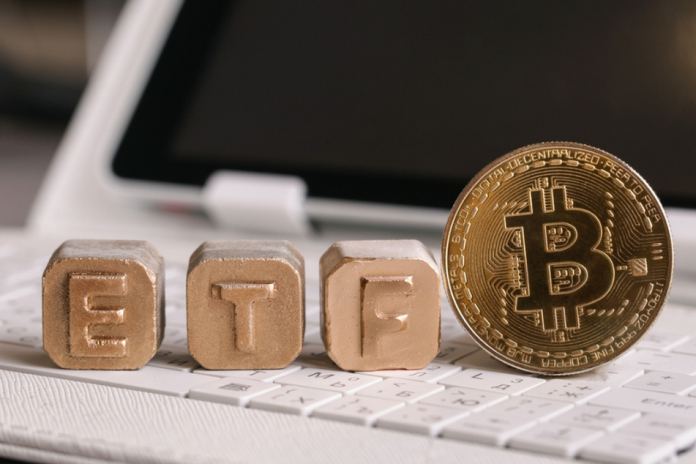
Bitcoin ETFs are not crypto’s finish line

0

The recent approval of the first Spot Bitcoin exchange-traded funds (ETFs) in the US has been hailed as a major milestone for the crypto industry. Many investors see it as a sign of mainstream acceptance and a gateway to wider adoption.

However, while Bitcoin ETFs are certainly a positive development, they are not the ultimate goal of crypto innovation. In fact, they may even pose some risks and limitations for the future of the decentralized economy.

A Bitcoin ETF is a type of investment fund that tracks the price of Bitcoin and trades on a regulated stock exchange. It allows investors to gain exposure to Bitcoin without having to buy, store, or manage the underlying asset.

This makes it easier and cheaper for investors to access the crypto market, especially for those who are not familiar with or comfortable with using crypto platforms and wallets.

Bitcoin ETFs also provide more legitimacy and credibility to the crypto industry, as they are subject to the rules and regulations of the securities market. They can attract more institutional and retail investors who may otherwise be wary of the volatility, security, and legality of crypto assets.

Moreover, they can increase the liquidity and price discovery of Bitcoin, as more trading activity and demand will reflect on its market value.

What are the drawbacks and challenges of Bitcoin ETFs?

However, Bitcoin ETFs are not without their drawbacks and challenges. For one thing, they do not give investors any ownership or control over their Bitcoin holdings. Investors only own shares of the ETF, not the actual Bitcoins.

This means that they cannot use their Bitcoins for transactions, lending, staking, or any other use cases that the crypto ecosystem offers. They also cannot benefit from any forks, airdrops, or upgrades that may occur on the Bitcoin network.

Another issue with Bitcoin ETFs is that they may create a disconnect between the price and the supply of Bitcoin. Unlike traditional ETFs that hold physical assets like gold or oil, Bitcoin ETFs do not have to buy or sell Bitcoins to match their fund size.

Instead, they use derivatives contracts such as futures and swaps to track the price of Bitcoin. This means that the demand for Bitcoin ETFs may not translate into actual demand for Bitcoin itself, and vice versa. This could create arbitrage opportunities and distortions in the market.

Furthermore, Bitcoin ETFs may expose investors to additional risks and costs that are not inherent to Bitcoin itself. For example, investors may face counterparty risk if the ETF provider or the derivatives issuer defaults or goes bankrupt.

They may also incur higher fees and taxes than if they directly own Bitcoins. Additionally, they may be subject to regulatory uncertainty and changes that could affect the performance and availability of the ETF.

What is the ultimate goal of crypto innovation?

The ultimate goal of crypto innovation is not to replicate or replace the existing financial system, but to create a new one that is more open, inclusive, transparent, and efficient.

Crypto assets are not just passive instruments for speculation, but active agents for value creation and exchange. They enable users to participate in a global network of peer-to-peer transactions, governance, and innovation, without intermediaries or gatekeepers.

Bitcoin ETFs are a welcome step towards bringing more awareness and adoption to the crypto industry, but they are not the end game. They are a bridge between the old and the new world, but not the destination.

The true potential and value of crypto lies beyond the confines of traditional finance, in the realm of decentralized applications, platforms, and protocols that are powered by crypto assets. That is where the real innovation and transformation will happen.