DD
MM
YYYY

PAGES

DD
MM
YYYY

spot_img

PAGES

Home Blog Page 3706

Nigeria lost N2.9trn through contract fraud within 2018-2020 by contractors

0

The Economic and Financial Crimes Commission (EFCC) has revealed that Nigeria lost a staggering N2.9 trillion to contract fraud in the last three years. This was disclosed by the EFCC Chairman, Ola Olukoyede, at a press conference on Monday.

According to Olukoyede, the commission uncovered several cases of contract fraud involving public officials and private contractors who colluded to divert funds meant for developmental projects for their personal enrichment. He said that some of the projects involved road construction, power generation, health care, education, and agriculture.

Olukoyede said that the EFCC was determined to recover the looted funds and bring the perpetrators to justice. He also urged Nigerians to report any suspicious activities or transactions involving public contracts to the commission. He said that the EFCC was working with other anti-corruption agencies and civil society organizations to ensure transparency and accountability in public procurement.

He said that contract fraud was one of the major challenges facing Nigeria’s development and economic growth. He said that the funds lost to contract fraud could have been used to provide basic amenities and services for millions of Nigerians who are living in poverty and deprivation. He said that the EFCC would not relent in its fight against corruption and would continue to protect the interest of the Nigerian people.

E-commerce business is good in Nigeria but the cost of everything mostly dollar rate

Nigeria is one of the fastest-growing e-commerce markets in Africa, with a projected revenue of $4.9 billion by 2025. Many entrepreneurs and businesses are tapping into the opportunities offered by online platforms, such as increased customer reach, lower operational costs, and improved efficiency. However, e-commerce in Nigeria also faces some challenges, especially in terms of currency fluctuations and exchange rates.

One of the major factors that affect e-commerce in Nigeria is the volatility of the naira against the dollar. The naira has depreciated significantly in recent years, due to various economic and political factors, such as low oil prices, foreign exchange shortages, inflation, and insecurity. This has made it difficult for e-commerce businesses to plan their budgets, manage their cash flows, and source their products and services from abroad.

For instance, many e-commerce platforms rely on imported goods, such as electronics, fashion items, and beauty products, to meet the demand of their customers. However, the high cost of importing these goods, due to the weak naira and high tariffs, has reduced their profit margins and competitiveness. Moreover, some e-commerce businesses have to pay their suppliers and service providers in dollars, which exposes them to exchange rate risks and increases their operational costs.

To cope with these challenges, some e-commerce businesses have adopted various strategies, such as:

Sourcing locally made products and services, which are cheaper and more accessible than imported ones. Hedging against currency risks by using forward contracts, futures contracts, or options contracts to lock in favorable exchange rates for future transactions. Diversifying their revenue streams by offering other services, such as logistics, digital marketing, or consulting, to complement their core e-commerce activities.

Partnering with other e-commerce platforms or aggregators to leverage their network effects, economies of scale, and bargaining power. Offering flexible payment options to their customers, such as pay-on-delivery, mobile money, or installment plans, to increase their affordability and convenience.

E-commerce in Nigeria has a lot of potential to grow and contribute to the economic development of the country. However, it also requires a stable and conducive environment to thrive. Therefore, it is important for the government and other stakeholders to address the challenges faced by e-commerce businesses, especially in terms of currency stability and exchange rate management.

Netflix gained 8.8 million subscribers in its latest quarter

0

Netflix is on a roll. The streaming giant added 8.8 million new subscribers in the fourth quarter of 2023, beating its own forecast and Wall Street’s expectations. This brings its total global membership to over 200 million, a milestone that few companies can match.

But Netflix is not resting on its laurels. The company announced that it will increase its prices in the US, Canada, and parts of Latin America, starting from February 2021. The standard plan will go up by $1 to $14 per month, while the premium plan will rise by $2 to $18 per month. The basic plan will remain unchanged at $9 per month.

Why is Netflix raising its prices? The company says it is investing more in content, technology, and customer service, and that the price hike reflects the value it provides to its subscribers. Netflix also faces increasing competition from other streaming services, such as Disney+, HBO Max, Amazon Prime Video, and Peacock, which are vying for a share of the growing online video market.

Netflix has a history of raising its prices every few years, and so far, it has not seen a significant impact on its subscriber growth or retention. In fact, some analysts believe that the price increase will boost Netflix’s revenue and earnings, and help it reduce its debt and dependence on external financing.

However, some customers may not be happy with the price hike, especially in the midst of a pandemic that has affected many people’s incomes and budgets. Some may decide to switch to cheaper alternatives, or share accounts with friends or family members. Others may simply cancel their subscriptions altogether.

Netflix says it understands that some members may find the new prices too high, and that it offers a range of plans to suit different needs and budgets. It also says it will notify its subscribers about the price change well in advance, and give them the option to change or cancel their plans.

Netflix is confident that its loyal fans will stick with it, and that its new and upcoming content will attract more viewers. The company has a strong slate of original shows and movies for 2021, including The Witcher season 2, Stranger Things season 4, The Crown season 5, Bridgerton season 2, Lupin season 2, and many more.

Netflix is betting that its quality and quantity of content will outweigh the cost of its service, and that its subscribers will see the value in paying a little more for a lot more entertainment. Whether this gamble pays off remains to be seen.

Chat API with Retrieval-Augmented Generation (RAG) is now available in a public beta

Chat API with Retrieval-Augmented Generation (RAG) is now available in a public beta. This means that you can start using our powerful and innovative chat technology to create engaging and natural conversations with your users.

RAG is a novel technique that combines two components: a retrieval system and a generative system. The retrieval system searches a large corpus of documents (such as Wikipedia) to find relevant passages that match the user’s query or context. The generative system then uses these passages as additional input to generate a response that is coherent, informative and diverse.

RAG enables our Chat API to produce high-quality responses that are not limited by the data used to train the model. Instead, the model can leverage the vast amount of knowledge available on the web to enrich the conversation and provide more value to the user.

Chat API with RAG is easy to use and integrate with your existing applications. You can simply send a user message and an optional context to our API endpoint and receive a response in JSON format. You can also customize various parameters, such as the number of retrieved documents, the length of the response, the tone of the response, and more.

You can use our Chat API with RAG for various use cases, such as customer service, education, entertainment, health, and more. You can create chatbots that can answer questions, provide information, give advice, tell stories, or just chat for fun.

To get started with the Chat API with RAG, you can sign up for our public beta here. You will receive an API key and access to our documentation and examples. We would love to hear your feedback and suggestions on how to improve our service.

SEC Chairman Gary Gensler confirms ongoing review, and talks potential benefits of Bitcoin ETF

0
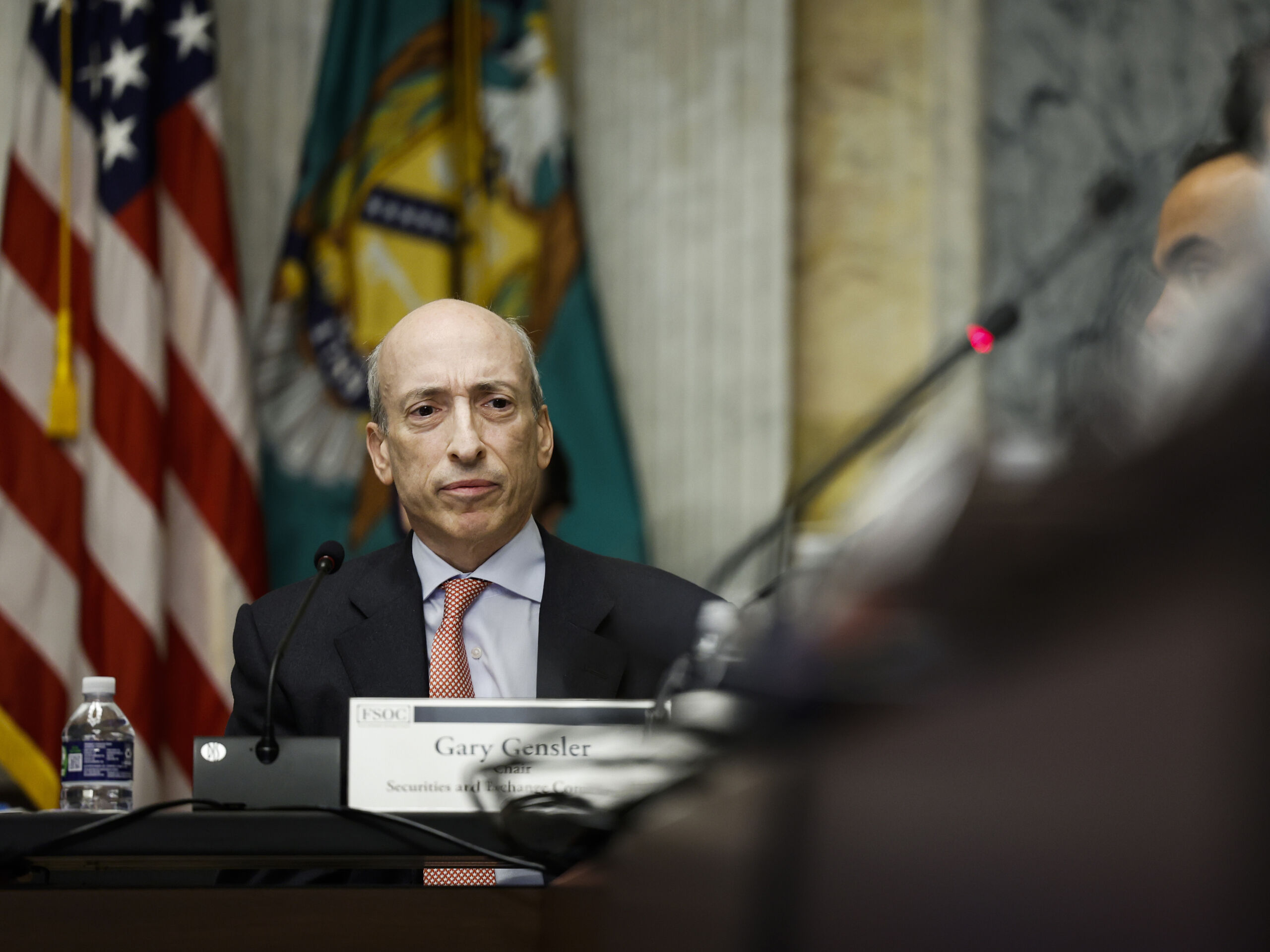
WASHINGTON, DC - OCTOBER 03: Securities and Exchange Commission (SEC) Chair Gary Gensler listens during a meeting with the Treasury Department's Financial Stability Oversight Council at the U.S. Treasury Department on October 03, 2022 in Washington, DC. The council held the meeting to discuss a range of topics including climate-related financial risk and the recent Treasury report on the adoption of cloud services in the financial sector. (Photo by Anna Moneymaker/Getty Images)

SEC Chairman Gary Gensler has confirmed that the agency is conducting an ongoing review of several applications for Bitcoin exchange-traded funds (ETFs) and discussed some of the potential benefits of such products. In a blog post published on Thursday, Gensler said that Bitcoin ETFs could provide investors with more transparency, liquidity, and efficiency in the crypto market, as well as reduce the risks of fraud and manipulation.

Gensler explained that the SEC’s review process involves evaluating whether the proposed ETFs meet the standards set by the federal securities laws, such as ensuring fair and orderly markets, protecting investors and the public interest, and preventing fraudulent and manipulative acts and practices. He added that the SEC staff is working diligently and expeditiously to review the applications and provide feedback to the applicants.

Gensler also highlighted some of the potential benefits of Bitcoin ETFs, such as:

– Providing investors with access to a regulated and transparent market for Bitcoin exposure, rather than having to deal with unregulated or offshore platforms that may have lower standards of investor protection and market integrity.

– Enhancing the liquidity and efficiency of the Bitcoin market, as ETFs could attract more institutional and retail investors, as well as facilitate price discovery and arbitrage opportunities.

– Reducing the operational and custody risks associated with holding Bitcoin directly, such as hacking, theft, loss of private keys, or technical glitches. ETFs would allow investors to hold Bitcoin indirectly through a regulated intermediary that would be responsible for safeguarding the underlying assets and ensuring compliance with applicable rules and regulations.

Gensler concluded his blog post by stating that he is optimistic about the potential of Bitcoin ETFs to foster innovation and competition in the crypto space, while also serving the needs and interests of investors. He said that he looks forward to working with his fellow commissioners and the SEC staff to advance the agency’s mission of protecting investors, maintaining fair and efficient markets, and facilitating capital formation.

Two of the most prominent entrepreneurs and investors in the US, Elon Musk and Mark Cuban, have teamed up to challenge the authority and legitimacy of the Securities and Exchange Commission (SEC), the federal agency that regulates the securities markets. In a joint amicus brief filed at the Supreme Court on Monday, Musk and Cuban argued that the SEC’s administrative proceedings, which are used to enforce securities laws and impose sanctions on violators, are unconstitutional and unfair.

The brief was submitted in support of a petition by Michelle Cochran, a former chief financial officer of a Texas-based company, who was accused by the SEC of fraud and fined $300,000 in an administrative proceeding. Cochran appealed the SEC’s decision, claiming that the administrative law judges (ALJs) who preside over such proceedings are not appointed by the President or confirmed by the Senate, as required by the Constitution’s Appointments Clause. She also claimed that the ALJs are insulated from removal by the President, which violates the Constitution’s separation of powers principle.

Musk and Cuban, who have both faced SEC investigations and lawsuits in the past, echoed Cochran’s arguments and added their own criticisms of the SEC’s administrative proceedings. They claimed that the SEC has an unfair advantage over defendants in such proceedings, because it can choose the venue, the rules of evidence, and the standard of review.

They also claimed that the SEC’s ALJs are biased in favor of the agency, because they are influenced by its performance metrics and incentives. They cited statistics showing that the SEC wins more than 90% of its administrative cases, compared to less than 70% of its cases in federal court.

Musk and Cuban urged the Supreme Court to grant Cochran’s petition and review the constitutionality of the SEC’s administrative proceedings. They said that such a review is necessary to protect the rights and interests of millions of Americans who participate in the securities markets, either as investors, issuers, or professionals. They also said that such a review would promote innovation and entrepreneurship, which are vital for the economic growth and competitiveness of the US.

The Supreme Court has not yet decided whether to take up Cochran’s case. If it does, it could have significant implications for the SEC’s enforcement powers and practices, as well as for the securities industry as a whole.

How The Emerging New World Order Could Shape the Global Price of Crude Oil

0

This is a question that many people are asking, especially in the wake of the recent OPEC+ meeting, where the major oil-producing countries agreed to increase their output gradually over the next few months.

The decision was seen as a compromise between the competing interests of Saudi Arabia, which wanted to maintain tight supply and high prices, and Russia, which wanted to boost production and market share.

But what are the underlying factors that are driving the oil price dynamics, and how does the world order play a role in them?

One way to approach this question is to look at the supply and demand sides of the oil market. On the supply side, there are several factors that affect the availability and cost of oil, such as:

The level of production by OPEC and its allies, which account for about 40% of global output. OPEC has a history of using its market power to influence prices by adjusting its output quotas, either to increase or decrease supply.

However, OPEC’s influence has been challenged by the rise of US shale oil, which has increased its production significantly in the past decade and become a major competitor in the global market.

The level of production by non-OPEC countries, such as the US, Canada, Brazil, Norway, and others, which account for about 60% of global output. These countries have different production costs and capacities, and their output decisions are influenced by market forces, technological innovations, environmental regulations, and geopolitical factors.

The level of spare capacity, which is the amount of oil that can be brought online quickly in case of a supply disruption or a surge in demand. Spare capacity acts as a buffer that can stabilize prices and prevent volatility.

However, spare capacity has been declining in recent years, as many producers have been operating at or near their maximum capacity, leaving little room for flexibility.

The level of inventories, which is the amount of oil that is stored in tanks, pipelines, ships, and other facilities. Inventories act as another buffer that can smooth out fluctuations in supply and demand.

However, inventories have also been declining in recent years, as demand has recovered from the pandemic-induced slump and supply has been constrained by OPEC+ cuts and other factors.

On the demand side, there are several factors that affect the consumption and price sensitivity of oil, such as:

The level of economic activity and growth, which determines the overall energy demand and oil consumption. Oil is still the dominant source of energy in the world, accounting for about 33% of total energy consumption.

Therefore, oil demand is closely linked to economic performance and outlook. The global economy has been recovering from the pandemic-induced recession, but at an uneven pace across regions and sectors.

The recovery has been boosted by fiscal and monetary stimulus measures, but also hampered by new waves of infections and variants, vaccine inequality, trade tensions, and social unrest.

The level of consumer preferences and behavior, which determines the demand for specific oil products and services. Oil is used for various purposes, such as transportation, heating, electricity generation, industrial processes, petrochemicals, etc. Different oil products have different demand elasticities, meaning how responsive they are to changes in price. For example, gasoline demand tends to be more elastic than jet fuel demand, meaning that consumers are more likely to reduce their gasoline consumption when prices rise than their jet fuel consumption.

The level of technological innovation and efficiency, which determines the energy intensity and oil intensity of economic activity. Energy intensity is the amount of energy needed to produce one unit of GDP, and oil intensity is the amount of oil needed to produce one unit of GDP. Technological innovation and efficiency can reduce both energy intensity and oil intensity,meaning that less energy and oil are needed to produce the same amount of output. This can lower the demand for oil and put downward pressure on prices.

The level of environmental awareness and regulation, which determines the demand for alternative energy sources and low-carbon solutions. Environmental awareness and regulation can affect both the supply and demand sides of the oil market,but they have a more direct impact on the demand side, as they can shift consumer preferences and behavior away from oil-based products and services towards cleaner options, such as renewable energy, electric vehicles, hydrogen, biofuels, etc.

This can also lower the demand for oil and put downward pressure on prices. These factors interact with each other in complex ways, creating a dynamic and uncertain oil market environment.

However, they do not operate in a vacuum, but rather within a broader context of global politics, economics, and security, which shapes the world order.

The world order can be defined as the set of rules, norms, institutions, and power relations that govern international interactions and cooperation.

The world order can affect the oil market in various ways, such as:

– The level of stability and predictability

of the international system, which affects the risk perception and confidence of oil producers and consumers. A stable and predictable world order can foster a cooperative and constructive oil market environment, where supply and demand are balanced and prices are stable and reasonable.

However, an unstable and unpredictable world order can create a competitive and conflictual oil market environment, where supply and demand are imbalanced and prices are volatile and extreme.

The level of integration and interdependence of the global economy, which affects the trade flows and investment patterns of oil producers and consumers.

An integrated and interdependent world order can facilitate a free and fair oil market environment, where oil is traded and invested across borders without barriers or distortions.

However, a fragmented and protectionist world order can hamper a free and fair oil market environment, where oil is traded and invested across borders with barriers or distortions.

The level of cooperation and coordination of the international community, which affects the policy responses and collective actions of oil producers and consumers. A cooperative and coordinated world order can enable an effective and efficient oil market environment, where oil policies and actions are aligned and harmonized to address common challenges and opportunities. However, an uncooperative and uncoordinated world order can disable an effective and efficient oil market environment, where oil policies and actions are divergent and contradictory to address common challenges and opportunities.

Therefore, the world order is not only a backdrop, but also a driver of the oil market dynamics.

The world order can influence the oil price trends by affecting the supply and demand factors, as well as the market sentiment and expectations.

However, the relationship between the world order and the oil market is not one-way, but rather two-way. The oil market can also influence the world order by affecting the economic performance, political stability, and strategic interests of oil producers and consumers.

For example, high oil prices can benefit oil-exporting countries by increasing their revenues, fiscal space, and geopolitical leverage, but they can also harm oil-importing countries by increasing their costs, inflation, and trade deficits.

Conversely, low oil prices can benefit oil-importing countries by decreasing their costs, inflation, and trade deficits, but they can also harm oil-exporting countries by decreasing their revenues, fiscal space, and geopolitical leverage.

These effects can have implications for the world order by altering the balance of power, the distribution of wealth, the patterns of cooperation or conflict, and the prospects of development or instability among countless countries.

The world order is a cause and a consequence of the decline in oil price globally. The world order affects the oil market by shaping the supply and demand factors, as well as the market sentiment and expectations.

The oil market affects the world order by shaping the economic performance, political stability, and strategic interests of countries. The interaction between the world order and the oil market creates a feedback loop that can amplify or dampen the oil price movements.

Therefore, understanding the world order is essential for understanding the oil market, and vice versa.

Nigeria is Broke, the Government is Just Managing to Pay Salaries – Budget Minister

0

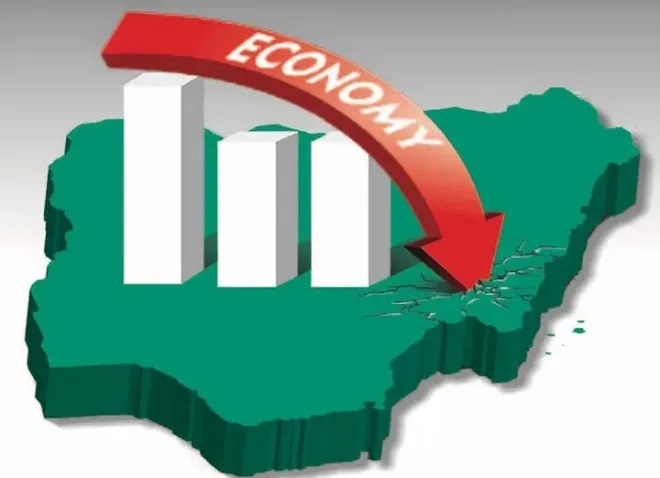
Nigeria’s Minister of Budget and National Planning, Atiku Bagudu, has openly acknowledged that the country is grappling with a severe financial crisis.

He stated that the government is presently just managing to pay salaries while dealing with a slow economic growth rate, a rapidly increasing population, surging unemployment, and high inflation.

Minister Bagudu expressed his concerns at the 30th Annual Development Forum organized by the Live Above Poverty Organization (LAPO) in Abuja. Represented by Dr. Sampson Ebimaro, the Director of Bilateral Economic Cooperation in the Ministry, Bagudu urged non-governmental organizations (NGOs) to assist the government in bridging the gaps it faces.

He disclosed the current financial predicament by stating, “Government faces enormous challenges, especially now; the government is facing a revenue deficit. There is no money anywhere in the country; the government is just managing to pay salaries. The growth rate is very slow, and the population growth is rapidly increasing. Unemployment is surging amid high inflation.”

Bagudu’s call to NGOs was to support the government in enhancing performance in critical areas and to facilitate the delivery of quality services to civil and public servants.

In response to the financial crisis, discussions with the World Bank are reportedly underway to secure a $1.5 billion concessionary loan to bolster budgetary provisions. This financial struggle coincides with a significant forex crisis in Nigeria, leading to the depreciation of the Naira to N1,200/$1 in the parallel market, and inflation surging to 26.72% in September.

The nation’s financial challenges are further exacerbated by the ongoing crisis in the oil sector, which has significantly impacted oil output. As a result, Nigeria heavily depends on external lenders.

In the first quarter of 2023, Nigeria’s net earnings from crude oil and gas stood at N486 billion, while net earnings from solid minerals amounted to N1.99 billion. In contrast, personnel cost reached N978 billion during the same period.

Economic experts have warned that the situation could worsen if the government does not take swift action to address the issues hindering economic growth. The need for comprehensive economic reforms and measures to boost forex earnings, particularly from the export of crude oil, is becoming increasingly urgent to tackle the nation’s financial crisis.

Besides boosting oil output, Olusegun Aganga, a former Minister of Finance, emphasized that Nigeria must reduce its dependence on imports and prioritize local production to bolster the strength of the naira. Speaking at the 3rd Adeola Odutola lecture during the 51st Annual General Meeting of the Manufacturers Association of Nigeria, Aganga underscored the critical role that local production and exports play in fortifying the country’s currency.

Aganga’s remarks came as part of a broader discussion on the economic challenges facing Nigeria and the steps needed to address them. He highlighted the adverse effects of a weak naira on the nation’s economy, which includes increased inflation and currency depreciation, among other issues.

The former finance minister emphasized that a strong naira is contingent on Nigeria’s ability to produce goods for both domestic consumption and export. He argued that the country’s reliance on imports perpetuates the naira’s vulnerability and exacerbates economic challenges. To address these issues, Aganga suggested a concerted effort to boost local production across various industries.

“Unlike the trillions spent on subsidies, bailouts, the Agric Anchor Borrowers Programme, the refineries, I can assure you that every naira, no matter how large, that is well spent on the strategic industrial sectors can be easily recovered and will deliver tremendous benefits to the economy and the nation,” he said.