DD
MM
YYYY

PAGES

DD
MM
YYYY

spot_img

PAGES

Home Blog Page 3711

Crypto Whales Explore: From Scorpion Casino to Pepe Coin and Floki Inu – Trends in Top Crypto Investments

0

Among the contenders in the spotlight are Pepe Coin, Floki Inu, and the rising star, Scorpion Casino. These digital assets, each with its unique attributes, vie for top place. As we delve into the depths of this ongoing competition, we unravel the intricate plays that distinguish Pepe Coin’s resilience, Floki’s recent surge, and Scorpion Casino’s promising ascent. Join us in exploring crypto whales and their impact on the market.

Scorpion Casino Token: Embrace Wealth with Strategic Crypto Investments

Within the crypto frenzy, Scorpion Casino Token (SCORP) stands out as a well-paid opportunity within the online gambling space. Leveraging blockchain technology, Scorpion Casino ensures transparency, efficiency, and security. The SCORP presale has already raised an impressive $5 million, signalling substantial investor interest.

The Scorpion Casino platform has solidified its position as a premier online gaming destination, offering a diverse range of options, from a comprehensive sportsbook to classic roulette. What sets SCORP apart is its robust tokenomics system, incorporating buy-backs and burns to enhance the staking experience. The token’s revenue-sharing system operates independently of crypto market fluctuations, positioning SCORP as a potential goldmine for crypto passive income in 2024.

Pepe Coin: The Rise and Stall

As of last year, Pepe Coin emerged as one of the most promising meme coins, drawing attention with impressive growth in value and investor interest. However, recent fluctuations have put investors on edge. In January alone, Pepe surged by 2%, signaling a leveling trend that suggests holders might be liquidating their tokens. The present bullish sentiment prompts investors to explore coins with untapped potential, ones that could break resistance levels.

Floki Inu: Riding the Momentum

Floki Inu, with its recent breakout fueled by positive TokenFi news, has become a focal point in the crypto market. Indicators showcase its robust performance, with the relative strength index (RSI) maintaining levels above 80, indicating strong momentum. However, it has yet to surpass its 200-day average, leaving room for potential upward movement before any correction takes place.
Navigating the Competition: Scorpion Casino Shines

As investors weigh their options in the competitive crypto landscape, Scorpion Casino emerges as a golden opportunity. The platform’s commitment to transparency, coupled with a thriving presale and a diverse gaming ecosystem, sets it apart from its counterparts.

In the online gaming market that’s projected to reach $145.6 billion by 2030, Scorpion Casino Token presents a strategic entry point, lowering barriers for both seasoned and novice investors. With a dynamic staking experience, supported by innovative tokenomics, SCORP positions itself as a promising venture for those seeking reliable passive income.


To learn more and invest in the Scorpion Casino presale, visit:

Presale: https://presale.scorpion.casino/

Twitter: https://twitter.com/ScorpionCasino

Telegram: https://t.me/scorpioncasino_official
Nigeria Can Fight for Naira’s FX Crises Through Fiscal Federalism

0
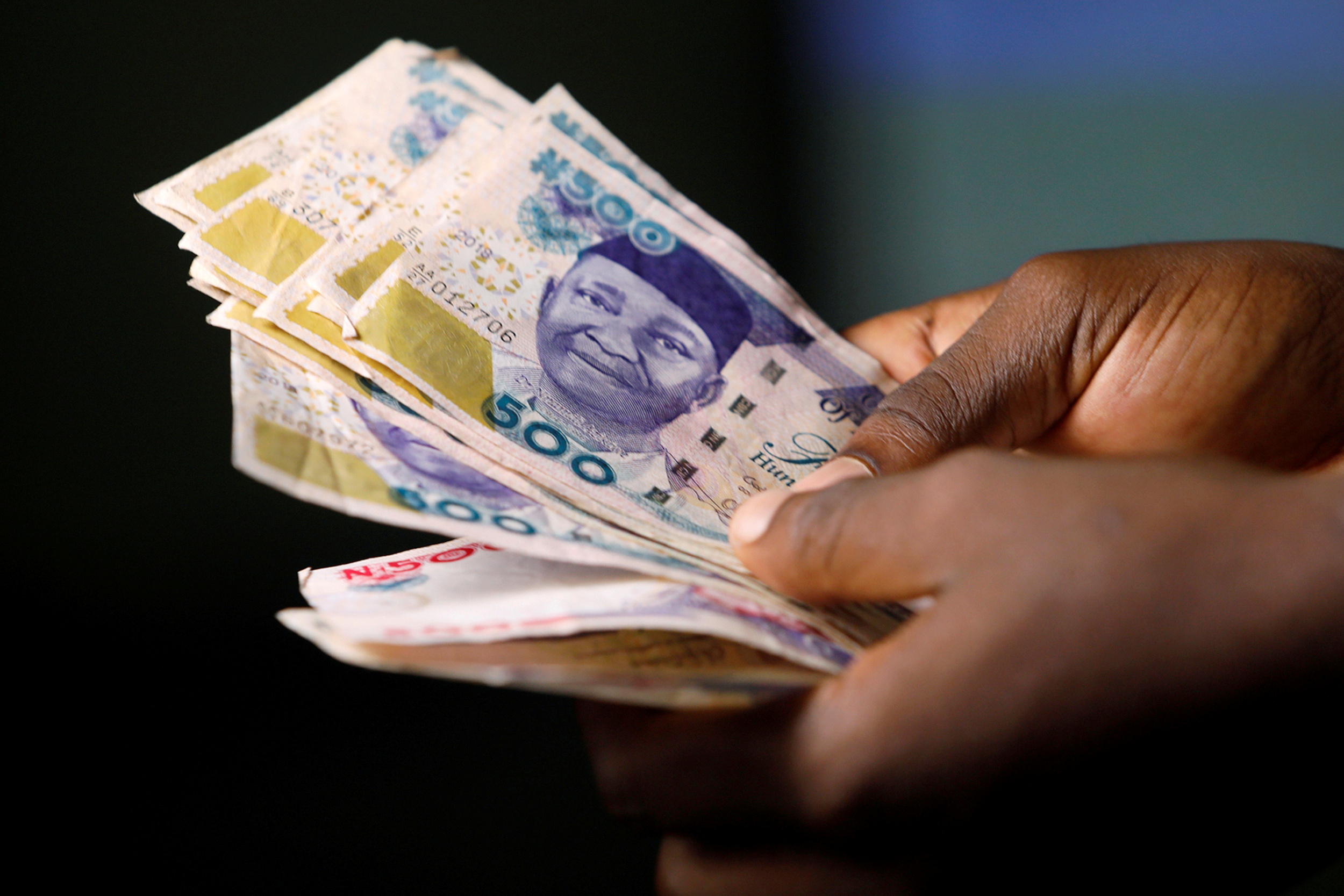
Nigerian naira banknotes are seen in this picture illustration, September 10, 2018. REUTERS/Afolabi Sotunde/File Photo

I want to wish those serving the best of luck as they architect policies. The latest is that Nigeria wants to raise $10 billion to support the Naira: “In response to the persistent challenges faced by Nigeria’s currency, the naira, the Federal Government has unveiled plans to raise $10 billion aimed at bolstering liquidity in the foreign exchange market.This announcement comes amidst growing concerns over the currency’s freefall, with the naira plummeting to an unprecedented low of 1,850 per dollar at the parallel market on Tuesday.”

Of course, anything which works is the best. Yet, I will also like to caution the nation to avoid a loop which could become a vicious circle where to fight today’s crisis, you need to raise money, and for tomorrow’s, more funds would be required at the debt market.

My position on this will be to look at critical anchors and enablers which can “wean” Nigeria of persistent currency paralysis. For a start, examine Nigeria’s fiscal architecture which has significantly affected our productivity and economic output. Indeed, can we consider looking at how to rearrange Nigeria?

Good People, if the leaders in the nation march to the National Assembly with a document on full fiscal federalism which will be put into motion within six months, Naira will appreciate to N650/$. That fiscal federalism will follow with Regional Police (not state police) to combate vices which are territorial.

(I am not in full support of State Police as our democracy is still immature to allow some governors to have full control of the Police. If that should happen, forget any opposition at the state level. Rather, I support Regional Police, like Southeast Police Force, under the control of the 5 governors with quarterly rotating chairmanship).

Under a regional government, Nigeria developed faster and during that period, exchange rate was never a problem as Nigeria built things and was productive. I do posit that we could return to that heritage if we organize around regions. The best “raise” to fight for Naira now is fiscal federalism where every region (or state specifically) will keep whatever it earns, and pays taxes to the federal government!

Nigeria Plans $10bn Raise to Tackle Currency Crisis

It Is Illegal for Internet Vendors To Ask Interested Buyers To “DM For Price”.

0

Some days ago, the Federal Competition and Consumer Protection Commission (FCCPC), sealed up some supermarkets in Abuja. One of their reasons for doing that is that the stores did not attach the prices of the items displayed on the shelves which is in breach of the law. 

Section 115 of the Federal Competition and Consumer Protection (FCCP) Act has mandated vendors (both offline and online vendors) to attach the price of any item they display or advertise for sale. 

Here are the full provisions of Section 115 of the FCCP Act; 

“115(1) An undertaking shall not display any goods or services for sale without adequately displaying to the consumer a price of those goods or services.

(2) For the purposes of this subsection, a price is adequately displayed to a consumer if, in relation to any, particular goods or services, a written indication of the price, expressed in the currency of the Federal Republic of Nigeria, is annexed or affixed to, written, printed, stamped or located upon, or otherwise applied to the goods or services or to any band, tickle covering the label, package, reel, shell or other thing used in connection with the goods or services, or on which the goods or services are mounted for display or exposed for sale, or published in relation to the goods or services in a catalogue, brochure, newspaper, a circular or similar publication available to the consumer

or to the public generally.

(3) An undertaking shall not require a consumer to pay a price for any goods or services higher than the displayed price for those goods or services, or if more than one price is concurrently displayed is higher than the lower or lowest of the prices so displayed. 

By implication of this s. 115 of the FCCP Act, posting an item for sale without affixing the price is an offence and asking interested buyers to dm you for the price as online vendors usually do is an offence as well. You are expected to charge in Niara so far your patrons or customers are residents in Nigeria or your business is conducted within the territorial jurisdiction of Nigeria. If your price tag is in any other currency other than the Niara, you have run a breach of subsection 2 of this section 115. 

The intention of this law and the reason for the establishment of the consumer protection agency is for the protection of the final consumers; to ensure that consumers are not exploited by greedy sellers who can Jack up their prices at any time and charge exorbitant prices. The agency is to ensure that dealers and sellers charge consumers a market fair price for the items, any price charged for an item which is above what is considered to be the fair price of the item is extortion and it is illegal. 

Sellers are therefore expected to charge customers the prices that were attached to the item, once a seller charges a customer a price different from the displayed price, it becomes an offense. If there is a change in price, it is expected of the seller to quickly update the price change to avoid running a breach of the law.


Investors in Europe Remain Cautious of Crypto Investment Despite ETFs Approval – VanEck Europe CEO

0

Managing Director and Head of Europe at VanEck, Martijn Rozemuller, has stated that investors in Europe remain cautious of crypto investments despite ETFs approval.

Martijn disclosed that the launch of Spot Bitcoin ETFs in the United States is gaining significant acceptance, meanwhile, some European investors remain reluctant to pull in resources into the assets.

In his words,

“U.S. investors are more willing to take educated risks. They’re also more used to trading on exchanges than some European investors that are still stuck in mutual funds that their bank or fund manager once advised”.

The VanEck Europe CEO highlights key differences in attitude toward the cryptocurrency sector on either side of the Atlantic Ocean. He disclosed that Europe’s crypto-curious investors typically include retail users, smaller independent wealth managers, and family offices:

It’s mainly retail because a lot of the larger financial institutions are still reluctant to use any crypto-related products in their standard portfolios”, he said.

Rozemuller further adds that although Europe has a number of exchange-traded notes (ETNs) that are appropriately licensed, local regulators have “explicitly” mentioned that they’re not in favor of crypto-related investments.

Recall that the U.S. Securities and Exchange Commission (SEC), last month approved the first U.S.-listed exchange-traded funds (ETFs) to track bitcoin, in a watershed for the world’s largest cryptocurrency and the broader crypto industry.

This approval gave the green light to multiple financial firms to offer spot bitcoin ETFs, including asset management giants like BlackRock, Fidelity Investments, and Franklin Templeton that cater to retail investors.

After a decade, the ETFs have been poised to be a game-changer for Bitcoin, offering investors exposure to the world’s largest cryptocurrency without directly holding it. They also provide a major boost for the wider crypto industry.

Standard Chartered analysts said the ETFs could draw $50 billion to $100 billion this year alone. Other analysts have said inflows will be closer to $55 billion over five years. Some regulatory experts believe the Bitcoin ETFs could also pave the way for other innovative crypto products.

The green light marks a U-turn for the SEC, which had rejected bitcoin ETFs due to worries they could be easily manipulated.

Analysts say that the introduction of ETFs could usher in new investor cohorts from traditional finance, significantly improving market transparency and liquidity and bringing long-term capital inflow into the digital assets market.

Bitcoin ETFs promise major potential gains but also have notable downsides, presenting investors with a wide range of outcomes that will test their risk tolerance. However, investors are advised to weather the asset’s considerable volatility as well as uncertainty stemming from its association with issues of fraud and mismanagement in the wider crypto industry.

China and USA have different approaches, goals and strategies when it comes to Crypto

0

The global landscape of cryptocurrencies is changing rapidly, as two of the world’s most powerful nations compete for dominance in this emerging field. China and the USA have different approaches, goals and strategies when it comes to crypto, and their actions have significant implications for the rest of the world.

We will compare and contrast the main aspects of China’s and USA’s crypto policies and discuss the potential outcomes and challenges for both countries and the global crypto community.

The USA is another major player in the global crypto scene, with a vibrant and diverse ecosystem of crypto companies, investors, developers and users. The USA is home to some of the most popular and influential crypto platforms, such as Coinbase, Kraken, Gemini, PayPal and Square. The USA also has a large and active market of crypto users, with millions of people buying, selling and holding cryptocurrencies.

However, unlike China, the USA does not have a clear or consistent policy or regulation on crypto. Instead, the USA has a decentralized and fragmented approach to crypto regulation, with different federal agencies, states and courts having different views and jurisdictions on various aspects of crypto activities.

One of the main challenges for the USA’s crypto policy is its lack of a national digital currency or CBDC. Unlike China, the USA does not have a clear or urgent need or plan to launch its own digital currency. The US dollar is still the dominant reserve currency in the world, and the existing financial system is still relatively stable and efficient.

China has been a pioneer in the development and adoption of cryptocurrencies, especially in the areas of blockchain technology, digital payments and mining. China is home to some of the largest and most influential crypto companies, such as Binance, Huobi, OKEx, Ant Group and Bitmain.
China also has a huge market of crypto users, with millions of people using digital wallets and platforms to trade, invest and transact with cryptocurrencies.

However, China’s crypto landscape is also characterized by a high degree of centralization and regulation. The Chinese government has a tight grip on the crypto industry, imposing strict rules and bans on various aspects of crypto activities.

For example, China has banned initial coin offerings (ICOs), crypto exchanges, foreign platforms and mining operations in certain regions. China has also cracked down on illegal or fraudulent crypto schemes, such as Ponzi schemes, money laundering and tax evasion.

One of the main reasons for China’s strict regulation of crypto is its ambition to launch its own digital currency, the digital yuan or e-CNY. The digital yuan is a central bank digital currency (CBDC) that is issued and controlled by the People’s Bank of China (PBOC).

The digital yuan is designed to be a legal tender that can be used for payments, settlements and transfers within China and abroad. The digital yuan is also intended to enhance China’s financial sovereignty, security and efficiency, as well as to challenge the dominance of the US dollar in the global financial system.

The digital yuan is currently in the testing phase, with several pilot projects running in various cities and regions across China. The PBOC has also partnered with several domestic and foreign institutions, such as banks, payment platforms, retailers and telecom operators, to facilitate the adoption and use of the digital yuan. The PBOC has not announced a specific timeline for the official launch of the digital yuan.

However, some experts argue that the USA should consider developing its own CBDC to keep up with the global trend of digitalization and innovation in finance. A US CBDC could potentially enhance the US financial sovereignty, security and efficiency, as well as to counter the threat of China’s digital yuan.

These different regulatory frameworks in USA and China create uncertainties, complexity and inconsistency for crypto companies and users in the USA, China and the world at large. They also create challenges for innovation and competition in the crypto industry, as some crypto companies face barriers or restrictions to operate or expand in certain states or markets.

Moreover, they create risks for compliance and enforcement, as some crypto companies or users may violate or evade existing laws or regulations.