DD
MM
YYYY

PAGES

DD
MM
YYYY

spot_img

PAGES

Home Blog Page 3714

Does Bitcoin care how many bitcoins Exist?

0

One of the most intriguing aspects of Bitcoin is its limited supply. Unlike fiat currencies, which can be printed at will by central banks, Bitcoin has a fixed maximum number of coins that can ever be created: 21 million. This scarcity gives Bitcoin its value and makes it attractive to investors and users who want to preserve their purchasing power.

As of October 16, 2023, the current market cap of Bitcoin is $526.36 billion USD, according to CoinMarketCap . This means that Bitcoin accounts for about 49.7% of the total cryptocurrency market cap, which is $1.06 trillion USD. The current price of Bitcoin is $28,358.34 USD, with a 24-hour trading volume of $5.3 billion USD. Bitcoin has increased by 0.33% in the last 24 hours, and by 3.16% in the last week.

But does Bitcoin itself care how many bitcoins there are? Does the protocol have any mechanism to adjust the supply in response to changing demand or economic conditions? The answer is no. Bitcoin is designed to be indifferent to the quantity of bitcoins in circulation. It only cares about the quality of the network and the security of the transactions.

The reason for this is that Bitcoin is not a currency in the traditional sense. It is not a unit of account, a medium of exchange, or a store of value. It is a decentralized ledger that records the history of transactions and transfers of value among its participants. The bitcoins are simply tokens that represent the right to update this ledger and transfer value on it. They are not backed by anything other than the consensus of the network and the cryptographic proof of work that secures it.

Therefore, Bitcoin does not need to adjust its supply to maintain its value or stability. It only needs to ensure that the network is robust, resilient, and censorship resistant. The value of Bitcoin is determined by the market forces of supply and demand, which reflect the utility and trust that users derive from it.

The supply of bitcoins is predetermined by an algorithm that reduces the reward for mining new blocks every four years, until it reaches zero around the year 2140. This creates a predictable and transparent monetary policy that is immune to manipulation or interference.

Scaramucci dismissed the common criticisms of Bitcoin, such as its volatility, environmental impact, and regulatory uncertainty. He said that Bitcoin’s volatility is a natural consequence of its rapid growth, and that it will stabilize as the market matures. He said that Bitcoin’s environmental impact is overstated, and that it will become more energy efficient as it adopts renewable sources of power. He said that Bitcoin’s regulatory uncertainty is a temporary hurdle, and that it will eventually gain acceptance from governments and central banks.

He concluded by saying that Bitcoin is a revolutionary technology that will change the world for the better. He said that Bitcoin is not only a financial asset, but also a social movement that empowers people and promotes freedom. He said that Bitcoin is the future of money, and that he is confident that it will reach a $15 trillion market cap in the next 10 years.

Bitcoin does not care how many bitcoins there are, because it does not need to. It only cares about how secure and reliable its network is, because that is what gives it its value and utility.


Instances Where An Individual’s Freedom of Speech/ Expression May Be Limited

0

On today’s episode of learning the law; we will be looking at the instances where an individual’s freedom of speech or expression can be restricted, limited or denied. 

Freedom of speech remains one of the famous rights that accrue to every person in modern society. If you have the right to live, you should also have the right to speak up, express yourself, share your opinion, air your grievances or communicate with one another, hence freedom of speech is as important as the freedom to live or right to life. 

In the United States of America, this right to speak or freedom of speech as it is preferably called is provided for in the First Amendment rights while in Nigeria it is constitutionally provided for in section 39 of the constitution of the Federal Republic of Nigeria, 1999 (as amended) and it reads thus; 39. (1) Every person shall be entitled to freedom of expression, including freedom to hold opinions and to receive and impart ideas and information without interference.

This right to speak freely and express oneself is as well recognized in most jurisdictions of the world and any country that still censors speeches and limits citizens’ freedom to express themselves freely are always accused of being autocratic like the country of North Korea. 

But as we always point out in every general rule there must be an or some exceptions; the same exists in this right to speak. There are some instances where your right to speak or express yourself may be restricted, limited or totally denied.

It has been held by the Supreme Court of Justices of the United States of America that the parliament can limit citizens’ freedom of speech if the occasion demands, like in wartime. 

In the landmark case of Schenck v. United States, 249 U.S. 47 (1919), the Supreme Court of the United States while upholding the conviction of Charles Schenck and Elizabeth Baer for violating the Espionage Act of 1917 through actions that obstructed the “recruiting or enlistment service” during World War 1 held that freedom of speech and freedom of the press under the First Amendment could be limited if the words in the circumstances created “a clear and present danger.”

In the above case, Charles Schenck and Elizabeth Baer, members and leaders of the Socialist Party were circulating literature and articles to newly conscripted soldiers, the literature which was published with the intent of making the conscripted soldiers rebel. Some parts of the literature read that the drafting of the soldier for World War 1 was a form of involuntary servitude that violated the Thirteenth Amendment.

When they were arrested and charged, they raised the defense of having the freedom to express themselves which has been provided for under the First Amendment rights but the court while rejecting their defense ruled that there are limitations to such freedom of expressing oneself which an individual under a civilized society may enjoy and circulating articles that might make newly conscripted soldiers to rebel is an extreme way of expressing oneself. 

This case remains the locus classicus on limitations to freedom of speech. 

X Needs To Adopt The One Oasis and Double Play Strategy, And Stop the $1 Annual Plan

0

Game on: “Starting today, we’re testing a new program (Not A Bot) in New Zealand and the Philippines. New unverified accounts will be required to sign up for a $1 annual subscription to be able to post & interact with other posts. Within this test, existing users are not affected.

“This new test was developed to bolster our already successful efforts to reduce spam, manipulation of our platform, and bot activity while balancing platform accessibility with the small fee amount. It is not a profit driver. And so far, subscription options have proven to be the main solution that works at scale”.

This is not a good playbook because even the creators are at risk, if the user base drops. Whatever Meta is doing which makes WhatsApp free and available with no adverts must be studied by Elon Musk’s team. Elon Musk, I will recommend my piece in Harvard Business Review on One Oasis and Double Play Strategy. You must use that in X (Twitter) and off this $1 thing.

X Announces Plans to Charge New Users $1 Annually

0

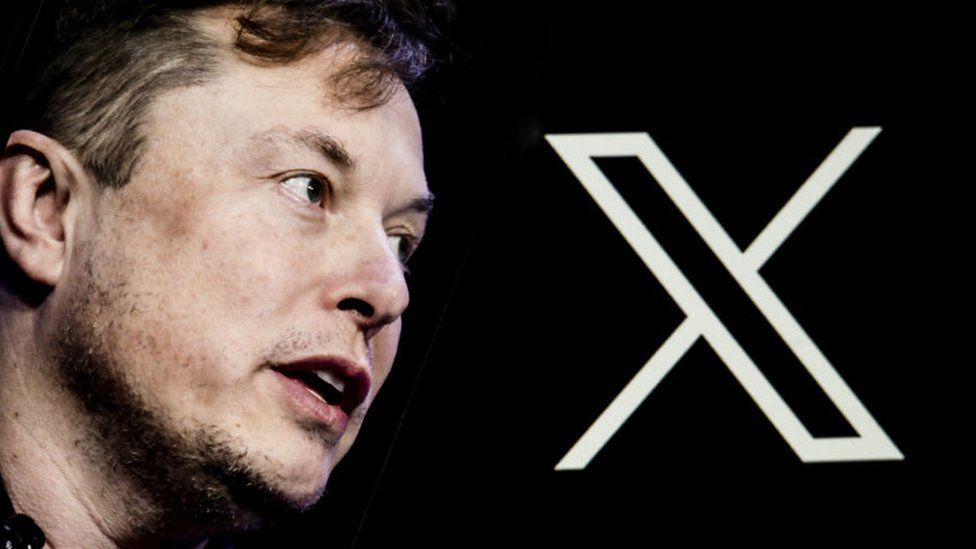
X (formerly Twitter), has announced plans to start charging new users a $1 annual subscription fee, to be able to post tweets, repost, and reply, amongst others.

This means that users who are unwilling to pay the fee will only be able to view posts and follow accounts.

On Tuesday, X on its support page announced in a post that the new unverified users in New Zealand and the Philippines will be required to pay $1 a year, adding that existing accounts are not affected.

X wrote,

“Starting today, we’re testing a new program (Not A Bot) in New Zealand and the Philippines. New unverified accounts will be required to sign up for a $1 annual subscription to be able to post & interact with other posts. Within this test, existing users are not affected.

“This new test was developed to bolster our already successful efforts to reduce spam, manipulation of our platform, and bot activity while balancing platform accessibility with the small fee amount. It is not a profit driver. And so far, subscription options have proven to be the main solution that works at scale”.

The company said that the move to charge new subscribers is in its efforts to reduce spam and not activity while balancing platform accessibility with the small fee amount, adding that it is not a profit driver.

Excess bot activity has been a plaguing issue on X for a very long time before Musk’s takeover in October 2022.

According to a data analysis firm hired by Elon Musk during his initial plan to purchase X, he alleged that spam and fake accounts were more prevalent on X than on comparable social platforms.

Bots on X later became central to the dispute over Musk’s initial attempt to get out of the acquisition deal. Less than three months after signing the deal, and waiving due diligence in the process, Musk moved to terminate the agreement, citing claims that X had misstated the number of bots on its platform.

Since his takeover, Bot’s activity has reportedly worsened, which has seen him implement many decisions to combat their presence on the microblogging platform such as charging users for Twitter Blue.

Charging new users an annual fee isn’t Musk’s first attempt to make X a paywalled service, and probably won’t be the last. X already limits the number of posts non-paying users can see on their timeline, and it’s blocked non-users from seeing any content whatsoever.

Tesla Announces Third Quarter Report For 2023; Profit, Sales Fall Short of Estimation

0

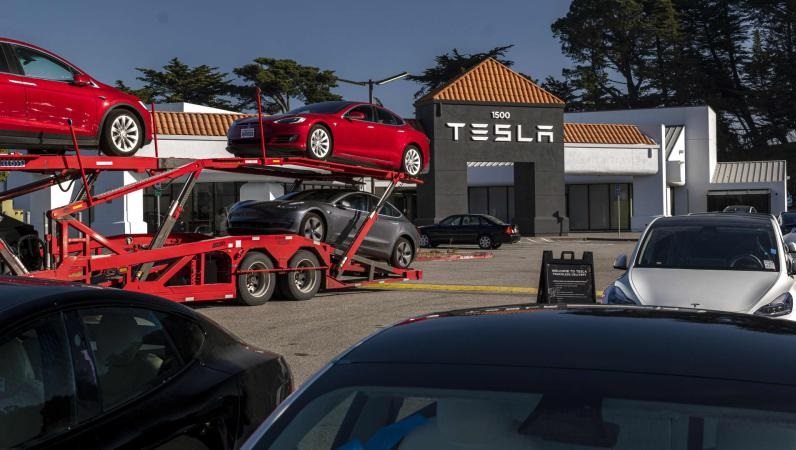
Electric Vehicle (EV) giant maker Tesla has announced its third quarter (Q3) report for 2023, which saw it fall short of profit and sales estimation.

The company posted weaker than anticipated financial results, which saw it post $23.4 billion in sales, during the three months ending September 30, below estimation of roughly $24.2 billion.

In Q3, Tesla delivered 435,059 vehicles, which was nearly 7% lower than deliveries in Q2. This was however expected due to a planned factory shutdown.

The automaker missed Wall Street estimates on revenue and earnings. Shareholders at the company seemed to have expected a decline in the third quarter result, as they braced for Tesla’s Q3 earnings earlier in the day, with shares closing down 4.78% to $242.68.

GAP (non-adjusted) net income for the quarter was $1.85 billion, or 53 cents per share. Total gross profit declined 22% year-over-year. Total operating margin came in at 7.6%, down significantly from the year-ago quarter’s figure of 17.2%.

Tesla closed the third quarter with a free cash flow of $800 million, down from $1 billion last quarter.

The company’s incessant price cuts have visibly squeezed its margins, a trend that has continued for the past several quarters. Tesla reported a gross margin of 17.9% in the third quarter, falling from 25.1% in the same period last year. It is also down from Q2 when it reported margins of 18.2%.

Tesla attributed its fallen profitability margin largely to its reduced pricing of vehicles. In the third quarter, Tesla cut prices for its Model S and Model X luxury vehicles by as much as $18,500 per car. Price cuts for the more popular and affordable Model 3 and Model Y continued into October. 

Tesla’s slash in prices of its vehicles is to stay competitive as the demand for Tesla vehicles in China, which has historically been a top market for the automaker, is waning as local EV companies like BYD gobble up market share.

Meanwhile, despite the decline in earnings, Tesla argues that it is able to bear the price drop fairly well by reducing costs.

It wrote,

“Our cost of goods sold per vehicle4 decreased to ~$37,500 in Q3. While production costs at our new factories remained higher than our established factories, we have implemented necessary upgrades in Q3 to enable further unit cost reductions. We continue to believe that an industry leader needs to be a cost leader”.

Notably, Tesla hasn’t changed its outlook for the year, stating that it still plans to deliver 1.8 million vehicles by the end of 2023.

The company has announced cybertruck deliveries in November, and claims to have deployed production capacity for 125,000 trucks per year.

Tesla’s aggressive price cuts have juiced demand for its electric vehicles, but at a steep cost. The EV maker reported a 44% dive in third-quarter profit Wednesday, even as it notched a rise in revenue compared with last year thanks to more vehicle deliveries. EV adoption has slowed just as Tesla faces increasing competition from rivals including Ford and GM, and its most popular models are aging. The company said it will deliver its long-delayed Cybertruck starting in November, but the pickup isn’t expected to have mass-market appeal.