DD
MM
YYYY

PAGES

DD
MM
YYYY

spot_img

PAGES

Home Blog Page 3726

Corruption Implications Widen in Nigeria As EFCC recover Over N30bn from Humanitarian Ministry

0

In a startling revelation, the Economic and Financial Crimes Commission (EFCC) said it has successfully uncovered a massive corruption scandal at the Ministry of Humanitarian Affairs, leading to the recovery of over N30 billion.

The scandal, which has widened the implication of corruption in Nigeria, initially implicated the former minister, Sadiya Umar-Farouq, in a money laundering scheme totaling N37.1 billion. The EFCC’s relentless pursuit resulted in the imposition of liens on bank accounts, leading to the recovery of a substantial amount.

An unnamed EFCC source told The Punch; “The commission has now recovered over N30bn from the laundered N37.1bn that was linked to former minister Sadiya Umar-Farouq,” emphasizing the gravity of the corruption.

Both the former minister and the contractor, James Okwete, are reportedly under daily interrogation, shedding light on the pervasive corruption within Nigeria’s humanitarian sector.

The current Minister of Humanitarian Affairs, Betta Edu, is now implicated in a separate N17 billion fraud, leading to her suspension. The EFCC has already recovered over N500 million linked to this scandal, intensifying the scrutiny on Edu as investigators delve into the layers of corruption within the ministry. The suspended Coordinator of the National Social Investment Programme (NSIP), Halima Shehu, is also facing allegations of an N44 billion fraud, adding to the complex web of corruption.

The EFCC, in a recent statement, disclosed that a total of N70,556,658,370.5 was recovered between October 2023 and January 19, 2024, underlining the scale of financial mismanagement. The breakdown includes N60,969,047,634.25, $10,522,778.57, £150,002.10, and €4,119.90.

The commission said it received 3,325 petitions during this period, accepted 2,657, and secured the conviction of 747 individuals for various financial crimes.

The EFCC’s Operations and Recoveries document underlines the widespread nature of corruption, with the Lagos Zonal Command alone recovering a staggering N6,826,993,798.78, $868,284.61, £147,672.10, and €1,899.90.

Despite these successes, EFCC Chairman Ola Olukoyede revealed that most of the convictions were related to cybercrime offenses. As of January 31, 2024, the total amount involved in money laundering cases, implicating high-profile public officials, has surged to around N130.1 billion.

The ongoing probes and discoveries are detailed in an EFCC document titled ‘100 Days in Office,’ reflecting the commission’s commitment to transparency and accountability.

The Troubling Implications

The implications of the corruption scandal at the Ministry of Humanitarian Affairs are far-reaching. The financial drain on public resources, erosion of public trust, humanitarian consequences, systemic weaknesses in governance, and the impact on Nigeria’s international reputation are among pressing concerns.

Financial Drain on Public Resources

The recovery of over N30 billion from the Ministry of Humanitarian Affairs sheds light on a significant financial drain on Nigeria’s public resources. The misappropriation of funds, totaling N37.1 billion, intended for humanitarian purposes reveals a dire misuse of financial allocations.

These diverted funds were meant to address the needs of vulnerable and marginalized populations, contributing to the exacerbation of economic challenges faced by many Nigerians.

Erosion of Public Trust

Corruption scandals at the highest levels of government erode public trust in institutions and public officials. The involvement of the former Minister, Sadiya Umar-Farouq, in a money laundering scheme further shakes the foundation of trust that citizens place in their government.

The subsequent suspension of the current Minister, Betta Edu, and the Coordinator of the National Social Investment Programme, Halima Shehu, intensifies the public’s skepticism, hindering citizens’ willingness to engage with government programs and initiatives.

Humanitarian Consequences

The Ministry of Humanitarian Affairs is tasked with addressing the needs of vulnerable populations. The alleged misappropriation of funds directly impacts the lives of those dependent on government support.

The diversion of funds meant for critical programs can result in the denial of essential services, exacerbating poverty and widening existing socio-economic disparities. The scandal, therefore, has not only financial but also humanitarian consequences.

Systemic Weaknesses in Governance

The depth of corruption uncovered by the EFCC raises questions about the effectiveness of governance and oversight mechanisms within Nigerian ministries.

The fact that such large sums of money could be misappropriated without detection for an extended period points to systemic weaknesses in the checks and balances meant to prevent corruption.

International Reputation

Corruption scandals not only affect domestic affairs but also impact Nigeria’s international standing. Such revelations can undermine confidence among foreign investors, hampering economic growth and development.

International organizations may be reluctant to collaborate on initiatives aimed at addressing global challenges if there are concerns about the mismanagement of funds at the national level. The tarnishing of Nigeria’s international reputation poses additional challenges to the nation’s progress on the global stage.

A Call for Reforms

The extensive recoveries made by the EFCC and ongoing investigations emphasize the need for comprehensive reforms in Nigeria’s anti-corruption efforts. Strengthening institutions, enhancing transparency, and promoting accountability at all levels of government have been advocated as essential steps toward combating corruption effectively.

Additionally, antigraft advocates have emphasized the need for a robust legal framework that ensures swift and severe consequences for those engaged in corrupt practices.
As Zuckerberg’s Meta Explores New Horizons with WhatsApp to Disrupt iPhone’s Blue Bubble Monopoly

0

The seemingly innocuous color of a message bubble has sparked a subtle but profound divide among iPhone users. The comforting blue bubbles of iMessage, exclusive to Apple devices, have become a symbol of camaraderie.

However, Mark Zuckerberg, the visionary CEO of Meta, appears ready to challenge this iPhone-centric norm by strategically leveraging WhatsApp, a messaging platform acquired by Facebook in 2014 for a staggering $19 billion.

While the blue-green messaging dichotomy might be dismissed as a superficial aspect of the smartphone experience, Apple has staunchly defended this visual distinction. The rejection of an app allowing Android users to mimic the coveted blue bubbles underscores Apple’s commitment to maintaining this exclusivity.

Within Zuckerberg’s expansive Meta empire, which includes social media giants Facebook and Instagram, WhatsApp emerges as a potential game-changer. Though not as ubiquitous in the United States, WhatsApp boasts a global user base of approximately 2 billion people, establishing itself as a communication powerhouse, particularly in international markets.

In a notable interview last year, Zuckerberg positioned WhatsApp as Meta’s “next chapter,” signaling a deliberate shift in strategic focus. This shift occurs against the backdrop of discussions dominated by artificial intelligence and the metaverse, adding an extra layer of intrigue to WhatsApp’s prominence.

Zuckerberg has offered glimpses into the trajectory of this “next chapter.” WhatsApp is strategically positioning itself as a business-friendly platform, introducing features that empower businesses to link multiple devices for efficient customer message management. Meta’s suite of tools, utilized by major brands such as Chevrolet and Samsung, streamlines customer interaction by eliminating the need for live support, elevating the overall business experience on the platform.

The appeal of WhatsApp’s business-centric features is evident in the U.S., where a reported 80% increase in daily business users was noted last year, aligning with the broader trend of businesses seeking streamlined ways to engage with their customer base.

Beyond its business-centric evolution, WhatsApp is carving a niche as a haven for personal interactions, emphasizing privacy at a time when social media platforms face heightened scrutiny. As users become more discerning about their online presence, the demand for private spaces to connect with friends and family has surged, creating an opportune environment for WhatsApp’s group chats to flourish.

The introduction of the “Channels” feature in 2023 further expands WhatsApp’s repertoire. This feature allows users to follow influencers and receive updates through a broadcast-style format, mirroring the popular Instagram story feature. WhatsApp aims to provide the benefits of social media without the accompanying publicity, catering to users seeking a more controlled and private online environment.

WhatsApp is also poised to outshine iMessage in the group chat domain. While Apple’s iMessage restricts groups to 32 users, WhatsApp accommodates over 1,000 users in a single group—a significant difference that may attract users seeking expansive and inclusive group communication platforms.

Zuckerberg’s strategic foray into this “next chapter” extends beyond a mere push for business messaging. It reflects a comprehensive effort to reshape how Americans communicate online. As users explore alternatives to traditional social media platforms, WhatsApp’s unique blend of business-friendly features and enhanced personal communication capabilities positions it as a formidable contender in challenging the entrenched dominance of blue bubbles.

As WhatsApp targets both business and personal communication needs, it emerges as a potent force in challenging the existing market dominated by Apple’s iMessage. With Zuckerberg betting on business messaging as the next major pillar, the battleground for user preference in the ever-evolving digital communication industry is set to intensify.

Tekedia Capital: our mission is Your Prosperity

0

Tekedia Capital aspires to become one of the leading financial institutions with an African heritage. With investments in more than 100 companies, we have created thousands of jobs, fixed market frictions, and advanced communities, through entrepreneurial capitalism. Learn how we’re building and rebuilding nations here.

Tekedia Capital >> our mission is Your Prosperity.

  • Prof Ndubuisi Ekekwe
  • Founder & Chairman
  • Tekedia Capital, USA

*Image: imagined art, not a real photo.

Tekedia Mini-MBA edition 13 Learners, Welcome

0

Tekedia Mini-MBA edition 13 has started and Week 1 courseware posted. Please check the Board. The Zoom link for the first live session, scheduled 7pm WAT on Saturday, Feb 10, 2024, has been posted.

From next week (week of Feb 12), we will be meeting live on Tuesdays, Thursdays and Saturdays at 7pm-8pm WAT. Please put these dates on your calendar as we do not send reminders.


How To Setup Your Account if Not Done Yet

Greetings. Thanks for joining us at Tekedia Institute. We have created or upgraded your account at https://school.tekedia.com/ with your email address (the very one you are receiving this invitation for account setup). This is a different location from where you read the ebooks.

There are three steps; Step 3 is compulsory. If you do not do Step 3, you will not see your course in your profile. Here is the instruction for account setup – https://school.tekedia.com/support/support/. (Please note the support video on the page as it may be helpful)

Once you complete the setup, you will see a post under LESSONS titled “Board13: Program News, Zoom Schedules and WhatsApp Link”. Please read it and join the WhatsApp Group, and note the Live Zoom schedules. The Week 1, Week 2, etc will drop as we progress in the program.


Register

Yes, Tekedia Mini-MBA edition 13 begins. I invite you to join us if you have not registered. It is going to be a playground of knowledge. Accelerate your leadership ascent with Tekedia Institute.


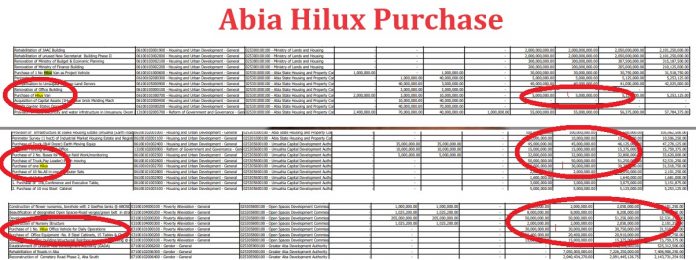
The Abia State 2 No Hilux Purchase Is a Pure Typo in the 2024 Budget

1

Great observation by SH that Abia budgeted N1.5B for two Hilux. But if you look at that data, you will notice that it was a pure typo. They listed Hilux purchases many times and the prices are consistent with normal market value, except the one that SH noted. You cannot buy one car on a budget for N750m and N15m in the same budget report. 

Calculate the total expenses for Vehicles and you will see that the 2 no Hilux was a typo; that was not a car line. The state should fix that typo. This is the file, search Hilux and check all places it is mentioned, check the numbers. Then add all the car, you will see that line was a typo https://abiastate.gov.ng/wp-content/uploads/2024/01/ABIA-STATE-2024-APPROVED-ESTIMATES.pdf 

Yet, this shows why governments should be thorough especially when transparency is the new game. We must commend SH for taking time to look into these numbers. It should be commended as that is how we can build a nation. Abia publishes its master budget file to the last Kobo. Of course, the real deal will be reconciling budget with actual expense; I am very confident that Abia will pay a normal rate for Hilux. 

Also, besides Hilux, Abia is buying Innoson Motors. In that master file, you will see many Innoson vehicles. The challenge is that Innoson lead time is long for some security operational vehicles. When I visited home during Christmas, all the commissioners I met in Abia State used Innoson Motors. 

The rumour that Abia does not buy local should be modulated; it buys local but for security vehicles, it cannot wait for ages. In short, the Nigerian government is also buying local; I have seen the data. The challenge remains that lead time from local car markers can run into months. This contrasts with Japanese firms which can “produce” 5m cars waiting for buyers. 

I am just a citizen; I do not work for any government. I looked at the same data as SH, and made these points. Many asked me to comment, I have done just that. This is a pure typo but that does not mean we should celebrate mistakes in budgets.