DD
MM
YYYY

PAGES

DD
MM
YYYY

spot_img

PAGES

Home Blog Page 3744

Judge rebuffs SBF’s requests to raise lack of crypto rules, as Ethereum’s underperforms against BTC

0

In a setback for the Securities and Exchange Commission (SEC), a federal judge has denied its motion to introduce evidence of the lack of clear regulations for cryptocurrencies and the role of FTX in the recovery of the hacked funds in the ongoing trial against Sam Bankman-Fried (SBF), the founder and CEO of FTX, a leading crypto exchange.

The SEC accuses SBF of violating securities laws by offering unregistered derivatives products to U.S. investors through FTX, which is based in Antigua and Barbuda. The SEC also claims that SBF misled investors about the security and liquidity of FTX, and failed to disclose that he had access to a backdoor that allowed him to manipulate the prices of the products.

SBF denies the allegations and argues that he acted in good faith and in compliance with the laws of Antigua and Barbuda, where FTX is licensed and regulated. He also points out that he helped recover most of the $150 million that was stolen from FTX by hackers in August 2020, by collaborating with other crypto exchanges and law enforcement agencies.

The SEC wanted to present evidence to the jury that the lack of clear and consistent regulations for cryptocurrencies in the U.S. created confusion and uncertainty for market participants, and that SBF took advantage of this situation to evade oversight and accountability. The SEC also wanted to show that FTX’s recovery of the hacked funds was facilitated by FTX’s relationship with other crypto exchanges, especially Binance, which is owned by SBF’s friend and mentor CZ.

However, the Judge ruled that these issues were irrelevant and prejudicial to the case, and that they would only confuse and distract the jury from the main question of whether SBF violated securities laws by offering unregistered derivatives products to U.S. investors. The Judge said that the SEC had failed to establish a causal link between the lack of crypto regulations and SBF’s alleged misconduct, and that the role of FTX in the recovery of the hacked funds was not material to the SEC’s claims.

The trial is expected to resume next week, with both sides presenting their witnesses and experts. The jury will then decide whether SBF is liable for securities fraud and whether he should pay civil penalties and disgorgement of profits.

In a recent report, K33 Research, a leading cryptocurrency analysis firm, has predicted that ether, the second-largest digital asset by market capitalization, will continue to lag behind bitcoin in terms of price performance and adoption.

According to the report, ether faces several challenges that limit its growth potential, such as scalability issues, regulatory uncertainty, competition from other smart contract platforms, and a lack of clear use cases beyond decentralized finance (DeFi).

The report states that while ether has benefited from the explosive growth of DeFi in 2020 and 2021, it also faces increasing competition from rival blockchains that offer faster, cheaper, and more user-friendly alternatives for developers and users. Some of these competitors include Binance Smart Chain, Solana, Cardano, and Polkadot.

The report also notes that ether’s transition from a proof-of-work (PoW) consensus mechanism to a proof-of-stake (PoS) one, known as Ethereum 2.0, is a risky and complex process that could take years to complete and may not deliver the expected benefits. The report argues that PoS is less secure, less decentralized, and more prone to centralization than PoW.

Furthermore, the report claims that ether lacks a clear value proposition beyond being a utility token for the Ethereum network. Unlike bitcoin, which has a fixed supply and a strong narrative as a store of value and a hedge against inflation, ether has an uncertain monetary policy and a weaker brand recognition among mainstream investors.

The report concludes that while ether may still see some positive price movements in the short term, driven by speculation and hype, it will ultimately underperform bitcoin in the long run. The report expects bitcoin to maintain its dominance as the most valuable and widely adopted cryptocurrency in the world.

Polygon Labs, Fuul, Caroline Ellison, Stellar, other Crypto News

0

Polygon Labs, a leading developer of scaling solutions for Ethereum, has announced a new project called ApeCoin, which aims to leverage zero-knowledge proofs (zk-proofs) to create a fast and secure layer 2 network for decentralized applications.

ApeCoin is designed to be compatible with Ethereum’s smart contracts and tokens, while offering lower fees, higher throughput, and enhanced privacy. The project is led by Sandeep Nailwal, the co-founder and COO of Polygon, who believes that zk-proofs are the future of blockchain scalability and interoperability.

The cryptocurrency market is expected to grow significantly in the next few years, and one of the leading players in this space is Ethereum. According to a recent report by Standard Chartered Bank, Ether, the native token of Ethereum, could reach a value of $8,000 by the end of 2026.

The report cites several factors that could drive Ether’s price appreciation, such as its role in decentralized finance (DeFi), its scalability potential with the upcoming transition to Ethereum 2.0, and its increasing adoption by institutional investors. The report also compares Ether to Bitcoin, the dominant cryptocurrency, and suggests that Ether could eventually surpass Bitcoin in market capitalization, as it offers more utility and innovation.

A startup that combines cryptocurrency and fantasy horse racing has secured $5 million in a seed funding round. The company, called Zed Run, allows users to buy, breed and race digital horses that are represented by non-fungible tokens (NFTs). Users can also trade their horses on a secondary market and earn rewards from participating in races and tournaments. Zed Run aims to create a new form of entertainment and gaming that leverages the power and potential of blockchain technology.

The cryptocurrency market has been volatile in recent weeks, as tensions between the US and China escalate over Taiwan and Ukraine. However, Bitcoin has shown resilience, bouncing back from a dip below $25,000 and finding support at the $27,000 level. Analysts say that Bitcoin’s fundamentals remain strong, and that the demand from institutional and retail investors is still high. Bitcoin could benefit from its status as a hedge against inflation and currency devaluation, as well as its network effects and innovation potential.

Stellar, a leading blockchain network for cross-border payments, has announced that it is conducting security audits for its smart contracts’ platform Soroban. Soroban is a layer-2 solution that enables developers to create and deploy complex smart contracts on Stellar, without compromising on speed, scalability, or cost. Soroban aims to provide a secure and reliable environment for building decentralized applications (DApps) that can leverage Stellar’s global reach and interoperability.

To ensure the highest level of security and trust, Stellar has partnered with several reputable security firms to conduct thorough and independent audits of Soroban’s codebase, architecture, and design. The audits will cover various aspects of Soroban’s functionality, such as its virtual machine, compiler, runtime, and API. The audits will also assess Soroban’s compliance with industry standards and best practices for smart contract development and deployment.

Stellar expects to complete the security audits by the end of the year and launch Soroban to the public in early 2024. Stellar believes that Soroban will unlock new possibilities for innovation and collaboration on its network and empower developers to create more impactful and inclusive DApps for the benefit of users around the world.

Fuul, a Web3 protocol that aims to revolutionize affiliate marketing, has announced its private beta launch after operating in stealth mode for several months. Fuul leverages blockchain technology and smart contracts to create a decentralized and transparent platform for affiliates, merchants, and consumers. Fuul’s protocol enables affiliates to earn commissions in cryptocurrency, merchants to access a global network of affiliates, and consumers to benefit from lower prices and rewards. Fuul’s private beta is open to a limited number of participants who can sign up on the project’s website.

Caroline Ellison, the former CFO of Genesis, was accused of fraud and conspiracy in a federal court yesterday. According to the prosecutors, Ellison prepared seven different versions of the company’s balance sheet in the months leading up to its bankruptcy and presented them to various investors and creditors to conceal the true financial situation of Genesis.

The prosecutors also alleged that Ellison received millions of dollars in kickbacks from some of the company’s vendors, who inflated their invoices and paid her a percentage. Ellison pleaded not guilty and claimed that she was acting under the direction of the CEO, who is still at large. The case is being closely followed by Inner City Press, a media outlet that covers corruption and human rights issues.

Uniswap, Galaxy invests in crypto on-chain analytics platform Parsec.

Parsec, a platform that provides on-chain analytics and data for various blockchains, has announced that it has raised $12 million in a Series A funding round led by Galaxy Digital and Uniswap. The round also saw participation from Coinbase Ventures, Fenbushi Capital, CMS Holdings, and others.

Parsec aims to empower crypto users, developers, and investors with actionable insights and tools to monitor and optimize their activities on the blockchain. The platform supports multiple blockchains, including Ethereum, Solana, Polygon, Binance Smart Chain, Avalanche, and more. Parsec claims to have over 100,000 active users and 200 integrations with leading crypto projects.

According to Parsec, the new funding will be used to expand its team, scale its infrastructure, and launch new features and products. Some of the planned products include Parsec Pro, a premium subscription service for advanced users; Parsec API, a unified interface for accessing data from various blockchains; and Parsec SDK, a software development kit for building applications on top of Parsec.

Parsec’s co-founder and CEO Anatoly Yakovenko said: “We are thrilled to have the support of such prestigious investors who share our vision of making blockchain data accessible and actionable for everyone. We believe that Parsec can become the go-to platform for anyone who wants to leverage on-chain data to enhance their crypto experience.”

Galaxy Digital’s co-president Damien Vanderwilt said: “Parsec is building a critical piece of infrastructure for the crypto ecosystem. As more users and developers enter the space, they will need reliable and easy-to-use data solutions to interact with various blockchains. We are excited to back Parsec and help them grow their platform and community.”

Uniswap’s growth lead Ashleigh Schap said: “Uniswap is proud to support Parsec as they build the next generation of on-chain analytics tools. Parsec’s technology enables users to access real-time data and alerts for Uniswap and other protocols, which can help them make informed decisions and optimize their strategies. We look forward to seeing Parsec’s continued innovation in this field.”

When The Court Can Override Arbitration Clause

0

More often than not when I’m drafting a contract or a legal agreement between parties, I always infuse the dispute resolution clause or the arbitration clause which always reads; “if there is a dispute emanating from the contract, the first point of recourse for settlement of the dispute is arbitration”. The clause stipulates that any dispute emanating from the contract or amongst the parties to the contract must first be referred to arbitration, it must be only when arbitration fails that the matter will be referred to a traditional court. 

The reason for this arbitration clause is that it is always easier and less time-consuming to settle a dispute through arbitration and once there is this clause in the agreement it must be followed based on the legal principle of “pacta sunt servanda” but it is not every dispute that can be settled through arbitration. There are some disputes that must be referred to a traditional court of competent jurisdiction to exercise jurisdiction over the matter despite what the content of the dispute resolution or the contract’s arbitration clause says. 

There are some cases that the arbitration panel does not have jurisdiction over and therefore cannot exercise jurisdiction over, such matters will have to be referred to a traditional court.

The recent Supreme Court ruling in the case of UBA plc v Triedent Consulting Ltd (2023) 14 NWLR (Pt. 1903) Pg. 95 (SC) reemphasized the rule that despite an arbitration clause in an agreement, there are some cases or matters where a traditional court will have to override the arbitration clause and exercise jurisdiction over the matter. 

In the above case, one of the core issues before the court for determination is whether a party to a contract can resort to traditional court over a dispute arising from the contract despite the arbitration clause infused in the contract. 

The court held that there are some instances where, even though parties have submitted to arbitration, the suitability of litigation takes priority over arbitration. Such instances may include:

(a) where the issue for resolution is essentially a legal one; or

(b) where the issue turns largely on the credibility of the evidence; or

(c) where immediate enforcement of a right is required; or

(d) where one of the parties is intransigent; or

(e) where there are multi-party disputes arising from a transaction. 

This is to say that there will be some instances where a court will override an arbitration clause and exercise jurisdiction over a dispute emanating from a contract. 

As Satellite Direct-to-cell service Evolves, GSM Operators Have Just Years Ahead for Fat Profits

0

If you own stocks of telcos which are piping data via GSM, remember what those telcos did to CDMA companies (they destroyed them). I have written that the biggest risk to GSM and broad terrestrial operators is when satellite-based operators could deliver direct-to-cell services. Yes, your normal-like smartphone will have satellite capabilities like the Huawei Mate 60 Pro at scale:

“Elon Musk-owned satellite internet service Starlink has announced plans to roll out a direct-to-cell service in 2024. On its webpage, Starlink wrote that the soon-to-be-launched feature will use its satellites to enable users with access to texting, calling, and browsing wherever they may be, either on land, lakes, or coastal waters.”

This is a new basis of competition and many terrestrial phone operators will struggle to compete by 2026. Those fat profits in Africa will fade because the satellite operators will challenge them at scale across all domains and territories.

Starlink is Set to Launch A Direct-to-Cell Service in 2024 to Enable Connectivity in Remote Regions

0

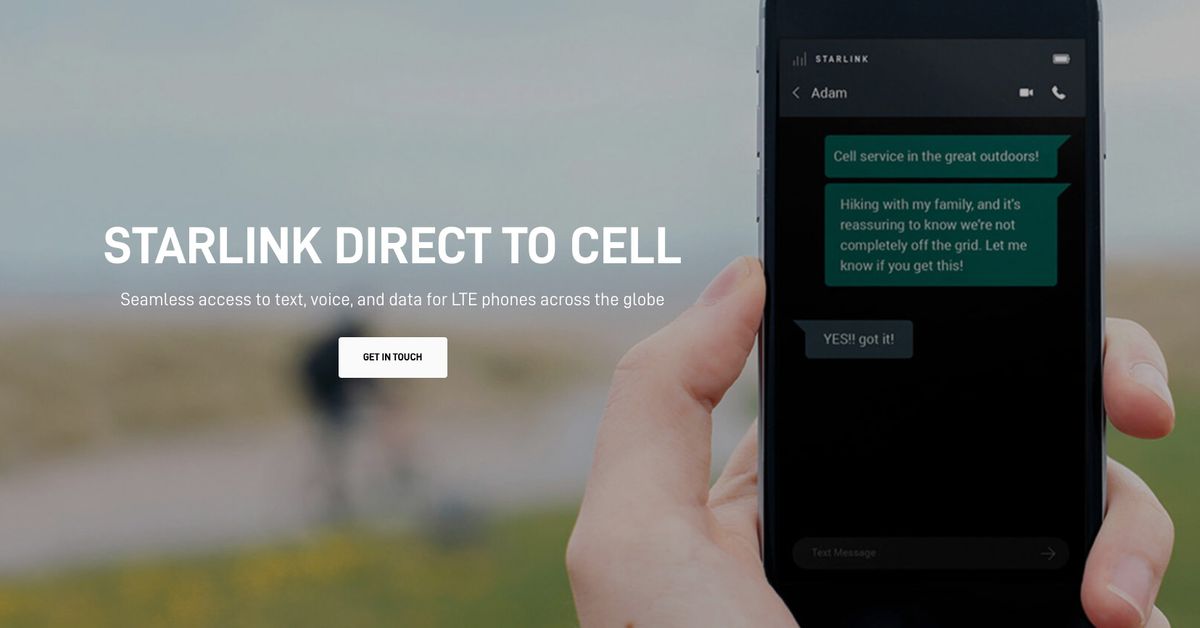
Elon Musk-owned satellite internet service Starlink has announced plans to roll out a direct-to-cell service in 2024.

On its webpage, Starlink wrote that the soon-to-be-launched feature will use its satellites to enable users with access to texting, calling, and browsing wherever they may be, either on land, lakes, or coastal waters.

Direct to Cell works with existing LTE phones wherever users are, and will also connect IoT devices with common LTE standards. The feature will not require any changes to hardware, firmware, or special apps.

The company confirmed on its site that initial coverage will apply to text in 2024, and expand to voice and data the following year. Also, Starlink says it will combine loT devices with LTE standards in 2025.

Starlink satellites with direct-to-cell capability have an advanced eNodeB modem onboard that acts like a cellphone tower in space, allowing network integration similar to a standard roaming partner.

According to Starlink, it plans to launch the direct-to-cell feature to enable users to connect to remote regions, providing peace of mind when customers need it most.

The latest development in Starlink’s Direct to Cell launch comes more than a year after SpaceX and T-Mobile announced they would work together to bring cell service to unreachable areas.

The companies confirmed the collaboration at a live event in August and T-Mobile’s CEO Mike Sievert said in a press release that the mobile service provider and SpaceX share a common goal to reach people in the most remote areas of the world.

In his words,

“We’ve always thought differently about what it means to keep customers connected, and that’s why we’re working with the best to deliver coverage above and beyond anything customers have ever seen before. More than just a groundbreaking alliance, this represents two industry-shaking innovators challenging the old ways of doing things to create something entirely new that will further connect customers and scare competitors.”

Notably, SpaceX is leveraging its experience in manufacturing and launching the world’s most advanced rockets and spacecraft to deploy Starlink satellites with the Direct to Cell capability at scale.

Direct to Cell satellites will initially be launched on SpaceX’s Falcon 9 rocket and then Starship. On orbit, the satellites will immediately connect over laser backhaul to the Starlink constellation to provide global connectivity.

It is worth noting that Starlink plans to launch the direct-to-cell feature which enables text, call, and browsing wherever users are, is already a feature launched by Apple for iPhone users.

Last year, in a bid to give users a measure of safety even when they’re in a place without cell service, Apple launched an emergency SOS feature for iPhone users which uses satellite technology to send for help.

With the launch of the latest iPhone 14, iPhone 14 Pro, iPhone 15, or iPhone 15 Pro, users can use Emergency SOS via satellite to text emergency services when they are off the grid with no cellular and Wi-Fi coverage.

Interestingly, satellite phones have now become the latest trend in the smartphone market.