DD
MM
YYYY

PAGES

DD
MM
YYYY

spot_img

PAGES

Home Blog Page 3745

Mt. Gox pushes back Repayments to 2024

0

Mt. Gox, the infamous cryptocurrency exchange that collapsed in 2014, has announced that it will extend the deadline for its civil rehabilitation plan to March 31, 2024. The plan, which was supposed to be finalized by October 15, 2023, outlines how the remaining assets of the exchange will be distributed to the creditors who lost their funds in the hack. The exchange lost about 850,000 bitcoins, worth about $450 million at the time, due to hacking and mismanagement. Since then, some of the bitcoins have been recovered, and the price of bitcoin has skyrocketed, making the remaining assets worth billions of dollars.

According to a notice posted on the Mt. Gox website, the reason for the delay is the ongoing legal disputes between the exchange and some of its creditors, as well as the complexity of the asset allocation process. The notice states that “there are still many creditors who have not agreed to the proposed rehabilitation plan” and that “there are a large number of assets that are difficult to evaluate.”

However, the notice also suggests that some payments might still be made before the end of 2024, depending on the progress of the court proceedings and the approval of the rehabilitation trustee. The notice says that “the rehabilitation trustee is considering making possible interim payments before the rehabilitation plan becomes effective” and that “the rehabilitation trustee will make an announcement on the website as soon as a specific date is decided.”

One of the main challenges is the ongoing lawsuit filed by CoinLab, a former partner of Mt. Gox, that claims $16 billion in damages from the exchange. CoinLab alleges that Mt. Gox breached their contract to provide bitcoin services in North America. The lawsuit has been widely criticized by the creditors and the bitcoin community as a greedy and frivolous attempt to take advantage of the situation. CoinLab has appealed the court’s decision to approve the repayment plan and has also filed a motion to freeze Mt. Gox’s assets in the US.

Another challenge is the technical difficulty of distributing the bitcoins to thousands of creditors around the world. The repayment plan requires each creditor to submit a claim form and provide a valid bitcoin address to receive their share of the assets. However, some creditors may have lost their access to their original Mt. Gox accounts or may have difficulty verifying their identity or providing a secure bitcoin address. Moreover, some creditors may prefer to receive cash instead of bitcoins, which would require converting the bitcoins at a fair market price and transferring the funds through various banking channels.

A third challenge is the volatility of the bitcoin market and the potential impact of a large-scale sell-off by the creditors. The repayment plan is based on the assumption that the price of bitcoin will remain stable or increase until the distribution is completed. However, if the price of bitcoin drops significantly, the value of the assets may not be enough to cover all the claims. Furthermore, if many creditors decide to sell their bitcoins as soon as they receive them, it could cause a downward pressure on the market and affect other investors.

The Mt. Gox saga has been one of the longest and most controversial in the history of cryptocurrency. The exchange, which was once the largest in the world, suffered a massive hack in 2014 that resulted in the loss of 850,000 bitcoins, worth about $450 million at the time. The exchange filed for bankruptcy shortly after, leaving thousands of creditors in limbo.

Since then, several attempts have been made to recover and redistribute the remaining assets of the exchange, which include about 150,000 bitcoins and some fiat currencies. However, the process has been plagued by legal battles, technical challenges and regulatory hurdles.

The latest extension of the deadline is likely to frustrate many creditors who have been waiting for years to receive their funds. Some have even opted to sell their claims to third-party buyers at a discount, rather than wait for the uncertain outcome of the civil rehabilitation plan.

On the other hand, some creditors might see this as an opportunity to increase their potential payouts, as the value of bitcoin has risen significantly since 2014. According to a report by CoinDesk, some creditors have filed petitions to change their claims from fiat to bitcoin, arguing that they should receive their original number of bitcoins rather than their equivalent value in fiat at the time of the hack.

It is hard to predict whether Mt. Gox will fulfil its repayment plans by the end of 2021. The plan faces many legal, technical and financial hurdles that could delay or prevent its execution. The creditors of Mt. Gox have been patient and hopeful for a long time, but they may have to wait even longer to see their money back.

The final decision on how the assets will be distributed rests with the Tokyo District Court, which oversees the civil rehabilitation proceedings. The court will review and approve or reject the proposed plan once it is submitted by the rehabilitation trustee. Until then, creditors will have to wait patiently for any updates from Mt. Gox.
The Three Pillars of the 48 Laws of Power By Robert Greene

1

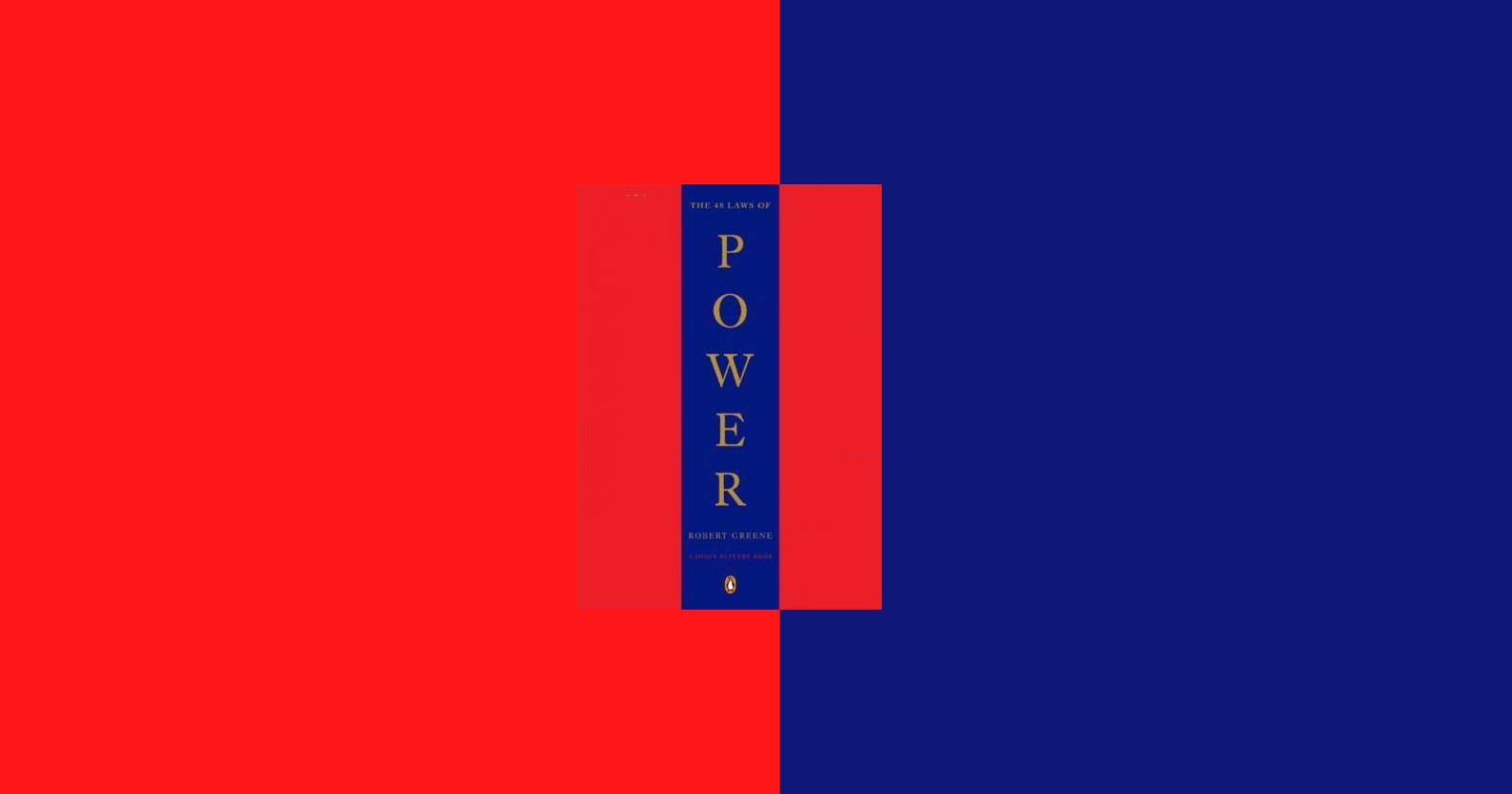
Robert Greene, an American classics scholar and writer, is no doubt one of the most admirable writers of our generation. His ‘’48 Laws of Power’’ is arguably the most commercially successful of his works. The 48 laws of powers is an exposition of a set of forty-eight laws that anyone who seeks to have and/or retain power should adhere to.

Robert Greene begins by identifying one of the things that evoke a sense of self in us — the feeling that derives from our ability to control events or influence people to do our bidding. This feeling brings to bear our hidden cravings for power. Thus, the inability to have control over events and people is described as strongly undesirable; it evokes a feeling of powerlessness. Powerlessness does not only make one feel miserable and inferior to others; it also constitutes a great obstacle in maximizing one’s potential and fulfilling one’s destiny.

Man is ‘’zoon politicon’’ argues Plato, the father of classical Philosophy. Zoon politicon translates to political animal. What Plato meant by this coinage is that man is naturally disposed to power play whether he is conscious of this or not. The struggle for power is the underlying factor behind every action of man or social relation.

Robert Greene probably had the foregoing Platonic worldview in mind when he conceived his 48 laws of power. Greene’s proposition is that power should be seen by man not only as a necessity for him to adapt in society but also as an inevitable force that shapes his social reality. There is no point avoiding the game of power when the world is a giant scheming court. However, in the course of attaining power, one must be careful not to be overt or eccentric. Standards must be set below and above which one must avoid. This is the rule of golden mean by Aristotle.

The following are the three pillars of the 48 laws of power:

 Self Mastery/Emotional Intelligence

One reason we need to master ourselves is because we have emotions. Emotions are not necessarily bad things about us; they are signals that alert us when we are up against a threat in our environment. However, we usually overestimate external threats. This leads to overreaction from us and could cause irreparable damage to both ourselves and the object of our emotional reaction.

There is a common saying that the master of his own emotion is the master of all. Feelings such as love, anger, hatred, passion, and dejection are some elements of our emotional life.  However one cannot repress these feelings and you should not endeavour to repress or avoid them when they surface. What you should avoid instead is making judgments based on those feelings. An emotional reaction to a situation does not only impair reasoning, it is prejudicial to sound judgment. It is like…..

When you are angered it is better to suspend your judgment than to make an irrational decision on the spot. More so, your love for someone or people should not prevent you from seeing them as human beings and by nature political animals.

Critical Reasoning

You want to consider all the possible contexts connected to the matter at hand. Critical reasoning helps you to not only identify a problem or threat but also help you to unravel opportunities within the identified problem. Distance yourself from the present moment and think objectively about the past and the future.  You should see the moment as the connecting point of the past and the future. Focus not only on what you have at the moment but on how you could use it to correct the past, learning from both your personal experience and the experiences of those above you.

The mistake that you have made and learned from may turn out to be your greatest advantage.

In Robert Grenees’ words, one must assume the image of Janus, the double-faced Greek god who secures all the gates and doorways. Hence, you must possess a double face, one to reflect on the past and the other to peek into the future concurrently. Also, while thinking about the future you must not be consumed in fantasy or illusion. That is you must not focus solely on the happy ending of your dreams. You must anticipate challenges and problems and prepare a defense against them.

Flexibility

According to Robert Greene, one adept at power play is able to assume different forms or shapes, cashing on the narrow and rigid mindset of the unsuspecting enemy. You must be able to put your critical thinking to use to devise more subtle means of navigating your obstacles. A master at power is not predictable. Sometimes he is a crook and other times he is a saint. He is whatever he wishes to be or whatever is required of him according to context or situation. This reflects the height of self-mastery and the basis of power. Thus, the powerful man always has an ace up his sleeve and he is one step ahead of the enemy.

By his idea of flexibility, Robert Greene invites us to be water just as the famous Chinese martial artist, Bruce Lee, would say, ‘’Be water, my friend’’. Water is a recurring metaphor in Lee’s philosophy. Water is perceived as a powerful adaptive element due to its ability to take different forms or shapes.

Nigeria Announces Plan to Unify Data Collection Through NIMC

0
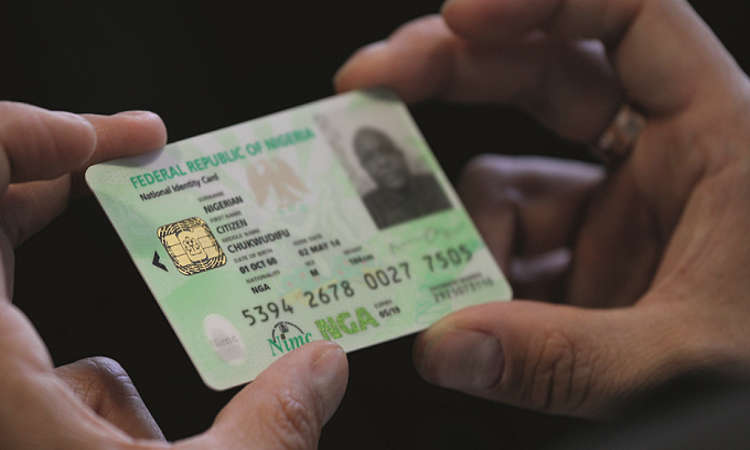
National ID Card, Nigeria

The federal government of Nigeria has announced its intention to harmonize data in a bid to end multiple identity registrations through the National Identity Management Commission (NIMC).

Nigeria is facing a challenge of data duplication with various agencies of the government, including the NIMC (national identity card), the Nigerian Immigration Service (international passport), and the Federal Road Safety Corp. (driver’s license).

Minister of Interior, Dr. Olubunmi Tunji-Ojo, who announced the plan while hosting a team from MTN management led by its Chief Executive Officer, (CEO), Karl Toriola, on Monday in Abuja, emphasized the need for Nigeria to harmonize its data.

“Data harmonization is key. If we must succeed at the Ministry of Interior, the success will start with NIMC. The integrity of our travel document must be restored through the harmonization of our data.

“This way, our people do not have to repeat data capture processes during the passport enrolment phase when they have a valid NIN,” he said.

According to the minister, the plan is to harmonize the country’s database in line with President Bola Tinubu’s mandate to the NIMC, which seeks to enhance Nigeria’s identity and security architecture.

He emphasized the need for an interior hub – a massive data center where “we will have all our identity information documented.” He said data harmonization will drastically cut down on stress for the people as well as overhead costs on the part of the government.

“When we harmonize our data, there will be an exchange amongst agencies such that when our people need data for passport or BVN, with their NIN, their data can be pulled out. This will not only save us stress, cost and energy but also help us optimize our processes,” he said.

The Minister emphasized the importance of private sector players, specifically mentioning MTN, in realizing the vision of harmonizing data. He stressed that in order to achieve this goal, it is crucial to establish mechanisms for private partnerships to contribute to the attainment of the objectives.

“For us, we are open to partnerships from private sector players, as NIMC may not have the full financial capacity to fulfill the ambition,” he said in a communiqué signed by his Special Adviser on Media and Publicity, Alao Babatunde.

Dr. Tunji-Ojo elaborated that various forms of data, including the issuance of driving licenses, passports, Bank Verification Numbers (BVN), National Identity Numbers (NIN), Subscribers Identity Modules (SIM), and others, should be integrated into digital chips.

This integration serves the purpose of streamlining and optimizing the planning and execution of government programs aimed at expediting development.

He further emphasized that the NIMC, as an agency falling under the ministry’s purview, has the potential to revolutionize the current scenario, where the country relies on a single point of data entry.

“There is no need for us to have a BVN number, a voter’s number, an NIN, and a passport number all at once, and this is why we have to work with NIMC to ensure that we harmonize all these and do away with these duplications.

“If NIMC performs well, NIS will perform better, and the police, NSCDC, and other agencies will perform admirably above par.” he notes.

Organizing Nigeria’s Informal Sector Across Sectors (Retail, Fashion, etc) is Growing Faster than Fintech

2

We began tracking this sector after it showed clearly on our radar that despite all the digitization playbooks, a big component of Nigeria remains outside the digital world. Yes, the Naira redesign showed that we have a lot of work ahead, just as the pandemic made it clear that our universities were not  networked and wired for the online age, despite all the promises.

Good People, retail B2B in Nigeria is doing really well.  As US dollars separate from the Naira with our deteriorating exchange rate, the makers’ cities like Aba and Kano are having moments. The data shows that most importers are now looking inwards to serve their markets. And companies working to formalize those markets are capturing massive value.

That tailor, that shoemaker, that bag-maker, and others offer huge latent opportunities which could be unlocked. Tekedia Capital is going to invest 100% of the round-funds by one of the players in this space in our next investment syndicate which begins on Monday. Led by bankers, but connecting shop by shop in Kano, Aba, etc, they’re growing at great percentages.

In this sector, you can decide to organize tailors, shoemakers, etc for a broad retail fashion sector. You can also focus on FMCGs and basic household needs. In other words, organizing these domains now that few can import due to exchange rate, is at the moment, growing faster than the average growth rates of fintech companies. Lagos shoe importers are now bulk-buying at Aba.

There are massive trade services available in the value chain and I expect massive growth in this sector, even if the Naira recovers. I do think  now that people cannot afford the Italian shoes, and are giving Aba a look, most will realize that Aba does make good shoes. The same is happening on suits, dresses, etc across the country with Kano and Ibadan showing on the antenna.

At Tekedia Capital, we’re investing, picking one of the leading firms, already being provided support by the Bank of Industry, which has unveiled a nice playbook. This startup’s numbers are outperforming the averages from the fintech space we are seeing.

Nigerian Senate Confirms Yemi Cardoso As Central Bank Governor

0

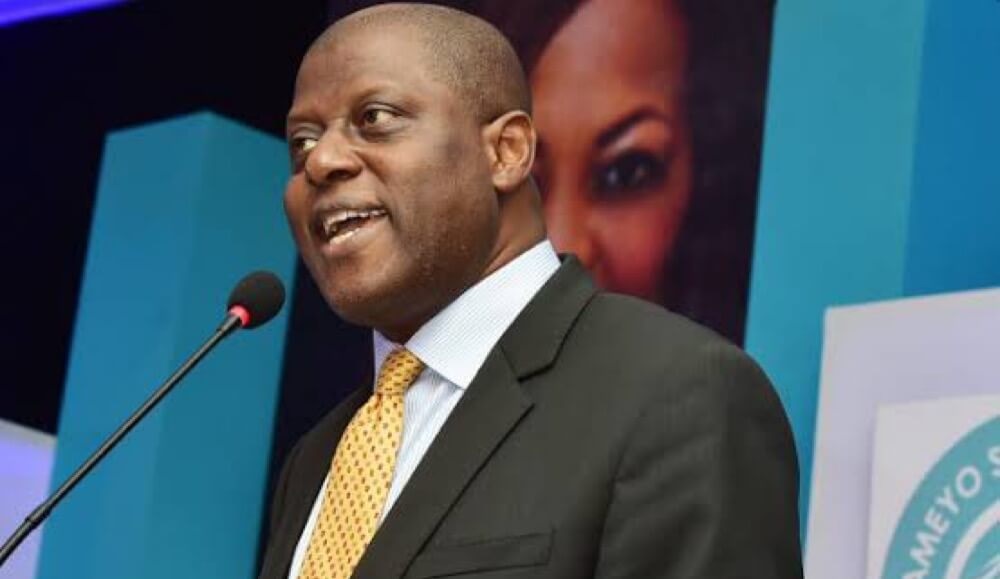
The Nigerian Senate has officially confirmed the appointment of Dr. Olayemi Michael Cardoso as the Governor of the Central Bank of Nigeria (CBN), along with his deputy governors, shortly after they assumed office.

The Senate’s confirmation on Tuesday also extended to the nominees for the deputy governorship positions, who are Mrs. Emem Nnana Usoro, Mr. Muhammad Sani Abdullahi Dattijo, Mr. Philip Ikeazor, and Dr. Bala M. Bello.

Last week, Cardoso and his four deputies assumed office amid Nigeria’s wildling forex crisis, which requires urgent monetary policies from the CBN to tame.

Following their screening, the President of the Senate Godswill Akpabio disclosed that the nominees had been confirmed.

“The nomination of Olayemi Cardoso is hereby confirmed as governor of the Central Bank of Nigeria (CBN),” Akpabio said.

Before their confirmation, the nominees had answered questions on matters related to economic and other policies. One of the questions put to Cardoso by Akpabio is if he would allow himself to be influenced and hijacked by politicians when he assumed office.

In response, the CBN governor said, “It is important that we, who are considered for this position today, understand that this is a position of trust.

“With that comes a huge responsibility to meet up with that trust. I know that a lot of time and effort has gone into choosing the people who are standing here for nomination today.

“As far as I am concerned, under my leadership, we will not be hijacked by anybody. The idea is to ensure that we do what is right, when it is right, and how it is right. We’ve seen what the effect of not doing right has been, and we do not intend for that to be repeated.”

He also promised to embrace compliance, assuring that under his leadership, the apex bank would remain apolitical.

“I believe that the Central Bank under our watch will have no choice but to embrace a culture of compliance,” he said.

“We will not wait for oversight to come and tell us what to do. We will ensure that by the time the system is passing through us, we catch it and we deal with it,” said Cardoso who promised zero tolerance for abuse of compliance.

“That is a cultural shift, a change in mindset, but we will make sure it happens,” the former Citibank Nigeria chairman assured.

The questions are believed to stem from the antecedents of his predecessor, Godwin Emefiele, who apart from meddling in politics, illegally printed N23 trillion loaned to the federal government through Ways and Means advances. The development violates the CBN Act which prohibits the apex bank from loaning more than 5% of the country’s previous year’s earnings to the federal government.

Economists said the loan is partly responsible for Nigeria’s rising inflation, which is at 26% as of August.

Emefiele is currently being prosecuted by the federal government for numerous offenses he committed while in office, including allowing himself to be influenced by former President Muhammadu Buhari to violate economic laws.

Cardoso promised not to tow Emefiele’s path, emphasizing that he would restore good corporate governance and a culture of compliance to the CBN, with an aim of achieving a $1 trillion GDP in 8 years.