DD
MM
YYYY

PAGES

DD
MM
YYYY

spot_img

PAGES

Home Blog Page 3753

Standard Chartered-backed Zodia Custody to offer yield on crypto holdings

0

Zodia Custody, a digital asset custody service provider backed by Standard Chartered, has announced that it will offer yield on crypto holdings to its clients. This means that customers who store their cryptocurrencies with Zodia will be able to earn interest on their assets, similar to how traditional banks offer savings accounts or certificates of deposit.

Crypto custody is the service of securely storing and managing the private keys of cryptocurrency assets. Crypto custody providers offer various solutions for institutional and individual investors who want to hold large amounts of crypto assets without worrying about security risks or operational complexities.

Zodia Custody was launched in December 2020 as a joint venture between Standard Chartered and Northern Trust, two of the world’s leading financial institutions. Zodia aims to provide institutional-grade custody solutions for cryptocurrencies, such as Bitcoin, Ethereum, Litecoin, Bitcoin Cash and XRP. Zodia is also one of the first crypto custodians to be registered with the UK’s Financial Conduct Authority (FCA) under the Money Laundering Regulations.

According to Zodia’s website, the yield offering will be powered by Fireblocks, a platform that enables secure transfer and storage of digital assets. Fireblocks uses a network of over 400 liquidity providers and lending platforms to source the best rates for crypto yield. Zodia claims that its yield offering will be fully compliant with the FCA’s rules and regulations, and that it will provide transparency and security for its clients.

Some of the benefits of crypto custody are:

Enhanced security: Crypto custody providers use advanced encryption, multi-signature protocols, cold storage, and other measures to protect the private keys from hackers, theft, or loss. They also comply with regulatory standards and undergo regular audits to ensure the safety and transparency of their operations.

Simplified management: Crypto custody providers handle the technical aspects of managing crypto assets, such as generating and storing private keys, updating software, performing backups, and executing transactions. They also provide easy-to-use interfaces and tools for users to access and monitor their crypto holdings.

Reduced liability: Crypto custody providers assume the responsibility and liability for the security and management of the crypto assets. This reduces the burden and risk for the users, who can focus on their core business or investment strategies.

Increased liquidity: Crypto custody providers enable users to access and trade their crypto assets on various platforms and markets, without compromising security or convenience. They also facilitate the integration of crypto assets with other financial services, such as lending, borrowing, staking, or earning interest.

Regulatory compliance: Crypto custody providers help users comply with the legal and regulatory requirements of different jurisdictions, such as anti-money laundering (AML), know-your-customer (KYC), tax reporting, and licensing. They also provide users with the necessary documentation and evidence to prove their ownership and control of their crypto assets.

Zodia’s CEO, Maxime de Guillebon, said in a press release: “We are delighted to launch our yield offering, which will allow our clients to access attractive returns on their crypto holdings while benefiting from Zodia’s high standards of security and compliance. This is a significant milestone for Zodia as we continue to expand our product suite and deliver innovative solutions for the institutional crypto market.”

Zodia’s yield offering is expected to launch in the fourth quarter of 2023 and will be available for select clients initially. Zodia said that it plans to add more cryptocurrencies and yield products in the future, as well as other services such as staking, lending and borrowing.

Cosmos Unveils IBC 2024 Roadmap, Axie Infinity Hosts New Event, Tradecurve Markets Introduces AI-Driven Trading Bots

0

Cosmos (ATOM) is trading in a bearish territory as bulls struggle to reverse the trend. However, the chart data suggests that it can initiate a recovery phase. Axie Infinity (AXS) holders are defending the $4 support level. This occurred after a major retracement last year sparked concerns that it could reach zero. The cryptocurrency can recover, assuming it gets the support it needs from whales.

Tradecurve Markets (TCRV) will open the derivative market to anyone globally. Best of all, anyone can already try the platform as the demo version is out, and expllore innovative AI-driven trading bots, for example

Summary

  • Cosmos can surge to a maximum point of $10.83 by the end of the year
  • Axie Infinity can surge to $7.73 before the year ends
  • Tradecurve Markets to surge by 4,000% once it launches

>Register For The Tradecurve Presale<<

Cosmos (ATOM) Unveils the IBC 2024 Roadmap

Cosmos (ATOM) unveiled the IBC 2024 roadmap. They went over the future of the Inter-Blockchain Communication protocol. The Cosmos team also recently introduced CometBFT v0.38. This release includes the second part of ABCI++ with methods such as ExtendVote and VerifyVoteExtension.

As for the recent Cosmos crypto value, the histogram bars are formed below the median line of increasing heights. There is an optimistic trend ahead of Cosmos. The RSI for the cryptocurrency is at 52, with the MSA at 35. The ATOM crypto traded between $6.61 and $7.55 during the past week. The overall price increase was 12.3%. In addition, according to the Cosmos price prediction, it can reach $10.83 by the end of the year.

>Register For The Tradecurve Presale<<

Axie Infinity (AXS) to Host an Event in Lunacia

The Axie Infinity (AXS) team uploaded a recording of the S6 Town Hall. Community members can catch everything they need to know about upcoming balancing changes. In addition, they announced a week-long contest. It will take place in Lunacia, and Axie Infinity enthusiasts can get rewards.

During the past week, the Axie Infinity crypto traded between $4.39 and $4.95. Moreover, Axie Infinity has a market cap of $576,469,830 and a 24-hour trading volume of $32,783,316. Based on its current momentum, it can soon reach a bullish streak. According to the Axie Infinity price prediction, it can see a significant increase to $7.73 by the end of 2023.

Tradecurve Markets (TCRV) Implements AI-Driven Trading Bots

Tradecurve Markets (TCRV) will combine the best elements of CEXs and DEXs to provide a truly open, borderless experience for all. Anyone can trade any derivative, alongside cryptocurrencies, from a single account. No longer will users need to undergo KYC procedures. The platform will have the lowest fees in the industry.

In addition, Tradecurve Markets also acknowledges the importance of privacy. The platform has eliminated any need for user identity. Users simply sign up using their email. Afterward, they can connect their wallets and begin trading any derivative from a single account.

Features like AI-driven trading bots and a VIP account system will be implemented. Moreover, the Tradecurve Markets platform will feature a Trading Academy to teach newbies anything they need to know.

During Stage 5, a single TCRV token trades at just $0.025. The crypto can rise in value by 4,000% at launch. Moreover, the presale has raised $6.1 million, from its target of raising $12 million. At launch, TCRV will also get listed on Tier-1 exchanges and the Uniswap DEX.

For more information about the Tradecurve Markets (TCRV) presale:

Website: https://tradecurvemarkets.com/

Buy presale: https://app.tradecurvemarkets.com/sign-up

Twitter: https://twitter.com/Tradecurveapp

US indicts Senator Bob Menendez for bribes, FTX sues ex-staff of Salameda

0

In a stunning development, Senator Bob Menendez of New Jersey was indicted on Wednesday by a federal grand jury on charges of bribery, corruption and fraud. The indictment alleges that Menendez accepted lavish gifts, trips and campaign contributions from a wealthy eye doctor in exchange for using his influence to benefit the doctor’s personal and business interests.

The 68-page indictment details a long-running scheme that spanned from 2006 to 2013, in which Menendez allegedly intervened on behalf of the doctor, Salomon Melgen, in various matters, including a Medicare billing dispute, a port security contract in the Dominican Republic and visa applications for the doctor’s foreign girlfriends.

The US Department of Justice announced said that it has indicted Senator Bob Menendez of New Jersey for allegedly accepting bribes from a wealthy donor in exchange for political favors. The indictment charges Menendez with 14 counts of corruption, including bribery, fraud, and conspiracy.

According to the indictment, Menendez received gifts and benefits from Dr. Salomon Melgen, a Florida eye doctor and longtime friend of the senator. The gifts included cash, flights on private jets, luxury hotel stays, and gold bars worth up to $400,000. In return, Menendez allegedly used his influence to help Melgen with various personal and business interests, such as securing visas for his foreign girlfriends, intervening in a Medicare billing dispute, and advocating for a port security contract in the Dominican Republic.

The indictment is the result of a lengthy investigation by the FBI and the DOJ’s Public Integrity Section, which oversees corruption cases involving public officials. The investigation began in 2013, after media reports revealed that Menendez had failed to disclose some of the gifts he received from Melgen. Menendez later reimbursed Melgen for some of the flights but claimed that they were personal gifts and not bribes.

“I am confident that at the end of the day I will be vindicated, and they will be exposed,” Menendez said at a press conference on Wednesday night. “I am not going anywhere.”

Menendez is the first sitting senator to face federal criminal charges since Ted Stevens of Alaska in 2008. Stevens was convicted of lying about gifts he received from an oil executive, but his conviction was later overturned due to prosecutorial misconduct.

Menendez has denied any wrongdoing and vowed to fight the charges in court. He said that he has always acted with integrity and in the best interests of his constituents. He also accused the DOJ of being politically motivated and influenced by the Trump administration, which he has been a vocal critic of.

If convicted, Menendez faces up to 20 years in prison for each count of bribery and fraud, and up to 5 years for each count of conspiracy. He also faces possible expulsion from the Senate, if two-thirds of his colleagues vote to remove him. Menendez is the first sitting senator to be indicted on corruption charges since Ted Stevens of Alaska in 2008.

The indictment is a major blow to Menendez’s political career and reputation. He has been a prominent voice on foreign policy issues, especially in Cuba, Iran and Venezuela. He has also been a vocal critic of the Obama administration’s policies on those countries and has clashed with the White House on several occasions.

The indictment also raises questions about the future of the Senate Foreign Relations Committee, which is expected to play a key role in reviewing and approving the administration’s nuclear deal with Iran and its efforts to normalize relations with Cuba. Menendez has said he will temporarily step aside as the ranking member of the committee until his legal issues are resolved.

The indictment is the result of a two-year investigation by the FBI and the Justice Department’s Public Integrity Section, which handles corruption cases involving public officials. The investigation was triggered by media reports in 2013 that alleged Menendez had engaged in improper conduct with Melgen.

Melgen, who is also facing separate charges of Medicare fraud in Florida, was indicted along with Menendez on Wednesday. He has also denied any wrongdoing and said he is confident he will be cleared of all charges.

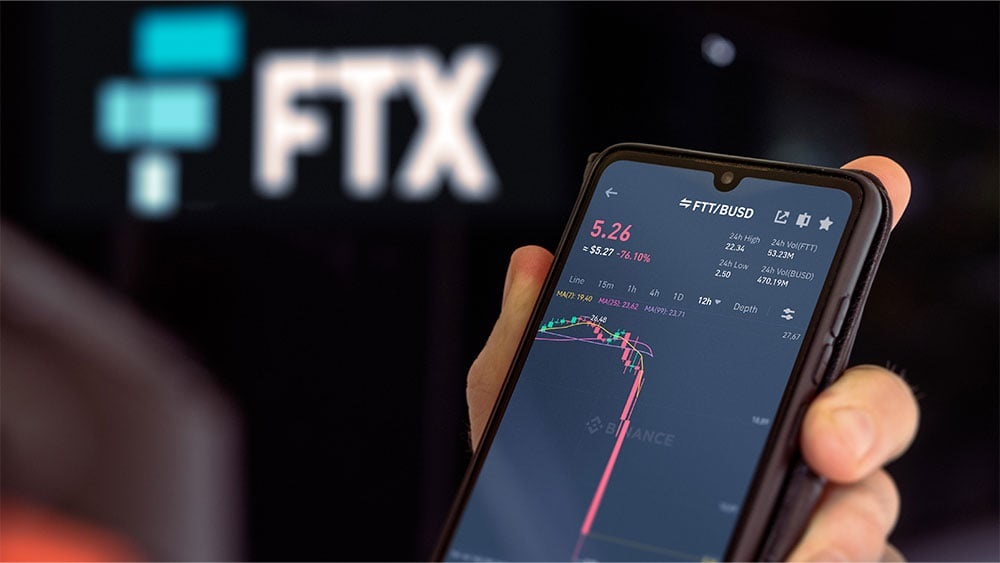
FTX has sued former employees of Salameda

Bankrupt crypto exchange FTX has sued former employees of Salameda, a blockchain analytics firm, for allegedly stealing trade secrets and confidential information. The lawsuit, filed in the U.S. District Court for the Northern District of California, claims that four ex-Salameda workers breached their employment contracts and fiduciary duties by joining FTX and using Salameda’s proprietary data and software to benefit FTX’s business.

According to the complaint, Salameda is a leading provider of blockchain intelligence and analytics, offering services such as transaction monitoring, risk scoring, and compliance solutions to various clients in the crypto industry. Salameda claims that it has developed a unique and valuable database of blockchain transactions and addresses, as well as a sophisticated software platform that analyzes and visualizes the data.

FTX, on the other hand, is a crypto derivatives exchange that was founded in 2019 and has grown rapidly to become one of the largest players in the market. FTX offers futures, options, leveraged tokens, and other products on various cryptocurrencies and indices. FTX is also known for its innovative and controversial features, such as tokenized stocks, presidential election betting, and carbon credit trading.

The lawsuit alleges that the four defendants, who were senior engineers and analysts at Salameda, left the company in late 2020 and early 2021 to join FTX as employees or consultants. The lawsuit claims that the defendants had access to Salameda’s confidential and proprietary information, including its database, software, algorithms, methodologies, and client lists. The lawsuit further alleges that the defendants used this information to help FTX develop and improve its products and services, such as its risk management system, its liquidity provision strategy, and its market surveillance tools.

The lawsuit accuses the defendants of violating the Computer Fraud and Abuse Act, the Defend Trade Secrets Act, the California Uniform Trade Secrets Act, and various state laws. The lawsuit seeks injunctive relief to prevent further use or disclosure of Salameda’s trade secrets, as well as compensatory and punitive damages for the alleged harm caused by the defendants’ actions.

Salameda’s CEO, said in a statement: “We are deeply disappointed by the conduct of our former employees, who betrayed our trust and violated their obligations to us. We have invested significant time and resources to build our technology and reputation in the crypto space, and we will not tolerate any attempts to undermine or exploit our competitive edge. We are confident that we will prevail in this case and protect our intellectual property rights.”

FTX’s founder and CEO, Sam Bankman-Fried, said in a tweet: “We are aware of the lawsuit filed by Salameda against some of our team members. We believe that the allegations are baseless and without merit, and we intend to vigorously defend ourselves in court. We respect the intellectual property rights of others, but we also value the talent and creativity of our staff. We have nothing to hide, and we look forward to proving our innocence.”

However, some observers have questioned the merits and motives of FTX’s lawsuits, suggesting that they are part of a broader strategy to intimidate or eliminate its competitors and consolidate its dominance in the crypto space. Some critics have also pointed out that FTX itself has been accused of engaging in similar practices as the defendants, such as copying features from other exchanges, manipulating prices and volumes, and influencing data providers.

The outcome of these lawsuits is uncertain and may take a long time to resolve. However, they are likely to have significant impacts on the crypto industry as a whole, as they may affect the trust, transparency, and innovation of the sector. The lawsuits may also set precedents for future legal disputes involving crypto exchanges and other stakeholders.

New York State Department of Financial Services (NYDFS) releases Draft on Crypto and Cybersecurity Guidance

0

The New York State Department of Financial Services (NYDFS) has issued a draft guidance on how it will evaluate the cybersecurity practices of cryptocurrency firms that operate under its supervision. The guidance, which was published on September 21, 2023, aims to provide clarity and transparency to the crypto industry and to enhance the security and resilience of the state’s financial system.

The NYDFS is the state agency that regulates financial services and products in New York, including banking, insurance, securities, and cryptocurrencies. The NYDFS was created in 2011 by merging the New York State Banking Department and the New York State Insurance Department.

The draft guidance outlines the minimum standards that crypto firms must meet to comply with the NYDFS’s existing cybersecurity regulation, which was adopted in 2017 and applies to all entities licensed or authorized by the department. The regulation requires crypto firms to implement a comprehensive cybersecurity program, conduct periodic risk assessments, adopt policies and procedures for incident response and recovery, and report any breaches or attempted breaches to the NYDFS within 72 hours.

According to the draft guidance, the NYDFS will assess the cybersecurity program of each crypto firm based on its specific business model, activities, risks, and complexity. The department will also consider the following factors:

The type, volume, and value of crypto transactions and assets that the firm handles or stores; The degree of integration and interoperability of the firm’s systems and platforms with other financial institutions and service providers; The extent to which the firm relies on third-party vendors or service providers for its crypto operations; The nature and scope of the firm’s compliance with applicable laws and regulations, including anti-money laundering (AML) and sanctions requirements; The level of innovation and adoption of emerging technologies and best practices in the crypto industry

The draft guidance also provides examples of specific cybersecurity controls that crypto firms should implement, such as: Encrypting all data in transit and at rest, using strong encryption algorithms and keys.

  • Segregating crypto assets across multiple wallets and storage devices, using cold storage for a significant portion of assets; Implementing multi-factor authentication (MFA) and biometric verification for access to systems and platforms; Using hardware security modules (HSMs) or other secure devices for key management and generation; Conducting regular audits and penetration tests of systems and platforms, both internally and externally, establishing clear roles and responsibilities for cybersecurity personnel and providing them with adequate training and resources

The NYDFS is seeking public comments on the draft guidance until October 22, 2023. The department will then finalize and issue the guidance, which will become effective on January 1, 2024. Crypto firms that are subject to the NYDFS’s supervision will have to comply with the guidance by July 1, 2024.

The draft guidance is part of the NYDFS’s ongoing efforts to foster a regulatory environment that supports innovation and growth in the crypto industry, while protecting consumers and investors from fraud and cyberattacks. The department has been one of the most active regulators in the U.S. in terms of issuing licenses and approvals for crypto firms, such as BitLicense, Trust Charter, Conditional BitLicense, Virtual Currency License, Stablecoin Approval Order, BitLicense No-Action Letter, etc.

The NYDFS’s draft guidance is also in line with the global trend of increasing regulatory scrutiny and oversight of the crypto industry, as more countries and jurisdictions are developing or updating their rules and standards for crypto-related activities. Some of the recent examples include:

The BitLicense was introduced by the New York State Department of Financial Services (NYDFS) in 2015, and it is considered one of the most comprehensive and stringent regulatory frameworks for crypto businesses in the US. The BitLicense aims to protect consumers, prevent money laundering, and promote financial stability in the crypto space.

However, the BitLicense also imposes a high barrier to entry and a heavy compliance burden on crypto businesses that operate in New York. The application process for obtaining a BitLicense can take up to a year or more, and it requires extensive documentation, background checks, audits, fees, and reporting obligations. The NYDFS has granted only 29 BitLicenses since 2015, and many crypto businesses have opted to leave New York or avoid serving New York customers rather than applying for a BitLicense.

In June 2020, the NYDFS issued a guidance on how crypto businesses can obtain a conditional BitLicense, which allows them to operate under the supervision of an existing BitLicense holder while they complete their full application process. This is intended to streamline and expedite the licensing process for new entrants.

In July 2020, the NYDFS issued a proposal for a new framework for regulating stablecoins, which are cryptocurrencies that are pegged to fiat currencies or other assets. The proposal outlines the requirements for issuing, redeeming, holding, and trading stablecoins in New York, as well as the standards for ensuring their safety and soundness.

In October 2020, the NYDFS issued a greenlist of approved cryptocurrencies that can be used by licensed crypto businesses in New York without prior approval from the regulator. The greenlist currently includes 10 cryptocurrencies: Bitcoin (BTC), Bitcoin Cash (BCH), Ethereum (ETH), Ethereum Classic (ETC), Litecoin (LTC), Binance USD (BUSD), Gemini Dollar (GUSD), Paxos Standard (PAX), Pax Gold (PAXG), and Ripple (XRP).

In November 2020, the NYDFS issued a guidance on how crypto businesses can self-certify their compliance with the regulator’s cybersecurity requirements. The guidance outlines the minimum standards for cybersecurity policies and procedures that crypto businesses must implement and maintain.

In January 2021, the NYDFS issued an alert to crypto businesses about potential risks associated with ransomware attacks. The alert urges crypto businesses to implement robust security measures to prevent and mitigate ransomware incidents, as well as to report any suspicious activity to the regulator.

The Financial Action Task Force (FATF), an intergovernmental body that sets global standards for AML and counter-terrorism financing (CTF), issued revised guidance on how countries should apply its recommendations to virtual assets and virtual asset service providers (VASPs) in June 2021.

The European Commission, the executive branch of the European Union (EU), proposed a comprehensive legislative framework for crypto markets in September 2020, called Markets in Crypto-Assets (MiCA), which aims to harmonize the rules and regulations for crypto activities across the EU.

The U.K.’s Financial Conduct Authority (FCA), the country’s financial regulator, banned the sale of crypto derivatives and exchange-traded notes (ETNs) to retail investors in October 2020, citing high risks of harm from price volatility, complexity, lack of transparency, and market abuse.

New York is one of the most important financial hubs in the world, and it is also a key player in the emerging crypto industry. However, the state has some of the strictest regulations for crypto businesses and investors, which can pose significant challenges and opportunities for both newcomers and veterans.

ApeCoin DAO Voting to Acquire sister DAO

0

ApeCoin DAO, the decentralized autonomous organization that aims to empower apes in the crypto space, is currently holding a governance vote on whether to create a sister DAO dedicated to acquiring and managing NFTs. The proposal, which was submitted by one of the ApeCoin DAO members, argues that NFTs are a valuable asset class that can generate revenue and exposure for the ape community. ApeCoin DAO is powered by its native token, APE, which is used for voting, staking, and rewarding the community members.

The sister DAO would have its own treasury, governance token and smart contracts, but would share the same vision and values as ApeCoin DAO. The vote will end on September 30th and requires a minimum quorum of 51% and a majority of 60% to pass.

NFTs, or non-fungible tokens, are unique digital representations of art, music, games, collectibles and other forms of creative expression that are stored on a blockchain. NFTs have exploded in popularity and value in recent months, attracting celebrities, artists, investors and enthusiasts from all over the world. Some of the most notable NFT projects include CryptoPunks, Bored Ape Yacht Club, Art Blocks and Loot. NFTs are not only a way to showcase and own digital art, but also a way to participate in a vibrant and diverse community of creators and collectors.

One of the projects that ApeCoin DAO supports is yugalabs, a blockchain-based gaming ecosystem that leverages the power of non-fungible tokens (NFTs) and metaverse. Yugalabs allows users to create, play, and trade their own games and NFTs on a scalable and interoperable network.

ApeCoin DAO has a strategic partnership with yugalabs, which gives it a significant stake in the gaming platform. ApeCoin DAO also provides funding, marketing, and technical support to yugalabs, as well as access to its large and active community of ape enthusiasts.

As a result of this collaboration, ApeCoin DAO and yugalabs have achieved remarkable growth and success in the blockchain gaming industry. According to the latest data, yugalabs has over 1 million registered users, 10,000 active games, and 100,000 NFTs minted on its platform. ApeCoin DAO has also seen its token price increase by over 500% since the launch of yugalabs, reaching a market capitalization of over $200 million.

ApeCoin DAO believes that NFTs are a natural fit for the ape culture, which is based on collaboration, innovation and fun. By creating a sister DAO focused on NFTs, ApeCoin DAO hopes to expand its influence and reach in the crypto space, as well as support talented artists and creators who share the ape ethos. The sister DAO would also provide educational resources and guidance for apes who want to learn more about NFTs and how to get involved.

The sister DAO would be funded by a portion of the ApeCoin DAO treasury, as well as by donations and fees from NFT sales and auctions. The sister DAO would also have its own governance token, which would be distributed to ApeCoin DAO members who participate in the vote and the NFT activities.

The proposal has received positive feedback and support from many ApeCoin DAO members, who see it as an opportunity to diversify their portfolio, express their creativity and connect with other like-minded apes. However, some members have also raised concerns and questions about the feasibility, legality and security of the sister DAO. Some of the issues that have been discussed include:

How to ensure that the sister DAO complies with the relevant laws and regulations in different jurisdictions regarding NFTs and DAOs.

How to protect the intellectual property rights and royalties of the artists and creators who collaborate with the sister DAO.

How to prevent fraud, theft and hacking of the NFTs and the smart contracts.

How to balance the interests and preferences of different stakeholders within the sister DAO.

How to measure and evaluate the success and impact of the sister DAO.

These and other issues are being debated and addressed by the ApeCoin DAO community in an open and transparent manner. The proposal also includes a detailed roadmap and timeline for the launch and operation of the sister DAO, as well as a contingency plan in case of unforeseen circumstances or challenges. The proposal encourages all ApeCoin DAO members to do their own research, ask questions and voice their opinions before casting their vote.

The vote is currently ongoing on Snapshot, a platform that allows decentralized governance voting using off-chain signatures. As of September 22nd, 2023, 14:15 GMT+00:00, the vote stands at 67% in favor, 28% against and 5% abstain, with 54% of the total ApeCoin DAO token supply participating. The vote will close on September 30th at 23:59 GMT+00:00.

ApeCoin DAO is confident that its current position in yugalabs will bring more benefits and opportunities to its community and ecosystem. ApeCoin DAO believes that yugalabs is one of the most promising and exciting projects in the blockchain gaming industry, and that it has the potential to become a leader and pioneer in the metaverse.

ApeCoin DAO is one of the most innovative and active DAOs in the crypto space, with a mission to empower apes to take control of their own destiny. By creating a sister DAO for NFTs, ApeCoin DAO hopes to take another step towards achieving its vision of a decentralized, democratic and diverse ape society.