DD
MM
YYYY

PAGES

DD
MM
YYYY

spot_img

PAGES

Home Blog Page 3758

Nigeria’s Finance Minister Statement on “Liquidity” And Saving the Naira

0

Nigeria’s Finance Minister, Wale Edun, has “said up to $6.8 billion of overdue forward payments in the foreign exchange market need to be addressed before the naira stabilizes”. He dropped the key words: “The issue we have now is that the market is not liquid enough”. Recall my position when the nation floated the currency. I posited that floating Naira without working for parity on demand and supply of US dollars is hopeless in saving Naira.

Nigeria’s Finance Minister, Adebayo Olawale Edun, has attributed the naira’s abysmal decline to the approximately $6.8 billion in overdue forward payments in the foreign exchange market, emphasizing that addressing this issue is crucial for the stabilization of the local currency.

According to Bloomberg, Edun stated that resolving these outstanding contracts would not only strengthen the naira but also facilitate additional foreign exchange inflows.

The naira’s decline has been attributed to the illiquidity across Nigeria’s FX markets – especially in the Investor & Exporter window. The naira reportedly reached the N1,000/$1 threshold in the parallel market on Thursday, as supplies from the central bank to the FX market tanks amid rising demand.

This is a vicious circle when you see that the new official rate (import export window, ~ N785/$) is now far away from the black market (N980/$) demonstrating a highly imperfect market, cushioned on the asymmetry and imbalances on demand and supply positions.

Expect the government to re-introduce fuel subsidies (directly, no backdoor) even as it brings a quasi-official FX rate back (outside the IE window). In June 2023, I wrote: “In his O’ Level textbook on economics, AO Lawal explained demand and supply and the movement of price on the demand-supply curve. If I apply what he explained in that book, floating naira with no capacity to earn USD dollars will kill Naira, because there is an asymmetric imbalance on demand and supply of USD in the Willing Buyer, Willing Seller nexus. In other words, two people may each have $100 to sell while twenty people want to buy each $100. If you do not close that number to near parity, the equilibrium point will keep shifting and I do not see how Naira will stabilize because demand outweighs supply here”

That imbalance is that $6.8 billion Mr Edun is talking about. Until we fix it, no better days for Naira.

Comment on Feed

Comment 1: It’s still basic demand and supply.
How can we have more supply of dollars? Earn it!
How can you earn it? Export more!

How can you export more? Start from commercial agric through state-led farm settlements(ekiti has a big one in Orin-ekiti built in the 80s just sitting there wasting away).

Also, fix your power generation and distribution.
Improve the rail capacity to transport goods across the country.

When the teeming youth population is gainfully employed in jobs, and goods are being exported, we won’t even talk about the exchange rate.

Also, the dollarization of the economy is illegal. Enforce this and see the demand for dollar decrease.

Economic nationalism must be the chosen ideology. Nigeria must aim for self-sufficiency(autarky).
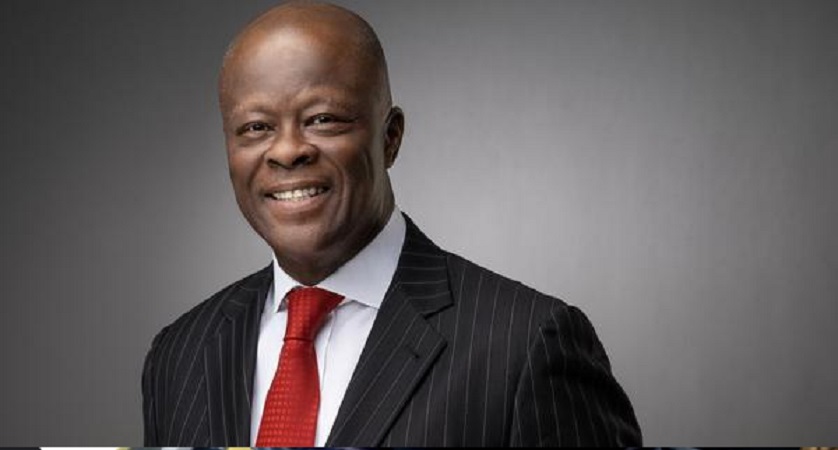

Nigeria’s Finance Minister, Wale Edun, Blames Forex Crisis on $6.8bn Overdue Forward Payment

0

Nigeria’s Finance Minister, Adebayo Olawale Edun, has attributed the naira’s abysmal decline to the approximately $6.8 billion in overdue forward payments in the foreign exchange market, emphasizing that addressing this issue is crucial for the stabilization of the local currency.

According to Bloomberg, Edun stated that resolving these outstanding contracts would not only strengthen the naira but also facilitate additional foreign exchange inflows.

The naira’s decline has been attributed to the illiquidity across Nigeria’s FX markets – especially in the Investor & Exporter window. The naira reportedly reached the N1,000/$1 threshold in the parallel market on Thursday, as supplies from the central bank to the FX market tanks amid rising demand.

“The issue we have now is that the market is not liquid enough. We are committed to encouraging liquidity based on reforms that have been made at the moment, on the fiscal side and the monetary side. And together with the restoration of trust and confidence, we think the FX flows will return,” Edun, who accompanied President Bola Tinubu to New York for the United Nations General Assembly, was quoted as saying in an interview there.

The FX illiquidity backdrop, which has culminated in a huge economic crisis for Nigeria over the years, has defied attempts by President Bola Tinubu’s administration to address it. Reform policies such as the removal of fuel subsidy and the floating of the naira, have instead seen the embattled currency crumble further in the FX market.

The impact is loudly evident in Nigeria’s inability to fulfill its international financial obligations that require foreign exchange. Nigeria has about $7 billion backlog in FX obligations to clear with insufficient dollar inflow.

Last year, Emirates Airlines suspended its operation in Nigeria due to its inability to repatriate over $80 million in trapped revenue.

The situation stands in the way of FDIs (foreign direct investments) and PDIs (portfolio direct investments). Economists said that investors are being spooked by the lax macroeconomic framework spearheaded by the FX crisis.

So far, efforts by the federal government, such as the $3bn emergency loan the Nigerian National Petroleum Company Limited secured from Afreximbank, have failed to boost FX liquidity.

Recently, the situation has been compounded by the inactivity of the central bank, which, besides halting FX supplies to the market, has postponed its Monetary Policy Committee (MPC) meeting scheduled for September 25-26, where it’s expected to further raise interest rate to tame rising inflation.

The central bank’s inactivity is attributed to the wait for the confirmation of the newly-appointed CBN governor, Olayemi Cardoso, which has led to the resignation of the acting governor and four deputy governors.

The gap in decision-making created by this development has impacted the CBN’s supply to the FX market, opening an N230 exchange rate gap between the parallel market and the I&E window, which has been relatively stable at N770/$1.

Edun said the solution is to boost FX supply by sustaining and improving the reforms.

“The commitment is to maintain the existing reforms and improving them, improving the FX market further so the gap narrows. Looking at all options for boosting supply so the one-way bet of speculators that we are seeing at the moment is reversed,” the finance minister said.

Examining Workplace Applications of Machine Learning

0

As we have said earlier, machine learning is about teaching computers to learn from experience. Just like humans, computers can learn patterns and relationships from data. This involves components like data, features, models, and algorithms.

The model is the heart of machine learning. It’s a mathematical representation of the patterns and relationships in the data. The algorithm adjusts the model’s parameters iteratively to minimize the difference between its predictions and the actual outcomes. Machine learning operates through several key steps:

Data Collection: The first step is to gather relevant data for the problem at hand. For instance, in a customer churn prediction scenario, data might include customer demographics, purchase history, and interactions with the company.

Data Pre-processing: Raw data often contains noise and inconsistencies. Pre-processing involves cleaning, transforming, and normalizing the data to make it suitable for analysis. This step is crucial as the quality of input data affects the model’s performance.

Extracting the Feature: Features are extracted from the data to represent meaningful information. In a spam email detection scenario, features might include the frequency of certain words or phrases., as we said in the earlier article.

Selecting a Model: Choosing the right model architecture is essential. There are various models, such as decision trees, neural networks, and support vector machines, each suited for different problems.

Training the Model: During this phase, the model is fed with labeled data (data with known outcomes) to learn the underlying patterns. The algorithm adjusts parameters to minimize the error between predicted and actual results.

Evaluation: Now, you have to assess and evaluate the model’s performance using unseen data. Metrics like accuracy, precision, recall, and F1 score help gauge how well the model generalizes to new data.

Optimization: If the model’s performance isn’t satisfactory, adjustments are made. You have to keep tweaking and fine-tuning hyperparameters, re-evaluating features, or trying a different model architecture until you get something as close to perfect as possible.

Deployment: Once satisfied with the model’s performance, it’s deployed to make predictions on new, real-world data. This is where the actual value of machine learning shines.

Now, let’s take a look at Workplace applications

Customer Service Chatbots: Many businesses use machine learning-powered chatbots to handle customer inquiries. These bots can analyze customer messages, understand intent, and provide relevant responses. Over time, they learn from interactions to offer more accurate solutions.

Predictive Maintenance: In industries like manufacturing and aviation, machine learning is used to predict when equipment might fail. By analyzing sensor data and historical maintenance records, models can forecast maintenance needs, reducing downtime and costs. Can you see how this can enhance your productivity in business?

Financial Fraud Detection: Banks and financial institutions employ machine learning to detect fraudulent activities. Algorithms learn from patterns in transaction data to identify unusual behavior and flag potentially fraudulent transactions. We talked more about this in an earlier article on AI.

Healthcare Diagnosis: Machine learning aids medical professionals in diagnosing diseases by analyzing medical images, such as X-rays and MRIs. These models learn to spot abnormalities that human eyes might have ordinarily missed.

Employee Recruitment: HR departments can use machine learning to sift through resumes and predict which candidates are most likely to be successful in a role based on historical hiring data. This can reduce the time recruiters spend reviewing thousands of resumes and help them with a shortlist.

Supply Chain Optimization: Retailers use machine learning to forecast demand, ensuring they have the right stock. This minimizes excess inventory and lost sales due to shortages.

Personalized Marketing: Online platforms utilize machine learning to analyze user behavior and preferences. This data is then used to tailor personalized recommendations and advertisements.

In conclusion

Machine learning is a subset of Artificial intelligence, and if you have been following our AI series, you should have guessed so by now.

In the workplace, machine learning finds applications in diverse fields, even beyond what we have touched on here. Practically everything you can think of that you have humans doing in your workplace can be done by AI. As businesses continue to harness the power of machine learning, the potential for efficiency, accuracy, and innovation is boundless. As we know, things get better and better with repeated use as the errors are eliminated, and accuracy is enhanced.

I know some people have commented about how AI cannot give personalized encounters, but I think this is where machine learning comes in as a subset of AI. It continues to gather data from previous interactions and improve its responses subsequently.

News on AI and ML

Google and TikTok. Younger people are increasingly using TikTok as a place to search for stuff, and now the company is testing out a search partnership with Google. TikTok told Insider that the feature was being trialed—alongside other third-party integrations—in several markets around the world. (In other Google news, the company insists its AI-chip-design partnership with Broadcom will continue, contrary to earlier reports. And in other TikTok news, that company apparently has an internal matchmaking service?!)

Stuff with AI in it. Microsoft is baking Copilot, its generative AI assistant, into Windows 11 and new Surface devices that it just announced. Reuters reports Copilot will hit Windows next Tuesday. Meanwhile, as described above, YouTube announced genAI backgrounds for Shorts, along with AI-powered video topic suggestions, background music recommendations, and dubbing. Earlier this week, Amazon previewed a genAI-ified Alexa assistant that should appear next year. (Fortune newsletter)

Gala Games Unexpected Twist, Floki Gets Listed, Kangamoon To Dominate the Meme Coin Space

0

Every day in the dynamic cryptocurrency market brings new stories, developments, and surprises. This article explores some recent events, including a legal battle at Gala Games (GALA), the Floki (FLOKI) listing on Hexn exchange, and the ascent of KangaMoon (KANG).

Gala Games (GALA): Co-Founders Square Off in Legal Dispute

Gala Games (GALA), known for its blockchain-based gaming ecosystem, made headlines for an unexpected twist involving its co-founders. Basically, in recent Gala Games news, its CEO, Eric Schiermeyer, has filed a lawsuit against his fellow co-founder, Wright Thurston.

In other words, Schiermeyer alleges that Thurston’s company, True North United Investments, unlawfully took $130M of Gala Games tokens in 2021. On the other hand, Thurston countered. He accused Schiermeyer of making unilateral decisions that resulted in significant financial losses for the company.

This legal turmoil raises questions about the future of Gala Games and the impact it might have on the GALA token and its community. Although experts remain confident that the Gala Games price will reach $0.030 by December 2023, buyers are wary.

Floki (FLOKI): Expands Its Horizons with Hexn Listing

Floki (FLOKI), the meme coin inspired by the Shiba Inu and Dogecoin craze, has been on a journey to establish itself in crypto. Most importantly, it made a significant step in this direction by listing on the Hexn exchange.

This listing provides Floki coin holders with more options for trading and liquidity. Furthermore, Floki’s community-driven approach and expansion to new exchanges showcase the project’s determination to grow beyond its meme status.

Due to all these reasons, market analysts predict that the Floki price will sit between $0.00002456 and $0.00002778 within Q4 of 2023.

KangaMoon (KANG): The Rising Star in the Meme Coin Universe

Amidst the crypto chaos, a new meme coin has generated buzz in the community – KangaMoon (KANG). KangaMoon commits to integrating Play-to-Earn elements, allowing players to monetize their gaming experiences.

With a focus on boxing-themed gameplay and an engaging virtual world, KangaMoon aims to redefine the meme coin narrative. KangaMoon empowers players to build unique characters, participate in battles and tournaments, and earn virtual currency and rare in-game items. Therefore, users can sell and trade them.

KangaMoon’s innovative approach combines gaming, blockchain, and meme coin mechanics, creating a unique ecosystem with the potential to disrupt both the gaming and cryptocurrency industries.

Above all, with a current value of just $0.005, KANG offers an enticing entry point for buyers seeking high growth. Analysts have been keeping a close eye on KANG and predict that it could experience explosive surges, possibly up to 220%, by the presales end.

New Unicorns Could Be Born – Join Tekeda Capital Syndicate Next Cycle Which Begins Oct 2

0

On Oct 2, 2023, about 9  startups will be available for our Tekedia Capital Syndicate members to invest in. The sectors cut through fintech, financial services, agriculture, AI, cybersecurity, retail, etc. We’re making it easier for citizens, groups, investment clubs, companies, organizations, etc to own a piece of early-stage, high-growth technology startups operating across Africa.

Good People, out of these 9 companies, a unicorn could be born. We invite you to join our Syndicate here and co-invest with our members. Begin here 


We’re making it easier for citizens, groups, investment clubs, companies, organizations, etc to own a piece of early-stage, high-growth technology startups operating across Africa and beyond.

Our opportunity antenna and grassroot connections with innovators enable us to see patterns as they develop. We invite you to partner with us as we nurture and build category-king companies in Africa and beyond, and in the process advance citizens, communities and nations.

At Tekedia Capital, we fund the foundations of the NEXT African economy through entrepreneurial capitalism. A  membership fee which covers 4 investment cycles (we typically do 2-3 cyclers every 12 months)  of $1,000 or equivalent is required; click and join today.