DD
MM
YYYY

PAGES

DD
MM
YYYY

spot_img

PAGES

Home Blog Page 3761

NERC Imposes N10.5 Billion Fine on DisCos for Billing Infractions As Tinubu signs Electricity Bill into law

0

The Nigerian Electricity Regulatory Commission (NERC) has taken a decisive step to address the longstanding issue of arbitrary billing by Electricity Distribution Companies (DisCos) across the country.

In a statement released on February 8th, NERC announced a hefty fine of N10.5 billion to be levied on all eleven DisCos for their non-compliance with mandated caps on estimated billing for unmetered customers.

According to the statement, DisCos have consistently flouted the prescribed credit caps for unmetered customers, opting instead to impose arbitrary charges on them. This blatant disregard for regulatory directives constitutes a violation of Section 34(1)(d) of the Electricity Act of 2023.

In response to these infractions, NERC has issued an Order on Non-compliance with the capping of estimated bills, outlining measures to rectify the situation and safeguard consumers’ interests. Among the directives outlined in the order are:

Credit Adjustment to Customers: DisCos are mandated to issue credit adjustments to all customers who have been overbilled for the period of January to September 2023 by the March 2024 billing cycle.

Public Notice: DisCos are required to publish the list of credit adjustment beneficiaries in two national dailies and on their websites no later than the 31st of March 2024.

Regulatory Sanctions: NERC will deduct a sum of N10,505,286,072 from the annual allowed revenues of the eleven DisCos during the next tariff review to penalize future non-compliance with the energy caps approved by the Commission.

This move by NERC comes against the backdrop of longstanding complaints from consumers regarding exorbitant and arbitrary electricity bills, particularly for unmetered customers. The introduction of energy caps aims to address these grievances and promote fairness in billing practices.

However, despite regulatory efforts to enforce the capping system, DisCos have continued to flout these regulations, allowing them to charge energy users arbitrarily. This persistent non-compliance has necessitated NERC’s imposition of significant fines to deter future infractions and uphold the integrity of the regulatory framework.

NERC’s decisive action underscores a significant shift from its previous approach to consumers’ complaints over arbitrary estimated billing. Holding DisCos accountable for their billing practices has long been advocated as the best way to deter exploitative practices and ensure a fairer and more transparent billing system for all electricity consumers.

Tinubu signs Electricity Amendment Bill into law

In related developments, President Bola Tinubu has recently signed the Electricity Act (Amendment) Bill, 2024, into law. The bill, which passed through both chambers of the National Assembly in 2023, seeks to address various issues within the electricity sector, including concerns related to host community development and environmental sustainability.

Sponsored by Hon. Babajimi Benson, the Electricity Act (Amendment) Bill, 2024 sets aside five percent of the actual annual operating expenditures of power generating companies (GENCOs) for the development of their respective host communities. This provision aims to ensure that host communities benefit from the operations of GENCOs by funding infrastructure development projects that enhance their well-being.

Furthermore, the Act mandates the appointment of a reputable Trustee/Manager to oversee the receipt, management, and administration of funds allocated for host community development. This mechanism is designed to ensure transparency and accountability in the utilization of funds, thereby maximizing their impact on community development initiatives.

NERC’s imposition of fines on DisCos for billing infractions and the signing of the Electricity Act (Amendment) Bill, 2024, into law signal significant developments within the Nigerian electricity sector. These measures are expected to improve regulatory oversight, promote consumer rights, and facilitate sustainable development within host communities, ultimately enhancing the credibility of the nation’s electricity supply.

Bitcoin has proven to be resilient and adaptable over its 15-year history

0

Bitcoin continues its bullish trend, gaining 4% in the last 24 hours and reaching a value of $47,324 at the time of writing. This is a remarkable recovery from the recent dip that saw the cryptocurrency drop below $40,000 on January 5, 2024. Analysts attribute this rally to several factors, including increased institutional adoption, positive regulatory developments, and growing public interest.

One of the main drivers of Bitcoin’s price surge is the growing demand from institutional investors, who see it as a hedge against inflation and a store of value. According to data from CryptoCompare, the volume of Bitcoin traded on regulated exchanges increased by 28% in January 2024, compared to the previous month. Some of the notable institutions that have added Bitcoin to their portfolios include MicroStrategy, Tesla, Square, and PayPal.

Another factor that has boosted Bitcoin’s confidence is the favorable regulatory environment in some jurisdictions. For instance, in the US, the Securities and Exchange Commission (SEC) recently approved the first Spot Bitcoin exchange-traded fund (ETF), which allows investors to access Bitcoin without having to buy or store it directly.

The SEC also appointed Gary Gensler, a former MIT professor and crypto advocate, as its new chairman. In addition, several countries, such as El Salvador, Ukraine, and Panama, have passed laws that recognize Bitcoin as legal tender or facilitate its adoption.

Bitcoin has also benefited from the growing awareness and interest of the general public. According to Google Trends, the search volume for “Bitcoin” reached its highest level since December 2017, when Bitcoin hit its previous all-time high of $19,783. Moreover, social media platforms such as Twitter and Reddit have seen an influx of new users who are curious about Bitcoin and want to learn more about it.

All these factors indicate that Bitcoin is on a strong upward trajectory and could soon surpass its two-year high of $49,000 that it achieved on January 11, 2024. However, as with any volatile asset, there are also risks and challenges that could affect its performance.

Some of these include technical issues, hacking attacks, market manipulation, regulatory uncertainty, and environmental concerns. Therefore, investors should exercise caution and do their own research before investing in Bitcoin or any other cryptocurrency.

Another factor that is driving Bitcoin’s price up is the growing demand from emerging markets, especially in Africa and Latin America. According to a report by Chainalysis, these regions have seen a surge in peer-to-peer Bitcoin trading volumes in 2024, as more people use the cryptocurrency to hedge against inflation, remit money across borders, and access financial services. Some countries, such as Nigeria and El Salvador, have even adopted Bitcoin as a legal tender and form of trading creating a favorable environment for crypto adoption.

As Bitcoin approaches its previous all-time high of $49,000, which it reached on January 11, 2024, many experts are optimistic that it will break through this resistance level and enter a new phase of growth. Some of the bullish predictions include a $100,000 target by the end of 2024, a $500,000 target by 2030, and a $1 million target by 2040.

Of course, these are speculative scenarios that depend on various factors, such as technological innovation, regulatory support, and social acceptance. However, they also reflect the confidence and enthusiasm that many investors have in Bitcoin’s long-term potential.

Bitcoin is not without challenges and risks, however. The cryptocurrency still faces technical issues, such as scalability and security, that need to be addressed by the developers and the community. It also faces regulatory uncertainty and opposition from some governments and central banks that view it as a threat to their monetary sovereignty and stability. Moreover, it faces competition from other cryptocurrencies and digital assets that offer different features and use cases.

Nevertheless, Bitcoin has proven to be resilient and adaptable over its 15-year history, surviving multiple crises and challenges and emerging stronger and more valuable than ever. It has also established itself as the leader and pioneer of the crypto space, setting the standards and trends for the rest of the industry. As such, it is likely that Bitcoin will continue to play a vital role in the future of finance and society.

Central Bank of Nigeria to Cease Ways and Means Advances to Federal Government Until Outstanding Debt Settled

0

The governor of the Central Bank of Nigeria (CBN), Olayemi Cardoso, has declared that the apex bank would no longer extend Ways and Means advances to the federal government until the outstanding balance is settled.

This declaration came during a high-profile interface with the Senate Committee on Banking, Insurance, and Other Financial Institutions, attended by key figures including Sani Abdullahi, CBN Deputy Governor of Economic Policy, and various ministers including Wale Edun, Atiku Bagudu, Abubakar Kyari, and Aliyu Abdullahi.

Ways and Means, a loan facility utilized by the Central Bank of Nigeria to cover the federal government’s budget shortfalls, has long been a subject of scrutiny and concern.

Under the former CBN governor, Godwin Emefiele, the federal government borrowed a whopping N23 trillion through Ways and Means in violation of the CBN Act that prohibits it from lending more than 5% of the government’s previous year’s revenue.

The Ways and Means loan, which has been fingered as a major contributor to Nigeria’s high inflation, became a subject of controversy. The magnitude of the financial arrangement was highlighted in March 2022 when the Debt Management Office (DMO) revealed that the federal government had borrowed a staggering N18.16 trillion from the Central Bank, sparking public outcry and economic unease.

The National Assembly approved in December 2023 the securitization of the outstanding debit balance of N7.3 trillion. However, the federal government is desperately looking for funds to finance the 2024 budget among other things. The budget is projected to have an N9.18 trillion deficit.

Cardoso said the federal government must settle its outstanding debts, citing compliance with Section 38 of the CBN Act (2007) as the guiding principle.
He said, “The Bank must strictly adhere to the law limiting advances under ways and means to 5 percent of the previous year’s revenue.”

He further noted that failure to comply not only contravenes regulatory mandates but also hampers the CBN’s ability to effectively manage inflationary pressures in the economy.

Addressing the broader economic implications, Cardoso asserted that settling the outstanding balance of the Ways and Means advances would play a pivotal role in controlling inflation, a persistent challenge in Nigeria’s economy. Furthermore, he disclosed that the CBN had ceased quasi-fiscal measures amounting to over N10 trillion, actions previously undertaken under the guise of development finance interventions.

These measures, while intended to stimulate economic growth, inadvertently contributed to excess liquidity and exacerbated inflationary pressures.

However, Cardoso stopped short of confirming whether the federal government had exceeded the prescribed limits for advances under the CBN Act. He said that the impending Monetary Policy Committee (MPC) meeting scheduled for February 26th and 27th may delve deeper into these critical issues and chart a course of action to safeguard economic stability.

The apex bank head emphasized the importance of adopting an inflation-targeting framework, advocating for clear communication and collaboration between the CBN and fiscal authorities. Such collaborative efforts, he asserted, could pave the way for lowered policy rates, increased investment, and the creation of job opportunities, fostering sustainable economic growth and stability.

Cardoso’s stance on Ways and Means advances heralds a new era of fiscal discipline and regulatory oversight for the central bank, signaling a shift from his successor’s total disregard for the CBN Act and a commitment to upholding the rule of law.

Vision Pro is not just a gadget, but a game-changer

0

When Steve Jobs unveiled the first iPhone in 2007, he changed the world of technology forever. The iPhone was not just a phone, but a revolutionary device that combined a touchscreen, a music player, a camera, a web browser, and a personal assistant. It was a breakthrough that set the standard for all smartphones to come.

Vision Pro is second most impressive tech since the iPhone – Sam Altman.

Now, 17 years later, another device is poised to make a similar impact: Vision Pro. Vision Pro is a pair of smart glasses that can project holographic images onto your field of view, creating an immersive augmented reality experience. You can use Vision Pro to access information, entertainment, communication, and productivity apps, all without taking your eyes off the real world.

Vision Pro is powered by a tiny chip that can process massive amounts of data and graphics in real time. The chip also enables Vision Pro to recognize your voice, gestures, and eye movements, allowing you to interact with the virtual world naturally and intuitively. Vision Pro also has a built-in camera that can capture high-quality photos and videos, as well as scan objects and faces for enhanced functionality.

Vision Pro is compatible with any smartphone, tablet, or computer, and can sync with your cloud services and social media accounts. You can also customize Vision Pro with different frames, lenses, and accessories to suit your style and preferences. Vision Pro is lightweight, comfortable, and durable, making it ideal for everyday use.

What are the specs of Vision Pro?

Vision Pro is a cutting-edge software that enables you to create stunning visual effects for your videos and animations. Whether you are a professional filmmaker, a hobbyist, or a student, Vision Pro can help you unleash your creativity and transform your vision into reality.

Vision Pro has a wide range of features that make it easy to use and powerful at the same time. Some of the main features are:

A user-friendly interface that lets you access all the tools and settings you need with a few clicks.

A library of over 1000 presets and templates that you can customize and apply to your projects.

A node-based workflow that allows you to create complex effects by connecting different nodes and adjusting their parameters.

A real-time preview that shows you how your effects look on your footage without rendering.

A GPU-accelerated engine that delivers fast performance and high-quality results.

A compatibility with most popular video formats and editing software, such as MP4, MOV, AVI, Premiere Pro, After Effects, and more.

Vision Pro is available for Windows and Mac OS, and you can download a free trial version from the official website. The full version costs $299 for a lifetime license, which includes free updates and support.

If you are looking for a software that can help you create amazing visual effects for your videos and animations, Vision Pro is the one for you. It is easy to use, versatile, and affordable. Try it today and see what you can do with Vision Pro

Vision Pro is not just a gadget, but a game-changer. It is the second most impressive tech since the iPhone, and it will redefine how we see and interact with the world. If you want to be part of the future, you need to get Vision Pro today.

Japan’s Nikkei index hit a 34-year high

0

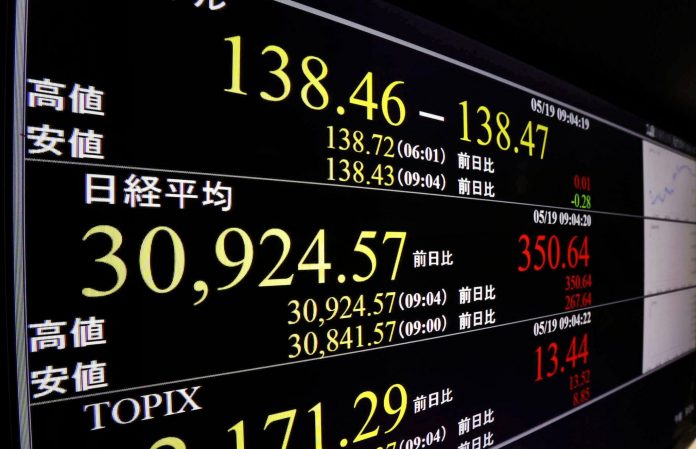
Japan’s Nikkei index hit a 34-year high this week, reaching its highest level since 1990. The benchmark index rose 2.1% on Friday, closing at 31,648.71 points. The Nikkei has gained more than 20% since the start of the year, outperforming other major global markets.

What is driving the Nikkei’s rally?

There are several factors behind the impressive performance of Japan’s stock market. One of them is the strong recovery of the Japanese economy from the impact of the coronavirus pandemic.

Japan’s gross domestic product (GDP) grew by an annualized rate of 21.4% in the third quarter of 2020, rebounding from a record contraction of 28.8% in the previous quarter. The growth was driven by a surge in consumer spending, exports, and business investment.

Another factor is the positive outlook for Japan’s corporate earnings. According to a survey by Nikkei, the combined net profit of listed companies is expected to increase by 38% in the fiscal year ending in March 2021, compared to a 25% decline in the previous year. The sectors that are expected to benefit the most from the earnings recovery are technology, automobiles, and financials.

A third factor is the political stability and continuity under the new Prime Minister Yoshihide Suga, who took office in September 2020 after Shinzo Abe resigned due to health reasons.

Suga has pledged to continue Abe’s economic policies, known as “Abenomics”, which consist of aggressive monetary easing, fiscal stimulus, and structural reforms. Suga has also vowed to tackle the challenges posed by the aging population, the low birth rate, and the digital transformation.

What are the challenges and opportunities for the Nikkei?

Despite the strong momentum, there are still some risks and uncertainties that could affect the Nikkei’s performance in the future. One of them is the ongoing COVID-19 crisis, which could derail the economic recovery if it worsens or leads to more lockdowns and restrictions. Japan has reported more than 400,000 cases and over 6,000 deaths so far and is currently facing a third wave of infections.

Another challenge is the high valuation of some stocks, which could make them vulnerable to profit-taking or corrections. The Nikkei’s price-to-earnings ratio (P/E) is currently around 20, which is higher than its historical average of around 15. Some analysts have warned that the market may be overheating or entering a bubble territory.

On the other hand, there are also some opportunities and catalysts that could boost the Nikkei further. One of them is the potential for more fiscal and monetary stimulus from the government and the Bank of Japan (BOJ), especially in light of the upcoming Tokyo Olympics in July 2021. The Olympics are expected to generate economic activity and tourism revenue for Japan, as well as showcase its technological prowess and innovation.

Another opportunity is the possibility of more mergers and acquisitions (M&A) among Japanese companies, as they seek to enhance their competitiveness and growth prospects in the global market. Japan has seen a wave of M&A activity in recent months, such as Nippon Telegraph and Telephone’s (NTT) buyout of its wireless unit NTT Docomo, and Hitachi’s acquisition of U.S.-based software company GlobalLogic.

Japan’s Nikkei index has hit a 34-year high this week, reflecting the strength and resilience of its economy and corporate sector amid the COVID-19 pandemic. The index has been supported by several factors, such as the economic recovery, the earnings growth, and the political stability under Prime Minister Suga.

However, there are also some challenges and uncertainties that could pose downside risks for the market, such as the COVID-19 situation, the high valuation, and the external environment. Therefore, investors should be cautious and selective when investing in Japanese stocks, while also looking for opportunities and catalysts that could drive further growth.