DD
MM
YYYY

PAGES

DD
MM
YYYY

spot_img

PAGES

Home Blog Page 3769

Nigerian Government to Partner With NGX to Promote Listing of Startups on The NGX Technology Board

0

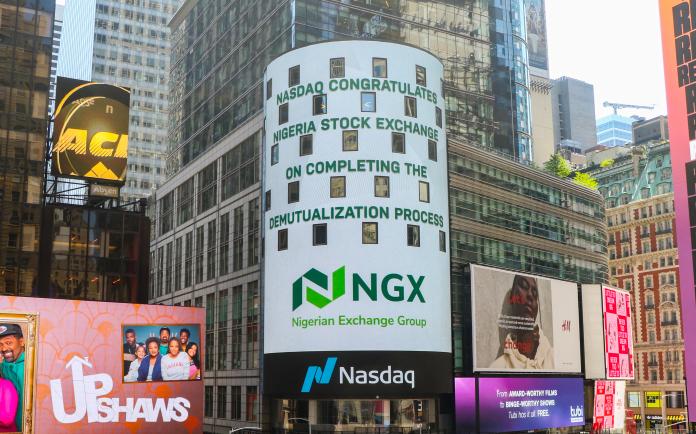
The Federal Government of Nigeria through the Ministry of Communications, Innovation and Digital Economy has announced the intention to partner with the Nigerian Exchange Limited (NGX), to promote startup listings with the newly created NGX Technology Board.

This was made known by the Minister of Communications, Innovation, and Digital Economy Bosun Tijani, while speaking at a tech event in New York, themed “Invest in Africa’s Future – Let’s talk about exits”.

Tijani noted that while Nigeria has for a long time continued to depend on oil, it was necessary to diversify from the heavy reliance on a single sector like the oil industry.

According to him, this can be achieved through the application of technology and innovation, further noting that the initiative is necessary to encourage and boost tech entrepreneurs.

Outlining his goals and ambitions, Mr. Tijani said the ministry will work on creating a regulatory environment for fintech, access to funding especially from Angel Investors, improve digital infrastructure, facilitate the export of tech products and services, and collaborate with NGX on tailored listing options for startups via its technology board.

In his words,

“We cannot do all of this as a country if we do not prioritize innovation and encourage entrepreneurs to build. Nigeria is now open to investments. We want to prioritise the ability of our technology companies to export products and we are targeting Africa first and then eventually start selling to the rest of the world”.

Also speaking at the event, Chief Executive Officer of NGX, Temi Popoola, said that the exchange will work efficiently to support the Ministry of Communications and Innovation.

He highlighted the technology’s role as a significant enabler of the capital market while highlighting the NGX’s commitment to fostering innovation in the market to attract more investors and tech companies.

In his words,

“We will continue to do a lot of work that makes us able to attract local capital and the day tech start-ups come to the exchange, we are confident that there would be a very good audience of investors that would want to own a bit of their shares. This is what we at NGX are”.

Explaining the challenges around listings, he stated that the demand for private capital currently outweighs public capital while revealing that the NGX is in discussions with the Securities and Exchange Commission (SEC) on private markets to enable the exchange to do business with non-listed companies like startups.

Also present at the event, Flutterwave CEO Olugbenga Agboola disclosed that his company is committed to the Nigerian project as most of its invisible capital had been deployed to Nigeria since its inception.

He added that the company would be looking at tapping opportunities created by the markets to scale and further deliver value to its customers and investors.

It is worth noting that the federal government of Nigeria plans to list startups on the NGX (Nigerian Exchange Group), can offer many advantages to these companies such as access to capital, access to a larger investor base, valuation benchmark, etc.

Macron Announces France’s Decision to Withdraw Troops, Recall Ambassador From Niger

0

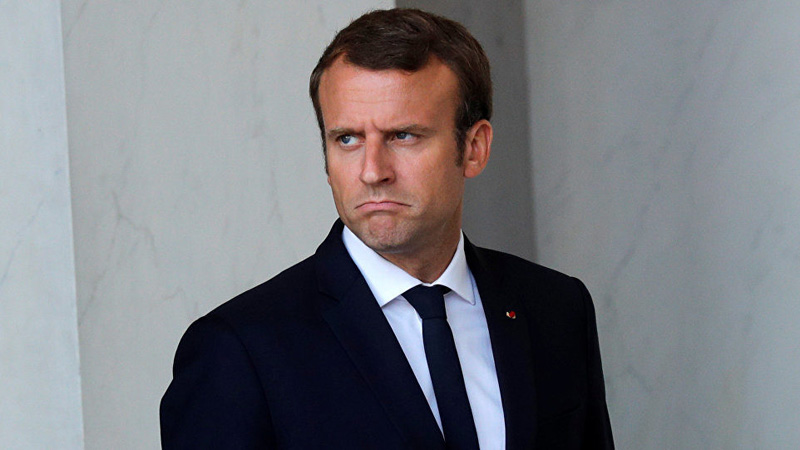
French President Emmanuel Macron announced on Sunday that France will withdraw its military presence from Niger and recall its ambassador.

This decision marks the end of a months-long standoff between the two nations, which was initially triggered by the July 26 coup that removed President Mohamed Bazoum from power.

The coup by the Niger military junta, which stirred global calls for action to end the menace of growing usurpation of power by the military in Africa, dealt a lasting blow to France’s legacy in Africa.

The coup has earned Niger several sanctions globally, with a threat of military intervention led by ECOWAS.

France has maintained a presence in its former colonies since their independence, exerting much political influence over them. Its African policy has been described as subjugative, as it controls a significant percent of the countries’ resources – including their currency CFA franc.

Recently, a new pan-African emotionalism appears to be driving apathy toward France’s presence in Africa, particularly, in the territories of its former colonies. This, besides corruption and bad leadership, is believed to have fueled the prevalence of coups across Francophone Africa. All the leaders removed in coups in Francophone Africa are believed to be backed by France.

France has in recent years withdrawn its forces from Mali and Burkina Faso due to coups in those countries. However, following the Niger coup, which saw Major Gen. Abdourahamane Tchiani assume power as the head of state, the European powerhouse has refused to withdraw its troops, despite an order to that effect from the junta.

However, Macron’s Sunday announcement is a sharp twist to his previous decision on Niger, where France has maintained about 1,500 troops ready to engage the junta. Macron had earlier defied the junta’s order to expel the French Ambassador, saying he did not recognize the coupists as legitimate and would only listen to constituted authority.

In August, the junta issued a 48-hour ultimatum to the French Ambassador, Sylvain Itte, demanding his departure. When France did not recall him within the specified deadline, the coup leaders took the step of revoking his diplomatic immunity.

The police were instructed to carry out his expulsion.

Also, the diplomatic cards and visas of the ambassador’s families were canceled, according to the communiqué sent by Niger’s Ministry of Foreign Affairs.

However, growing support for the junta by the Niger population calling for France to free their country has changed the dynamics.

Macron who recently expressed concern, revealing that diplomats were relying on military rations as they sought refuge in the embassy, said in an interview with the France-2 and TF1 television networks, that he spoke to Bazoum on Sunday and told him that “France has decided to bring back its ambassador, and in the coming hours our ambassador and several diplomats will return to France.”

“And we will put an end to our military cooperation with the Niger authorities because they don’t want to fight against terrorism anymore,” he added.

He said the troops would be gradually pulled out, likely by the end of the year, in coordination with the coup leaders because we want it to take place peacefully.

He explained that France’s military presence was in response to a request from Niger’s government at the time. That military cooperation between France and Niger had been suspended since the coup.

Niger’s junta said in response that the announcement signals a “new step towards the sovereignty” of the country.

“Imperialist and neo-colonialist forces are no longer welcome on our national territory. The new era of cooperation, based on mutual respect and sovereignty is already underway,” it said in a statement.

Insa Garba Saidou, a local activist who plays a role in assisting Niger’s new military authorities with their communication efforts, stated that they will maintain vigilance and closely observe the situation until the French ambassador departs from the country. Additionally, he has called for a specific and defined timeline for the withdrawal of French troops.

“This announcement from the French president announces the victory of the people of Niger. However, we are going to take it with a lot of reservation because I no longer believe in Mr. Macron,” said Saidou.

Is CZ Binance trying to play smart with SEC, as SBF’s parents say FTX’s claims are Completely False?

0

Binance, the world’s largest cryptocurrency exchange by trading volume, has been under scrutiny from regulators around the world for allegedly offering unlicensed securities and derivatives trading. The US Securities and Exchange Commission (SEC) is reportedly investigating whether Binance violated US laws by allowing Americans to trade on its platform without registering as a broker-dealer.

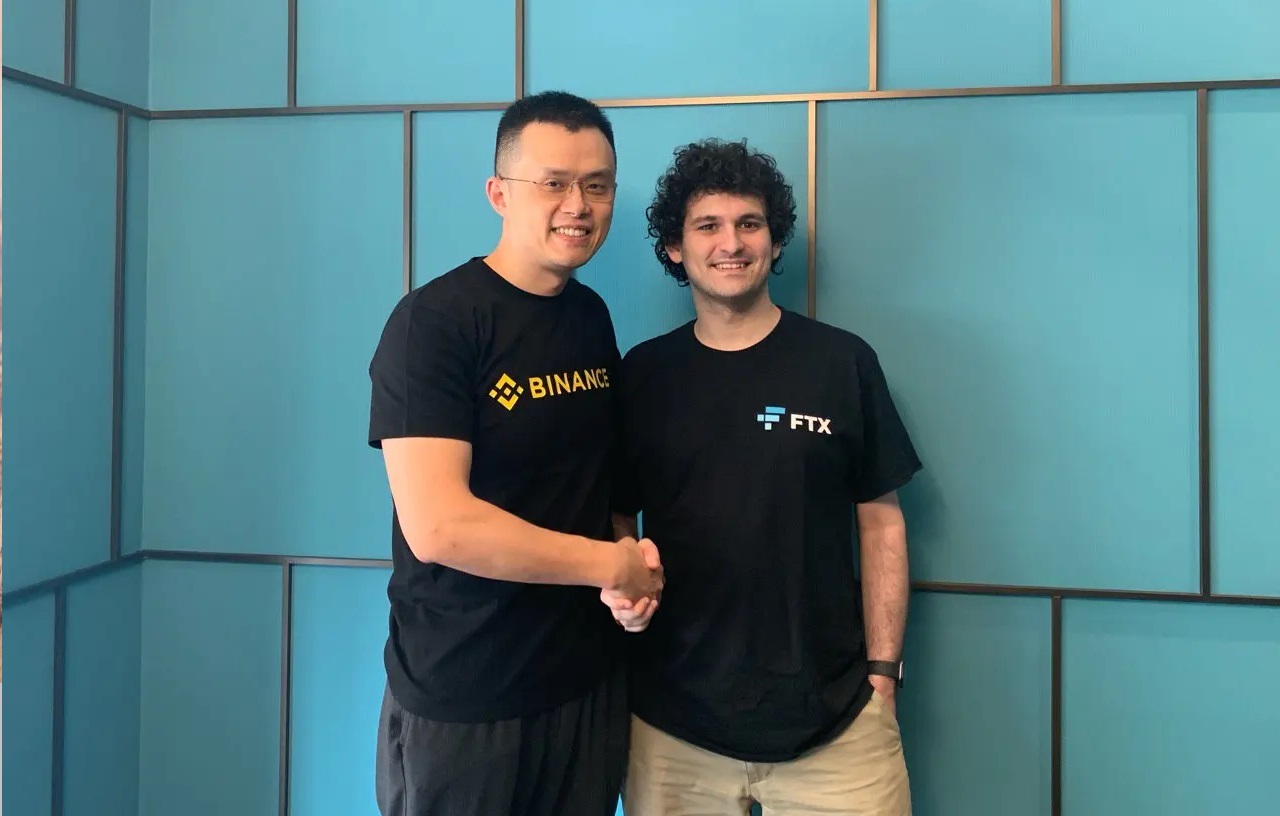
Binance CEO Changpeng Zhao has denied that the US arm of the crypto exchange used a Cayman Islands-based entity that was recently accused by the SEC of illegally offering securities. In a blog post published recently, Zhao said that Binance.US, which is operated by BAM Trading Services, has never used Binance Holdings Limited, the entity that received a Wells notice from the SEC last week.

A Wells notice is a formal notification from the SEC that it intends to bring an enforcement action against a company or individual for violating securities laws. Zhao said that Binance Holdings Limited is a separate entity from Binance.US and has no direct or indirect ownership or control over BAM Trading Services. He also said that Binance Holdings Limited has never provided any services or products to Binance.US or its customers.

Binance’s founder and CEO, Changpeng Zhao (CZ), has repeatedly denied any wrongdoing and claimed that Binance operates in compliance with local laws and regulations wherever it does business. He has also said that Binance does not have a headquarters or a single legal entity, but rather a decentralized network of affiliates and partners.

However, some experts and analysts have questioned CZ’s claims and suggested that he is trying to evade regulatory oversight and accountability by playing smart with his words and actions. They point out that Binance has a clear corporate structure, with entities registered in various jurisdictions such as the Cayman Islands, Singapore, Malta, and the UK. They also argue that Binance’s decentralized model does not exempt it from complying with the rules of the markets where it operates or serves customers.

For instance, Binance recently announced that it would stop offering derivatives trading to users in Hong Kong, following a similar move in Germany, Italy, and the Netherlands. However, some observers noted that Binance did not actually ban Hong Kong users from accessing its derivatives platform, but rather asked them to close their positions within 90 days. This means that Binance could still earn fees from existing derivatives contracts until they expire or are closed.

Another example is Binance’s decision to launch a new platform called Binance.US, which is operated by a separate entity called BAM Trading Services Inc., based in San Francisco. Binance.US claims to be fully compliant with US laws and regulations and has registered as a money services business with the Financial Crimes Enforcement Network (FinCEN). However, some reports have suggested that Binance.US is not independent from Binance, but rather a subsidiary or an affiliate of the parent company. They cite evidence such as the use of the same brand name, logo, website design, and customer support channels.

Furthermore, some critics have accused CZ of being dishonest or misleading about his involvement with Binance.US. They point out that CZ has publicly stated that he has no direct role or influence over Binance.US but has also admitted that he provides “advice” and “guidance” to its CEO, Brian Brooks, who is a former acting head of the Office of the Comptroller of the Currency (OCC). They also note that CZ has access to the data and analytics of Binance.US, which could give him an unfair advantage over other competitors in the US market.

Zhao claimed that the SEC’s allegations are based on a misunderstanding of the relationship between Binance and Binance.US, and that the exchange is willing to cooperate with the regulator to resolve the issue. He added that Binance.US is fully compliant with all US laws and regulations, and that it has robust anti-money laundering and compliance programs in place.

CZ Binance seems to be trying to play smart on sec allegations by adopting a decentralized and ambiguous approach to its business operations and governance. However, this strategy may not be enough to avoid regulatory scrutiny and enforcement actions from authorities around the world who are concerned about the potential risks and harms of unregulated crypto activities. CZ may need to rethink his stance and cooperate more transparently and proactively with regulators if he wants to preserve his reputation and credibility as a leader in the crypto industry.

Zhao said that Binance.US is committed to providing a safe and secure platform for its users, and that it will continue to offer innovative products and services to the US market.

SBF’s parents say FTX’s claims are Completely False

In a recent development in the ongoing lawsuit between FTX and the family of Samuel Bankman-Fried (SBF), the legal representatives of SBF’s parents have issued a statement denying FTX’s allegations that they were involved in a scheme to defraud the crypto exchange.

FTX had accused SBF’s parents of conspiring with their son to transfer millions of dollars’ worth of FTX tokens to offshore accounts, in violation of the terms and conditions of the exchange. FTX had also claimed that SBF’s parents had used their influence and connections to pressure regulators and media outlets to launch investigations and negative campaigns against FTX, in an attempt to damage its reputation and market share.

The statement from SBF’s parents’ lawyers reads as follows:

“We are appalled by the baseless and malicious accusations that FTX has made against our clients, who are respectable and law-abiding citizens with no involvement whatsoever in the crypto industry. FTX’s claims are completely false and fabricated and are part of a desperate and unethical strategy to divert attention from its own wrongdoing and legal troubles’’.

“This is a dangerous attempt to intimidate Joe and Barbara and undermine the jury process just days before their child’s trial begins. These claims are completely false,” Sean Hecker, counsel to Joe Bankman, and Michael Tremonte, counsel for Barbara Fried.

Our clients have never conspired with their son or anyone else to defraud FTX or any other entity, nor have they ever used their influence or connections to interfere with FTX’s operations or regulatory compliance. These allegations are nothing but slander and defamation, and we will vigorously defend our clients’ rights and reputation in court. We demand that FTX retract its false statements and apologize to our clients immediately or face the full consequences of its actions.”

The lawsuit between FTX and the family of Samuel Bankman-Fried (SBF) is a legal dispute over the ownership and control of FTX tokens, which are the native currency of the crypto exchange. FTX claims that SBF, who is the founder and CEO of FTX, had breached his fiduciary duty and contract with the exchange by secretly transferring millions of dollars’ worth of FTX tokens to his parents and other associates, who then moved them to offshore accounts.

The filing claims Bankman lobbied his son to increase his salary from $200,000 a year to $1 million a year, invoking his mother to push this forward. The couple received a $16.4 million property in the Bahamas, paid using funds from FTX, the filing adds — as well as donations to Stanford, an appearance in a Super Bowl commercial and a Persian rug that cost more than $2,500.

FTX alleges that this was done to avoid taxes, regulations, and accountability, and to gain an unfair advantage over other FTX token holders. FTX is seeking to recover the tokens and damages from SBF and his family.

Top 10 Countries Adopting Cryptocurrency, USA not #1

1

Cryptocurrency is a digital form of money that is decentralized, secure and transparent. It can be used for various purposes, such as online payments, remittances, investments and more. Cryptocurrency adoption is the measure of how widely and easily people can access and use this innovative technology in their daily lives.

In this blog post, we will rank the top 10 countries that are leading the way in cryptocurrency adoption, based on factors such as the number of crypto users, the volume of crypto transactions, the availability of crypto services and the regulatory environment. We will also explain why the USA, despite being a global superpower and a hub of innovation, is not number one on this list.

10. South Korea

South Korea is one of the most technologically advanced and internet-savvy countries in the world, with a high penetration of smartphones and broadband. It is also home to some of the largest and most active crypto exchanges, such as Bithumb, Upbit and Coinone. According to a survey by Finder, 30% of South Koreans have invested in cryptocurrency, making it the country with the highest percentage of crypto investors in the world. South Korea also has a supportive regulatory framework for crypto, allowing licensed exchanges to operate legally and offering tax incentives for blockchain companies.

9. Japan

Japan is another Asian country that has embraced cryptocurrency with enthusiasm. It was the first country to recognize Bitcoin as a legal form of payment in 2017, and it has since established a comprehensive set of rules and standards for crypto businesses to ensure consumer protection and compliance. Japan also has a large and active crypto community, with over 3.5 million crypto users and over 20% of global Bitcoin transactions. Japan is also the birthplace of some of the most influential crypto projects, such as Bitcoin itself (allegedly created by the mysterious Satoshi Nakamoto), Cardano (founded by Charles Hoskinson) and Monacoin (a popular meme coin).

8. Switzerland

Switzerland is known for its tradition of banking secrecy, financial stability and innovation. It is also one of the most crypto-friendly countries in Europe, offering a favorable tax regime, a supportive legal system and a vibrant ecosystem of crypto startups and organizations. Switzerland hosts the Crypto Valley, a cluster of over 900 crypto companies and institutions located in the canton of Zug, which is dubbed as the “Silicon Valley of Crypto”. Switzerland also boasts some of the most progressive crypto initiatives in the world, such as the Swiss National Bank’s pilot project to test a digital version of the Swiss franc, and the city of Zug’s e-voting system based on blockchain.

7. Singapore

Singapore is a small but wealthy city-state that has established itself as a global hub of finance, trade and innovation. It is also one of the most crypto-friendly countries in Asia, offering a clear and flexible regulatory framework for crypto businesses, a low-tax regime and a strong support for blockchain development. Singapore has attracted some of the biggest names in the crypto industry, such as Binance (the world’s largest crypto exchange), Huobi (a leading crypto platform) and Bitmain (a major crypto mining company). Singapore also has a high level of crypto adoption among its population, with over 20% of Singaporeans owning some form of cryptocurrency.

6. United Kingdom

The United Kingdom is one of the most influential and developed countries in the world, with a strong economy, a diverse culture and a leading role in global affairs. It is also one of the most crypto-friendly countries in Europe, offering a balanced and pragmatic approach to crypto regulation, a supportive environment for crypto innovation and a high level of crypto awareness and usage among its citizens. The UK has over 8 million crypto users, making it the country with the highest number of crypto users in Europe. The UK also hosts some of

the most prominent crypto companies and organizations, such as Coinbase (a leading crypto exchange), Blockchain.com (a popular crypto wallet) and CryptoUK (a self-regulatory trade body for the UK crypto industry).

5. Germany

Germany is the largest and most powerful economy in Europe, with a reputation for excellence in engineering, manufacturing and innovation. It is also one of the most progressive and open-minded countries in terms of cryptocurrency adoption, offering a legal recognition for Bitcoin as a form of private money, a tax exemption for long-term crypto holders and a robust framework for security token offerings (STOs). Germany also has a large and active crypto community, with over 4 million crypto users and over 40% of Germans expressing interest or curiosity about cryptocurrency.

4. Turkey

Turkey is a transcontinental country that bridges Europe and Asia, with a rich history, a diverse culture and a dynamic economy. It is also one of the most enthusiastic adopters of cryptocurrency in the world, with over 16% of Turks owning some form of digital currency. Turkey has seen a surge in crypto usage in recent years, as a result of its volatile currency, high inflation and strict capital controls. Turkey also has a growing crypto industry, with several local exchanges, such as BTCTurk, Paribu and BtcTurk, and blockchain projects, such as BiLira (a Turkish lira-backed stablecoin) and Colendi (a decentralized credit scoring platform).

3. Nigeria

Nigeria is the most populous and the largest economy in Africa, with a young and entrepreneurial population. It is also one of the most active and innovative countries in the crypto space, with over 1.1 million crypto users and over $400 million worth of crypto transactions in 2020. Nigeria has embraced cryptocurrency as a means of financial inclusion, empowerment and opportunity, especially for its large unbanked and underbanked population. Nigeria also has a vibrant crypto ecosystem, with several local exchanges, such as Quidax, BuyCoins and Luno, and blockchain projects, such as Bundle (a social payments app) and Kudi (a digital banking platform).

2. China

China is the world’s most populous and the second-largest economy, with a dominant role in global trade, manufacturing and technology. It is also one of the most influential and controversial countries in the crypto sphere, with over 7 million crypto users and over 60% of global Bitcoin mining power. China has a complex and ambivalent relationship with cryptocurrency, as it has banned crypto exchanges and initial coin offerings (ICOs) since 2017, but it has also embraced blockchain technology and launched its own digital currency, the digital yuan. China also has some of the most innovative and successful crypto projects in the world, such as NEO (a smart contract platform), VeChain (a supply chain management platform) and Binance Smart Chain (a decentralized application platform).

1. El Salvador

El Salvador is a small Central American country that has made history by becoming the first country in the world to adopt Bitcoin as legal tender. This means that Bitcoin can be used as a medium of exchange, a unit of account and a store of value in El Salvador, alongside the US dollar. El Salvador’s president, Nayib Bukele, announced this bold move in June 2021, as a way to boost the country’s economy, attract foreign investment and provide financial access to millions of Salvadorans who lack bank accounts or remittance services. El Salvador also plans to use its abundant geothermal energy to power Bitcoin mining operations using volcanoes.

Why is the USA not number one?

The USA is undoubtedly one of the most important and influential countries in the world, with a strong economy, a powerful military and a leading role in politics, culture and innovation. It is also one of the pioneers and leaders in the crypto industry, with over 40 million crypto users and some of the most renowned crypto companies and organizations, such as Coinbase (the first crypto company to go public), MicroStrategy (the first publicly traded company to hold Bitcoin on its balance sheet) and the Bitcoin Foundation (the oldest non-profit organization dedicated to promoting Bitcoin).

However, the USA is not number one on this list for several reasons. First, the USA has a low level of crypto adoption relative to its population size and economic power. According to a report by Chainalysis, the USA ranks only 8th in terms of global crypto adoption index, behind countries such as Vietnam, India and Pakistan. Second, the USA has a complex and uncertain regulatory environment for crypto, with different federal agencies having different views and approaches to crypto regulation.

For instance, the Securities and Exchange Commission (SEC) considers most cryptocurrencies as securities subject to its oversight, while the Commodity Futures Trading Commission (CFTC) considers them as commodities subject to its jurisdiction. Third, the USA faces increasing competition from other countries that are more proactive and supportive of crypto innovation and adoption, such as China, Switzerland and El Salvador.

Atiku’s Spokesman Unveils 10 ‘Big Lies’ of Tinubu’s Nigerian Presidency

0

Phrank Shaibu, who serves as the Special Assistant on Public Communication to former Vice President Atiku Abubakar, has revealed ten significant falsehoods that he believes define the administration of Bola Tinubu so far.

This is coming days after the presidency’s false claim that Tinubu is the first African President to ring the NASDAQ bell stirred backlash, forcing them to issue a corrigendum.

In a statement over the weekend, Phrank Shaibu asserted that the recurrent falsehoods were clear evidence that Bola Tinubu’s primary strategy was to employ propaganda to mislead Nigerians, rather than engaging in effective governance to rescue citizens from the prolonged period of poor governance experienced over the past eight years, along with the additional 117 days of the All Progressives Congress (APC) administration.

Phrank Shaibu, an aide to Atiku, cautioned Nigerians not to be swayed by the apology issued by Chief Ajuri Ngelale, the Special Adviser to the President on Media and Publicity, and other members of Tinubu’s team. He suggested that their apologies were prompted by exposure rather than genuine remorse.

Shaibu highlighted the fact that Tinubu had more media aides than economic and security advisers, which he believed was indicative of a policy reliant on propaganda within his administration.

He described the situation as “the height of deception and wickedness,” warning Nigerians to be deceived.

These are the 10 lies of the Tinubu regime I have compiled so far:

1. The first lie that was told by Bola Tinubu was in his inaugural speech, where he stated that the petrol subsidy was gone. With oil prices now at $94 per barrel and the naira exchanging at N1,000/$1, the price of diesel has risen to about N1,000 per liter while petrol remains at about N620 per liter. It is obvious to the discerning mind that petrol is now being subsidized, a position which all oil marketers have espoused. Nigerians should not be deceived. Tinubu’s claim that there is no subsidy is a lie from the pit of hell, and the fact that they are even hiding the information means there is no transparency, and the money is probably being stolen again.

2. The second lie told by these charlatans was that the United Arab Emirates had lifted the visa ban on Nigerians immediately and that all Nigerians were free to visit Dubai. This lie was well celebrated by many undiscerning Nigerians whose only crime was to believe the deceptive words of an illegitimate government. UAE authorities later confirmed to CNN that it was all a lie. What a national embarrassment!

3. A third lie told by this deceptive government is that Tinubu was the first African President to ring the NASDAQ bell. It has since been established that Malawian President, Jakaya Kikwete, rang the bell on September 21, 2011.

4. Another lie was a statement issued by Ajuri Ngelale on August 27, 2023, where US Presidential Envoy and Assistant Secretary of State for African Affairs, Ambassador Molly Phee, was quoted as saying, “President Joe Biden is asking to meet with you on the sidelines of UNGA and you are the only African leader he has requested to meet. It is a mark of his high regard for your leadership.” Well, this has turned out to be another embarrassing lie as Tinubu has departed UNGA and never met President Biden.

5. A fifth lie was a claim made by Tinubu on the floor of NASDAQ where he stated that “We have retooled the exchange rate to a reliable, dependable one figure floating of the naira. You are free to take in your money and bring out your money.” But this is another lie from the pit of hell. The exchange rate on the I&E Window is about N780/$1, while the rate at the parallel market is about N1,000/$1. Besides, foreign airlines still have over $600m in funds stuck in Nigeria. Tinubu, therefore, lied when he said “you are free to take in your money and bring out your money.”

6. On August 14, 2023, the Nigerian government said on its official Twitter handle that the Nigerian Air Force struck terrorists gathering at Kurebe in Shiroro LGA in Niger State. The government claimed that the terrorists were neutralized. Well, Premium Times has now revealed in its latest report that this is nothing but propaganda, as those who were killed were innocent civilians. Is it not tragic that the Bola Tinubu administration has now infected the military with its lies? Indeed, once the head of the fish is rotten, the body cannot escape corruption.

7. As part of Bola Tinubu’s propaganda programme, the Central Bank of Nigeria said on September 6, 2023, that within two weeks, it would inject $10 billion into the foreign exchange market to clear the FX backlog. Days after the deadline passed, not a single cent has been injected into the system as the naira continues its free fall. The institution that Tinubu’s leadership cannot destroy does not exist.

8. In his inaugural speech, Tinubu said, “As your President, I shall serve with prejudice towards none.” But this has turned out to be another bare-faced lie. Tinubu has been running a government of the clannish, by the clannish and for the clannish, with all key appointments in every sector going to a section of the country, including CBN, FIRS, customs, army, police, and immigration while he himself is the petroleum and gas minister. Tinubu appointed 10 ministers from the southwest and only five from the southeast. If this isn’t prejudice, I don’t know what it is.

9. Last month, the Nigerian National Petroleum Company Limited claimed they had obtained an Afrexim loan of $3bn, which would help stabilize the naira. We raised the alarm that it was all a ruse to deceive Nigerians. Now, we have been justified as the naira is now trading at $1/N1,000 on the black market, while Afrexim Bank has refused to speak on it. This was just audio money.

10. Perhaps the biggest scam and deceit of the Tinubu administration was the Student Loan Act, which he signed on June 12. The new law provides loans for students’ tuition only. It doesn’t cover any other educational expenses. After the law was signed, all federal government schools began increasing school fees. But Dele Alake, the Special Adviser on Media as he then was, said in a statement that tuition in all government schools remains free and that the only fees that were increased were accommodation, laboratory, library, and other costs. So if tuition is free and the Student Loan Act covers only tuition fees, that means the Student Loan Act is pointless, and no money will be released. In essence, Tinubu’s government has prodded government schools to increase fees while no loans will be given to the students. This is the height of deception and wickedness.

Signed:
Phrank Shaibu
Special Assistant (Communication) to Atiku Abubakar
September 24, 2023