DD
MM
YYYY

PAGES

DD
MM
YYYY

spot_img

PAGES

Home Blog Page 3776

CZ, Binance-US filed to dismiss SEC lawsuit against its Exchanges

0

Binance is the world’s largest cryptocurrency exchange by trading volume, offering hundreds of digital assets and derivatives to millions of users around the globe. However, the exchange has also faced increasing regulatory scrutiny in recent months, as authorities in several countries have accused it of operating without proper licenses, facilitating money laundering, and violating securities laws.

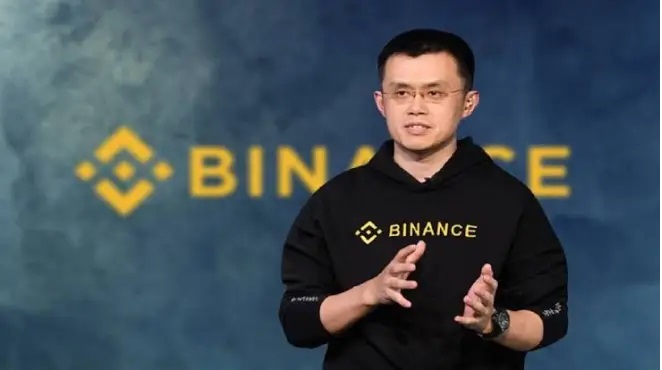
The cryptocurrency exchange Binance, its U.S. affiliate Binance.US and its founder and CEO Changpeng Zhao (CZ) have filed a motion to dismiss a lawsuit brought by the U.S. Securities and Exchange Commission (SEC) in New York.

One of the most prominent regulators that has taken action against Binance is the U.S. Securities and Exchange Commission (SEC), which has been investigating the exchange for potential violations of federal securities laws. The SEC has not publicly disclosed the details of its probe, but some of the possible issues that it may be looking into are:

Binance’s offering of tokens that may be considered securities, such as stock tokens that track the performance of publicly traded companies, or tokens that represent fractional shares of other cryptocurrencies.

Binance’s handling of customer funds and data, especially in relation to its U.S. subsidiary, Binance.US, which operates under a different legal entity and regulatory framework than the parent company.

Binance’s involvement in market manipulation, insider trading, or other fraudulent activities, such as the recent hack of Poly Network, a decentralized finance (DeFi) platform that resulted in the theft of over $600 million worth of crypto assets, some of which were traced back to Binance accounts.

The lawsuit, which was filed in April 2023, alleges that Binance and CZ violated the federal securities laws by offering and selling unregistered securities in the form of digital tokens on their platforms. The SEC claims that Binance and CZ failed to register or seek an exemption for their offerings, which involved more than 50 different tokens, some of which were deemed to be securities by the SEC.

Binance and CZ argue that the lawsuit should be dismissed for several reasons, including:

The SEC lacks jurisdiction over Binance and CZ, who are not U.S. persons and do not operate in the U.S.

The SEC fails to allege any specific facts that show that Binance and CZ offered or sold any securities in the U.S. or to U.S. investors.

The SEC fails to identify any specific tokens that are securities or explain how they meet the criteria of the Howey test, which is used to determine whether an asset is a security.

The SEC fails to allege any scienter or intent to defraud on the part of Binance and CZ, which is required for a securities fraud claim.

The SEC’s claims are barred by the statute of limitations, as most of the alleged conduct occurred more than five years before the lawsuit was filed.

Binance and CZ also contend that the lawsuit is part of the SEC’s “regulation by enforcement” strategy, which creates uncertainty and confusion in the crypto industry and harms innovation and growth. They assert that the SEC has not provided clear and consistent guidance on how it applies the securities laws to digital assets, and instead relies on retroactive enforcement actions that are based on vague and subjective standards.

Binance and CZ request that the court grant their motion to dismiss the lawsuit with prejudice, meaning that it cannot be refiled. They also seek an award of their attorneys’ fees and costs. The motion to dismiss is expected to be heard by Judge Alison J. Nathan in the coming months. The outcome of this case could have significant implications for the crypto industry, as it could set a precedent for how the SEC regulates digital assets and exchanges in the U.S.

The SEC has not yet filed any formal charges or taken any enforcement actions against Binance or its US affiliate, but it has reportedly issued subpoenas and requests for information to the exchange and its affiliates. The SEC has also warned investors about the risks of trading on unregistered platforms that may not comply with U.S. securities laws.

Sometimes you just fight as delay is also a strategy looking at how Intel’s case has played out over years.

A years-old antitrust case against Intel may be drawing to a close, at least in part. European regulators are re-fining the chipmaker $400 million over allegations it paid retailers and computer makers to “delay, cancel or simply not sell” products containing chips from rival AMD between 2002 and 2006. Intel was penalized over $1 billion after a 2009 ruling, but that fine was scrapped when one part of the case was annulled. The development comes as both EU and U.S. regulators flex their muscles in high-profile antitrust cases, including a landmark trial on Google’s search dominance. Another facet of the case alleging that Intel “gave hidden rebates and incentives” to computer manufacturers to use its chips remains under appeal.
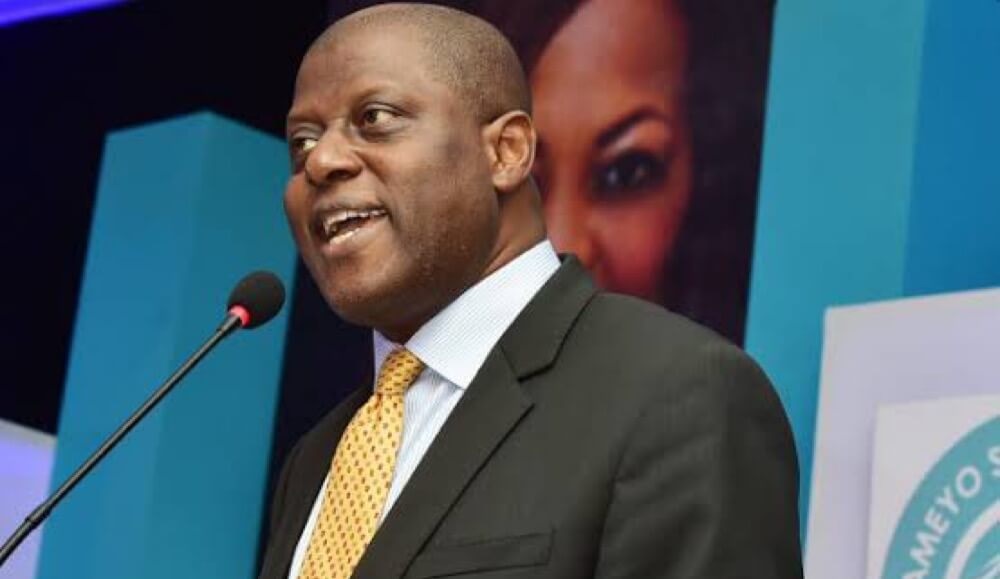

New Central Bank of Nigeria Governor Yemi Cardoso, Four Deputies Assume Office

0

Olayemi Cardoso has officially assumed office as the new Governor of the Central Bank of Nigeria (CBN), along with four new Deputy Governors: Nnana Usoro, Muhammad Abdullahi Dattijo, Philip Ikeazor, and Bala Bello. They have all taken over their roles in an acting capacity, pending confirmation by the Senate, according to a statement from the CBN.

The announcement comes on the heels of the forex crisis currently rocking the country, which requires utmost fiscal policies from the central bank to address.

Cardoso is to replace Folashodun Shonubi, who has been serving as the CBN governor in an acting capacity.

President Bola Ahmed Tinubu nominated Cardoso to serve as the acting Governor of the CBN, along with the four new Deputy Governors, on September 22, 2023. Cardoso’s nomination came after the suspension of Godwin Emefiele from office approximately three months before the announcement.

The Cardoso-led team has assumed leadership of the central bank following the resignations of Godwin Emefiele, Shonubu, and the other deputy governors, as confirmed by the CBN in its statement issued on Friday.

“Dr. Olayemi Michael Cardoso, recently nominated by President Bola Ahmed Tinubu, has on Friday, September 22, 2023, formally assumed duty, in an acting capacity, as the Governor of the Central Bank of Nigeria (CBN), pending his confirmation by the Senate. This follows the resignation of Mr. Godwin Emefiele as Governor of the Central Bank of Nigeria (CBN),” the statement said.

“Deputy-Governors-Designate have also assumed duty, in acting capacities, sequel to the formal resignation of Mr Folashodun Shonubi, Mrs Aishah Ahmad, Mr Edward Lametek Adamu, and Dr Kingsley Obiora as Deputy Governors of the CBN,” it added.

Olayemi Cardoso and the other new appointees officially assumed their roles after taking the relevant oaths of office in a brief ceremony held at the CBN’s Head Office in Abuja on Friday, September 2023. They have now begun their responsibilities related to administering monetary and financial sector policies for the Federal Government, as stated in the CBN’s announcement.

The wait for the confirmation of the newly-appointed CBN governor, Cardoso, and his deputies has been linked to the abysmal performance of the naira in the parallel market this week. The gap in decision-making that it created is believed to have impacted the CBN’s supply to the FX market, opening an N217 exchange rate gap between the parallel market and the I&E window. The naira was trading at N955/$1 in the parallel market, and N738/$1 in the Investor & Exporter window on Friday.

Following their assumption, the governor and his deputies are expected to tackle the FX crisis head-on. Although the Finance Minister, Wale Edun, said to boost FX liquidity, Nigeria needs to clear the $6.8 billion in overdue forward payments in the foreign exchange market, sound monetary and financial sector policies by the CBN are expected to ameliorate the situation.

SEC, Blockchain Capital, Digital Currency Group, Anchorage Digital, Toncoin and More

0

The U.S. Securities and Exchange Commission (SEC) has expressed a strong interest in examining Binance.US, the American affiliate of the global cryptocurrency exchange Binance. The regulator is concerned about the safety and security of the digital assets that Binance.US holds on behalf of its customers, as well as the compliance of its trading platform with the federal securities laws. The SEC has requested access to Binance.US’s books and records, as well as information about its internal controls, governance, and risk management practices.

Blockchain Capital, one of the oldest and most prominent venture capital firms in the crypto industry, has announced the closing of two new funds with a total of $580 million in capital commitments. The firm, which was founded in 2013 and has backed some of the most successful projects and companies in the blockchain space, said that the new funds will enable it to continue investing in both early-stage and growth-stage opportunities across the crypto ecosystem.

The two funds are Blockchain Capital VI, a $300 million fund focused on seed and Series A rounds, and Blockchain Capital Growth Fund I, a $280 million fund dedicated to later-stage investments. According to the firm, the new funds were oversubscribed and attracted a diverse group of investors, including pension funds, endowments, foundations, family offices, corporations, and high-net-worth individuals.

Blockchain Capital also said that it has expanded its team and added new strategic partners to support its portfolio companies and enhance its network. The firm’s co-founder and managing partner, Bart Stephens, said that the crypto industry is at an inflection point, with more innovation and adoption than ever before. He added that Blockchain Capital is well-positioned to capitalize on this trend and help shape the future of finance, technology, and society.

“We are incredibly honored to welcome such a distinguished group of investors into our new funds,” Stephens said in a press release. “We believe that we are in the early stages of a multi-decade adoption cycle for digital assets and blockchain technology. Our mission is to support the best entrepreneurs in the world who are building this new and exciting digital economy.”

Digital Currency Group (DCG), a global blockchain and cryptocurrency investment leader, has appointed Professor Tonya Evans as a new independent director. Professor Evans is an expert in blockchain law and policy, digital assets and intellectual property. She is also the founder and CEO of Advantage Evans Academy, an online education platform for blockchain literacy and crypto asset management.

Professor Evans has over 20 years of experience as a lawyer, scholar, educator and entrepreneur. She teaches blockchain, crypto and fintech courses at Penn State Dickinson Law School. She also chairs the Maker Foundation’s MakerDAO Law and Policy Working Group and advises several blockchain startups and organizations.

“Professor Evans is a visionary leader in the blockchain space, with deep legal and regulatory insights. Her perspective and guidance will be invaluable as we grow our portfolio of companies and initiatives across the globe,” said Barry Silbert, founder and CEO of DCG.

“I am honored and excited to join DCG’s board of directors. DCG is at the forefront of innovation and adoption in the blockchain and cryptocurrency sector. I look forward to working with Barry and the board to advance DCG’s mission of a better financial system for everyone,” said Professor Evans.

Anchorage Digital, a leading crypto custody and staking platform, saw a significant increase in the demand for Ether staking services in 2023, according to its co-founder and president, Diogo Monica. In an interview with Bloomberg, Monica revealed that the amount of Ether staked on Anchorage’s platform quadrupled in the past year, reaching over $40 billion worth of the second-largest cryptocurrency. Monica attributed the growth to the launch of Ethereum 2.0, a major upgrade that aims to transition the network from a proof-of-work to a proof-of-stake consensus mechanism.

By staking Ether, users can earn rewards for securing the network and validating transactions. Monica said that Anchorage’s clients, which include institutional investors, hedge funds, and corporations, are attracted by the high returns and low volatility of staking Ether compared to other crypto assets. He also said that Anchorage’s platform offers a unique advantage of allowing users to stake Ether without locking it up for an indefinite period, as is the case with some other platforms. “We have a very innovative solution that allows our clients to stake their Ether and still have access to it for trading, lending, or any other use case they might have,” he said.

Toncoin, the cryptocurrency backed by the popular messaging app Telegram, has surged ahead of bitcoin in the latest crypto market rally. According to CoinMarketCap, Toncoin’s price increased by more than 50% in the past 24 hours, reaching a new all-time high of $2.34.

The spike came after Telegram’s founder and CEO Pavel Durov announced on his channel that Toncoin will be integrated into the app’s payment system, allowing users to send and receive Toncoins within chats. Durov also praised Toncoin’s speed, scalability and security, calling it “the future of digital money”. Bitcoin, meanwhile, lagged behind Toncoin, gaining only 10% in the same period and trading at around $27,266. Analysts attribute Toncoin’s dominance to its strong community support, innovative technology and growing adoption by mainstream platforms.

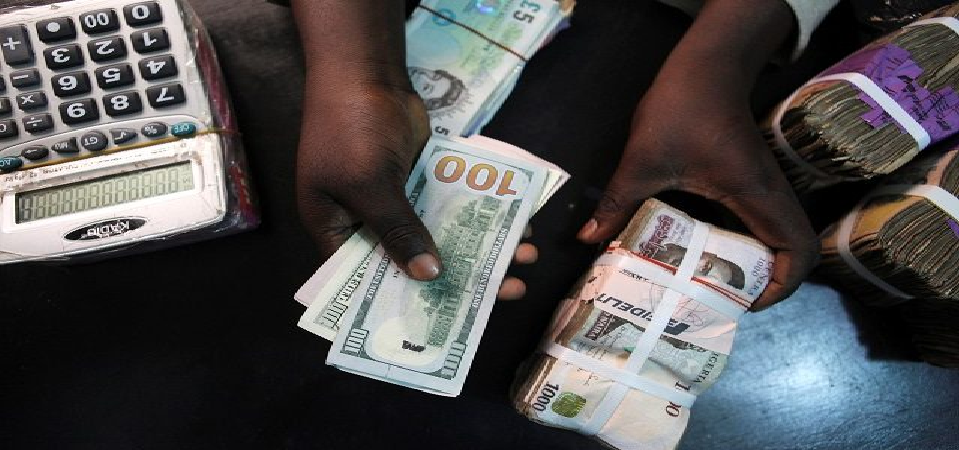
How Nigeria Lost The NAIRA

1
Nigeria Naira US Dollar

When you are majorly import-dependent, you lose your national-building capacity as a nation. Strategically and economically, Nigeria began to fade in 1983 when many institutional adjustments reshaped our manufacturing and production capabilities. By 1989, Nigeria died economically, with abysmal native ability to grow and advance endogenously. Yes, with SAP (structural adjustment programme), Nigeria lost its economic soul as we allowed the full vagaries of globalization to nip our indigenous industries. People, SAP sapped Nigeria and we have not recovered.

In Ovim (Abia State), the top five crops are yam, cassava, melon, maize and pumpkin. Take a look at the top 3 crops in your village. Then check the national agricultural policy. What you would notice is this: in more than 90% of communities in Nigeria, the national agricultural policy is not structured to help them. Rather, the policy is mainly designed to boost export-focused crops. So, you have cocoa, rubber, sesame seed, and all kinds of seeds no one uses in homes and kitchens in Nigeria.

But why do we do that? We have lost the ability to decide on what to farm since we have a bill to pay at the international market. In other words, because of the pressure of balance of trade and payment, our national policy is now tuned to earn US DOLLARS to settle those bills. As that becomes the order of the day, what Ovim farmers need becomes secondary, and what becomes the focus of the government is how to grow special seeds which can bring in dollars.

That mindset precipitates across our national economic strategy. Only the United States has the special printer to print US dollars; others have to earn the dollars. And to earn dollars, you need to produce things which people with US dollars need. They do not need pumpkin (ugu) and that means Nigeria does not care. And because Nigeria does not care, a vicious circle is triggered where those farmers never rise to advance, affecting the nation economically – and destroying the national currency, the Naira.

So, as Naira fades to N1,000/$, it will not stop there. Yes, there is nothing that can stop it going to N2,00/$ until you pay attention to local factories and warehouses (the modern and the old). Yes, you need to earn the dollars and also boost the local communities to produce what they need. Do those and we can dance as a nation.

Someone needs to reset Nigeria economically. Those local crops in Ovim, factories and warehouses (old and modern) in Aba, Kano, Ibadan, Uyo, etc are the variables.

Comment on Feed

Comment 1Nigerians erroneously attribute our failure to the structural adjustment programme. This is not so.

Upon decolonisation, several countries across Africa took caught thr fever of structuralism which had taken root in Latin America (especially Brazil and Argentina) and adopted ISI policies. We set up numerous state owned enterprises in a bid to find substitutes for import and there by create jobs and keep the naira strong….since it has been observed the the relationship which involved exchange of raw materials for finished products was unhealthy for the exporters of raw materials…prebisch singer thesis.

Nigeria as well several other countries in the southern hemisphere unfortunately went into industries that at that point didn’t match their factor endowment. There were no skilled hands to even on the textile factories that littered the country. These SOEs where doomed to fail for the inception since there was an obvious misalignment, and there has not been any deliberate attempt by succeeding governments to deliberately upgrade our endowment factor in line with targeted industries. SAP was a consequence of the failure of our structural policies. Those we borrowed money from had to recover their money since our industries had failed.

My Response“Nigerians erroneously attribute our failure to the structural adjustment programme” -I was waiting for you to support this but you did not.

“We set up numerous state owned enterprises” – that may not be true. Per capita, Nigeria was advancing in industrialization during colonization than post-colonization. From Unilever to First Bank, Flour Mills to Delta Steel Company, etc, Nigeria established indigenous great companies. There is a difference between having a fintech company and having the Aba Glass Industry or Kano textiles on FX,

The core impact of SAP was that it wiped out the real income of Nigerians as Naira depreciated. With that, everyone became poor. And because of that, investing in anything more than 90 days became risky. Magically, no one wanted to build industries or factories because those became risky. With that, entrepreneurial Nigerians moved into “banking” since factories are no-go areas. From GTBank to Zenith Bank to Access Bank – the new generation banks, most were born around 1989-1992 as it became a great business of trading to import since no one was making things. As that happened, the local industries collapsed. That was how SAP killed the economy and turned the nation into a trading economy where everyone is adding his 3% with none doing anything of value. It continues till today with fintech: receive N100k as a merchant, they take their 3% from it. Shekinah

Bluesky Records Surge in Daily Active Users, After Musk Disclosed Plan to Put X Behind Paywall

0
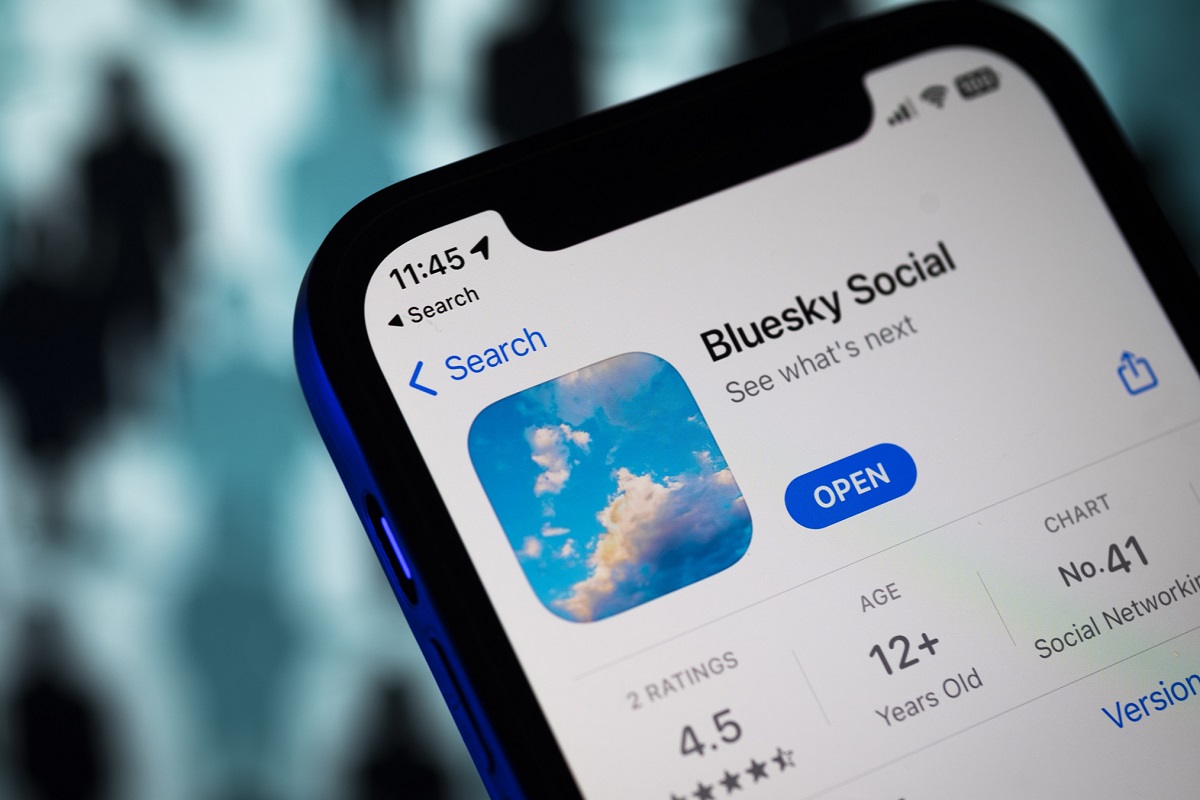
The Bluesky social media app logo is seen on a mobile device in this photo illustration in Warsaw, Poland on 21 April, 2023. Founder Jack Dorsey of twitter has released the Bluesky application on Android. (Photo by Jaap Arriens / Sipa USA)(Sipa via AP Images)

Jack Dorsey-backed social network Bluesky, recently recorded a surge in the number of active users after X CEO Elon Musk announced plans to charge users on the platform monthly.

Reports revealed that after Musk’s statement, Bluesky saw a record 53,585 total new sign-ups on Tuesday, September 19. The figure equates to 5% of the platform’s entire user base of roughly 1.13 million accounts.

Data from analytics firm Similarweb revealed that Bluesky’s Android app saw half a million daily active users on the day of Musk’s announcement on September 18, and its web traffic surged even higher.

On Android, the daily active users metric was up 20.6% from the day prior. Bluesky web app saw over 775,000 daily visitors, up 30% from the day prior.

Earlier this summer, Bluesky said in a post on the platform that it was dealing with record-high traffic, the same day Musk announced a temporary limit on the number of tweets X users can view.

The platform had to temporarily pause new sign-ups in response to the surge of interest.

It wrote,

“We will temporarily be pausing Bluesky sign-ups while our team continues to resolve the existing performance issues. We’ll keep you updated when invite codes will resume functionality.”

Recall that X owner Elon Musk four days ago, announced the idea of charging users a small amount monthly to use the service.

In a live-streamed conversation with Israeli Prime Minister Benjamin Netanyahu on Monday, Musk said the company was moving

to a small monthly payment for the use of the X system. He suggested that such a change would be necessary to deal with the problem of bots on the platform.

In his words,

It’s the only way I can think of to combat vast armies of bots. Because a bot costs a fraction of a penny call it a tenth of a penny but even if it has to pay a few dollars or something, the effective cost of bots is very high. Plus, every time a bot creator wanted to make another bot, they would need another new payment method”.

Reports reveal that because Bluesky has remained in invite-only mode, the surge in user usage this week could have been higher if it had opened the app for users to sign up.

According to Bluesky CEO Jay Graber, 1.2 million people were on the platform’s waitlist following Musk’s X takeover.

Originally launched by X (Formerly Twitter) co-founder Jack Dorsey, Bluesky has been touted as X’s replacement. The platform has on countless occasions benefitted from X challenges.

With the latest surge in active users after Musk floated the idea that the social network may no longer be a free site, Bluesky would likely record more usage in active users if X decides to charge users monthly.