DD
MM
YYYY

PAGES

DD
MM
YYYY

spot_img

PAGES

Home Blog Page 3779

Organizing Nigeria’s Informal Sector Across Sectors (Retail, Fashion, etc) is Growing Faster than Fintech

2

We began tracking this sector after it showed clearly on our radar that despite all the digitization playbooks, a big component of Nigeria remains outside the digital world. Yes, the Naira redesign showed that we have a lot of work ahead, just as the pandemic made it clear that our universities were not  networked and wired for the online age, despite all the promises.

Good People, retail B2B in Nigeria is doing really well.  As US dollars separate from the Naira with our deteriorating exchange rate, the makers’ cities like Aba and Kano are having moments. The data shows that most importers are now looking inwards to serve their markets. And companies working to formalize those markets are capturing massive value.

That tailor, that shoemaker, that bag-maker, and others offer huge latent opportunities which could be unlocked. Tekedia Capital is going to invest 100% of the round-funds by one of the players in this space in our next investment syndicate which begins on Monday. Led by bankers, but connecting shop by shop in Kano, Aba, etc, they’re growing at great percentages.

In this sector, you can decide to organize tailors, shoemakers, etc for a broad retail fashion sector. You can also focus on FMCGs and basic household needs. In other words, organizing these domains now that few can import due to exchange rate, is at the moment, growing faster than the average growth rates of fintech companies. Lagos shoe importers are now bulk-buying at Aba.

There are massive trade services available in the value chain and I expect massive growth in this sector, even if the Naira recovers. I do think  now that people cannot afford the Italian shoes, and are giving Aba a look, most will realize that Aba does make good shoes. The same is happening on suits, dresses, etc across the country with Kano and Ibadan showing on the antenna.

At Tekedia Capital, we’re investing, picking one of the leading firms, already being provided support by the Bank of Industry, which has unveiled a nice playbook. This startup’s numbers are outperforming the averages from the fintech space we are seeing.

Nigerian Senate Confirms Yemi Cardoso As Central Bank Governor

0

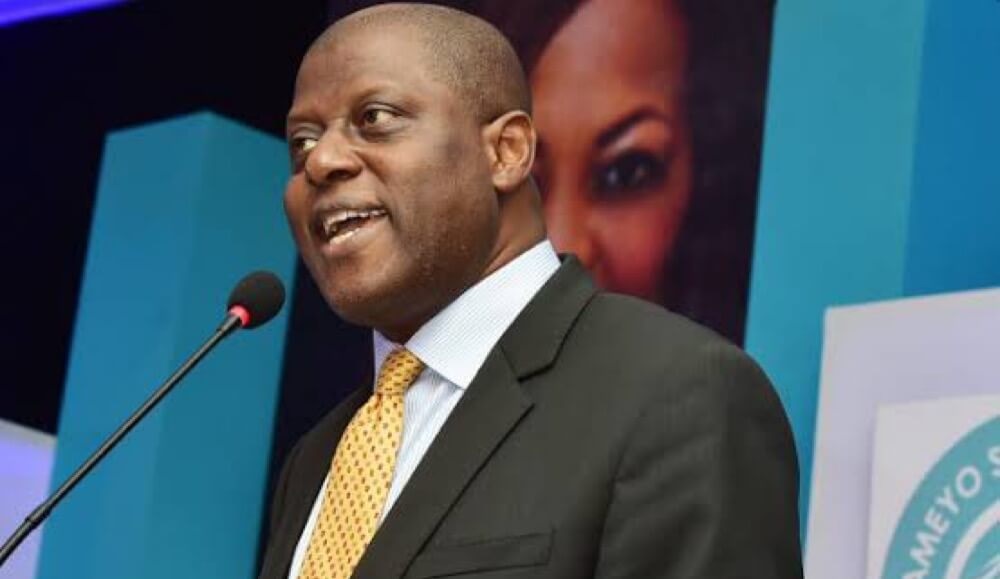
The Nigerian Senate has officially confirmed the appointment of Dr. Olayemi Michael Cardoso as the Governor of the Central Bank of Nigeria (CBN), along with his deputy governors, shortly after they assumed office.

The Senate’s confirmation on Tuesday also extended to the nominees for the deputy governorship positions, who are Mrs. Emem Nnana Usoro, Mr. Muhammad Sani Abdullahi Dattijo, Mr. Philip Ikeazor, and Dr. Bala M. Bello.

Last week, Cardoso and his four deputies assumed office amid Nigeria’s wildling forex crisis, which requires urgent monetary policies from the CBN to tame.

Following their screening, the President of the Senate Godswill Akpabio disclosed that the nominees had been confirmed.

“The nomination of Olayemi Cardoso is hereby confirmed as governor of the Central Bank of Nigeria (CBN),” Akpabio said.

Before their confirmation, the nominees had answered questions on matters related to economic and other policies. One of the questions put to Cardoso by Akpabio is if he would allow himself to be influenced and hijacked by politicians when he assumed office.

In response, the CBN governor said, “It is important that we, who are considered for this position today, understand that this is a position of trust.

“With that comes a huge responsibility to meet up with that trust. I know that a lot of time and effort has gone into choosing the people who are standing here for nomination today.

“As far as I am concerned, under my leadership, we will not be hijacked by anybody. The idea is to ensure that we do what is right, when it is right, and how it is right. We’ve seen what the effect of not doing right has been, and we do not intend for that to be repeated.”

He also promised to embrace compliance, assuring that under his leadership, the apex bank would remain apolitical.

“I believe that the Central Bank under our watch will have no choice but to embrace a culture of compliance,” he said.

“We will not wait for oversight to come and tell us what to do. We will ensure that by the time the system is passing through us, we catch it and we deal with it,” said Cardoso who promised zero tolerance for abuse of compliance.

“That is a cultural shift, a change in mindset, but we will make sure it happens,” the former Citibank Nigeria chairman assured.

The questions are believed to stem from the antecedents of his predecessor, Godwin Emefiele, who apart from meddling in politics, illegally printed N23 trillion loaned to the federal government through Ways and Means advances. The development violates the CBN Act which prohibits the apex bank from loaning more than 5% of the country’s previous year’s earnings to the federal government.

Economists said the loan is partly responsible for Nigeria’s rising inflation, which is at 26% as of August.

Emefiele is currently being prosecuted by the federal government for numerous offenses he committed while in office, including allowing himself to be influenced by former President Muhammadu Buhari to violate economic laws.

Cardoso promised not to tow Emefiele’s path, emphasizing that he would restore good corporate governance and a culture of compliance to the CBN, with an aim of achieving a $1 trillion GDP in 8 years.

South Korea’s city Set to Launch Crypto Exchange

0
The logo for Goldman Sachs is seen on the trading floor at the New York Stock Exchange (NYSE) in New York City, New York, U.S., November 17, 2021. REUTERS/Andrew Kelly/Files

The city of Busan, South Korea’s second-largest city and a major port, is preparing to launch a digital-assets exchange in November, according to local media reports. The exchange, which will be operated by the Busan Metropolitan Government and the Korea Asset Management Corporation (KAMCO), will allow trading of various digital assets, including cryptocurrencies, non-fungible tokens (NFTs), and digital securities.

South Korea is one of the most technologically advanced and digitally connected countries in the world, with a strong interest and enthusiasm for emerging technologies such as blockchain and digital assets. The country has a large and active digital asset market, with millions of users and billions of dollars in trading volume. However, the regulatory landscape for digital assets in South Korea is still evolving and facing some challenges.

The exchange is part of Busan’s efforts to become a leading hub for the digital economy, following its designation as a “regulation-free zone” for blockchain and fintech innovation in 2019 by the Ministry of Science and ICT, the Busan Metropolitan Government, and several private sector partners, with the support of the National Assembly. The city has also been developing various projects related to digital assets, such as a blockchain-based local currency, a digital art platform, and a smart city platform.

The exchange will be regulated by the Financial Services Commission (FSC), the country’s top financial regulator, which has recently tightened its oversight of the crypto industry. The exchange will have to comply with the FSC’s requirements for anti-money laundering, customer protection, and reporting. The exchange will also have to obtain an information security management system (ISMS) certification from the Korea Internet and Security Agency (KISA) before launching.

The project consists of two main components: a regulatory sandbox and a blockchain-based platform. The regulatory sandbox allows blockchain companies to test their products and services in a designated area of Busan, without being subject to existing regulations that may hinder their development. The sandbox covers various sectors, such as finance, tourism, logistics, public services, and healthcare.

The blockchain-based platform is a comprehensive system that integrates various blockchain applications and services for the benefit of the citizens and businesses of Busan. The platform aims to provide solutions for various challenges and needs, such as identity verification, digital asset management, smart contracts, data sharing, and social welfare.

The Busan Blockchain Project is expected to bring significant benefits to the city and the country, such as:

  • Enhancing the competitiveness and innovation of the local economy.
  • Attracting foreign investment and talent.
  • Creating new jobs and industries.
  • Improving the quality and efficiency of public services.
  • Increasing the transparency and trust of transactions.
  • Promoting social inclusion and participation.

The Busan Blockchain Project is not only a showcase of the potential of blockchain technology, but also a vision for the future of urban development. By leveraging the power of blockchain, Busan aims to become a smart city that is more connected, resilient, and sustainable.

The future of digital assets in South Korea depends largely on how the regulators and policymakers will address these issues and establish regulatory clarity and certainty for the industry. South Korea has the potential to be a leader in the region and globally in terms of adoption and regulation of digital assets, but it needs to adopt a clear taxonomy for digital assets aligned with global standards, balance innovation and risk management in the sector, and provide a supportive environment for VASPs and users.

The exchange is expected to attract both institutional and retail investors, as well as local businesses and startups that want to issue or trade digital assets. The exchange will also provide educational and consulting services for potential users and issuers of digital assets. The exchange aims to become a leading platform for the digital economy in Asia and beyond.

Essential raises $5.15M, As Orb Secures $2.3M in Seed Funding

0
Fund, money cash dollar

Essential, a startup that aims to simplify the deployment and management of cloud-native applications, announced today that it has raised $5.15 million in seed funding from a group of investors led by Accel. The company plans to use the new capital to expand its team, develop its product, and grow its customer base.

Essential’s core product is an intent-based infrastructure platform that allows developers to define their desired state of their applications and services using a declarative language, and then automatically orchestrates the necessary resources and configurations to achieve that state. The platform supports multiple cloud providers, such as AWS, Azure, and Google Cloud, as well as Kubernetes and serverless technologies.

According to Essential’s co-founder and CEO, the idea behind the platform is to abstract away the complexity and heterogeneity of the cloud infrastructure landscape and enable developers to focus on their business logic and user experience. “We believe that developers should not have to worry about the low-level details of how to provision, scale, secure, and monitor their applications. They should be able to express their intent in a simple and intuitive way, and let our platform handle the rest,” he said.

He added that Essential’s platform also provides benefits for operators and DevOps teams, who can leverage the platform’s built-in observability, governance, and compliance features to ensure the reliability, security, and performance of their applications. “Our platform gives operators full visibility and control over their infrastructure, while also empowering developers with self-service capabilities and faster feedback loops,” he said.

Orb, a web3 social app that leverages the Lens Protocol, has secured $2.3 million in a seed round led by Placeholder Ventures. Orb aims to create a decentralized platform for content creators and consumers, where they can monetize their interactions and own their data.

Lens Protocol is a framework for building web3 social apps that use peer-to-peer storage, encryption, and identity verification. Lens Protocol allows users to store their content on IPFS, encrypt it with their private keys, and verify their identity with social proofs. Lens Protocol also enables users to discover and connect with other users based on their interests and preferences.

Orb is one of the first applications built on top of Lens Protocol. Orb allows users to create and join communities, share and consume content, and earn and spend tokens. Orb also integrates with popular web3 protocols such as Ethereum, ENS, 3Box, and Uniswap. Orb’s vision is to empower users to create their own social networks, without intermediaries or censorship.

Orb’s founder and CEO said: “We believe that web3 is the future of the internet, where users have more freedom, privacy, and ownership. We are excited to partner with Placeholder Ventures, who share our vision and have deep expertise in the web3 space. With this funding, we will be able to accelerate our development and grow our community.”

Placeholder Ventures’ partner, Joel Monegro, said: “We are impressed by the team behind Orb and their vision for web3 social apps. We think that Lens Protocol is a powerful framework that can enable a new wave of decentralized social applications. We are thrilled to support Orb as they build one of the first and most promising examples of this new paradigm.”

Essential was founded in 2022 by and his co-founder and CTO, who both have extensive experience in cloud computing and software engineering. Smith was previously a senior engineer at Netflix, where he worked on the company’s cloud platform and infrastructure automation tools. Doe was a lead engineer at Google, where she contributed to several open-source projects related to Kubernetes and serverless computing.

The company has already attracted some early customers, including Acme Inc., a fintech startup that uses Essential’s platform to deploy and manage its microservices-based application across multiple cloud providers. “Essential has been a game-changer for us. It has significantly reduced our operational overhead and improved our agility and scalability. We can now launch new features faster and more reliably than ever before,” said, the founder and CEO of Acme Inc.

Essential’s seed round also included participation from several angel investors, such as Joe Schmo, a former executive at AWS; a former engineer at Facebook; and Bob Ross, a renowned painter and TV personality. The company is currently hiring for various roles in engineering, product, sales, and marketing.

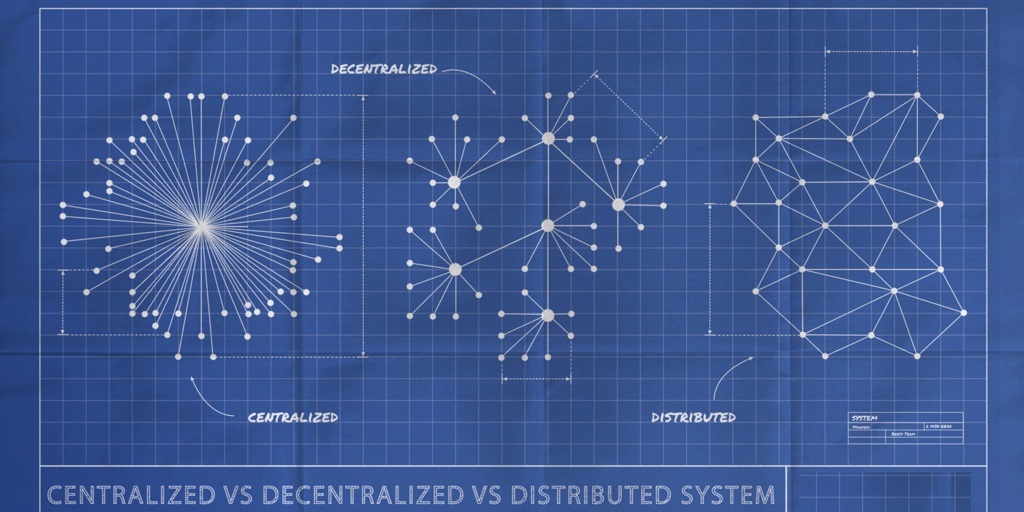
Lumerin to Launch Decentralized Bitcoin Hashpower Market on Arbitrum

0
The Bluesky social media app logo is seen on a mobile device in this photo illustration in Warsaw, Poland on 21 April, 2023. Founder Jack Dorsey of twitter has released the Bluesky application on Android. (Photo by Jaap Arriens / Sipa USA)(Sipa via AP Images)

Lumerin, a startup that aims to democratize access to Bitcoin mining, has announced that it will launch its decentralized hashpower market on Arbitrum, a layer-2 scaling solution for Ethereum. The market will allow anyone to buy and sell hashpower contracts, which are agreements to mine Bitcoin for a certain period of time and receive a share of the rewards.

Bitcoin hashpower market is a term that refers to the amount of computing power that is used to secure the Bitcoin network and process transactions. Hashpower is measured in hashes per second (H/s), which is the number of possible solutions to a cryptographic puzzle that miners have to solve in order to create new blocks and earn rewards.

Lumerin’s vision is to create a more inclusive and sustainable Bitcoin mining ecosystem, where anyone can participate without having to invest in expensive and energy-intensive hardware. By leveraging Arbitrum’s low-cost and high-throughput transactions, Lumerin hopes to offer a fast and secure way to trade hashpower on the blockchain.

Lumerin’s hashpower market will use a novel mechanism called Proof-of-Hashrate (PoH), which verifies the amount of hashpower delivered by the sellers and ensures fair payouts to the buyers. PoH works by requiring the sellers to submit proofs of their mining activity, such as block headers or Merkle proofs, to a smart contract on Arbitrum. The contract then validates the proofs and distributes the rewards according to the terms of the hashpower contract.

The hashpower market is influenced by various factors, such as the price of Bitcoin, the difficulty of mining, the availability and cost of electricity, the innovation and competition among mining hardware manufacturers, and the regulation and taxation of mining activities in different jurisdictions.

One way to measure the hashpower market is by looking at the total hash rate of the Bitcoin network, which indicates how much computing power is being used at any given time. According to Blockchain.com, the Bitcoin network’s hash rate reached an all-time high of 197.6 exahashes per second (EH/s) on October 23, 2021. This means that miners were collectively performing 197.6 quintillion (197.6 x 10^18) hashes per second.

Another way to measure the hashpower market is by looking at the distribution of hash rate among different mining pools, which are groups of miners that share their resources and split the rewards. According to BTC.com, as of September 26, 2023, the top five mining pools by hash rate were AntPool (18.9%), F2Pool (16.8%), Poolin (15.4%), Binance Pool (11.2%), and Foundry USA (7.4%). These pools represent a diverse range of regions, such as China, North America, Europe, and Southeast Asia.

The hashpower market is constantly evolving and changing, as miners seek to optimize their profitability and efficiency. Some of the recent trends and developments in the hashpower market include:

The migration of hashpower from China to other countries, following the crackdown on cryptocurrency mining by the Chinese authorities in June 2021. According to Cambridge Bitcoin Electricity Consumption Index, China’s share of global Bitcoin mining power dropped from 65% in April 2020 to 46% in April 2022, and then to less than 10% in July 2023.

The adoption of renewable energy sources for Bitcoin mining, such as hydroelectricity, solar power, wind power, and geothermal energy. According to a report by the Bitcoin Mining Council, a voluntary organization of Bitcoin miners, 56% of global Bitcoin mining was powered by sustainable energy in Q2 2021, up from 36.8% in Q4 2020.

The emergence of new players and business models in the hashpower market, such as cloud mining services, mining-as-a-service platforms, hash rate futures contracts, and decentralized mining pools. These innovations aim to lower the barriers to entry and increase the liquidity and efficiency of the hashpower market.

Lumerin’s co-founder and CEO, said that launching on Arbitrum was a strategic decision that aligned with their mission of making Bitcoin mining more accessible and efficient. “Arbitrum is one of the most promising layer-2 solutions in the Ethereum ecosystem, and we are excited to leverage its scalability and security features to offer our users a seamless and trustless hashpower trading experience. By launching on Arbitrum, we hope to lower the barriers to entry for Bitcoin mining and create a more decentralized and resilient network,” she said.

The hashpower market is an important aspect of the Bitcoin ecosystem, as it affects the security, scalability, and sustainability of the network. The hashpower market is also a reflection of the innovation and competition that drives the Bitcoin industry forward.

Lumerin plans to launch its hashpower market on Arbitrum in Q4 2023, and will initially support SHA-256 mining, which is used by Bitcoin and other cryptocurrencies. The startup also intends to expand its offerings to other mining algorithms and coins in the future, as well as introduce more features and services for its users.