DD
MM
YYYY

PAGES

DD
MM
YYYY

spot_img

PAGES

Home Blog Page 3791

EigenLayer TVL close to $6B after temporary Marketcap removal

0

EigenLayer, the decentralized protocol for layer 2 scaling solutions, has announced that its total value locked (TVL) has reached nearly $6 billion after it temporarily removed the cap on its deposits. This is a remarkable achievement for the project, which aims to provide fast, cheap and secure transactions for various DeFi applications.

The cap removal was a response to the high demand from users who wanted to migrate their assets from Ethereum to EigenLayer, which uses optimistic rollups to reduce gas fees and latency. The cap was initially set at $50 million per week, but it was quickly reached by eager depositors. To accommodate the growing demand, EigenLayer decided to remove the cap for 48 hours, starting from February 10 at 12:00 UTC.

The result was a massive influx of liquidity into the protocol, as users deposited over $5.9 billion worth of ETH, USDC, DAI and other tokens. According to DeFi Pulse, Eigen Layer’s TVL jumped from $271 million on February 9 to $5.96 billion on February 12, making it the third largest DeFi protocol by TVL, behind only Maker and Aave.

Eigen Layer’s co-founder and CEO, Dr. Alice Chen, expressed her gratitude and excitement for the community’s support in a blog post. She said:

“We are overwhelmed by the enthusiasm and trust that our users have shown us. This is a clear sign that the DeFi space is hungry for scalable solutions that can handle the increasing volume and complexity of transactions. We are proud to offer such a solution with EigenLayer, which leverages the security and decentralization of Ethereum, while enhancing its performance and user experience.”

Dr. Chen also assured the users that the cap removal was a temporary measure, and that EigenLayer will resume its gradual and controlled launch process soon. She explained that the cap was necessary to ensure the stability and security of the protocol, as well as to comply with the regulatory requirements in different jurisdictions. She added:

“We are working hard to make EigenLayer accessible to everyone, but we also have to be careful and responsible. Scaling Ethereum is not a trivial task, and we have to take into account various technical, legal and economic factors. We appreciate your patience and understanding as we navigate this complex landscape.”

EigenLayer is one of the most anticipated projects in the DeFi space, as it promises to solve some of the most pressing challenges that Ethereum faces today. By using optimistic rollups, EigenLayer can process thousands of transactions per second, with near-instant finality and minimal fees. This makes it ideal for applications that require high throughput and low latency, such as decentralized exchanges, lending platforms, gaming and NFTs.

EigenLayer also offers a seamless user experience, as it allows users to interact with their favorite DeFi apps without leaving their wallets or changing their addresses. Users can simply deposit their assets into Eigen Layer’s smart contracts, and then use them on any compatible app on Eigen Layer’s network. When they want to withdraw their assets back to Ethereum, they can do so with a simple click of a button.

EigenLayer is not only compatible with Ethereum, but also with other layer 1 blockchains that support EVM-compatible smart contracts, such as Binance Smart Chain, Polygon and Avalanche. This means that users can enjoy cross-chain interoperability and access a wider range of DeFi opportunities across different ecosystems.

EigenLayer is currently in its beta phase, and it plans to launch its mainnet in Q2 2024. The project has already secured partnerships with some of the leading DeFi projects, such as Uniswap, Compound, Aave, Synthetix and Curve. It has also raised over $40 million in funding from prominent investors, such as Andreessen Horowitz, Polychain Capital, Paradigm and Coinbase Ventures.

EigenLayer’s vision is to become the ultimate layer 2 scaling solution for DeFi and beyond. By offering fast, cheap and secure transactions for any application on any blockchain, EigenLayer aims to unlock the full potential of decentralized finance and enable mass adoption.

Design thinking and Innovation at Tekedia Institute

0

Join us tomorrow at Tekedia Mini-MBA for a lecture on Design Thinking and Innovation by SAP’s Aderinola Oloruntoye. Design thinking is a problem-solving technique that involves a mix of creative thinking and hands-on testing. Largely, it is a non-linear, iterative process that’s most useful for solving complex or unknown problems. When you have a great design thinking framework in your organization, you will see a regime of innovation.

At Tekedia Institute, our innovation equation is:

Innovation = Invention + Commercialization

With design thinking, the correlation between the idea and the market needs becomes stronger. Join us tomorrow as the academic festival continues.

European Union has finally reached a compromise on how to reform its Fiscal Rules

0

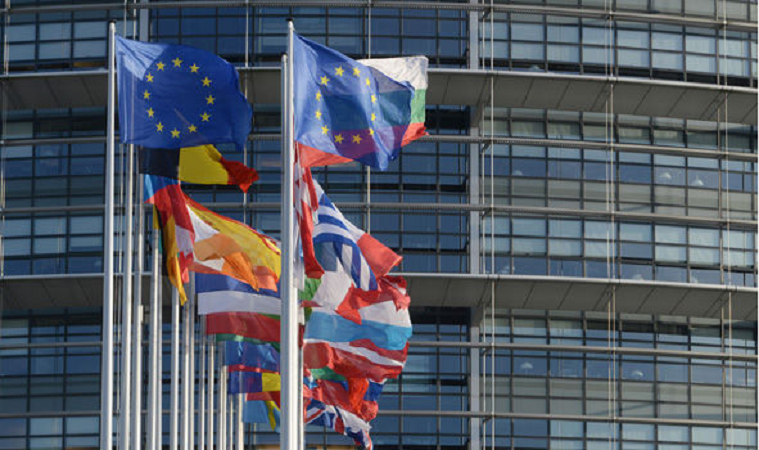
After months of tense negotiations, the European Union has finally reached a compromise on how to reform its fiscal rules, which were suspended during the pandemic. The new rules aim to give more flexibility and room for investment to member states, while ensuring fiscal sustainability and avoiding excessive debt.

The agreement came after a heated dispute between France and Germany, the two largest economies in the bloc, over the role of the European Commission in enforcing the rules. France wanted more discretion for the Commission to take into account the specific circumstances of each country, while Germany insisted on strict and automatic criteria to trigger corrective measures.

The compromise, which was endorsed by the finance ministers of the 27 EU countries on Tuesday, preserves the main pillars of the existing rules, such as the 3% limit on budget deficits and the 60% limit on public debt. However, it also introduces some changes, such as:

A new “investment clause” that allows countries to exclude some public spending on green and digital projects from the deficit calculation, as long as they respect the debt limit and have a clear plan to reduce their debt over time.

A new “simplification clause” that enables countries to temporarily deviate from the adjustment path towards the medium-term budgetary objective, which is a country-specific target for the structural balance that ensures fiscal sustainability. The deviation is allowed if it is justified by exceptional circumstances, such as a severe economic downturn, a natural disaster, or a health emergency.

A new “matrix” that links the required fiscal adjustment to the level of debt and the economic conditions, with more differentiation across countries and more room for judgment by the Commission. The matrix replaces the previous complex system of benchmarks and indicators that were often criticized for being too rigid and opaque.

The new rules are expected to enter into force in 2023, after the EU’s general escape clause, which was activated in March 2020 to allow massive fiscal stimulus in response to the Covid-19 crisis, is deactivated. The Commission will also review the new rules in 2024 to assess their effectiveness and propose further changes if needed.

The reform of the fiscal rules is a crucial step for the future of the European project, as it will ensure that the member states pursue sound and responsible fiscal policies that support economic stability and convergence, while also fostering social cohesion and environmental protection.

The reform will also enhance the credibility and legitimacy of the European fiscal framework, which has been often criticized for being too complex, rigid, and ineffective.

The compromise reached by the EU is not perfect, and it may not satisfy all the preferences and expectations of the different stakeholders. However, it is a balanced and realistic solution that reflects the diversity and complexity of the European reality, as well as the common interest and vision of the European family.

It is a sign of maturity and solidarity that shows that the EU is capable of overcoming its differences and finding common ground on key issues that affect its present and future.

Decentralized Finance (DeFi) needs more Decentralization

0

DeFi, or decentralized finance, is a term that encompasses a variety of applications and protocols that aim to provide financial services without intermediaries. DeFi has been growing rapidly in the past few years, attracting billions of dollars in value locked and millions of users.

However, DeFi is not without its challenges and limitations. One of the most pressing issues facing DeFi is the degree of decentralization that it can achieve.

Decentralization is a core principle of DeFi, as it promises to reduce the risks of censorship, fraud, corruption, and single points of failure. Decentralization also enables greater transparency, accountability, and innovation in the financial sector.

However, decentralization is not a binary concept, but rather a spectrum that varies across different dimensions. For example, some DeFi protocols may be more decentralized in terms of governance, while others may be more decentralized in terms of infrastructure or security.

One of the questions that arises from this discussion is how can we measure decentralization? How can we quantify and compare the degree of decentralization that different DeFi protocols have? This is not an easy task, as there is no universal or agreed-upon metric or framework for measuring decentralization.

Different approaches may focus on different aspects or criteria of decentralization, such as the number and distribution of nodes, the level of participation and influence of stakeholders, the degree of autonomy and coordination of agents, or the resilience and robustness of the system. Moreover, different metrics may have different assumptions, limitations, and trade-offs that affect their validity and reliability.

Therefore, measuring decentralization is a complex and multidimensional problem that requires a holistic and nuanced perspective. There is no one-size-fits-all solution or answer to this question. Rather, we need to use multiple methods and tools to assess and compare the level of decentralization that different DeFi protocols have across different dimensions and contexts.

We also need to acknowledge the limitations and uncertainties that come with any measurement approach and be transparent about the assumptions and trade-offs that we make. By doing so, we can gain a better understanding of the strengths and weaknesses of different DeFi protocols and how they can improve their level of decentralization.

The level of decentralization that a DeFi protocol can achieve depends on several factors, such as the design choices, the trade-offs, and the external constraints that it faces.

For instance, some DeFi protocols may rely on centralized oracles to provide external data, such as price feeds or real-world events. This introduces a potential source of manipulation or error that can compromise the integrity and functionality of the protocol.

Similarly, some DeFi protocols may use permissioned or semi-permissioned validators to process transactions and secure the network. This may improve scalability and efficiency, but at the cost of reducing the diversity and autonomy of the participants.

Therefore, DeFi needs more decentralization in order to fulfill its vision and potential. More decentralization can enhance the resilience, trustlessness, and permissionlessness of DeFi, as well as foster more innovation and competition in the space. However, more decentralization is not a simple or straightforward goal.

It requires careful analysis and evaluation of the trade-offs and challenges involved in each case. It also requires constant experimentation and improvement to find the optimal balance between decentralization and other desirable properties, such as usability, performance, and security.

DeFi is a revolutionary movement that aims to democratize and disrupt the traditional financial system. However, DeFi is still in its early stages and faces many obstacles and limitations. One of the most important issues that DeFi needs to address is how to achieve more decentralization across its various aspects and dimensions.

More decentralization can bring more benefits and opportunities to DeFi users and developers, but it also entails more complexity and responsibility. Therefore, DeFi needs more decentralization, but not at any cost.

China employs sci-tech to improve biological breeding, seed varieties

0

China is making great strides in applying science and technology to improve its agricultural production and food security. One of the key areas of innovation is biological breeding, which involves using biotechnology to create new varieties of crops and livestock that are more productive, resilient, and nutritious.

Biological breeding is not a new concept, but China has been investing heavily in research and development, infrastructure, and talent cultivation to enhance its capabilities and competitiveness in this field.

According to the Ministry of Agriculture and Rural Affairs, China has established more than 1,000 national and provincial-level key laboratories, engineering centers, and innovation platforms for biological breeding. It has also trained more than 100,000 professionals and technicians in this field.

One of the main goals of biological breeding is to improve the quality and diversity of seed varieties, which are the basis of agricultural production. China has developed more than 10,000 new varieties of crops and livestock through biological breeding, covering major food crops such as rice, wheat, corn, soybean, potato, and rapeseed, as well as fruits, vegetables, flowers, tea, cotton, and silkworms.

These new varieties have increased the yield potential, disease resistance, stress tolerance, and nutritional value of the crops and livestock.

For example, China has developed hybrid rice varieties that can produce more than 15 tons per hectare, breaking the world record several times. It has also created wheat varieties that can resist stripe rust, a major fungal disease that affects wheat production worldwide. Moreover, it has bred corn varieties that can adapt to different ecological zones and climatic conditions, such as drought, cold, salinity, and alkalinity.

Another example is the development of transgenic pigs that are resistant to porcine reproductive and respiratory syndrome (PRRS), a viral infection that causes high mortality and economic losses in the pig industry. The transgenic pigs carry a gene from a mouse that confers immunity to PRRS. They have been tested for safety and efficacy in laboratory and field trials, and have shown no adverse effects on health or reproduction.

China’s achievements in biological breeding have not only improved its own food security and agricultural competitiveness, but also contributed to global food security and poverty alleviation.

China has shared its biological breeding technologies and products with more than 100 countries and regions, especially in Africa and Asia. It has also participated in international cooperation and exchanges on biological breeding standards, regulations, and ethics.

China is committed to developing biological breeding in a safe, responsible, and sustainable manner. It has established a comprehensive legal and regulatory framework for biosafety management, covering the whole process of research, development, production, distribution, use, and supervision of biological breeding products.

It has also implemented strict quality control and inspection systems to ensure the safety and quality of seeds and livestock.

China believes that biological breeding is an important means to achieve green development and ecological civilization. It advocates the harmonious coexistence of humans and nature and respects the diversity of life forms.

It strives to balance the development of biological breeding with the protection of biodiversity and genetic resources. It also promotes the integration of traditional knowledge and modern technology in biological breeding.

China is confident that biological breeding will bring more benefits to its people and the world. It will continue to innovate and cooperate in this field, aiming to create a better future for agriculture and food.