
DD
MM
YYYY

PAGES

DD
MM
YYYY

spot_img

PAGES

Home Blog Page 3798

Lagos State Tribunal Dismisses PDP’s Jandor Petition, Challenging Sanwo-Olu’s Re-election

0

The Lagos State Governorship Election Petition Tribunal has dismissed the petition of the Peoples Democratic Party’s candidate, Olajide Adediran (Jandor), challenging the re-election of Governor Babajide Sanwo-Olu.

The tribunal also struck off the joinder between Jandor and Gbadebo Rhodes-Vivour of the Labour Party (LP).

The Chairman of the tribunal, Justice Arum Ashom, announced that the court would deliver its judgment in the case of the PDP and its candidate before issuing its judgment in the petition of the Labour Party’s governorship candidate, Gbadebo Rhodes-Vivour.

In a unanimous decision delivered by Justice Mikail Abdullahi on behalf of the three-member panel on Monday, the Lagos State Governorship Election Petition Tribunal determined that the petition brought by the PDP and its gubernatorial candidate, Adediran, lacked merit.

The first argument brought forward was whether the third respondent, Obafemi Hamzat, Deputy Governor of Lagos, should be considered a distinct candidate from the second respondent, Babajide Sanwo-Olu. Additionally, the tribunal decided whether the deputy governor could be included as a respondent in the case.

On the joinder, citing a series of previous rulings, the panel agreed that a petition should be filed between the winner and loser of an election, not between two individuals who both lost.

Consequently, the tribunal upheld the preliminary objection and subsequently removed the name of the 5th respondent, Rhodes-Vivour, from Jandor’s petition. Furthermore, the tribunal eliminated all exhibits presented in evidence by Rhodes-Vivour in Jandor’s petition from its records.

The panel also clarified that Rhodes-Vivour would not be able to appeal any aspect of the Jandor’s petition judgment later, or he would be regarded as an unwarranted intervenor.

Similarly, the Tribunal determined that the 6th respondent, the Labour Party, should not have been included as a respondent in Jandor and the PDP’s case.

The party’s name was subsequently removed for being improperly joined, and all evidence and exhibits related to the party were also expunged from the tribunal’s records.

The tribunal held that it dismissed the preliminary objection raised by the petitioner because they failed to adhere to the regulations outlined in the Electoral Act, which necessitate the deposit of security as a cost requirement.

On the second matter, which focused on whether Governor Sanwo-Olu and his deputy, Obafemi Hamzat, received valid nominations from their party, the APC, to participate in the elections, the tribunal held that it’s a pre-election matter.

The tribunal reached this conclusion referencing relevant provisions of the Constitution and the Electoral Act, as well as previous legal precedents. It held that the matter is unrelated to the conduct of the contested polls.

Furthermore, the tribunal determined that the petitioners were not affiliated with the 4th respondent, the APC, and therefore lacked the legal standing to challenge the party’s primary elections that selected both candidates.

Regarding the allegation of a forged certificate presented by Governor Sanwo-Olu, the tribunal took note of several factors, including the petitioner, Jandor’s testimony stating that Sanwo-Olu did not attend Community Grammar School, Ijebu-Ife, the institution from which the certificate originated. Notably, the petitioner also mentioned that the school’s principal was still alive.

The tribunal raised questions about why the petitioner did not summon the school’s principal or any staff members as witnesses to testify regarding the authenticity of the certificate.

The tribunal therefore held, “that the petition lacks merit and is accordingly dismissed.

However, the tribunal’s (pre-election matter) ruling on the second issue, which has to do with the APC’s primary election, has added a fresh stale to the series of inconsistencies following election tribunal judgments in Nigeria.

In May, A Federal High Court sitting in Kano nullified the candidature of Abia State governor-elect, Dr. Alex Otti, and other candidates who ran for electoral office under the Labour Party in both Abia and Kano states.

The annulment was based on the argument that the Labour Party failed to submit the names of its members in the 35 states of the federation and the Federal Capital Territory (FCT) in both hard and soft copies to INEC, 30 days before the primaries as stipulated by the Electoral Act.

Lawyers who criticized the judgment said it is a pre-election matter, and under the Electoral Act, 2022, only an aspirant who actually participated in the primaries can challenge the candidate of any party.

Nigerians Should Invest Patient Capital in Government for a Better Nigeria

0

In my previous article, after the Inauguration of President Bola Ahmed Tinubu, I strongly recommended that the new and substantive commander in chief of the Nigerian federation should prioritize public good and diplomacy as the most potent mechanisms to deal with vested interest which his administration is liable to. Vested interest is a political reality; it is inevitable especially in a multicultural country like Nigeria.

We often see governance as entirely resting on the leadership or the government. However, the followers or the citizens too have critical roles to play in nation building. The least the citizens could do to enable the government they have instituted to achieve its purpose is to invest more patient capital in the government while they also extend trust and moral support to it. More often than not, impatience on the part of the people does a lot of harm to the progress of the nation; it makes the people subject to the whim and caprices of the opportunists in government; this promotes scattered quick fixes and political instability.

When the citizens do not trust their government or the government’s programmes, what follows are confusion, tension and further degeneration.

It is understandable how direly Nigerians want a significant improvement in the status of the nation and the standard of living of every average person in the country. However, it is important to understand that the change we so much desire is not as simple as it is often thought.

Unfortunately, those who should understand better the philosophy of change often appear to be the ones that stand in the way of effecting positive change in the country, especially when they profit from the old system. They do everything within their power to maintain the status quo. They furtively build encumbrance against any government whose aim is to institute a new order.

Ironically, the retrograde are mostly well-informed and connected. They are the off-stage players. They have many tools in their possession, part of which is the media and the union. They use these tools to spur negative sentiments in the masses and cause distractions for the on-stage or real players.

The organised labour has recently threatened an indefinite strike to ground the entire economic activities of the country over the fuel-subsidy removal. This is a lofty example of business as usual; when a government policy or programme seems not to meet our short term needs or the interest of some group, a disruption is orchestrated forcing the government to jettison the plan. And the cycle keeps repeating itself. If the union continues to see strike action as the only means to hold the government responsible, not exploring possible alternatives, it is not insulated from becoming paraphernalia for partisan politics.

In a society where corruption has become so endemic, effective change can’t be hurried. Effective change should be gradual. At its build up stage, change flow with its temporary pains. Corruption in a society is like a wound on the skin whose healing process may first of all induce a feeling of pain. Thus, change should be gradual and effectively planned for the sake of posterity.

If we all agree with the aphorism that what is built within many years of hard labour may be destroyed in just a day, change should be embraced as a gradual thing. To have a long-term economic benefit, the change process must be given much time and patients and trust.

Several decades of problems of the country cannot be resolved in four years. However, with the political will to ensure program continuity and smooth transitioning on the part of the government and the display of virtues such as patience, trust and empathy towards the government by the people, the change and renewed hope that we all desire will materialize in no distant time. Even if a subsisting government cannot achieve most or all of its manifestoes, the next administration in line can have what to build on if there is continuity in government programs and a corresponding trust, support and patience from the people. These are values that are missing in our government.

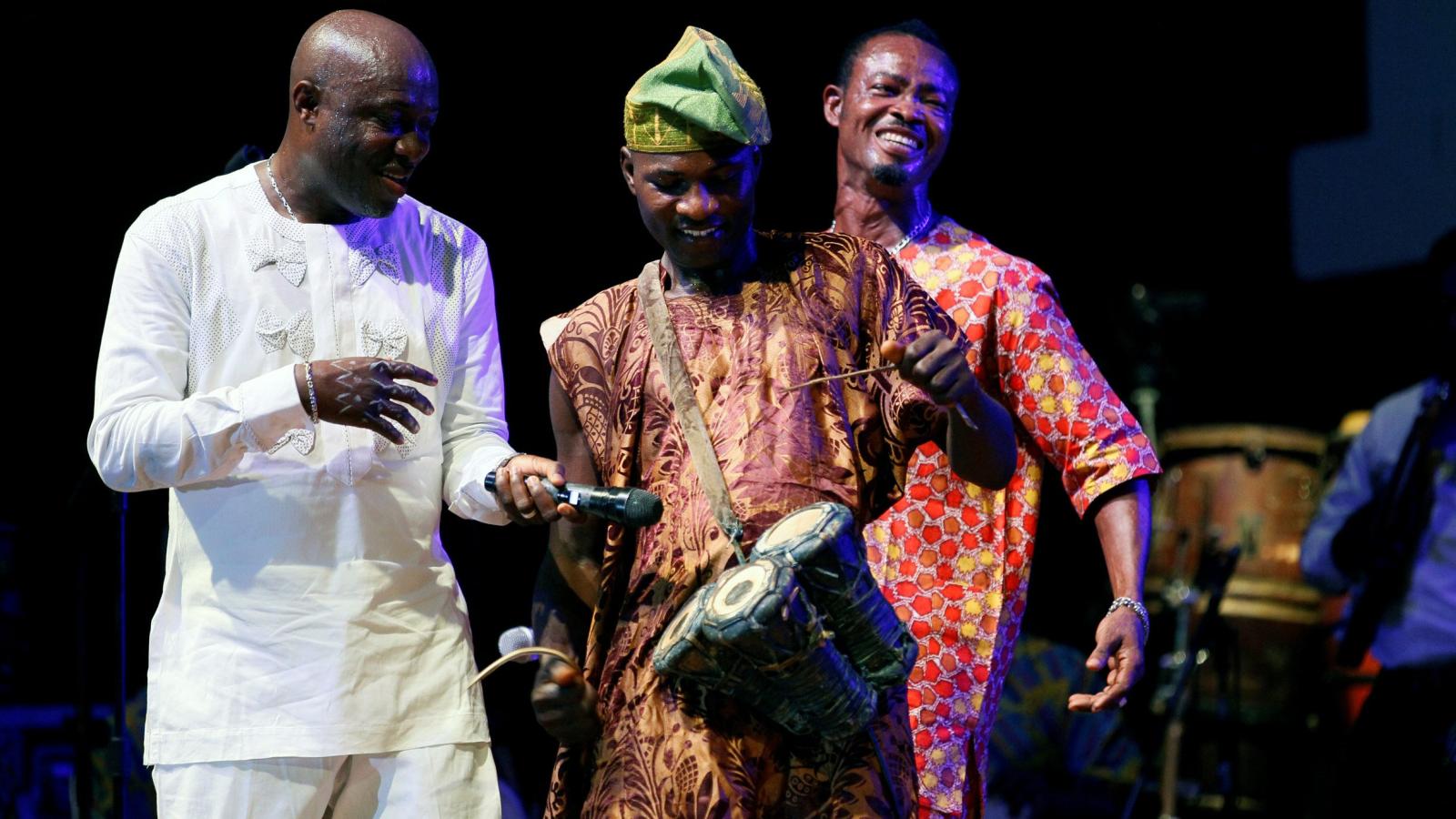
Music Theft and Copyright Infringement in The Nigerian Gospel Music Industry.

0

I attended a church program-tagged worship service over the weekend where so many popular gospel artists were invited to perform, there and then, it dawned on me how much of intellectual property theft infringement that goes on in the gospel music industry and unfortunately nobody is saying anything about it. 

Maybe I have never really paid much attention to it but at that service it pricked on me how some gospel artistes were brazenly performing and remixing other popular artistes songs on stage. Such a thing dare not happen in the secular music scene; before you can legally perform or remix another secular musicians song, you must have acquired a legal right to that song or else if you remix or perform another artiste’s song without that artiste’s express consent and approval you will be sued for copyright infringement but gospel musician brazenly do that; maybe because they believe that other gospel musicians have the spirit of God and the songs are rendered to the glory of God, therefore, they won’t get sued over copyright theft and infringement. 

It is rare for you to hear or see a gospel musician suing another gospel musician for copyright theft or infringement. In fact, in recent times, I have only heard of it once in Nigeria and I think that the man got canceled for daring to seek legal protection over his intellectual property.

Holy Spirit inspired or not, remixing songs to the glory of God or not, gospel musicians should take note that they do it and nobody has really taken it up legally does not make it right. Remixing other classic or old gospel songs without the express approval or consent of the original creator of the song is morally and legally wrong; at best it is theft and I believe that the holy spirit will not lead you to steal. If it is performing other gospel artiste’s songs on stage I can understand but remixing or remaking another artiste’s song without permission amounts to copyright infringement. 

Let me also put it out there that as a choir member of a church, any song you crafted or wrote and released through the inspiration of the holy spirit whilst you are still a member of that church choir belongs to that church ie any new song that a choir member or choir members releases is an intellectual property of the church and not that of the choir member, at best, both the choir member and the church will share joint ownership of the song. 

Therefore, as English people will say, what is worth doing is worth doing well; go through the proper channel in remixing and making another gospel song which is getting the necessary consent and approval of the original creator of the song so that you will not be committing the sin of theft.

Balancer, Coinbase, Bitcoin, Binance, Walmart and Other Crypto News

0

Balancer, a decentralized finance (DeFi) platform that allows users to swap tokens and provide liquidity, was hit by a DNS attack on its front-end website on Monday. The attackers managed to hijack the domain name and redirect users to a phishing site that asked for their private keys. Balancer said that no funds were lost and that the issue was resolved within a few hours. The platform advised users to avoid interacting with its website until further notice and to use alternative interfaces such as Zapper or Zerion.

Coinbase, one of the largest cryptocurrency exchanges in the world, has announced that it is closely monitoring the situation of Zcash, a privacy-focused coin that has recently seen a significant increase in its hash rate. According to a blog post by Coinbase, a mining pool called Luxor has managed to capture more than 50% of the Zcash network’s hash power, which could pose a threat to the security and decentralization of the coin.

Coinbase stated that it is working with other exchanges and stakeholders to ensure the safety of its customers’ funds and transactions, and that it will take appropriate measures if any malicious activity is detected. Coinbase also advised its users to be cautious when sending or receiving Zcash, and to avoid using shielded transactions, which are more vulnerable to attacks.

Ledger, the leading provider of hardware wallets for cryptocurrencies, has announced that its Recover service will be available by the end of 2023. The Recover service is designed to help users who have lost access to their Ledger devices or their recovery phrases to restore their funds. The service will use a combination of cryptographic proofs, trusted third parties and user verification to ensure the security and privacy of the recovery process.

Ledger CEO Pascal Gauthier said that the Recover service is a result of years of research and development, and that it will offer a new level of convenience and peace of mind for Ledger users. “We believe that everyone should have the right to access and control their own digital assets, even in the worst-case scenarios. That’s why we have created Recover, a service that will allow our users to recover their funds in a secure and user-friendly way, without compromising on our core values of security and sovereignty,” Gauthier said.

According to a report by K33, a crypto analytics firm, Binance was the main contributor to the drop in bitcoin spot trading volume in September. The report stated that Binance’s spot volume decreased by 31% month-over-month, while the global spot volume declined by 22%. The report attributed the decline to regulatory pressures, competition from other platforms, and lower market volatility.

Taurus, a leading provider of digital asset infrastructure solutions, has announced that it will support private blockchains for its custody and tokenization services. This will enable clients to leverage the benefits of blockchain technology while maintaining control and privacy over their data.

Taurus claims that its platform is the first to offer such a comprehensive solution for private blockchains, which can be used for applications such as digital identity, supply chain management, and asset tokenization. Taurus says that its platform is compatible with any private blockchain protocol, and that it can integrate with existing systems and processes seamlessly.

Walmart, the world’s largest retailer, has announced its intention to explore new opportunities in the metaverse, the virtual environment where people can interact with digital content and each other. The company said it will leverage its expertise in e-commerce, logistics, and customer service to create immersive and engaging experiences for its customers and partners in the metaverse.

Walmart also said it will collaborate with leading platforms and developers in the metaverse space to integrate its products and services into various virtual worlds. The company’s goal is to become a leader in the emerging metaverse economy and to offer value and convenience to its customers across different realities.

Stanford University plans to return millions of dollars received from FTX

0

Stanford University, one of the most prestigious academic institutions in the world, has decided to return millions of dollars that it received from FTX, a cryptocurrency exchange platform, according to a report by Bloomberg. The move comes amid growing concerns about the environmental and social impact of the crypto industry, as well as the potential conflicts of interest that may arise from accepting donations from such sources. FTX has been facing devastating setbacks owing to its bankruptcy filing in November 2022.

According to Bloomberg, Stanford received $7.5 million from FTX in June 2021, as part of a $20 million donation that the exchange made to various universities. The donation was intended to support research and education in blockchain and digital assets, and was announced by FTX CEO Sam Bankman-Fried, a Stanford alumnus, on Twitter.

However, the university later faced backlash from some faculty members and students, who questioned the ethics and transparency of accepting money from a company that is involved in highly speculative and volatile markets, and that may have a negative impact on the environment and society.

In a statement, Stanford said that it has decided to return the funds to FTX, after reviewing its policies and procedures for accepting gifts. The university said that it is committed to ensuring that its research and teaching are independent and free from undue influence, and that it respects the views and values of its community. The university also said that it will continue to explore opportunities to collaborate with FTX and other partners in the crypto space, as long as they align with its mission and principles.

FTX did not immediately respond to request for comment. The exchange is one of the largest and fastest-growing platforms in the crypto industry, with a valuation of $18 billion as of August 2021. It has been making headlines for its aggressive marketing and sponsorship deals, such as naming rights for the Miami Heat’s arena, and partnerships with celebrities like Tom Brady and Kevin O’Leary.

FTX has also been trying to position itself as a socially responsible company, by pledging to donate 1% of its revenue to charity, and by offsetting its carbon footprint through carbon credits.

However, some critics have argued that FTX’s actions are not enough to address the fundamental issues that plague the crypto industry, such as its high energy consumption, its lack of regulation and oversight, its susceptibility to fraud and manipulation, and its role in facilitating illicit activities like money laundering and tax evasion.

They have also pointed out that FTX’s donations may be seen as a way of buying influence and legitimacy in the academic world, and that they may compromise the integrity and credibility of the research and education that they fund.

Stanford’s decision to return FTX’s donation may set a precedent for other universities that have received similar gifts from the crypto industry, such as Harvard, MIT, Yale, Cornell, and Berkeley. It may also spark a broader debate about the ethical implications of accepting money from controversial sources, and the need for more transparency and accountability in the academic fundraising process.