DD
MM
YYYY

PAGES

DD
MM
YYYY

spot_img

PAGES

Home Blog Page 3798

What is a DAO (decentralized autonomous organization)?

0

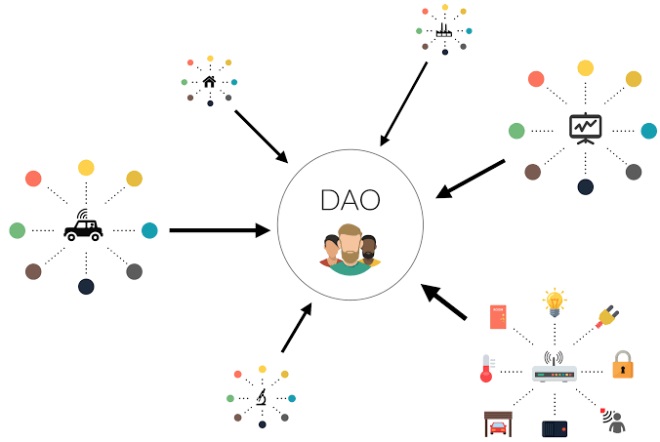
DAO, or decentralized autonomous organization, is a new way of organizing and collaborating with people around the world. Unlike traditional organizations, which have a central authority or hierarchy, a DAO is governed by its members through a set of rules encoded in smart contracts on a blockchain. This means that anyone can join a DAO, participate in its decision-making process, and benefit from its collective actions, without having to trust or rely on any intermediaries.

DAOs are important because they enable new forms of social and economic coordination that are more transparent, democratic, and efficient than existing models. DAOs can empower communities to pursue shared goals and values, such as funding public goods, creating digital art, supporting social causes, or building innovative products and services. DAOs can also reduce the costs and risks of collaboration, such as bureaucracy, corruption, censorship, or fraud, by leveraging the security and immutability of blockchain technology.

The core of a DAO is its smart contract, which defines the rules of the organization and holds its funds. The smart contract is deployed on a blockchain, such as Ethereum, which ensures that the rules are enforced, and the funds are secure. The smart contract also allows the members of the DAO to vote on proposals and actions that affect the organization, such as allocating resources, changing parameters, or updating the code. The voting process is transparent and verifiable by anyone on the blockchain.

Some examples of DAOs are:

The DAO, one of the first and most famous DAOs, which was created in 2016 to automate decisions and facilitate cryptocurrency transactions. However, it was hacked and drained of millions of dollars due to a vulnerability in its code.

MakerDAO, a DAO that manages a decentralized lending platform and a stablecoin called DAI. MakerDAO allows users to borrow DAI by locking up collateral in smart contracts and adjusts the interest rates and parameters through a governance token called MKR.

MetaCartel, a DAO that funds and supports projects in the Ethereum ecosystem that focus on user experience, adoption, and social impact. MetaCartel uses a token called METACARTEL to coordinate its members and distribute grants.

DAOs are still an emerging and experimental phenomenon, and they face many challenges and opportunities in their development. Some of the challenges include:

Security: DAOs need to ensure that their smart contracts are bug-free and resistant to attacks, as any flaw or exploit could compromise their funds or functionality.

Scalability: DAOs need to find ways to handle large numbers of members and transactions without sacrificing performance or security, as blockchain networks have limited capacity and high fees.

Regulation: DAOs need to navigate the legal and regulatory implications of their activities, as they may not fit into existing frameworks or jurisdictions.

Culture: DAOs need to foster a culture of trust, cooperation, and accountability among their members, as they rely on collective intelligence and self-organization.

Some of the opportunities include:

Innovation: DAOs can enable new forms of innovation and value creation that are not possible or feasible in traditional organizations, such as crowdsourcing, crowdfunding, co-creation, or co-ownership.

Inclusion: DAOs can enable more people to participate in and benefit from economic and social activities that are otherwise inaccessible or exclusive, such as investing, lending, donating, or voting.

Impact: DAOs can enable more effective and efficient solutions to global challenges that require collective action and coordination, such as climate change, poverty, or health.

DAOs are a revolutionary concept that has the potential to transform how we organize and collaborate with each other. By leveraging blockchain technology and smart contracts, DAOs can create decentralized organizations that are more transparent, democratic, and efficient than existing models.

However, DAOs also face many challenges and opportunities in their development, as they need to overcome technical, legal, cultural, and ethical issues. As more people experiment with and participate in DAOs, we may witness the emergence of a new paradigm of social and economic coordination.


Normalising Sex Video Leaks in Nigeria

0

In recent times, Nigeria has grappled with an unsettling surge in the sharing and distribution of explicit sex videos without consent. This disconcerting trend has not only cast a shadow over the privacy and dignity of those involved but has also raised serious concerns about societal values and the erosion of fundamental principles like consent and respect. In this piece, our analyst delves into the unsettling normalization of sex video leaks in Nigeria and proposes practical solutions to combat this deeply distressing phenomenon.

The normalization of sex video leaks in Nigeria is a distressing social phenomenon that has emerged as a byproduct of the digital age. The ubiquity of smartphones and easy access to the internet has created an environment ripe for the sharing of explicit content, often without the consent of the individuals depicted. What is most concerning is the seemingly indifferent response to these incidents that have begun to plague our society.

Recent cases involving public figures and celebrities have garnered significant media attention. Initially, there is shock and outrage. However, as time passes, these incidents tend to fade from public consciousness, leaving behind a disconcerting sense of complacency. This normalization of such behaviour is morally reprehensible and strikes at the very heart of principles that should underpin any civilized society: consent, privacy, and respect.

To effectively address this issue, it is crucial to delve into the root causes behind the normalization of sex video leaks in Nigeria. Several factors contribute to this disturbing trend. Many people remain unaware of the severe consequences of sharing explicit content without consent, both in terms of legal repercussions and moral implications.

Practical solutions can be implemented to combat the normalization of sex video leaks in Nigeria. Comprehensive digital literacy programs can educate citizens, particularly the youth, about online safety, responsible internet usage, and the importance of consent in the digital age. Legal protections for victims of sex video leaks can be enhanced by amending existing laws to include stricter penalties for offenders. Support systems, including counselling services, can be established for individuals who have been affected by sex video leaks, reducing the stigma surrounding such incidents and encouraging victims to seek help.

Nationwide awareness campaigns can educate the public about the consequences of sharing explicit content without consent, emphasizing the legal, ethical, and emotional aspects of such actions. Promoting responsible behaviour online by advocating for the principles of consent, privacy, and respect can be achieved through partnerships with social media platforms, educational institutions, and community organizations. Addressing the underlying economic pressures that drive individuals to engage in cybercrimes for monetary gain is also crucial, with job creation programs and support for those in need being potential solutions.

Normalizing sex video leaks in Nigeria is a grave concern that threatens to corrode the very fabric of our society. Urgent and decisive action is required to confront this issue. It is our collective responsibility to safeguard the rights and dignity of individuals in the digital age and ensure that the normalization of such harmful behaviour becomes a thing of the past. This is not just a legal or moral issue; it is a societal imperative that demands our unwavering commitment to fostering a culture of consent, privacy, and respect in our increasingly connected world.

Manifestos as Battlegrounds in Nigerian Politics

0

In the vibrant and often tumultuous world of Nigerian politics, the battle for power is waged not only in the polling booths but also in the pages of party manifestos. In this thought-provoking exploration, we embark on a journey into the political economy of party manifestos in Nigeria, using the analytical lens of Marxist theory to decode the intricacies of this crucial aspect of Nigerian democracy.

Class Struggle in Nigerian Politics

To unravel the enigma of party manifestos, we must first grasp the essence of class struggle, a concept famously expounded by Karl Marx. In Nigeria’s political landscape, candidates and their affiliated parties assume the role of capitalists. Their goal? To attain political supremacy through the electoral process, they seek the consent of the electorate during the campaign season. Winning elections grants them the coveted means and governance authority to shape the nation’s destiny.

On the flip side of this power dynamic are the voters and experts who engage in the vigilant scrutiny of political actors. In this context, they represent the proletarians, the labouring class. They must remain vigilant, discerning the messages propagated during campaigns and the actions of political actors. The experts, in particular, play a pivotal role in identifying inconsistencies and contradictions in these messages, as these can significantly influence voters’ decisions and, in turn, determine electoral outcomes.

Manifestos as Battlegrounds

The heart of election campaigns lies within the pages of party manifestos. Here, candidates engage in a unique form of class struggle, using specific statements to oppose one another on socio-economic and political issues in Nigeria. This battle is often waged through critiques of the ruling political party’s perceived failures in addressing citizens’ needs and improving the nation’s economy.

Aligned with Marx’s theory of labour surplus value, political parties skillfully package existing problems and needs as enticing products for the electorate. Their aim is clear: to secure votes. However, in the context of this study, votes are analogous to a form of labour power exchanged for sound policies and programs that promise to tackle the socioeconomic and political challenges that plague the nation.

The Role of Class Consciousness

Yet, beneath the surface of manifestos lies the critical role of class consciousness. This analytical framework, inspired by Marx, serves as the guiding compass for experts as they navigate the treacherous waters of political ideologies. Class consciousness enables them to identify the underlying narratives and ideologies within manifestos. It also shines a light on how these narratives and ideologies can potentially give rise to false consciousness among voters. In this scenario, vital information remains obscured, adversely affecting their decision-making.

In this reflective journey through the political economy of party manifestos in Nigeria, we have unearthed profound insights. This analysis offers a powerful tool for understanding the complex decision-making process of the electorate during electoral cycles in developing nations like Nigeria.

In a nation where the political landscape constantly evolves, the ability to grasp the deeper socio-economic forces at play becomes an indispensable asset. For both voters and the experts who guide them, this understanding is essential in navigating the intricate terrain of Nigerian politics and shaping the future of the nation.

Notable Provisions of The Manufacturing Guidelines For Food and Food Products in Nigeria

0

Current Good Manufacturing Practice (cGMP) is a key factor for manufacturers/ industries to produce good quality, safe and affordable products, especially in respect of consumables like food products. 

The cGMP guidelines as issued by the National Agency For Food and Drug Administration and Control (NAFDAC) are a set of technical principles and recommendations used in processing food products in order to guarantee that they are safe and suitable for consumption, and to prevent contamination or adulteration. They are also sometimes called “good processing practices” or “good fabrication practices”.

cGMP guidelines are established to satisfy regulatory requirements as well as maintain the high quality standards of products.

This guideline has been developed to highlight good manufacturing practices that should be followed by manufacturers, operators and employees to maximally assure the production of safe and sanitary products at all times. 

The guidelines offer suggestions for measures and precautions that should be taken regarding employee health, food handling practices, appearance, personal hygiene, plant procedures, plant and equipment design, maintenance, and sanitation. The document also offers some examples of GMP documentation, which has been identified as one of the main shortcomings in implementing food safety and food quality management systems.

It is important that every employee is made knowledgeable and aware of the necessity of adhering to these guidelines at all times. The guidelines need to be re-emphasized by the manufacturer on a regular basis and that regular assessment and review of how well the guidelines are being followed should be conducted by management.

We will thus be taking a look into the notable provisions and regulatory requirements of these guidelines 

What is the scope of the cGMP guidelines?

These guidelines apply to food manufacturers/industries and covers all activities undertaken from the point where raw materials are received, through processing, storage and distribution of final products.

What are the provisions of the guidelines regarding the application of good manufacturing practices?

-The guidelines state that good manufacturing practices should be applied with sanitary criteria in mind. 

-As there will always be situations where specific requirements do not apply, the key is to assess whether a recommendation is “necessary” from the standpoint of food safety and suitability. 

-The application of Good Manufacturing Practices also requires reassessing the potential risk of each food hazard in food processing. 

-While less severe hazards or hazards not very likely to occur will probably not need to be analyzed in an HACCP plan, they must be addressed within the framework of GMP. 

-Thus, to apply good manufacturing practices, business operators will also need to perform a hazard analysis for each product or type of process, and for each new product, even though they are not implementing the HACCP.

-Good Manufacturing Practices and the HACCP system are interrelated and interdependent: application of GMP requires familiarity with the principles of the HACCP system to ensure a comprehensive approach to food safety.

What are the provisions of the guidelines regarding organization and personnel? 

-There shall be an adequate number of personnel, as determined by the company, at all levels having appropriate education, knowledge, training, experience, skill and capabilities or a combination thereof relevant to their assigned functions, in good mental and physical health to be able to execute their duties.

Organization, Qualification, and Responsibilities

  • The organizational structure of the company should be such that the production and the quality assurance/quality control functions are headed by different managers/heads, neither of whom shall be reporting to the other. Each shall be given full authority and facilities necessary to execute their duties effectively.
  • The production manager/head shall be adequately trained and/or shall possess good practical experience in the field of food manufacture or any other related field, and managerial skill, which will enable him/her to perform the function effectively. The production manager shall have full authority and responsibility to manage production of food products. Additionally, the production manager shall have other responsibilities, which he shall share with the quality assurance/quality control manager and the person responsible for engineering.
  • The quality assurance/quality control manager/head shall have adequate training and practical experience, which will enable him perform his function effectively. The quality assurance/quality control manager/head shall have full authority and responsibility in all quality assurance and quality control duties such as establishment, verification and implementation of all quality control procedures.
  • The quality assurance/quality control unit shall be entrusted with the responsibilities and authority to:

i.Approve/reject all components – raw and packaging materials, labeling materials, as well as bulk and finished products.

ii.Approve/reject product manufactured or packed or, held under control by a third party manufacturer.

iii.Approve/reject procedures, which have impact on the product quality or product specifications.

iv.Review production records and quality control records.

v.Support monitoring and controlling the manufacturing environment, plant cleanliness, production validation, calibration, training of personnel, approve supply of materials and contract parties, protect products and materials against spoilage and deterioration and the maintenance of records.

  • The quality assurance/quality control manager/head shall share responsibility with the production manager/head for establishing and authorizing written procedures.
  • The production manager/head shall have full authority and responsibility to manage the production of products covering all aspects of personnel, area, equipment and records.
  • The production manager/head shall share with the quality assurance/quality control manager/head the responsibility of product quality and authority in the aspects specified in the guidelines.
  • The duties of every employee shall be clearly defined, communicated and well understood, and shall be within an employee’s capacity to perform.

Training

  • All employees who are directly engaged in the manufacturing, processing, packaging and holding of food and food products shall be trained in the particular operations they perform in accordance with the principles of current Good Manufacturing Practice.
  • Training shall be conducted by qualified personnel.
  • Training in Good Manufacturing Practices shall be on a continuing basis and with adequate frequency to assure that employees remain familiar with the Good Manufacturing Practice requirements relevant to their functions.
  • Training in Good Manufacturing Practices shall be in accordance with written programs approved by the production and quality control managers/heads.
  • Records of personnel training in Good Manufacturing Practices shall be maintained.
  • After training, the consequential employees’ performance shall be appraised to determine their further training needs.

What are the provisions of the guidelines on buildings and facilities?

Buildings

-Buildings should be located, designed, constructed, adapted and maintained to suit the operations carried out in them and to facilitate the protection of materials and products from contamination or deterioration. 

-Equipment should be designed, constructed, adapted, located and maintained to suit the processes and products for which it is used and to facilitate protection of the materials handled from contamination or deterioration.

Location

a.The first thing to consider is where to locate a food processing establishment. The surroundings must be taken into consideration to ensure that they do not have an adverse effect on the food processed. Facilities should not be located near areas considered adverse or harmful, for example, sanitary landfills, areas subject to flooding, industrial activities that pose a threat of contaminating food, or other sources of contamination. Generally, a minimum distance of 30 meters from potential sources of contamination is recommended.

 b.Establishments should be adequately fenced round with blocks to prevent external interference and shall be located away from:

i.Environmentally polluted areas and industrial activities, which pose serious threat of contaminating food;

ii.Areas with excessive dust, foul odours, smoke, airborne microbial and chemical contaminants, such as quarry sites, abattoirs, sewage treatment or oxidation lagoons, animal habitats, dusty roads, soak-away pits, cemetery etc.

iii.Areas subject to flooding unless sufficient safeguards are provided such as channels, drainages etc.

iv.Areas prone to infestation of pests;

v.Areas where wastes, either solid or liquid cannot be removed effectively.

What are the general provisions of the guidelines regarding premises?

General Requirements for Premises

Premises should:

  • provide sufficient space to suit the operations to be carried out;
  • allow an efficient flow of work;
  • provide suitable internal storage areas;
  • facilitate effective communication and supervision;
  • be sited with due regard for the provision of services needed and to avoid contamination from adjacent activities. In existing premises, effective measures should be taken to avoid such contamination;
  • Be maintained in a good state of repair. The condition of buildings should be reviewed regularly, and repairs effected where necessary. Special care should be exercised to ensure that building materials of construction, repair or maintenance operations are not allowed to adversely affect product quality or integrity.

Grounds

  • Grounds shall be constructed and maintained to protect against weather, flood, ground seepage, and the access and harboring of vermin, rodents, birds, insects or other animals.
  • If the plant grounds are bordered by grounds not under the operator’s control, care shall be exercised by conducting inspection, extermination, or other means to exclude pests, dirt, and filth that may be a source of food contamination.
  1. The grounds about a food plant under the control of the operator shall be kept in a condition that will protect against the contamination of food.
  1. The methods for adequate maintenance of grounds shall include, but are not limited to:

i.Good housekeeping. Properly storing equipment, removing litter and waste, and cutting weeds or grass within the immediate vicinity of the plant buildings or structures that may constitute an attractant, breeding place or harborage for pests.

ii.Providing and properly operating systems for waste treatment and disposal designed and constructed in an appropriate manner so that they do not constitute a source of contamination of areas where food is exposed.

What are the provisions of the guidelines regarding sanitation and hygiene?

Personnel

-The plant management shall define its policy and document its procedures on sanitation and personnel hygiene and take all reasonable measures and precautions to ensure the following:

Disease Control.

  1. Persons directly involved in the manufacturing, food processing or packing should be fit and capable of discharging their duties effectively.
  1. Any personnel who, by medical examination or supervisory observation, is shown to have, or appears to have, an illness, open lesion, including boils, sores, or -infected wounds, or any other possible source of microbial contamination shall be excluded from any food handling/contact operations until the condition is corrected.
  2. Illnesses, symptoms and injuries that should be immediately reported by employees to management so they can be examined by a doctor include:
  • jaundice (yellowing of skin and eyes),
  • diarrhea,
  • vomiting,
  • fever,
  • sore throat with fever,
  • visibly infected skin lesions (boils, cuts, etc.),
  • discharges from the ear, eye or nose.

There shall be established/documented procedures for disease control including specific instruction for all personnel to report such health conditions to their supervisors.

Monitoring of personnel

– The business should have a set procedure for monitoring the personal health status of employees that includes, among other things:

i.Keeping track of employees’ health through health files for each employee where all health-related events are recorded.

ii.Requiring all persons or visitors who enter processing rooms to first fill out a form on their health status so as to prevent food contamination.

iii.Excusing food handlers with diarrhoea or other type of digestive illnesses from work because, even if they are not in contact with food, their use of toilet facilities among others may lead to contamination of other employees.

iv.Use of liquid soap in toilet facilities to prevent cross-contamination that can occur when bar soap is used. 

Social Contract and the Return of Military Rule in West Africa

0

In the heart of West Africa, a region renowned for its vibrant cultures and diverse landscapes, a disconcerting trend has emerged in recent years. Like ripples on a pond, coups and coup attempts have shaken the political stability of several nations, leaving a lingering question hanging in the air: Is the social contract between governments and their citizens unravelling in this sub-region? In this narrative exploration, we delve into the underlying causes of these coups and the profound implications they carry for the future of West African nations.

Picture a scene where the social contract, a concept rooted in centuries of philosophical thought, is akin to a sacred covenant. In this agreement, citizens willingly relinquish certain individual freedoms in exchange for protection, public services, and the safeguarding of their rights by their government. It is an invisible thread that binds the governed to the governing, forming the backbone of a stable society.

Yet, as we turn our attention to West Africa, we see that this once-robust social contract appears to be fraying at its edges, if not breaking altogether. The causes of this troubling trend are multifaceted and deeply rooted in the region’s history and contemporary challenges.

First and foremost is the spectre of corruption and mismanagement. In the eyes of many West Africans, their leaders, who are meant to be stewards of public resources, have been found wanting. Rampant corruption, embezzlement of public funds, and unchecked nepotism have eroded trust in governments. Citizens increasingly perceive their leaders as enriching themselves at the expense of general welfare, and the sense of betrayal is palpable.

Another force eroding the social contract is the erosion of democratic institutions. These institutions meant to safeguard the principles of fair governance and the rule of law, have been weakened or co-opted. Electoral commissions are viewed with scepticism, and judiciaries are often perceived as puppets of the ruling elite. The result is contested elections, disputed results, and a rising sense of political instability.

Simultaneously, socioeconomic disparities continue to plague West African societies. Poverty remains stubbornly persistent, essential services remain out of reach for many, and the gap between the haves and have-nots continues to widen. Frustration among the populace festers as governments repeatedly fail to deliver on their promises of better lives.

The implications of this unravelling social contract are far-reaching and profound. Political instability, driven by coups and coup attempts, makes it exceedingly challenging for governments to focus on long-term development goals. The revolving door of leadership deters foreign investments and hampers aid efforts, further entrenching economic challenges.

Human rights concerns are equally alarming. Coups often lead to a disregard for fundamental freedoms, as arbitrary detentions and violence become disturbingly common. The erosion of democratic norms can have dire consequences for civil liberties and individual rights.

Economically, the consequences are severe. Economic development takes a backseat when governments are toppled or paralyzed by coups. Reduced economic growth, increased unemployment, and poverty become the new normal.

The impact extends beyond borders, contributing to regional security threats. West Africa’s instability can easily spill over into neighbouring countries, exacerbating regional challenges such as terrorism and organized crime. Moreover, the demographic pressures of political and economic instability may drive more people to seek refuge in more stable countries, leading to migration pressures on both regional and global scales.

The series of coups in West Africa paints a stark picture of a social contract in jeopardy. To prevent further unravelling and its associated consequences, West African leaders must prioritize good governance, accountability, and inclusive development. International cooperation and support should be directed towards fostering stability and promoting democratic values in the region. Only through these concerted efforts can West Africa aspire to a future of peace, prosperity, and social cohesion, where the social contract is not just renewed but strengthened for the generations to come.