DD
MM
YYYY

PAGES

DD
MM
YYYY

spot_img

PAGES

Home Blog Page 3800

First Transfer of a Sino Amazon / Sinosignia product successful

0

We are very happy that the first Sino Amazon / Sinosignia has been successfully transferred to its new owner.

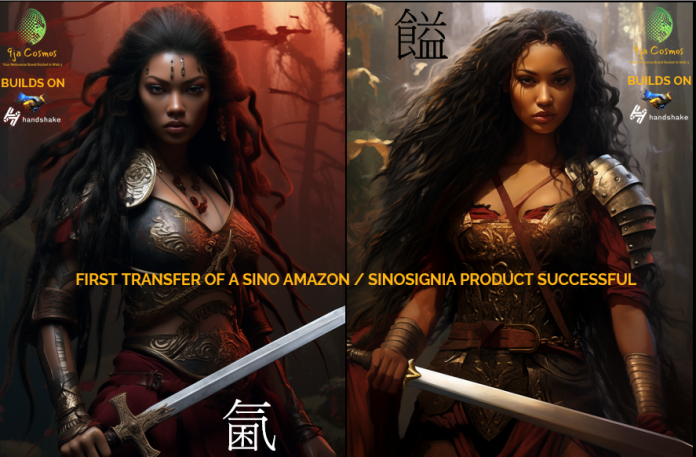
The first transfer of ownership of a Sino Amazon has successfully taken place with a mint to OP. (Optimism)
It now displays on Opensea.

To view on Opensea CLICK HERE
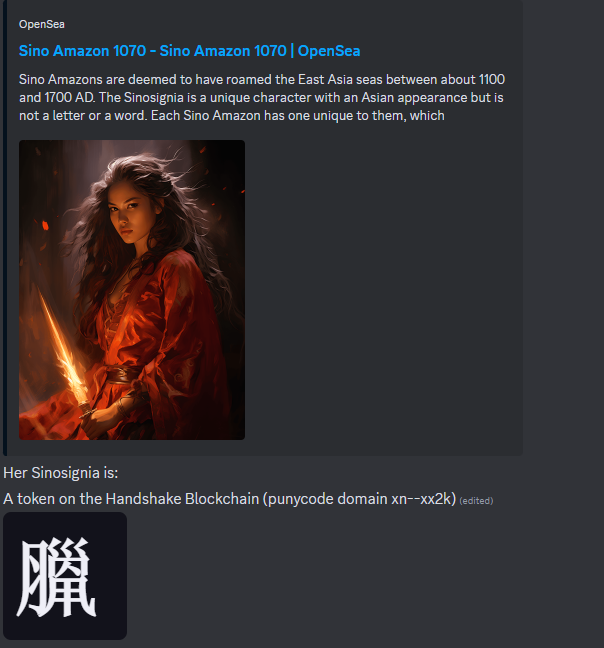
The two parts of the product ( the NFT image higher up, minted to OP, and the Web 3 domain [token] above) have been successfully paired.

This can be examined by checking the Niami system (niami.io) for xn--xx2k.
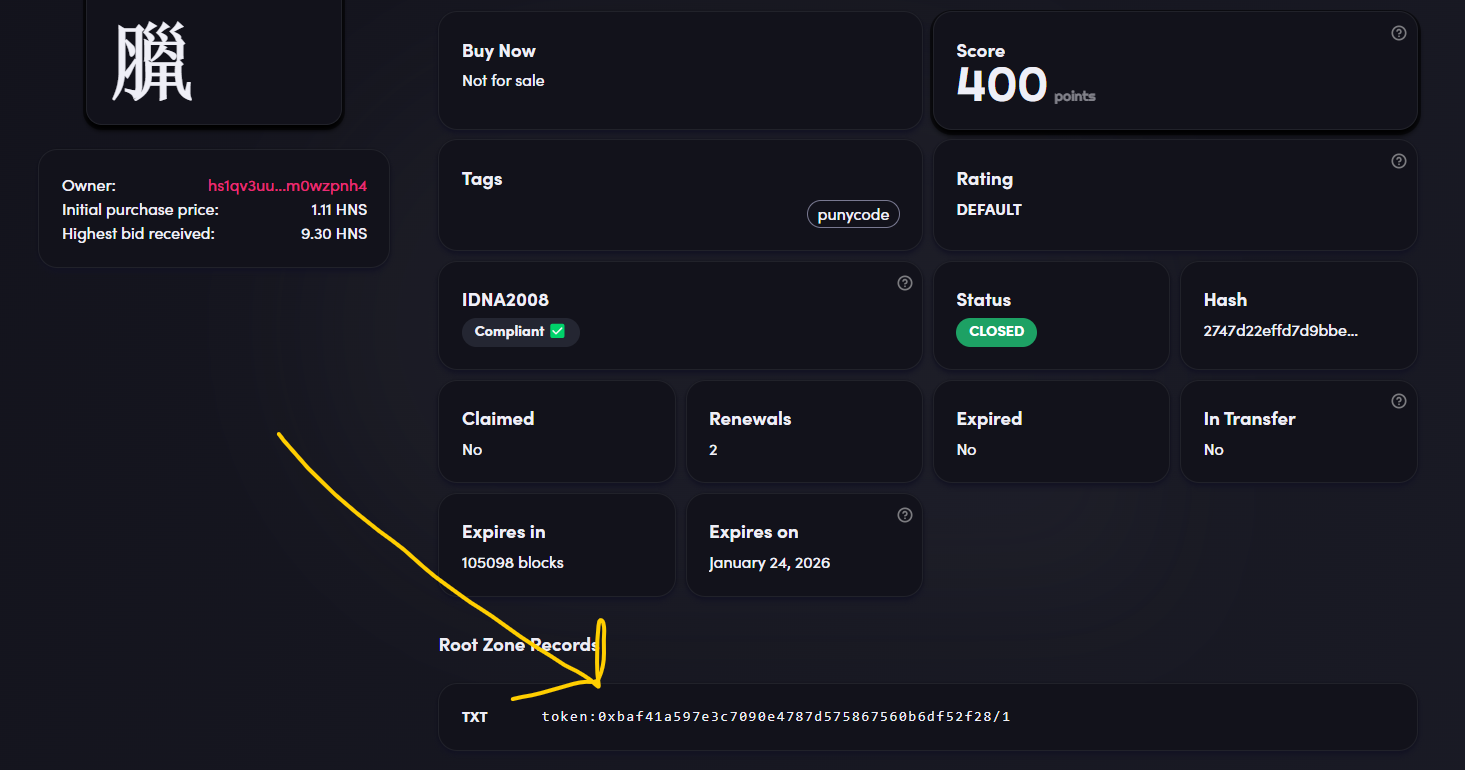
Niami reveals the embedded txt record of the Web 3 domain (token) which is the ‘0x’ hash of the Sino Amazon (a mint as an NFT type token of the female warrior image higher up).

Handshake is an almost direct copy of the Bitcoin blockchain – but since Bitcoin has attracted institutional investors like Blackrock and JP Morgan, supplying a financial product called an ‘ETF’ future costs associated with building off Bitcoin are uncertain.

Handshake is equally as secure as the Bitcoin Blockchain and never been hacked. So we can use the OP (Optimism) mint for the Sino Amazon, for ubiquity, while the Handshake blockchain side takes care of security and has a restoration path, if the OP side ever gets hacked.

For all the ‘down the rabbit hole’ folk that really, really want to know, the OP mint is ERC-1155. But because of the security on the Handshake side, it really doesn’t matter. Whatever is cheapest to mint is ok in this case.

But we don’t need to mention – combined, its just a great product – A high quality piece of art that has been through multiple AI solutions and manual adjustments…

Combined with a fully functional single character Top Level Web 3 Domain – quote Niami ‘Handshake TLDs are open for anyone to register, transparent for anyone to audit, and extensible for uses from domain names to wallet names to usernames’

You can also signal your ownership of a Sinosignia to your community by wearing it as a tattoo just as the Sino Amazons do!

There is still a few things to do before the product line can be offered at scale.

The normal ‘run’ of the series is 1000 and we did an ‘over-run’ of 109, which Sino Amazon 1070 is from.

One of the things is a HIP (Handshake Improvement Proposal), just to standardize the protocol for the embedded text that links the Sino Amazon and Sinosignia tokens.

Anybody that is familiar with Ethereum will have seen ‘EIP’ before. It’s quite similar.

As an aside – There are around 70 people outstanding who are entitled to the ‘celebratory shares’ since our celebration last year, and our release of 9ja Cosmos as an ‘extra sovereign’ business incorporated with blockchain tokens as shares.

The remaining inertia seems to be a reluctance to install or sign up to a HNS compatible wallet or market system. Wallets like Best Wallet, Coinbase, MetaMask and Trust Wallet are not very good at providing accounts for systems outside the EVM Compatible space.

With the EVM compatible space becoming ever increasingly more hacker friendly, assets that won’t reside in the same wallets as them, isn’t a bad thing. But some people will need to come out of their comfort zone to explore wallet types that accommodate more exotic assets.

Remember that part of you that took bold steps to embrace cryptocurrency and/or NFTs?

Maybe some of you have forgotten who that person is, and are now sticking to a few things you learned rather than continuing on that voyage of discovery. For this, you might need to wake that person in you again.

We also have some of that over-run that we might decide to airdrop. Sino Amazons / Sinosignias are very unique and this dual ecosystem approach hasn’t been done before.

Get a HNS compliant wallet… some FOMO is healthy!

9ja Cosmos is here…

Get your .9jacom and .9javerse Web 3 domains  for $2 at:

.9jacom Domains

.9javerse Domains

Visit 9ja Cosmos LinkedIn Page

Visit 9ja Cosmos Website

Preview our Sino Amazon/Sinosignia releases
A Handshake Improvement Proposal is a technical document that attempts to standardize a feature or protocol extension across the Handshake Ecosystem. It should be implementation-agnostic. Those wishing to propose a specific change should open an issue or pull request in the appropriate repository on Github. HIPs are not consensus, they are not law, they may never be actually implemented in production. HIPs are just solutions to common problems the Handshake Developer Community can use as a reference in their own projects. They may change over time, or be replaced with newer HIPs.

As Nigerian Banks Declare Record Profits, Manufacturing Firms Declare Losses

0

In secondary school, James Ene Henshaw’s “Jewels of the Shrine” was a memorable and intriguing book . Mr Okorie was looking for how to engineer a great burial for himself even though he did not have means stored for that. He tricked his two grandsons who never really liked him because they felt that he was a relic of the past.

He created an illusion that he was loaded with wealth which they could inherit. But only the person who could muster a great burial for him will get the goodies – and the key to his long lost heirloom. He designed an illusive rivalry system which ended up making the grandsons deliver a superb burial for him. But when they checked for the thrones, they discovered that grandpa had tricked them to give him a great burial. The man had nothing, factually!

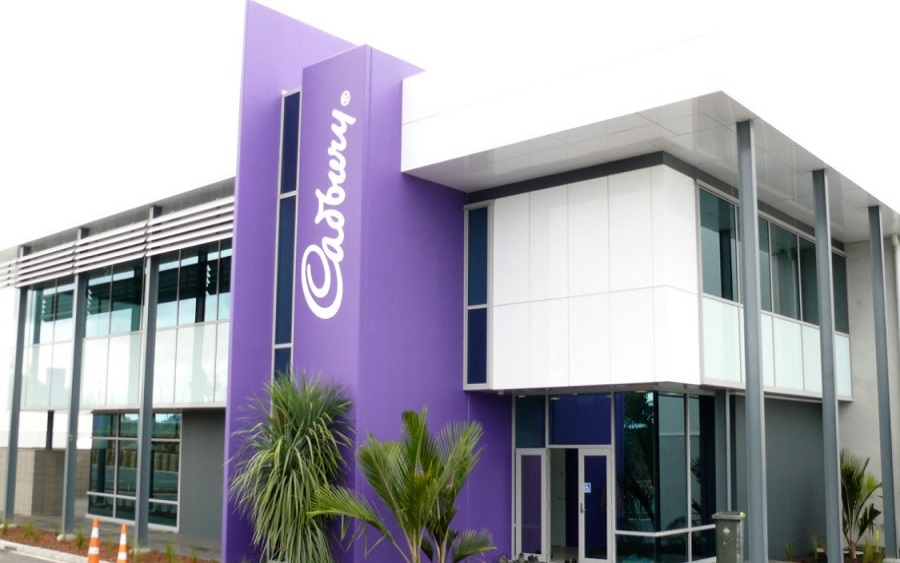
That takes me to Nigeria where banks are declaring record profits and manufacturing companies are declaring record losses: “In its fiscal year 2023 performance report, Cadbury Nigeria Plc, a prominent multinational corporation operating in Nigeria, disclosed a substantial loss of N27.63 billion. This marked a significant downturn, representing a staggering 2,228% decline from the N1.30 billion pre-tax profit recorded in the previous fiscal year.”

Who is tricking who in Nigeria’s economy?


Comment on Feed

Comment 1: Whenever you see stats like that though alarm bells must go off! What potential sneaky trickery lies within their financial statements and MD&A reports? What did they do? Did they change amortisation schedules? Did they right down some assets? Did they fool around with unearned revenue accounts? Unscheduled goodwill?

Financial report analysis is a skill that takes not only mathematical aptitude but some general business sense and experience and some basic common sense. Always look at the numbers with a doubting eye and examine what lies beneath the facade of numbers. The truth is often stated within the MD&A reports so take those and examine them while looking at the financial statements. Often times, trickery lies beneath the numbers.

My response: Actually, it is not complicated. I have made that point before. A bank with assets of $20m in the UK or New York can book a virtual profit of N12 billion between Jan 1 and Dec 31 2023 (delta of N415 to N1,000 per $ today). But a foreign manufacturer bringing raw materials can also book a reverse. So, Cadbury could be making profit on N415/$ but could switch to losses on N1,000 purely on FX. If they imported say $30m worth of items, multiply that by N600, you will see those losses are possible.

Cadbury Nigeria Records N27.63 Billion Loss in FY 2023

Nigeria Secures $7 Billion Investment Deal with India, Boosting Economic Ties

0

In a significant stride towards attracting foreign investments, the Nigerian Federal Government has successfully secured a substantial $7 billion investment deal from India.

The official announcement was made by Mr. Gangadharan Balasubramanian, the Indian High Commissioner to Nigeria, during the 75th Republic Day celebrations on Friday night.

This development comes on the heels of India’s earlier commitment to invest $14 billion in Nigeria, pledged during the G20 Summit held in September of the previous year.

President Tinubu’s active participation in the G20 Summit proved instrumental in solidifying the $14 billion pledge aimed at bolstering the Nigerian economy and fostering stronger economic ties between the two nations.

Balasubramanian revealed that, following President Tinubu’s engagement in the G20 Summit, $7 billion of the promised investment has now been formalized through a signed agreement.

“Out of the $14 billion promised during this visit as investment into Nigerian economy, $7 billion has already been signed immediately after the visit,” he said.

During the Republic Day celebrations, the Indian High Commissioner noted the robust economic relations between India and Nigeria. He highlighted the historical and enduring ties between the two nations, dating back to before Nigeria gained independence.

“India and Nigeria enjoy strong and historical relations. With the ties dating back to before Nigeria’s independence, our bilateral relations have been nurtured by the leadership of both the countries,” he said.

Balasubramanian noted that currently, close to 150 Indian companies are operating within Nigeria, collectively contributing a substantial investment of $27 billion. This investment, primarily concentrated in the manufacturing sector, has translated into job creation, making Indian companies significant employers in Nigeria, second only to the Federal Government.

Highlighting the unique and special relationship between India and Nigeria, Balasubramanian recounted the memorable visit of H.E. Mr. Bola Ahmed Tinubu, President of the Federal Republic of Nigeria, to the G20 Summit in September 2023. He said the visit played a crucial role in consolidating bilateral ties, and as a testament to the commitment made during that summit, $7 billion of the pledged investment has already been finalized.

Furthermore, the Indian High Commissioner provided insights into the ongoing efforts to deepen business relations between India and Nigeria. He mentioned the successful visit of India’s External Affairs Minister Dr. S. Jaishankar for the Joint Commission meeting earlier in the week. During this visit, meaningful interactions took place with Nigerian leadership, the business community, and the Indian Diaspora, further strengthening the ties between the two nations.

Speaking on behalf of the Indian government, Balasubramanian expressed solidarity with Nigeria in their joint journey towards development. He conveyed the unwavering commitment of the Government of India to fortifying the ties and fostering mutually beneficial collaborations.

Adding depth to the economic perspective, Minister of Foreign Affairs, Ambassador Yusuf Tuggar, shed light on the substantial trade volume between Nigeria and India. According to the minister,

Over the last two years, the trade volume reached approximately $20 billion, comprising $14.95 billion in the formal sector and around $5 billion in the informal sector, according to the minister. This economic collaboration spans various sectors, contributing significantly to the growth and development of both nations.

As of the fourth quarter of 2021, India was the main importer of Nigeria’s crude oil. The exports of crude oil to the Asian country amounted to approximately 774.5 billion naira.

However, recent data indicates a notable shift in Nigeria’s crude oil exports. The Netherlands has overtaken India as the largest buyer of Nigerian crude oil. In the first nine months of 2023, the Netherlands purchased Nigerian crude oil worth N2.5 trillion, while India’s imports were valued at N1.6 trillion.

Analysts attribute this shift to sanctions related to the Ukraine conflict, compelling India to seek discounted Russian oil and subsequently reduce its demand for Nigerian crude.

The $7 billion investment deal with India marks a substantial achievement for Nigeria in its ongoing efforts to attract foreign investments and fortify economic ties with strategic partners. This significant financial commitment will undoubtedly contribute to Nigeria’s economic growth and development, fostering a deeper and more resilient partnership with India.

Cadbury Nigeria Records N27.63 Billion Loss in FY 2023

0

In its fiscal year 2023 performance report, Cadbury Nigeria Plc, a prominent multinational corporation operating in Nigeria, disclosed a substantial loss of N27.63 billion. This marked a significant downturn, representing a staggering 2,228% decline from the N1.30 billion pre-tax profit recorded in the previous fiscal year.

Despite this financial setback, the company reported a commendable 46% increase in revenue, reaching N80.38 billion in 2023 compared to N55.21 billion in 2022. The revenue growth was primarily propelled by the performance of its refreshment beverages segment, featuring flagship products such as Bournvita and 3-in-1 Hot Chocolate.

However, economic headwinds, particularly the Naira revaluation that occurred in mid-2023, took a toll on Cadbury Nigeria’s bottom line. The finance costs surged significantly, with interest expenses on borrowings rising by 170% to N1.36 billion.

Furthermore, the company incurred a substantial N36.93 billion due to exchange rate differences in 2023. These currency-related challenges denote the vulnerability of multinational corporations to monetary policies.

In response to the negative equity of N15.08 billion recorded in 2023, reflecting a 213% decrease from the previous year, Cadbury Nigeria has proposed a strategic move to address its financial structure. The company plans to convert its outstanding $7.7 million loan payable to its major shareholder, Cadbury Schweppes Overseas Limited, into equity. This initiative is aimed at fortifying the company’s financial position and navigating the uncertainties posed by economic fluctuations.

Despite the substantial loss before tax, Cadbury Nigeria demonstrated operational efficiency by achieving a surge in operating profit. This positive market response is evidenced by a 39% increase in the company’s share price since the announcement of the debt-to-equity proposal on January 9, reflecting investor confidence in the company’s strategic initiatives to address economic challenges.

Beyond Cadbury Nigeria’s individual challenges, the financial report indicates broader economic headwinds affecting multinationals in the country. Among several economic factors impacting the operations of multinational corporations in Nigeria are:

Exchange Rate Volatility: Multinationals grapple with the volatility of the Naira exchange rate, impacting financial statements involving foreign currency-denominated transactions.

Inflationary Pressures: Persistent inflationary pressures affect the cost of goods, services, and overall operational expenses for multinational corporations operating in Nigeria.

Policy and Regulatory Changes: Changes in government policies and regulations introduce uncertainties and challenges for multinationals, necessitating adaptability and strategic adjustments.

Infrastructure Challenges: The state of infrastructure in Nigeria, encompassing power supply and transportation, poses operational challenges for multinationals, impacting production costs and logistics.

Market Demand Fluctuations: Consumer behavior and purchasing power, influenced by economic conditions, affect the demand for products and services offered by multinationals.

Cadbury Nigeria’s fiscal year 2023 report, which serves as a barometer for the economic realities faced by multinationals in Nigeria, underscores the importance for the government to redesign its economic policies to enable a business-friendly environment.

However, while multinationals wait on the government to change the current business climate – particularly – the exchange rate crisis, the resilience and ability of business entities to navigate these complex economic factors will remain pivotal for sustained economic growth.

Consider Abia State for Your Vocational School

2

The literacy rate in China is now 99.83%. In other words, out of every 100 people above 15 years, 99 can read and write. In 2022, the gross enrollment rate in tertiary education (university, polytechnic, etc) in China reached 59.6%.

The literacy rate in Russia is 99.70%. In Russia, about 56% of adults hold a tertiary degree, and that number is the second highest attainment rate after Canada of all OECD and partner countries, and 19% points more than the OECD average. OECD countries include the UK, US, Germany, etc. In the United States, the percentage of people with bachelor’s degrees or higher is about 37.7%.

In Abia State, we go to school and attend universities just as other states and nations. But we want to borrow something big from some of these countries: put the best money on young people, not just on the post-secondary school level.  Yes, that includes developing and investing in world-class vocational education that will produce the best tilers, plumbers, electricians, etc for Nigeria and Africa in general. Our young people are literate – one of the highest in Nigeria at above 94% – but our translation into opportunity has not been properly unlocked. The new budget of the state government is designed to enable that redesign.

Capital Expenditure took the lion’s share, claiming 84% of the total budget, while 16% was allocated to Recurrent Expenditure. This allocation pattern signifies a considerable commitment to boosting infrastructure and growth in the state. Notably, 20% was allocated to education and 15% to healthcare, underlining the government’s dedication to these critical sectors.

I admire what they do in Togo and Chad on vocational education. You may be surprised that those nice mansions you see in Lagos, Abuja and everywhere in Nigeria would not have looked great without Togolese who are masters in tiling. Yes, we import those skills into Nigeria. 

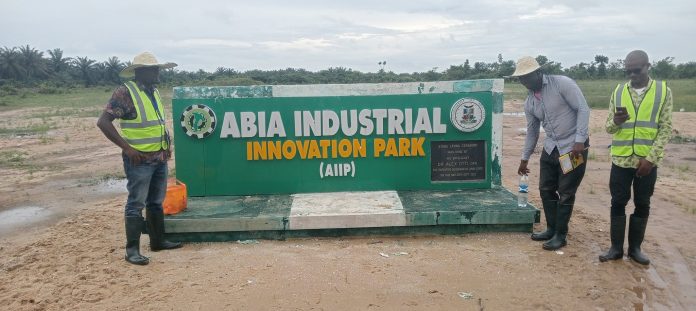
If you run a vocational school, my state of Abia has opportunities here. We would like to have you come to Abia State. Note that with the demand of these skills, you can train and empower young people who will have gainful employment. The state has support mechanisms.

Hello Togolese, Chadians, etc and proprietors in this craft trade…please connect; come to Abia and set up a school. We will provide tons of support because we want to have working ABIA YOUTH.