DD
MM
YYYY

PAGES

DD
MM
YYYY

spot_img

PAGES

Home Blog Page 3803

This Is How You Get Your Money When You Mistakenly Send Money To Someone in Nigeria

0

Have you tried transferring money to someone and you mistakenly mixed up the account digits and you ended up sending money to someone else whom you do not even know?

Well, I found myself in that situation yesterday when I wanted to transfer money to my staff and I mixed up the digits and I ended up transferring money to a total stranger. That got me thinking about what laws/ regulations have been put in place to cater for situations such as this. 

The Central Bank of Nigeria definitely knows that human beings are prone to error, so the chances of making mistakes during electronic transfers are high. They therefore introduced a Regulation for Instant Electronic Transfer Funds (EFT) Services in Nigeria in September 2018. This regulation of the CBN captured every error or mistake that could occur during electronic money transfer and they issued guidelines/ procedures on how affected persons; ie persons who made some mistake during electronic money transfer like sending the above figure and want a refund or sending money in error to other persons and want a refund or a failed transfer and want a reversal etc. 

According to this CBN guidelines, when a person mistakenly sends money to another person, the apex bank suggests that if the sender knows the receiver or can find out who the receiver of that erroneous transfer is, the sender should reach out to that recipient and negotiate for the refund but if the beneficiary is unknown to the sender, the sender should quickly contact his bank (which is the sending entity) and make a complaint of the erroneous transfer and the Sending Entity having received the complaint from the Customer will notify the receiver’s bank which is the Receiving Entity. Upon the notification, the Regulation provides that the Receiving Entity i.e. the receiver’s bank should immediately place a lien on the said amount in the account of the beneficiary and thereafter obtain the consent of the beneficiary to execute a refund back to the sender.

I have also heard of scenarios where a receiver of an erroneous transfer, with criminal intent, quickly withdraws all the money from his account and empties his account so that a reversal cannot be executed by his bank. The CBN in its wisdom also covered this ground in their regulatory guideline. The guideline also provides that when the funds are no longer available in the receiver’s account, the receiver’s bank should immediately notify its Customer about the transaction. The Receiving Entity is also legally obligated to charge the customer to fund the account so that the reversal can be executed and they are to also notify the Customer about the consequences of not funding the account within 24 hours, which is the attraction of sanctions and reporting the customer to the law enforcement agencies.

So according to the 2018 CBN regulatory guidelines on Electronic money transfer, if you erroneously transfer money to the wrong person, you are to reach out to the person (if that is possible) and negotiate your refund with the person but if it won’t be possible for you to reach out to the receiver, quickly contact your bank and lay the complaints with the prove of the transaction, your bank will then contact the receiver’s bank (when the receiver uses a different bank from the sender), the receiver’s bank will then execute a refund back to the sender with the consent of the receiver. 

No doubt that it is not as easy as written here, it takes days, time and a lot of back and forth for all these to be executed but these are the statutory steps to be taken when you find yourself in such a situation and you want your money back. 

Meta is on the right track with their Ray Bans Smart Glasses

0

Meta is one of the leading companies in the field of augmented reality, and their latest product, the Ray Bans, is a testament to their innovation and vision. The Ray Bans are smart glasses that allow users to interact with digital content and applications in a seamless and immersive way.

The glasses are designed to look like ordinary sunglasses, but they are equipped with advanced sensors, cameras, speakers, and microphones that enable a range of features and functionalities. Some of the benefits of the Ray Bans are:

They offer a natural and intuitive interface for accessing information and entertainment. Users can control the glasses with voice commands, gestures, or touch inputs on the frame. The glasses can also respond to contextual cues, such as location, time, or activity.

They enhance the user’s perception and awareness of their surroundings. The glasses can overlay relevant information, such as directions, notifications, or reminders, on the user’s field of view. The glasses can also filter out unwanted distractions, such as noise or glare.

They enable social and collaborative experiences. The glasses can connect users with their friends, family, or colleagues through video calls, messaging, or shared media. The glasses can also allow users to co-create and co-experience digital content in real time.

The Meta Ray Bans come in three styles: Wayfarer, Round, and Meteor. They are available in five colors: black, blue, green, brown, and clear. The lenses can be either polarized or non-polarized, and users can also choose between clear, transition, or prescription lenses.

The glasses have two 5-megapixel cameras on the front corners, which can take photos with a resolution of 2592 x 1944 pixels and videos with a resolution of 1184 x 1184 pixels at 30 frames per second. The cameras have LED indicators that light up when they are recording, to alert others of the user’s activity.

The glasses also have a physical capture button on the right temple, which can be used to take photos or start and stop videos. Alternatively, users can use voice commands to control the cameras, such as “Hey Facebook, take a photo” or “Hey Facebook, record a video”.

The glasses have two open-ear speakers on the bottom of the temples, which can deliver stereo sound to the user’s ears. The speakers can be used to listen to music or podcasts from a paired smartphone, or to make phone calls using the built-in microphone on the right temple.

The microphone can also be used to access the virtual assistant, which can perform tasks such as checking the weather, setting reminders, or launching apps on the smartphone.

The glasses have a touchpad on the right temple, which can be used to adjust the volume, pause or play music, answer or reject calls, or activate the virtual assistant. The touchpad can also be used to swipe through a carousel of filters and effects that can be applied to the photos and videos captured by the cameras.

The glasses have a battery life of about six hours with moderate use, according to Meta. The battery can be charged using a magnetic USB-C cable that attaches to the right

The Ray Bans are not just a gadget, but a platform for creating and consuming immersive and interactive content. Meta is on the right track with their Ray Bans, as they are pushing the boundaries of what is possible with augmented reality. The Ray Bans are expected to launch in 2025, and they will undoubtedly change the way we see and interact with the world.

Nigeria’s digital payment volume hits N600tn in 2023

0

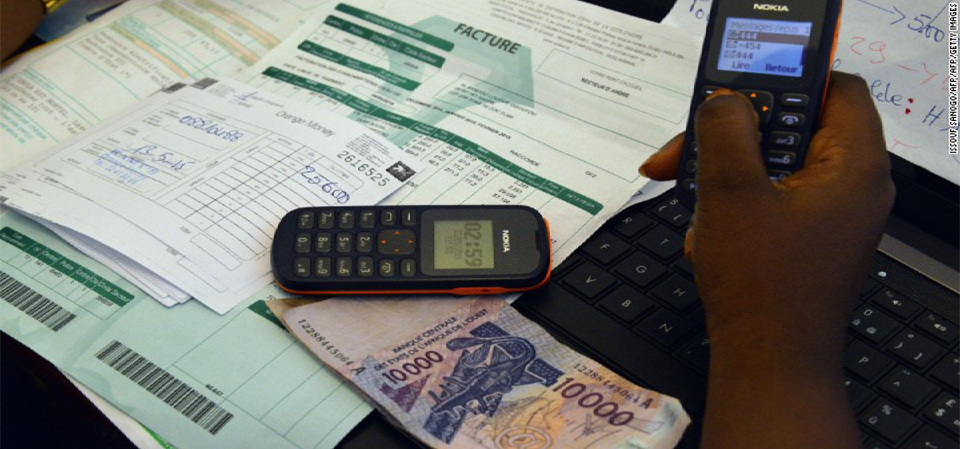
Electronic payment transactions in Nigeria surged to an unprecedented high, reaching the N600 trillion mark in 2023, representing a remarkable 55 percent increase from the previous year’s figure of N387 trillion.

This significant rise was disclosed in recent data released by the Nigeria Inter-Bank Settlement System (NIBSS), underscoring the nation’s accelerating transition towards a cashless economy.

The data further revealed a substantial increase in the total value of point of sale (PoS) transactions, which amounted to N10.73 trillion in 2023 compared to N8.39 trillion recorded in 2022, indicating a notable growth rate of 27.85 percent.

March 2023 emerged as a standout period, witnessing an unprecedented peak in e-payment transactions, with a staggering volume of 1.17 billion transactions, closely followed by December, which recorded 968 million transactions. This surge speaks of the growing reliance on electronic payment systems by Nigerians.

A detailed breakdown of the monthly analysis of electronic transaction values in 2023 sheds light on the evolving trends throughout the year. January commenced with transactions amounting to N38.8 trillion, setting a robust pace for the months ahead. Subsequent months saw fluctuations in transaction values, with March witnessing a substantial surge to N48.3 trillion, attributed largely to the prevailing scarcity of cash during that period.

The momentum continued in the following months, with April recording N41.3 trillion in transactions and May witnessing a further increase to N45.9 trillion. Notably, June saw a marginal decline to N45.3 trillion, followed by a significant leap in July to N47.4 trillion. August marked another milestone with transactions reaching N50.9 trillion, maintaining an upward trajectory through September (N51 trillion), October (N59 trillion), and November (N63.6 trillion), and culminating in the highest recorded value of N71.9 trillion in December.

Similarly, a breakdown of the monthly volume of transactions for 2023 revealed fluctuating patterns, with peaks in March (1.17 billion) and December (968.59 million). Despite some fluctuations, the overall trend indicates a consistent increase in electronic transactions throughout the year, reflecting the growing adoption of digital payment methods across the country.

Impact on Nigeria’s Cashless Policy

The surge in electronic payment transactions carries significant implications for Nigeria’s cashless policy. As the country continues to embrace digital payment solutions, there is a gradual shift away from traditional cash-based transactions, offering numerous benefits such as improved transparency, efficiency, and financial inclusion.

Although it was significantly buoyed by cash scarcity, the robust growth in PoS transactions underlines the increasing acceptance and utilization of card payments among consumers and merchants alike. The substantial fluctuations in PoS transaction values throughout the year reflect changing consumer spending patterns and economic dynamics.

However, amidst the remarkable progress, challenges remain in ensuring the security and integrity of electronic payment systems. The central bank has implemented measures to mitigate related risks, including setting limits for contactless payment transactions and enhancing cybersecurity protocols. Also, initiatives such as the eNaira demonstrate the regulatory efforts to mitigate related risks and ensure the security of electronic transactions.

However, experts’ voices have advocated the need for continuous innovation, regulatory oversight, and infrastructure development to sustain this momentum and address emerging challenges in the digital payment industry. While the impact on financial inclusion and economic growth is undeniable, they said concerted efforts are necessary to address emerging challenges and ensure the continued integrity and resilience of digital payment systems.

PayPal Reports Better Than Expected Fourth-Quarter Earnings, Beat Wall Street Estimates

0

American multinational financial technology company operating an online payment, PayPal, has reported a better than expected fourth-quarter earnings, surpassing Wall Street estimates.

PayPal posted a fourth-quarter adjusted profit of $1.48 per share for the three months ended December 31, 2023. Analysts had expected $1.36 per share.

The company’s revenue rose 9% to $8 billion in the quarter, on a currency-neutral basis, beating expectations of $7.87 billion. The number of active accounts fell 2% to 426 million, trailing analyst expectations of 427.17 million.

PayPal net income rose 52% to $1.4 billion, or $1.29 per share, from $921 million, or 81 cents per share, a year earlier. The company reported total payment volume of $409.8 billion for the quarter, up 15% from the prior year and surpassing the $405.51 billion expected by analysts.

Moving ahead, the payments giant provided guidance for the full year and first quarter that fell just short of expectations. The company anticipates full-year earnings of $5.10 per share, below the $5.48 analysts expected.

For the first quarter, PayPal estimated year-over-year (YoY) earnings per share growth would fall in the mid-single digits, compared with a consensus estimate of 8.7%.

In a bid to ensure a more profitable year for 2024, recall that last month PayPal introduced new Artificial Intelligence (AI) features, the first major announcement under CEO Alex Chriss who described it as the start of the company’s next chapter.

He disclosed that the integration of the technology is to drive significant transformations to drive profitable growth in the years ahead.

Speaking on the company’s plan for 2024, he said,

“We characterize 2024 really as a year that we need to focus on execution, and a year of transition while we start to have conversations about profitability with our partners and conversations about getting our go-to-market muscle really accelerated”.

PayPal is currently undergoing a transition under its new leadership as it faces tight competition in the market for online payments and navigates shifts in its business mix that have been weighing on margins.

For the current quarter, PayPal anticipates a mid-single digit increase in adjusted EPS relative to the $1.17 that the company posted a year prior.

With the integration of AI into its platform, PayPal looks to lean into future innovation to become everyday commerce enablers. The company expects more innovative features in 2024, which include commerce management tools like PayPal’s Smart Receipts and passwordless checkout.

By the end of 2024, it expects most of these features to be commonplace in all digital wallets, as it plans to lean further into innovation to differentiate itself from competitors.

Apple Acquired A Staggering 32 AI Startups in 2023 – Report

0

According to a recent Stocklytics report, tech giant Apple is reported to have acquired up to 32 AI startups in 2023, the highest number among tech giants.

In the overall AI startup acquisition, Google trails behind Apple with 21, followed by Meta with 18 and Microsoft with 17.

Stocklytics Financial Analyst Edith Reads, commenting on the data said Apple’s massive acquisition of AI startups puts the company in a good position for future tech developments amongst its competitors.

Her comment reads,

In the ongoing Al arms race, Apple is making sizeable deals with many Al startups, putting it in a good spot for future tech developments even as its competitors Microsoft and Google, make considerable investments in already established Al companies. By acquiring promising Al startups, Apple gains access to top-tier talent and innovative technologies and consolidates its foothold in crucial Al domains, ensuring a competitive edge in the rapidly evolving tech landscape”.

Despite the acquisition of numerous AI startups, Apple has been quite subtle in integrating AI capabilities into its products compared to other companies like Google and Samsung. While Apple has updated the software and hardware in its devices with the help of AI and machine learning, Samsung and Google have moved progressively faster with their latest phones and devices, building on their own generative AI.

However, statistics reveal that the Cupertino giant is well ahead of its competitors in equity and add-on investment in AI technologies. One notable aspect of Apple’s acquisition is that the company is acquiring early-stage startups, indicating a proactive strategy to identify and invest in emerging AI trends and technologies.

Apple CEO Tim Cook has disclosed the company’s plans to invest in Artificial intelligence (AI) as well as other technologies, as he hints at a possible announcement later this year.

In his words,

“As we look ahead, we will continue to invest in these and other technologies that will shape the future. That includes Artificial Intelligence where we continue to spend a tremendous amount of time and effort, we are excited to share the details of our ongoing work in that space later this year”.

Recall that last year October, Apple disclosed that it is on track to spend $1 billion per year on developing its generative Artificial Intelligence products. The company’s CEO however remarked that Apple is directing its energy into research on AI. A push into large language models (LLM) has seen Apple touted to make 2024 the year of AI.

The company has already announced a new open-source text-powered image editing tool that could one day be built into Siri and other Apple initiatives. The tool allows people to provide an image and text commands on the changes they want including alterations to colors, sizing, and more.

It is increasingly clear that Apple is keen to ensure that it closes the Al gap between its products and those offered by its competitors, as it possibly could look to integrate AI features into its iPhone 16.