DD
MM
YYYY

PAGES

DD
MM
YYYY

spot_img

PAGES

Home Blog Page 3807

Mohbad’s Death: The Core Reason Record Labels Fallout With Their Artistes

1

I have so much tried to get my mind off Mohbad’s death and the events that led to his untimely demise, but honestly, I just can’t. I always find myself going back to his bullying videos, and his old music, reading up and asking those I know who are close to him what has been done and what’s the update about the so-called investigation over the cause of his death.

It is true that he is dead and buried, hence that cannot be undone but what we should be interested in is to make sure that nobody suffers the same fate as him. What the police should be interested in is dismantling the cult groups that parade themselves as record labels. Most so-called record labels in Nigeria are death traps for young artists.

It is always the case with most of these record labels that once an artiste wants to leave the label or has a different opinion with the label there will be fallout that sometimes leads to death. It happened with Runtown and his former record label boss Eric Many and it involved a series of police cases and ended up in the courtroom, a close source said that Runtown had to run for his life to avoid being killed. It happened with Kizz Daniel and his former record label G Worldwide. G Worldwide had to take an injunction from the court to stop Kiss Daniel from performing in shows or releasing new music and to have him change his name from Kiss Daniel to something else, Kiss Daniel had to change his name to Kizz Daniel.

It happened with Harrysongs with his former record label, Five Star Music, it ended in a police and court case too. These names I mentioned are some of the cases that made it to the public domain. I can tell you for free that there are hundreds of others too, some of which I and my law firm have handled; the core issues of the case always revolve around the artists wanting to leave and the label insisting that he is not going anywhere yet or that the artiste is yet to fulfill his obligations to the label. In fact, it happened with Wizkid and his former label, EME Records, a close source said that Wizkid had to forgo everything including his masters and royalties and his outstanding pay to start life afresh.

I have handled numerous cases which revolve around this issue and you need to be there to see the record label boss threatening to destroy the artiste and make sure he never does music again for wanting to leave. Some record label bosses do claim that they picked the artiste when they were nobody, made them a star and they are ungrateful for wanting to leave.

If you read music contracts, there are obligations on the side of the artiste and on the side of the record label and there are damages for any party that does not fulfill its own side of the obligation. It is a business relationship and should never be do or die. If an artiste feels he wants to exit the label and do something else before the effluxion of the contract, there are clauses in the contract that state his damages, some of the clauses include the artiste paying back some many to the record label, some include the artiste forgoing his royalties or his masters.

Some artists for the sake of peace are always ready to do anything like changing their name or never performing the songs they released under the label but the label will still ask for their heads.

This is sad, it is high time the law and legislation shine its light on the Nigerian music industry because a lot is happening there and that is why the death of Mohbad is quite significant as it has started this conversation. Many artists are now speaking up and crying for public help and we are obligated to help them before they will lose their lives like Mohbad.

President Tinubu Approves Appointment of 18 New Presidential Aides

0

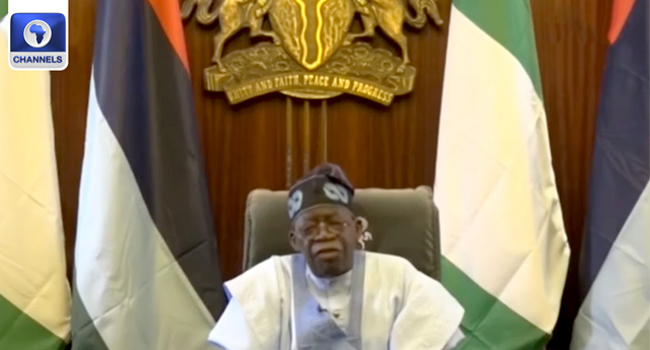
President Bola Ahmed Tinubu has approved the appointment of 18 special advisers and senior special assistant to work with him in the different sectors of the economy through the office of the Vice President and towards the actualization of the renewed hope agenda.

The names of the new presidential aides were revealed in a statement released by the Director of information, office of the vice president, Mr Olusola Abiola, on Monday in Abuja.

According to Mr Abiola, the new appointees comprised six special advisers and twelve senior special assistants all whom would work in the office of the Vice president, Kashim Shettima, to support the renewed hope agenda of the Tinubu-led administration.

Among the new presidential aides is Rukaiya El-Rufai, a financial expert and daughter of former Kaduna State Governor, Nasiru El-Rufai. Also included in the list is Hakeem Baba Ahmed, spokesperson of the Northern elder forum, Jumoke Oduwole, Kingsley Nwokocha, Bashir Maidugu among others.

The full list including the names and portfolios of the new presidential aides are here below:

  1. Rukaiya El-Rufai as Special Adviser to the president on National Economic Council (NEC) and Climate Change
  2. Tope Kolade Fasua as Special Adviser to the president on Economic matters.
  3. Aliyu Modibbo as the Special Adviser, General Duties.
  4. Hakeem Baba-Ahmed as Special Adviser, Political Matters
  5. Jumoke Oduwole, Special Adviser to the President on Presidential Enabling Business Environment Council (PEBEC) and Investment.
  6. Sadiq Wanka, Special Adviser to the President on Power Infrastructure;
  7. Usman Mohammed, Senior Special Assistant to the President on Administration and Office Coordination
  8. Kingsley Nkwocha, Senior Special Assistant to the President on Media and Communications.
  9. Ishaq Ningi, Senior Special Assistant to the President on Digital Media and Emergency Management.
  10. Peju Adebajo, Senior Special Assistant to the President, Investment and Privatisation.
  11. Mohammed Bulama, Senior Special Assistant to the President on Political/Special Duties.
  12. Kingsley Uzoma as Senior Special Assistant to the President on Agribusiness and Productivity Enhancement.
  13. Gimba Kakanda, Senior Special Assistant to the President, Research and Analytics.
  14. Temitola Adekunle-Johnson as the Senior Special Assistant to the President, Job Creation and MSMEs.
  15. Nasir Yammama, Senior Special Assistant to the President, Innovation.
  16. Zainab Yunusa, Senior Special Assistant to the President on NEC.
  17. Mariam Temitope as Senior Special Assistant to the President, Regional Development Programmes.
  18. Bashir Maidugu, Deputy State House Counsel (Senior Special Assistant to the President).

A Stable Naira is Crucial for Economic Stability and Attracting Foreign Investment – US Deputy Secretary of Treasury

0
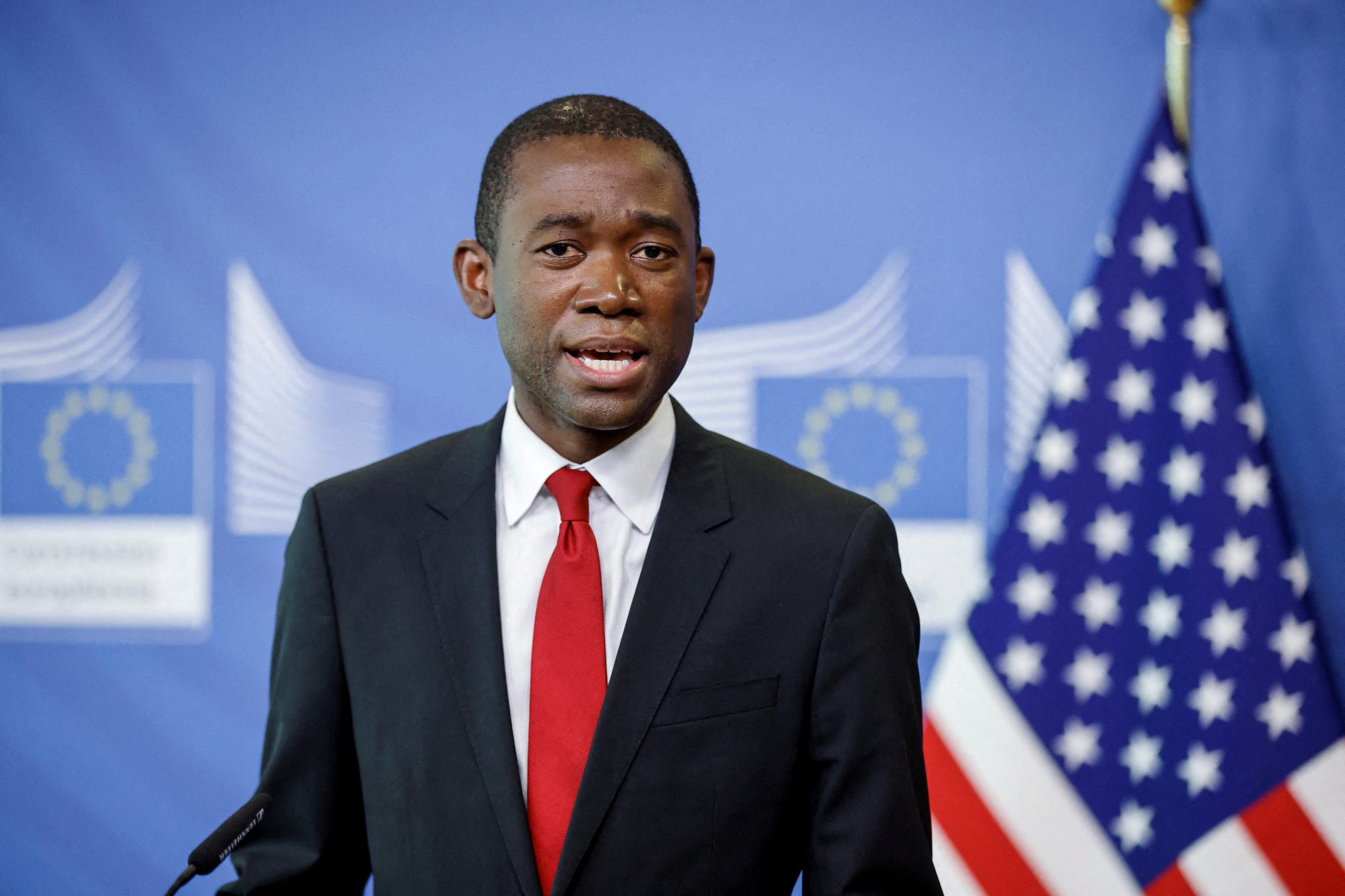
FILE PHOTO: U.S. Deputy Treasury Secretary Wally Adeyemo speaks during a joint news conference with EU Commissioner McGuinness (not pictured) in Brussels, Belgium March 29, 2022. REUTERS/Johanna Geron/Pool

The United States Deputy Secretary of Treasury, Wally Adeyemo, who is on an official visit to Nigeria, has outlined key areas the country needs to work on to achieve maximum economic growth.

In his address at the Lagos Business School on Monday, Adeyemo noted that apart from oil, Nigeria is rich with several resources led by its teeming youthful demographic. He said with Africa’s largest economy’s potential to become the fourth most popular country in the world in 2050, the US is ready to be her partner in accelerating progress on the economic reforms.

Adeyemo thus outlines four key factors for economic growth in Nigeria that the government needs to focus on.

  1. Stable Currency: Achieving a stable Naira is crucial for economic stability and attracting foreign investment. Unifying foreign exchange rates is seen as a positive step in this direction.
  2. Fiscal Strategy: The government should implement a fiscal strategy to fund critical investments in infrastructure, education, and small businesses. Ending fuel subsidies is viewed as a necessary move to generate resources for these investments, particularly in the agriculture sector.
  3. Corruption Eradication: Corruption and the perception of corruption must be addressed to ensure that economic reforms benefit the people rather than the powerful. Transparency, accountability, and online government services can help combat corruption and improve the business environment.
  4. Financial System Integrity: Protecting the integrity of Nigeria’s financial system is essential to prevent money laundering by criminals, corrupt officials, and fraudsters. Strengthening the banking system is key to achieving this goal.

Read his full address below:
Remarks of United States
Deputy Secretary of Treasury
Wally Adeyemo

Thank you all for joining me. I want to start by thanking the Lagos Business School for graciously hosting us. I’m glad to be here today representing President Biden and the United States government.

My visit this week comes on the back of those of many other officials in the Biden Administration, including Secretary of State Blinken. President Biden is committed to a strong U.S.-Nigeria relationship built on shared values and mutual benefit. Our Administration recognizes that your economic success is not only important to the approximately 200 million people who call Nigeria home; it is important to the region, the continent, and the global economy.

Nigeria is, as you know, the largest economy in Africa and will be the fourth most populous country in the world by 2050. Nigeria’s economic and social impact can be felt well beyond your borders with a diaspora that has spread across the world, bringing with them the unbounded creativity and innovation that you find in every city and village.

As a child of the diaspora, I am humbled to be standing here in front of you as the U.S. Deputy Secretary of the Treasury. More than four decades ago, my parents left a very different Nigeria to get an education in search of opportunities for their young family. They raised us with a deep and abiding love for Nigerian culture and the struggles of a people that fought to be free of colonialism and the yolk of dictatorship. A people filled with so much potential but with too few opportunities.

In so many ways Nigeria is a different country than the one we left more than forty years ago, but progress on expanding economic opportunity has come more slowly than any of us hoped.

I am here to talk about how the United States can be your partner in accelerating progress on economic reforms.

I am here because we know that a strong and prosperous Nigeria is not only good for you, but it is also good for the United States of America.
I am here because unlocking Nigeria’s economic success can transform an entire continent.

Economic Opportunity

This is a critical moment in Nigeria, where decisive actions by your government and the determination and shared effort of the Nigerian people can create the changes needed to unlock the unrealized opportunity of Africa’s most populous country.

Nigeria’s greatest resource is not oil, it is the Nigerian people. Nigerians have built leading companies around the world like the Dangote Group, Globacom, and Zenith Bank. Nigerians have made significant contributions to culture from Wole Soyinka to Chinua Achebe. Nigerian music and films are heard and watched around the world, and I’m excited to tour Ogidi Studios this evening to see one of many places where this art is made.

Today one of Nigeria’s greatest opportunities is the fact that around three in five Nigerians are below the age of 25, creating the possibility for Nigeria to reap a tremendous “demographic dividend,” as the proportion of working people in the country grows.

That possibility lies with you, the students here at the Lagos Business School. Creating jobs and access to opportunity for the tens of thousands of students and executives that come through here, and your peers all over this country is essential to Nigeria’s success.

In addition to being on the right side of demographics, Nigeria is also blessed with an array of natural resources and innovative companies. It is clear from my conversations with investors and foreign companies that they are eager to invest in Nigeria to help grow a diversified economy that can meet your needs. We know that with the right macroeconomic framework, Nigeria can be a destination of choice for foreign direct investment.

While demographics and capital can fuel a Nigerian economic boom, small and medium-sized enterprises will sustain your growth. There are more than 40 million micro, small, and medium-sized businesses in the country, which employ more than 80 percent of Nigerians. These businesses represent the beating heart of the Nigerian economy. In order for these businesses to thrive, they need government policy to go from being the problem to providing solutions.

Nigerians are at the heart of the innovation that is blossoming all over Africa. From arts to technology, the economy is more diverse today than even a few years ago. Tomorrow, I’m looking forward to touring Vibranium Valley and meeting with leaders in venture capital, fintech, healthcare, and more. These firms have the ability to be drivers of growth here in Nigeria, but they require an ecosystem of public-private partnerships that fosters investment.

The Tinubu Administration and the people I’ve met with – from students to entrepreneurs to major business leaders – all share a common understanding of the challenges and opportunities Nigeria faces. The question now is how to forge a path forward that creates prosperity for the Nigerian people. I am here to say that the United States stands ready and eager to partner with the Nigerian people and government in your quest to build a better future.

Our Partnership

Before I talk about specific areas in which we are keen to partner, let me first take a minute to discuss why I have faith in our partnership. Our countries have enjoyed a decades-long relationship that has only grown since democracy returned to Nigeria in 1999. The heart of this relationship is people.

America is home to over half a million Nigerian-born American citizens and permanent residents. This vast diaspora community brings a rich culture, a penchant for entrepreneurship, and wide-ranging economic and social contributions.

Thousands of Nigerians study each year in the United States, including through educational exchanges like the Fulbright and Humphrey fellowship programs and the Mandela Washington Fellowship that seeks to foster the next generation of young African leaders.

Thousands of United States citizens call Nigeria home. We also have a number of American companies from different sectors that have made significant investments in Nigeria, from Google to General Electric.

Today, the United States is one of the largest foreign investors in Nigeria and Nigeria stands as America’s second-largest African trading partner.

In addition to our countries’ trade, the U.S. government provided Nigeria with over $1 billion in assistance last year, helping to support Nigerians with access to health care and reducing food insecurity.

Four Economic Reform Priorities

There are many reasons why the United States is committed to this partnership – from our people-to-people relationships to our shared values to our common economic and security interests. I want to spend the remainder of my remarks highlighting some of the steps needed for the type of growth that creates economic opportunity for the Nigerian people.

First, Nigeria needs a stable Naira. You stop into any small business or market, and you will hear shop owners and customers bemoaning the lack of a stable currency. Unifying Nigeria’s foreign exchange rates will create the kind of macroeconomic stability that is essential to attracting foreign investment. We commend the difficult steps your government has already taken to accomplish this goal. The path to unification is not easy, but going backward would be even worse.

Second, the government needs to articulate and implement a fiscal strategy that will provide the resources to make critical investments. I recognize the decision to end fuel subsidies is hard for many Nigerian households, but it was an important early step to create resources the government can use to invest in physical and digital infrastructure, education, and a strong small business environment.

There is nowhere this need is greater than the agriculture industry, which despite the digital revolution taking place remains Nigeria’s top employer. Its full potential is held back by issues like access to fertilizer, limited use of new technology, access to water and land, the availability of credit, and high market entry costs.

The need for economic reform does not demand indifference to the pain caused by this transition. This is why partners like the World Bank and African Development Bank are committed to working with your government to provide resources and advice to help smooth this transition for the Nigerian people.

The third factor for growth is the rooting out of corruption and the perception of corruption in the business environment. I know the Nigerian people are willing to make sacrifices in the service of progress but have a legitimate fear that corruption and mismanagement will dash their hopes that the benefits of these reforms will enrich the people rather than the powerful. I know that Nigerians agree with Wole Soyinka that “it is not fair to those who fight corruption that they have to fight the aggressiveness, the impunity of the corrupt.” Creating economic opportunity will require a government-driven effort that addresses these fears by shining a light on corruption, holding people accountable, and taking meaningful steps to improve the business climate.

For example, Nigeria is a hotbed for digital entrepreneurship. Taking simple steps like moving government functions online, so Nigerians can apply for business licenses and visas using their smartphones and computers will help improve services and reduce opportunities for fees to go into pockets rather than government coffers. This new government also has the ability to fight skepticism by making reforms that will allow the Nigerian people to better understand how federal, state, and local resources are being used.

Fourth, and finally, is protecting the integrity of Nigeria’s financial system. The cowardly kidnapper, corrupt official, and fraudster all are seeking to launder their money. Taking steps to make your banking system more secure will help reduce the ability of criminals, terrorists, and others to illicitly use the Nigerian financial system.

I applaud the leadership of the Tinubu Administration for committing to work with the Financial Action Task Force to tackle money laundering and terrorist financing. Our government stands ready to help work through these steps and challenges in financial institution supervision, implementing controls in high-risk sectors, and pursuing investigations and prosecutions.

Deepening Our Relationship

President Biden and our whole administration are committed to taking steps in these key areas that are at the heart of long-term economic growth. As I said at the start, over the past few decades, progress in Nigeria has not been as fast as many hoped or anticipated.

But, at the same time, the opportunity has never been greater. Your government is pursuing difficult and bold reforms. Your businesses and founders are bursting with ambition and new ideas. And the students I talk to are optimistic and demanding; you all are ready to lead Nigeria to a new chapter. And the United States looks forward to being a partner as you build an economy that works for all Nigerians.

With that, I am eager to hear from you all and have a conversation. Thank you all.

Musk Discloses Plan to Put X (Twitter) Behind Paywall

0

Elon Musk said Monday he plans on “moving toward having a small monthly payment for use of the X system” in an effort to keep bots off the platform. The plan is coming months after he introduced monetized features on the platform. 

Musk announced the move during a live-streamed conversation with Israeli Prime Minister Benjamin Netanyahu, who is currently visiting the US. 

The conversation was based on stopping anti-Semitism on X, formerly Twitter. The world’s richest man said X will come out with a “lower tier of pricing” of “a small amount of money” that all users would have to pay, in addition to the premium service, X Blue.

Musk, who attributed the growing cases of anti-Semitism on X to bots, said that creating a paywall is “the only way I can think of to combat vast armies of bots.” 

He was responding to Netanyahu’s statements that curbing anti-Semitism on X might require preventing the use of bots on the platform. 

The Tesla CEO explained that bots cost “a fraction of a penny,” but if to use X, a user had to pay “a few dollars” or “some minor amount” it would make the effective cost of creating a large amount of bots “very high.”

He had sought to back out of Twitter acquisition deal last year, citing an overwhelming number of bots on the platform – but was forced to complete the deal after Twitter sued him. Musk, who months after the acquisition, said that the number of bot accounts on the platform has significantly been reduced, also said that the AI the bots use now is getting better at passing CAPTCHA tests meant to detect bots than humans.

However, some analysts believe that creating a paywall has the potential to hurt X’s growth. The company has been grappling to bring back advertisers and users who left due to the controversial changes introduced by Musk after his takeover. Introducing a paywall is expected to significantly cut the number of users on the platform.

Musk’s attempt to monetize the verification system under X Blue, has not been largely successful, as only a low percent of users have signed up for the Blue Subscription. 

The mass exodus of advertisers has significantly impacted X’s revenue, jeopardizing Musk’s aim to recoup his spending and make the platform profitable. The company was operating at a loss around the period of his takeover. Twitter reported a $344 million loss in its last quarterly earnings report before the acquisition.

Earlier this month, Musk said X’s advertising revenue was down 60%. X Blue has also failed to bring in the expected revenue due to low subscription, even though it comes with added features such as more characters, the ability to edit posts after you posted them, and having your posts promoted over other non-Twitter Blue users.

Also, the company transformed the well-known TweetDeck service, which enables users to access multiple feeds displaying content such as users and lists, into XPro. In August, they introduced a fee for using this service.

A small monthly fee for users of X, formerly Twitter, could stop bots, according to Elon Musk. He said that introducing a subscription service would drastically slow the “vast armies of bots” as operators would need to individually pay for each account. X is currently free for most users, although it has a subscription service some pay for, as well as some brands. X now has 550 million “monthly users,” who generate 100 million to 200 million posts per day, said Musk, who made the comments during a livestream Monday with Israeli Prime Minister Benjamin Netanyahu.

Zambian Neobank Lupiya Secures $8.25m in Series A Round For Expansion Into New Markets

0

Lupiya, a Zambian venture-backed Fintech startup that provides online loans, has announced the raise of $8.25 million series A funding to expand into new markets.

The funding round was led by Alitheia IDF Fund, with participation from INOKS Capital SA and the German Investment Bank KfW DEG.

Lupiya will use the funds raised to enhance its technological infrastructure, expand its range of financial products, and expand its operations, enabling the Fintech startup to serve a broader customer base.

Speaking on the funds raised, Co-Founder and CEO of Lupiya Evelyn Chilomo Kaingu said,

“This Series A investment marks a significant milestone in our journey to continue serving our customers and the opportunity to further provide holistic financial solutions. The team at Lupiya has worked hard and is excited about the new phase of our growth. With the support of Alitheia IDF, INOKS Capital, Mastercard, and Kfw DEG, we are better poised to scale our operations and deepen our footprint not just in Zambia but also in the broader Southern and East African region.”

Also speaking on the funding round, lead investor and co-managing partner of Alitheia IDF Fund Polo Leteka said,

“We have always been on the lookout for startups that are at the cusp of making a significant impact in the financial sector of Africa. Lupiya’s vision and dedication to financial and gender inclusion resonates deeply with our own objectives. We believe that with this funding, they will be better equipped to make financial services accessible to many more Zambians”.

As fintech solutions continue to reshape the African financial ecosystem, Lupiya’s fresh capital infusion is yet another testament to the continent’s dynamic and evolving digital economy.

Founded in 2016, Lupiya operates as an online marketplace for microloans, offering an innovative digital microfinance platform. Leveraging technology, Lupiya simplifies the borrowing process, making it accessible to individuals and businesses across the country, including those in remote, rural areas.

Lupiya’s goal is to expand access to credit and lower the cost of borrowing for millions of Zambians.

The Fintech startup aims to level the playing field for all Zambians by offering low-cost lending products and attainable options for security.

Lupiya distances itself from traditional lenders by being accessible to marginalized and unbanked communities and offering lending practices that are transparent and fair.

More than profit, the startup is driven by creating a landscape that promotes an economically empowered Zambia.

Lupiya’s mission is to foster financial inclusion in Zambia by simplifying borrowing processes and requirements. The startup believes that every Zambian should be accorded a fair opportunity to access financing