DD
MM
YYYY

PAGES

DD
MM
YYYY

spot_img

PAGES

Home Blog Page 3814

Why Canada is Limiting International Student Permits and Who will be Affected

0

Canada is a popular destination for international students who want to pursue higher education and gain valuable work experience. However, in recent years, the Canadian government has introduced some changes to the eligibility criteria and processing times for international student permits.

These changes are aimed at preventing fraud, ensuring quality education, and protecting the interests of Canadian workers and employers. In this blog post, we will explain what these changes are, why they were implemented, and how they will affect prospective and current international students in Canada.

One of the major changes that the Canadian government has made is to limit the number of international student permits that can be issued per year. According to Immigration, Refugees and Citizenship Canada (IRCC), the annual cap for 2024 is set at 500,000, which is a significant reduction from the previous years.

This means that not all applicants who meet the minimum requirements will be granted a permit, and some may have to wait longer or reapply in the next year. The IRCC says that this measure is necessary to maintain the integrity of the program and to ensure that there are enough resources and opportunities for international students who are already in Canada.

Another change that affects international students is the introduction of a new online portal for submitting applications and documents. The portal, which was launched in October 2023, is designed to streamline the application process and to reduce processing times.

However, some applicants have reported technical issues and delays in accessing the portal, especially during peak periods. The IRCC advises applicants to submit their applications well in advance of their intended start date and to check the status of their applications regularly on the portal.

A third change that impacts international students is the revision of the post-graduation work permit (PGWP) program. The PGWP program allows international students who have completed a qualifying program of study in Canada to work in Canada for up to three years after graduation.

This gives them an opportunity to gain Canadian work experience and to apply for permanent residency if they wish. However, starting from January 2024, the IRCC has tightened the eligibility criteria and the duration of the PGWP program. To qualify for a PGWP, international students must:

  • Have completed a full-time program of at least eight months in duration at a designated learning institution (DLI) in Canada
  • Have maintained a valid study permit throughout their program
  • Have applied for a PGWP within 180 days of receiving their final marks or official notification of program completion
  • Have a valid passport or travel document at the time of application

The duration of the PGWP will depend on the length of the program completed by the student. For programs that are less than two years in duration, the PGWP will be equal to the length of the program. For programs that are two years or longer in duration, the PGWP will be three years. However, if the student has previously obtained a PGWP, they will not be eligible for another one.

The IRCC says that these changes are intended to ensure that the PGWP program aligns with its objectives of attracting skilled workers and supporting economic recovery. However, some critics argue that these changes will discourage international students from choosing Canada as their study destination and will limit their options for staying and working in Canada after graduation.

These are some of the major changes that have affected or will affect international students who want to study and work in Canada. If you are an international student who is planning to apply for a study permit or a PGWP, you should familiarize yourself with these changes and prepare your application accordingly. You should also consult with an immigration consultant or lawyer if you have any questions or concerns about your eligibility or status.


The Crime Of Buying A Stolen Property

0

A retired Assistant Inspector General of police was recently in the news having been found in the possession of a stolen vehicle. Although he claimed to have purchased the vehicle from a market auction, thereby having acquired a good root of title to the sport utility vehicle (SUV), he also claims to have no idea that the vehicle was stolen before it was auctioned. 

Readers should take note that buying a stolen item even at the auction is a criminal offence punishable with prison terms in Nigeria. There are a lot of cases with similar facts where the courts have convicted persons simply because they received or bought a stolen item. Some of these convicts are ignorant of the fact that the goods they bought or received were stolen but as we say in law; “ignorantia numquam excusat ante legem” (ignorance is never an excuse before the law). 

In October 2022, three friends were arraigned before the Grade I Area Court, Kado in Abuja for allegedly buying stolen goods. They were subsequently convicted by the court for criminal conspiracy and for receiving stolen property. Also, back in 2011, An Area Court in Jos sentenced two traders, Imirana Samaila and Mohammed Sani to three years imprisonment for buying stolen motor spare parts. 

This offence of receiving stolen goods contravenes the provisions of Sections 97 and 317 of the Penal Code (which is applicable in Northern Nigeria) and Section 427 of the Criminal Code Act (which is applicable in Southern Nigeria). 

Section 427 of the Criminal Code act states that “any individual who obtains any property through any act establishing a felony or misdemeanor, or through whatever act performed outside of Nigeria that would have constituted a felony or misdemeanor if done in Nigeria would have constituted a felony or misdemeanor, and which is an offence under the laws in force in the place where it was done, knowing the same to have been so obtained, is guilty of a felony”. This statute places the punishment of seven years jail term to life imprisonment for the offenders. 

For a receiver of a stolen item to be prosecuted, the prosecutor must prove that the item in question was indeed stolen and in the case of BABAGANA v. STATE (2020) LPELR-51431(CA) the court of appeal itemized six ingredients that must be proven or be present before an item will be deemed to have been stolen and according to the appellate court, those ingredients are; 

  1. That the property in question is movable property.
  2. That the property was in the possession of a person. 
  3. That the accused person moved the property whilst in the possession of the person. 
  4. That he did so without the consent of that person. 
  5. That he did so in order to take the property out of the possession of that person. 
  6. That he did so with the intent to cause wrongful gain to himself or wrongful loss to that person.

The only time that a person can purchase a stolen property and will not be prosecuted is when the purchaser purchases the item from market overt because it is deemed that a reasonable person will presume that any good sold on market overt has a good root of title. A buyer in a market overt acquires a good title to the goods.

Nigeria still a Lucrative Destination for Foreign Airlines, Despite Economic and Security Challenges

0

A recent report by the Central Bank of Nigeria (CBN) has revealed that foreign airlines operating in Nigeria withdrew a whopping N795 billion from the country in the first half of 2023. This represents a 25% increase from the same period in 2022, when they withdrew N636 billion.

The report, which was obtained by our correspondent, attributed the huge outflow of funds to the high demand for foreign exchange by the airlines, as well as the scarcity and volatility of the naira.

The report also noted that the COVID-19 pandemic and the insecurity challenges in some parts of the country have adversely affected the aviation sector, leading to low passenger traffic and reduced revenue.

According to the report, some of the major foreign airlines that withdrew funds from Nigeria in H1 2023 include Emirates, British Airways, Lufthansa, Air France, Turkish Airlines, Ethiopian Airlines, Qatar Airways, and KLM. The report stated that these airlines accounted for 80% of the total outflow of funds by foreign airlines in Nigeria.

The report further revealed that the CBN has been intervening in the foreign exchange market to meet the needs of the airlines, as well as other critical sectors of the economy. The report stated that the CBN sold $2.6 billion to the airlines in H1 2023, compared to $2.1 billion in H1 2022. The report added that the CBN has also been working with other stakeholders to address the challenges facing the aviation sector and to ensure its sustainability and growth.

The impact of this situation is manifold. On one hand, it shows that Nigeria is still a lucrative destination for foreign airlines, despite the economic and security challenges. On the other hand, it also indicates that Nigeria is losing a huge amount of foreign exchange that could have been used for other developmental purposes.

Moreover, it puts pressure on the naira and makes it more difficult for Nigerians to travel abroad or import goods and services. Therefore, there is a need for more policy measures to stabilize the naira and boost domestic aviation.

One of the ways that Nigeria can boost its domestic aviation is by improving its infrastructure and safety standards. According to a report by the International Air Transport Association (IATA), Nigeria ranks among the lowest in Africa in terms of airport infrastructure quality and aviation safety performance.

The report also stated that Nigeria has one of the highest costs of doing business in aviation in Africa, due to high taxes, fees and charges. These factors discourage both local and foreign investors from entering or expanding their operations in the Nigerian aviation market.

Another way that Nigeria can boost its domestic aviation is by supporting its local airlines and creating a level playing field for them. Currently, Nigerian airlines face stiff competition from foreign airlines that have access to cheaper and more reliable sources of funding, maintenance and fuel. Nigerian airlines also suffer from multiple taxation, regulatory bottlenecks and operational challenges that affect their profitability and viability.

The government should provide incentives and subsidies to Nigerian airlines to enable them to acquire new aircraft, upgrade their fleets and expand their routes. The government should also ensure that foreign airlines comply with the bilateral air service agreements (BASAs) that regulate their operations in Nigeria.

A third way that Nigeria can boost its domestic aviation is by promoting its tourism potential and attracting more visitors to its various destinations. Nigeria has a rich and diverse cultural heritage, natural beauty and wildlife that can appeal to both domestic and international tourists.

However, Nigeria’s tourism sector is underdeveloped and underutilized due to poor infrastructure, security issues and negative perception. The government should invest more in developing and marketing its tourism products and services, as well as improving its security and hospitality standards. This will increase the demand for air travel within and outside Nigeria and create more opportunities for domestic airlines.

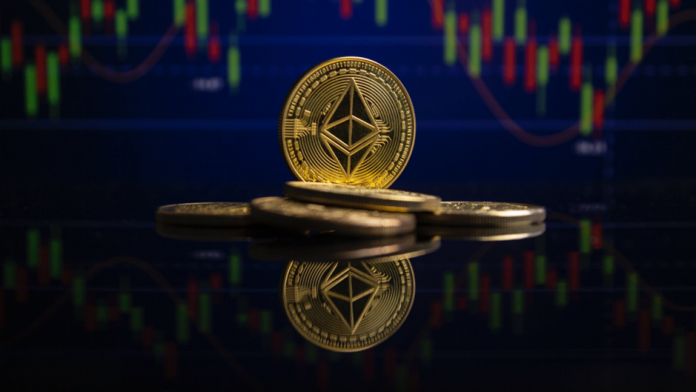
Ethereum Poised to soar in 2024 with ETH ETF listing, as South Korea’ explores Bitcoin ETFs

0

Ether, the native cryptocurrency of the Ethereum network, has been showing remarkable strength and resilience in the past few years, despite the volatility and uncertainty in the broader crypto market. In 2024, many analysts and experts believe that Ether could be poised to soar even higher, on the back of hopes of a spot ETH exchange-traded fund (ETF) listing in the US.

A spot ETH ETF is a type of investment product that tracks the price of Ether directly, rather than through futures contracts or other derivatives. This means that investors can gain exposure to Ether without having to buy, store, or manage the digital asset themselves. A spot ETH ETF would also provide more liquidity, transparency, and regulatory oversight for the Ether market, potentially attracting more institutional and retail investors.

The prospect of a spot ETH ETF has been a long-awaited and highly anticipated event for the Ethereum community, as well as for the crypto industry as a whole. However, the US Securities and Exchange Commission (SEC) has been reluctant to approve any crypto ETFs so far, citing concerns about market manipulation, fraud, custody, and investor protection. The SEC has rejected several proposals for Bitcoin ETFs over the years and has delayed its decision on several others.

However, there are some signs that the SEC may be warming up to the idea of a crypto ETF, especially after the appointment of Gary Gensler as the new SEC chairman in 2021. Gensler is a former MIT professor who taught courses on blockchain and digital currencies and is widely regarded as a crypto-friendly regulator. In his confirmation hearing, he said that he would work to foster innovation in the crypto space, while also ensuring investor protection and market integrity.

In addition, the SEC has recently approved several Bitcoin futures ETFs, which are seen as a precursor and a test case for a spot Bitcoin ETF. A Bitcoin futures ETF tracks the price of Bitcoin through contracts that expire at a certain date in the future, rather than through the actual spot price of Bitcoin. While a Bitcoin futures ETF is not as ideal as a spot ETF, it still offers investors a way to access the crypto market through a regulated and familiar vehicle.

The success of the Bitcoin futures ETFs could pave the way for a spot ETH ETF in 2024, as the SEC gains more confidence and experience in regulating crypto products. Moreover, Ether may have some advantages over Bitcoin in terms of getting an ETF approval, such as its lower energy consumption, its more diverse use cases, and its ongoing transition to a proof-of-stake consensus mechanism.

If a spot ETH ETF is approved in 2024, it could trigger a massive rally for Ether, as more capital flows into the Ethereum ecosystem. According to a report by Bloomberg Intelligence, a spot ETH ETF could boost Ether’s price to $10,000 by 2024, representing a more than four-fold increase from its current level of around $2,300. The report also predicts that Ether could surpass Bitcoin in market capitalization by 2025, as Ethereum becomes the dominant platform for decentralized applications (DApps), smart contracts, non-fungible tokens (NFTs), decentralized finance (DeFi), and Web 3.0.

In conclusion, Ether could be poised to soar in 2024 on the back of hopes of a spot ETH ETF listing in the US. This would be a major milestone for the Ethereum network and the crypto industry at large, as it would signify greater mainstream adoption and recognition of Ether as a valuable and legitimate asset class. Investors who want to capitalize on this opportunity should consider adding Ether to their portfolio before it’s too late.

South Korea’s Presidency has urged regulator to consider approving Bitcoin ETFs

In a surprising move, South Korea’s office of the President has urged the regulator to consider approving Bitcoin ETFs, or exchange-traded funds, as a way to boost the country’s crypto industry and attract more investors.

Bitcoin ETFs are investment products that track the price of the leading cryptocurrency and allow investors to buy and sell shares of the fund without having to deal with the complexities of storing and securing digital assets.

Bitcoin ETFs have been a hot topic in the global crypto space, as many believe they could provide a more accessible and regulated way for institutional and retail investors to gain exposure to the volatile but lucrative market. However, regulators in many countries, including the US, have been reluctant to approve such products, citing concerns over market manipulation, investor protection, and legal clarity.

South Korea’s office of the President, also known as the Blue House, has reportedly sent a letter to the Financial Services Commission (FSC), the country’s main financial regulator, asking it to review the possibility of allowing Bitcoin ETFs in the local market. The letter was sent in response to a petition filed by a group of crypto enthusiasts, who argued that Bitcoin ETFs could help boost the legitimacy and transparency of the crypto industry and foster innovation and growth.

The letter stated that the Blue House recognizes the potential benefits of Bitcoin ETFs and supports the development of the crypto industry in South Korea. It also urged the FSC to conduct a thorough analysis of the pros and cons of Bitcoin ETFs and consult with experts and stakeholders before making a final decision. The letter added that the Blue House respects the FSC’s independence and authority as a regulator and does not intend to interfere with its decision-making process.

The FSC has not yet responded to the letter, but it is expected to face pressure from both sides of the debate. On one hand, some crypto advocates and industry players have welcomed the Blue House’s intervention, saying that it shows a positive attitude towards crypto innovation and could pave the way for more regulatory clarity and acceptance.

On the other hand, some critics and skeptics have warned that Bitcoin ETFs could pose significant risks to investors and the financial system, especially given the high volatility and uncertainty of the crypto market.

The FSC has previously taken a cautious stance on crypto regulation, imposing strict rules on crypto exchanges, such as requiring them to register with authorities and partner with banks to provide real-name accounts for customers. The FSC has also banned initial coin offerings (ICOs) and warned against speculative trading and illegal activities involving crypto assets.

However, the FSC has also acknowledged that crypto is an emerging phenomenon that cannot be ignored or banned outright, and that it needs to balance innovation and regulation in a dynamic and evolving environment.

It remains to be seen whether South Korea will become one of the first countries to approve Bitcoin ETFs, or whether it will follow the footsteps of other regulators who have rejected or delayed such products. Either way, South Korea’s office of the President has shown that it is paying attention to the crypto industry and its growing influence on the economy and society.

Bitcoin, Ethereum, Solana shows dips as selling pressure continues

0

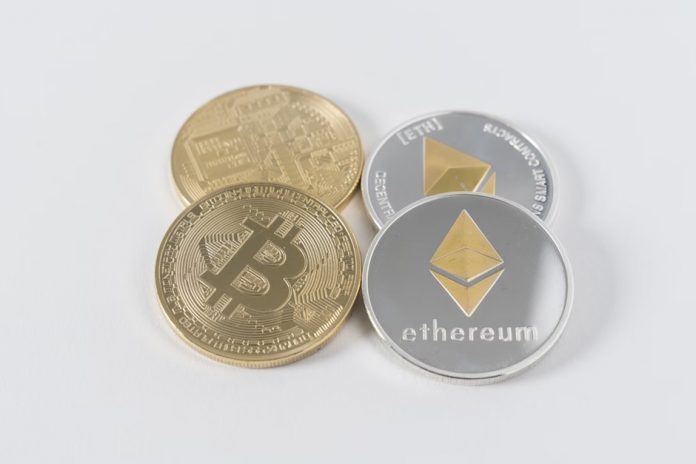
The cryptocurrency market is facing another wave of selling pressure, as major coins are losing value across the board. Bitcoin, the largest and most influential crypto asset, has dropped by 4.5% in the last 24 hours, trading below $40,000 at the time of writing.

Ethereum, the second-largest crypto by market cap and the leading platform for smart contracts and decentralized applications, has fallen by 6.5%, slipping below $2,200. Solana, one of the fastest-growing and most promising crypto projects, has suffered the most, plunging by 9% and losing its spot as the fourth-largest crypto by market cap.

What is behind this crypto bloodbath? There are several factors that are contributing to the bearish sentiment in the market. One of them is the ongoing regulatory uncertainty and crackdown in various countries, especially China, where authorities have banned all crypto-related activities and transactions.

Another factor is the rising inflation and interest rates in the US and other developed economies, which are reducing the appeal of crypto as a hedge against fiat currency devaluation. A third factor is the technical weakness and lack of momentum in the crypto market, as many coins are struggling to break above key resistance levels and attract new buyers.

How long will this downtrend last? It is hard to predict the future of such a volatile and unpredictable market, but some analysts and experts are optimistic that this is just a temporary correction and not a reversal of the long-term bullish trend.

They point out that crypto adoption and innovation are still growing at a rapid pace, and that many institutional and retail investors are still interested in crypto as an alternative asset class. They also argue that crypto has proven its resilience and strength in the past, bouncing back from bigger crashes and reaching new highs.

What should crypto investors do in this situation? There is no one-size-fits-all answer to this question, as different investors have different risk appetites, time horizons, and goals. However, some general advice that applies to most crypto investors is to avoid panic selling, diversify their portfolio, do their own research, and follow a long-term strategy. Crypto investing is not for the faint-hearted, but for those who believe in the potential and value of this revolutionary technology.

However, the opposite seems to have happened, as Bitcoin has lost more than 20% of its value since the ETF launch on January 18.

What are the possible reasons behind this paradoxical phenomenon? Here are some of the factors that may be contributing to the crypto price slump:

Regulatory uncertainty: The spot ETF approval was seen as a major milestone for the crypto industry, but it also raised some regulatory concerns. The Securities and Exchange Commission (SEC) has warned that the ETF may pose significant risks to investors, such as market manipulation, fraud, theft, and cyberattacks.

The SEC has also indicated that it may impose stricter rules on the crypto market in the future, such as requiring more disclosures, oversight, and compliance from crypto firms and platforms. These regulatory uncertainties may have dampened the enthusiasm of some investors and traders, who may prefer to wait and see how the situation unfolds before entering or increasing their exposure to the crypto market.

Market sentiment: Another factor that may be influencing the crypto price is the overall market sentiment, which is affected by various events and news. For example, the recent escalation of tensions between Russia and Ukraine, which could potentially lead to a military conflict, has increased the demand for safe-haven assets such as gold and US dollars, while reducing the appetite for riskier assets such as crypto.

Profit-taking: A third factor that may be driving the crypto price down is profit-taking by some investors and traders who have made substantial gains from the previous bull run. The crypto market has seen a remarkable rally in 2021, with Bitcoin reaching an all-time high of over $69,000 in November and many other cryptocurrencies achieving record-breaking prices as well.

Some of these investors and traders may have decided to cash out their profits or rebalance their portfolios after the spot ETF approval, which was widely anticipated and priced in by the market. This may have triggered a domino effect of selling pressure, as more investors and traders followed suit or reacted to the falling prices.

These are some of the possible explanations for why the crypto price is plummeting even after spot ETF approval. However, it is important to note that these are not definitive or conclusive answers, as the crypto market is complex and dynamic, and influenced by many other factors that are not easy to measure or predict. Therefore, investors and traders should always do their own research and analysis before making any decisions regarding their crypto investments.