DD
MM
YYYY

PAGES

DD
MM
YYYY

spot_img

PAGES

Home Blog Page 3819

Elon Musk Says X Lost Roughly $22 Billion Over Antisemitism Accusation, Promises to File A Lawsuit Against The ADL

1

Elon Musk, the CEO of Twitter (Now called X), has announced that his microblogging company will file a lawsuit against the Anti-Defamation League (ADL), over accusations of antisemitism that cost the company roughly $22 billion.

Musk disclosed that he deemed it fit to clear the company’s name on the matter of antisemitism, due to the negative impacts it has had on the platform.

He added that based on the information he got from advertisers on X, ADL seems to be responsible for most of the company’s revenue loss, as most of these advertisers avoid controversy at all costs.

In a tweet on X, he wrote,

“To clear our platform’s name on the matter of anti-Semitism, it looks like we have no choice but to file a defamation lawsuit against the Anti-Defamation League … oh the irony!”

Replying to a user who wrote that this wouldn’t be the first time the Defamation League would be found to have defamed people.

Musk replied,

“Interesting. In our case, they would potentially be on the hook for destroying half the value of the company, so roughly $22 billion.”

In a subsequent tweet, he wrote,

“Based on what we’ve heard from advertisers, ADL seems to be responsible for most of our revenue loss. Giving them the maximum benefit of the doubt, I don’t see any scenario where they’re responsible for less than 10% of the value destruction, so ~$4 billion.

“Document discovery of all communications between the ADL and advertisers will tell the full story. Advertisers avoid controversy, so all that is needed for ADL to crush our US & European ad revenue is to make unfounded accusations. They have much less power in Asia, so our ad revenue there is still strong.

“This “controversy” causes advertisers to “pause”, but that pause is permanent until ADL gives the green light, which they will not do without us agreeing to secretly suspend or shadow ban any account they don’t like. That is the relationship they’ve had with X/Twitter for many years. Presumably, they have that with all Western search or social media organs.”

Musk has on countless occasions disclosed that he is pro-free speech, but against antisemitism of any kind. He further made a shocking revelation that since he acquired X last year October, the ADL has been trying to kill the platform by falsely accusing him and the company of being anti-Semitic.

According to Musk, X US advertising revenue is still down 60%, primarily due to pressure on advertisers by ADL, who he said almost succeeded in killing the platform.

Musk’s recent tweets against the Anti-Defamation League (ADL) are coming after the hashtag #BanTheADL, trended on X last week. The trending hashtag and Musk’s engagement with it, began hours after the ADL said it had a productive conversation with X CEO Linda Yaccarino about fighting hate speech on the platform.

It is worth noting that Antisemitism was a problem on Twitter (Now called X) before Musk took over the company. Since his takeover reports of hate speech have abounded.

Recall that in May 2023, Elon Musk was accused of fueling anti-Semitism after comparing George Soros to the Jewish supervillain Magneto and claiming that the billionaire philanthropist “hates humanity”.

His comment sparked a wave of criticism, with Israel’s foreign ministry and the Jewish non-governmental organization Anti-Defamation League (ADL) accusing Musk of stoking anti-Semitism.

Musk who has always been vocal, defended his tweet, stating that his opinion doesn’t make him antisemitic, which he described himself as “a pro-semite. He added that he will continue to voice his often controversial opinions on the site.

Trade Union Congress (TUC) Pulls Out of the Nigerian Labour Congress (NLC) Planned Strike

0

The Trade Union Congress (TUC) has announced its decision not to participate in the nationwide warning strike called by the Nigeria Labour Congress (NLC), which is set to commence on Tuesday.

This development comes after a meeting between the TUC and the federal government, which the NLC shunned. The NLC had shunned the meeting, which took place in Abuja on Monday evening – saying that the government is not serious.

The meeting was facilitated by the Minister of Labour Simon Lalong.

Though the NLC president, Joe Ajaero, earlier admitted that part of the union’s policies and structure permits it to negotiate even if at the last minute, he explained that the reason for turning his back on the meeting is because “the people we are dealing with are not serious.”

“The federal government has refused to engage and reach agreement with organized labour on the critical issues of the consequences of the unfortunate hike in the price of petrol which has unleashed massive suffering on Nigerian workers and masses,” Ajaero said.

But the president of the TUC, Comrade Festus Osifo urged the NLC to intensify dialogue with the government.

“As of today, the need to embark on a nationwide strike hasn’t arisen hence the leadership of congress should intensify the conversation with government so that all grey areas identified could be ironed out within the time frame given”, Osifo said after meeting Labour Minister Simon Lalong.

The organized labor made up of the NLC and the TUC, had last week declared that its members will embark on the warning strike from Tuesday.

Ajaero said it will embark on the warning strike in preparation for a “total and indefinite shutdown of the nation” later in the month.

A month ago, the Unions initiated a strike, but they temporarily halted their protest after the government extended an invitation for negotiations. However, these discussions failed to yield adequate concessions to satisfy the organized labor.

Ajaero emphasized that the strike could only be prevented if the government took measures to alleviate the “widespread and unbearable suffering and poverty affecting people across the nation.”

In response to this development, Lalong appealed to the NLC to shelve the strike. He said in a statement that the cabinet of President Bola Tinubu is newly formed, and needs more time to address the concerns of the people.

“It has become pertinent to appeal to the leadership of the Nigeria Labour Congress (NLC) to suspend its intended two-day warning strike; as such action would be detrimental to the gains already being recorded on our course to securing a greater future for Nigerian workers and citizens at large

“It should be realized that the cabinet of this administration was only recently sworn in by Mr. President and all cabinet members have hit the ground running by receiving briefings from their MDAs.

“Therefore, the issues raised by the leadership of the NLC are some issues that I and the Hon. Minister of State for Labour and Employment are being briefed upon. In the next few weeks, we intend to address them holistically.

“Consequently, I use this opportunity to reassure Nigerian workers that this government would never take them for granted nor fail to appreciate their support and understanding.
“We shall continue to pursue policies aimed at massive employment generation in all sectors of the economy as well as look into immediate challenges that have emerged from the policies of the government. We cannot do this in an atmosphere devoid of industrial peace,” he said.

Lalong added that his ministry had not been formally informed about the upcoming strike, as mandated by legal requirements.

Several NLC affiliates, including the National Union of Banks, Insurance, and Financial Institutions Employees (NUBIFIE), have announced their decision to join the strike.

However, the decision of the TUC to pull out has presented a challenge that will likely change the planned strike or make it ineffectual.

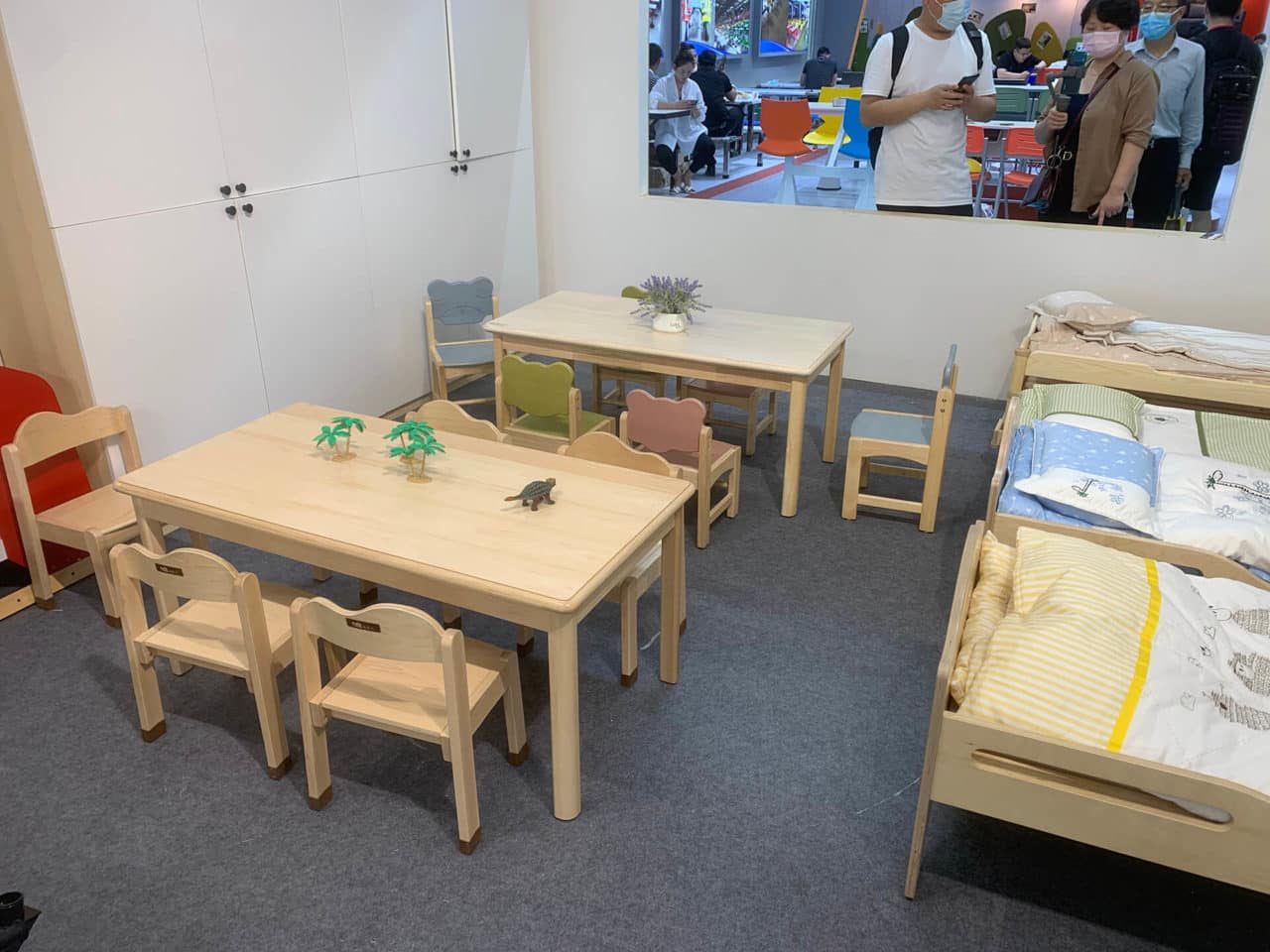
How to Select the Best Products for Your Child from an Online Store

0

Understand Your Child’s Needs

Firstly, understanding your child’s specific needs and interests is crucial. This section will advise identifying your child’s developmental stage, interests, and preferences to help you select appropriate products in your children’s furniture store.

  • Product Safety

Nothing is more important than the safety of your child. Since the online marketplace is flooded with many products, ensuring that your buying meets the highest security standards is essential. This process includes reviewing the safety performance of products, understanding the design and materials used, and communicating safety recalls or warnings.

  • Safety standards and certifications

Before purchasing any product for your child, check that it meets the established safety standards. Standards such as the European EN71 or the American ASTM F963 are often used for toys. These certifications ensure the toy has been rigorously tested for hazards such as small parts, sharp edges, toxic materials, etc.

For kids’ furniture, look for compliance with safety standards such as CPSC (Consumer Product Safety Commission) in the US or AS/NZS (Australian/New Zealand Safety Standards). These standards cover aspects such as structural strength, the materials’ safety, and preventing accidents such as rollovers.

  • Materials and design

The materials used in the product can have profound safety implications. Ensure the toys are non-toxic, especially for small children who may put them in their mouths. BPA-free plastic, natural wood, and organic fabrics are often safer. Regarding furniture, look for solid construction, stable designs, and non-toxic finishes.

  • Recall and Safety Warnings

Stay up to date with product recalls and safety warnings. They are usually issued when a product already sold is found to have security issues. Websites such as the US CPSC or the EU Safety Gate update the recall lists regularly. Following a brand on social media can also inform you of any safety warnings associated with a product.

  • Product Age Compliance

Always follow the manufacturer’s age recommendations. They are based on the developmental abilities of children of different ages and are designed to prevent hazards such as choking with small parts. Remember that these are guidelines, and you should always consider your child’s individual development and abilities.

Keeping food safe for your child can seem daunting, but by following these steps, you can navigate the world of online shopping with peace of mind. Safety should always be a priority when shopping for baby products, and it’s worth taking the time and effort to make sure what you’re buying is fun and safe for your child.

Reading product reviews

In the digital age, product reviews are an indispensable tool for online shoppers. They provide first-hand information about other customers’ quality, functionality, and overall product performance. This section will guide you through effectively interpreting and using these reviews, emphasizing the importance of examining positive and negative reviews.

  • Weighing Positive and Negative Feedback

Positive and negative reviews play a significant role in forming a holistic product view. Positive reviews can highlight features that work well and meet the expectations of parents and children. They can also give you an idea of the product’s durability and long-term performance.

Negative reviews, however, can alert you to potential problems or flaws in a product. Look for recurring themes in these reviews – if multiple reviewers mention the same problem (such as a part that breaks easily or a toy that doesn’t attract attention), this could indicate a significant flaw in the product.

  • Recognition of detailed and helpful reviews

Some reviews provide more detailed information than others. Detailed reviews that discuss product features, ease of use, durability, and how a child received it can be beneficial. Reviews containing images or videos can also provide valuable additional information.

By analyzing positive and negative reviews, you can get a complete picture of the quality of the product and its suitability for your child. Remember to approach each study critically and consider the wide range of experiences children and parents can have with a product. Armed with this information, you will be better equipped to make informed decisions that will

  • Quality vs. Price

While staying within budget is essential, the quality of products shouldn’t be compromised. We’ll explore how to strike a balance between affordability and quality, focusing on the idea of long-term value for money.

Understanding the Return Policy and Warranties

While online shopping provides a wide range of choices and convenience, it also comes with the uncertainty associated with a lack of physical product inspection before purchase. This makes it essential to understand the return policy and guarantees in case the product does not meet your expectations or has some defects. Here, we will delve into these aspects.

  • Why the return policy matters

A return policy is a guarantee provided by retailers that allow buyers to return an item, usually within a specified period, if unsatisfied. This is especially important when buying children’s products, as they may not be as described, damaged during shipping, or your child may not experience it as expected.

When shopping, look for information about the return policy on the website. Key factors to consider are the return period (how many days you must return the product), the product’s condition to be eligible for a return, and whether return shipping is free or paid by the buyer.

  • The role of safeguards

Understanding a warranty includes knowing its duration (how long it lasts), what it covers (some warranties only cover certain parts or types of damage), and the warranty claim process.

  • How to use the return and warranty policy

Upon receipt of the item, scrutinize it as soon as possible. Check all its features and make sure they match the product description. If you find a problem, please get in touch with your dealer immediately. Keep all packaging and paperwork until you are sure you are keeping the item, as these often need to be included in returns.

For warranty claims, please ensure you have registered the product with the manufacturer, if applicable, and retain all receipts and proof of purchase. Contact the manufacturer’s support if you need clarification on any part of the process is also a good idea.

The return policy and guarantees play an essential role in ensuring the safety of online purchases. Understanding and using them can help you get the best value for money, and your child will get a safe, functional, and fun product. As with every step of online shopping, taking your time, reading the fine print, and asking questions if you need clarification is essential. Your child’s happiness and your wallet will thank you.

 Considering the Age Appropriateness of Products

Considering age-appropriate products is critical to ensure your child’s safety, participation, and development. By understanding and considering age classifications and your knowledge of your child’s abilities and interests, you can make informed purchasing decisions that benefit your child’s development and enjoyment.

Online shopping has revolutionized how we purchase goods, offering unprecedented convenience, variety, and the ability to compare products and prices. However, regarding children’s interests, the sheer volume of options can sometimes be overwhelming. But fear not! By taking a strategic approach, you can confidently navigate this vast marketplace.

Firstly, understanding your child’s specific needs and preferences is vital. This can range from their current developmental stage to their interests and activities they enjoy. This understanding will allow you to make targeted searches and decisions, saving time and effort.

Product safety should always be a top priority. Always check for safety standards and certifications, the materials used in the product, and any safety warnings or recalls. Remember, a safe product is always a sound investment.

What Immanent Critique Says About 222 Years of 6 Men Ruling 6 African Nations

0
AU

In the heart of Africa, a disconcerting pattern has emerged over the past 222 years. The reins of power have been firmly held by six individuals who ascended to authority through means ranging from forceful takeovers to the bending of laws and constitutions. This enduring practice has deep roots, echoing the traditional African governance system, where tribes and communities looked to their hereditary rulers to lead until their last breath. However, it is nothing short of astonishing that in the modern era of governance—democracy—such leaders continue to wield power across the African continent.

On average, these six men—Teodoro Obiang Nguema Mbasogo (43-year rule) in Equatorial Guinea, Paul Biya (40-year rule) in Cameroon, Denis Sassou Nguesso (38-year rule) in the Republic of the Congo, Yoweri Museveni (36-year rule) in Uganda, King Mswati III (36-year rule) in the Kingdom of Eswatini, and Isaias Afwerki (29-year rule) in Eritrea—have collectively governed for 37 years each. As we examine this cumulative reign, we must grapple with the mixed outcomes it has delivered for the people and businesses of these nations in terms of good governance and iron-fisted rule.

Immanent critique, a philosophical approach that scrutinizes systems from within, offers a powerful lens through which to understand the implications of this enduring rule. It invites us to evaluate these long-standing regimes not from an external, judgmental perspective, but rather from within the context of their own making.

Through the lens of immanent critique, we are compelled to ask: What has sustained these leaders’ grip on power for such extended periods? What societal, economic, and political factors have enabled their continued rule, despite the tenets of democracy that advocate for change and the will of the people?

One might argue that these leaders, while holding onto power for decades, have navigated a complex web of domestic and international dynamics, making them adept at maintaining stability, albeit at the cost of democratic principles. However, immanent critique does not merely highlight the endurance of these regimes; it underscores the importance of challenging the status quo.

The central question that immanent critique poses is this: Can these nations truly progress and thrive under the protracted rule of a few? While some might point to economic growth or stability as signs of success, we must remember that democracy’s essence lies in the power of choice, accountability, and the capacity for renewal.

Emancipating the people of these nations from the clutches of enduring rule is not about negating the accomplishments or stability achieved during these long reigns. Instead, it is about reimagining a future where leadership is dynamic, participatory, and aligned with the will of the governed.

As we reflect on 222 years of these six men ruling six African nations, immanent critique calls us to examine the systems that have allowed this to happen and to seek paths toward a future where democracy, in its truest form, empowers the people to shape their destinies. It reminds us that progress and emancipation lie in the hands of those who dare to challenge the status quo, advocating for governance that prioritizes the flourishing of nations and their people above all else.

Safeguarding Your Life in an Era of Constant Scrutiny

0

In the interconnected world we inhabit today, our lives are constantly under the microscope, examined in two distinct arenas. Whether you’re the proud owner of a myriad of social media accounts or a dedicated participant in various communities, groups, and workplaces, you find yourself exposed to the watchful eyes of the public. However, the question that arises is: How can we find genuine safety and privacy in a world where our every move seems to be up for grabs?

Let’s face it, the age of the internet has brought unprecedented levels of connectivity and exposure. Our online presence, spread across various platforms, has given the public unprecedented access to our lives. But what if I told you that you have the power to reclaim your privacy and protect your activities from becoming mere commodities in the hands of others? It’s not just a matter of guarding your data; it’s about preserving the essence of who you are.

Consider this: Every like, comment, and share on social media can be seen as an opportunity for others to accumulate social and financial capital at your expense. It’s a thought that may give pause to anyone seeking to engage in these activities without careful consideration.

In this age of relentless scrutiny, we must reflect on the choices we make online and offline. The act of safeguarding our privacy is not about withdrawing from the digital world but rather about being mindful of how we engage with it. It’s about using the digital sphere as a tool for empowerment rather than a trap for exploitation.

Imagine a world where you can be truly free to express yourself, share your thoughts, and connect with others without fear of your every move being monetized or analyzed. It’s a world where authenticity and genuine human connections prevail over superficial assessments and judgments.

By taking a moment to pause and reflect before you hit that ‘post’ button, you’re not just protecting your privacy; you’re shaping a future where our digital lives are more than just commodities. You’re leading the charge towards a world where our online presence serves as a reflection of our true selves, and where we connect with others on a deeper, more meaningful level.

So, the next time you find yourself tempted to share your life with the world, take a moment to think twice. You’re not just safeguarding your privacy; you’re setting an example for a world that desperately needs more genuine connections, where your digital life is a testament to your authenticity.