DD
MM
YYYY

PAGES

DD
MM
YYYY

spot_img

PAGES

Home Blog Page 3819

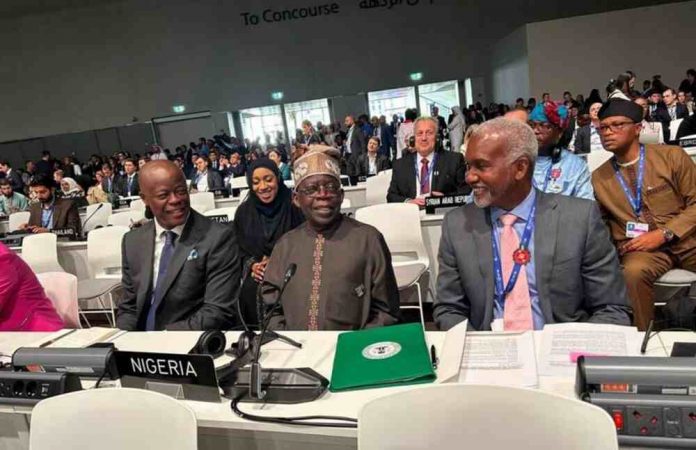
President Tinubu’s Entourage Cuts: Is It Enough to Tackle Nigeria’s High-Cost Governance?

0

In an effort to streamline governance expenses, President Bola Tinubu has initiated substantial cuts in official entourages for both domestic and international events by a significant 60 percent.

The President’s directive entails a significant reduction in the number of accompanying personnel during official trips. For local engagements, security details will now be sourced from the host state, a move aimed at optimizing resources.

Announced on Tuesday by Ajuri Ngelale, the Special Adviser to the President on Media and Publicity, these measures dictate a marked reduction in the entourage sizes. Previously numbering over 50 individuals, the President will now travel with only 20 officials, while the Vice President’s entourage will be limited to five. Similarly, the First Lady and the wife of the Vice President will each travel with five officials.

For local trips, the entourage limits have been scaled down to 25 for the President, 15 for the Vice President, and 10 each for the First Lady and the Vice President’s spouse.

Ngelale said these changes aim to instill fiscal prudence and accountability in resource management. Ministerial foreign delegations will now comprise a maximum of four officials, while heads of Ministries, Departments, and Agencies (MDAs) will be restricted to a maximum of two officials during international trips.

The President’s directive also includes the reduction of elaborate security entourages during local trips, aiming to curtail excessive duty travel allowance costs.

Ngelale sternly cautioned that any official disregarding these directives would do so at their own risk, underscoring the seriousness of adherence to these cost-saving measures.

A step in the right direction, but is it enough?

President Bola Tinubu’s directive to reduce entourages by a substantial 60% appears as a stride towards curbing extravagant spending. However, while commendable, this measure, taken in isolation, does not effectively address the underlying issue of expensive governance amid Nigeria’s economic predicament. Though in an era where fiscal prudence is the clarion call across nations grappling with economic challenges, the move seems like a step in the right direction.

The ostensible reduction in the number of officials accompanying the President, Vice President, and their spouses on both international and local trips might create an impression of cost-saving. Yet, this singular action, though a start, barely scratches the surface of a larger problem rooted in Nigeria’s governance structure. The reduction in entourage size, while a symbolic gesture, does not significantly dent the expenses incurred by the government machinery in other areas.

Nigeria’s current economic challenges need a more comprehensive approach to cost reduction in governance. While trimming down travel entourages is a visible aspect, there are numerous other avenues where fiscal prudence could yield substantial savings. For instance, the salaries and allowances of political officeholders remain a significant drain on the national coffers. Additionally, there are often redundant or overlapping government agencies that consume substantial resources without yielding commensurate benefits to the populace.

Ministries, Departments, and Agencies (MDAs) have grown significantly over the past decade in the country, creating concerns about government spending amid scarce resources. There have been calls to trim the number of ministers in the nation. Currently, Nigeria has about 48 ministers, and some have intertwined portfolios – gulping millions of naira monthly for recurrent expenditure from the national treasury.

Other countries have set precedents in addressing expensive governance. For instance, Rwanda, in its bid to streamline governance costs, reduced the size of its cabinet and merged several ministries, leading to operational efficiency and considerable cost savings. Similarly, countries like Singapore and New Zealand have actively restructured their public sectors, focusing on merit-based appointments and reorganization to maximize efficiency while reducing unnecessary expenses.

The need for Nigeria to emulate such strategies cannot be overstated. It requires holistic reform across various facets of governance. This includes rationalizing the number of political appointees, merging redundant agencies, and implementing stringent measures to curb excessive spending in all government sectors.

Critics said that while the directive to trim entourages is a positive gesture, it must serve as a stepping stone toward broader, more impactful reforms. Nigeria’s leadership needs to delve deeper, looking beyond mere optics, and address the systemic issues contributing to expensive governance. Experts believe that only through such comprehensive reforms can the nation achieve sustainable cost reduction while enhancing operational efficiency across the government.
MTN And Ericsson Strengthen Partnership to Enhance Mobile Financial Services Across Africa

0

Africa’s largest mobile network operator MTN, has strengthened its partnership with Swedish multinational networking and telecommunications company Ericsson, to enhance mobile financial services and financially empower millions of citizens across Africa.

The agreement was signed during a visit by senior MTN Group executives to Ericsson’s Group Headquarters in Kista, Sweden, where key strategic priorities and collaboration between the two companies were discussed.

MTN and Ericsson partnership will broaden the scope of financial inclusion from first-time users to high-end business applications, utilizing MTN’s Fintech subsidiary Mobile Money (MoMo) service on the Ericsson Wallet Platform. This will provide MTN’s customer base across Africa with access to a world-class mobile connectivity-based financial ecosystem.

Powered by the Ericsson Wallet Platform, MTN Mobile Money will enable individuals and businesses to conduct secure and convenient banking and payment transactions with ease, directly from their mobile devices.

Also, MTN MoMo customers can securely manage funds, pay merchants and utility providers, and access loans and insurance services with ease and affordability, promoting financial freedom and stability.

Speaking on the partnership, Chief Fintech Officer, MTN Group, Serigne Dioum said,

“At MTN, we are not just connecting people, we are unlocking a world of financial possibilities for every African. With 63.5 million active users, our Mobile Money platform is advancing economic empowerment across the continent. MTN Mobile Money offers a spectrum of mobile financial services, encompassing money transfers, payments, savings, and loans for every consumer, actively driving financial inclusion, and advancing economic empowerment across the continent.”

He further added that the strategic collaboration with Ericsson is a significant milestone in the execution of MTN’s Ambition 2025, building the largest and most valuable platform business and creating shared value for its customers in Africa.

Also speaking, Head of Mobile Financial Services, Ericsson, Michael Wallis-Brown said,

Ericsson’s partnership with MTN is a world-leading example of the ability of mobile financial services to financially empower people and businesses by giving the unbanked their first opportunity to control their finances, making it easier for women to access financial services and promoting digital inclusion to enabling more advanced users to access high-end services.

“This model can be applied in any market anywhere in the world to genuinely empower mobile subscribers of all financial standings. Our valued MTN partnership also supports Ericsson’s AfricaInMotion vision to promote a sustainable and connected Africa.”

MTN has built strong core operations, which are underpinned by the largest fixed and mobile network in Africa.

Following the launch of its Fintech subsidiary, MoMo PSB in 2022, the telecoms giant remains committed to enhancing the lives of individuals through innovative and convenient financial solutions.

Its recent partnership extension with Ericsson includes a transition to public cloud deployments and the refinement of the Open API services framework, fostering the acceleration of fintech innovation in Africa.

Seedstars Africa Ventures Receives $30 Million From EIB Global to Support Entrepreneurs in Africa

0

Seedstars Africa Ventures, an early-stage venture capital fund investing in high-growth companies active across Sub-Saharan Africa, has received $30 million from EIB Global, to invest in Entrepreneurs and early-stage startups in Africa.

The fund will be invested in companies developing and implementing digital technologies, particularly those addressing basic needs such as education, healthcare, and utilities, or enhancing goods, services, and efficiency.

Additionally, tech startups will also receive a portion of funding, and innovative brick-and-mortar businesses that get an unfair advantage from digitalization.

The fund also plans to invest up to 50% in Francophone Africa, a region that continues to be an investment destination for emerging VCs owing to lower competition, a massive market opportunity, and high-quality and better-priced deals, in comparison to the more mature Anglophone regions.

Commenting on the investment, EIB head of regional hub for East Africa, Edward Claessen highlighted the importance of backing funds in Africa saying they play an important role in growing and strengthening the continent’s startup ecosystem. He further noted that funds like Seedstars Africa Ventures are invested in the continent and back founders that create jobs and contribute to the growth of economies.

Also speaking on the investment, EIB Vice-President Ambroise Fayolle, said,

Encouraging and promoting innovation and digitalisation is crucial to developing strong and sustainable economies. African entrepreneurs hold the key to the continent’s future, creating jobs, reducing inequality, and improving quality of life. The EIB, as part of Team Europe, is committed to supporting African businesses, and we are proud of the success of Boost Africa and the ACP Trust Fund.”

It is worth noting that the US$30 million EIB Global investment is backed by the EU, through US$20 million from the ACP Trust Fund and US$10 million from the Boost Africa program. With this investment, the EIB has now fully deployed Boost Africa, a program launched in 2016 with the aim of boosting sustainable jobs and prosperity through venture capital for African entrepreneurs.

Boost Africa is a joint initiative of the European Investment Bank and the African Development Bank to enable and enhance entrepreneurship and innovation across Africa, supported by the European Commission and the Organisation of African, Caribbean, and Pacific States.

Under Boost Africa, the companies invested in by Seedstars Africa Ventures 1 will also benefit from technical assistance to develop business skills and expertise, funded by the EU

The EIB pillar of the Boost Africa programme comprises senior and junior tranche investments into venture capital funds in Sub-Saharan Africa and provides guidance and expert advice to both funds and investee companies.

First week of 2024 has been a mixed one for the financial markets

0

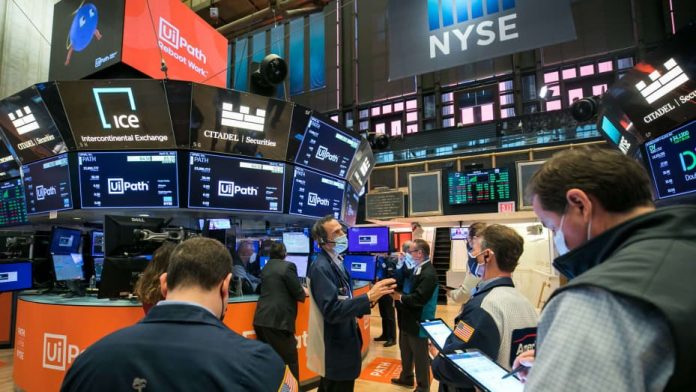
The first week of 2024 has been a turbulent one for the financial markets, as investors grappled with the implications of the Omicron variant, the Federal Reserve’s tapering plans, and geopolitical tensions. While the major stock indices managed to bounce back from their lows and end the week with modest gains, the crypto market suffered another setback, as most coins retreated from their recent highs.

According to data from CoinMarketCap, the total market capitalization of all cryptocurrencies fell by 8.7% in the past seven days, from $2.48 trillion to $2.26 trillion. Bitcoin, the largest and most influential crypto asset, dropped by 7.6% in the same period to $47,900. Ethereum, the second-largest coin by market cap, fared slightly better, losing 5.9% of its value. Other major coins, such as Binance Coin, Cardano, Solana, and Polkadot, also experienced double-digit losses.

The crypto market has been under pressure since mid-November, when China announced a crackdown on crypto mining and trading activities, and several countries tightened their regulatory oversight on the sector. The uncertainty caused by the Omicron variant, which has led to renewed lockdowns and travel restrictions in some parts of the world, has also dampened the risk appetite of crypto investors.

Moreover, the Fed’s decision to accelerate its tapering program and signal three interest rate hikes in 2022 has raised concerns about the impact of monetary tightening on the crypto space.

However, some analysts and experts remain optimistic about the long-term prospects of crypto assets, citing their growing adoption, innovation, and resilience. They argue that crypto is still in its early stages of development and that the current volatility is a natural part of its maturation process. They also point out that crypto has proven its ability to recover from previous downturns and reach new highs.

For instance, Michael Saylor, the CEO of MicroStrategy and a vocal Bitcoin advocate, said in a recent interview that he is not worried about the short-term fluctuations in the crypto market. He said that he views Bitcoin as a long-term store of value and that he is confident that it will eventually surpass gold as the dominant monetary asset. He also said that he expects more institutional investors and corporations to embrace Bitcoin as a hedge against inflation and currency devaluation.

On the other hand, the stock market showed some signs of stabilization after a shaky start to the year. The S&P 500 index ended the week with a 0.6% gain, while the Dow Jones Industrial Average rose by 0.3%. The Nasdaq Composite index, which is heavily weighted by tech stocks, outperformed its peers with a 1.8% increase.

The stock market was boosted by some positive economic data, such as a stronger-than-expected jobs report for December and a rebound in consumer confidence. Additionally, some investors viewed the Fed’s hawkish stance as a sign of confidence in the economic recovery and a necessary step to curb inflation.

The stock market also benefited from some sector rotation, as investors shifted their funds from high-growth but high-risk stocks to more defensive and value-oriented ones. This trend was evident in the performance of some of the most popular tech stocks of 2023, such as Tesla, Meta Platforms (formerly Facebook), and Shopify, which all ended the week with losses. Meanwhile, some of the traditional sectors that have been lagging behind in 2023, such as energy, financials, and industrials, saw some gains.

The outlook for the stock market in 2024 remains uncertain, as there are still many factors that could influence its direction. The evolution of the Omicron variant and its impact on public health and economic activity is one of them. Another one is the pace and magnitude of the Fed’s policy tightening and its effect on market liquidity and valuations. Furthermore, the political landscape could also play a role in shaping investor sentiment, as the US midterm elections approach and tensions between major powers escalate.

In summary, the first week of 2024 has been a mixed one for the financial markets, as crypto slipped while stocks posted a mild recovery after a rough start to the year. The crypto market was weighed down by regulatory headwinds, pandemic fears, and monetary tightening expectations. The stock market was supported by positive economic data, sector rotation, and Fed optimism. The future course of both markets will depend on how these factors evolve in the coming weeks and months.

Duolingo Laysoff 10% of Its Contract Translators as it Adopts The Use of AI For Content Creation

0
In this photo illustration the Duolingo logo seen displayed on a smartphone. (Photo by Rafael Henrique / SOPA Images/Sipa USA)(Sipa via AP Images)

US-based language learning company Duolingo has laid off 10% of its contract translators, as it turns to generative AI for creating content on the platform.

This move comes months after the CEO Luis Von Ahn, announced that the company is relying more on generative AI to develop its content.

In a letter to shareholders in November 2023, Von stated that the company would be using generative AI technology to speed up the creation of text, speech, and images.

In his words,

“AI accelerates our mission to make high-quality education available to everyone in the world. The things that we can do now with the power of OpenAI’s technology are going to shape the future of education”.

Speaking on the recent layoff at the company, a spokesperson said,

“We just no longer need as many people to do the type of work some of these contractors were doing. Part of that could be attributed to AI,”

The spokesperson added that the job reduction isn’t a straight replacement of workers with AI, as many of its full-time employees and contractors use the technology in their work.

Duolingo had 600 full-time workers at the end of 2022, according to company filings. The spokesperson added that no full-time employees were affected by the cutback.

Also speaking on the layoff at the company, Duolingo’s global head of communications, Sam Dalsimer was quoted saying,

“There is some merit to the idea that AI is contributing to the reduction of our contract workforce, but it would be an oversimplification to say this is the sole reason. We use AI for a variety of different functions and tasks,”

Dalsimer mentioned that contract and staff employees are still closely involved in reviewing AI outputs for accuracy.

These tasks include generating sentences and acceptable translations. In addition, he stated that the company tried to find alternate roles for the contractors affected by the changes.

According to Dalsimer, AI was not intended to replace jobs, instead, it would save translators time and allow them to concentrate on more difficult tasks.

The job cuts at Duolingo reinforce concerns that have been raised by employee groups and unions that businesses may begin significant adoption of AI to replace workers.

A report by the World Economic Forum predicts that AI will cause significant disruption in the labor market within the next five years, although the overall impact may be positive as employers seek workers with more technical skills to navigate AI technology, per the report. 

Duolingo is far from the first company to make job cuts while adopting the use of AI, as reports reveal that 1 in 4 companies have already replaced workers with AI-driven technology.