DD
MM
YYYY

PAGES

DD
MM
YYYY

spot_img

PAGES

Home Blog Page 3825

America Saved Facebook’s Meta And Now It’s Hitting $1 Trillion Valuation

0

Facebook (yes, Meta) celebrated a massive year of efficiency in 2023 – and got a massive reward. Today, the market cap of the company is worth close to $1 trillion. Yet, if anyone tells you that Facebook accelerated in value because of its efficiency, tell that person that there are more bridges available for buyers.

In a stunning turnaround, Meta, the parent company of Facebook and Instagram, is on the cusp of achieving a market capitalization of $1 trillion.

The company’s shares have experienced a phenomenal 200% surge in 2023, propelling its market cap to an impressive $966.60 billion, tantalizingly close to the coveted trillion-dollar milestone.

Meta, if successful in reaching the $1 trillion mark, will join the elite league of technology giants, including Microsoft, Apple, Alphabet, Amazon, and Nvidia, all currently valued at $1 trillion or more. Microsoft, leading the pack with a market cap of $2.93 trillion, signifies the significant achievement that awaits Meta should it cross this threshold.

In 2022 as Facebook was under massive high voltage searchlight from American regulators, triggering an avalanche in value destruction as investors fled, a pill was created: the fall on the value of the company was the best defense before regulators that Facebook was not actually a monopoly, or a beast which could not be challenged, or taken out.

In other words, as the stock value crashed, regulators ran away. And when they ran away and left the company alone, the investors re-assembled. And Facebook was able to get new fresh air.

And this is the message: business environment and political leaders can make and undo missions. In 2023, it was about us writing about Facebook and its AI, and not one investigation after another. As that was happening, advertisers returned and Facebook rose to another mountaintop.

Good People, the most important course in business is Political Economy. Every nation must understand that all market players take that course, and politicians and regulators must pay attention to the contents.  America allowed Facebook’s Meta to breathe and Meta was saved!

Meta Platforms Nears $1 Trillion Market Cap as Shares Surged 200% in 2023

Uber will 100% definitely accept crypto payments in the future – CEO Dara Khosrowshahi

0

In a recent interview, Uber CEO Dara Khosrowshahi revealed that the company is planning to integrate Bitcoin and other cryptocurrencies as payment options in the near future. He said that Uber is always looking for ways to innovate and provide more convenience and choice to its customers, drivers and partners.

Khosrowshahi explained that Uber is already accepting various forms of digital payments, such as credit cards, PayPal, Venmo and Apple Pay, and that adding cryptocurrencies would be a natural extension of its strategy. He said that Uber is not interested in holding or investing in cryptocurrencies itself, but rather in enabling its users to pay with their preferred method.

He also said that Uber is closely monitoring the regulatory developments and the technical challenges related to cryptocurrencies, and that the company is working with experts and partners to ensure a smooth and secure implementation. He said that Uber will 100% definitely accept Bitcoin and crypto payments in the future, but he did not give a specific timeline or details on which cryptocurrencies will be supported. Nonetheless, we now know that very soon, we should expect a world-class cryptocurrency wallet app from the company.

Khosrowshahi expressed his optimism about the potential of cryptocurrencies to transform the global economy and society and said that Uber wants to be part of this revolution. He said that Uber is committed to being a leader in the mobility and transportation industry, and that embracing cryptocurrencies is one of the ways to achieve this goal.

It offers many advantages for users who want to use it for Uber rides, such as:

Lower fees: Bitcoin transactions are cheaper than credit card or PayPal payments, as they do not involve any third-party service providers that charge fees. This means more savings for both drivers and riders.

Privacy: Bitcoin transactions are pseudonymous, meaning that they do not reveal the identity of the users or their personal information. This protects the users from identity theft, fraud, or unwanted tracking.

Global access: Bitcoin is accessible to anyone with an internet connection, regardless of their location or financial status. This means that users can use Uber in countries where traditional payment methods are not available or restricted.

Innovation: Bitcoin is constantly evolving and improving, as it is driven by a network of open-source developers and enthusiasts. This means that users can benefit from new features and enhancements that make Uber more convenient and efficient.

To use Bitcoin for Uber, users need to have a Bitcoin wallet, which is a software or hardware device that stores and manages their bitcoins. They also need to have some bitcoins in their wallet, which they can buy from an online exchange or a peer-to-peer platform.

Once they have their wallet and bitcoins ready, they can use Uber as usual, but select Bitcoin as their payment option when they book a ride. The app will then generate a QR code that the user can scan with their wallet to send the payment to the driver. The transaction will be confirmed within minutes, and the ride will be completed.

Using Bitcoin for Uber is a smart and convenient way to enjoy the benefits of both services. It can save users money, protect their privacy, expand their access, and enhance their experience. Bitcoin is the future of money, and Uber is the future of transportation. Together, they can create a better world for everyone.

North Korea’s warming relations with Russia and China

0

Kim Jong Un, the leader of North Korea, has recently escalated his verbal attacks on the United States and its allies, calling them “hostile forces” and threatening to take “resolute countermeasures”. This aggressive stance may seem paradoxical, given that North Korea has also been engaging in diplomatic dialogue with Russia and China, two of its main economic and political partners.

However, a closer analysis reveals that Kim Jong Un’s hostile rhetoric is not a sign of irrationality or isolationism, but rather a strategic move to leverage his relations with Moscow and Beijing to gain more concessions from Washington and Seoul.

One of the main goals of Kim Jong Un’s foreign policy is to secure the survival of his regime and the legitimacy of his rule. To achieve this, he needs to balance two contradictory objectives: maintaining his nuclear and missile capabilities as a deterrent against external threats and easing the international sanctions that have crippled his economy and caused widespread hardship for his people.

Kim Jong Un knows that he cannot achieve both objectives simultaneously, so he has adopted a dual-track approach: pursuing dialogue and cooperation with Russia and China on the one hand, and provoking and pressuring the United States and South Korea on the other.

By strengthening his ties with Russia and China, Kim Jong Un hopes to gain their support and protection in the international arena, as well as their economic assistance and investment. Both Moscow and Beijing have expressed their willingness to cooperate with Pyongyang on various issues, such as denuclearization, peace and stability on the Korean Peninsula, humanitarian aid, trade and infrastructure.

They have also advocated for a more flexible and gradual approach to sanctions relief, in contrast to the maximalist and rigid stance of the United States. Moreover, they have shown their displeasure with the US-led alliance system in the region, which they perceive as a threat to their own interests and influence.

By escalating his hostile rhetoric against the United States and South Korea, Kim Jong Un hopes to create a sense of urgency and crisis that would compel them to make more concessions and compromises. He also wants to test their resolve and commitment to their alliance, as well as their willingness to engage in dialogue and negotiation.

He knows that his nuclear and missile tests have provoked strong reactions from Washington and Seoul, as well as from Tokyo, which has been increasingly alarmed by the potential threat posed by Pyongyang. He also knows that his verbal attacks have caused anxiety and frustration among the public opinion and the media in these countries, which may pressure their governments to adopt a more conciliatory or appeasing attitude.

Kim Jong Un’s hostile rhetoric reflects not only his confidence in his nuclear and missile capabilities, but also his confidence in his relations with Russia and China. He believes that he can afford to be more aggressive and defiant towards the United States and South Korea, because he has the backing of two powerful allies that can shield him from any adverse consequences.

He also believes that he can use his relations with Russia and China as a bargaining chip to extract more benefits from the United States and South Korea. He hopes that by playing off these two sets of actors against each other, he can achieve his ultimate goal of ensuring the security and prosperity of his regime.

Spot bitcoin ETF issuer VanEck to shutter BTC futures fund

0

VanEck, the company behind the first spot bitcoin exchange-traded fund (ETF) in Canada, has announced that it will liquidate its bitcoin futures fund in the US. The VanEck Vectors Bitcoin Strategy ETF, which was launched in August 2018, aimed to provide exposure to bitcoin futures contracts and other bitcoin-related investments. However, the fund failed to attract significant investor interest and had only $9.7 million in assets under management as of January 18, 2024.

The fund’s last day of trading will be January 26, 2024, and the liquidation process will begin on January 29, 2024. VanEck said that shareholders of the fund will receive cash proceeds equal to the net asset value of their shares as of the liquidation date. The fund’s closure does not affect VanEck’s other bitcoin-related products, such as the VanEck Bitcoin Trust and the VanEck Vectors Digital Assets Equity ETF.

The decision to shutter the bitcoin futures fund comes as VanEck faces increasing competition in the bitcoin ETF space. In October 2023, the US Securities and Exchange Commission (SEC) approved the first bitcoin futures ETFs, which track the performance of bitcoin futures contracts traded on regulated exchanges. Since then, several other issuers have launched similar products, attracting billions of dollars in inflows.

VanEck was one of the first companies to file for a bitcoin futures ETF in the US, but its application was repeatedly delayed by the SEC. The regulator has not yet approved any spot bitcoin ETFs, which would directly hold bitcoin in custody and track its price movements. VanEck was able to launch a spot bitcoin ETF in Canada in February 2023, after receiving approval from the Ontario Securities Commission. The VanEck Bitcoin ETF (VBTC) is listed on the Toronto Stock Exchange and has over $1 billion in assets under management.

VanEck remains hopeful that the SEC will eventually approve a spot bitcoin ETF in the US, as it believes that such a product would offer investors a more transparent and efficient way to access the bitcoin market. The company said that it will continue to work with regulators and stakeholders to bring innovative and investor-friendly digital asset solutions to the market.

The fund, which aimed to provide exposure to bitcoin through regulated futures contracts, had failed to attract significant investor interest and assets. VanEck’s decision comes at a time when the bitcoin ETF market is becoming more crowded and competitive, with several new products launching in the past few months.

Some of these products offer direct access to bitcoin through physical custody, while others track the performance of bitcoin-related companies or indices. VanEck itself has filed for a physical bitcoin ETF, which is still pending approval from the SEC. The closure of the bitcoin futures fund suggests that VanEck is shifting its focus and resources to its other bitcoin ETF initiatives, which may have more appeal and potential in the long run.

TradFi types are likely to see opportunity to the downside in 2024

The year 2024 is expected to be a challenging one for the traditional finance (TradFi) sector, as the global economy faces multiple headwinds and uncertainties. The ongoing pandemic, geopolitical tensions, environmental crises, and regulatory changes are some of the factors that could negatively impact the performance and profitability of TradFi institutions and markets.

We will explore why TradFi types are likely to see opportunity to the downside in 2024, and what strategies they could adopt to mitigate the risks and capitalize on the opportunities.

One of the main reasons why TradFi types are likely to see opportunity to the downside in 2024 is the rise of decentralized finance (DeFi), which is a fast-growing alternative to TradFi that leverages blockchain technology and smart contracts to offer financial services without intermediaries.

DeFi has been gaining popularity and adoption among users, investors, and developers, as it offers advantages such as lower costs, higher efficiency, greater transparency, and more innovation. According to a report by Deloitte, the total value locked (TVL) in DeFi protocols reached $200 billion in November 2023, up from $20 billion in January 2023, representing a tenfold increase in less than a year. The report also projected that DeFi could capture up to 10% of the global financial market by 2025, posing a significant threat to TradFi incumbents.

Another reason why TradFi types are likely to see opportunity to the downside in 2024 is the potential for increased volatility and instability in the financial markets, due to various macroeconomic and geopolitical factors. For instance, the Federal Reserve has signaled that it will start tapering its quantitative easing program in 2022, and possibly raise interest rates in 2023, in response to rising inflation and economic recovery.

This could lead to a tightening of liquidity and credit conditions, as well as a repricing of risk assets, which could trigger a market correction or even a crash. Moreover, the global economy could face further shocks from the pandemic, such as new variants, vaccine resistance, or lockdowns, which could hamper growth and consumer confidence.

Additionally, the world could witness more conflicts and tensions among major powers, such as the US-China rivalry, the Russia-Ukraine crisis, or the Iran nuclear deal, which could escalate into trade wars or military confrontations, disrupting global trade and security.

Given these challenges and uncertainties, TradFi types are likely to see opportunity to the downside in 2024, as they could benefit from short-selling, hedging, diversifying, or arbitraging strategies. Short selling involves selling borrowed assets with the expectation of buying them back at a lower price later, profiting from the price difference. Hedging involves using derivatives or other instruments to reduce or offset the exposure or risk of an asset or portfolio.

Diversifying involves allocating funds across different asset classes, sectors, regions, or strategies to reduce correlation and dependence on a single source of return. Arbitraging involves exploiting price differences or inefficiencies between two or more markets or instruments to generate risk-free profits.

TradFi types are likely to see opportunity to the downside in 2024, as they face multiple threats and challenges from DeFi, market volatility, and geopolitical instability.

However, they could also adopt various strategies to mitigate the risks and capitalize on the opportunities, such as short-selling, hedging, diversifying, or arbitraging. The key is to be flexible, adaptive, and proactive in navigating the complex and dynamic financial landscape in 2024.

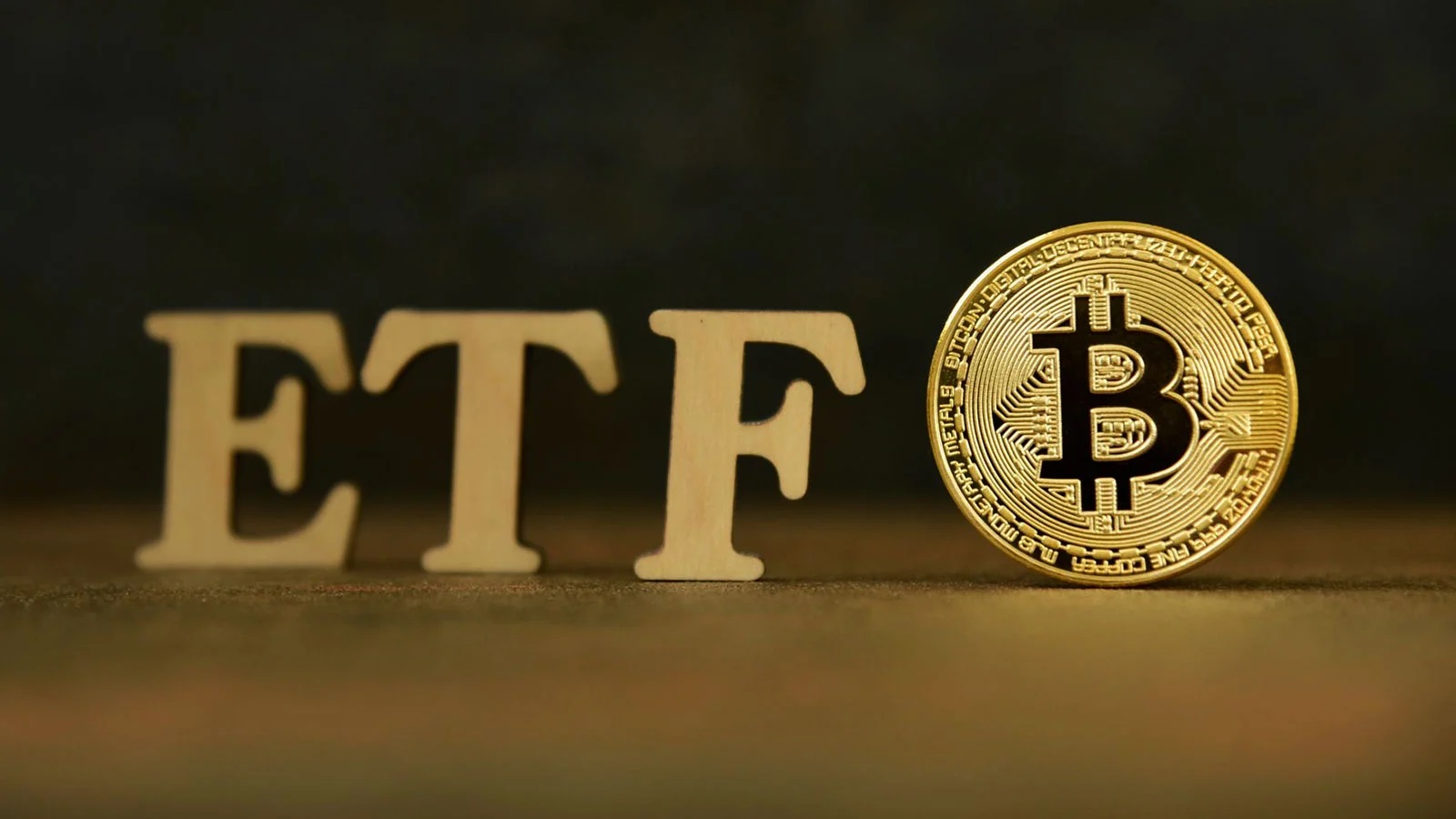
Bitcoin becomes second largest ETF commodity in the US, surpassing Silver

0

Bitcoin has achieved a remarkable milestone in the US financial market, as it has overtaken silver to become the second largest commodity in terms of exchange-traded fund (ETF) assets. According to a report by ETF.com, Bitcoin ETFs had a total of $28.9 billion in assets under management as of January 18, 2024, surpassing silver ETFs, which had $27.8 billion.

This means that Bitcoin is now only behind gold, which has $149.3 billion in ETF assets, in the ranking of the most popular commodities for investors.

This development reflects the growing demand and acceptance of Bitcoin as a legitimate and valuable asset class, especially after the launch of the first Bitcoin futures ETFs in October 2021. These products allow investors to gain exposure to the price movements of Bitcoin without having to buy or store the cryptocurrency directly, thus reducing the barriers and risks associated with it.

Since their debut, Bitcoin futures ETFs have attracted massive inflows and trading volumes, making them some of the most successful ETF launches in history.

The rise of Bitcoin ETFs also coincides with the impressive performance of the cryptocurrency itself, which reached a new all-time high of over $100,000 in November 2021 and has remained above $80,000 for most of 2022 and 2023.

Despite the volatility and regulatory uncertainty that still surround it, Bitcoin has proven to be a resilient and innovative asset that offers diversification and hedging benefits to investors, especially in times of inflation and geopolitical turmoil.

The surpassing of silver by Bitcoin is not only a symbolic achievement, but also a sign of a paradigm shifts in the global financial system. Silver has been used as a form of money and a store of value for thousands of years, while Bitcoin is only 15 years old and represents a new era of digital and decentralized finance.

The fact that investors are now allocating more capital to Bitcoin than to silver shows that they are embracing the potential and vision of this revolutionary technology, which could challenge and transform the existing structures and institutions that govern money and finance.

Bitcoin has outperformed many traditional assets, including silver, in terms of returns and adoption. This indicates that investors are recognizing the value and potential of this innovative technology, which offers a decentralized, secure and transparent way of transferring and storing value.

Bitcoin is not just a digital currency, but a network of distributed nodes that validate transactions and maintain the integrity of the system. Unlike silver, which is a physical commodity that requires storage, transportation and verification, Bitcoin is a purely digital asset that can be accessed and transferred anywhere in the world with an internet connection. Bitcoin also has a limited supply of 21 million coins, which makes it scarce and deflationary, unlike silver, which can be mined indefinitely.

The fact that investors are now allocating more capital to Bitcoin than to silver shows that they are embracing the potential and vision of this revolutionary technology. They are not only looking for short-term profits, but also for long-term value creation and innovation. Bitcoin is not a fad or a bubble, but a paradigm shift that will transform the way we exchange and store value in the digital age.

“The fundamental case for Bitcoin remains weak” says UBS Switzerland

Yet, this is not global. In a recent report, UBS, one of the largest and most influential banks in Switzerland, has expressed its skepticism about the long-term viability of Bitcoin as an asset class. The report argues that Bitcoin lacks some of the key features that make a currency or a store of value attractive, such as stability, scalability, and regulatory acceptance.

The report argues that Bitcoin lacks some of the key features that make a currency useful, such as stability, scalability, and regulatory acceptance. Moreover, the report claims that Bitcoin faces significant environmental and social challenges, as its energy-intensive mining process contributes to global warming and its anonymity facilitates illicit activities.

The report states that “the fundamental case for Bitcoin remains weak”, and that it is unlikely to replace traditional money or become a mainstream asset. It also warns investors that Bitcoin is subject to high volatility and regulatory uncertainty, and that they should be prepared for large price swings and potential losses. The report concludes that Bitcoin is more of a speculative gamble than a reliable store of value or a medium of exchange.

Despite its reputation as a groundbreaking technology, Bitcoin is actually quite outdated and limited in its functionality. It uses a proof-of-work (PoW) consensus mechanism, which is wasteful and vulnerable to attacks. It also has a hard cap of 21 million coins, which limits its growth potential and creates deflationary pressures.

Moreover, Bitcoin is unable to support smart contracts or decentralized applications (DApps), which are the main drivers of innovation and adoption in the blockchain space. To overcome these limitations, Bitcoin relies on third-party solutions, such as the Lightning Network or sidechains, which are complex and risky.

The fundamental case for Bitcoin remains weak. Bitcoin is not a reliable store of value or a medium of exchange. It is not environmentally friendly or socially responsible. It is not innovative or scalable. It faces significant challenges and risks that threaten its long-term viability. Therefore, I believe that investors and enthusiasts should be cautious and realistic about Bitcoin’s prospects and explore other alternatives that offer more value and potential.

UBS’s view on Bitcoin is not shared by all financial institutions, however. Some other banks, such as Morgan Stanley and Goldman Sachs, have shown more interest and openness towards the cryptocurrency, offering their clients exposure to Bitcoin-related funds and products.

Additionally, some companies, such as Tesla and MicroStrategy, have invested in Bitcoin as part of their corporate treasury strategy, signaling their confidence in its future potential. Furthermore, some countries, such as El Salvador and Ukraine, have taken steps to adopt Bitcoin as legal tender or to facilitate its use by their citizens.

Therefore, it remains to be seen whether UBS’s pessimistic outlook on Bitcoin will prove to be accurate or not. Bitcoin is still a relatively young and evolving phenomenon, and its future may depend on how it adapts to the changing technological, economic, and regulatory environment. While UBS may have valid reasons to doubt Bitcoin’s long-term prospects, it may also be underestimating its innovative and disruptive power.

The report also points out the environmental and social risks associated with Bitcoin mining, which consumes vast amounts of energy and generates significant carbon emissions.

The report concludes that Bitcoin is unlikely to replace traditional money or become a mainstream asset anytime soon, and that investors should be cautious about its high volatility and uncertain future.