DD
MM
YYYY

PAGES

DD
MM
YYYY

spot_img

PAGES

Home Blog Page 3829

Crypto Weekend Round Up at Tekedia – Sept 2, 2023

16

A new smartphone that runs on the Ethereum blockchain has been a huge success, selling out its entire stock in just one day. The device, called EthPhone, is the first of its kind to use Ethereum as its native platform, allowing users to access decentralized applications, smart contracts and cryptocurrencies directly from their phone.

EthPhone’s operating system, ethOS, is based on Linux and integrates seamlessly with the Ethereum network, providing a secure and user-friendly interface. EthPhone also features a built-in hardware wallet, a high-resolution camera, a fingerprint scanner and a 5G connection. EthPhone’s creators claim that their product is not only a smartphone, but also a gateway to the decentralized web, where users can enjoy more freedom, privacy and innovation.

The U.S. Securities and Exchange Commission (SEC) has announced that it will postpone its decision on three applications for Bitcoin exchange-traded funds (ETFs) until October. The applicants are Valkyrie Investments, Invesco, and WisdomTree, who have all proposed to launch spot Bitcoin ETFs that would track the price of the cryptocurrency directly.

The SEC said that it needs more time to evaluate the potential risks and benefits of allowing such products in the U.S. market, as well as to solicit public comments on the proposals. The SEC has been reluctant to approve any Bitcoin ETFs so far, citing concerns over market manipulation, fraud, custody, and investor protection.

The delay is another setback for the crypto industry, which has been hoping for a breakthrough in the U.S. regulatory landscape. A Bitcoin ETF would provide a convenient and accessible way for investors to gain exposure to the digital asset without having to buy and store it themselves. Some analysts believe that a Bitcoin ETF would also boost the legitimacy and adoption of the cryptocurrency, as well as increase its liquidity and price stability.

According to CertiK, a leading blockchain security company, the year 2023 has witnessed a surge of malicious activities in the decentralized finance (DeFi) sector. The company’s latest report revealed that from January to August, more than $997 million worth of digital assets were stolen or drained by hackers and scammers through various methods, such as flash loan attacks, exit scams and exploits. Flash loan attacks involve borrowing large amounts of liquidity from DeFi protocols and manipulating the market prices to profit from arbitrage opportunities.

Exit scams occur when the developers or promoters of a DeFi project disappear with the funds raised from investors or users. Exploits are the result of exploiting vulnerabilities or bugs in the smart contracts or protocols that power DeFi applications. CertiK warned that these threats pose significant risks to the security and trust of the DeFi ecosystem and urged users and developers to adopt best practices and tools to protect their assets and projects.

LimeWire, the peer-to-peer file sharing platform that was once synonymous with online piracy, has reinvented itself as a pioneer of AI-generated content. The company announced today that it has launched LimeWire Creator Studio, a web-based tool that allows users to create and monetize digital art, music, videos, and more using artificial intelligence. The Creator Studio is powered by LimeWire’s proprietary AI engine, which leverages deep learning and generative adversarial networks to produce original and diverse content.

Users can customize their creations by adjusting various parameters, such as style, mood, genre, and complexity. The Creator Studio also integrates with Polygon, a scalable and low-cost blockchain network that supports Ethereum-compatible smart contracts. Users can mint their creations as non-fungible tokens (NFTs) and sell them on LimeWire’s own marketplace or other NFT platforms.

LimeWire claims that its Creator Studio is the first of its kind to offer a fully decentralized and censorship-resistant way to generate and distribute AI-generated content. The company hopes that its platform will democratize the access to creative tools and empower a new generation of digital artists and creators.

Crypto Exchange OKX, one of the largest and most popular platforms for trading digital assets, has recently disclosed its massive reserves of Bitcoin (BTC), Ethereum (ETH) and Tether (USDT). According to a report by the exchange, OKX holds more than $10.4 billion worth of these three cryptocurrencies, which account for over 90% of its total assets under custody.

The report also reveals the breakdown of OKX’s holdings by coin and by wallet type, showing that the majority of its funds are stored in cold wallets for security reasons. OKX claims that its disclosure is part of its commitment to transparency and accountability, as well as a response to the growing demand from regulators and investors for more information about the crypto industry. OKX hopes that its report will inspire other exchanges to follow suit and increase the trust and confidence in the crypto space.

According to a recent survey conducted by KuCoin, a leading global cryptocurrency exchange, Turkey has one of the highest rates of cryptocurrency adoption in the world. The survey revealed that more than 50% of Turkish adults have invested in some form of digital currency, such as Bitcoin, Ethereum, or Dogecoin.

The main reasons for this high level of interest are the volatility of the Turkish lira, the ease of access to online platforms, and the desire to diversify income sources. KuCoin’s CEO, Johnny Lyu, commented on the findings: “We are delighted to see that Turkey is embracing the potential of cryptocurrency and blockchain technology. We believe that Turkey has a bright future in the crypto space, and we are committed to providing our users with the best services and products to support their journey.”

The island of Maui has been devastated by a series of natural disasters, including wildfires, floods, and landslides. Thousands of people have lost their homes, businesses, and livelihoods. In response, a group of celebrities and philanthropists have launched a relief fund that accepts donations in various cryptocurrencies. The fund is led by Oprah Winfrey and Dwayne Johnson, who are both avid supporters of the crypto community. They hope to raise awareness and funds for the recovery efforts, as well as to promote the adoption and innovation of crypto technology.

The fund accepts donations in Bitcoin, Ethereum, Dogecoin, and other popular coins. Donors can also choose to remain anonymous or to receive recognition and rewards for their generosity. The fund aims to distribute the donations to local organizations and individuals who are working to rebuild Maui and to provide essential services and support to the affected communities.

The fund also plans to invest in long-term projects that will enhance the resilience and sustainability of the island. The crypto community has shown its solidarity and compassion for the people of Maui and has demonstrated the potential of cryptocurrency as a tool for social good.

Ivan Bianco, a very popular cryptocurrency influencer in Portugal, made a serious mistake that cost him all his funds. During a live stream in which he talked about his decentralized finance (DeFi) strategies, he accidentally revealed his seed phrase, which is a sequence of words that allows access to his cryptocurrency wallet. As soon as viewers realized what he had done, some of them used the seed phrase to steal all their money.

PancakeSwap, the leading decentralized exchange (DEX) on the Binance Smart Chain (BSC), has announced its expansion to Base Network, a cross-chain platform that enables interoperability between different blockchains. PancakeSwap users will be able to access Base Network’s liquidity pools, swap tokens across multiple chains, and participate in yield farming and lottery programs.

Base Network aims to provide a fast, secure, and scalable solution for decentralized applications (dApps) and DeFi protocols that want to leverage the benefits of multiple blockchains without compromising on user experience or security. PancakeSwap’s integration with Base Network is expected to boost its user base, trading volume, and innovation potential.

Understanding Altcoins and the Underlying Difference with Stablecoins

0

Altcoins are alternative cryptocurrencies that are not based on Bitcoin’s protocol or network. They have their own rules, features, and goals, and often aim to improve on some aspects of Bitcoin, such as speed, scalability, privacy, or functionality. Some of the most popular altcoins include Ethereum, Litecoin, Ripple, Cardano, and Dogecoin.

Altcoins are important for several reasons. First, they provide more choices and opportunities for cryptocurrency enthusiasts, who can diversify their portfolio and explore different use cases and applications. Second, they foster innovation and competition in the crypto space, which can lead to better solutions and standards for the industry. Third, they challenge the dominance and influence of Bitcoin, which can reduce the risk of centralization and manipulation.

The main difference between altcoins and stablecoins lies in their price behavior and functionality. Altcoins are subject to extreme price fluctuations, which can provide high returns but also high risks for investors. Altcoins also offer novel and innovative features, such as smart contracts, decentralized applications, faster transactions and lower fees. Stablecoins, on the other hand, have a stable price that does not change much over time. Stablecoins can provide convenience, security and predictability for users who want to transact with cryptocurrencies without worrying about price volatility.

To summarize, altcoins and stablecoins are two types of cryptocurrencies that have different characteristics and use cases. Altcoins are more suitable for investors who are looking for high-risk high-reward opportunities and who want to access the latest developments in the crypto space. Stablecoins are more suitable for users who want to use cryptocurrencies as a reliable and stable form of money.

However, altcoins also come with some challenges and risks. For one thing, they are generally more volatile and unpredictable than Bitcoin, as they are subject to market fluctuations, technical issues, and regulatory uncertainty. For another thing, they may not have the same level of security, network effect, or adoption as Bitcoin, which can make them more vulnerable to attacks or obsolescence. Finally, they may not offer any real value or advantage over Bitcoin, as some of them may be based on hype, speculation, or fraud.

Therefore, if you are interested in altcoins, you should do your own research and due diligence before investing or using them. You should also be aware of the potential rewards and risks involved, and only invest what you can afford to lose. Altcoins can be a great way to diversify your crypto portfolio and explore new possibilities, but they are not without challenges and pitfalls.

The NAFDAC Guidelines For The Registration of Bulk/Semi-Processed Food Products For Export in Nigeria

0

Effective from 27/03/2023,the guidelines issued by the National Agency For Food and Drug Administration and Control (NAFDAC) for the registration of bulk/Semi-Processed food products meant for export are for the interest of the public and in particular, manufacturers/exporters of food products.

It is necessary to emphasize that, no food product shall be manufactured, imported, exported, advertised, sold, distributed or used in Nigeria unless it has been registered in accordance with the provisions of NAFDAC Act CAP N1 (LFN) 2004, other related legislations and the accompanying guidelines.

This article will thus be focused on the procedures and requirements for the registration of food products for export in detail. 

What is the procedure for registration application as prescribed by the guidelines?

-A written application for the registration of bulk/semi-processed food product for export should be made on the company’s letter head to the Director-General ,NAFDAC.

-An online application form for the registration of bulk/semi-processed food product for export should be purchased, completed and submitted as well.

-A separate application form shall be submitted for each product.

What are the provisions of the guidelines on product labeling information?

-Labeling should be informative, accurate and in conformance with the Agency’s Food Labeling Regulations and any other relevant Regulations.

What are the steps involved in product registration under the guidelines?

Step I

Documentation

-The application letter for registration of bulk/semi processed food products for export.

-Evidence of Business Incorporation.

-Evidence of payment.

-Contract Manufacturing Agreement (where applicable).

-Evidence of Registration of Brand Name with Trademark Registry in the Ministry of Industry, Trade and Investment (where applicable). This should be done in the name of the owner of the Trademark/Brand name, as the case may be.

 -Product Labels/artworks.

-Comprehensive Certificates of Analysis of the product for export and product specification from country of destination.

Step II

Product Approval Meeting

– Upon satisfactory documentation review, GMP inspection report of the production facility and laboratory analysis report of the product, applicant is issued a NAFDAC Registration Number subject to ratification at approval meeting.

What are the tariff prescriptions under the guidelines?

Tariff prescriptions are subject to  NAFDAC Tariff stipulations on its website. 

What are the cautionary notes provided by the guidelines?

– Failure to comply with these requirements may result in the disqualification of the application or lead to considerable delay in the processing of registration.

-A successful application will be issued a Certificate of Registration with a validity period of two (2) years.

– Registration of a product does not automatically confer Advertising Permit. A separate application and subsequent approval by the Agency shall be required if the product is to be advertised. Simultaneous submission of registration and advertisement applications are allowed.

-NAFDAC reserves the right to revoke, suspend or vary a certificate during its validity period.

-Filing an application or paying an application fee does not confer registration status.

-Failure to respond promptly to queries or enquiries raised by NAFDAC on the application (within 90 working days) will automatically lead to the closure of the Application.

-The timeline for processing approvals for export of bulk/semi-processed food products starting from receipt of application by NAFDAC is twenty-five (25) working days and the breakdown is as follows: 

a). Issuance of request for inspection by NAFDAC – 2 days;

b). Label vetting by NAFDAC – 2 days;

c). Inspection by FSAN – 3 days;

d). Lab analysis – 8 days, Review and issuance of NAFDAC;

e) Registration Number by NAFDAC– 4 days, 

f). Issuance of Export certificate by PID – 6 days.

-Please note that the clock stops once compliances are issued.

All correspondences should be addressed toDirector-General, (NAFDAC).

How Nations Rise As America Pumps $15.5B into EV Factories

1

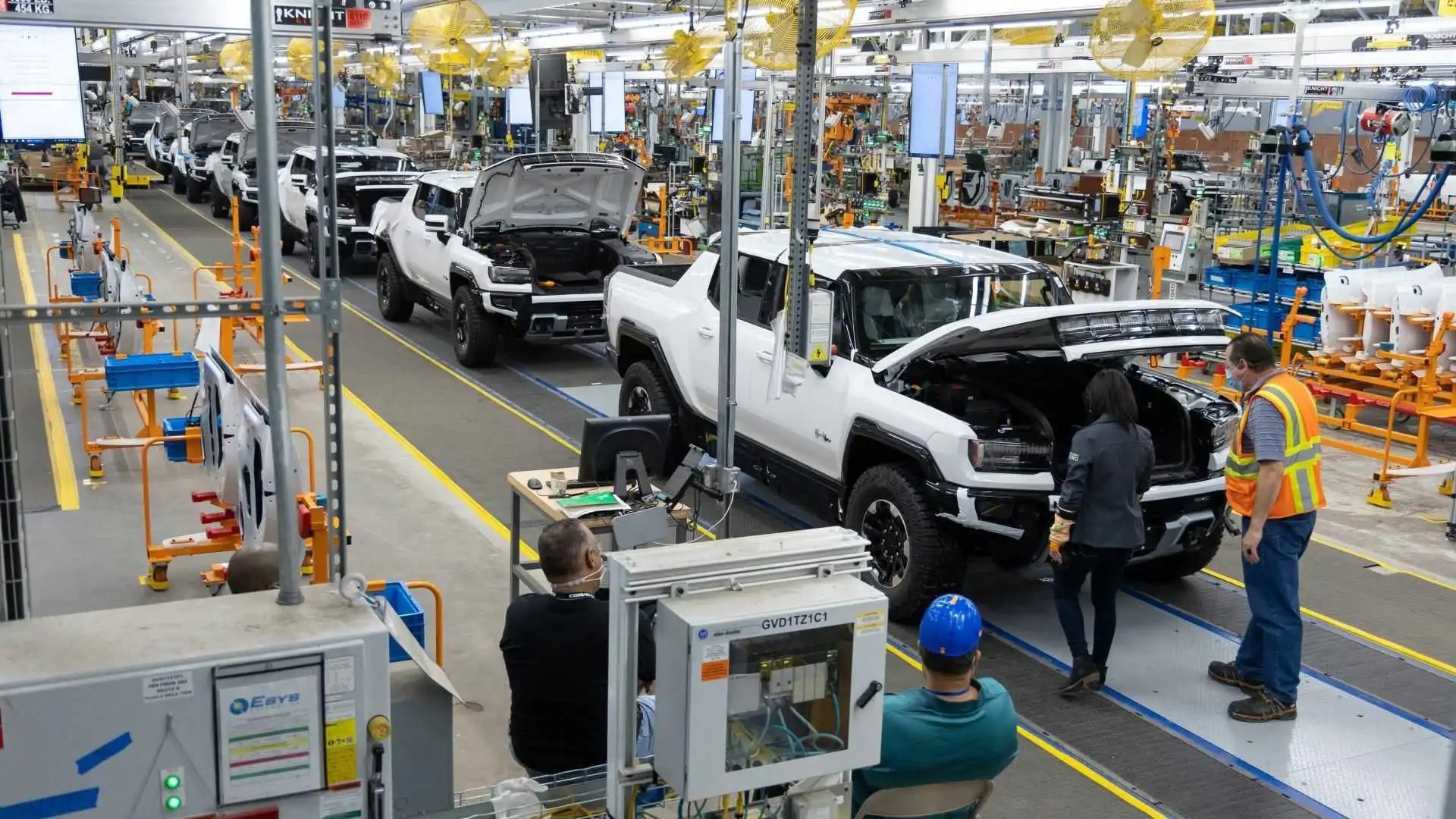
“Today’s announcements show that President Biden understands that building the cars of the future also necessitates helping the communities challenged by the transition away from the internal combustion engine.” —U.S. Secretary of Energy Jennifer M. Granholm, announcing $15.5 billion worth of funding and loans for the conversion of existing auto plants to factories that can churn out electric vehicles.

That is how nations accelerate modern industries. Yes, the birthplace of modern capitalism, the US of A, is not waiting for banks to finance the redesign, rather, it is pumping money to make sure American car companies can compete in the future.

But in my native country, Nigeria, we want to be too capitalist, leaving everything to market forces. That was why they defunded the postal service because it was not making money; in the United States, its postal service has lost money in the last twenty years!

Good People, it is an illusion to think that companies can help themselves. What happens is that nations build platforms, and companies participate on them. But expecting companies to build platforms, you have to return to the eras of Carnegie, Mellon and Rockefeller, but those eras have expired. These days, governments lead on big things in economies.

I am a Keynesian strategist and I like governments to open the wallets and INVEST in productive things, not the acceleration of consumerism. And if we do just that, Nigeria will rise.

Comment on Feed

Comment 1: “The US Postal Service I believe was only profitable for a small duration of time and it wasn’t in the modern era. I believe it was before the automobile was invented. Biden’s plan for transition has a lot of unforeseen and unintended consequences. Here in the US we are going to see the cost of electricity increase. I truly value your insights and ask that you read The Bitcoin Standard. After reading that, I am confident that you will no longer be a Keynesian strategist.”

My Response: I started reading “The Bitcoin Standard ” but stopped when they were talking of “decentralized” option to central banking. It is an illusion to think that a product whose  top 10 miners control more than 80% of the mining capacity is decentralized. For a village kid like me, I will prefer the central banks to be mining the money than those “10” guys.

Simply, bitcoin is not decentralized in production even though there is an illusion of decentralization in consumption. More so, even at that consumption, exchanges unify them and very few control those exchanges. If you believe in BTC, you believe that FTX, Coinbase, Binance etc and those ten miners are better custodians than the US Federal Reserve and central banks. I do not believe that.

In the political economy, bitcoin sneezes when one government speaks. How is that decentralized if it responds to all perturbations like that? I have no problem with BTC or coins, but that does not mean I accept that it is decentralized because it is not. It has no native capacity to mutate if the US government bans all exchanges and banks from doing any BTC. Yes, that decentralization will not save it from crashing!

Comment 1R: It is also estimated that a full energy transition in the USA would cost 10-14 Trillion USD… The problem with government funded initiatives is the allocation of the resources (money and time). It has been proven time and again that we cannot trust ourselves or politicians and that free market capitalism is the best means of finite resource allocation.

My Response: I agree with the free market system. But the free market system works when governments have built the PLATFORMS. No free market could have built the US interstate, the universities, etc which make America great. As a Keynesian, I have empirical data to show that more than 80% of America’s finest universities are in blue cities. More than 80% of the largest cities are blue cities. More than 80% of net-tax sender are blue cities. What makes them better? Governments building platforms where companies thrive. As Alabama cuts costs on universities, California opens the vaults on R&D and in ten years, California extends the gaps on innovation and wealth creation. Free market system is amazing but it requires governments to do the hard things to kick off!

Comment 1RR: I have thought of this a lot and like what Napoleon did. He offered what was a King’s ransom for a way to store food, because an army marches on its stomach. This is how canning was invented. I like the concept but also don’t want it tied to taxation so that politicians can repay those that brought them into office. I think an innovation policy needs to be supported with at most low cost loans.

This also goes back to the comments you made about democracy the other day… There needs to be a foundation. EVERYTHING a solid foundation. I see what El Salvador is doing. I like what Singapore did. I like how Rwanda is progressing. They all built the foundation first.

Comment on 1RRR: Nigeria is a different country from the USA.

It doesn’t matter the amount of funding you pour into the Nigeria Postal Service or any government entity for that matter, the result will remain the same because of corruption.

The intended benefits will hardly get to the intended Beneficiaries.

Unfortunately, no government, whether military or democratic, seems to have any solution to the kind of corruption in government establishment in this part of the world.

Instead of throwing money into leaking government baskets, let’s reduce governments footprint to the barest minimum by entrusting most of the resource allocation assignment to the free market. Since governments in this part of the world are not set up to run any business, anything and everything that can be run like a business should be privatised.

Let us banish all form of subsidies that enrich the few at the expense of the majority. And let the naira remain floating.

Let’s embrace free market economy, at least until such a time that we figure out how to effectively deal with corruption.

Comment 2: But there is a huge market to transform existing gas cars to electric or hybrids. The Joe Biden administration should incentivize existing car companies to build branches to retool gas vehicles, rather than only create new electric cars. Hydrogen powered cars are also better than electric- due to the problem of Li iron mining. Speaking of which – African countries need to produce their own electric or hydrogen cars to make use of their mineral deposits – not just selling the raw material. We certainly have the ingenuity to build better products.

African politicians are largely clueless about building business. Their incentive is always to exploit the tax revenue, they have done relatively little to create industry. The private sector in Africa needs to take more initiative

GTCO (GTBank Parent Firm) Declares Profit Before Tax of N327.4bn for H1 2023

3

Guaranty Trust Holding Company Plc (GTCO) has published its Audited Consolidated and Separate Financial Statements for the period ending on June 30, 2023, to both the Nigerian Exchange Group (NGX) and the London Stock Exchange (LSE).

GTCO is a leading financial services conglomerate that operates within the realms of banking across Nigeria, West Africa, East Africa, and the United Kingdom. Additionally, it has ventured into new enterprises encompassing Payment, Funds Management, and Pension Fund Administration.

In the report, the company disclosed a profit before tax of N327.4 billion, marking a substantial growth of 217.1% compared to the N103.2 billion reported in the corresponding period concluding in June 2022.

The company’s net loan book experienced a notable surge of 22.8%, rising from N1.89 trillion at the end of December 2022 to N2.32 trillion by June 2023. Additionally, deposit liabilities witnessed substantial growth, increasing by 37.0% from N4.61 trillion in December 2022 to N6.32 trillion by June 2023.

The Group Chief Executive Officer of Guaranty Trust Holding Company Plc (GTCO Plc), Mr. Segun Agbaje, said the results came off challenging economic times.

“Our half-year audited results reflect the strong business fundamentals underpinning the GTCO franchise, the quality of our past decisions in future-proofing our balance sheet for challenging times, and the sound practices that guide our day-to-day operations.

“Despite the challenges in the business environment, notably inflationary pressures, and exchange rate fluctuations, we are starting to see the gains in the transformation of our businesses following our transition to a Holding Company structure,” he said.

The balance sheet of GTCO continued to maintain a robust and structured posture, concluding with total assets of N8.5 trillion and shareholders’ funds of N1.2 trillion.

Full Impact Capital Adequacy Ratio (CAR) remained very strong, closing at 24.7%, while asset quality was sustained as IFRS 9 Stage 3 Loans improved to 4.6% in June 2023 from 5.2% in December 2022.

“Improved profitability and solid performance across key metrics reflect efficiencies and justify the investments we continue to make in technology, product development and our people,” Agbaje added.

However, Cost of Risk (COR) closed at 3.7% from 0.6% in December 2022 owing to worsening macros which caused a significant increase in ECL variables.

Respecting that Agbaje said: “We recognize the impact prevailing economic and market conditions have on people and livelihoods and we remain committed to seeking better outcomes for our customers, by ensuring that our products and service offerings support our customers and their businesses through their evolving realities, whilst also taking every opportunity to optimize stakeholder value.”

Since it became a Holding Company in 2021, the group has defied challenges to post one of the best metrics in the Nigerian Financial Services industry in terms of key financial ratios i.e., Pre-Tax Return on Equity (ROAE) of 61.4%, Pre-Tax Return on Assets (ROAA) of 8.8%, Full Impact Capital Adequacy Ratio (CAR) of 24.7% and Cost to Income ratio of 27.7%.

The company’s prominent position in the banking sector, coupled with its dedication to empowering individuals and communities, has won it numerous prestigious awards throughout its history.

Recently, Guaranty Trust Bank was recognized as Nigeria’s Best Bank and Best Bank in CSR at the 2023 Euromoney Awards for Excellence, Best Banking Group in Nigeria by World Finance, and Best Bank in Nigeria by Global Finance. GTCO’s Guaranty Trust Bank is featured in the Top 1000 Banks in the World and Top 100 Banks in Africa rankings by The Banker.