I have been consistent: I am against the removal of Nigeria’s fuel subsidy when all we needed to do was to remove the corruption in the subsidy management. Yes, I like strategic subsidies in economies because you have to subsidize something most times despite whatever Adam Smith postulated on his “invisible hands” construct. Yes, in the last 20 years, the United States Postal Service has not made a single profit (see data below). Why? The US is fine to make sure logistics and supply chains remain optimized for industries to grow.
(Nigeria is now operating on quasi fuel subsidies since there is no more correlation between the FX and the prices at the pumps, implying that someone is covering the differences.)
How can rural and urban America work without the postal service? Not possible. So, America tells the postal service NOT to use reflective pricing on shipping, making things cheaper across the nation, and especially in the rural areas. Of course, when all is done, they recover those “losses” in taxes, which typically grow because of more engaged economic activities across both urban and rural areas.
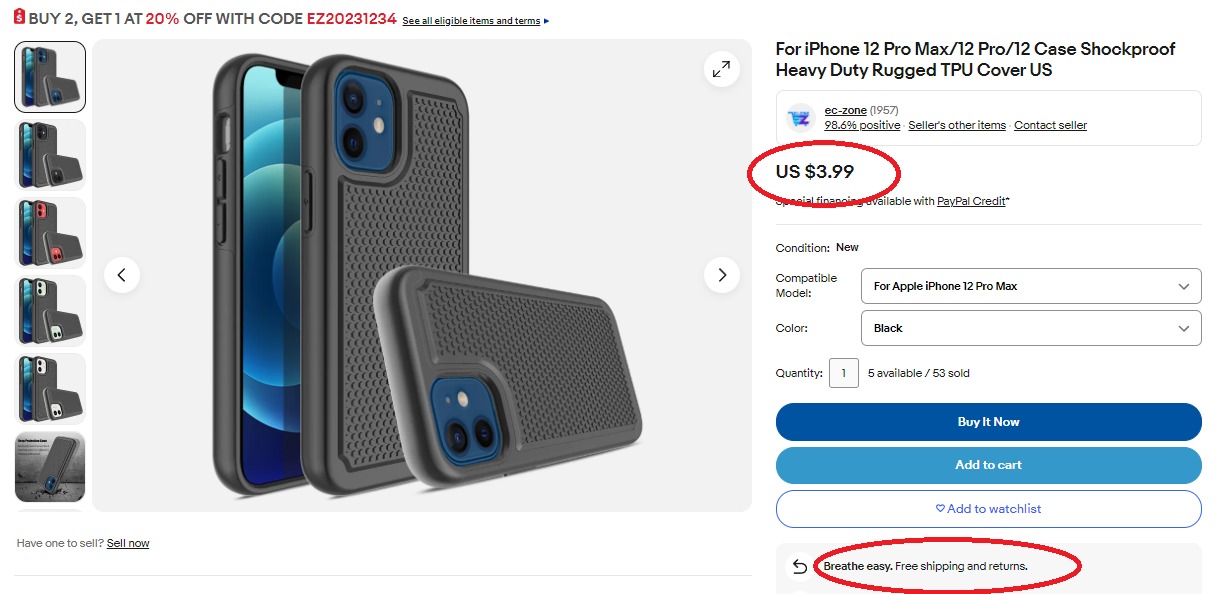
If you live in New York, you can buy an iPhone cover for $4 from China. That $4 includes shipping and handling. How can someone make an iPhone cover in China and ship it to you in New York for $4 and still remain in business? China has subsidized logistics.
Why this post? I am responding to those who want to make Nigeria a 100% free market system with zero subsidies. Good People, Nigeria needs energy subsidies, forex subsidies, etc BUT must remove the corruption in its subsidies so that only productive things receive those supports to advance the nation. There is nothing wrong in fuel subsidies or forex subsidies, our challenge is that we have too much corruption in them and that makes them look bad. Every country subsidizes something, and when scaled, it becomes conglomerate tax.
Postal Service Net Income/Loss By Year
- 2023 – $6.5 billion loss
- 2022 – $473 million loss
- 2021 – $6.9 billion loss
- 2020 – $7.6 billion loss
- 2019 – $8.8 billion loss
- 2018 – $3.9 billion loss
- 2017 – $2.7 billion loss
- 2016 – $5.6 billion loss
- 2015 – $5.1 billion loss
- 2014 – $5.5 billion loss
- 2013 – $5 billion loss
- 2012 – $15.9 billion loss
- 2011 – $5.1 billion loss
- 2010 – $8.5 billion loss
- 2009 – $3.8 billion loss
- 2008 – $2.8 billion loss
- 2007 – $5.1 billion loss
- 2006 – $900 million surplus
- 2005 – $1.4 billion surplus
- 2004 – $3.1 billion surplus
- 2003 – $3.9 billion surplus
- 2002 – $676 million loss
- 2001 – $1.7 billion loss
As the world praised the removal of fuel subsidies in June 2023, on the illusion that it would rekindle Nigeria's economy, a village boy from Ovim wrote: "My social media channels are classrooms. And most times, I write things which deviate from the “typical” consensus, partly… pic.twitter.com/Yl15U9Kxwt
— Ndubuisi Ekekwe (@ndekekwe) February 2, 2024