DD
MM
YYYY

PAGES

DD
MM
YYYY

spot_img

PAGES

Home Blog Page 3839

Central Bank of Nigeria Implements Sweeping Reforms in CRR Policy, Stops Daily Debits

0

In a bold move aimed at bolstering operational efficiency within the banking sector, the Central Bank of Nigeria (CBN) has unveiled an overhaul of its Cash Reserve Requirement (CRR) policy.

The transformative initiative, detailed in a circular addressed to all financial institutions, marks a departure from the conventional daily CRR debits, signaling a strategic shift towards a more predictable and adaptive mechanism.

The CBN’s decision to cease daily CRR debits is underpinned by a commitment to foster a stable and growth-oriented banking environment. The updated framework is envisioned to empower banks with enhanced liquidity management capabilities, enabling more effective financial planning and regulatory compliance.

Revamped Framework Unveiled in Two Distinct Phases

1. Incremental Approach:
Under the first phase of the revamped framework, an incremental approach has been introduced. The existing CRR ratios, standing at 32.5% for commercial banks and 10% for merchant banks, continue to form the basis for compliance. However, the application of these ratios is now intricately tied to increases in the weekly average adjusted deposits.

This strategic modification injects a level of flexibility into the CRR framework, allowing banks to adapt to changing financial circumstances without compromising on regulatory compliance. Unlike the previous practice where the CRR was applied to the total funds held by a bank, the incremental approach ensures that the percentage of funds set aside applies solely to the influx of new money, providing banks with a dynamic tool to navigate evolving market conditions.

2. Lending Incentive:
The second phase introduces a compelling incentive for banks to actively contribute to economic growth by increasing lending activities. A 50% CRR levy is imposed on banks failing to meet the minimum Loan to Deposit Ratio (LDR). This strategic move is designed to encourage banks to channel a larger portion of their deposits towards productive economic activities.

In essence, banks falling short of the prescribed lending threshold face a financial penalty, thereby incentivizing them to deploy a greater share of their resources into the real sector. This mechanism aligns with broader economic goals by fostering increased access to finance, supporting businesses, and stimulating overall economic growth.

The overarching goal of these reforms is to provide banks with a more dynamic and adaptive CRR framework. This, in turn, is expected to facilitate improved liquidity management, allowing banks to plan and monitor their financial resources more effectively. By moving away from daily CRR debits, the CBN aims to create an environment that fosters financial stability and growth.

The linkage of CRR compliance to LDR targets is a strategic move to nudge banks towards extending more credit, thereby contributing to economic expansion. The imposition of a CRR levy on banks failing to meet the minimum LDR is said to be a powerful mechanism to ensure that financial institutions actively participate in driving economic growth by providing financial support to businesses and individuals.

Dr. Adetona S. Adedeji, the Acting Director of the Banking Supervision Department at CBN, said that the new framework aligns with the central bank’s commitment to maintaining monetary stability while actively promoting economic expansion.

In essence, the CBN’s comprehensive overhaul of the CRR policy signifies a dual-purpose strategy. Firstly, it aims to streamline banking operations by providing a more structured and predictable regulatory framework. Simultaneously, it is incentivizing banks to become active contributors to economic growth by channeling funds towards productive activities.

This strategic move is not merely a shift in policy; it represents a visionary approach aimed at nurturing a financial ecosystem that thrives on adaptability, efficiency, and economic vibrancy. The ripple effect of increased lending is expected to stimulate business expansion, job creation, and overall economic prosperity.

The implementation of these sweeping reforms by the central bank denotes its commitment to utilizing monetary policy tools not only for stability but as a proactive driver of growth within the banking sector and the broader economy. The new CRR framework is expected to reshape banking operations in Nigeria, providing a solid foundation for sustained financial stability and economic expansion.
Ukraine, Russia complete prisoner exchange amid inclusion mystery

0

Ukraine and Russia have completed a prisoner exchange that involved swapping dozens of detainees, including some high-profile figures, amid the ongoing conflict in eastern Ukraine. However, the deal was shrouded in mystery and confusion, as some of the expected names were missing from the lists and others were added at the last minute.

The exchange took place on Saturday at a checkpoint near the city of Horlivka, in the Donetsk region, where pro-Russian separatists have been fighting Ukrainian government forces since 2014. According to the Ukrainian presidency, 34 Ukrainians were freed in exchange for 35 Russians or pro-Russian supporters. Among them were 24 sailors captured by Russia in the Kerch Strait in 2018, as well as filmmaker Oleg Sentsov, who was sentenced to 20 years in prison on terrorism charges after protesting against Russia’s annexation of Crimea.

The Russian side received some of its most wanted figures, such as Volodymyr Tzemach, a former commander of a separatist air defense unit who is considered a key witness in the downing of Malaysia Airlines Flight 17 over eastern Ukraine in 2014, killing all 298 people on board. Tzemach was arrested by Ukrainian special forces in June and was reportedly on the verge of revealing crucial information about the incident.

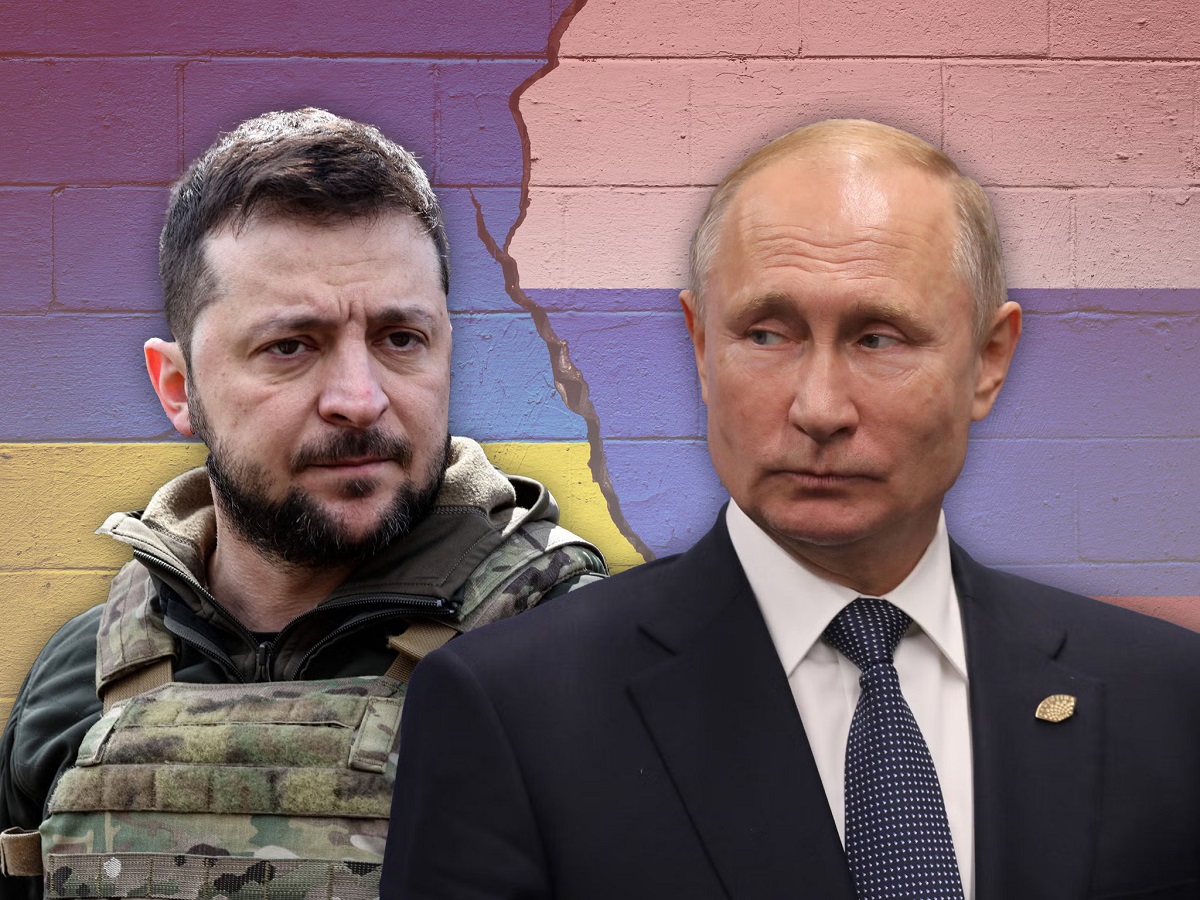
The prisoner swap was hailed as a major step towards easing tensions and resolving the conflict that has claimed more than 13,000 lives. Ukrainian President Volodymyr Zelensky, who made the exchange a priority since taking office in May, said it was “a very difficult but important step” and thanked his Russian counterpart Vladimir Putin for his “political will”. Putin, for his part, said he hoped the deal would “improve the atmosphere” and lead to a full settlement of the crisis.

However, the exchange also raised many questions and concerns, as some of the expected participants were left out or replaced by others. For instance, Ukrainian journalist Roman Yushchenko, who was sentenced to 12 years in prison in Russia for espionage, was not on the list of released prisoners, despite earlier assurances from Zelensky’s office. Instead, Russia freed Kirill Vyshinsky, the head of Russian state news agency RIA Novosti’s Ukraine branch, who was accused of treason by Kyiv for supporting the separatists.

Another controversial figure was Oleksandr Kolchenko, a Crimean activist who was arrested along with Sentsov and also sentenced to 20 years in prison. Kolchenko refused to take part in the exchange, saying he did not want to be traded for “people who have blood on their hands”. He also said he did not recognize himself as a Ukrainian citizen and demanded to be released as a political prisoner.

The prisoner swap was also criticized by some human rights groups and international organizations, who said it violated international law and undermined justice. They argued that some of the people exchanged were not prisoners of war or hostages, but criminal suspects or convicts who should face fair trials and investigations. They also warned that the deal could set a dangerous precedent and encourage further violations of human rights and international humanitarian law.

The prisoner exchange was seen as a possible precursor to a summit between Zelensky and Putin, along with the leaders of France and Germany, who are part of the so-called Normandy format that seeks to mediate the conflict.

The summit has been postponed several times due to disagreements over the implementation of the Minsk agreements, a peace plan signed in 2015 that envisages a ceasefire, a withdrawal of heavy weapons, and a political dialogue between Kyiv and the separatists. The last meeting of the Normandy format took place in 2016.

The prisoner swap was also seen as a test of Zelensky’s ability to negotiate with Putin and deliver on his campaign promises of ending the war and restoring peace. Zelensky, a former comedian and political novice, has faced criticism from some of his supporters and opponents for being too soft or naive in dealing with Russia.

He has also faced pressure from the United States, which has been providing military and financial aid to Ukraine since 2014. The US has recently been embroiled in a scandal over allegations that President Donald Trump pressured Zelensky to investigate his political rival Joe Biden and his son Hunter Biden, who had business dealings in Ukraine.

The prisoner exchange was a rare moment of cooperation between Ukraine and Russia, two countries that have been locked in a bitter confrontation since 2014. However, it also exposed the complexity and uncertainty of the situation, as well as the challenges and risks that lie ahead for both sides.

The exchange may have opened a window of opportunity for dialogue and diplomacy, but it also raised doubts and suspicions about the motives and intentions of each party. The fate of the remaining prisoners, as well as the future of eastern Ukraine and Crimea, remains unclear.

CBN Increases Customs’ exchange rate by 43% in 24hours, stirring Backlash

0

In the wake of economic uncertainties, the Central Bank of Nigeria (CBN) has raised Customs exchange rates twice within 24 hours, sparking vehement opposition from importers and Customs agents.

The initial increase from N952 to N1,356.883 per dollar on Friday was followed by another hike to N1,413.62. This move, amounting to a 43 percent rise, has drawn sharp criticism, particularly from Dr. Muda Yusuf, the Chief Executive Officer of the Centre for the Promotion of Private Enterprise (CPPE).

Dr. Yusuf expressed the severity of the situation, stating, “The drastic upward review of the exchange rate for the computation of import duty from N952 to N1,413.62 would have a negative effect on businesses across all sectors. This is a whopping 42.5% increase. This is like the last straw.”

His sentiments capture the gravity of the impact on businesses that are already grappling with the aftermath of recent currency devaluation and unification.

The CEO of CPPE emphasized that businesses, especially those in the real sector, are still reeling from the shocks of the recent unification of the exchange rate, which has driven the official rate to about N1400. The 42.5% increase in import duty rates is poised to exacerbate the challenges faced by businesses, leading to escalated production and operating costs.

One of the major concerns raised is the potential fueling of inflation as a result of these policy actions. Dr. Yusuf pointed out, “This action will further fuel inflation as production and operating costs get escalated. The vulnerable segments of the population will be further impoverished as cost-push inflation gets exacerbated.”

The socio-economic ramifications of such inflationary pressures are substantial, posing a threat to the well-being of the population at large.

The CPPE, recognizing the severity of the situation, appealed to the CBN to reverse the rate hike in consideration of the already impoverished segments of society and the numerous businesses teetering on the verge of collapse.

The recommendation to treat the determination of the exchange rate for import duty computation as a fiscal policy matter, falling within the remit of the finance ministry, reflects the urgency of realigning such policies with broader fiscal considerations.

Amidst these developments, there are speculations that the CBN is not done with its adjustments to the Customs exchange rate. Alhaji Tanko Ibrahim, the National Coordinator of the National Association of Government Approved Freight Forwarders (NAGAFF), said, “I heard from the grapevine that the CBN plans to push the Customs exchange rate to as high as N1,500 per dollar. That is their target, and they are going to do it soon.”

This speculation raises further concerns among stakeholders about the sustainability of the import business and the ability of the Nigeria Customs Service to meet its revenue targets for 2024.

The series of rate hikes has triggered a wave of concern among stakeholders, who view the government’s actions as insensitive. An angry stakeholder lamented, “The whole situation has given away this government as insensitive to the plight of Nigerians. While we are still discussing the implications of Friday’s increase and how it is going to impact the lives of ordinary Nigerians, this government went ahead to slam yet another increase.”

This sentiment reflects a growing disillusionment with the government’s economic policies and a perception of cruelty and insensitivity.

The recent spikes in Customs exchange rates in Nigeria have set off a chain reaction of economic concerns and discontent among stakeholders. The immediate repercussions on inflation, production costs, and the overall business environment underscore the need for a more nuanced and carefully considered approach to economic policies.

The call for a reversal of the rate hike and the suggestion to involve fiscal authorities in determining exchange rates for import duty computation point towards the necessity of aligning policies with broader economic considerations. The biting economic situation in the country makes it crucial for policymakers to address these challenges to ensure the stability and prosperity of businesses and the well-being of the Nigerian population.

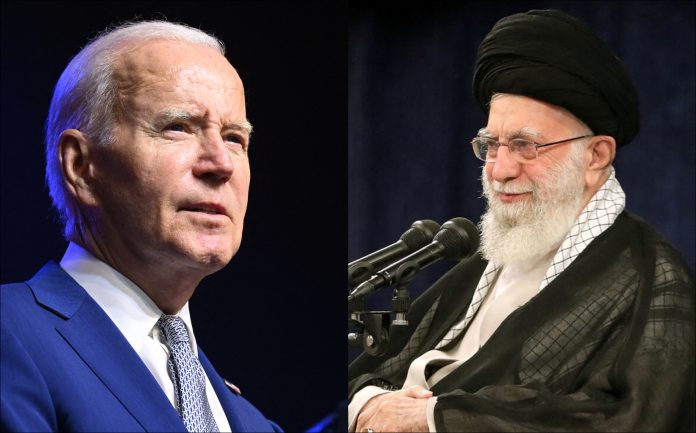
The Origin of the US-Iran Standoff can be traced back to the 1953 Coup d’état

0

The US and Iran have been locked in a standoff over Iran’s nuclear program and its regional influence for decades. The tensions have escalated and de-escalated several times, but the core issues remain unresolved. In this blog post, I will examine the historical background, the current situation, and the possible outcomes of this long-standing conflict.

The origins of the US-Iran standoff can be traced back to the 1953 coup d’état that overthrew the democratically elected Prime Minister Mohammad Mosaddegh and restored the monarchy under Shah Mohammad Reza Pahlavi. The coup was orchestrated by the CIA and the British intelligence, who feared that Mosaddegh would nationalize Iran’s oil industry and align with the Soviet Union.

The Shah ruled Iran with an iron fist, suppressing opposition and dissent, and relying on the US for military and economic support. He also embarked on a modernization and westernization program that alienated many traditional and religious sectors of Iranian society.

The Shah’s regime was toppled by the 1979 Islamic Revolution, led by Ayatollah Ruhollah Khomeini, who established an Islamic Republic based on the principle of velayat-e faqih (guardianship of the jurist). The revolution was a watershed moment in Iranian history, as it marked a rejection of foreign interference and a return to Islamic values and identity.

However, it also sparked a hostile reaction from the US, which severed diplomatic ties with Iran and imposed sanctions. The US also supported Iraq in its eight-year war with Iran, which claimed hundreds of thousands of lives on both sides.

The US-Iran standoff entered a new phase in 2002, when President George W. Bush labeled Iran as part of the “axis of evil”, along with Iraq and North Korea. Bush accused Iran of pursuing nuclear weapons and supporting terrorist groups such as Hezbollah and Hamas.

The US also accused Iran of meddling in Iraq and Afghanistan, where the US had invaded and toppled the regimes of Saddam Hussein and the Taliban. Iran denied these allegations and insisted that its nuclear program was peaceful and that its regional activities were legitimate.

The standoff reached a critical point in 2015, when Iran and six world powers (the US, China, Russia, France, Britain, and Germany) signed the Joint Comprehensive Plan of Action (JCPOA), also known as the Iran nuclear deal. The deal required Iran to limit its nuclear activities in exchange for relief from sanctions.

The deal was hailed as a diplomatic breakthrough that could pave the way for a broader dialogue and cooperation between Iran and the West. However, it also faced fierce opposition from Israel, Saudi Arabia, and some US lawmakers, who argued that it was too lenient and did not address Iran’s ballistic missile program and its regional role.

The standoff took a dramatic turn in 2018, when President Donald Trump withdrew the US from the JCPOA and reimposed sanctions on Iran.

Trump called the deal “the worst deal ever” and vowed to exert “maximum pressure” on Iran to force it to renegotiate a more comprehensive agreement that would also curb its missile program and its support for proxy forces in the region. Iran responded by gradually reducing its compliance with the JCPOA and resuming some of its nuclear activities.

The standoff escalated further in 2020, when the US assassinated Qasem Soleimani, the commander of Iran’s elite Quds Force, in a drone strike in Baghdad. Iran retaliated by launching missile attacks on US bases in Iraq but avoided direct confrontation.

The standoff is now at a crossroads, as President Joe Biden has expressed his willingness to rejoin the JCPOA if Iran returns to full compliance. Biden has also signaled his interest in engaging with Iran on other issues of mutual concern, such as regional stability, human rights, and counterterrorism.

However, Biden faces several challenges and constraints, such as the opposition from Israel and some Gulf states, the skepticism from some US allies in Europe, the resistance from some US lawmakers from both parties, and the domestic pressure to prioritize other issues such as COVID-19 and climate change.

Iran also faces its own challenges and constraints, such as the upcoming presidential election in June 2021, which could bring a more hardline leader to power who may be less inclined to negotiate with the US.

Iran also faces economic hardship due to sanctions and pandemic, social unrest due to repression and corruption, security threats due to regional rivalries and conflicts, and environmental crises due to droughts and floods.

The outcome of the standoff is uncertain and depends on many factors. Some possible scenarios are:

A return to diplomacy: Both sides agree to revive the JCPOA and engage in further talks on other issues. This scenario would require mutual trust, goodwill, flexibility, patience, and coordination among all parties involved.

A continuation of stalemate: Both sides remain stuck in their positions and fail to reach an agreement. This scenario would entail more sanctions, more nuclear activities, more regional tensions, and more risks of miscalculation and escalation.

A spiral into war: Both sides resort to military action and trigger a wider regional conflict. This scenario would have devastating consequences for human lives, infrastructure, economy, environment, and security.

The US-Iran standoff is one of the most complex and consequential issues in the world today. It has implications not only for the two countries, but also for the region and the international community. It is a test of diplomacy, leadership, and vision. It is a challenge for peace, justice, and cooperation. It is a choice between war and peace.

Corruption Implications Widen in Nigeria As EFCC recover Over N30bn from Humanitarian Ministry

0

In a startling revelation, the Economic and Financial Crimes Commission (EFCC) said it has successfully uncovered a massive corruption scandal at the Ministry of Humanitarian Affairs, leading to the recovery of over N30 billion.

The scandal, which has widened the implication of corruption in Nigeria, initially implicated the former minister, Sadiya Umar-Farouq, in a money laundering scheme totaling N37.1 billion. The EFCC’s relentless pursuit resulted in the imposition of liens on bank accounts, leading to the recovery of a substantial amount.

An unnamed EFCC source told The Punch; “The commission has now recovered over N30bn from the laundered N37.1bn that was linked to former minister Sadiya Umar-Farouq,” emphasizing the gravity of the corruption.

Both the former minister and the contractor, James Okwete, are reportedly under daily interrogation, shedding light on the pervasive corruption within Nigeria’s humanitarian sector.

The current Minister of Humanitarian Affairs, Betta Edu, is now implicated in a separate N17 billion fraud, leading to her suspension. The EFCC has already recovered over N500 million linked to this scandal, intensifying the scrutiny on Edu as investigators delve into the layers of corruption within the ministry. The suspended Coordinator of the National Social Investment Programme (NSIP), Halima Shehu, is also facing allegations of an N44 billion fraud, adding to the complex web of corruption.

The EFCC, in a recent statement, disclosed that a total of N70,556,658,370.5 was recovered between October 2023 and January 19, 2024, underlining the scale of financial mismanagement. The breakdown includes N60,969,047,634.25, $10,522,778.57, £150,002.10, and €4,119.90.

The commission said it received 3,325 petitions during this period, accepted 2,657, and secured the conviction of 747 individuals for various financial crimes.

The EFCC’s Operations and Recoveries document underlines the widespread nature of corruption, with the Lagos Zonal Command alone recovering a staggering N6,826,993,798.78, $868,284.61, £147,672.10, and €1,899.90.

Despite these successes, EFCC Chairman Ola Olukoyede revealed that most of the convictions were related to cybercrime offenses. As of January 31, 2024, the total amount involved in money laundering cases, implicating high-profile public officials, has surged to around N130.1 billion.

The ongoing probes and discoveries are detailed in an EFCC document titled ‘100 Days in Office,’ reflecting the commission’s commitment to transparency and accountability.

The Troubling Implications

The implications of the corruption scandal at the Ministry of Humanitarian Affairs are far-reaching. The financial drain on public resources, erosion of public trust, humanitarian consequences, systemic weaknesses in governance, and the impact on Nigeria’s international reputation are among pressing concerns.

Financial Drain on Public Resources

The recovery of over N30 billion from the Ministry of Humanitarian Affairs sheds light on a significant financial drain on Nigeria’s public resources. The misappropriation of funds, totaling N37.1 billion, intended for humanitarian purposes reveals a dire misuse of financial allocations.

These diverted funds were meant to address the needs of vulnerable and marginalized populations, contributing to the exacerbation of economic challenges faced by many Nigerians.

Erosion of Public Trust

Corruption scandals at the highest levels of government erode public trust in institutions and public officials. The involvement of the former Minister, Sadiya Umar-Farouq, in a money laundering scheme further shakes the foundation of trust that citizens place in their government.

The subsequent suspension of the current Minister, Betta Edu, and the Coordinator of the National Social Investment Programme, Halima Shehu, intensifies the public’s skepticism, hindering citizens’ willingness to engage with government programs and initiatives.

Humanitarian Consequences

The Ministry of Humanitarian Affairs is tasked with addressing the needs of vulnerable populations. The alleged misappropriation of funds directly impacts the lives of those dependent on government support.

The diversion of funds meant for critical programs can result in the denial of essential services, exacerbating poverty and widening existing socio-economic disparities. The scandal, therefore, has not only financial but also humanitarian consequences.

Systemic Weaknesses in Governance

The depth of corruption uncovered by the EFCC raises questions about the effectiveness of governance and oversight mechanisms within Nigerian ministries.

The fact that such large sums of money could be misappropriated without detection for an extended period points to systemic weaknesses in the checks and balances meant to prevent corruption.

International Reputation

Corruption scandals not only affect domestic affairs but also impact Nigeria’s international standing. Such revelations can undermine confidence among foreign investors, hampering economic growth and development.

International organizations may be reluctant to collaborate on initiatives aimed at addressing global challenges if there are concerns about the mismanagement of funds at the national level. The tarnishing of Nigeria’s international reputation poses additional challenges to the nation’s progress on the global stage.

A Call for Reforms

The extensive recoveries made by the EFCC and ongoing investigations emphasize the need for comprehensive reforms in Nigeria’s anti-corruption efforts. Strengthening institutions, enhancing transparency, and promoting accountability at all levels of government have been advocated as essential steps toward combating corruption effectively.

Additionally, antigraft advocates have emphasized the need for a robust legal framework that ensures swift and severe consequences for those engaged in corrupt practices.