DD
MM
YYYY

PAGES

DD
MM
YYYY

spot_img

PAGES

Home Blog Page 3848

SOLANA and Ethereum’s Market cap, Japan to end Crypto tax on unrealized Profits

0

SOLANA is a blockchain platform that aims to provide fast, scalable, and low-cost solutions for decentralized applications. It is one of the most promising contenders in the race to challenge Ethereum’s dominance in the crypto space. I will explain why I believe that SOLANA will not just catch Ethereum’s $270b Market cap it will tear through it into the $ trillions by 2030.

SOLANA’s main advantage over Ethereum is its high performance and efficiency. SOLANA claims to be able to process over 50,000 transactions per second (TPS) with sub-second finality and minimal fees. This is orders of magnitude faster and cheaper than Ethereum, which currently struggles with congestion, high gas costs, and slow confirmation times.

Solana (SOL) was one of the best performers among the top 10 cryptocurrencies this December, plunging by more than 10% and breaking below $113 from $120. The high-performance blockchain platform saw its price peak at $260 on November 24, but has since entered a downtrend that has erased about 30% of its value. The correction was likely influenced by the overall market sentiment, as well as some specific factors related to Solana.

SOLANA achieves this feat by using a novel consensus mechanism called Proof of History (PoH), which allows the network to timestamp and order transactions without relying on a single leader or validator. PoH enables SOLANA to run parallel processing across its network of nodes, resulting in a highly scalable and secure system.

Another key feature of SOLANA is its compatibility with Ethereum. SOLANA supports the Ethereum Virtual Machine (EVM), which means that developers can easily port their existing smart contracts and dApps from Ethereum to SOLANA without much hassle.

SOLANA also offers a bridge called Wormhole, which allows users to transfer tokens and data across different blockchains, including Ethereum, Binance Smart Chain, Terra, and others. This interoperability gives SOLANA access to a large and diverse ecosystem of projects, users, and liquidity.

Wormhole is a decentralized protocol that uses special validators called guardians to verify and relay cross-chain transactions. Wormhole uses a two-way peg mechanism, which means that users can lock their tokens on one chain and mint corresponding tokens on another chain. For example, a user can lock their ETH on Ethereum and mint wETH on SOLANA, or vice versa.

The tokens are always backed by the original assets and can be redeemed at any time. Wormhole also supports transferring arbitrary data across chains, such as NFT metadata or oracle data. This enables cross-chain communication and integration for various dApps.

SOLANA also has a strong and growing community of supporters, investors, and developers. SOLANA has raised over $300 million from prominent venture capital firms such as Andreessen Horowitz, Alameda Research, Multicoin Capital, and others.

SOLANA also hosts an annual hackathon called Solana Season, which attracts thousands of participants from around the world who compete to build innovative and cutting-edge dApps on the platform. Some of the notable projects that have emerged from the hackathon include Audius, a decentralized music streaming service; Metaplex, a platform for creating and selling NFTs; and Star Atlas, a massive multiplayer online game.

All these factors make SOLANA a formidable force in the crypto industry. I believe that SOLANA has the potential to surpass Ethereum in terms of adoption, innovation, and value creation. By 2030, I expect SOLANA to reach a market cap of several trillions of dollars, reflecting its superior technology, compatibility, and community. SOLANA is not just a competitor to Ethereum; it is a game-changer for the future of decentralized applications.

Japan to end Crypto tax on unrealized Profits

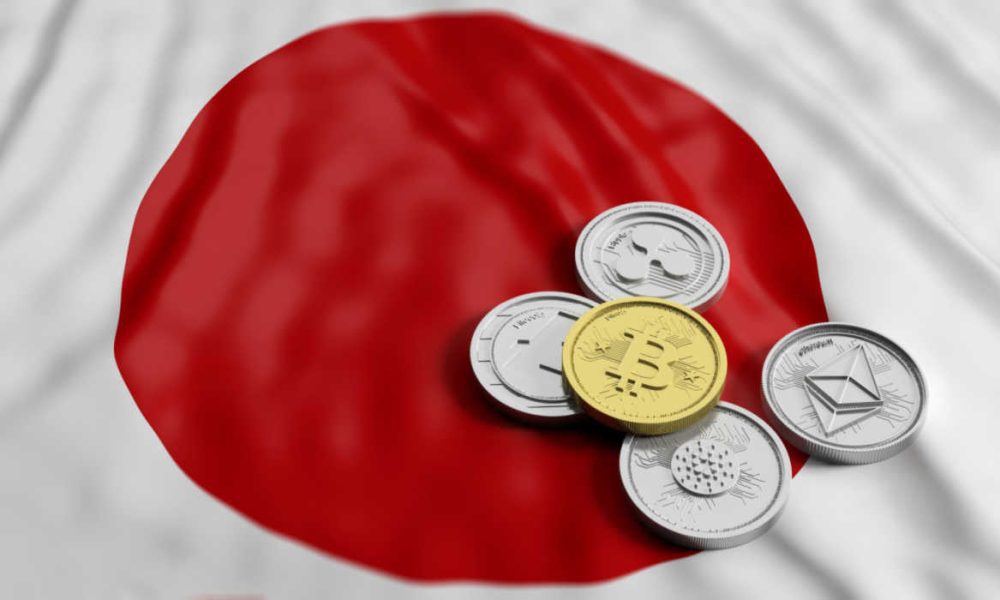
In a landmark decision, the Japanese government has announced that it will no longer tax cryptocurrency gains until they are realized. This means that investors and traders can hold their digital assets without paying taxes on paper profits, as long as they don’t sell or exchange them.

The new tax policy, which will take effect from April 2024, is aimed at promoting the development and innovation of the crypto industry in Japan, as well as attracting more foreign investors. The government hopes that by reducing the tax burden on crypto holders, it will encourage more long-term investment and foster a healthy and stable market.

Previously, Japan taxed crypto gains as miscellaneous income, which could range from 15% to 55% depending on the amount and the individual’s income bracket. This was one of the highest tax rates for crypto in the world, and many critics argued that it discouraged people from investing in digital assets or forced them to move their funds to offshore platforms.

The new tax policy will treat crypto gains as capital gains, which are taxed at a flat rate of 20%. However, unlike other capital assets, such as stocks or real estate, crypto gains will only be taxed when they are realized, meaning when the holder sells or exchanges them for fiat or other cryptocurrencies. This will allow crypto holders to benefit from the price appreciation of their assets without paying taxes until they decide to cash out.

The new tax policy is expected to boost the growth and innovation of the crypto industry in Japan, which is already one of the most advanced and regulated markets in the world. Japan was the first country to recognize Bitcoin as a legal form of payment in 2017 and has since established a comprehensive framework for licensing and overseeing crypto exchanges and service providers.

Japan also has a vibrant and active crypto community, with many startups, associations, and initiatives supporting the adoption and development of digital assets.

The new tax policy is also likely to attract more foreign investors and entrepreneurs to Japan, as it will make the country one of the most favorable destinations for crypto investment. By eliminating the tax on unrealized profits, Japan will offer a competitive advantage over other jurisdictions that still impose high taxes on crypto gains, such as the US, UK, or South Korea.

The new tax policy will also reduce the administrative and compliance costs for crypto holders, as they will no longer have to report their paper profits every year.

The new tax policy is a welcome and progressive move by the Japanese government, which shows its commitment and vision to support the crypto industry and its potential to transform the economy and society. By ending the tax on unrealized profits, Japan will create a more conducive and attractive environment for crypto investment and innovation and set an example for other countries to follow.

What happened in US Congress in 2023

0

The year 2023 has been a tumultuous one for the US Congress, with several major bills and events shaping the legislative agenda and the political landscape. Here are some of the highlights of what happened in Congress in 2023 so far:

The Infrastructure Investment and Jobs Act: After months of negotiations, President Biden signed into law a $1.2 trillion bipartisan infrastructure bill on January 31, 2023. The bill provides funding for roads, bridges, broadband, water systems, public transit, electric vehicles, and other projects.

The bill also includes provisions to address climate change, such as creating a national network of electric vehicle charging stations, investing in clean energy research and development, and establishing a Civilian Climate Corps. The bill was hailed as a historic achievement by both parties, although some progressives criticized it for not going far enough to tackle the climate crisis.

The Build Back Better Act: Following the passage of the infrastructure bill, Democrats turned their attention to passing a larger social spending and climate package through the budget reconciliation process, which allows them to bypass a Republican filibuster in the Senate.

The bill, dubbed the Build Back Better Act, originally had a price tag of $3.5 trillion over 10 years, but faced resistance from moderate Democrats who demanded lower spending and more targeted programs. After weeks of intense negotiations, the bill was scaled back to $1.75 trillion, and included measures such as expanding Medicare, extending the child tax credit, creating universal pre-K and free community college, subsidizing childcare and home care, and implementing a range of climate policies.

The bill passed the House on November 19, 2023, by a narrow margin of 220-213, with one Democrat joining all Republicans in voting against it. The bill is now awaiting Senate action, where it faces an uncertain fate due to the slim Democratic majority and the possibility of further changes or amendments.

The Debt Ceiling Crisis: In October 2023, the US government faced the risk of defaulting on its debt obligations for the first time in history, as Congress failed to raise the debt ceiling before the deadline of October 18. The debt ceiling is a legal limit on how much the government can borrow to pay its bills and has been raised or suspended dozens of times in the past without much controversy.

However, this time Republicans refused to cooperate with Democrats on raising the debt ceiling, arguing that they should not enable more spending by the Biden administration. Democrats accused Republicans of playing political games with the full faith and credit of the US and warned that a default would have catastrophic consequences for the economy and national security.

After a tense standoff that rattled financial markets and sparked public outrage, Congress finally reached a deal on October 14 to raise the debt ceiling by $480 billion, enough to cover the government’s expenses until early December. The deal was approved by both chambers and signed by President Biden on October 15, averting a default by just three days. However, the deal only postponed the problem until December 3, when the new debt ceiling will be reached unless Congress acts again.

The January 6 Commission: One of the most contentious issues in Congress this year has been the investigation into the January 6 attack on the US Capitol by a mob of former President Trump’s supporters who tried to stop the certification of Biden’s victory in the 2020 election. In May 2023, the House passed a bill to create an independent commission to probe the causes and consequences of the attack, modeled after the 9/11 Commission.

However, the bill was blocked by Senate Republicans who argued that it was unnecessary and partisan. Instead, House Speaker Nancy Pelosi appointed a select committee composed of seven Democrats and two Republicans (Liz Cheney and Adam Kinzinger) who voted to impeach Trump for his role in inciting the insurrection.

The committee has been holding hearings and issuing subpoenas to witnesses and documents related to the attack, including former White House officials and members of Congress who communicated with Trump on January 6. The committee has faced resistance from some Republicans who have tried to undermine its legitimacy and obstruct its work. The committee is expected to release its final report by early 2024.

2023’s top 5 DeFi protocols by Revenue, As Stablecoins Set to Outshine Visa in 2024

0

Decentralized finance (DeFi) has been one of the most exciting and innovative sectors in the crypto space in the past few years. DeFi protocols aim to provide various financial services such as lending, borrowing, trading, investing, and more, without relying on intermediaries or centralized authorities.

By leveraging smart contracts, blockchain technology, and decentralized governance, DeFi protocols offer users more control, transparency, efficiency, and access to financial opportunities.

We will look at the top 5 DeFi protocols by revenue in 2023, based on the data from defipulse.com. Revenue is defined as the total fees generated by the protocol from its users, excluding any subsidies or incentives. Revenue is a good indicator of the value proposition, adoption, and sustainability of a DeFi protocol.

Here are the top 5 DeFi protocols by revenue in 2023:

Uniswap: $1.2 billion

Uniswap is the leading decentralized exchange (DEX) on Ethereum, allowing users to swap any ERC-20 tokens without intermediaries or order books. Uniswap also enables users to provide liquidity to various pools and earn fees from each trade.

Uniswap has been the most popular and widely used DeFi protocol since its launch in 2018 and has maintained its dominance in 2023 with a 32% market share of the DEX sector. Uniswap’s revenue comes from a 0.3% fee that is charged on every swap and distributed to the liquidity providers.

Aave: $800 million

Aave is a decentralized lending and borrowing platform that supports a variety of assets, including stablecoins, cryptocurrencies, and interest-bearing tokens. Aave allows users to borrow funds at variable or fixed interest rates, as well as to lend their idle assets and earn passive income.

Aave also offers innovative features such as flash loans, credit delegation, and liquidity mining. Aave’s revenue comes from a 0.25% origination fee that is charged on every loan and a 0.09% flash loan fee.

Compound: $600 million

Compound is another decentralized lending and borrowing platform that operates on Ethereum. Compound differs from Aave in that it uses a compound interest rate model that adjusts the supply and demand of each asset in real time.

Compound also issues its own governance token, COMP, which allows holders to propose and vote on protocol changes. Compound’s revenue comes from a 0.05% origination fee that is charged on every loan.

Maker: $400 million

Maker is a decentralized credit platform that enables users to generate Dai, a stablecoin pegged to the US dollar, by locking up collateral such as ETH, WBTC, or other tokens. Dai can then be used for various purposes such as trading, lending, or paying for goods and services.

Maker also maintains the stability of Dai through a system of collateralized debt positions (CDPs), interest rates (stability fees), and automated feedback mechanisms (liquidations and auctions). Maker’s revenue comes from the stability fees that are paid by CDP users when they repay their Dai.

Curve: $300 million

Curve is a specialized DEX that focuses on stablecoins and low-volatility assets. Curve offers low slippage, high liquidity, and low fees for swapping between similar assets, such as USDC, USDT, DAI, sUSD, etc.

Curve also allows users to provide liquidity to various pools and earn fees and rewards from both the protocol and third-party platforms such as Yearn, Synthetix, or SushiSwap. Curve’s revenue comes from a 0.04% fee that is charged on every swap and distributed to the liquidity providers.

Stablecoins set to outshine Visa in settlements by 2024 With a $137B market surge

Stablecoins are digital currencies that are pegged to a fiat currency or a basket of assets. They aim to provide the benefits of cryptocurrencies, such as fast and cheap transactions, without the volatility and risk of price fluctuations. Stablecoins have been gaining popularity and adoption in recent years, especially as a means of cross-border payments and remittances.

One of the main advantages of stablecoins is that they can offer faster and cheaper settlements than traditional payment systems, such as Visa. Visa is one of the largest payment networks in the world, processing over $11 trillion worth of transactions in 2020.

However, Visa also charges fees for each transaction, which can vary depending on the region, currency, and type of card. Moreover, Visa transactions can take up to three days to clear and settle, depending on the intermediary banks involved.

Stablecoins, on the other hand, can settle transactions in minutes or even seconds, using blockchain technology and smart contracts. They also have lower fees than Visa, as they do not rely on intermediaries or third parties.

According to a recent report by Juniper Research, stablecoins are expected to surpass Visa in terms of the value of settlements by 2024, reaching $1.7 trillion, compared to Visa’s $1.5 trillion. This would represent a massive increase from the current value of stablecoin settlements, which is estimated at $540 billion in 2020.

The report also predicts that the market capitalization of stablecoins will grow from $35 billion in 2020 to $172 billion in 2024, driven by the increasing demand for digital payments and the growing adoption of stablecoins by various sectors and regions. Some of the factors that could boost the growth of stablecoins include:

The emergence of central bank digital currencies (CBDCs), which are digital versions of national currencies issued by central banks. CBDCs could increase the trust and legitimacy of stablecoins, as well as provide interoperability and compatibility between different platforms and systems.

The development of decentralized finance (DeFi), which is a movement that aims to create financial services and products that are accessible, transparent, and permissionless, using blockchain technology and smart contracts. DeFi could offer new use cases and opportunities for stablecoins, such as lending, borrowing, trading, investing, and saving.

The expansion of stablecoin offerings and innovations, which could cater to different needs and preferences of users and customers. For example, some stablecoins could offer more stability and security, while others could offer more flexibility and scalability. Some stablecoins could also incorporate features such as governance, rewards, or privacy.

Stablecoins are set to outshine Visa in settlements by 2024 with a $137 billion market surge in four years. This could have significant implications for the future of payments and finance, as well as for the adoption and innovation of cryptocurrencies and blockchain technology.

Nigeria Printed More Than It Owed in Dollars

0

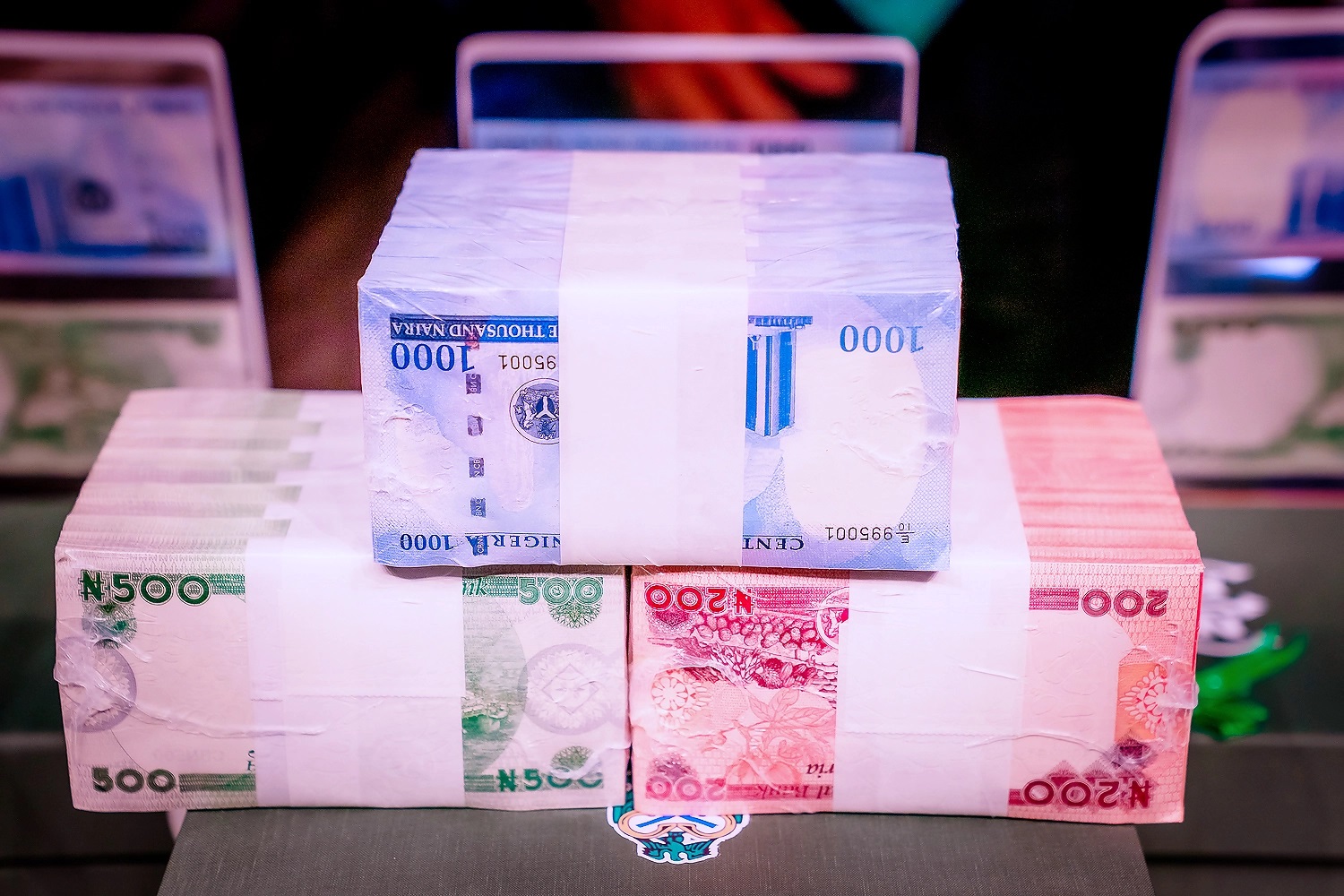
Nigeria is facing a severe currency crisis, as the naira has lost more than 50% of its value against the US dollar in the past year. The main cause of this crisis is the government’s decision to print more money than it had in foreign reserves, in order to finance its budget deficit and pay off its debts.

The Nigerian government has been running a fiscal deficit since 2015, when the global oil price collapsed and reduced its main source of revenue. The government borrowed heavily from domestic and foreign sources, accumulating a public debt of over 35% of GDP by 2020. However, as the COVID-19 pandemic hit the economy and reduced its tax revenues, the government faced a liquidity crunch and struggled to service its debt obligations.

How Printing Money Led to Hyperinflation

To avoid defaulting on its debt, the government resorted to printing more naira, which it used to pay its creditors and fund its spending. According to the Central Bank of Nigeria (CBN), the government’s overdraft facility increased from 2.4 trillion naira ($6 billion) in 2019 to 10 trillion naira ($24.5 billion) in 2020, equivalent to 12% of GDP. This was more than the total amount of dollars that the CBN had in its foreign reserves, which stood at $35.4 billion at the end of 2020.

The consequence of printing more money than it had in foreign reserves was that the naira became overvalued and unsustainable. The CBN tried to maintain a fixed exchange rate of 380 naira per dollar, but this created a huge gap between the official rate and the parallel market rate, which reached over 500 naira per dollar in December 2020.

The CBN also imposed strict capital controls and rationed foreign exchange to importers and investors, creating a shortage of dollars in the economy and hampering trade and investment.

The excess supply of naira and the scarcity of dollars led to a rapid depreciation of the naira and a surge in inflation. The annual inflation rate rose from 11.4% in December 2019 to 18.1% in April 2021, the highest level since 2017.

The food inflation rate was even higher, at 22.7%, reflecting the impact of currency devaluation on import costs and domestic food production. The rising inflation eroded the purchasing power of Nigerians, especially the poor and vulnerable, who spend a large share of their income on food.

The currency crisis has also had negative effects on economic growth and development. The GDP contracted by 1.8% in 2020, the second recession in five years. The unemployment rate rose to 33.3% in the fourth quarter of 2020, the highest level on record. The poverty rate increased from 40% in 2019 to 45% in 2020, meaning that over 100 million Nigerians are living below the poverty line of $1.90 per day.

The way out of this crisis is for the government to stop printing money and adopt a credible fiscal and monetary policy framework that can restore macroeconomic stability and confidence. The government needs to reduce its fiscal deficit by increasing its revenue base and rationalizing its expenditure.

The CBN needs to allow the exchange rate to reflect market forces and eliminate the multiple exchange rate regime. The CBN also needs to tighten its monetary policy stance and reduce its lending to the government, which fuels inflation and crowds out private sector credit.

By taking these steps, Nigeria can avoid a hyperinflationary scenario that would further impoverish its people and undermine its economic prospects. Nigeria has the potential to become a prosperous and diversified economy, but it needs to address its currency crisis before it becomes too late.

Bloody Christmas in Plateau: Obi, Others Decry Escalating Violence in Nigeria

0

The echoes of a grim Christmas resonate across Nigeria as the nation grapples with appalling violence, particularly in Plateau, Katsina, and Zamfara states – resulting in a cold bloodbath.

The recent onslaught of attacks, characterized as pure acts of terrorism and gruesome murders by Plateau State Governor Caleb Mutfwang, has drawn widespread condemnation, including from prominent figures like the Labour Party’s 2023 presidential candidate, Peter Obi.

The resultant toll includes a distressing number of casualties, with hundreds displaced from their communities. In Plateau State alone, more than 150 people have been confirmed dead in 15 communities, with about 300 others injured.

Obi, expressing profound dismay, decried the escalating insecurity and bloodshed, likening the situation in Nigeria to countries embroiled in declared wars. He highlighted the dire circumstances faced by the country during the Christmas break, specifically addressing the harrowing incidents in Plateau, Zamfara, Kaduna, and other regions often overlooked in media coverage.

“After my sympathy visit to the Regent of Oba Community in Anambra State for the recent horrific killing of people in a nightclub in that community; plus the mindless act of terrorism that occurred on Christmas Day in Plateau State, where the death toll is now reportedly more than 100 with over 300 injured; with the saddening acts of violence that have occurred in Zamfara and Katsina States, where farmers were killed and several others kidnapped, and the many other violent attacks in many parts of the country, which may go unreported; my thoughts went to our overstretched security operatives,” Obi said in a series of poignant messages shared on social media.

“And to all the families who have lost their loved ones to these acts of violence, do accept my sincere condolences. These are very challenging times in our nation.

“Even some countries in open declared wars have not experienced this level of insecurity, violence and loss of human lives,” he added.

Governor Mutfwang, while addressing the horrifying attacks in Plateau State during an interview with ARISE NEWS, said that these brutal actions were not rooted in religious or farmer-herder conflicts. Instead, he categorized them as sheer criminality and terrorism, perpetuated on the eve of a revered day of remembrance.

“But I must say that this recent action has nothing to do with farmers-herders clash, has nothing to do with religion, this is pure criminality, this is pure terrorism… It’s quite unfortunate, but we will continue these engagements and also explore other ways by which we can be able to bring the situation under control,” Muftang said.

The governor highlighted the multifaceted approach taken by the state government, involving both kinetic and non-kinetic strategies, including community engagements aimed at unraveling the underlying causes of the recurrent crisis. Despite these efforts, the recent onslaught of violence staggered the region, leaving devastation and displacement in its wake.

The collective sentiment among Nigerian leaders and citizens alike echoes the need for urgent and decisive action to stem the tide of violence. The nation finds itself at a critical juncture, grappling with the erosion of security and stability across multiple regions.

In the wake of these senseless killings, calls for unity, resilience, and prayers for a nation besieged by unprecedented insecurity reverberate.

Following these attacks, Nigerians have reminded President Bola Tinubu, whose campaign promises included security for the whole country, of the urgent need for cohesive strategies to restore peace, protect lives, and heal a nation torn asunder by violence.

However, the question that lingers amid the grief and turmoil is whether the present government is ready to step on toes to stem the tide of violence and pave the way toward a future where peace and security prevail.

The president has yet to comment on the bloodbath as of the time of filing this report.