DD
MM
YYYY

PAGES

DD
MM
YYYY

spot_img

PAGES

Home Blog Page 3855

Microsoft Gaming Lays Off 1,900 Employees, Months After Activision Blizzard’s Acquisition

0

In a move that marks a significant shift in the gaming industry, Microsoft Gaming is set to lay off approximately 1,900 employees, constituting around 9% of its gaming unit workforce.

“We have made the painful decision to reduce the size of our gaming workforce by approximately 1900 roles out of the 22,000 people on our team,” the company said.

The news came to light through an internal memo released by the company on Thursday, where Microsoft Gaming CEO Phil Spencer detailed the restructuring plan, emphasizing a broader “execution plan” aimed at reducing “areas of overlap.”

The layoffs come just over three months after Microsoft’s monumental $69 billion acquisition of gaming giant Activision Blizzard, which closed in late 2023.

Former Blizzard president Mike Ybarra has announced his departure from both Microsoft and Blizzard on the social media platform X. While acknowledging the difficulty of the decision, Spencer assured that Microsoft would provide “full support” to all affected employees, including location-dependent severance packages.

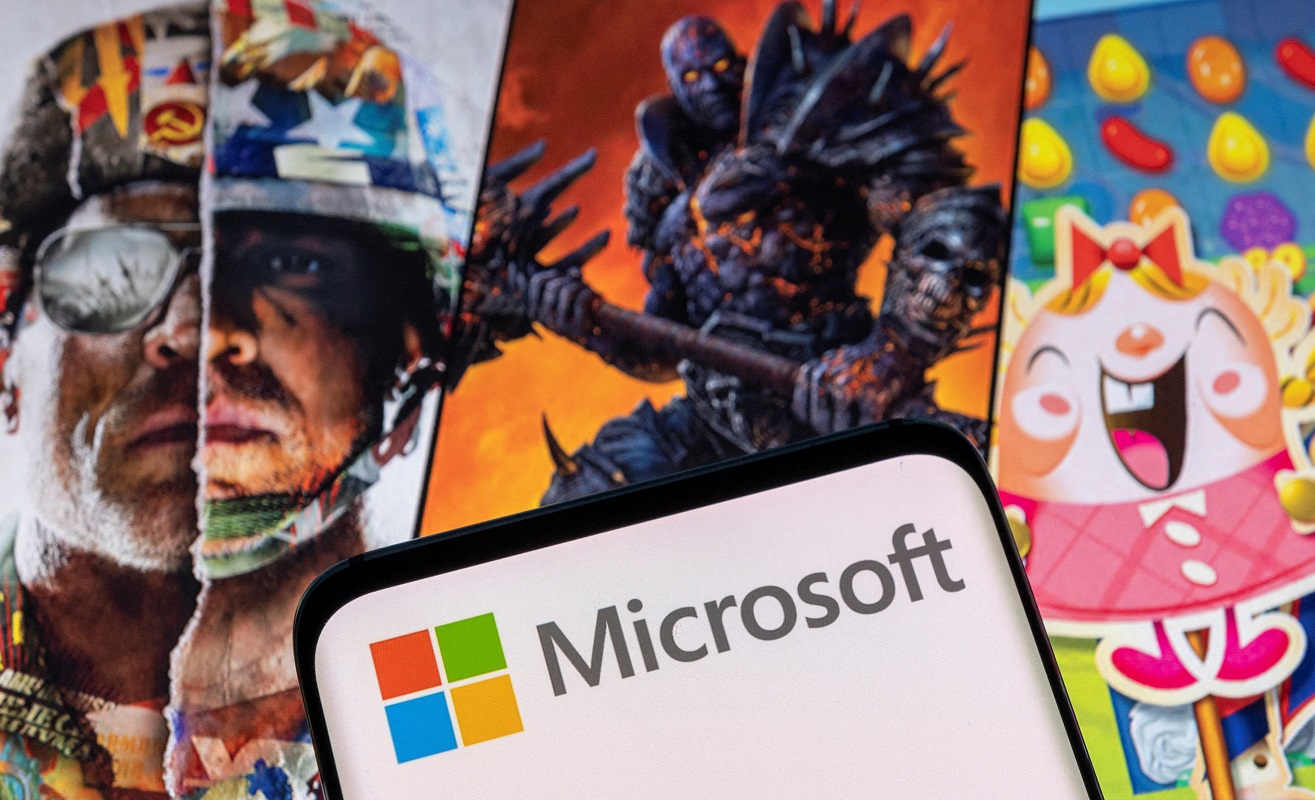
Activision Blizzard, known for developing and publishing popular gaming franchises like Call of Duty and Diablo, also owns the mobile gaming subsidiary King, responsible for the globally renowned Candy Crush Saga. The strategic acquisition of Activision Blizzard was Microsoft’s largest to date, more than doubling the size of its 2016 purchase of LinkedIn.

Despite the magnitude of the layoffs, Microsoft’s shares remained largely unaffected, as such restructuring is often anticipated after sizable mergers and acquisitions.

The tech industry has witnessed a trend of increased efficiency and a clearer path to growth or profitability as economic pressures mount. This move by Microsoft is part of a broader trend, with other major tech companies implementing deep cuts in the early weeks of 2024, independent of mergers and acquisitions.

Companies such as Tencent-owned Riot Games, TikTok, and Discord have all announced layoffs in the wake of a challenging 2023 that saw over 100,000 tech workers lose their jobs.

This week alone, eBay and SAP joined the list of companies announcing significant workforce reductions, with eBay planning to lay off 1,000 workers and SAP intending to shift or buy out 8,000 employees. Unlike Microsoft, both eBay and SAP experienced a notable increase in their share prices following their announcements.

The internal memo from Microsoft Gaming’s leadership outlined the reasoning behind the layoffs. As the company integrates Activision, Blizzard, and King into its structure, leadership is focused on developing a sustainable cost structure to support the growing business.

The memo emphasized the commitment to aligning strategy and execution plans, identifying areas of overlap, and prioritizing opportunities for growth.

Despite the challenges, Microsoft Gaming remains optimistic about the future, expressing confidence in the team’s ability to create and nurture games, stories, and worlds that bring players together.

In the memo, the company assured support for affected employees during the transition and encouraged colleagues to treat departing team members with respect and compassion, in line with the company’s values.

Tech companies are coming under increasing pressure to demonstrate efficiency and create a clear path to growth and profitability. Moves like this are aimed at positioning companies for sustainable growth as economic uncertainties persist.


Beat Tekedia Mini-MBA Early Registration Deadline for Massive Discounts

0

If you have paid for the next edition of Tekedia Mini-MBA which begins on Feb 5,  you should have received your login instructions by now. I want to welcome you to our academic festival; thank you for choosing Tekedia Institute.

This is the temple for knowledge acquisition; you will see markets and business differently, after spending time with us. Your career, your business … our mission.

Meanwhile, registration continues. Beat the early registration deadline of Jan 27 for massive discounts. Register here and let’s co-learn.

Tekedia Mini-MBA is an innovation management 12-week program, optimized for business execution and growth, with digital operational overlay. It runs 100% online. The theme is Innovation, Growth & Digital Execution – Techniques for Building Category-King Companies. All contents are self-paced, recorded and archived which means participants do not have to be at any scheduled time to consume contents. Besides, programs are designed for ALL sectors, from fintech to construction, healthcare to manufacturing, agriculture to real estate, etc.

Your Account Setup Instructions for Tekedia Mini-MBA Edition 13 (Feb 5 – May 4, 2024)

0

Hello,

Greetings. Thanks for joining us at Tekedia Institute. We have created or upgraded your account at https://school.tekedia.com/ with your email address (the very one you are receiving this invitation for account setup). This is a different location from where you read the ebooks.

There are three steps; Step 3 is compulsory. If you do not do Step 3, you will not see your course in your profile. Here is the instruction for account setup – https://school.tekedia.com/support/support/. (Please note the support video on the page as it may be helpful)

Once you complete the setup, you will see a post under LESSONS titled “Board13: Program News, Zoom Schedules and WhatsApp Link”. Please read it and join the WhatsApp Group, and note the Live Zoom schedules. The Week 1, Week 2, etc will drop as we progress in the program.

Class begins on Feb 5, 2024. If you have any questions, please contact us.

Regards,
Tekedia Mini-MBA Team

As Naira Hits N1,410/$, Help Me Tell the Nigerian Government To Retire The Floating of Naira Policy

5
Nigeria Naira US Dollar

One of the worst economic policies in Nigeria since 1999 is the current floating of the Naira. That decision has a score of “F” from me, because despite what any person could tell you, from the IMF to the Central Bank of Nigeria, economics is “science” played by the people. And science operates on principles. 

In the natural philosophy domains like engineering, those principles are self-evident: you cannot throw a beam during construction without supporting systems. In social science like economics, you cannot float a currency without FIRST ensuring that you can create parity on demand and supply. 

Yes, if demand continues to rise for US dollars in Nigeria and you have no means to improve the Supply of US dollars, you have disarmed the Naira, because market forces will weaken its positioning. This is economics 101; every WAEC Economics textbook always begins with Prof Lord Robbins definition of economics where he posited on the relationship between the “end and scarce means”.

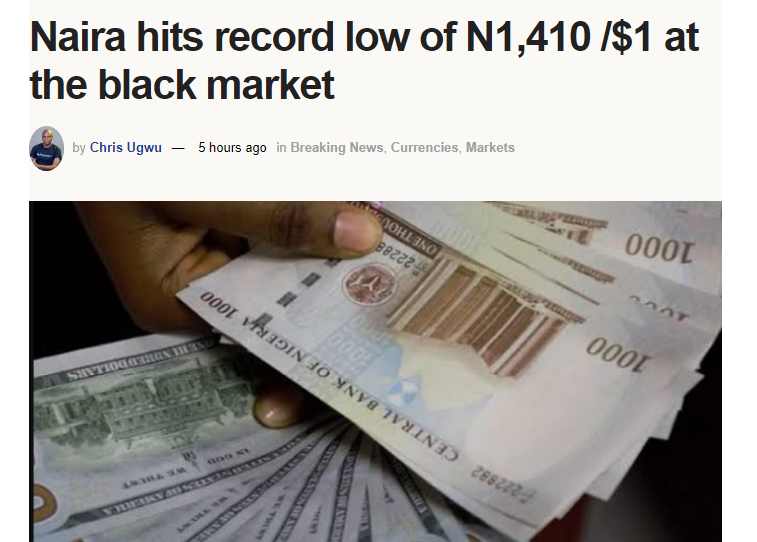
Today, Naira is hitting above N1,400/$: “Naira on Thursday fell to a record low of N1,410 per dollar following strong demand on the parallel market, also known as the black market. This represents 3.29% or N45.00 weaker than N1,365 recorded at the close of trading on Wednesday.” Where is the N600/$ stable state?

Nigeria needs to remove the float. What we were doing was just fine if we can attack the corruption in the policy over discarding the whole system.  If Mr. Wazobia wants to import Equipment A from Germany,  let him source his USD funds. And if you want to assist, offer a rebate on the official and black market rates. By offering a rebate, over the old system, you would be sure the equipment would be imported. 

I call on the Nigerian government to focus on policies which will create more US dollars by deepening our industrialization policy. But to think that we can float Naira and it can stabilize over time by pure financial engineering is an illusion. AO Lawal would have graded any suggestion “P8”. Factories, warehouses, etc for physical, digital and services will strengthen Naira, and nothing more, and Nigeria needs to get into that.

Good People, Nigeria must FLOAT industries (yes, companies) to get Naira to fight globally! And here floating companies mean starting enterprises across industrial sectors and growing them to the point they become public companies because they have become super successful.

In the past, we credited people cheap US Dollars, and they could divert the funds to other things. If we change to a rebate system, we would remove that loophole as before payment, we would reconcile data from customs, banks and the company, making sure cheap US dollars were going to PRODUCTIVE things over expanding mindless consumerism.

People, get me right; I am not a political person. I have been consistent with this position for months. I hope I am wrong. But from basic economics, removing frictions to attain market transaction equilibrium faster does not mean price can radically improve if Demand and Supply positions remain misaligned. That is fundamental and cannot be disintermediated as if 90 people each wants to buy $100 with Naira, and you have only two people selling each $100 for Naira, whether you use mobile app, bank hall, bureau de change, etc,  the price of Naira will go up, because there is no parity between demand and supply here.

This is the summary:  if 90 people each wants to buy $100 with Naira, and you have only two people selling each $100 for Naira, whether you use mobile app, bank hall, bureau de change, etc, the price of Naira will go up, because there is no parity between demand and supply here. The impact is clear: lack of stability in the exchange rate makes making long-term investments impossible, pushing the nation into a trading and rent-seeking ground.

The government can ideally do this floating later once it gets a good picture on how to have access to USD dollars via any means possible that excludes borrowing! The unstable state of the Naira is more dangerous to the economy than mismatch on pricing between official and black market currency rates which ironically the Naira floating did not close, making the core reason for the floating largely unrealized.

Fraud Prevention: Opay to Enforce KYC Requirements For Customers in March 2024

0

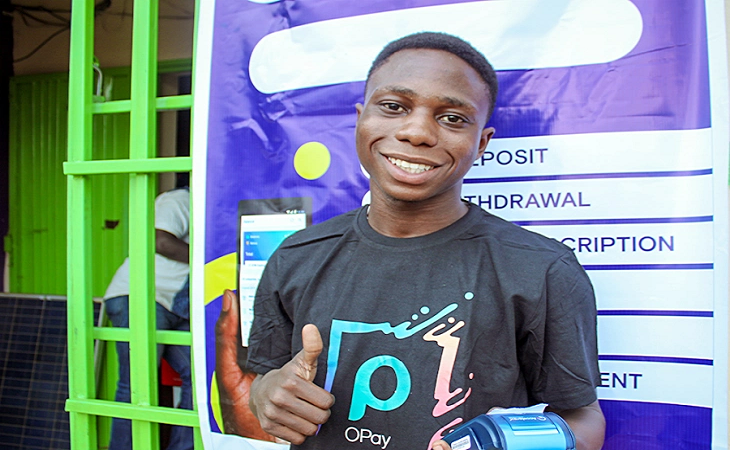
Nigerian Fintech company Opay has announced plans to enforce a stricter Know Your Customer (KYC) requirement starting from March 2024, to mitigate fraud on the platform.

This move is coming after the startup was scrutinized for revealing significant weaknesses in its platform. Multiple tests were reported to have exposed vulnerabilities, particularly in the facial identity system, raising concerns about the platform’s susceptibility to exploitation by malicious actors.

There was a viral video shared by a user displaying how users can open an account using other people’s bank account numbers.

At that time, checks showed that OPay continued to allow new users to sign up to its platform without proper verification.

According to reports, during the onboarding process on the platform, people were allegedly allowed to impersonate others by opening accounts in their names.

Multiple tests show that OPay’s basic account verification process for tier 1 is weak, and the facial identity system is porous, which could allow bad actors to register for the service and begin carrying out transactions within 60 seconds.

In a bid to strengthen security on the platform, OPay has now initiated the enforcement of the Bank Verification Number (BVN) and National Identity Number (NIN) requirements for wallet opening. Customers whose accounts are not KYC compliant will be blocked.

In line with this, OPay announced its partnership with Nigerian financial services company Interswitch, to curb these issues. With the Interswitch Payment Gateway (IPG), the partnership seeks to reduce transaction friction by offering consumers a safe and easy way to make payments.

Opay beef of security on the platform is coming on the heels of the Central Bank of Nigeria’s (CBN) directives on Know-Your-Customer (KYC), mandating all accounts and wallets for individuals to have BVN and/or NIN before March 1, 2024.

CBN also mandated that no new accounts or wallets should be opened without BVN or NIN. The director, of Card Business, OPay, Priscilla Olayemi, averred that the company in adhering to these new directives, has commenced the first two stages of the KYC.

Explaining further, she stated that, users under tier one accounts, cannot log in to carry out financial transactions without providing their BVN or NIN.

Also, the director of partnerships OPay, I.K Odiase, posited that any fraudulent account will be removed from the OPay platform, beginning March 1, 2024, while pleading with customers to confirm that the information provided while opening their accounts matches the information in their NIN and BVN.

Amid growing concerns stemming from high-profile fraud incidents and critiques of lenient KYC standards, Nigeria is promoting financial system stability by reinforcing KYC procedures.

The new rules come as an amendment to Section 1.5.3 of the Regulatory Framework for Bank Verification Number (BVN) Operations and Watchlist for the Nigerian Banking Industry.

OPay’s proactive approach towards enhanced KYC and secure transactions demonstrates the startup’s commitment to protecting users and fostering a trustworthy financial ecosystem in Nigeria.