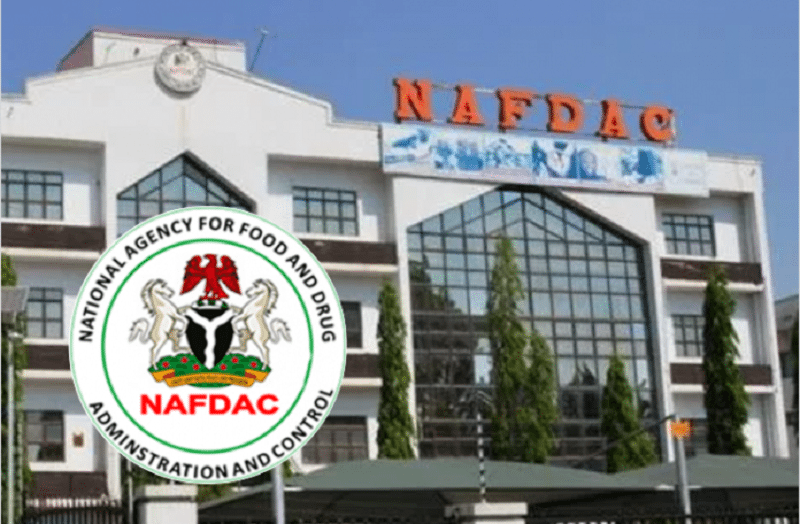
The National Agency For Food& Drug Administration & Control (NAFDAC) is a government agency statutorily empowered with the task of ensuring compliance with acceptable minimum standards of all activities related to the sale, manufacture and preparation of food, drugs and related products in Nigeria set by its enabling statute. This article is aimed at highlighting the various provisions of the NAFDAC act, with a focus on the topics of :-
– The establishment and structure of NAFDAC
-Functions of NAFDAC
– The NAFDAC Governing Council
– The NAFDAC Director-General
– The fund and expenditure of the agency
Establishment
The National Agency for
Food and Drug Administration and Control (in this Act referred to as “the Agency”) :-
(a) shall be a body corporate with perpetual succession and a common seal; and
(b) may sue and be sued in its corporate name.
Governing Council
(1) There is hereby established for the Agency, a Governing Council which shall consist of-
(a) a chairman who shall be appointed by the President on the recommendation of the Minister;
(b) the Permanent Secretary of the Federal Ministry of Health or his representative;
(c) the Director and Chief Executive of the National Institute for Pharmaceutical Research and Development or his representative;
(d) the Director-General of the Standards Organisation of Nigeria or his representative;
(e) the chairman of the National Drug Law Enforcement Agency or his representative;
(f) the chairman of the Pharmacists Board of Nigeria or his representative;
(g) one person to represent the Pharmaceutical Group of the Manufacturers Association of Nigeria;
(h) one person to represent the Food Beverages Group of the Manufacturers Association of Nigeria;
(i) the Director-General of the Agency; and
(j) three other persons to represent public interest to be appointed by the Minister.
(2) A member of the Council, other than the chairman, shall be appointed by the Minister on the recommendation of the body, if any, he represents.
(3) The members of the Council shall be paid such allowances as the Federal Government may, from time to time, approve.
(4) The provisions of the First Schedule to this Act shall have effect with respect to the proceedings of the Council and the other matters mentioned therein.
Tenure of Office
-A member of the Council appointed, otherwise than by office, shall hold office for a term of four years, and subject to the provisions of subsection (2) of the relevant section of the act, shall be eligible for reappointment for only one further term of four years.
-The office of a member of the Council shall become vacant if-
(a) he resigns as a member of the Council by notice in writing under his hand addressed to the Minister; or
(b) the Minister is satisfied that it is not in the interest of the Agency for the person appointed to continue in office and notifies the member in writing to that effect
Removal from office of members of the Council
-If it appears to the Council that a member of the Council, other than an ex-officio member, should be removed from office on the grounds of misconduct or inability to perform the functions of his office, the Council shall make a recommendation to the President.
-If the President, after making such inquiries as he considers necessary, approves the recommendation, the Minister shall, in writing, declare the office of such a member vacant.
-Notwithstanding the provisions of subsection (1) of the relevant section of the act, the President may remove any member of the Council if he is satisfied that it is in the public interest so to do.
Functions of the Agency
The Agency shall have the following functions, that is, to-
(a) regulate and control the importation, exportation, manufacture, advertisement, distribution, sale and use of food, drugs, cosmetics, medical devices, bottled water and chemicals;
(b) conduct appropriate tests and ensure compliance with standard specifications designated and approved by the Council for the effective control of the quality of food, drugs, cosmetics, medical devices, bottled water and chemicals and their raw materials as well as their production processes in factories and other establishments;
(c) undertake appropriate investigations into the production premises and raw materials for food, drugs, cosmetics, medical devices, bottled water and chemicals and establish relevant quality assurance systems, including certificates of the production sites and of the regulated products;
(d) undertake inspection of imported food, drugs, cosmetics, medical devices, bottled water and chemicals and establish relevant quality assurance systems, including certification of the production sites and of the regulated products;
(e) compile standard specifications and guidelines for the production, importation, exportation, sale and distribution of food, drug, cosmetics, medical devices, bottled water and chemicals;
(f) undertake the registration of food, drugs, cosmetics, medical devices, bottled water and chemicals;
(g) control the exportation and issue quality certification of food, drugs, cosmetics, medical devices, bottled water and chemicals intended for export;
(h) establish and maintain relevant laboratories or other institutions in strategic areas of Nigeria as may be necessary for the performance of its functions under this Act;
(i) pronounce on the quality and safety of food, drugs, cosmetics, medical devices, bottled water and chemicals after appropriate analysis.
Appointment of the Director-General
(1) There shall be appointed for the Agency by the President, on the recommendation of the Minister, a Director-General who shall be a person with good knowledge of pharmacy, food and drugs.
(2) The Director-General shall be-
(a) the chief executive of the Agency;
(b) responsible for the day-to-day administration of the Agency and keep the books and records of the Agency; and
(c) subject to the supervision and control of the chairman and the Council.
(3) The Director-General shall hold office for a period of five years on such terms and conditions as may be specified in his letter of appointment and be eligible for re- appointment for another period of five years.
(4) The Council may, from time to time, appoint such other persons as members of staff of the Agency as it may deem necessary, to assist the Agency in the performance of its functions under this Act.
(5) The members of staff of the Agency appointed under subsection (4) of the relevant section shall be appointed on such terms and conditions of service as the Council may, after consultation with the Federal Civil Service Commissions determine.
(6) The members of staff of the Agency shall be public officers as defined in the Constitution of the Federal Republic of Nigeria, 1999.
Fund of The Agency
(1) The Agency shall establish a fund from which shall be defrayed all expenditure incurred by the Agency for the purposes of this Act.
(2) There shall be paid and credited to the fund of the Agency-
(a) fees charged for services rendered by the Agency;
(b) all sums accruing to the Agency by way of gifts, endowments, bequests or other voluntary contributions by persons and organisations;
(c) foreign aid and assistance from bilateral agencies; and
(d) subventions and extra-budgetary allocations from the Federal Government.
Expenditure Of The Agency
The act provides that the agency shall, from time to time, apply the funds at its disposal to-
(a) the cost of establishing and maintaining the head office of the Agency at the Federal Capital Territory, Abuja and its other offices located in other places in Nigeria;
(b) pay allowances and other benefits of members of the Council and of its committee;
(c) pay the emoluments and entitlement of the Director-General and other members of staff of the Agency;
(d) pay the personnel, overhead, allowances, benefits and other administrative costs of the Agency;
(e) the training of members of staff of the Agency;
(f) provide scholarship and awards for specialised training of personnel;
(g) publicise and promote the activities of the Agency;
(h) support national and international scientific and professional organisations and pay annual and other contributions to such bodies;
(i) undertake any other activity in connection with all or any of the functions of the Agency.
Exemption From Income Tax
-All income derived by the Agency from the sources specified in section 13 (2) of this Act shall be exempt from income tax and all contributions to the fund of the Agency shall be tax deductible.
This section looks at other notable provisions of the National Agency For Food and Drug Administration and Control (NAFDAC) Act concerning :-
– The Offices and Premises of NAFDAC
– The Power of NAFDAC to borrow
– The Power of NAFDAC to accept gifts
– The Power of NAFDAC to enter premises
– Offences under the act
– Legal proceedings
– The power of the Minister of Health to give Directives
Offices & Premises
(1) For the purpose of providing offices and premises necessary for the performance of its functions, the Agency may, subject to the Land Use Act-
(a) purchase or take on lease any interest in land, building or property; and (b) build, equip and maintain offices and premises.
(2) The Agency may, subject to the Land Use Act, sell or lease out any office or premises held by it, which is no longer required for the performance of its functions under this Act.
Power To Borrow
The act provides here that :-
(1) The Agency may, from time to time, borrow by overdraft or otherwise such sums as it may require for the performance of its functions under this Act.
(2) The Agency shall not, without the approval of the Minister, borrow money which exceeds, at any time, the limit set by the Minister.
(3) Notwithstanding subsection (1) of this section, where the sum to be borrowed is in foreign currency the Agency shall not borrow the sum without the prior approval of the Minister.
Power To Accept Gifts
The act provides that :-
-The Agency may accept gifts of land, money or other property, upon such terms and conditions, if any, as may be specified by the person or organisation making the gift.
-The Agency shall not accept any gifts if the conditions attached by the person or organisation making the gift are inconsistent with the functions of the Agency.
Power To Enter Premises
The act provides in its Section 24 that :-
(1) An officer of the Agency may, in the course of his duty, at any reasonable time and on production of his certificate of designation if so required-
(a) enter (if need be by force) any premises in which he reasonably believes that any article to which this Act or the regulations apply is manufactured, pre- pared, preserved, packaged, stored or sold;
(b) examine any article in the premises which appears to him to be an article to which this Act or the regulations apply or anything in the premises which he reasonably believes is used or is capable of being used for the manufacture, preparation, preservation, packaging, storage or sale of any such article;
(c) take a sample or specimen of any article to which this Act or the regulations apply or which he has power to examine under paragraph (b) of this subsection;
(d) open and examine, while on the premises, any container or package which he reasonably believes may contain anything to which this Act or the regulations apply or which may help in his investigations;
(e) examine any book, document or other record found on the premises which he reasonably believes may contain any information relevant to the enforcement of this Act or the regulations and make copies thereof or extracts therefrom; and
(j) seize and detain for such time as may be necessary for the purpose of this Act, any article by means of or in relation to which he reasonably believes any pro- vision of this Act or regulations has been contravened.
(2) The owner or person in charge of any premises entered by an officer of the Agency in pursuant of this section, and every person found thereon, shall give all reasonable assistance in their power to the officer and shall make available to the officer all such information as the officer may reasonably require for the purposes of this Act.
(3) Any article seized under this Act shall be kept or stored in such a place as the officer of the Agency may direct and shall be returned to the owner or the person from whom it was seized if the article upon analysis or examination is found to conform with the requirements of this Act and regulations.
(4) Any article seized by an officer of the Agency pursuant to this Act or the regulations may be submitted to an analyst for analysis or examination and the analyst upon making such analysis or examination shall issue a certificate or report in the prescribed form setting forth the result of such analysis or examination, and the officer of the Agency shall on demand deliver a copy of such certificate or report to the owner of the article if the article is to be the subject of a proceeding under this Act.
5) In this section, the expression “article” to which this Act or the regulations apply” means-
(a) any food, drug, cosmetics, medical devices, bottled water or chemical;
(b) anything used for the manufacture, preparation, preservation, packaging or storage of any food, drug, cosmetics, medical device, bottled water or chemical; and
(c) any labelling or advertising material relating to or for use in connection with any food, drug, cosmetics, medical device, bottled water or chemical, but does not include a live animal.
Offences
The act provides that :-
(1) A person who obstructs an officer of the Agency in the performance of his duties under section 24 of this Act shall be guilty of an offence and liable on conviction to a fine of N5,000 or to imprisonment for a term not exceeding two years or to both such fine and imprisonment.
(2) Any person who contravenes the provisions of any regulations made under this Act is guilty of an offence and liable on conviction to the penalties specified in the regulations.
(3) Where no penalty has been specified, the person shall be liable to a fine of N50, 000 or imprisonment for a term of one year or to both such fine and imprisonment.
(4) Where an offence under this Act which has been committed by a body corporate is proved to have been committed with the consent or connivance of, or to be attributable to any neglect on the part of any director, manager, secretary or other similar officer of the body corporate or any person purporting to act in any of those capacities, he, as well as the body corporate, shall be deemed to be guilty of the offence and shall be liable on conviction to a fine of N 100,000.
Exclusive Judicial Jurisdiction
The Federal High Court shall have exclusive jurisdiction to try offences under this Act.
Conduct of Proceedings
-Subject to the provisions of section 174 of the Constitution of the Federal Republic of Nigeria 1999 (which relates to the power of the Attorney General of the Federation to institute, continue or discontinue criminal proceedings against any person in a court of law), any officer of the Agency may, with the consent of the Attorney-General of the Federation, conduct criminal proceedings in respect of offences under this Act or regulations made under this Act.
-In a judicial proceeding for an offence under this Act or any regulation made under it, the provisions of the Criminal Procedure Act or depending on the venue, the Criminal Procedure Code shall, with such modifications as the circumstance may require, apply in respect of such matter to the same extent as they apply to the trial of offences generally.
Legal Proceedings
The act provides here that :-
(1) No suit shall be commenced against the Agency before the expiration of a period of one month after written notice of intention to commence the suit shall have been served on the Agency by the intending plaintiff or his agent and the notice clearly and explicitly states-
(a) the cause of action;
(b) the particulars of the claim;
(c) the name and place of abode of the intending plaintiff; and
(d) the relief which he claims.
(2) The notice referred to in subsection (1) of this section and any summons, notice or other document required or authorised to be served on the Agency under the provisions of this Act or any other enactment or law, may be served by-
(a) delivering the same to the Director-General; or
(b) sending it by registered post addressed to the Director-General at the head office of the Agency.
Power of The Minister To Give Directives
The act provides that the Minister of Health may give directives of a general or special character to the Agency relating to the performance by the Agency of any or all of its functions under this Act, and it shall be the duty of the Agency to comply and give effect to the directives.
Power To Make Regulations
The Council may, with the approval of the Minister, make regulations-
(a) to prescribe the methodologies for private sector payments into the fund of the Agency;
(b) to prescribe the fees to be paid for services rendered by the Agency;
(c) generally for the purposes of carrying out or giving full effect to the provisions of this Act.
Provisions of The NAFDAC Complaints Resolution Guidelines
The National Agency For Food and Drug Administration and Control (NAFDAC) released a set of guidelines(effective from the 22nd of June 2020) for the resolution of complaints which will be the focus of this article.
NAFDAC as a scientific organization has the mandate under Nigerian law to regulate and control the manufacture, importation, exportation, distribution, advertisement, sale and use of food, drugs, cosmetics, medical devices, packaged water, chemicals and detergents collectively known as regulated products and operates as a service-oriented agency that ensures customer satisfaction.
Which unit of NAFDAC is responsible for the resolution of customer complaints?
The NAFDAC Reforms unit is responsible for receiving, escalating and sending feedback on internal and external complaints .
What is the resolution mechanism of NAFDAC regarding internal complaints?
– Internal complaints are grievances from staff of NAFDAC regarding which include unjust dismissal, non-payment of salaries, pension issues as may be found in the public service rules.
Escalation Mechanism
– The reforms unit acknowledges receipt of a complaint within 48 hours of receiving it and immediately conveys a resolution of such complaint to the complainant where the staff has first-hand knowledge.
– The reforms unit escalates the complaint within 2 working days to the Administration and Human Resources directorate for an investigation to be carried out.
– Action/A resolution should be reverted to the reforms unit on or before the expiration of 10 working days. Where further investigation is required or initial investigation could not be completed within the 10 working days timeline. It is extended to 30 working days for feedback to be received by the reforms unit.
– Where the Human Resources directorate requires further information, it is the responsibility of the complainant to provide such information to the directorate timely to enable them carry out the investigation within the set timeline.
– At the conclusion of the investigation, the HR manager should forward via memo/email, the investigation report resolution to the reforms unit.
– The reforms unit should send the feedback to the complainant.
– The reforms unit should close the case and update the complaints log with this information.
What is the procedure of NAFDAC regarding external complaints resolution?
– External complaints are grievances from customers and stakeholders of NAFDAC which include product registration delays, fraud, reports of production of unwholesome regulated products,etc.
Escalation Mechanism
– The reforms unit acknowledges receipts of the customer complaint within 24 hours of receiving it and immediately conveys a resolution of such complaint to the complainant where the staff has first-hand knowledge.
– The reforms unit escalates the complaint within 2 working days days to the appropriate technical directorate for investigations to be carried out.
– Action/Resolution should be reverted to the reforms unit on or before the expiration of 10 working days. Where further investigation is required or initial investigation could not be completed within the 10 working days timeline, it is extended to 30 working days for feedback to be received by the reforms unit
– Where the directorate/formation requires further information, it is the responsibility of the complainant to provide such information to the directorate/formation timely to enable them carry out the investigation within the set timeline.
– At the conclusion of investigation, the directorate/formation should forward via memo/email, the investigations report to the reforms unit.
– The reforms unit should send the feedback to the complainant.
– The reforms unit should close the case case and update the complaints log with this information.
– The reforms unit should update the NAFDAC with the information in the complaints log and also forward same to the head of its ICT unit to be published on the NAFDAC which should be done on a quarterly basis.
It should be noted that during the course of investigation into a complaint, it is the responsibility of the complainant to provide adequate information to enable NAFDAC conduct the investigation, likewise, it is the responsibility of NAFDAC to conduct the investigation are adequate information is available and convey feedback/resolution to the complainant.
Important Provisions of The NAFDAC Regulations on The Registration of Food Products & Packaged Water Manufactured in Nigeria
The National Agency for Food and Drug Administration and Control (NAFDAC) released a set of guidelines for the interest of the general public and in particular, manufacturers of food products and packaged water produced in Nigeria.
It is necessary to emphasize that no food product or packaged water shall be manufactured, imported, exported, advertised, sold distributed or used in Nigeria unless it has been registered in accordance with the provisions of the NAFDAC Act.
This article will be focused on the procedures involved in registering food and packaged water products in Nigeria.
Step 1- Documentation
– An application letter and registration form which shall be accompanied by the following documents :-
- Evidence of Business Incorporation/Registration
- Evidence of payment of the required tariff
- Contract manufacturing agreement(where applicable)
- Evidence of registration of brand name with the trademark registry which should be done in the name of the owner of the trademark
- Evidence of satisfactory inspection issued by the Food Safety & Applied Nutrition Directorate (FSAN) or Good Manufacturing Practice (GMP) Certificate for product line companies with registered products
- Product labels/artwork
- The brand name of the product
- The manufacturing and expiry dates
- The batch number of the product
- The name, designation and signature of the analyst
Step 2- Product Approval Meeting
– Upon satisfactory documentation, a GMP inspection of the production facility and lab analysis, products are presented at the agency’s products approval meetings.
– For a product with unsatisfactory labelling, a compliant artwork may be accepted with a written commitment by the manufacturer to ensure that the commercial product will be labelled in accordance with the approved product artwork.
Step 3 – Issuance of Notification
– For products approved by NAFDAC,a notification of registration shall be issued to the applicant while a compliance directive shall be issued for those not approved.
– Labelling should be informative, accurate and in conformity with NAFDAC Food labelling regulations.
Step 4- Tariff payments as applicable
Validity Period of Approval
– 5 years
Note that :-
– NAFDAC reserves the right to revoke, suspend or vary a certificate during its validity period.
– Filing an application or paying the requisite fees, do not confer registration status.
– Registration of a product does not automatically confer an advertising permit which requires a separate application.
Like this:
Like Loading...