DD
MM
YYYY

PAGES

DD
MM
YYYY

spot_img

PAGES

Home Blog Page 3874

Reviving Nigeria’s Stifled Innovation Outcomes

0

In a world rapidly advancing through innovation and technological prowess, Nigeria stands at a crucial crossroads. The nation’s innovation landscape, as revealed through rigorous analysis, reflects a concerning decline in recent years. As we delve into the intricacies of this trend, we unearth both challenges and opportunities that demand the immediate attention and collaborative efforts of policymakers, new political appointees, and innovators alike.

Understanding the Innovation Ecosystem

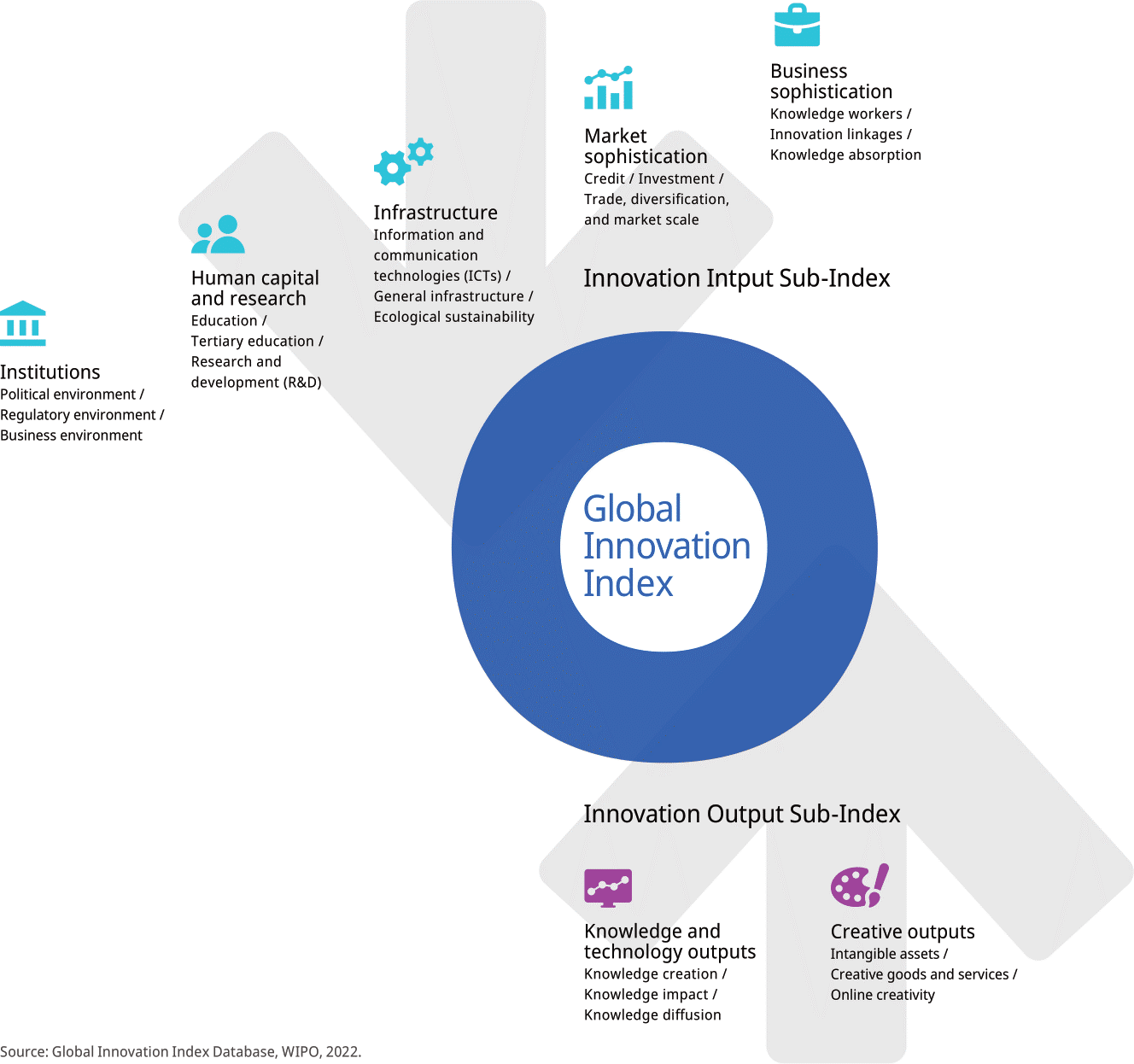
At the heart of this analysis lies the correlation between innovation inputs and outputs. The components of innovation inputs include institutions, human capital and research, infrastructure, market sophistication, and business sophistication. These factors are the foundational pillars upon which a thriving innovation ecosystem is built. However, from 2013 to 2022, a disconcerting trend emerged – innovation inputs demonstrated a negative impact on innovation outputs.

This correlation, while perplexing, serves as a wake-up call for Nigeria’s decision-makers. As we dissect the data further, a startling revelation surfaces: each unit increase in innovation inputs led to a staggering 62.4% reduction in innovation outputs during these years. It’s an alarm bell that demands immediate attention and recalibration of our nation’s approach to innovation.
The Struggle for Innovation Outputs

Despite the discouraging connection between inputs and outputs, Nigeria’s concerted efforts in innovation inputs, as assessed by prestigious institutions like the World Intellectual Property Organization, only yielded a mere 39% realization of the indicators considered for innovation outputs. This disparity underscores a critical discrepancy – the need for a more harmonized, holistic approach to innovation that bridges the gap between aspiration and execution.

The Ripple Effect on Economic Growth

Innovation isn’t just a buzzword; it’s a cornerstone of sustainable economic growth. The analysis reveals a significant ripple effect that innovation outputs – which encompass knowledge, technology, and creativity – exert on Nigeria’s GDP per capita. Shockingly, a single unit increase in innovation outputs corresponds to a reduction of over 74% in GDP per capita growth in constant terms, and over 20% in current terms, when measured in US dollars. This tangible impact highlights the inextricable link between innovation and the prosperity of our nation’s citizens.

Breaking Down the Components

To resuscitate Nigeria’s ailing innovation outcomes, a comprehensive understanding of the components involved is essential. The institutions that shape our political, regulatory, and business environment, along with the development of human capital through primary and tertiary education, hold the key to nurturing a fertile ground for innovation. Infrastructure, ranging from information and communication technologies to general infrastructure and ecological sustainability, must be optimized to foster innovation.

Market sophistication, encompassing aspects like credit, investment, trade, competition, and market scale, must evolve to provide innovators with the conducive environment they need. Business sophistication, the realm of knowledge workers, innovation linkages, impact, and absorption, has the power to transform ideas into reality.

Charting a New Path

To revive Nigeria’s stifled innovation outcomes, policymakers, new political appointees, and innovators must join hands in a united effort. The first step lies in dismantling the negative correlation between innovation inputs and outputs. This can be achieved through strategic investment in institutions, robust education systems, futuristic infrastructure, and dynamic market mechanisms.

Moreover, the innovation ecosystem requires a holistic overhaul. Aligning policies to incentivize businesses to invest in research and development, fostering collaboration between academia and industries, and cultivating an atmosphere of creativity are pivotal steps toward unleashing Nigeria’s latent innovative potential.

In the face of challenges, great opportunities await. The analysis provides a clarion call to policymakers, new political appointees, and innovators to take the reins of Nigeria’s innovation journey. By reimagining the nexus between inputs and outputs, and by fostering an ecosystem that nurtures creativity and technology, we can embark on a trajectory of innovation-led growth. The road ahead is challenging, but the potential for Nigeria to emerge as a global innovation powerhouse is boundless. Now is the time for decisive action, collaboration, and an unwavering commitment to reviving Nigeria’s stifled innovation outcomes.
Kresus launches curated marketplace for Polygon projects

0

Kresus, a leading platform for decentralized finance (DeFi) on Polygon, has announced the launch of its curated marketplace for Polygon projects. The marketplace aims to provide users with a one-stop shop for discovering and accessing the best DeFi products and services on the Polygon network.

The marketplace features a selection of vetted and verified projects that have passed Kresus’ rigorous standards of quality, security, and innovation. Users can browse through different categories such as lending, borrowing, trading, staking, NFTs, gaming, and more. Each project has a detailed profile page that showcases its features, benefits, risks, and performance metrics. Users can also access the project’s website, social media channels, documentation, and smart contracts directly from the marketplace.

The marketplace also offers users the opportunity to earn rewards by participating in various activities such as liquidity mining, yield farming, governance voting, and referrals. Users can stake their Kresus tokens (KRS) to earn passive income from the platform’s fees and revenue streams. Additionally, users can vote on the inclusion or exclusion of projects in the marketplace, as well as other governance proposals that affect the platform’s development and direction.

Kresus’ curated marketplace for Polygon projects is designed to enhance the user experience and foster the growth of the Polygon ecosystem. By providing users with a trusted and convenient way to access the best DeFi products and services on Polygon, Kresus hopes to increase adoption, innovation, and collaboration among the Polygon community.

Kresus is a platform that enables users to access various DeFi protocols on Polygon with ease and efficiency. Kresus leverages Polygon’s fast and low-cost transactions to offer users a seamless and frictionless DeFi experience. Kresus also integrates with other popular DeFi platforms such as Aave, Curve, SushiSwap, Uniswap, and more. Kresus aims to become the ultimate DeFi hub for Polygon users and developers.

The total value locked (TVL) in decentralized finance (DeFi) protocols has dropped to its lowest level since February 2021, according to data from DeFi Pulse. The TVL, which measures the amount of crypto assets locked in various DeFi platforms, fell below $60 billion on August 25, 2021, a decline of more than 50% from its peak of over $120 billion in May 2021.

The sharp drop in TVL can be attributed to several factors, including the bearish sentiment in the crypto market, the regulatory crackdown on DeFi activities in some countries, and the emergence of new competitors in the DeFi space. Some of the major DeFi protocols that have seen significant losses in TVL include Maker, Aave, Compound, Uniswap, and Curve.

Despite the slump in TVL, some analysts and industry experts remain optimistic about the long-term potential of DeFi. They argue that DeFi offers a more transparent, efficient, and inclusive alternative to traditional finance, and that the current challenges are temporary and will be overcome by innovation and adoption. They also point out that DeFi still accounts for a significant share of the overall crypto market cap, and that the growth of DeFi users and transactions has not slowed down.

In fact, some DeFi projects have managed to increase their TVL and market share amid the downturn. For instance, Polygon, a layer-2 scaling solution for Ethereum, has seen its TVL surge from $1 billion in April 2021 to over $5 billion in August 2021, thanks to its low fees and fast transactions. Similarly, Terra, a blockchain platform that supports stablecoins and synthetic assets, has grown its TVL from $2 billion in June 2021 to over $7 billion in August 2021, driven by its popular savings protocol Anchor and its algorithmic stablecoin UST.

As the crypto market recovers and matures, DeFi is expected to regain its momentum and continue to innovate and disrupt the financial sector. According to a report by Deloitte, DeFi could become a “truly open, transparent, and immutable” financial system that could “create a more inclusive and democratized economy”. The report also predicts that DeFi could reach a TVL of $800 billion by 2025, representing a compound annual growth rate of 50%.

Ethereum 2.0 Deposit Contract Reaches All Time High, Hacked Crypto Exchange Cypher Plans to Hold Public Token Sale

3

The Ethereum 2.0 deposit contract, which holds the funds of users who want to stake on the new proof-of-stake network, has reached a new milestone. According to data from Etherscan, the deposit contract now holds over 28 million ETH, worth more than $4.6 billion at current prices. This is the highest amount of ETH ever locked in the contract, surpassing the previous peak of 8.4 million ETH in May 2021.

The deposit contract was launched in November 2020, ahead of the launch of the Ethereum 2.0 beacon chain, which is the first phase of the network upgrade. Users who want to become validators on the new network have to deposit at least 32 ETH into the contract and run a node that validates transactions and produces blocks. In return, they receive rewards in ETH for securing the network and participating in consensus.

The deposit contract is a one-way bridge, meaning that users cannot withdraw their funds until the merge of Ethereum 1.0 and Ethereum 2.0 transitioning will happened sometime in 2022. The merge marked the end of proof-of-work mining on Ethereum and the transition to a fully proof-of-stake network.

The growth of the deposit contract reflects the increasing interest and confidence in Ethereum 2.0, which promises to improve the scalability, security and sustainability of the network. According to data from Beaconcha.in, there are currently over 260,000 active validators on the beacon chain, with more than 100,000 pending validators waiting to join. The current annual percentage rate (APR) for staking on Ethereum 2.0 is around 6%, which is higher than most traditional investments.

The deposit contract also serves as a measure of the long-term commitment of ETH holders, who are willing to lock their funds for an indefinite period of time and support the development of the network. As more ETH gets deposited into the contract, the supply of ETH on the market decreases, which could have a positive impact on the price of ETH in the future.

The recent market crash has seen the price of Ethereum (ETH) drop to the $1600 range in August 2023, a level not seen since June 2023. However, not everyone is panicking. Some large investors, known as Ether Whales, have taken advantage of the dip and accumulated more ETH. According to data from Santiment, a blockchain analytics firm, the top 10 non-exchange ETH addresses have added more ETHERs to their holdings in the past days, worth about $94 million at current prices. This shows that these whales are confident in the long-term prospects of Ethereum and its network upgrade to Ethereum 2.0, which aims to improve scalability, security and energy efficiency.

Ethereum 2.0 is expected to be fully operational in late 2023 or early 2024, after several delays and technical challenges. The upgrade will transition Ethereum from a proof-of-work (PoW) consensus mechanism, which relies on miners to validate transactions, to a proof-of-stake (PoS) mechanism, which rewards validators for staking their ETH. This will reduce the network’s carbon footprint and allow for faster and cheaper transactions.

The Ether Whales are likely betting on the future growth of Ethereum’s ecosystem, which hosts a variety of decentralized applications (DApps) in sectors such as decentralized finance (DeFi), non-fungible tokens (NFTs), gaming and social media. Ethereum is the most popular platform for DApps, with over 3,000 active DApps and over 100,000 daily users, according to DappRadar. Despite the current market downturn, Ethereum’s fundamentals remain strong, and its innovation continues. The Ether Whales may be ahead of the curve and scooping up ETH at a bargain price before the next bull run.

Hacked Crypto Exchange Cypher Plans to Hold Public Token Sale

Cypher, a crypto exchange that suffered a major hack in June, has announced its plans to hold a public token sale in October. The exchange claims that the token sale is part of its recovery strategy and that it has secured the support of its investors and users.

According to a blog post published by Cypher on Monday, the exchange will issue 100 million CYP tokens, which will represent 20% of its equity. The tokens will be sold at a price of $0.1 each, valuing the exchange at $50 million. The token sale will be conducted on a decentralized platform called Launchpad, which is powered by Binance Smart Chain.

Cypher said that the token sale will help it raise funds to reimburse its users who lost their funds in the hack, as well as to upgrade its security and infrastructure. The exchange also said that it will use part of the proceeds to launch new products and services, such as margin trading, futures, and options.

The exchange added that it has obtained the approval of its existing investors, who have agreed to convert their shares into CYP tokens. Cypher also said that it has received positive feedback from its users, who have expressed their interest in participating in the token sale and supporting the exchange’s recovery.

Cypher was hacked on June 15, when an unknown attacker exploited a vulnerability in its smart contract and drained $25 million worth of crypto assets from its hot wallet. The exchange suspended its operations and reported the incident to the authorities. Cypher said that it has been working with law enforcement agencies and cybersecurity experts to track down the hacker and recover the stolen funds.

The hackers managed to steal over $200 million worth of various cryptocurrencies from the exchange’s hot wallets, as well as compromising the personal data of millions of users.

The hack was announced by Cypher on its official website and social media channels, where it apologized to its customers and assured them that it is working with law enforcement agencies and security experts to investigate the incident and recover the stolen funds. Cypher also said that it will compensate its users for any losses they may have suffered as a result of the hack, and that it has temporarily suspended all deposits, withdrawals, and trading activities on its platform.

The hack is one of the biggest and most devastating cyberattacks in the history of the crypto industry, and it has shaken the confidence of many investors and traders in the security and reliability of crypto exchanges. The hack also raises questions about the regulatory oversight and compliance of crypto exchanges, as well as the best practices for storing and managing crypto assets.

Here are some tips on how to protect yourself and your crypto assets from such hacks:

Use a reputable and regulated crypto exchange that follows high security standards and has insurance coverage for its users’ funds.

Do not store large amounts of crypto on exchange wallets, especially hot wallets that are connected to the internet. Use cold wallets or hardware wallets that are offline and more secure.
Enable two-factor authentication (2FA) and use strong passwords for your exchange accounts. Do not share your login credentials or private keys with anyone.

Beware of phishing emails, fake websites, and social media scams that may try to trick you into revealing your personal information or sending your crypto to malicious addresses.
– Monitor your exchange accounts and crypto transactions regularly and report any suspicious or unauthorized activity to your exchange and law enforcement authorities.

Cypher is not the first crypto exchange to hold a token sale after a hack. In 2017, Bitfinex issued BFX tokens to compensate its users who lost their funds in a $72 million hack in 2016. The exchange later redeemed all the BFX tokens and replaced them with equity tokens called LEO.

To Succeed At Airdrop Hunting, You Need To Have Money

0

Airdrop mode has changed, as the debut of (ICO) in the blockchain realm was clearly and succinctly demonstrated. Indirect research into the methodology used to apply the idea of an initial coin offering (ICO) in the creation of a blockchain business reveals that many participants earn six figures from airdrop participation with just a dollar. 

Many new testnet projects creating a significant network in the blockchain community immediately adopt this strategy in order to gain more funds while building. The introduction of ICO is the reason why some projects are able to stand. I can confirm the fact that such a strategy is excellent and that it enables new potential airdrops to use it to find active participants via testnet, betanent, and mainnet.

Hunting for airdrops is a good idea, especially for projects building their own network or based on Ethereum, Binance, Aptos, and Solana, Base, Zksync, and Arbitrum.

ICO definition
An initial coin offering (ICO) is an event where a company sells a new cryptocurrency to raise money. Investors receive cryptocurrency in exchange for their financial contributions. In many ways, an ICO is the cryptocurrency version of an initial public offering (IPO) in the stock market.

Is an airdrop an ICO?
Crypto airdrops and ICOs are different concepts, even though they both involve launching new cryptocurrency projects. Airdrops don’t require any investment from participants, but an ICO is a crowdfunding method. In an ICO, the project team conducts a token sale to raise funds from investors.

Airdrop is free by definition
Wow, indeed. An airdrop is a mechanism in which a cryptocurrency project indirectly advertises its product while rewarding the participant. Such an airdrop is free and requires no investment. An airdrop is an unsolicited distribution of a cryptocurrency token or coin, usually for free, to numerous wallet addresses.

Airdrop is free, and its goal is free, but please consider the educational learning involved in learning about its origin, aim, and teams. The introduction of ICO served as the foundation for new projects. Since we dedicated our time to understanding the protocol’s development, engaging in its test net, betanet, mainnet, including swapping, bridging, adding pool, providing liquidity, and also minting its NFT, we have an interest in and faith in our speculation to earn.

Users complete one or more online tasks to qualify for receiving the airdrop at a later date. Assets are automatically distributed to token-holders of a given asset, provided the wallet has a minimum balance on the relevant blockchain on which the airdrop takes place.

However, many of us continue to believe that a faucet has been added for usage during the participation process. There is a faucet in the testnet participation process, but can we use it to test and conduct transactions during the beta and mainnet phases? I hope the response is not. This is the reason some people didn’t initially receive an Arbirum airdrop.

What to believe before participating in an airdrop
The amount of money a project raises during funding impacts who will believe in and support it. We research a project’s funding source and its investors before engaging. This brought us into the spotlight and gave us access to the network’s introduction and engagement strategies.

Though speculation is the operative word, our faith truly led us to believe in the project through regular follow-up and product updates to community involvement. By gaining an understanding of the network’s nature and what is about to be released, we engage in involvement here.

Our time, consistent use of the testnet, betanet, and mainnet, and our capital to acquire more units and points through the mainnet swap, bridge, pools, and liquidity processes are how we invest to earn toward this process.

By focusing their efforts on the potential future of earning the potential airdrop, funding, and project investors strengthen and inspire hunters to trust in the project. “Good investments pay off over time.”

For example, the current ongoing airdrops from Zksync, Venom, Polygon, Zkvem, Aptos, Metamask, Altlayer, Smartlayer, Quai, Scroll, Base, Script Network, Zetachain, Tabi, Unstoppable, and Starknet raised a combined total of $450 million and $2 billion, respectively.
All of this is speculative, but the expectation is enormous, as some alpha educators constantly emphasize, with a $0 initial commitment and a $2000 anticipation.

This is significant, and I can attest that it is worthwhile for you to investigate the world of airdrop participation. This paragraph provides an overview of why, given the nature of the ICO introduction, we need funding to participate in the testnet. These are yet another factor for accumulating points for potential airdrops.

The nature of using money to participate in a project’s mainnet testing and generate points for a potential airdrop was introduced by the ICO.

Why would someone take part in an airdrop?
A large number of people will respond at this time by working hard to change their financial situations. Yes, but the major driver and goal of the project is to develop a sizable network within the Blockchain community and do the necessary testing for the financial sector. This testing is entirely instructional and designed to help students understand the network’s structure and operation (Curriculum => Scheme of Work). The researcher or hunter can learn and explore this approach as an open source.

Participating in an airdrop launching project has two goals: making money and learning about the history and operation of the project network. At this point, the tester may provide some expertise about how to grasp the blockchain network’s function. This method allows you to learn something new.

In summary

In order to be included in community updates, such as those that always take place in Discord, Twitter, and Telegram where the mod highlights current news before making it public in the media space, airdrop requires regular engagement and follow-up.

By using your digital money to test how successful, efficacious, and relevant the project is to the blockchain community and to the global market, you may gain more points and aim for bigger returns from those projects.

Tether Surpasses 100% Reserve Ratio

0

Tether, the largest stablecoin issuer in the world, has announced that it has surpassed the 100% reserve ratio, meaning that it has enough fiat currency and other assets to back up every USDT token in circulation. This is a major milestone for the company, which has faced scrutiny and criticism from regulators, investors, and the crypto community over its transparency and solvency. Tether USDT is one of the most popular and controversial stablecoins in the cryptocurrency market.

Tether USDT claims to be backed by US dollars at a 1:1 ratio, meaning that for every USDT in circulation, there is a corresponding US dollar in reserve. However, this claim has been challenged by many critics and regulators, who doubt the veracity and transparency of Tether’s reserves and audits.

Tether USDT was launched in 2014 by Tether Limited, a company based in Hong Kong and registered in the British Virgin Islands. Tether Limited is affiliated with Bitfinex, one of the largest and oldest crypto exchanges in the world. Tether USDT is issued on various blockchain platforms, such as Bitcoin (via Omni Layer), Ethereum, Tron, EOS, Algorand, Solana, and others.

Stablecoins are cryptocurrencies that are pegged to a fiat currency or a basket of assets, such as the US dollar or gold. They are designed to provide stability and liquidity in the volatile crypto market, as well as to enable cross-border payments and remittances. Tether is the most popular and widely used stablecoin, with a market capitalization of over $70 billion as of August 2023.

However, Tether has also been accused of manipulating the crypto market, inflating its supply without proper backing, and being involved in illicit activities. In February 2021, Tether and its sister company Bitfinex settled a lawsuit with the New York Attorney General’s office for $18.5 million, without admitting or denying any wrongdoing. The settlement required Tether to submit quarterly reports on its reserves and to stop serving customers in New York.

Since then, Tether has made efforts to improve its transparency and compliance, hiring independent auditors, publishing attestations, and diversifying its reserve assets. According to its latest report, as of June 30, 2023, Tether had $71.2 billion in total assets, of which 75.85% were cash and cash equivalents, 12.55% were secured loans, 9.96% were corporate bonds and precious metals, and 1.64% were other investments. The report also stated that Tether had $70.9 billion in liabilities, of which $70 billion were USDT tokens and $900 million were other payables.

This means that Tether had a reserve ratio of 100.42%, exceeding the 100% threshold for the first time since its inception in 2014. Tether’s CEO Paolo Ardoino said that this achievement was a result of the company’s commitment to transparency and accountability, as well as the growing demand and adoption of USDT in the crypto ecosystem.

We are proud to announce that we have surpassed the 100% reserve ratio, which is a testament to our resilience and reliability as the leading stablecoin issuer. We have always honored our promise to redeem every USDT token at par with the US dollar, and we will continue to do so. We thank our customers, partners, and regulators for their trust and support, Ardoino said in a press release.

According to Tether’s website, each USDT is backed by a reserve of traditional currency held in Tether’s bank accounts. Tether claims that its reserves are regularly audited by independent third parties, and that it publishes monthly reports on its website showing its assets and liabilities. Tether also states that it follows strict anti-money laundering (AML) and know-your-customer (KYC) policies, and that it complies with all relevant laws and regulations.

However, these claims have been met with skepticism and scrutiny by many observers, who question the validity and reliability of Tether’s backing and reporting. Some of the main issues raised by Tether’s critics are:

Lack of transparency: Tether has not provided a full audit of its reserves by a reputable accounting firm, nor has it disclosed the identity and location of its banking partners. The monthly reports published by Tether are not verified by any external auditor, and only show aggregate numbers without any breakdown or detail. Moreover, Tether has changed its reserve policy several times over the years, from claiming to hold 100% USD reserves, to admitting to holding other assets such as loans and securities, to stating that its reserves include “cash equivalents” and “other receivables”.

Legal troubles: Tether has faced multiple lawsuits and investigations from various authorities around the world, including the US Department of Justice (DOJ), the New York Attorney General (NYAG), the Commodity Futures Trading Commission (CFTC), and others. Some of these cases are still ongoing or unresolved, while others have resulted in settlements or fines for Tether. For example, in February 2021, Tether agreed to pay $18.5 million to settle a case with the NYAG, which accused Tether of misleading investors and customers about its reserves and liquidity. As part of the settlement, Tether also agreed to provide quarterly reports on its reserves to the NYAG for two years.

Market manipulation: Tether has been accused of inflating the supply and demand of USDT to manipulate the price of Bitcoin and other cryptocurrencies. Some studies have suggested that there is a positive correlation between USDT issuance and Bitcoin price movements, implying that Tether prints new USDT tokens without sufficient backing and uses them to buy Bitcoin on exchanges, creating artificial demand and driving up the price. Some critics have also alleged that Tether is involved in wash trading, spoofing, pump-and-dump schemes, and other fraudulent activities to manipulate the crypto market.

Tether’s announcement was met with mixed reactions from the crypto community. Some praised Tether for achieving this milestone and proving its critics wrong, while others remained skeptical and questioned the validity and quality of its reserve assets. Some also pointed out that Tether still faced legal challenges and regulatory uncertainties in other jurisdictions, such as Europe and Asia. Regardless of the opinions, Tether’s surpassing of the 100% reserve ratio is a significant event for the stablecoin industry and the crypto market as a whole. It shows that stablecoins can be viable and trustworthy alternatives to fiat currencies, as well as catalysts for innovation and inclusion in the digital economy.