DD
MM
YYYY

PAGES

DD
MM
YYYY

spot_img

PAGES

Home Blog Page 3880

Traders are Abandoning US Dollar for Oil Transactions

0

Oil is one of the most important commodities in the world economy, and its price and trade have a significant impact on global markets. Traditionally, oil has been priced and traded in US dollars, the dominant reserve currency and the medium of exchange for most international transactions.

However, in recent years, some oil producers and consumers have started to shift away from the US dollar and use other currencies or assets for their oil deals. What are the reasons behind this trend, and what are the implications for the US and the global economy?

One of the main reasons why some oil traders are abandoning the US dollar is the desire to reduce their exposure to US sanctions and geopolitical risks. The US has imposed sanctions on several major oil producers, such as Iran, Venezuela, and Russia, as well as some of their trading partners, such as China and Turkey.

These sanctions limit the access of these countries to the US financial system and restrict their ability to sell their oil in US dollars. By using alternative currencies or assets, such as the euro, the yuan, or gold, these countries can bypass the US sanctions and maintain their oil trade with their allies and customers.

Another reason why some oil traders are abandoning the US dollar is the diversification of their portfolios and risk management. The US dollar has been losing its value and purchasing power over time due to inflation, debt, and monetary expansion.

Moreover, the US dollar faces increasing competition from other reserve currencies, such as the euro and the yuan, as well as emerging digital currencies, such as Bitcoin and stablecoins. By using different currencies or assets for their oil transactions, oil traders can hedge against the fluctuations of the US dollar and benefit from the appreciation of other currencies or assets.

A third reason why some oil traders are abandoning the US dollar is the alignment of their interests and preferences with their trading partners. Some oil producers and consumers have strong economic and political ties with each other, and they prefer to use their own or regional currencies or assets for their oil trade.

For example, China is the largest importer of oil in the world, and it has been promoting the use of its currency, the yuan, for its oil imports from countries like Russia, Iran, and Saudi Arabia. Similarly, some European countries have been using the euro for their oil imports from countries like Iran and Iraq. By using their own or regional currencies or assets, these countries can strengthen their economic integration and cooperation, as well as reduce their dependence on the US dollar.

The trend of abandoning the US dollar for oil transactions has significant implications for the US and the global economy. On one hand, it could reduce the demand for the US dollar and weaken its status as the dominant reserve currency and medium of exchange. This could increase the cost of borrowing and financing for the US government and businesses, as well as reduce their influence and leverage over other countries.

On the other hand, it could also create more opportunities for innovation and competition in the global financial system and foster more diversity and stability in the international monetary order. This could benefit both oil producers and consumers by lowering transaction costs, increasing efficiency, and enhancing resilience.

Automated trading and Algo gets FBS MT4

If you are looking for a reliable and flexible platform to automate your trading strategies, you might want to check out the FBS MT4 trading platform. FBS is a global broker that offers various trading instruments, including forex, metals, stocks, indices, and cryptocurrencies. FBS also supports automated trading and algorithmic trading, which can help you save time and optimize your performance.

Automated trading is a method of executing orders using pre-programmed trading instructions based on various criteria, such as time, price, volume, indicators, etc. Automated trading can eliminate human emotions and errors, as well as take advantage of market opportunities 24/7. Algorithmic trading is a subset of automated trading that involves using complex mathematical models and algorithms to generate and execute orders.

FBS MT4 is one of the most popular and widely used platforms for automated and algorithmic trading. It has a user-friendly interface, advanced charting tools, technical analysis indicators, and a built-in programming language called MQL4. MQL4 allows you to create your own custom indicators, scripts, and expert advisors (EAs), which are automated trading systems that can run on the FBS MT4 platform.

FBS MT4 also offers access to a large online community of traders and developers who share their ideas, experiences, and codes. You can find thousands of free and paid EAs, indicators, and scripts on the MQL4 website or the MetaTrader Market. You can also test and optimize your EAs using the Strategy Tester tool, which simulates historical market data and provides detailed statistics and reports.

If you want to start automated or algorithmic trading with FBS MT4, you need to follow these steps:

  1. Open an account with FBS and download the FBS MT4 platform from their website.
  2. Choose an EA or create your own using MQL4 or other tools.
  3. Install the EA on the FBS MT4 platform and adjust the settings according to your preferences and risk tolerance.
  4. Enable automated trading on the FBS MT4 platform and monitor your EA’s performance.

Automated and algorithmic trading can be a powerful way to enhance your trading experience and results. However, you should also be aware of the risks and challenges involved, such as technical issues, market volatility, broker slippage, etc. Therefore, you should always test your EAs before using them on a live account and use proper risk management techniques.

FBS MT4 is a great platform for automated and algorithmic trading that offers many features and benefits for traders of all levels. If you want to learn more about FBS MT4 or open an account with FBS, you can visit their website or contact their customer support team.

FBS MT4 is compatible with Windows, Mac, iOS, and Android devices, so you can access your account anytime and anywhere. You can also benefit from the FBS customer support team, which is available 24/7 to assist you with any issues or questions.

To start trading with FBS MT4, you just need to open an account with FBS and download the platform for free. You can also try out the platform with a demo account before you invest real money. FBS MT4 is a trading platform that combines simplicity and functionality to suit traders of all levels.

Conflict between Israel and Gaza has been raging for decades, but in recent years it has reached a new level of intensity

0

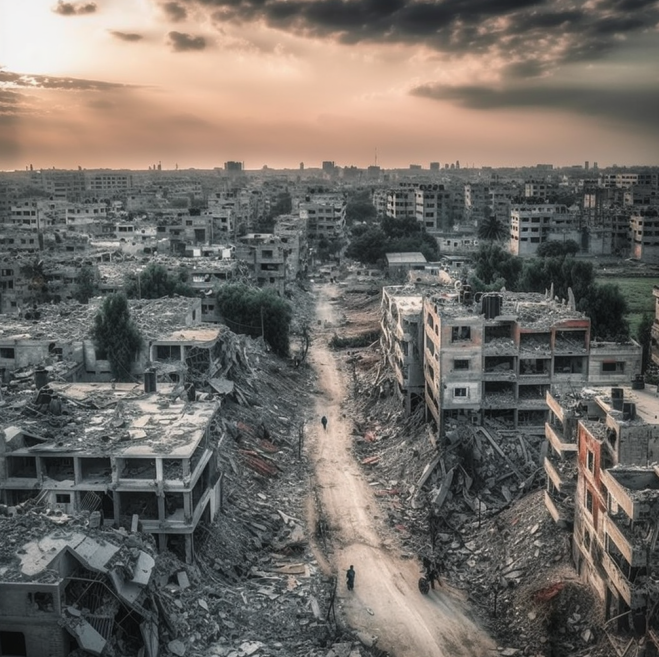
The conflict between Israel and Gaza has escalated in recent days, with both sides launching airstrikes and rockets at each other. The violence has claimed the lives of dozens of people, mostly civilians, and injured hundreds more. As the sun sets over the Israel-Gaza border, plumes of smoke rise from the sites of the attacks, creating a grim and eerie scene.

The conflict between Israel and Gaza has been raging for decades, but in recent years it has reached a new level of intensity and violence. The latest escalation, triggered by the eviction of Palestinian families from East Jerusalem and the storming of the Al-Aqsa Mosque by Israeli forces, has resulted in hundreds of casualties, thousands of injuries, and widespread destruction of infrastructure and homes.

The human cost of this ongoing crisis is immense and heartbreaking. According to the United Nations, more than 250 people have been killed in Gaza, including at least 66 children and 39 women. More than 1,900 people have been wounded, and over 72,000 have been displaced from their homes. The humanitarian situation is dire, as Gaza faces shortages of water, electricity, food, and medical supplies. The health system is overwhelmed by the influx of patients and the damage caused by Israeli airstrikes.

The conflict between Israel and Gaza has a long and complicated history that dates back to the early 20th century, when the Zionist movement began to establish a Jewish homeland in Palestine, then under British rule. The Arab population of Palestine, who had lived there for centuries, opposed the influx of Jewish immigrants and the creation of a Jewish state.

The tension and violence between the two sides escalated after the end of World War II, when the United Nations proposed a partition plan that divided Palestine into two states, one Jewish and one Arab. The plan was accepted by the Jewish leaders, but rejected by the Arab leaders, who launched a war against the newly declared state of Israel in 1948.

The war resulted in the displacement of hundreds of thousands of Palestinians, who fled or were expelled from their homes and became refugees in neighboring countries or in the Gaza Strip and the West Bank, two territories that were occupied by Egypt and Jordan respectively.

In 1967, another war broke out between Israel and its Arab neighbors, and Israel captured Gaza and the West Bank, along with other territories. Since then, Israel has maintained a military and civilian presence in these areas, despite international condemnation and resistance from the Palestinian population.

The Palestinians have sought to establish their own state in Gaza and the West Bank, with East Jerusalem as their capital. They have pursued this goal through various means, including armed struggle, diplomacy, and popular protests.

Several attempts have been made to reach a peaceful settlement between Israel and the Palestinians, such as the Oslo Accords in 1993 and the Camp David Summit in 2000, but none have succeeded in resolving the core issues of the conflict, such as borders, security, settlements, refugees, and Jerusalem.

In 2005, Israel withdrew its settlers and soldiers from Gaza, but retained control over its borders, airspace, and waters. In 2006, Hamas, an Islamist militant group that rejects Israel’s right to exist and is considered a terrorist organization by many countries, won the Palestinian legislative elections and took over Gaza after a violent clash with Fatah, the secular nationalist party that controls the West Bank.

Since then, Gaza has been under a blockade imposed by Israel and Egypt, which has severely restricted the movement of people and goods in and out of the territory. Hamas has also launched thousands of rockets at Israel, which has responded with airstrikes and ground incursions.

The latest escalation of violence was sparked by the eviction of Palestinian families from East Jerusalem’s Sheikh Jarrah neighborhood by Israeli settlers, who claim ownership of the land based on a 19th century Ottoman document. The evictions were seen by many Palestinians as part of Israel’s ongoing attempt to change the demographic and cultural character of East Jerusalem, which they claim as their capital.

The situation worsened when Israeli forces stormed the Al-Aqsa Mosque compound during Ramadan prayers, injuring hundreds of worshippers and provoking outrage across the Muslim world. Hamas then fired rockets at Jerusalem and other Israeli cities, triggering a massive Israeli retaliation that targeted Gaza’s infrastructure and civilian population.

On the other side of the border, Israel has also suffered losses and damages. According to the Israeli authorities, 12 people have been killed by rockets fired from Gaza, including two children and a soldier. Hundreds have been injured, and millions have been forced to seek shelter from the barrage of rockets that have targeted Israeli cities and towns. The psychological trauma and fear among the civilians are palpable, as they live under constant threat of attack.

The complexity of this conflict is undeniable, as it involves historical, religious, political, and territorial disputes that have defied resolution for generations. The root causes of the violence are deep and entrenched, and the prospects for peace are dim and distant.

The international community has repeatedly called for a ceasefire and a diplomatic solution, but the parties involved have shown little willingness or trust to engage in meaningful dialogue or compromise.

What Is A Category-King Company? And How Do You Build One?

0

A category-king is a “company that dominates a market category and captures most of the value in that space. Category-kings are not just market leaders; they are market makers. They create new categories of products or services that solve problems that customers didn’t know they had, or they redefine existing categories by offering superior solutions that customers can’t resist.”

In this piece, Tekedia explains how you can build a category king company in 2024?

-Identify a problem that is urgent, pervasive, and valuable.

-Define the category and its boundaries.

-Position your solution as the category king.

-Educate the market and evangelize the category.

-Scale your operations and defend your position. This means “protecting your competitive advantage and market share by innovating faster than your competitors, monitoring their moves and countering their threats, building strategic partnerships and alliances, acquiring or merging with complementary or competing companies, and complying with relevant laws and regulations.”

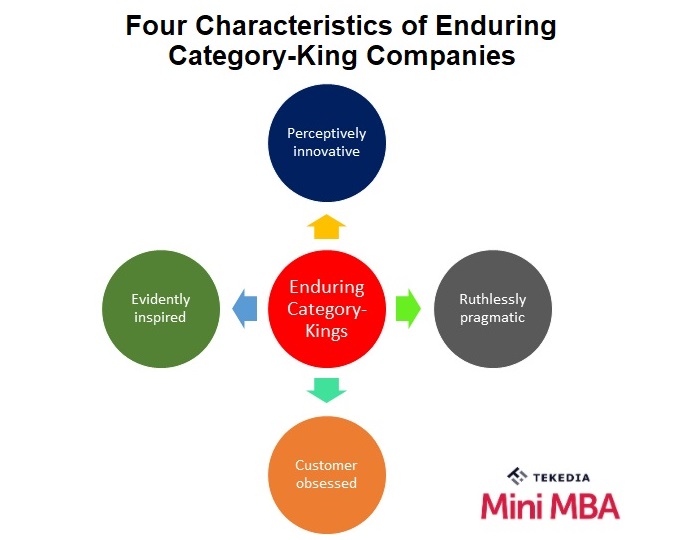
Finally, our video presents 4 traits you see in category-king companies. Create your firm to have those and win in 2024. In Tekedia Mini-MBA, our focus is educating on the mechanics of building category-king companies; consider it. Happy New Year again.

How can you build a category-king company in 2024?

How can you build a category-king company in 2024?

0

A category-king is a company that dominates a market category and captures most of the value in that space. Category-kings are not just market leaders, they are market makers. They create new categories of products or services that solve problems that customers didn’t know they had, or they redefine existing categories by offering superior solutions that customers can’t resist.

Category kings are rare and valuable. According to research by Play Bigger, a consulting firm that specializes in category design, category kings account for 76% of the market capitalization in any given category, while the rest of the competitors fight for the remaining 24%. Category kings also enjoy higher growth rates, lower customer acquisition costs, and stronger brand loyalty than their rivals.

So how can you build a category king company in 2024? Here are some steps to follow:

Identify a problem that is urgent, pervasive, and valuable. The first step to creating a new category is to find a problem that is worth solving for a large and underserved market. The problem should be urgent, meaning that customers are actively looking for a solution and are willing to pay for it.

The problem should be pervasive, meaning that it affects a significant number of people or businesses across different segments and geographies. The problem should be valuable, meaning that it has a clear and measurable impact on the customer’s outcomes, such as revenue, cost, time, or quality.

Define the category and its boundaries. The next step is to define the category that your solution belongs to and its boundaries. A category is a group of products or services that share a common purpose, function, or benefit for the customer.

A category boundary is the set of criteria that distinguish your category from other categories. For example, if you are creating a new category of online education platforms, you need to define what makes your platform different from other online education platforms, as well as from other types of education providers, such as universities, MOOCs, or corporate training programs.

Position your solution as the category king. The third step is to position your solution as the category king, the best and only choice for customers who want to solve the problem that you identified. To do this, you need to craft a compelling category vision, a story that explains why your category exists, what it does for customers, and why it matters for the world.

You also need to create a unique value proposition, a statement that summarizes how your solution delivers superior value to customers compared to other alternatives in the market. Finally, you need to design a distinctive brand identity, a set of elements that communicate your category vision and value proposition to customers and stakeholders, such as your name, logo, slogan, colors, fonts, images, etc.

Educate the market and evangelize the category. The fourth step is to educate the market and evangelize the category. This means creating awareness and demand for your category and your solution among potential customers, partners, investors, media, analysts, influencers, and regulators.

You need to use various channels and tactics to reach and engage your target audiences, such as content marketing, social media marketing, email marketing, webinars, podcasts, blogs, white papers, case studies, testimonials, reviews, referrals, etc. You also need to leverage thought leadership and public relations to establish yourself as an authority and a trusted source of information on your category and its benefits.

Scale your operations and defend your position. The fifth step is to scale your operations and defend your position as the category king. This means growing your customer base and revenue by expanding into new segments and geographies, launching new features and products, improving your customer service and support, optimizing your pricing and packaging strategies etc.

It also means protecting your competitive advantage and market share by innovating faster than your competitors, monitoring their moves and countering their threats, building strategic partnerships and alliances, acquiring or merging with complementary or competing companies, and complying with relevant laws and regulations.

I Hear The Groans of Nigerians – Tinubu Vows to Tackle Challenges In New Year’s Address to Nigerians

0

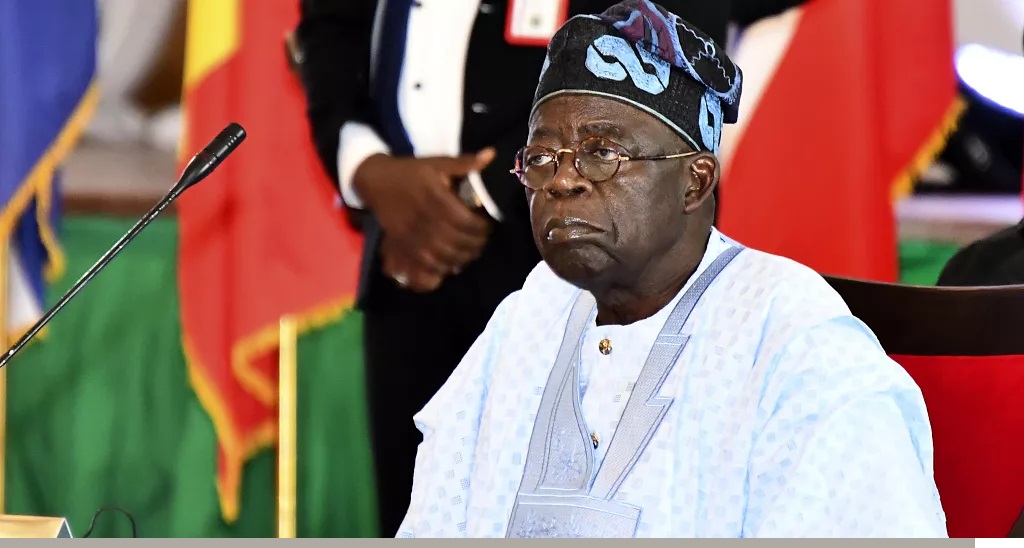
President Bola Tinubu, in a New Year’s address to the nation, highlighted the challenges Nigeria faces, including high inflation and insecurity, significantly impacting the country’s quality of life since 2015.

Despite these issues, the President assured Nigerians that his administration is diligently addressing these concerns and working towards national betterment.

“Despite the challenges we face, my administration is dedicated to diligently addressing the pressing concerns of high inflation, insecurity, and the rule of law. We are steadfast in our commitment to advancing the nation towards a better future,” he said.

The President expressed gratitude for the past year, acknowledging its challenges and celebrating the peaceful transfer of power, marking another milestone in Nigeria’s unbroken democracy. He emphasized the clear mandate given by the people to improve the nation across various sectors, underlining the core mission of his presidency.

Highlighting actions taken during his administration, the President mentioned difficult decisions made to address fiscal challenges, including the removal of long-standing fuel subsidies and changes in the foreign exchange system. He empathized with citizens affected by rising living costs and underemployment.

President Tinubu affirmed the administration’s efforts in improving security and laying the groundwork for economic recovery. Notably, plans to enhance electricity supply, restart local petroleum refining, and cultivate farmlands to ensure constant food supply and affordability were outlined.

“Our efforts in bolstering security and laying the groundwork for economic recovery remain steadfast. Plans to enhance electricity supply, restart local refining, and cultivate farmlands aim to ensure sustained food supply and affordability,” he said.

The President emphasized the government’s commitment to creating a conducive business environment, implementing fiscal and tax policy reforms, and prioritizing key areas such as national defense, job creation, poverty reduction, and social security in the 2024 budget.

Highlighting the administration’s dedication to inclusivity and equitable opportunities, President Tinubu underscored the goal of reducing inequality and ensuring equal opportunities for hardworking Nigerians.

Encouraging collective responsibility, unity, and cooperation among citizens, the President called for joint efforts to work towards peace, progress, and stability in Nigeria. He urged all to contribute to building a prosperous nation and concluded with warm wishes for a happy and prosperous 2024 for all Nigerians.

Read his full speech below:

Dear Compatriots,

It gives me immense joy to welcome each and every one of you – young and old- to this brand new year 2024. We must lift up our hands to Almighty God, in gratitude, for his grace and benevolence to our country and our lives in the year 2023 that has just gone by.

Though the past year was a very challenging one, it was eventful in so many ways. For our country, it was a transition year that saw a peaceful, orderly, and successful transfer of power from one administration to another, marking yet another remarkable step in our 24 years of unbroken democracy.

It was a year, you the gracious people of this blessed nation, entrusted your faith in me with a clear mandate to make our country better, revamp our economy, restore security within our borders, revitalize our floundering industrial sector, boost agricultural production, increase national productivity and set our country on an irreversible path towards national greatness that we and future generations will forever be proud of.

The task of building a better nation and making sure we have a Nigerian society that cares for all its citizens is the reason I ran to become your President. It was the core of my Renewed Hope campaign message on the basis of which you voted me as President.

Everything I have done in office, every decision I have taken, and every trip I have undertaken outside the shores of our land, since I assumed office on 29 May 2023, have been done in the best interest of our country.

Over the past seven months of our administration, I have taken some difficult and yet necessary decisions to save our country from fiscal catastrophe. One of those decisions was the removal of fuel subsidy which had become an unsustainable financial burden on our country for more than four decades. Another was the removal of the chokehold of a few people on our foreign exchange system that benefited only the rich and the most powerful among us. Without a doubt, these two decisions brought some discomfort to individuals, families, and businesses.

I am well aware that for some time now the conversations and debates have centered on the rising cost of living, high inflation which is now above 28%, and the unacceptable high under-employment rate.

From the boardrooms at Broad Street in Lagos to the main streets of Kano and Nembe Creeks in Bayelsa, I hear the groans of Nigerians who work hard every day to provide for themselves and their families.

I am not oblivious to the expressed and sometimes unexpressed frustrations of my fellow citizens. I know for a fact that some of our compatriots are even asking if this is how our administration wants to renew their hope.

Dear Compatriots, take this from me: the time may be rough and tough, however, our spirit must remain unbowed because tough times never last. We are made for this period, never to flinch, never to falter. The socio-economic challenges of today should energize and rekindle our love and faith in the promise of Nigeria. Our current circumstances should make us resolve to work better for the good of our beloved nation. Our situation should make us resolve that this New Year 2024, each and every one of us will commit to being better citizens.

Since our administration took over the mantle of office, security has improved. Silently, we have worked to free captives from abductors. While we can’t beat our chest yet that we have solved all the security problems, we are working hard to ensure that we all have peace of mind in our homes, places of work, and on the roads.

Having laid the groundwork of our economic recovery plans within the last seven months of 2023, we are now poised to accelerate the pace of our service delivery across sectors.

Just this past December during COP28 in Dubai, the German Chancellor, Olaf Scholz, and I agreed and committed to a new deal to speed up the delivery of the Siemens Energy power project that will ultimately deliver a reliable supply of electricity to our homes and businesses under the Presidential Power Initiative which began in 2018.

Other power installation projects to strengthen the reliability of our transmission lines and optimize the integrity of our National grid are ongoing across the country.

My administration recognizes that no meaningful economic transformation can happen without a steady electricity supply. In 2024, we are moving a step further in our quest to restart local refining of petroleum products with Port Harcourt Refinery, and the Dangote Refinery which shall fully come on stream.

To ensure constant food supply, security, and affordability, we will step up our plan to cultivate 500,000 hectares of farmlands across the country to grow maize, rice, wheat, millet, and other staple crops. We launched dry season farming with 120,000 hectares of land in Jigawa State last November under our National Wheat Development Programme.

In this New Year, we will race against time to ensure all the fiscal and tax policy reforms we need to put in place are codified and simplified to ensure the business environment does not destroy value. On every foreign trip I have embarked on, my message to investors and other business people has been the same. Nigeria is ready and open for business.

I will fight every obstacle that impedes business competitiveness in Nigeria and I will not hesitate to remove any clog hindering our path to making Nigeria a destination of choice for local and foreign investments.

In my 2024 Budget presentation to the National Assembly, I listed my administration’s 8 priority areas including national defense and internal security, job creation, macro-economic stability, investment environment optimization, human capital development, poverty reduction, and social security. Because we take our development agenda very seriously, our 2024 budget reflects the premium we placed on achieving our governance objectives.

We will work diligently to make sure every Nigerian feels the impact of their government. The economic aspirations and the material well-being of the poor, the most vulnerable and the working people shall not be neglected. It is in this spirit that we are going to implement a new national living wage for our industrious workers this New Year. It is not only good economics to do this, but it is also a morally and politically correct thing to do.

I took an oath to serve this country and give my best at all times. Like I said in the past, no excuse for poor performance from any of my appointees will be good enough.

It is the reason I put in place a Policy Coordination, Evaluation, Monitoring, and Delivery Unit in the Presidency to make sure that governance output improves the living conditions of our people.

We have set the parameters for evaluation. Within the first quarter of this new year, Ministers and Heads of Agencies with a future in this administration that I lead will continue to show themselves.

Fellow Nigerians, my major ambition in government as a Senator in the aborted Third Republic, as Governor of Lagos State for eight years, and now as the President of this blessed country is to build a fair and equitable society and close the widening inequality. While I believe the rich should enjoy their legitimately earned wealth, our minimum bargain must be that any Nigerian who works hard and diligent enough will have a chance to get ahead in life. I must add that because God didn’t create us with equal talents and strengths, I cannot guarantee that we will have equal outcomes when we work hard. But my government, in this new year 2024 and beyond, will work to give every Nigerian equal opportunity to strive and to thrive.

For the new year to yield all its good benefits to us as individuals and collectively as a people we must be prepared to play our part. The job of building a prosperous nation is not the job of the President, Governors, Ministers, Lawmakers, and government officials alone. Our destinies are connected as members of this household of Nigeria. Our language, creed, ethnicity, and religious beliefs even when they are not the same should never make us work at cross purposes.

In this new year, let us resolve that as joint heirs to the Nigerian Commonwealth, we will work for the peace, progress, and stability of our country. I extend this call to my political opponents in the last election. The election is over. It’s time for all of us to work together for the sake of our country.

We must let the light each of us carry – men and women, young and old- shine bright and brighter to illuminate our path to a glorious dawn.

I wish all of us a happy and prosperous year 2024.

May God continue to bless the Federal Republic of Nigeria.