DD
MM
YYYY

PAGES

DD
MM
YYYY

spot_img

PAGES

Home Blog Page 3881

Naira needs air to breathe from factories and warehouses

0

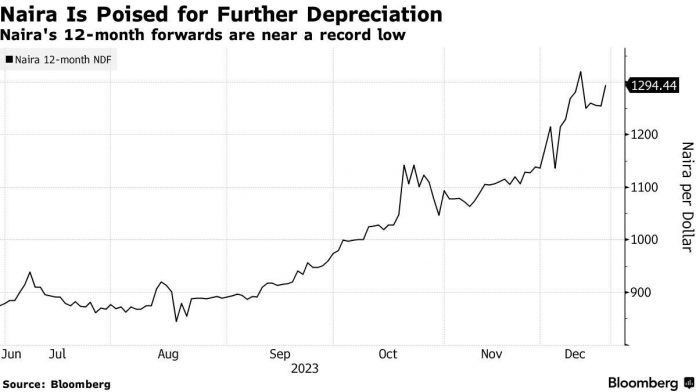
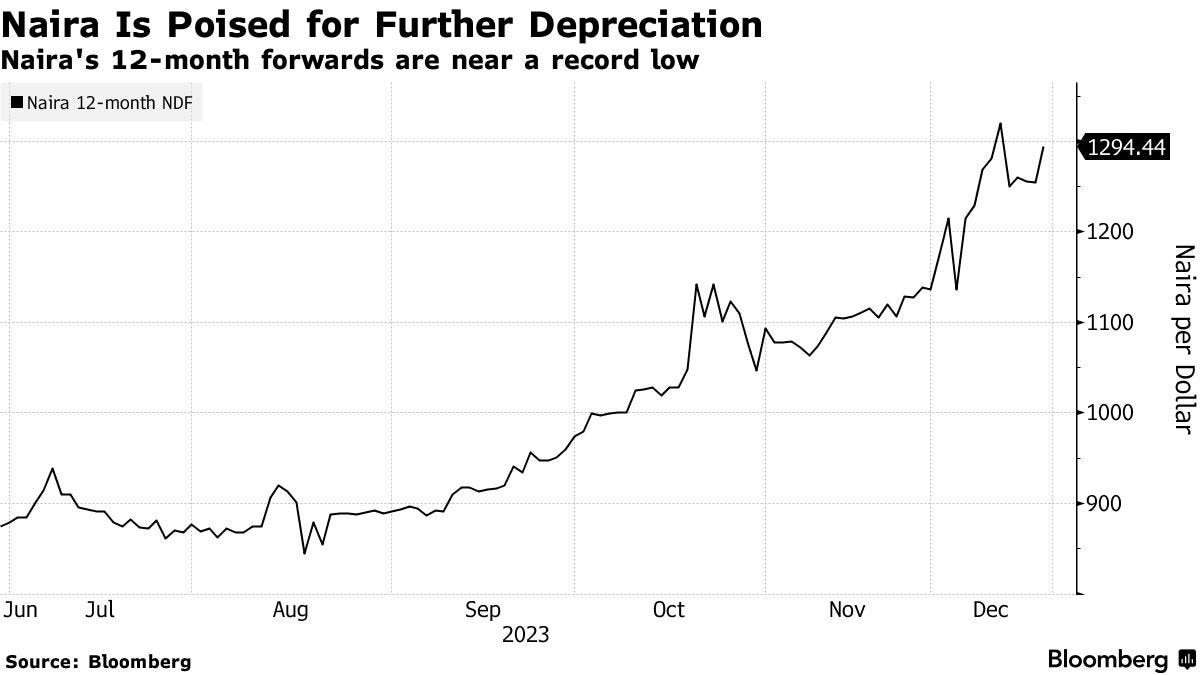
The poor Naira – “The naira, Nigeria’s currency, has been on a downward spiral since the beginning of the year, losing more than 40% of its value against the US dollar. This is the worst performance of the naira since 1999, when the country returned to democracy after decades of military rule.”

Naira needs air to breathe,  and the special air is created in factories and warehouses (the modern and old). Our finance-first strategy, over manufacturing-first strategy, will never save the Naira.

As a nation, we’re over finance-lized as everyone knows the CBN governor, Finance Minister, but few care to know who the Science & Tech minister is. That is our problem, and it must change for Naira to breathe.

The naira, Nigeria’s official currency, has been on a downward spiral since the beginning of the year, losing more than 30% of its value against the US dollar. This is the worst performance of the naira since 1999, when the country returned to democracy after decades of military rule.

The naira’s woes are largely driven by the collapse of oil prices, Nigeria’s main source of foreign exchange, as well as the impact of the COVID-19 pandemic on the economy. The Central Bank of Nigeria (CBN) has tried to defend the naira by devaluing it twice this year, but this has not stopped the pressure on the currency.

South Africa institutes Court proceedings against ISRAEL

0

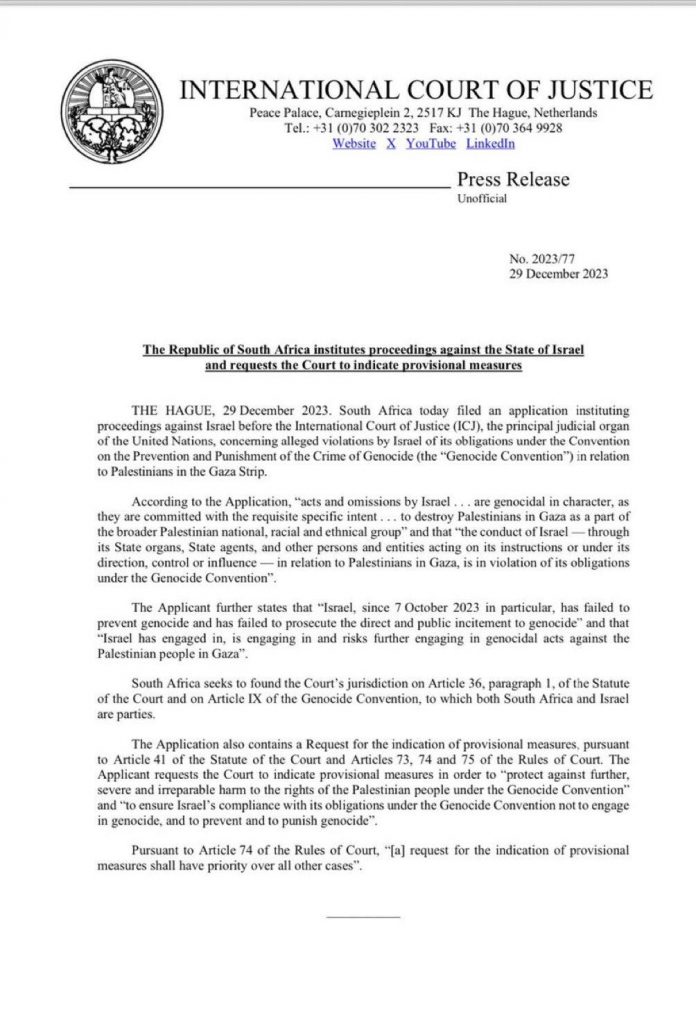
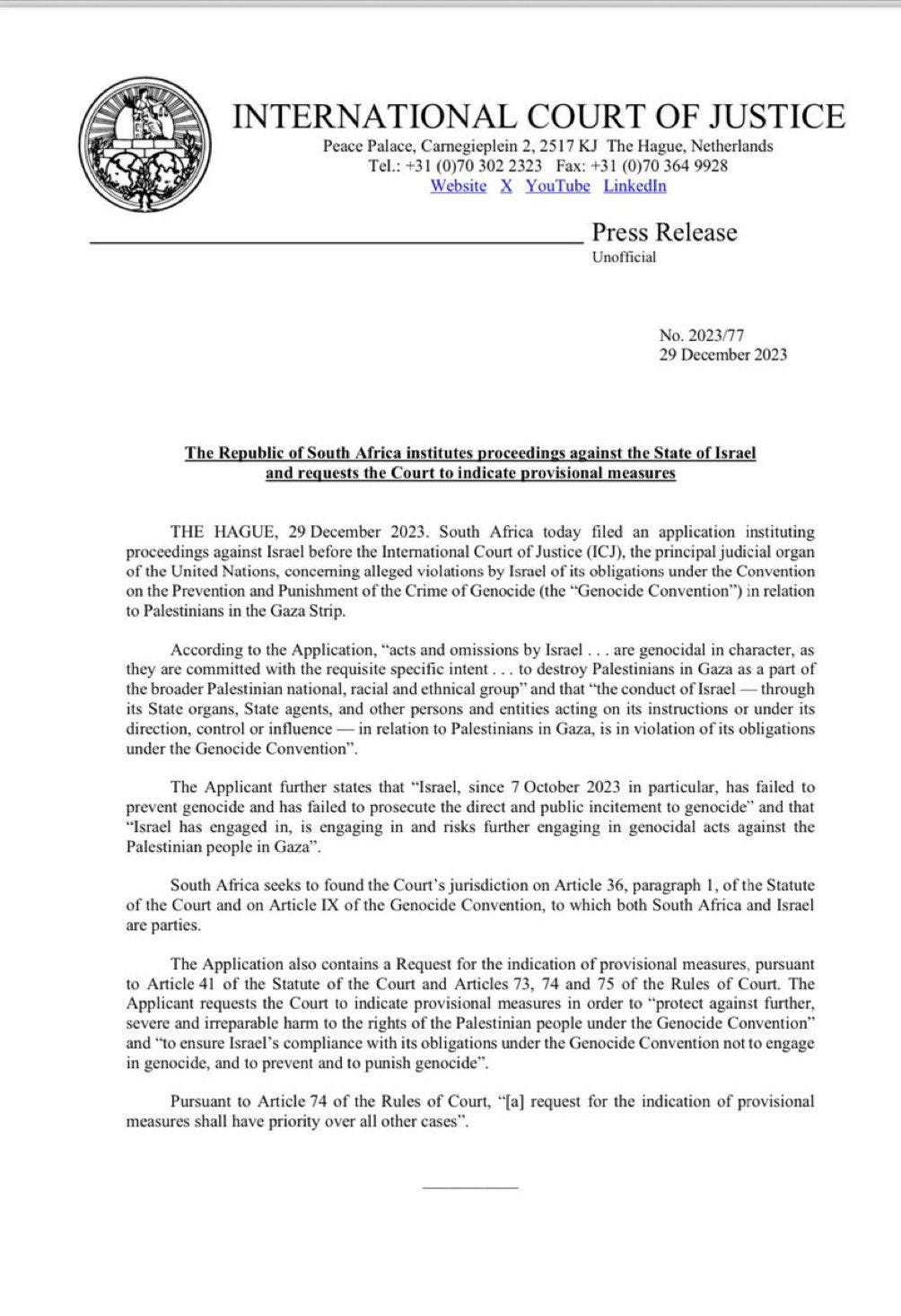
In a landmark move, South Africa has filed a lawsuit against Israel at the International  Court of Justice (ICJ) for alleged violations of the Convention on the Prevention and Punishment of the Crime of Genocide (Genocide Convention).

South Africa claims that Israel has committed genocide against the Palestinian people in the occupied territories and asks the court to order provisional measures to prevent further harm.

The lawsuit, which was submitted on December 29, 2023, is based on Article IX of the Genocide Convention, which allows any contracting party to submit a dispute to the ICC if it considers that another party has breached its obligations under the convention.

South Africa argues that Israel, as a party to the convention since 1950, has failed to prevent and punish the crime of genocide, as defined in Article II of the convention, which includes killing, causing serious bodily or mental harm, deliberately inflicting conditions of life calculated to bring about physical destruction, imposing measures intended to prevent births, and forcibly transferring children of a national, ethnical, racial or religious group.

South Africa alleges that Israel has committed these acts against the Palestinian people, especially in Gaza, where it has imposed a blockade since 2007, launched several military operations that resulted in thousands of civilian casualties, and restricted access to basic services such as water, electricity, health care and education.

South Africa also accuses Israel of committing genocide in the West Bank, where it has expanded illegal settlements, demolished Palestinian homes, confiscated land and natural resources, and subjected Palestinians to arbitrary arrests, torture and extrajudicial killings.

South Africa requests the ICJ to declare that Israel has violated the Genocide Convention and to order it to cease its genocidal acts and policies, to respect the rights of the Palestinian people under international law, and to provide reparations for the harm caused.

South Africa also asks the court to order provisional measures under Article 41 of the Statute of the ICJ, which allows the court to indicate measures that are necessary to preserve the rights of the parties or to prevent irreparable damage. South Africa contends that provisional measures are urgently needed to protect the Palestinian people from further acts of genocide by Israel.

The lawsuit is unprecedented in several ways. It is the first time that a state party to the Genocide Convention has invoked Article IX to bring another state party before the ICJ. It is also the first time that a state has accused another state of genocide at the ICJ. Moreover, it is the first time that a state has requested provisional measures from the ICJ in relation to an ongoing situation.

The lawsuit is expected to face several legal and political challenges. Israel is likely to contest the jurisdiction of the ICJ over the dispute, arguing that it does not recognize the court’s authority or that the matter is not within its scope.

Israel may also challenge the admissibility of the case, claiming that it is not a genuine dispute or that it is an abuse of process. Furthermore, Israel may dispute the merits of the case, denying that it has committed genocide or that its actions are justified by self-defense or necessity.

The lawsuit may also encounter opposition from some members of the international community, especially from Israel’s allies such as the United States, which have criticized a sister organization to ICJ,  the Internation Criminal Court (ICC), for its involvement in the Israeli-Palestinian conflict.

The United States has already imposed sanctions on ICC officials who are investigating alleged war crimes by Israel and other parties in Palestine. The lawsuit may also affect the prospects of peace negotiations between Israel and Palestine, which have been stalled for years.

However, South Africa’s lawsuit may also garner support from other states and actors who share its concern for human rights and international justice. South Africa may invoke its own experience of overcoming apartheid and racism as a moral authority for challenging Israel’s policies and practices.

South Africa may also rely on its diplomatic relations and influence in Africa and other regions to mobilize support for its case. Additionally, South Africa may count on the solidarity of civil society organizations and movements that advocate for Palestinian rights and oppose Israeli occupation.

The lawsuit is likely to have significant implications for international law and politics. It may set a precedent for using the Genocide Convention as a legal tool to address mass atrocities and hold perpetrators accountable. It may also raise awareness and mobilize action on the plight of the Palestinian people and their quest for self-determination. It may also challenge the status quo and power dynamics in the Middle East and beyond.

The lawsuit is expected to take several years before a final judgment is rendered by the ICJ. In the meantime, South Africa hopes that its legal action will contribute to ending Israel’s alleged genocide against Palestine and advancing peace and justice in the region.

Naira is set for its worst year since 1999

0

The naira, Nigeria’s currency, has been on a downward spiral since the beginning of the year, losing more than 40% of its value against the US dollar. This is the worst performance of the naira since 1999, when the country returned to democracy after decades of military rule.

What are the causes and consequences of this currency crisis, and is there any hope for a recovery in the near future?

The naira, Nigeria’s official currency, has been on a downward spiral since the beginning of the year, losing more than 30% of its value against the US dollar. This is the worst performance of the naira since 1999, when the country returned to democracy after decades of military rule.

The naira’s woes are largely driven by the collapse of oil prices, Nigeria’s main source of foreign exchange, as well as the impact of the COVID-19 pandemic on the economy. The Central Bank of Nigeria (CBN) has tried to defend the naira by devaluing it twice this year, but this has not stopped the pressure on the currency.

The CBN also maintains multiple exchange rates, which create distortions and inefficiencies in the foreign exchange market. The naira trades at different rates in the official, parallel, and interbank markets, creating opportunities for arbitrage and speculation.

The CBN has also imposed various restrictions on access to foreign exchange for certain imports and transactions, in a bid to conserve its dwindling reserves. However, these measures have not been effective in curbing the demand for dollars, as importers and investors seek alternative sources of foreign exchange.

The outlook for the naira remains bleak, as oil prices are expected to remain low for the foreseeable future, and the economy is projected to contract by 4.3% this year, according to the International Monetary Fund (IMF).

The IMF has urged Nigeria to unify its exchange rates and adopt a more flexible exchange rate regime, as well as implement structural reforms to diversify its economy and boost its competitiveness.

However, the CBN has resisted these recommendations, arguing that they would lead to further inflation and hardship for Nigerians. The CBN governor, Yemi Cardoso, has said that the naira is “appropriately priced” and that there is no need for further devaluation. He has also vowed to continue to intervene in the foreign exchange market to support the naira.

However, analysts and observers doubt that the CBN can sustain this strategy for long, given its limited reserves and the persistent gap between the official and parallel rates. They warn that unless Nigeria addresses its underlying economic challenges and adopts a more market-driven exchange rate policy, the naira will continue to depreciate and erode Nigerians’ purchasing power.

The America Inc and China Inc – And Dominating Nations

0

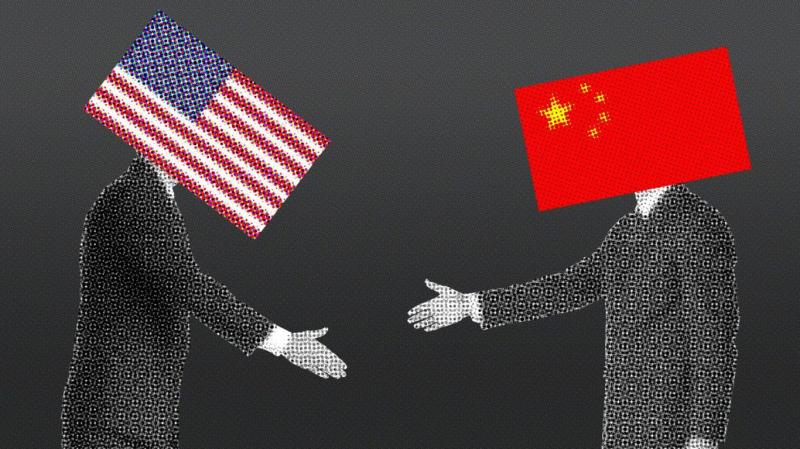
There are three countries on this earth when it comes to building tech empires: America, China and others. Yes, China’s Baidu has created a ChatGPT  competitor named  Ernie Bot, and now has 100 million users in five months.

Chinese multinational technology company that specializes in Internet-related services, products, and artificial intelligence, Baidu, has announced that its ChatGPT rival Ernie Bot now has more than 100 million users.

The company announced this milestone on Thursday, at a deep-learning summit in Beijing. The news is coming about five months after Ernie Bot was officially launched to the public in August 2023. Before the launch, Baidu‘s Ernie bot ranked first in popularity on Apple’s app store in China after the Chinese tech giant disclosed that it was releasing its ChatGPT-like chatbot to the public.

The company generated $17.9 billion in revenue from its applications during its last fiscal year, after making Ernie Bot generally available in August this year.

Meanwhile, China’s Huawei is ‘back on track’, and is expected to close 2023 with $100 billion in revenue. In other words, the US sanctions have not destroyed the company as it has largely managed to use its own chips to make products customers like.

China Inc. America Inc. They run this world. We’re just here as spectators  from other nations. Have you seen the latest Fortune Global 500 of largest global companies?  That is a Champions League of business, and China and America run the show. No other nation comes close. #respect

How the online ‘Advertorial’ Pandemic is killing Web3 Projects

0

So… I read a great post earlier today which I didn’t entirely agree with.

I don’t have to agree with EVERYTHING in a post to see value in it. Sometimes I won’t agree with a conclusion… sometimes I will agree with the conclusion but not on how the writer arrived there… sometimes I will think that some points made are nailing it, while some other ones are obscure and unrelatable.

So… this was one of those posts where I didn’t agree with everything that was said, but I still felt I benefited from reading it. It didn’t waste my time.

The articles conclusion in this case, was that founders and project owners try to pack far too much technical detail into marketing efforts for a web 3 aimed product.

While the story has some truth in it. The conclusion to me seems incomplete.

The track record 2020-23

From all the expressions of people online, some things seem clear:

  1. NFT projects over the last few years have been disasters, with many out-of-pocket and upset. People want better explanations and understanding of why some projects pump and dump, how rug pulls happen, and where and how hacks are less likely to happen.
  2. They are attracted with some FOMO feelings about memecoins, and yet, they also look for concrete reasons why some will be a one month wonder, while others will retain value more durably.

These things need techno-economic and mathematical explanations. There is no one line answer.

While many are fans of blockchain projects, and some are fans solely of coins, there is a completely different movement in various countries, objecting to the imposition of CBDCs (Central Bank Digital Currencies).

The explosive mix of FOMO with COVID stay-at-home boredom is gone. 2024 is probably going to be the ‘year of many questions’ and product owners need to have answers.

The rise of the ‘Advertorial’ Pandemic

Was a day… printed newspapers were the bread-and-butter media product. Editorial content was king. Journalists and Publication Teams didn’t allow the articles ‘subject’ to drive the narrative, their concern was to sell newspapers.

Advertisements were within 2-3 pages before the end of the publication, but readers were the real pay master. As the focus of an article, whether the subject approved or disapproved of the content didn’t matter. Some tabloids even published content about individuals knowing it to be somewhere between sensationalist and completely false, if, worse case scenario, the sales revenue could be projected to outweigh losses from law suits.

Things moved on. Online, people expect to just have to pay for their connectivity device and their data connection. The reader/consumer can no longer be relied upon as as source of income.

So in reporting on web3/blockchain related news, what we have, instead of impartial news intended to inform the reader, is carefully crafted corporate content, paid for by the subject of the article, and presented in a style as if it were honest, impartial news.

Hence the phrase ‘Advertorial’ – a fusion of the words ‘Advertisement’ and ‘Editorial’. Rather than having the best start-up product around, a well financed start-up simply needs to run the same article among the ‘usual suspects’ in order to corner the online readerships.

The problem with this approach is, unlike the old printed newspapers, who lived or died on the sword of the street news stand, or the cash register of the newsagent, the apex online news sites or bloggers, simply needs to get sign off from the project owner on the ‘proof’.

R.I.P. Project Marketing Success

It’s a little bit like having the best airbag in the motor industry. Once there were none. People died, and now they are law. As a product owner in ‘web3’ if you have the best ‘airbag’ in town, especially after all that happened the last 3 years, that should be a big selling point.

But ‘airbags’ are a boring topic for customers (until they crash and see their importance).

So, its really down to the publisher to capture the reader imagination to make the airbag super-cool. That’s the missing link.

On another issue today – Kristine Lillieneike said: ‘If we leave this development up to Tech Bros, we are in deep dodo.’

But this is it… online publishing is often going direct to publish ‘Tech Bro’ raw copy, adding none of the nuances that sell the big story of safety in a sexy way to regular users. If client pays, quibble free on raw copy, who will take time to do more?

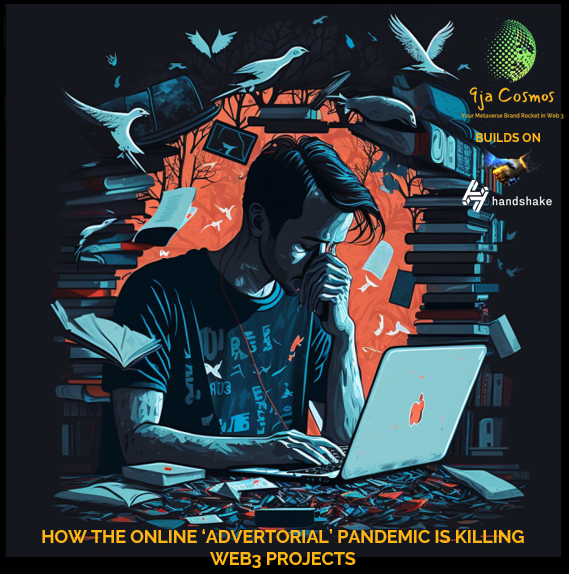
This may be how the online ‘Advertorial’ Pandemic is killing Web3 Projects


9ja Cosmos is here…

Get your .9jacom and .9javerse Web 3 domains  for $2 at:

.9jacom Domains

.9javerse Domains

Visit 9ja Cosmos LinkedIn Page

Visit 9ja Cosmos Website

Preview our Sino Amazon/Sinosignia releases