DD
MM
YYYY

PAGES

DD
MM
YYYY

spot_img

PAGES

Home Blog Page 3885

The Big Plot in Nigeria’s Stock Exchange: Investing and Trading in US Dollars

0

Hello Tekedia Capital members: the Nigerian stock exchange wants to do what we discussed when it approached us to list some of our portfolio firms in the NGX Tech Board. Yes, our members voted down that option, sending a message to the bourse in an unambiguous way: our startups will consider listing in NGX if you have an option for the deals to be done in both Naira and USD. In other words, people can invest and buy shares in both Naira and USD!

Today, that playbook seems to have gotten an interest: “The Nigerian stock exchange is proposing the inclusion of listings for bonds denominated in dollars, which could potentially extend to stocks as well. The primary objective is to facilitate enhanced foreign currency access for companies operating in the country, according to a Bloomberg report.”

The initiative is being touted to augment other measures announced by the Central Bank of Nigeria (CBN), in the wake of its fresh fight to stop the naira from free-falling in the forex market.

Temi Popoola, the CEO of Nigerian Exchange Ltd., said the focus is on enterprises based within the nation’s special economic free trade zones, as well as those generating foreign currency, per Bloomberg.

“Our primary objective is to enable these companies to issue bonds denominated in dollars and eventually offer equity in dollars as well,” he said in an interview. “It could potentially address the challenges posed by fluctuations in foreign currency.”

Yes, foreign companies which want to invest in Nigerian companies do not need to convert to Naira in the NGX, rather, they can have the option to invest directly in USD. We approve this message because it will help deepen liquidity of US dollars in Nigeria, and help the Naira to strengthen.

Sure, you may argue that as a sovereign nation that Nigeria should not undercut the Naira. That is fair, but for those startups which must pay for APIs, cloud services, etc in USD, anything but USD makes things very challenging! And if you look at this broadly, this can help stabilize the Naira which means a win-win for all.

If you allow Company A to list 20% of its stock in USD and others in Naira, it can raise the 20% to seed a manufacturing boom with USD available to import things. Do not discard this idea. It is key to understand that more than 90% of leading startups in Nigeria price their companies in USD and most have bank accounts in US and UK where that money is paid and kept. If you can convince them to share a small part so that the funds are no more in US and UK, but in Zenith Bank, Fidelity, GTB, etc, you help Nigeria.

Yes, tech valuation and fundraise are already dollarized because the dollar men bring the money as we like our cement, industrials and FMCGs in NGX. This policy is to bring that fund to Lagos.
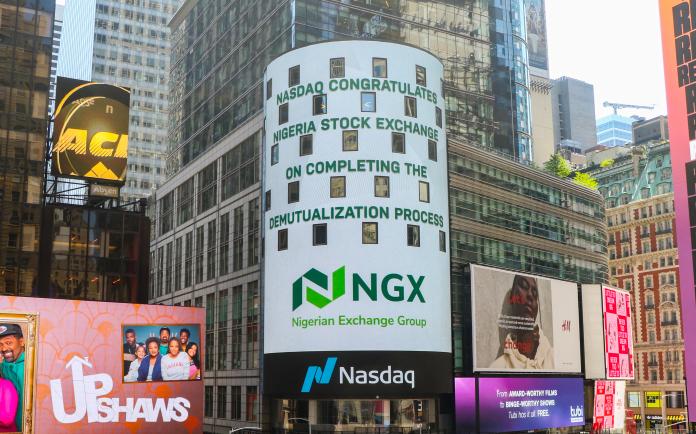

I understand the patriotism element which is valid. This is a key component. Today, no one can start a decent manufacturing firm which needs imported raw materials in Nigeria because of lack of USD. I hope we look deeper to understand that when other options are limited, anything that can kickstart making things in Nigeria should be evaluated.

My Response: Why do you think that all funds must go through I&E window? If I do IPO and receive $1m and want to pay for my AWS cloud services, why do I need to go to I&E when I have funds in my Fidelity dorm account?

Comment 1: This is a selfishly formulated policy,Jumia was listed on the NYSE and investors globally(Africans inclusive) invested with dollars not with their local currencies,

If Nigerian tech startups need dollar inflow via sale of shares,they should get listed on the NYSE, not on NGX

Buying Nigerian tech stock listed on the NGX in dollars is a bad idea and I will be glad to see that this idea doesn’t fly.

Comment 1R: Absolutely! Why dollarise our economy when it is not a legal tender by law! Ndubuisi Ekekwe , I don’t support this your new idea but love the other idea where you stated that only manufacturing goods can save the Naira!

My Response: “other idea where you stated that only manufacturing goods can save the Naira!” – unfortunately, you need to kickstart that process since with Naira you cannot even import raw materials. If you allow Company A to list 20% of its stock in USD and others in Naira, it can raise the 20% to seed that manufacturing boom. Do not discard this idea. It is key to understand that more than 90% of leading startups in Nigeria price their companies in USD and most have bank accounts in US and UK where that money is paid. If you can convince them to share a small part so that the funds are no more in US and UK, but in Zenith Bank, Fidelity, GTB, etc, you help Nigeria.

Yes, tech valuation and fundraise is already dollarized because the dollar men bring the money as we like our cement, industrials and FMCGs in NGX. This policy is to bring that fund to Lagos.
The Nigerian Stock Exchange Proposes Dollar Asset Listing to Tackle its FX Crisis – Bloomberg

0

The Nigerian stock exchange is proposing the inclusion of listings for bonds denominated in dollars, which could potentially extend to stocks as well. The primary objective is to facilitate enhanced foreign currency access for companies operating in the country, according to a Bloomberg report.

The initiative is being touted to augment other measures announced by the Central Bank of Nigeria (CBN), in the wake of its fresh fight to stop the naira from free-falling in the forex market.

Temi Popoola, the CEO of Nigerian Exchange Ltd., said the focus is on enterprises based within the nation’s special economic free trade zones, as well as those generating foreign currency, per Bloomberg.

“Our primary objective is to enable these companies to issue bonds denominated in dollars and eventually offer equity in dollars as well,” he said in an interview. “It could potentially address the challenges posed by fluctuations in foreign currency.”

Nigeria has been battling to tame its forex crisis, which has seen the naira plunged to N950/$1 in the parallel market. The naira’s free fall is largely tied to low FX earnings from oil exports due to low oil outputs.

Following the inauguration of his administration on May 29, President Bola Tinubu has initiated some reforms, including the removal of fuel subsidies that gulped more than $10bn from the 2022 budget, and the floating of the FX market. However, the reforms have accelerated the naira’s fall, spiking inflation – which hit 24.08% in July.

This backdrop created an urgent need for the government to provide short-term solutions to the volatility of the FX market. While a solution to the crisis impeding oil output remains farfetched, the government is exploring other mechanisms through policies to boost the naira’s value.

Last week, the Nigerian National Petroleum Company Limited (NNPCL) announced that it has secured $3bn emergency crude oil repayment from Afreximbank. The loan is targeted at boosting Nigeria’s foreign reserves, which according to estimates by JPMorgan, have been depleted to $3.7bn – far below the $37bn that the CBN has been posting.

The CBN also announced other policy changes, including new rules for the Bureau De Change operators, which typically brought them back into Nigeria’s regulated FX market.

But despite these efforts, the naira has resumed its woeful performance after making a little gain trading at N840/$1 in the parallel market and N770/$1 at the Investor & Exporter window. As of Wednesday afternoon, the naira was trading around N925/$1 in the parallel market and N769.23 in the I&E window.

This new proposal by the government is seen as bait designed to draw companies and individuals, who keep funds in dollars as a hedge to naira’s volatility, into making them available.

Per Bloomberg, Popoola refrained from specifying a timeframe for the potential implementation of these proposals. However, he noted that the government’s demonstrated interest in comprehensive market reforms is apparent. He said changes to listing regulations can be achieved within a “relatively short time.”

Popoola said in addition to facilitating the listing and issuance of foreign-currency bonds, the stock exchange is collaborating with the domestic Securities and Exchange Commission to revise regulations. This aims to enable specific companies to distribute dividends in dollars.

“Given the proactive stance of the current administration, it is reasonable to anticipate that these objectives can be achieved,” he said.

He noted that both retail and institutional investors possess substantial quantities of dollars that domestic capital markets can leverage to promote increased participation in local listings.

“If the target companies cannot access dollars within our market, many of them may opt to list abroad,” he said.

Betting on the Blockchain: Bitcoin Integration in Online Gambling

1

The world of online gambling is constantly evolving.  The integration of Bitcoin and other cryptocurrencies into the industry is one of the most transformative developments in recent years.

Blockchain technology is the foundation of cryptocurrencies. It promotes transparency, security, and efficiency to various sectors, including online gambling. Here, we will explore how Bitcoin is revolutionizing online gambling, its benefits, and the challenges it presents.

The Basics of Bitcoin

Bitcoin is a decentralized digital currency created in 2009 by an anonymous entity known as Satoshi Nakamoto. Unlike traditional currencies, Bitcoin operates on a decentralized ledger called the blockchain. It records all transactions across a network of computers. Here are some aspects of Bitcoin:

Decentralization

Bitcoin is not controlled by central authorities like governments or banks. Instead, it relies on a network of miners who validate transactions and maintain the blockchain.

Anonymity and Security

Bitcoin transactions are recorded on the blockchain as pseudonymous. Users are represented by wallet addresses, not personal information, which can enhance privacy.

The blockchain’s cryptographic nature makes it highly secure, reducing the risk of fraud and hacking.

Blockchain is a decentralized and distributed ledger technology that has gained significant attention for its potential to revolutionize various industries. Here are key aspects of blockchain:

Transparency

Transactions on a blockchain are transparent and can be viewed by anyone on the network. This can help reduce fraud and increase trust among participants.

Consensus Mechanisms

Blockchain networks use consensus mechanisms to validate the ledger. Common mechanisms include Proof of Work (PoW) and Proof of Stake (PoS), each with its own advantages and drawbacks.

Smart Contracts

Smart contracts are self-executing. They hold the terms of the agreement directly written into code. These terms automatically execute when predefined conditions are met. There is no need for intermediaries.

Permissioned vs. Permissionless

Blockchains can be permissioned (private) or permissionless (public). Permissioned blockchains restrict access to a select group of participants, while permissionless blockchains are open for anyone to join.

Tokenization

Many blockchains use tokens or cryptocurrencies to represent value or ownership rights. These tokens can be used for various purposes within the blockchain ecosystem. Their uses include payment, access, and governance.

Use Cases

Blockchain technology has a wide range of potential applications beyond just cryptocurrencies. It can be used in supply chain management, finance, healthcare, identity verification, and more. It is suitable for areas where trust, security, and transparency are essential.

The Rise of Bitcoin Casinos

Bitcoin casinos have brought a revolutionary shift to the online gambling world.  These digital platforms have introduced a new dimension to the traditional casino experience. Instead of completely relying on traditional currencies, casinos are integrating cryptocurrencies like Bitcoin, into their operations.

This convergence of technology and gambling has changed the landscape of the gambling industry for both players and operators.

The concept of crypto casinos emerged as a direct result of the increasing popularity of cryptocurrencies. Bitcoin, introduced in 2009, marked the beginning of a new era in digital finance and transactions.

Over time, enthusiasts recognized the potential of using cryptocurrencies to revolutionize other industries, including gambling. As a result, the first crypto casinos started appearing around 2014. They allow players to place bets using cryptocurrencies instead of traditional fiat currencies. Here are some benefits of Bitcoin casinos.

Transparency and Anonymity

Transparency is one of the biggest benefits of crypto casino. Traditional online casinos often lack transparency in their operations, making it difficult for players to verify the fairness of games.

However, many crypto casinos use blockchain technology to create provably fair games. This technology allows players to independently verify the fairness of each game’s outcome, ensuring that casinos cannot manipulate the results.

Additionally, the use of cryptocurrencies provides a higher level of anonymity for players. Transactions on blockchain networks are pseudonymous. They allow users to gamble without revealing personal information. This level of privacy is particularly appealing to those who prioritize the security of their data.

Global Accessibility and Speed of Transactions

Accessibility is another significant advantage of crypto casinos. Traditional online casinos often restrict access to players from certain countries due to regulatory and legal considerations. However, Bitcoin operates on a decentralized network, enabling players from around the world to gamble online without facing geographical restrictions.

The speed of transactions is also a game-changer in the world of gambling. Traditional banking methods often cause delays in deposits and withdrawals. The delays can impact the overall user experience.

In contrast, Bitcoin transactions are almost instant. They allow you to deposit funds and withdraw winnings without unnecessary delays.

The Future of Crypto Casinos

The rise of crypto casinos has been rapid, and the future looks promising. As blockchain technology advances, it is likely that more sophisticated and secure gaming platforms will emerge, tightly integrated with innovative crypto payment gateways. An example of such a crypto payment gateway is the PassimPay platform. PassimPay stands as a revolutionary force in the realm of cryptocurrency payment gateways for online casinos, offering a plethora of advantages that redefine the gaming experience. Its benefits are multifaceted, catering to both players and casino operators alike: anonymity, high speed of transactions, global accessibility and inclusivity for players.

From the casino operator’s perspective, PassimPay offers cost-effectiveness and efficiency. Its decentralized nature reduces transaction fees and minimizes the intermediaries involved, translating into significant savings for the casino. High level of security and privacy minimizes the risks associated with fraudulent activities, ensuring a secure and reliable payment gateway for both players and the casino itself.

Largely, as regulatory frameworks become clearer, the mainstream adoption of crypto casinos may increase, attracting a wider audience.

Crypto casinos may expand their game offerings beyond traditional casino games like slots and poker. They might integrate blockchain-based games and NFT-based games. They may even incorporate virtual reality (VR) and augmented reality (AR) experiences.

Integration with decentralized finance (DeFi) protocols could enable players to earn interest on their cryptocurrency holdings while gambling or provide liquidity to betting pools.

Crypto casinos may become more accessible by ensuring compatibility with various cryptocurrencies and wallets. This will allow you to switch between different cryptocurrencies when gambling.

Cryptocurrencies enable global access to gambling platforms, breaking down geographical barriers. The future may see increased internationalization of crypto casinos.

The energy consumption associated with certain cryptocurrencies has raised environmental concerns. Crypto casinos might consider adopting more energy-efficient cryptocurrencies or eco-friendly blockchain solutions.

AI algorithms can analyze player behavior to detect problem gambling patterns and offer responsible gambling features. Big data analytics can provide insights into player preferences and help customize gaming experiences at crypto casinos.

In conclusion, the rise of crypto casinos has reshaped the landscape of online gambling. These platforms enhance transparency, anonymity, and faster transactions. While challenges exist, there is a lot of potential for continued growth and innovation.

As the gambling industry continues to adapt to technological advancements, the fusion of cryptocurrencies and casinos is set to make a huge difference.

BRICS Currency Is Highly Unlikely, But Currency Swap Is Rather Possible

0

The BRICS nations of Brazil, Russia, India, China and South Africa, will score own-goals if they think they can use gold to back the planned BRICS currency, which is being designed to rival the US dollars. Here is an advantage of a gold-backed currency as advocates explain: “it provides more stability and certainty to its users and holders, as its value is determined by the market price of gold, which is relatively stable and predictable over time. A gold backed currency also reduces the risk of inflation or hyperinflation, as its supply cannot be increased arbitrarily by its issuer.”

I do not buy  that and this has been my position. In our modern global economy, using gold to back any currency in a free mercantilist economy (you are better by increasing export and trade) is an illusion. Using the US which has data on everything, the nation has about 8,133 metric tons in gold reserves which comes down to about $500 billion.  Simply, if you melt all the physical gold in America, it is not worth up to 25% of the value of Apple Inc. At a deeper level, markets have priced Apple more because it has more value! 

Globally (including the BRICs nations), in all forms and nature including bullions, jewelry, derivatives, private placements, stocks, etc, the value of gold is about $13 trillion. The world economy is about $105 trillion; there is no way gold in all forms will back that economic size, even for the BRICS countries, unless we move to the imperial age.

What that means is that gold cannot support the BRICS currency because of the asymmetrical imbalance where the GDP of China alone is larger than the value of known gold, in all forms, in the world. 

More so, if they adopt a single currency, the flexibility which comes to the independent central banks will go, since that currency will have a supranational apex bank for its governance.  That “ limits the flexibility and autonomy of its issuer to conduct monetary policy according to its economic needs and objectives. A gold backed currency cannot be adjusted in value through interest rate changes, quantitative easing, or exchange rate interventions.”

Russia will not like that because just last week, it used an interest rate hike to save its falling ruble. Under a BRICs currency, that interest rate tool would not be possible for Russia.

Good People, currency union is challenging when economies are heterogeneous in nature, and in BRICS, none seems similar, making welfare losses possible, and that is why BRICS currency will not happen in the near future. Rather, currency swaps will reign!


Ndubuisi Ekekwe served as a currency expert to the African Union Congress, helping on the impacts of a single currency. The ex-banker earned a doctorate in banking/finance with focus on global trade and currency.

Gold-Backed BRICS Currency Will Be Challenging To Execute

0

The idea of a gold backed currency issued by the BRICS countries (Brazil, Russia, India, China and South Africa) has been circulating for a while, especially among some alternative media outlets and gold enthusiasts. The proponents of this idea argue that such a currency would challenge the dominance of the US dollar and provide a more stable and fairer alternative for international trade and finance. However, there are many challenges and obstacles that make this idea very unlikely to materialize, at least in the foreseeable future.

First of all, let’s clarify what a gold backed currency means. A gold backed currency is a type of currency that is convertible into a fixed amount of gold at any time, either by the issuing authority or by the holders of the currency. This means that the value of the currency is determined by the market price of gold, and that the issuing authority has to maintain sufficient gold reserves to back up its currency in circulation.

A gold backed currency is different from a gold standard, which is a system where the exchange rate between different currencies is fixed according to their gold content or parity. Under a gold standard, the issuing authorities do not necessarily have to hold gold reserves, as long as they maintain the fixed exchange rate with other currencies. There is no economic rationale or incentive for the BRICS countries to adopt a gold-backed currency. A gold-backed currency would limit their monetary sovereignty and policy flexibility, as they would have to maintain a fixed exchange rate with gold and adjust their money supply accordingly.

This would constrain their ability to respond to external shocks, such as commodity price fluctuations, trade imbalances, capital flows and financial crises. It would also expose them to speculative attacks and currency wars from other countries that could manipulate the gold market or devalue their own currencies.

A gold backed currency is also different from a fiat currency, which is a type of currency that is not backed by any physical commodity or asset, but by the confidence and trust of its users and the credibility and stability of its issuer. A fiat currency derives its value from the supply and demand of money in the economy, and from the monetary policy of its issuer. A gold-backed currency would require a large and stable stock of gold reserves, a credible and transparent mechanism to audit and verify them, a secure and efficient system to transfer and settle them, and a widespread acceptance and trust from the public and the international community.

None of these conditions are met by the BRICS countries at the moment. Their gold reserves are relatively small compared to their GDPs and trade volumes, their auditing and reporting standards are questionable or inconsistent, their payment systems are fragmented or underdeveloped, and their currencies are not widely used or trusted outside their borders.

The US dollar is currently the most widely used fiat currency in the world, and it serves as the global reserve currency, meaning that most countries hold a large portion of their foreign exchange reserves in US dollars, and that most international transactions are denominated and settled in US dollars. The US dollar also benefits from the so-called petrodollar system, which refers to the fact that most oil producing countries sell their oil in US dollars, creating a constant demand for the greenback.

The US dollar has been a fiat currency since 1971, when President Nixon ended the convertibility of the dollar into gold, effectively ending the Bretton Woods system that had been established after World War II. The Bretton Woods system was a type of gold standard, where most currencies were pegged to the US dollar, which in turn was convertible into gold at $35 per ounce.

The main advantage of a fiat currency is that it gives more flexibility and autonomy to its issuer to conduct monetary policy according to its economic needs and objectives. A fiat currency can be adjusted in value through interest rate changes, quantitative easing, or exchange rate interventions, depending on the economic situation and goals of its issuer.

The main disadvantage of a fiat currency is that it can be subject to inflation or deflation, depending on how well its issuer manages its money supply and demand. A fiat currency can also lose its value or credibility if its issuer becomes insolvent, defaults on its debt obligations, or faces political or social instability.

A gold backed currency, on the other hand, has some advantages and disadvantages compared to a fiat currency. The main advantage of a gold backed currency is that it provides more stability and certainty to its users and holders, as its value is determined by the market price of gold, which is relatively stable and predictable over time. A gold backed currency also reduces the risk of inflation or hyperinflation, as its supply cannot be increased arbitrarily by its issuer.

The main disadvantage of a gold backed currency is that it limits the flexibility and autonomy of its issuer to conduct monetary policy according to its economic needs and objectives. A gold backed currency cannot be adjusted in value through interest rate changes, quantitative easing, or exchange rate interventions.