DD
MM
YYYY

PAGES

DD
MM
YYYY

spot_img

PAGES

Home Blog Page 3888

Happy New Year And Building the Ant-Hills

1

The ant-hills are not built by the elephants but by the collective efforts of the little ants. The triumphs of 2024 will not come because of our  individual efforts; it will take a team, a village, a community, and a nation to ascend.

We have learnt in the past that the strongest among us is limited by the weakest in our midst. From most Nigerian experts, 2024 has many attributes to repeat the 2023 economic vagaries of high inflation, deterioration of currency, loss in manufacturing productivity, high cost of energy, and broad economic stasis.

But I tell you something: we as a people can reverse those challenges and deliver abundance for all.  It comes down to what we can do for our communities, states and the nation.

A recent report from Nigeria’s National Bureau of Statistics (NBS) noted that 27 states in Nigeria attracted $0 foreign investments for the first nine months of 2023. These are the states:

  1. Bauchi
  2. Bayelsa
  3. Benue
  4. Borno
  5. Cross River
  6. Delta
  7. Ebonyi
  8. Edo
  9. Enugu
  10. Gombe
  11. Imo
  12. Jigawa
  13. Kaduna
  14. Kano
  15. Katsina
  16. Kebbi
  17. Kogi
  18. Kwara
  19. Nasarawa
  20. Osun
  21. Oyo
  22. Plateau
  23. Rivers
  24. Sokoto
  25. Taraba
  26. Yobe
  27. Zamfara

You may wonder how such could be possible since these states have ministries and departments focusing on investments. Does it mean no one tried or they just hired highly unqualified people with no impacts?

Good People, while we always look at the governors, it goes beyond them to the team, and that means every person must do his or her job. Imagine if those governors clean houses today, and bring in some motivated people from our local banks, etc to support the states. It is troubling that 27 states out of 36 states recorded $0 when the message everywhere is how to attract foreign investments into Nigeria. That must change.

(Meanwhile, I thank my state of Abia for attracting $150 million in Q3 alone; the year 2024 will be better).

The Tech Careers of 2024 Will Evolve Around These 3 Words

0

Every year, I take time to check the pulse of the IT  career market. Yes, what companies are looking for as they hire entry level engineers and tech workers. For 2024, I am using three words from a recent IBM recruitment message as the summary: curiosity, individuality and possibility.

In a recent recruitment flyer, IBM wrote, “Are you an IT or Computer Science graduate, ready to lead in this new era of technology and solve some of the world’s most challenging problems? Then apply for the IBM Graduate Programme and join IBM as a graduate trainee…. “ IBM summarized what they needed around those three words.

Looking at the three words, the second one – individuality – is noticeable. Notice that being good as an individual is now highly valued because increasingly AI is now our team members at work. In other words, if you have a lot of team members as AIs, the challenge now is how you will bring the specific and individual human element into the team. 

Sure, this is not to say that Teamwork is not important, but the message is clear: what you can deliver in a team of AIs is as valuable as what you can deliver as a team member in a world of humans.

That also underscores my point that the career of the future is not just prompt engineering  – helping machines understand humans – but how to help humans understand machines better, because overtime the machines will evolve!

Be curious, deepen your individual capacities and unlock possibilities. Happy New Year.

According to ChatGPT “…Prompt engineering is the process of designing effective and efficient prompts for generating high-quality responses from natural language processing models such as GPT-3. It involves the selection and combination of various text inputs that can help guide the model to produce specific outputs.

Prompt engineering requires a deep understanding of the underlying language model and the task at hand, as well as the ability to create prompts that are tailored to the specific needs of the user or application. The goal is to design prompts that provide sufficient context and direction to the model, while avoiding ambiguity or confusion that could result in incorrect or irrelevant responses.

Effective prompt engineering can significantly improve the accuracy and usefulness of natural language processing models, and is a critical component of many AI applications such as chatbots, language translation, and content generation…”

Happy New Year – 2024 will bring abundance to you!

0
It is all beautiful – leaving the bounds of 2023 to touch the ecclesiastical blessings which 2024 has in stock for all. The sun rises on the horizon as the songs of the happy crickets fade, and the flowers blossom, awakened by the fresh energy from the eastern corridor. The happy birds are out, in ecstasy, and men and women, look with fresh imaginations in the horizons. A new day, bringing a new year, has broken. Happy New Year!
 
2024 will bring abundance to you, your friends and your families. Like the baobab tree, abundance unconstrained, on health, wealth and wisdom. The works of your hands would be blessed!
 
My name is Ndu-bu-isi [life is first]; you will have life in abundance. Thanks for making time for this feed, curated by a village boy from Ovim. By coming here, you have made my aspirations come to pass in many shapes. Thanks for the great 2023.
 
Good People, we’re here, breaking the curtains of 2024. Happy New Year!

Bitcoin inches higher after outperforming stocks

0

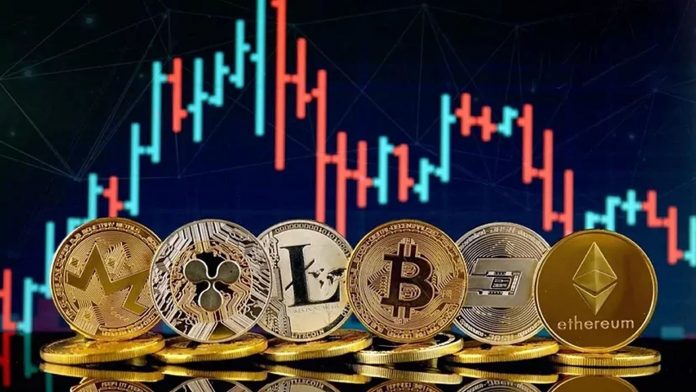
Bitcoin, the leading cryptocurrency by market capitalization, has been on a steady rise in 2023, outperforming most traditional assets such as stocks and bonds. We will explore some of the factors that have contributed to Bitcoin’s impressive performance this year, and what the outlook is for the future.

One of the main drivers of Bitcoin’s growth this year has been the increasing adoption by institutional investors, who see it as a hedge against inflation and currency devaluation.

According to a recent report by Chainalysis, a blockchain analytics firm, institutional investors accounted for 63% of all Bitcoin transactions in the first half of 2023, up from 44% in 2022. Some of the notable institutions that have added Bitcoin to their portfolios include Tesla, MicroStrategy, Square, PayPal, and Morgan Stanley.

Another factor that has boosted Bitcoin’s value this year has been the innovation and development in the crypto space, especially in the areas of decentralized finance (DeFi) and non-fungible tokens (NFTs). DeFi is a term that refers to various applications that use blockchain technology to provide financial services such as lending, borrowing, trading, and investing, without intermediaries.

NFTs are unique digital tokens that represent ownership of various assets such as art, music, games, and collectibles. Both DeFi and NFTs have created new use cases and demand for Bitcoin, as well as increased its network effect and liquidity.

Finally, Bitcoin has also benefited from the regulatory clarity and support that it has received from some governments and central banks around the world. For instance, in June 2021, El Salvador became the first country to adopt Bitcoin as legal tender, allowing its citizens to use it for everyday transactions and tax payments.

In September 2023, Ukraine followed suit and passed a law that recognized and regulated Bitcoin as an asset class. Moreover, some central banks such as the European Central Bank (ECB) and the Bank of England (BoE) have announced plans to launch their own digital currencies, which could potentially increase the public awareness and acceptance of Bitcoin and other cryptocurrencies.

Bitcoin has shown remarkable resilience and growth in 2023, outpacing most traditional assets in terms of returns. While there are still challenges and risks ahead, such as volatility, security breaches, and regulatory uncertainty, the outlook for Bitcoin remains positive, as more investors, developers, and users embrace it as a store of value, a medium of exchange, and a platform for innovation.

A major milestone for the cryptocurrency industry could be reached as early as next week, according to a Reuters report. The U.S. Securities and Exchange Commission (SEC) may give the green light to several Bitcoin exchange-traded funds (ETFs) that have been waiting for approval for months.

Bitcoin ETFs are investment products that track the price of the leading digital currency and trade on traditional stock exchanges. They offer investors a convenient and regulated way to gain exposure to Bitcoin without having to buy and store it directly.

The SEC has been reluctant to approve Bitcoin ETFs in the past, citing concerns about market manipulation, fraud, and investor protection. However, the agency has recently signaled a more open stance, as it has not blocked several applications that use Bitcoin futures contracts as their underlying assets.

Bitcoin futures are contracts that allow traders to bet on the future price of Bitcoin. They are traded on regulated platforms such as the Chicago Mercantile Exchange (CME) and the Intercontinental Exchange (ICE). Unlike spot Bitcoin, which is traded on unregulated and often opaque exchanges, Bitcoin futures are subject to strict oversight and reporting requirements.

The Reuters report, citing unnamed sources familiar with the matter, said that the SEC may notify some of the Bitcoin ETF applicants as soon as Tuesday or Wednesday that they have met the regulatory standards and can launch their products the following week. The report did not specify which applicants were likely to receive the approval but noted that there were at least four contenders in the race.

The news comes amid a strong rally in the Bitcoin market, which has seen the price of the cryptocurrency surge above $60,000 for the first time since April 2021. Many analysts and investors believe that the launch of Bitcoin ETFs will boost the demand and liquidity for Bitcoin, as well as attract more institutional and mainstream investors to the space.

The approval of Bitcoin ETFs in the U.S. would also follow similar developments in other countries, such as Canada and Brazil, where several Bitcoin ETFs have already been launched and have attracted significant inflows. The U.S., however, remains the largest and most influential market for ETFs, with over $6 trillion in assets under management.

If the Reuters report is confirmed, it would mark a historic moment for the cryptocurrency industry and a major validation for Bitcoin as an asset class. It would also open up new opportunities and challenges for both investors and regulators in the rapidly evolving digital economy.

Global rise of income and wealth inequality

0

The global rise of income and wealth inequality is one of the most pressing challenges of our time. It has profound implications for the well-being of billions of people, the stability of democratic institutions, and the sustainability of economic growth. We will explore some of the causes, consequences, and possible solutions to this problem.

One of the main drivers of inequality is the increasing concentration of income and wealth at the top of the distribution. According to the World Inequality Report 2023, the top 1% of the global population captured 27% of the total income growth between 1990 and 2020, while the bottom 50% only got 9%. The top 0.1% alone amassed more wealth than the bottom 80%. This trend is evident in both developed and developing countries, although with different degrees and patterns.

There are many factors that contribute to this phenomenon, such as technological change, globalization, financialization, tax evasion, political capture, and institutional erosion. These factors interact and reinforce each other, creating a vicious cycle that widens the gap between the haves and the have-nots.

For instance, technological change can increase productivity and innovation, but also create winner-take-all markets and displace workers. Globalization can foster trade and integration, but also expose workers to unfair competition and erode social protection.

Financialization can mobilize capital and allocate resources, but also generate instability and rent-seeking. Tax evasion can reduce fiscal burdens, but also deprive governments of revenues and undermine public services.

Political capture can influence policies and regulations, but also distort democracy and accountability. Institutional erosion can weaken checks and balances, but also undermine trust and social cohesion.

The consequences of inequality are manifold and far-reaching. They affect not only material well-being, but also health, education, happiness, security, justice, environment, and democracy.

For example, inequality can reduce economic growth by lowering aggregate demand, discouraging investment, and hampering human capital formation. Inequality can worsen health outcomes by increasing stress, reducing access to care, and spreading diseases.

Inequality can impair education quality by creating disparities in opportunities, resources, and outcomes. Inequality can diminish happiness by generating dissatisfaction, frustration, and resentment. Inequality can increase insecurity by fueling crime, violence, and conflict.

Inequality can erode justice by creating unequal access to rights, representation, and redress. Inequality can harm the environment by accelerating resource depletion, pollution, and climate change. Inequality can undermine democracy by weakening civic participation, representation, and accountability.

The solutions to inequality are complex and context specific. They require a combination of economic, social, political, and institutional reforms that address both the symptoms and the root causes of the problem. Some of the possible measures include:

Promoting inclusive growth that benefits all segments of society. Enhancing social protection that provides adequate coverage and benefits for all. Strengthening fiscal systems that ensure progressive taxation and efficient spending. Regulating financial markets that prevent excessive risk-taking and speculation.

Fostering innovation that creates new opportunities and jobs for all. Supporting education that improves access, quality, and equity. Expanding health care that ensures universal coverage and quality.

Protecting the environment that preserves natural resources and mitigates climate change. Empowering workers that improve their rights, wages, and conditions. Reducing corruption that prevents abuse of power and misuse of public funds. Reforming governance that enhances transparency, accountability, and participation

The global rise of income and wealth inequality is not inevitable or irreversible. It is the result of human choices and actions that can be changed for the better. It is our collective responsibility to ensure that everyone has a fair chance to live a dignified and fulfilling life.