DD
MM
YYYY

PAGES

DD
MM
YYYY

spot_img

PAGES

Home Blog Page 3890

Gaston Glock dies at the age of 94-years-old

0

The firearms industry has lost one of its most influential figures. Gaston Glock, the founder and developer of the Glock pistol, died on December 27, 2023, at the age of 94. He was a visionary engineer and entrepreneur who revolutionized the design and manufacture of handguns.

Glock was born in Vienna, Austria in 1929. He started his career as a radiator manufacturer, but in the late 1970s he became interested in firearms after hearing about a tender from the Austrian army for a new service pistol. He had no previous experience in gun making, but he applied his engineering skills and innovative spirit to create a polymer-framed, striker-fired, high-capacity pistol that was simple, reliable and durable.

The Glock 17, as it was named, won the contract in 1982 and soon became popular with military and law enforcement agencies around the world. Glock also established a successful subsidiary in the United States, where his pistols gained a loyal following among civilian shooters and enthusiasts. Today, Glock pistols are used by more than 65% of U.S. law enforcement agencies and are available in various models and calibers.

Glock was not only a brilliant inventor, but also a shrewd businessman. He built a global empire that generated billions of dollars in revenue and employed thousands of people. He also faced many challenges and controversies, such as legal battles, patent disputes, assassination attempts and family feuds. He was a private and secretive person who rarely gave interviews or appeared in public.

Glock’s impact on the firearm industry is undeniable. According to the ATF, Glock pistols accounted for 65% of the pistols imported into the US in 2020, and more than 50% of the pistols used by US law enforcement agencies. Glock pistols are also widely used by civilians for self-defense, sport shooting, and hunting. Glock has sold over 15 million pistols worldwide since its inception in 1982.

Glock’s success was based on his ability to anticipate and meet the needs of his customers, as well as his constant pursuit of excellence and innovation. Glock was not a gun enthusiast or a trained engineer, but he had a knack for solving problems and creating simple, reliable, and durable products. He also had a keen sense of marketing and branding, creating a loyal fan base and a strong reputation for his company.

Glock’s passing leaves a void in the firearm industry that will be hard to fill. His son, Robert Glock, who has been the co-CEO of Glock GmbH since 2010, will continue to lead the company and uphold his father’s vision and values.

However, Glock will face increasing competition from other manufacturers who are trying to emulate or surpass Glock’s products and market share. Glock will also have to deal with the challenges posed by changing regulations, consumer preferences, and social trends that affect the firearm industry.

Glock’s legacy will live on through his products, his company, and his customers. He will be remembered as one of the most influential figures in the history of firearms, and as a man who changed the world with his ideas and actions.

Glock’s legacy will live on through his products, which have changed the history and culture of firearms. He will be remembered as a pioneer and a legend in the gun world. He is survived by his wife Kathrin and his six children.

Glock was not the only influential figure in the firearms industry. There are many others who have contributed to the development and innovation of guns, such as Samuel Colt, John Browning, Mikhail Kalashnikov, Eugene Stoner and Hiram Maxim.

These inventors have created some of the most iconic and widely used firearms in history, such as the Colt revolver, the Browning pistol, the AK-47 rifle, the M16 rifle and the Maxim machine gun. They have also shaped the military and political landscape of the world with their inventions.
US Congressman Says SEC’s Gensler Should be Fired in 2024

0
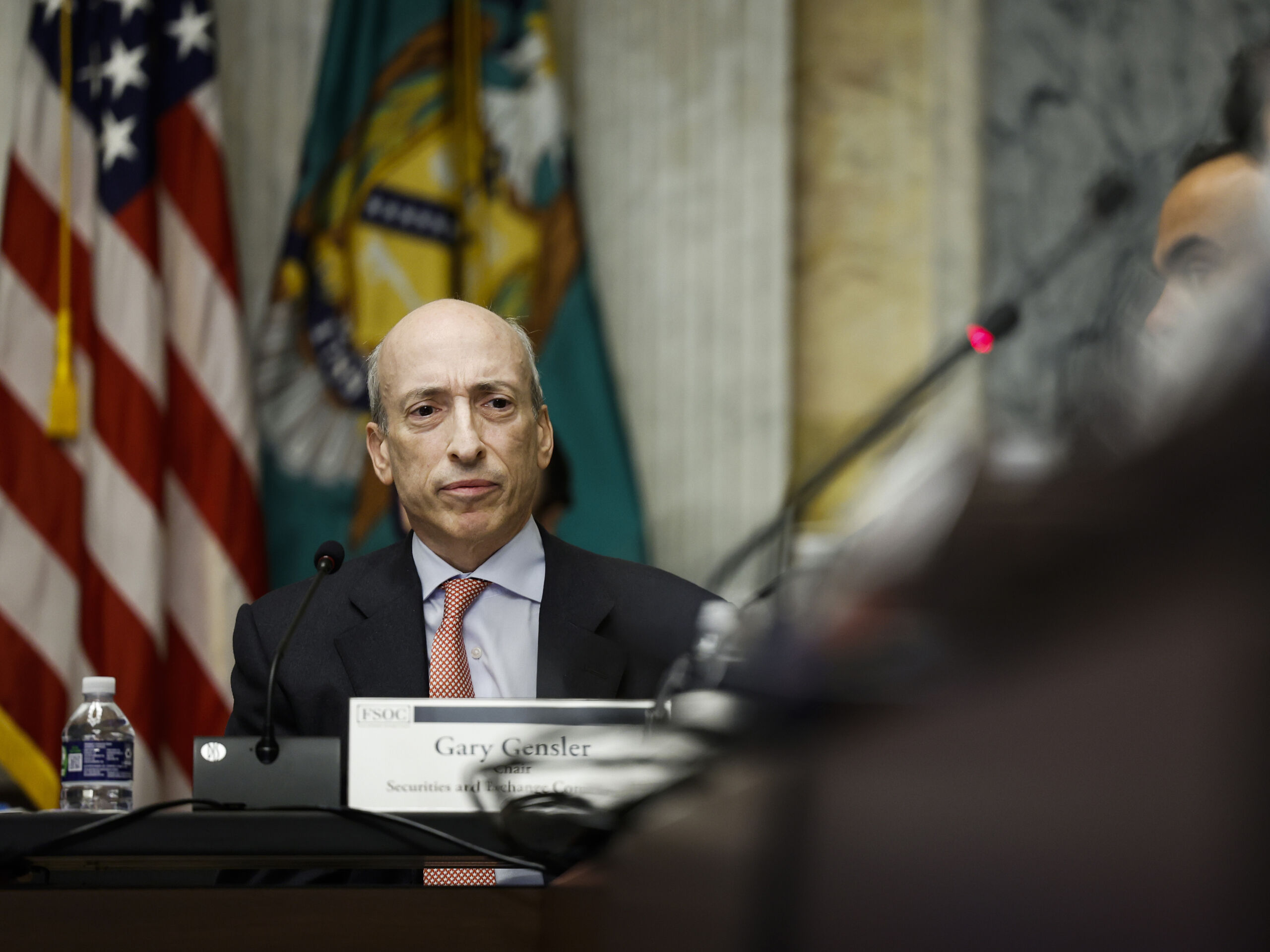
WASHINGTON, DC - OCTOBER 03: Securities and Exchange Commission (SEC) Chair Gary Gensler listens during a meeting with the Treasury Department's Financial Stability Oversight Council at the U.S. Treasury Department on October 03, 2022 in Washington, DC. The council held the meeting to discuss a range of topics including climate-related financial risk and the recent Treasury report on the adoption of cloud services in the financial sector. (Photo by Anna Moneymaker/Getty Images)

In a recent interview with CNBC, US Representative Ted Budd, a Republican from North Carolina, expressed his dissatisfaction with the Securities and Exchange Commission (SEC) and its chairman, Gary Gensler. He accused Gensler of overregulating the crypto industry and stifling innovation. He also said that Gensler should be fired in 2024, when the next presidential term begins.

Budd, who is a member of the House Financial Services Committee and the co-chair of the Congressional Blockchain Caucus, said that he was disappointed with Gensler’s testimony before the committee in October. He said that Gensler did not provide clear guidance on how the SEC would regulate crypto assets and platforms, and instead resorted to vague threats and enforcement actions.

Budd said that he was concerned about the impact of the SEC’s actions on the US crypto industry, which he said was a source of job creation and economic growth. He said that the SEC was driving away innovation and investment from the US to other countries that have more friendly regulatory environments. He also said that the SEC was hurting American consumers and investors who want to access the benefits of crypto.

Budd said that he hoped that Congress would pass legislation to provide clarity and certainty for the crypto industry, and to limit the SEC’s authority over crypto. He said that he supported the Securities Clarity Act, which would amend the Securities Act of 1933 to exclude digital tokens from the definition of securities.

He also said that he supported the Eliminate Barriers to Innovation Act, which would establish a joint working group of regulators and industry representatives to study and recommend a regulatory framework for crypto.

He said that the SEC should provide clear guidance and rules for crypto businesses and investors, instead of relying on enforcement actions and lawsuits. He also urged the SEC to work with Congress and other stakeholders to develop a comprehensive legislative framework for crypto regulation.

Senator Budd is not alone in his views. Many crypto advocates and industry leaders have expressed similar concerns about the SEC’s approach to crypto regulation. They argue that the SEC is stifling innovation and growth in the crypto sector, which has the potential to create jobs, wealth, and social impact. They also point out that the US is falling behind other countries, such as Singapore, Switzerland, and Japan, that have adopted more proactive and supportive policies for crypto development.

The SEC, on the other hand, has defended its actions as necessary to protect investors and maintain market integrity. The SEC has said that it is applying existing securities laws to crypto assets, and that it is open to dialogue and collaboration with the crypto industry. The SEC has also warned that many crypto products and services may pose significant risks to investors, such as fraud, hacking, volatility, and lack of transparency.

The debate over crypto regulation is likely to continue as the industry evolves and matures. The challenge for both the SEC and the crypto community is to find a balance between innovation and protection, between flexibility and certainty, and between national and global interests. The future of crypto depends on how well they can achieve this balance.

Budd said that he believed that Gensler was not fit to lead the SEC, and that he should be replaced by someone who understands and supports crypto. He said that he hoped that the next president would appoint a new SEC chairman who would foster innovation and protect consumers in the crypto space. He said that he would work with his colleagues in Congress to ensure that Gensler is fired in 2024.

Mt. Gox starts PayPal repayments of 2014 Bitcoin Hack, FTX to Repay Customers

3

Mt. Gox, the infamous cryptocurrency exchange that was hacked in 2014 and lost 850,000 bitcoins, has announced that it will start repaying its creditors using PayPal. The announcement was made on the official website of the exchange, where users can log in and claim their refunds.

According to the website, Mt. Gox has obtained approval from the Tokyo District Court to use PayPal as a payment method for the civil rehabilitation proceedings. The exchange said that PayPal was chosen because it is “fast, secure and convenient” and that it will cover the fees for the transactions.

The exchange also said that it has recovered about 200,000 bitcoins from various sources, including its own wallets, third-party services and law enforcement agencies. The remaining 650,000 bitcoins are still missing and presumed stolen by hackers.

The repayment process will be based on the balance of each user’s account as of February 2014, when the exchange suspended its operations. The exchange will use the exchange rate of $483 per bitcoin, which was the average price at the time of the hack.

Users who want to claim their refunds will have to provide their PayPal email address and verify their identity using a photo ID and a selfie. The exchange said that it will process the claims within 10 business days and that users can expect to receive their funds within 24 hours after approval.

The announcement comes as a surprise to many in the crypto community, who have been waiting for years for Mt. Gox to resolve its legal issues and return their funds. Some users have expressed skepticism and distrust about the PayPal option, while others have welcomed it as a sign of progress and hope.

Mt. Gox was once the largest and most popular bitcoin exchange in the world, handling over 70% of all bitcoin transactions at its peak. However, in February 2014, the exchange revealed that it had been hacked and lost almost all of its bitcoins, worth about $450 million at the time. The hack triggered a massive sell-off in the crypto market and a loss of confidence in the security and reliability of bitcoin exchanges.

Since then, Mt. Gox has been involved in a complex and lengthy legal process, involving multiple lawsuits, investigations and bankruptcy proceedings. The exchange has been under the supervision of a court-appointed trustee, Nobuaki Kobayashi, who has been selling some of the recovered bitcoins to pay off the creditors.

The PayPal option is part of the civil rehabilitation plan that was approved by the court in December 2020. The plan allows creditors to choose between receiving cash or bitcoins as their repayment. However, due to the limited amount of bitcoins available, most creditors will only receive a fraction of their original claim.

The plan also stipulates that any remaining bitcoins after the repayment will be returned to Mt. Gox’s shareholders, mainly its former CEO Mark Karpeles. This has sparked controversy and criticism from some creditors, who argue that Karpeles should not benefit from the hack and that he should be held accountable for his role in the exchange’s collapse.

Karpeles has maintained his innocence and claimed that he was not involved in or aware of the hack. He has also said that he does not want to receive any bitcoins from Mt. Gox and that he will donate them to a foundation that will support the development of bitcoin.

The PayPal option is expected to be available until March 31, 2024, after which any unclaimed funds will be forfeited. Users who have not yet filed their claims or who prefer other payment methods can still do so through the online system or by contacting Kobayashi’s office.

FTX plans to pay back customers crypto but at the price they were when they went bankrupt

FTX, one of the leading cryptocurrency exchanges, has announced that it will reimburse its customers who lost their funds due to the recent insolvency of a third-party custodian. The exchange said that it will use its own reserves to pay back the affected users, but with a catch: the compensation will be based on the market value of the crypto assets at the time of the bankruptcy, not the current price.

This means that some customers may receive less than what they had originally deposited, while others may receive more. For example, if a customer had 10 bitcoins (BTC) in their FTX account when the custodian went bankrupt, and the price of BTC was $50,000 at that time, they will receive $500,000 worth of FTX tokens (FTT) as compensation.

However, if the price of BTC is now $60,000, they will miss out on the $100,000 difference. Conversely, if the price of BTC is now $40,000, they will gain an extra $100,000.

FTX said that this method of compensation is fair and transparent, as it reflects the actual value of the assets at the time of the loss. The exchange also said that it will cover any legal fees and expenses incurred by the customers in relation to the bankruptcy case.

FTX CEO Sam Bankman-Fried said that he regrets the inconvenience and frustration caused by the custodian’s insolvency, and that he hopes to restore trust and confidence in the crypto industry.

“We are deeply sorry for what happened to our customers who trusted us with their funds. We take full responsibility for this incident, and we will do everything in our power to make it right. We believe that paying back our customers based on the market value of their crypto at the time of the bankruptcy is the most fair and transparent way to handle this situation.

We also want to assure our customers that we have taken steps to prevent this from happening again, and that we are working with regulators and law enforcement to hold the custodian accountable for its actions.” Bankman-Fried said in a blog post.

The exchange did not disclose the name of the custodian or the amount of funds that were affected by the insolvency. However, some sources claim that the custodian was Crypto Capital, a Panama-based company that has been accused of fraud and money laundering by several authorities.

FTX is not the first exchange to face such a situation. In 2019, QuadrigaCX, a Canadian crypto exchange, went bankrupt after its founder died and took the private keys to the exchange’s wallets with him. The exchange owed its customers over $190 million in crypto and fiat currencies, but could not access them.

FTX’s decision to pay back its customers at the original value of their deposits is commendable and shows that the exchange cares about its users and their funds. It also sets a positive example for other exchanges that may face similar issues in the future.

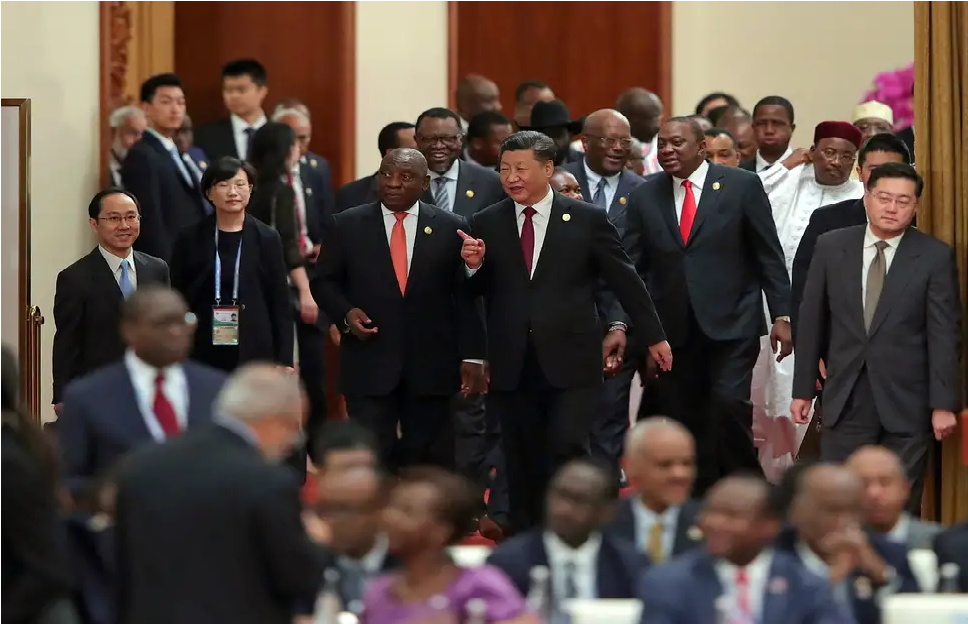
Why Africa should review and recalibrate its relationship with China

0

Africa and China have a long history of economic and political ties, dating back to the 1950s when many African countries gained their independence from colonial powers. China supported the liberation movements and provided aid and investment to the newly formed states.

Since then, China has become Africa’s largest trading partner, a major source of infrastructure financing, and a key player in regional and global affairs.

However, in recent years, some critics have raised concerns about the nature and impact of China’s engagement with Africa. They argue that China is exploiting Africa’s natural resources, creating debt traps, undermining governance and human rights standards, and eroding Africa’s sovereignty and agency.

They also claim that China is pursuing its own strategic interests in Africa, such as securing access to markets, raw materials, and political influence, at the expense of Africa’s development and security.

These criticisms are not entirely unfounded, but they also overlook some of the benefits and opportunities that China’s presence in Africa offers. China has contributed to Africa’s economic growth, poverty reduction, infrastructure development, and regional integration.

China has also supported Africa’s participation in multilateral platforms, such as the Forum on China-Africa Cooperation (FOCAC), the Belt and Road Initiative (BRI), and the African Continental Free Trade Area (AfCFTA). China has also cooperated with Africa on various issues of common concern, such as climate change, public health, peace and security, and digital transformation.

Therefore, it is not a question of whether Africa should engage with China or not, but rather how Africa should engage with China in a way that maximizes its benefits and minimizes its risks. This requires a comprehensive and nuanced understanding of the opportunities and challenges that China’s involvement in Africa presents, as well as a clear vision of Africa’s own interests and priorities. It also requires a proactive and pragmatic approach that leverages Africa’s strengths and capabilities, while addressing its weaknesses and vulnerabilities.

Trade and investment: Africa should diversify its exports to China, reduce its trade deficit, negotiate fairer terms for Chinese loans and projects, promote local content and value addition, enhance environmental and social safeguards, and foster more balanced and sustainable economic partnerships.

Governance and human rights: Africa should uphold its own values and standards of democracy, rule of law, human rights, and good governance, while engaging with China on these issues through dialogue and cooperation. Africa should also protect its sovereignty and independence from external interference or pressure.

Security and peace: Africa should enhance its own capacity to address its security challenges, while seeking China’s support for peacekeeping, counter-terrorism, maritime security, and conflict resolution. Africa should also ensure that its security cooperation with China does not undermine its relations with other partners or regional organizations.

Development and cooperation: Africa should align its development agenda with China’s cooperation initiatives, such as the FOCAC action plan, the BRI projects, and the AfCFTA framework. Africa should also leverage China’s experience and expertise in areas such as industrialization, urbanization, digitalization, agriculture, education, health, and innovation.

Global governance: Africa should strengthen its voice and influence in global affairs, while working with China to reform the international system to make it more inclusive, representative, and responsive to the needs and aspirations of developing countries. Africa should also collaborate with China on global challenges such as climate change, pandemic response, debt relief, multilateral trade, and human development.

By reviewing and recalibrating its relationship with China in these areas, Africa can enhance its strategic partnership with China in a way that serves its long-term interests and goals.

This will also enable Africa to pursue a more diversified and balanced foreign policy that engages with other partners on the basis of mutual respect and mutual benefit. Ultimately, this will contribute to Africa’s vision of achieving a peaceful, prosperous, and integrated continent.

Some challenges and criticisms have emerged in the Africa-China relationship. Some of these include:

  • The debt burden and sustainability of some African countries that have borrowed heavily from China for infrastructure projects.

  • The environmental and social impacts of some Chinese investments and activities in Africa, such as mining, logging and wildlife trade.

  • The lack of transparency and accountability of some Chinese actors in Africa, such as state-owned enterprises, private companies and individuals.

  • The perceived imbalance and inequality of the Africa-China partnership, which is often seen as favoring China’s interests over Africa’s needs and aspirations.

These issues have raised questions about the benefits and costs of the Africa-China relationship, as well as its future direction and prospects. Therefore, it is important for African countries to review and recalibrate their relationship with China, in order to: Ensure that the relationship is based on mutual respect, trust and cooperation, and that it aligns with Africa’s own vision and agenda for development.

Enhance the quality and diversity of the relationship, by expanding the areas of cooperation beyond trade and infrastructure, to include sectors such as health, education, agriculture, science and technology, culture and tourism. Promote the principles and values of good governance, human rights, democracy and rule of law, both within Africa and in its engagement with China.

Strengthen the capacity and voice of African institutions, governments, civil society and media, to effectively negotiate, monitor and evaluate the relationship with China. Foster a balanced and inclusive relationship that benefits all stakeholders, especially the ordinary people of Africa and China.

By reviewing and recalibrating its relationship with China, Africa can seize the opportunities and address the challenges that come with this strategic partnership. This will enable Africa to achieve its goals of peace, prosperity and integration, while also contributing to global peace and development.

eNaira Experienced A Substantial Growth of 284.6%, Totaling N9.78 Billion in August – CBN

0

According to the Central Bank of Nigeria (CBN), the electronic version of the Nigerian Naira, known as the eNaira, exhibited a remarkable increase in August, surging by 284.6% and reaching a substantial sum of N9.78 billion.

This was disclosed in the apex bank’s Monthly Economic Report for August 2023. However, the eNaira for the month was substantial, when compared to the Currency-In-Circulation (CIC) it was only 0.37%.

The CBN also reported an 11.7% decline in currency-in-circulation for August to reach N2.66 trillion. The decline in CIC was attributed to a rise in the use of electronic payment methods for business transactions.

Total credits for August increased by 0.8% to N38.55 trillion for the month with the service sector constituting over half of the credits at 52.2%. The industry and agricultural sector represented 43.2% and 4.6% respectively.

Also, consumer credits for the month stood at N2.99 trillion representing an increase of 16.9% from the previous month when compared to the previous month. The report noted that the rise in consumer credit was a result of an increase in demand for credit facilities by economic agents.

Personal loans constituted the most consumer credit for the month at 75.4% trailed by retail sector loans which represented 24.6%.

With the launch of the naira in October 2021, Nigeria became the first country in Africa and one of the seven countries in the world to have a digital currency. The eNaira project according to the CBN is envisaged to improve financial inclusion, increase remittance, and ensure a more effective monetary policy.

At the time of the launch, the former Governor of CBN Godwin Emefiele forecasted that the digital currency could boost Nigeria’s GDP by as much as $29bn over the next 10 years. Amongst other advantages, he disclosed that it is expected to boost commerce by making retail transactions more seamless in places such as petrol stations and supermarkets

According to reports, the number of eNaira wallets spiked more than 12-fold to 13 million since October 2022, when CBN announced the redesigning of the old naira notes, which led to a nationwide cash crunch.

The former CBN Governor as at then, disclosed that the volume of transactions had jumped to 63% to N22 billion, about $48 million this year.

Meanwhile, why there’s a shortage of statistics on eNaira usage, it is safe to say that Africa’s first central bank digital currency (CBDC) hasn’t caught the interest of many Nigerians.

Given its perks of speedy transactions at zero fees amongst others, many Nigerians are yet to take advantage of what the Central Bank of Nigeria (CBN) describes as the same naira with more possibilities, especially when digital payments are fast becoming viable options.

In August 2023, the acting Governor of CBN Folashodun Adebisi Shonubi, disclosed that modifications will be made to the eNaira to boost adoption.

Shonubi said the CBN was amending the current model of the Central Bank Digital Currency (CBDC), the eNaira, to ensure an increase in the volume and activity of wallet holders.

The bank leadership in a concerted effort to drive the CBDC usage, introduced new features, such as upgrading the eNaira to support NFC technology, which is the same technology used by popular platforms like Apple Pay and Google Pay for contactless payments.

Additionally, the central bank introduced enhanced programmability functions that will enable users to set restrictions on payments, including utilization in government aid programs like farmer loans.

Notabl6, the IMF noted the eNaira holds significant potential for streamlining the remittance process.